D6111 Dental Code: Your Comprehensive Guide to Partial Dentures
Navigating the world of dental insurance and procedural codes can often feel like learning a new language. If you’ve recently been told by your dentist that you need a replacement for a few missing teeth, you might have heard the term “D6111” thrown around in the treatment plan.
Don’t worry; you are not alone in feeling confused. These codes are essential for insurance claims, but they aren’t always explained in plain English.
This guide is designed to change that. We are going to take a deep, friendly dive into the D6111 dental code. We’ll break down exactly what it means, what procedure it covers, when it is used, and—most importantly—what it means for your wallet and your smile.
Whether you are a patient trying to understand your benefits or a professional looking for a clear reference, you’re in the right place. Let’s demystify this code together.
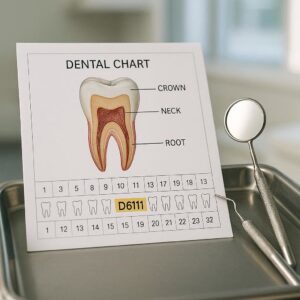
What Exactly is the D6111 Dental Code?
In the simplest terms, the D6111 dental code is a specific alphanumeric identifier used in dentistry to describe a particular type of prosthetic device. It falls under the broader category of “Prosthodontics” (replacement of missing teeth).
Specifically, D6111 is defined as: Partial denture – maxillary, resin base (including any conventional clasps, rests, and teeth), with a metal framework.
Let’s break that down into digestible pieces:
-
Partial Denture: This means it is not a full set of teeth. It is a removable appliance designed to fill in a gap where several teeth are missing, but you still have some natural teeth remaining.
-
Maxillary: This simply refers to the upper jaw. If the partial denture were for the lower jaw (mandibular), the code would be different (D6112).
-
Resin Base: The part of the denture that looks like your gums (the base) is made of a pink or gum-colored acrylic (resin).
-
With a Metal Framework: This is the key distinguishing feature. Hidden inside the acrylic base, or forming the major connector, is a strong cast metal structure, usually made of an alloy like cobalt-chromium. This provides exceptional strength and allows the appliance to be thinner and more comfortable than a denture made entirely of plastic.
Important Note: A partial denture coded under D6111 is designed to be removable. You take it out for cleaning and while sleeping. It is not a fixed bridge.
The Visual Breakdown: D6111 vs. Other Partial Dentures
To truly understand what the D6111 code entails, it helps to see how it stacks up against other common options for replacing missing teeth on the upper arch.
The following table compares D6111 to other common codes you might see on a treatment plan.
| Feature | D6111 (Cast Metal Partial) | D5211 (Acrylic Partial – “Flipper”) | D6240 (Fixed Bridge) |
|---|---|---|---|
| Type | Removable | Removable | Fixed (Permanently cemented) |
| Material | Acrylic base with a metal framework | All acrylic (resin) | Porcelain or ceramic fused to metal |
| Strength & Durability | High. The metal framework makes it very strong and resistant to fracture. | Low to Medium. Prone to breaking and cracking over time. | Very High. Extremely durable and stable. |
| Comfort & Fit | Excellent. The metal framework allows for a thinner, more contoured base, making it less bulky. | Fair. Often thicker and bulkier to compensate for the lack of metal support. | Excellent. Feels most like natural teeth. |
| Cost | Moderate to High | Low | High (often the most expensive option) |
| Longevity | 5-10+ years with proper care. | 1-5 years, often considered a temporary solution. | 10-15+ years with good oral hygiene. |
| Typical Use Case | Long-term, durable replacement for multiple missing teeth on one arch. | Immediate dentures (placed right after extraction), temporary replacements, or strict budget constraints. | Replacing one or two missing teeth where the adjacent teeth are strong and healthy. |
When is the D6111 Code Used? (Clinical Indications)
Your dentist will recommend a treatment plan involving the D6111 code under specific clinical circumstances. It is not a one-size-fits-all solution, but rather a strategic choice for long-term oral health.
1. Multiple Missing Teeth on the Upper Arch
The primary indicator is the loss of several teeth in the upper jaw, but not all of them. For example, if you are missing teeth #6 through #11 (your front teeth on the upper left and right), but your back molars are still present, a cast metal partial is an excellent option. The metal framework connects to the remaining teeth for support.
2. Need for Superior Strength
If the area of the missing teeth is long (a long span), an all-acrylic partial (D5211) might be too weak. It could flex or break under the pressure of chewing. The D6111’s metal framework provides the rigidity needed to prevent this flexing, protecting both the appliance and the teeth it clasps onto.
3. Patient Preference for a Removable Appliance
Some patients are not candidates for fixed bridges or dental implants, either due to bone loss, medical conditions, or budget. A removable partial denture is a non-invasive, cost-effective way to restore function and aesthetics.
4. Abutment Teeth are Suitable
For a metal framework partial to work, the remaining natural teeth (called abutment teeth) must be strong enough to support the extra stress. The dentist will check for:
-
Good periodontal health: Healthy gums and bone supporting the teeth.
-
Sufficient tooth structure: The teeth need to be sturdy enough to accommodate “clasps” (the metal or acrylic arms that grip the tooth for retention).
-
Favorable position: The teeth need to be positioned in a way that allows for a stable design.
The Procedure: What to Expect When Getting a D6111 Appliance
Understanding the process can significantly reduce anxiety. Getting a cast metal partial denture is not a one-visit affair. It is a carefully planned journey involving multiple appointments to ensure a perfect fit and natural look.
Here is a step-by-step look at the typical workflow:
Step 1: The Initial Consultation and Examination
Your dentist will perform a comprehensive exam, which will likely include X-rays. They will evaluate your oral health, discuss your goals, and determine if a D6111 partial is the right choice. Impressions (molds) of your teeth may be taken at this stage for diagnostic purposes.
Step 2: Tooth Preparation (If Necessary)
Sometimes, the abutment teeth need minor adjustments to accommodate the clasps or rests (small metal extensions that help support the partial). This might involve slightly reshaping the enamel. In some cases, crowns may be recommended on the abutment teeth to provide a better surface for the partial to attach to.
Step 3: Primary Impressions
Once the treatment plan is finalized, the dentist will take a detailed impression of your upper arch. This is usually done with a tray filled with alginate or a similar impression material. This mold captures every detail of your teeth and gums.
Step 4: The Metal Framework Try-In
The impression is sent to a dental laboratory. A skilled technician creates the metal framework. At your next appointment, you will try in this framework without any teeth or pink acrylic. The dentist checks for:
-
Fit: Does it sit flush against the tissue?
-
Stability: Does it rock or move?
-
Occlusion: How does it feel when you bite?
This step is crucial. Adjustments are much easier to make on the bare metal frame.
Step 5: The “Wax Try-In” (or Teeth Try-In)
Once the metal framework fits perfectly, the lab adds the pink wax and sets the prosthetic teeth in place. At this appointment, you get to see the partial denture almost in its final form.
-
Aesthetics: You can approve the shade, shape, and arrangement of the teeth. Do they look natural?
-
Speech: You can speak with the appliance in your mouth to see if it feels comfortable.
-
Bite: The dentist will double-check your bite to ensure it is even.
Step 6: Final Placement
The lab processes the final appliance, replacing the wax with hard, pink acrylic. At your final appointment, the dentist will place the finished partial denture in your mouth. They will make any minor adjustments needed for comfort, show you how to insert and remove it, and give you detailed care instructions.
Step 7: Follow-Up Visits
It is standard to have a follow-up appointment a week or two later. This allows the dentist to check for any pressure sores or areas of discomfort that may have developed as your mouth adjusts to the new appliance.
The Cost Factor: What Influences the Price of D6111?
Dental costs vary significantly based on location, the dentist’s experience, and the complexity of your case. However, we can look at the general factors that influence the final price for a D6111 partial denture.
-
Geographic Location: Dental fees in major metropolitan areas are typically higher than in rural towns.
-
Laboratory Fees: High-quality dental labs with expert technicians charge more for their craftsmanship. A poorly made framework can lead to a poor fit and discomfort.
-
Complexity of the Design: If your case requires special design features, like precision attachments (which are more aesthetic than metal clasps), the cost will increase.
-
Preliminary Procedures: The cost of the D6111 code itself usually only covers the fabrication of the denture. It does not include the cost of exams, X-rays, tooth preparations, or any other dental work needed beforehand.
Insurance Coverage for D6111
This is where things get practical. Most dental insurance plans categorize partial dentures as “Major Services.”
-
Percentage Coverage: Typically, insurance plans cover 50% of the cost of major services after you have met your annual deductible.
-
Annual Maximums: This is the most important number to know. Most plans have an annual maximum benefit (often between $1,000 and $2,000 per year). Since a cast metal partial can cost well over this amount, you will likely be responsible for the balance.
-
Frequency Limitations: Insurance plans usually have rules about how often they will pay for a replacement. For example, they may only cover a new partial every 5 or 7 years.
A Word of Advice: Before proceeding with treatment, ask your dentist’s office to send a “pre-determination of benefits” to your insurance company. This is not a guarantee of payment, but it provides a written estimate of what your plan will pay and what your out-of-pocket cost will be.
How to Care for Your D6111 Partial Denture
Getting your new partial is an investment in your health and smile. To protect that investment and ensure it lasts for years, proper care is non-negotiable.
Caring for a cast metal partial is slightly different from caring for your natural teeth. Here is a helpful checklist to follow:
Daily Cleaning Routine
-
Rinse After Eating: Remove your partial and rinse it under lukewarm water to remove food debris. Never use hot water, as it can warp the acrylic.
-
Brush Gently: Use a soft-bristled toothbrush specifically designed for dentures or a very soft regular toothbrush. Avoid hard-bristled brushes, as they can scratch the acrylic surface, creating places for bacteria to hide.
-
Use the Right Cleaner: Use a mild hand soap or a designated denture cleanser. Do not use regular toothpaste. Toothpaste is often too abrasive and can create microscopic scratches in the acrylic.
-
Soak Overnight: Most dentures need to stay moist to maintain their shape. Place your partial in a container filled with water or a gentle denture-soaking solution while you sleep. This also gives your gum tissues a much-needed rest from the pressure of the appliance.
Handling with Care
-
Be Mindful of the Clasps: The metal clasps are delicate. When cleaning, hold the denture firmly but be careful not to bend the metal.
-
Work Over a Sink: To avoid disaster if you drop it, fill the sink with a little water or place a soft towel in the basin while you are cleaning your partial.
Don’t Forget Your Natural Teeth!
A partial denture rests on your natural teeth, making them more vulnerable to decay.
-
Brush and floss your natural teeth meticulously every day. Pay special attention to the teeth that the clasps grip onto.
-
Your dentist may recommend using a fluoride toothpaste or rinse to help protect these teeth from cavities.
Advantages and Disadvantages of Choosing a D6111 Appliance
Like any medical device, a cast metal partial denture comes with its own set of pros and cons. Being aware of these will help you have a more informed conversation with your dentist.
The Pros (Advantages)
-
Durability: The metal framework makes it significantly stronger and less likely to break than an all-acrylic denture.
-
Comfort and Bulk: Because the metal is strong, the acrylic base can be made much thinner. This makes it feel less bulky in your mouth and can be easier to adapt to.
-
Improved Function: The rigidity of the metal allows for better chewing efficiency. You can eat a wider variety of foods with confidence.
-
Long-Term Solution: With good care, a cast metal partial can serve you well for a decade or more.
-
Protects Remaining Teeth: By filling the gaps, it prevents the remaining natural teeth from shifting into the empty spaces, which can cause bite problems.
The Cons (Disadvantages)
-
Visibility of Clasps: In many cases, the metal clasps that grip the abutment teeth can be visible when you smile, especially if they are on front teeth. (Some patients opt for more expensive “precision attachments” to hide the clasps).
-
Cost: It is more expensive upfront than an all-acrylic partial.
-
Adjustment Period: It takes time to get used to the feeling of a foreign object in your mouth. Speech and saliva flow may be temporarily affected.
-
Potential for Wear: Over many years, the metal clasps can cause slight wear on the enamel of the natural teeth they grip.
-
Not as Stable as Implants: While stable, it can still move slightly on the gums, which some patients find less secure than fixed options.
Common Questions About the D6111 Dental Code
To wrap up, let’s address some of the most frequently asked questions regarding this specific code. Having these answers at your fingertips can make you feel much more prepared.
Is the D6111 code for an upper or lower partial?
It is specifically for a maxillary (upper) partial denture. The code for the same type of appliance on the lower jaw (mandibular) is D6112.
How long does it take to make a D6111 partial?
The process from the first impression to the final placement typically takes 4 to 8 weeks. This allows time for the dental lab to meticulously craft the metal framework and set the teeth.
Can I sleep with my D6111 partial denture?
It is generally not recommended to sleep with any removable partial denture. Removing it at night gives your gums a chance to rest and helps prevent plaque buildup and fungal infections under the appliance.
What if my D6111 partial breaks?
Do not try to fix it yourself. Over-the-counter repair kits can alter the fit and damage the appliance beyond professional repair. If it breaks, place it in a safe container and contact your dentist immediately. They can often send it to the lab for a proper repair.
My insurance covers 50% of D6111. What will I pay?
If your insurance covers 50% of the cost after your deductible, your out-of-pocket expense will be:
(Total Cost of Procedure - Your Annual Deductible) x 50%
So, if the partial costs $2,000 and your deductible is $100, the insurance would cover 50% of the remaining $1,900 ($950). You would be responsible for the $100 deductible + $950 = $1,050.
Conclusion
Understanding the D6111 dental code empowers you to take control of your dental health decisions. It represents a time-tested, durable solution for replacing missing teeth on the upper jaw. While the upfront cost and adjustment period can seem daunting, the long-term benefits of a stable, functional, and natural-looking smile are invaluable.
By working closely with your dentist, understanding your insurance benefits, and committing to proper care, your cast metal partial denture can be a reliable companion for many years to come.
Frequently Asked Questions (FAQ)
Q1: What is the main difference between D6111 and D5211?
The main difference is the internal structure. D6111 has a metal framework for strength and durability, while D5211 is made entirely of acrylic and is generally considered a temporary or budget option.
Q2: Does dental insurance usually cover the D6111 code?
Yes, it is typically covered under the “Major Services” category of most dental insurance plans, often at 50% after the deductible is met. However, you are responsible for any costs exceeding your plan’s annual maximum.
Q3: Will my D6111 partial denture have visible metal clasps?
In most standard designs, yes. The metal clasps are often necessary to hold the denture in place. However, you can discuss alternatives with your dentist, such as precision attachments (which are more cosmetic but also more expensive).
Q4: How do I clean the metal framework of my partial?
Gently brush it with a soft brush and a non-abrasive cleaner like mild soap or denture paste. Avoid using harsh chemicals or bleach, as they can tarnish or weaken the metal over time.
Q5: What should I do if my partial denture feels loose?
Do not try to adjust it yourself. A loose fit can happen naturally as your mouth changes over time. Schedule an appointment with your dentist. They may be able to “reline” the base of the denture to make it fit snugly again.
Additional Resource:
For more information on finding a prosthodontist (a specialist in restoring and replacing teeth) in your area, you can visit the American College of Prosthodontists’ patient education and referral website at www.gotoapro.org.