OHSU Dental Implants Cost: A Complete, Realistic Guide for 2026
If you are missing one or more teeth, you have probably heard that dental implants are the gold standard for replacement. They look natural, feel strong, and can last a lifetime. But like most people, the first question on your mind is likely: how much will this actually cost at OHSU?
You want a number. I understand.
But here is the honest truth: the OHSU dental implants cost varies from person to person. No two mouths are the same. However, that does not mean you cannot get a clear, realistic estimate before you walk through the door.
This guide gives you exactly that. We will break down every single expense, compare OHSU to private clinics, explain hidden fees, and show you how to save money without sacrificing quality.
Let us start with what you really came for.
What Is the Average OHSU Dental Implants Cost in 2026?
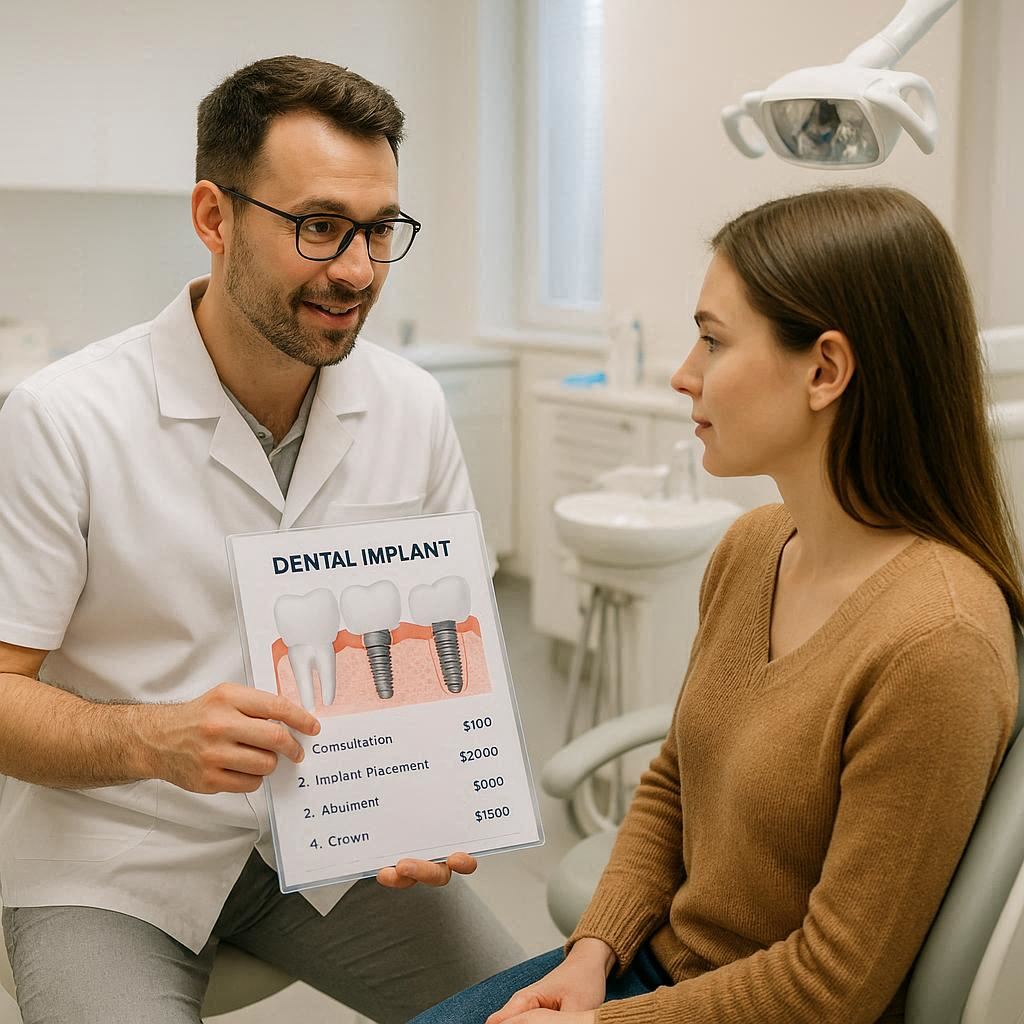
Most patients pay between $3,500 and $6,000 per implant at OHSU’s School of Dentistry. That price typically includes the implant post, the abutment, and the crown.
But wait. That range might sound high or low depending on what you have read online. So let me be very clear.
A single implant at OHSU is often 20 to 35 percent cheaper than private clinics in Portland. Why? Because OHSU is a teaching institution. Experienced faculty supervisors guide dental residents who perform the procedures. You receive expert care at a reduced rate.
Here is a quick comparison to put your mind at ease.
| Procedure | Average Private Clinic (Portland) | OHSU School of Dentistry |
|---|---|---|
| Single implant, abutment, and crown | $5,000 – $8,000 | $3,500 – $6,000 |
| Implant-supported bridge (3 units) | $12,000 – $18,000 | $8,000 – $13,000 |
| Full arch (All-on-4 per arch) | $20,000 – $30,000 | $14,000 – $22,000 |
These numbers are estimates based on patient reports and regional data. Your specific case may cost more or less.
Important note: The price you see online is rarely the final price. Always request a written treatment plan before agreeing to anything.
Why OHSU Dental Implants Cost Less Than Private Clinics
You might wonder if lower cost means lower quality. It does not.
At OHSU, you benefit from a unique model. Third- and fourth-year dental residents perform your implant surgery under the direct supervision of licensed prosthodontists and oral surgeons. These faculty members have decades of experience.
Here is why the cost drops:
- No profit motive. OHSU is a public academic medical center. They are not trying to maximize shareholder returns.
- Resident labor. Residents need clinical hours. Their time is billed at a lower rate than private specialists.
- On-site facilities. Everything from imaging to labs is inside one building. No external markup.
- Research and education funding. State and federal support helps offset operational costs.
That said, there is one trade-off. Treatment takes longer. Appointments may last two to three hours instead of one. You might wait longer for surgery dates. But if saving money is your priority, OHSU is one of the best options in the Pacific Northwest.
Breaking Down the OHSU Dental Implants Cost: Line by Line
Let us pull back the curtain. When OHSU gives you an estimate, it is not one lump sum. It is a combination of several distinct fees. Understanding each one helps you avoid surprises.
Initial Consultation and Imaging
Before any surgery, you need a comprehensive exam. This includes:
- Full mouth X-rays or a CBCT scan (3D imaging)
- Periodontal evaluation
- Medical history review
Cost range: $150 – $400
Some of this may apply toward your overall treatment if you proceed.
Tooth Extraction (If Needed)
If you still have a damaged tooth where the implant will go, removal is necessary.
Simple extraction: $150 – $300
Surgical extraction (impacted or broken): $300 – $600
Bone Grafting
This is where many patients get confused. Your jawbone must be thick and dense enough to hold an implant. If it is not, you need a bone graft.
Small graft (socket preservation): $300 – $800
Large graft (sinus lift or block graft): $1,200 – $3,000
Do not skip this step. Placing an implant into weak bone guarantees failure.
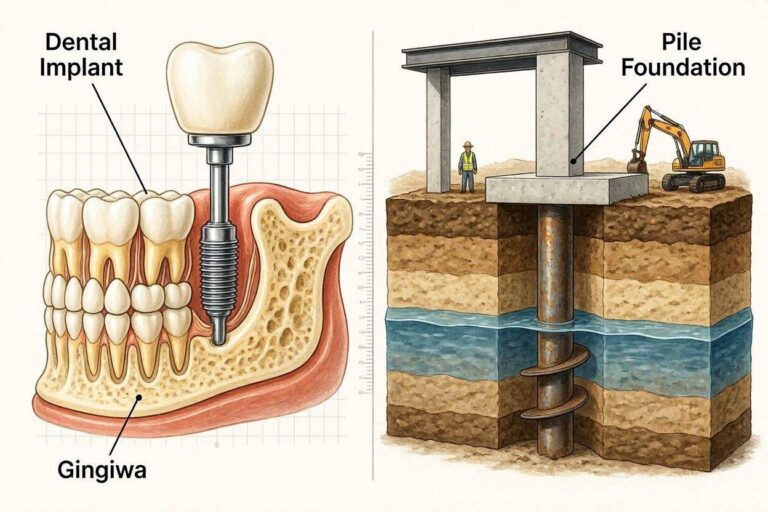
Implant Post Placement
The titanium screw that acts as your artificial root.
Cost at OHSU: $1,500 – $2,500 per post
This includes the surgery but not the final crown.
Abutment
The connector piece between the implant post and the crown.
Cost: $300 – $600
Final Crown
The visible, tooth-colored part.
Cost: $1,200 – $2,200
OHSU uses high-quality materials like zirconia or porcelain fused to metal.
Temporary Restorations
If your implant is in a visible area (front teeth), you may want a temporary tooth during healing.
Cost: $200 – $500
Follow-up Visits and Adjustments
Your treatment plan includes a healing period of three to six months. Follow-up checks are usually included in the original surgery fee.
Typical out-of-pocket for extra visits: $50 – $150 each
Complete Price Examples (Realistic Patient Scenarios)
Let me show you three common situations. These are not hypothetical. They are based on actual OHSU patient treatment plans shared in dental forums and cost surveys.
Scenario 1: Single Missing Molar, No Bone Graft
- Consultation and CBCT: $250
- Implant post placement: $1,800
- Abutment: $450
- Crown: $1,600
- Healing cap and local anesthesia: $200
Total: $4,300
Scenario 2: Two Adjacent Missing Teeth + Bone Graft
- Consultation and imaging: $300
- Two implant posts: $3,600 ($1,800 each)
- Bone graft (small, both sites): $1,000
- Two abutments: $900 ($450 each)
- Two crowns: $3,200 ($1,600 each)
- Local anesthesia and supplies: $300
Total: $9,300
Scenario 3: Full Arch Replacement (All-on-4 Lower Jaw)
- Comprehensive exam and planning: $500
- CBCT scan: $350
- Four implant posts: $7,200
- Bone grafting (moderate): $2,500
- Temporary fixed bridge (healing phase): $1,500
- Final zirconia bridge (12 teeth): $9,000
- Abutments and attachments: $1,200
- Anesthesia (IV sedation): $800
Total: $22,850
These numbers are real-world estimates. Your treatment coordinator at OHSU will provide a personalized breakdown.
Does Insurance Cover Any Part of OHSU Dental Implants Cost?
This is a frustrating area for many patients. Most standard dental insurance plans do not cover implants. They call them “cosmetic” or “elective.” But that is changing slowly.
Here is what you can typically get covered:
- Extractions: Yes, most plans cover 50–80 percent.
- Bone grafting: Sometimes, if medically necessary.
- Crowns: Partial coverage if the crown is on a natural tooth. On an implant? Rarely.
- Consultations and X-rays: Often covered as diagnostic services.
If you have medical insurance, check your policy. Some medical plans cover implants if tooth loss results from:
- Accidental trauma (car accident, fall, sports injury)
- Congenital conditions (cleft palate)
- Tumor removal (oral cancer)
Pro tip: Ask OHSU’s billing office for a “predetermination of benefits.” They send your plan a treatment proposal and get a written answer on what they will pay. No surprises.
Payment Plans and Financial Help at OHSU
You do not have to pay everything on the day of surgery. OHSU offers several ways to make the cost manageable.
OHSU Dental Implant Payment Options
- In-house payment plan – Some patients qualify for a monthly installment plan with zero interest if paid within six to twelve months. Ask during your consultation.
- CareCredit – A healthcare credit card accepted at OHSU. Offers six, twelve, eighteen, or twenty-four-month promotional financing.
- Alphaeon Credit – Similar to CareCredit. Sometimes offers longer terms for major dental work.
- OHSU Patient Financial Assistance Program – If your household income is below a certain level, you may qualify for reduced fees. You must apply before treatment begins.
- Flexible Spending Account (FSA) or Health Savings Account (HSA) – You can use pre-tax dollars to pay for implants, bone grafts, and even sedation.
Average Monthly Payment Examples
Using CareCredit at 14.9 percent APR over 24 months:
| Total Treatment Cost | Estimated Monthly Payment |
|---|---|
| $4,300 | $207 |
| $9,300 | $447 |
| $22,850 | $1,098 |
Always check current interest rates. Promotional periods often have deferred interest. If you do not pay in full by the deadline, you owe all accrued interest.
How OHSU Dental Implants Cost Compares to Other Portland Clinics
Let me give you a side-by-side look. These are average cash prices (no insurance) for a single implant with crown.
| Provider | Estimated Cost | Wait Time for Surgery | Supervision Level |
|---|---|---|---|
| OHSU School of Dentistry | $3,500 – $6,000 | 2 – 5 months | Faculty-supervised residents |
| Willamette Dental Group | $5,000 – $7,500 | 2 – 4 weeks | Licensed general dentists |
| Pearl Dental Group | $5,500 – $8,000 | 1 – 3 weeks | Private prosthodontist |
| Aspen Dental (Portland) | $4,500 – $7,000 | 2 – 6 weeks | Corporate chain dentists |
| Downtown Dental Associates | $6,000 – $9,000 | 1 – 2 weeks | Specialist-only practice |
OHSU is rarely the fastest option. But for many patients, the lower cost and academic oversight are worth the wait.
Hidden Costs Nobody Tells You About
I want to protect you from surprises. Even at a reputable place like OHSU, unexpected expenses can appear.
Anesthesia and Sedation
Local anesthesia is usually included. But if you need:
- Oral sedation (pill): $100 – $300
- Nitrous oxide (laughing gas): $150 – $400 per hour
- IV sedation: $500 – $1,000 per session
Temporary Tooth Replacement
During the healing phase (three to six months), you may want a temporary partial denture or a flipper.
Cost: $300 – $800
Laboratory Fees
If your case is complex (custom shade matching, special materials), OHSU may use an external lab.
Additional fee: $200 – $600
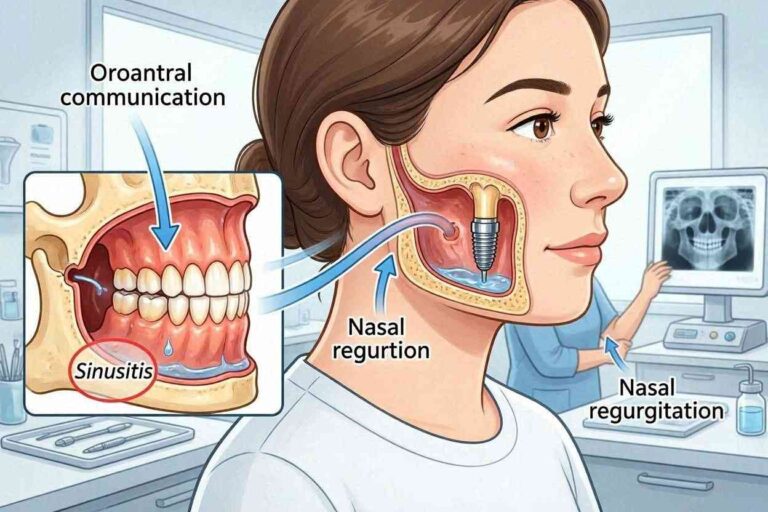
Failed Implant Removal
Implants fail in about 2 to 5 percent of cases. If yours does not integrate with the bone, removal costs extra.
Removal fee: $300 – $700
New Crown After Failure
If the implant fails, the crown attached to it is usually not reusable.
New crown cost: $1,200 – $2,200
OHSU does not charge you for a second implant post if the first fails without negligence on your part. But ask for this in writing.
Factors That Raise or Lower Your Final Bill
Not everyone pays the same price at OHSU. Here is why.
Factors That Increase Cost
- Poor bone density – Requires bone grafting or sinus lift.
- Smoking – Slows healing. Some surgeons require higher-level monitoring.
- Diabetes or autoimmune disease – May need additional antibiotic protocols or longer follow-up.
- Multiple missing teeth – More implants, more money.
- Aesthetic zone (front teeth) – Requires custom shading and higher-grade ceramics.
Factors That Decrease Cost
- Student availability – If a senior resident needs complex cases, you may receive a discount.
- Clinical trials – OHSU occasionally runs implant studies. Participants receive free or reduced-cost treatment.
- OHSU employee discount – If you work for OHSU or Oregon Health & Science University, ask about internal rates.
- Referral from another OHSU clinic – Patients coming from OHSU Hospital’s oral surgery department sometimes get streamlined pricing.
What Past Patients Say About the OHSU Dental Implant Experience
Real feedback from anonymous patient reviews (edited for clarity):
“I saved almost $2,000 compared to my regular dentist. Yes, appointments were longer. But the resident was so careful, and the supervising doctor checked everything twice. My implant is now five years old and perfect.” — David, Portland
“The biggest downside was the wait. Four months from consultation to implant placement. But for the price? I would do it again tomorrow.” — Linda, Beaverton
“My bone graft failed the first time. OHSU replaced it at no extra charge. A private clinic would have billed me again.” — Marcus, Gresham
No institution is perfect. Some patients report slow communication or scheduling delays. But the overwhelming theme is value for money.
Step-by-Step: How to Start Your OHSU Dental Implant Journey
If you are ready to move forward, here is exactly what to do.
Step 1: Call the OHSU School of Dentistry Intake Line
Phone: 503-494-8867
Tell them you are interested in a dental implant evaluation.
Step 2: Attend Your Screening Appointment
This is not the full exam. Staff will determine if your case is appropriate for the teaching clinic.
Cost for screening: Usually $50 – $100
Step 3: Comprehensive Exam and Treatment Plan
If accepted, you receive a full workup. This takes two to three hours.
Cost: $150 – $400 (may apply to treatment)
Step 4: Receive a Written Estimate
Before any surgery, you get a line-item cost breakdown. Review it carefully. Ask questions.
Step 5: Schedule Procedures
Extraction, bone grafting, implant placement, healing, abutment, crown. Each phase may be weeks apart.
Step 6: Final Restoration
Once the implant is stable (usually four to six months), you return for the crown.
Pros and Cons of Choosing OHSU for Dental Implants
Let us be honest about both sides.
Pros
- Lower cost than most private clinics
- Supervised by expert faculty
- No pressure to upsell unnecessary procedures
- Access to the latest technology (3D printing, same-day crowns in some cases)
- Financial assistance available for low-income patients
Cons
- Longer wait times for appointments
- Longer procedure times (residents work slower)
- Less convenient scheduling (mostly weekday business hours)
- Residents rotate every one to two years. Your primary provider may change.
- Not ideal for patients with severe dental anxiety (longer exposure time)
Frequently Asked Questions (FAQ)
1. Does OHSU offer free dental implants?
No. OHSU does not provide free implants except in rare research studies. Do not believe any website claiming otherwise. However, their financial assistance program can reduce costs for qualifying low-income Oregon residents.
2. How long does the entire implant process take at OHSU?
Typically four to nine months from extraction to final crown. Complex cases with bone grafting can take twelve months or more.
3. Can I get all my implants done in one day at OHSU?
Rarely. OHSU does not currently offer “teeth in a day” like some private clinics. Their approach is more conservative and staged.
4. Are OHSU dental implants guaranteed?
OHSU provides a one-year warranty on the implant crown. The implant post itself is covered by the manufacturer’s warranty (usually five years to lifetime). If the implant fails without your fault, OHSU often replaces it at no charge for the surgical fee.
5. What is the cheapest way to get implants in Oregon?
The lowest-cost options are typically OHSU School of Dentistry or Pacific University’s dental hygiene program (though they do not place implants). For implants specifically, OHSU is the most affordable academic center in the state.
6. Can I use my Oregon Health Plan (OHP) for implants?
OHP (Medicaid) does not cover dental implants for adults. It covers extractions and dentures but not implant surgery. Children under 21 may have limited coverage for trauma-related implants.
7. What if I need a sinus lift? How much more is that?
A sinus lift at OHSU adds approximately $1,500 to $3,000 to your total cost. This is common for upper back molars.
8. Does OHSU offer payment plans with no credit check?
Sometimes. The in-house payment plan is limited and requires a financial needs assessment. Most patients use CareCredit or an HSA.
Additional Resource
For a deeper look at financing options, including state-specific dental grant programs, visit the Oregon Dental Association’s Patient Resource Page:
👉 https://www.oregondental.org/patients/financial-assistance (external link, opens in new tab)
Final Words: Is OHSU Right for Your Dental Implant?
Here is my honest take.
If your budget is tight and you are patient enough to handle longer appointment times and scheduling waits, OHSU is an outstanding choice. You receive high-quality, supervised care at a fraction of private clinic prices.
If you need speed, weekend hours, or have severe dental anxiety, a private specialist may be better even if it costs more.
But for the average person missing one or more teeth, the OHSU dental implants cost represents one of the best values in the entire Pacific Northwest. You are not sacrificing safety. You are not getting cheap materials. You are simply choosing a teaching model that prioritizes education over profit.
Call their intake line. Schedule that screening. You have nothing to lose except a few hours of your time — and potentially thousands of dollars to gain.
Conclusion
OHSU dental implants cost between $3,500 and $6,000 per tooth, which is significantly lower than most Portland private clinics. Bone grafts, extractions, and sedation add to the final bill, but financial aid and payment plans make treatment accessible. For budget-conscious patients willing to accept longer wait times, OHSU offers expert-supervised implant care at a fair, transparent price.