
Do Dental Implants Fall Out
If you are missing a tooth, you have probably heard that dental implants are the “gold standard” for replacement. They are strong, natural-looking, and designed to last for decades. But a quiet worry often lingers in the back of many people’s minds: Can these things actually fall out?
You are not alone in asking this question. It is a fair concern. After all, natural teeth can fall out due to injury or decay. So why would a piece of metal and ceramic be any different?
The short answer is yes, dental implants can fail and fall out, but it is rare when you follow the rules. However, the way they fall out is very different from a natural tooth. In this guide, we will walk you through the honest truth about implant failure. We will look at why it happens, how to spot the warning signs, and—most importantly—how to make sure your implant stays firmly in place for life.
Let us clear up the myths and give you a realistic, friendly guide to keeping your smile safe.
Important Note for Readers: This article is for educational purposes only. It does not replace professional medical advice. Always consult your dentist or oral surgeon for personal concerns about your implants.
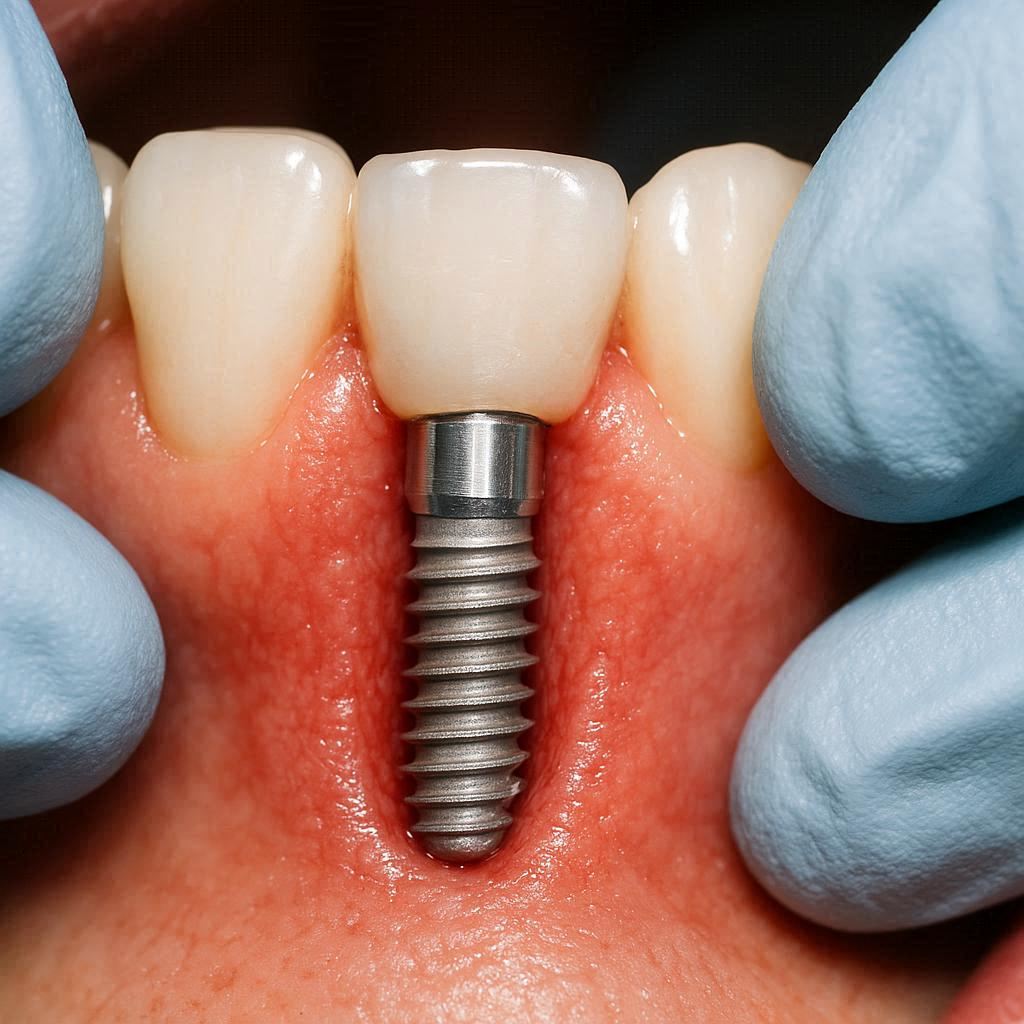
Understanding the Basics: How an Implant Stays “Stuck”
To understand why an implant might fall out, you first need to know how it stays in. A dental implant is not like a screw in a piece of wood. It is a biological marvel.
An implant has three parts:
- The Post (Fixture): A titanium or zirconia screw placed into your jawbone.
- The Abutment: A connector piece that sits on top of the post.
- The Crown: The fake tooth you see.
The magic happens with the post. Your jawbone actually grows into the surface of the titanium post. This process is called osseointegration (say that three times fast). Essentially, the bone fuses with the metal. It becomes part of you.
Because of this fusion, a successful implant will never just “rattle loose” like a cheap screw. It is biologically locked in place. When an implant fails, it is usually because that bone fusion broke down or never happened in the first place.
So, Do Dental Implants Fall Out? The Short List of Scenarios
Here is the honest breakdown. An implant can “fall out” in only a few specific ways.
| Scenario | What actually happens? | How common is it? |
|---|---|---|
| Early Failure | The bone never fuses to the implant. The post becomes mobile within weeks or months of surgery. | 2-6% of cases |
| Late Failure | Years of successful use. Then, due to infection or grinding, the bone melts away. The implant loosens very slowly. | 1-3% after 10+ years |
| Crown Failure | The fake tooth (crown) chips or unscrews, but the metal post remains solid in the bone. | Common (~5-15% over time) |
| Trauma | A severe accident (car crash, fall) breaks the jaw or fractures the implant. | Very rare |
As you can see, the titanium post itself falling out is uncommon. But the crown on top falling out? That happens more often, and it is an easy fix.
Early Failure: When the Implant Never Takes Hold
Imagine you plant a seed, but it never sprouts. That is early implant failure. This usually happens within the first three to six months after surgery, before the crown is even attached.
Why does early failure happen?
- Infection at the site: Bacteria contaminate the surgical wound.
- Poor bone quality: Your jawbone is too soft (like sponge cake instead of brownie).
- Overheating the bone: During drilling, if the dentist creates too much friction, it kills bone cells.
- Smoking: Nicotine chokes blood flow. Smokers have double the failure rate.
- Medical conditions: Uncontrolled diabetes or autoimmune diseases slow healing.
Signs to watch for:
- The implant moves when you push it with your tongue.
- You have severe pain that gets worse, not better.
- Pus or constant bleeding around the site months later.
Reader Note: If your implant falls out during the healing phase, do not panic. Your dentist can usually re-do the procedure after the bone heals (often with a bone graft).
Late Failure: Perio-Implantitis is the Real Enemy
If you pass the first year, you might think you are safe forever. Mostly, you are. But there is a silent enemy that causes late failure: peri-implantitis.
Think of this as gum disease, but for your implant. Natural teeth have a ligament that acts like a shock absorber. Implants do not. They are rigid.
When plaque builds up around an implant:
- Your gums get inflamed (mucositis).
- If untreated, the inflammation spreads to the bone.
- The bone slowly melts away.
- With no bone to hold it, the implant becomes loose and eventually falls out.
This is a slow process. It can take 5, 10, or even 15 years. The scary part? It is often painless until the very end.
Who is at risk for late failure?
- People who skip dental cleanings.
- Patients with a history of gum disease.
- Heavy smokers.
- Those who grind their teeth at night (bruxism).
The Crown vs. The Implant Post: A Crucial Difference
Many people say “my implant fell out” when, in reality, only the crown (the visible tooth) came off.
Here is a simple way to tell the difference.
| The Crown fell off | The Implant Post fell out | |
|---|---|---|
| What you see | A metal post still sticking out of your gum. | A hole in your gum. No metal left behind. |
| Feeling | Mild annoyance. You can chew on the other side. | Bleeding, possible pain, mobility of jaw area. |
| Fix | The dentist screws or cements a new crown on. Takes 1 hour. | Complex bone surgery. Takes 6-12 months. |
| Urgency | Schedule a visit within 2 weeks. | Emergency visit within 48 hours. |
“I had a panic attack when my tooth popped out while eating taffy. But my dentist calmly unscrewed the old crown, cleaned the abutment, and put a new one on in 20 minutes. The root was still solid.”
— Maria, 54, implant patient
If your crown falls off, clean it and store it in a baggie. Do not try to glue it back yourself with super glue. That will ruin the fit. Call your dentist for a re-cementation appointment.
Can You Knock an Implant Out? (Trauma and Accidents)
This is a common question. If you get punched in the mouth, will the implant fly out?
Probably not. Remember, the implant is fused to your jawbone. For an implant to physically fall out due to trauma, the bone itself must break first.
Think of it like a fence post set in concrete. You can kick the post all day. It might bend, but it will not pop out unless the concrete block shatters.
In extreme cases (car accidents, falls from heights), the jaw can fracture. The implant might come out with the broken bone fragment. But for everyday life? Sports, eating, hugs, minor bumps? Your implant is stronger than your natural teeth.
7 Warning Signs Your Implant Is In Trouble (Before It Falls Out)
The good news is that implants give you months of warning before they fall out. You just have to listen to your body.
Do not ignore these signs:
- Bleeding when brushing: Healthy gums do not bleed. Pink in the sink means inflammation.
- A bad taste or smell: This indicates bacteria trapped deep around the implant.
- The gum is receding: You see more of the metal post than you used to.
- Clicking or wobbling: Even a millimeter of movement is a red flag.
- Pain when tapping the tooth: Natural teeth hurt with heat/cold. Implants hurt with pressure if failing.
- Difficulty flossing: If the floss drops roughly between the crown and gum, the bone has changed shape.
- Visible pus: This is an active infection. See a dentist immediately.
If you have one or two of these, you have time. If you have three or more, schedule an appointment this week.
How to Prevent an Implant from Falling Out (Practical Tips)
Prevention is easier, cheaper, and less painful than replacement. You do not need a magic potion. You need good habits.
Your daily home care checklist
- Brush twice a day: Use a soft-bristle brush. Hard bristles scratch the implant surface, creating hiding spots for bacteria.
- Water flosser is your best friend: Regular string floss works, but a water flosser (Waterpik) is excellent for flushing out the gum pocket around an implant.
- Avoid sticky candies: Caramel, taffy, and toffee can pull off crowns.
- Do not use your teeth as tools: No opening bottles, ripping tags, or cracking nuts.
Professional maintenance (Do not skip this)
| Frequency | Action | Why it matters |
|---|---|---|
| Every 6 months | Regular cleaning & exam | Dentist checks for early bone loss on X-rays. |
| Every 12 months | Implant-specific evaluation | Uses a plastic scaler (metal ones scratch implants). Checks for “peri-implant probing.” |
| Every 2-3 years | Bite check | Your bite shifts with age. Uneven pressure loosens crowns. |
The Smoker’s Reality: Hard Truth About Implants and Nicotine
Let us be honest. If you smoke, you need to hear this.
Smoking does not just stain your teeth. It literally kills the blood vessels in your gums. Your bone needs oxygen and nutrients to fuse to an implant. Nicotine is a vasoconstrictor—it squeezes your blood vessels shut.
The numbers do not lie:
- Non-smokers: 95-98% implant success rate.
- Light smokers (less than 10/day): 85-90% success rate.
- Heavy smokers (pack a day): 70-80% success rate, with higher risk of late failure.
What can you do?
- Stop smoking entirely for 2 weeks before surgery and 2 months after. This is critical for osseointegration.
- Switch to nicotine patches (less direct gum damage than smoke).
- Be aware that vaping is not safe either. The heat and chemicals still irritate tissues.
What Actually Happens When an Implant Falls Out? (Step by Step)
If despite your best efforts, the implant post comes out, here is what to expect. It is not the end of the world.
At home:
- Do not panic. Rinse your mouth with warm salt water.
- Do not try to push the implant back in. You will introduce bacteria.
- Save the implant in a small container of milk or saline (not water).
- Call your dentist for an emergency appointment.
At the dentist’s office:
- Exam and X-ray: The dentist checks if there is enough bone left.
- Debridement: They clean out the infected tissue from the socket.
- Bone graft (likely): Since the bone failed once, they usually pack the hole with bone grafting material.
- Healing period: 4 to 8 months of waiting.
- Second implant attempt: Often successful if the underlying cause (infection, smoking) is fixed.
Cost note: Replacing a failed implant is usually not covered by insurance. It often costs 70-100% of the original price ($1,500 to $4,000). This is why prevention is so vital.
When Is an Implant NOT the Right Choice?
Not everyone is a good candidate. Dentists should do a thorough evaluation before promising an implant. If you have these conditions, your risk of “falling out” is high.
- Active gum disease: You must treat periodontitis first. Placing an implant into infected gums is like building a house on a swamp.
- Uncontrolled diabetes: High blood sugar prevents healing and encourages infection.
- Heavy bruxism (grinding): You will crush the crown or fracture the implant. You need a night guard.
- Radiation therapy to the jaw: This kills bone cells (osteoradionecrosis). Implants rarely survive here.
- Young age (under 18): Your jaw is still growing. The implant would look like a baby tooth next to adult teeth.
The Psychological Impact: Fear of Implant Loss
We need to talk about the mental side. Many patients live with constant anxiety. They refuse to bite into apples. They chew only on one side. They dream that their teeth fall out.
This fear is understandable, but usually unnecessary.
Realistic perspective:
- A successful implant has a 95% survival rate at 10 years.
- At 20 years, it is still above 90%.
- You are more likely to lose a natural tooth than a healthy implant.
How to reduce anxiety:
- Ask your dentist for a “torque test” at your yearly visit. They apply pressure to see if the implant wiggles. A solid implant does not move.
- Keep your X-rays. Seeing stable bone year after year is reassuring.
- Remember: Even if it fails, the world does not end. You can try again or switch to a bridge.
5 Myths About Implants Falling Out (Busted)
Let us put some internet rumors to rest.
- Myth 1: “Implants fall out like natural teeth.”
- Truth: Natural teeth fall out due to decay or gum disease. Implants cannot get cavities. They only fail from infection or overload.
- Myth 2: “Once you get an implant, you never have to see the dentist again.”
- Truth: This is the #1 reason for failure. Implants need MORE maintenance than natural teeth because they have no ligaments.
- Myth 3: “Magnetic implants exist and fall out if you use a microwave.”
- Truth: This is pure fiction. Dental implants are titanium or ceramic. They are not magnetic. You can safely use a microwave.
- Myth 4: “Eating hard bread will pop out the implant.”
- Truth: The crown might break. The implant post will not. Your jaw would break first.
- Myth 5: “If one implant falls out, all of them will.”
- Truth: No. Each implant is independent. Failure usually has a local cause (bad bone at that spot or poor hygiene only around that tooth).
Case Study: A Realistic Timeline of Failure and Recovery
Let us follow “David,” a 48-year-old patient. This is a composite of real cases.
- Year 1: David gets an implant for tooth #19. He is a light smoker. He quits for 3 months after surgery. The implant heals well. Crown placed.
- Year 3: David starts smoking again. He skips his dental cleaning because he moved cities.
- Year 5: He notices bleeding when brushing. He ignores it.
- Year 7: The gum around the implant looks red and puffy. Bad taste in mouth.
- Year 8: David bites into a granola bar. The implant crown feels “wobbly.”
- Year 8, month 2: X-ray shows 50% bone loss around the implant. Peri-implantitis.
- Year 8, month 4: The implant post becomes visibly mobile.
- Year 8, month 5: The implant falls out while David is eating soup.
- Year 9: David pays $3,500 for a bone graft and a new implant. He quits smoking permanently and buys a water flosser.
- Year 10: The second implant is solid and healthy.
The moral? David had seven years of warning signs. Implants do not fall out overnight. They fall out after years of neglect.
How Implants Compare to Other Tooth Replacements
If you are worried about something “falling out,” how do implants compare to other options?
| Restoration | Can it fall out? | How often? | Ease of repair |
|---|---|---|---|
| Dental Implant | Rare (post); Common (crown) | Post: 1-5% lifetime; Crown: 5-10% per decade | Crown: Easy; Post: Hard |
| Removable Partial Denture | Yes, every day if not fitted well | Very common. They rely on clips. | Easy (just pop back in) |
| Traditional Bridge | No, it is cemented to teeth | Never “falls out.” The cement fails, but it stays on. | Moderate (re-cement or new bridge) |
| Natural Tooth | Yes, from decay/gum disease | ~1% per year for adults over 40 | Hard (extraction) |
Notice: Only the implant’s crown falls out frequently. The root is the most stable option of all.
The Role of the Dentist: Was It Their Fault?
Sometimes patients blame themselves. Sometimes it is actually the dentist’s error. How do you know?
Dentist-caused failures (malpractice):
- Placing an implant into an obvious infection.
- Using poor quality implants (cheap Chinese copies).
- Damaging a nerve or adjacent tooth root during surgery.
- Overloading the implant with a poorly fitting crown.
Patient-caused failures (most common):
- Poor oral hygiene.
- Smoking.
- Skipping follow-up appointments.
- Grinding teeth without a night guard.
If your implant falls out within 6 months and you followed all the rules (no smoking, good hygiene), ask for a second opinion. You might need a refund or a free redo. Most reputable dentists guarantee their work for 1 year.
Special Case: All-on-4 and Full Arch Implants
What if you have a whole mouth of implants? For example, “All-on-4” where a denture snaps onto four implants.
Do those fall out?
- The denture (the teeth): Yes. The “hybrid denture” can unscrew or break. This is common and fixable.
- The actual implant posts: Rarely. In All-on-4, you have four posts. If one fails, the other three usually hold the denture in place. You might notice the denture rocking. But the denture will not suddenly fall onto the table unless all four posts fail (extremely rare).
Key advice for All-on-4 patients: Keep your torque wrench key with you when traveling. If a screw loosens, you can call your dentist. Do not try to tighten it yourself.
Frequently Asked Questions (FAQ)
Q: Can a dental implant fall out after 20 years?
A: Yes, but only if you have developed peri-implantitis (bone infection) or severe grinding. With good hygiene, most last 30+ years.
Q: What does a loose implant feel like?
A: Unlike a loose tooth (which wiggles side-to-side), a loose implant feels like a rocking horse motion—front to back. You may also hear a clicking sound when you chew.
Q: Can I push a loose implant back in myself?
A: No. Absolutely not. You will push bacteria into the bone and cause a severe jaw infection (osteomyelitis). See a dentist.
Q: Are zirconia (metal-free) implants more likely to fall out?
A: No. Zirconia fuses to bone as well as titanium. However, zirconia is more brittle. The post may fracture (break in half) rather than fall out loose.
Q: How much does it cost to replace a lost implant?
A: Between $2,000 and $5,000 for the post, abutment, and crown. Insurance rarely covers it. Some dentists offer a reduced fee for re-dos.
Q: Will dental implants fall out if I have osteoporosis?
A: Not necessarily. Oral bisphosphonate pills (Fosamax, Actonel) are usually safe. IV bisphosphonates (for cancer) are high risk. Always tell your dentist about your bone medications.
Q: Can an MRI machine pull out my implant?
A: No. Titanium is not ferromagnetic (not magnetic). It is MRI-safe. Zirconia is also safe. You do not need to worry.
Additional Resources for Long-Term Implant Success
For further reading and professional support, here is a trusted external resource:
🔗 American Academy of Implant Dentistry (AAID) – Patient Resources
Link: https://www.aaid.com/patients/
This site offers a “Find an Implant Dentist” tool and downloadable guides on implant maintenance. It is a non-commercial, authoritative source.
Conclusion (Three Lines Summary)
Dental implants rarely fall out as complete posts, but the crowns on top can loosen over time. Early failure happens within months due to poor healing, while late failure takes years and is almost always caused by preventable gum disease (peri-implantitis). With daily cleaning, no smoking, and regular dental checkups, your implant has a 95% chance of staying firmly in place for decades.
Disclaimer: This article is for general informational purposes only and does not constitute medical or dental advice. Individual results vary. Always seek the guidance of a licensed dentist or oral surgeon with any questions regarding your dental implants or oral health. The author and publisher disclaim any liability for any adverse effects arising from the use or application of information contained herein.


