Soft Foods to Eat After Dental Implants
The day has finally arrived. You have completed your dental implant surgery. But as the anesthetic wears off, one pressing question takes center stage: What on earth are you going to eat?
Let’s be honest. Nobody looks forward to a diet of lukewarm broth and chalky protein shakes. However, the first few weeks after your procedure are the most critical period for your recovery. Eating the wrong thing could dislodge a blood clot, damage the surgical site, or lead to a painful condition called dry socket.
The good news? A soft food diet does not have to mean a sad diet.
In this guide, we will walk you through exactly what to eat, what to avoid, and how to turn your recovery period into an opportunity to enjoy comfort foods you may have forgotten about. From scrambled eggs to smoothie bowls, you have more options than you think.
Why Your Diet Matters After Dental Implant Surgery
When you receive a dental implant, your oral surgeon places a titanium post into your jawbone. Over the next several months, a process called osseointegration occurs. This is a fancy way of saying your jawbone grows around the metal post, locking it into place like the foundation of a house.
If you start chewing hard foods too early, you risk micro-movements in the implant. These tiny shifts prevent the bone from attaching properly. In the worst-case scenario, the implant fails entirely.
Important Note: The first 48 hours are critical. During this time, you are not just avoiding pain; you are protecting a surgical wound. Stick strictly to cold or lukewarm liquids and semi-liquids.
The Three Phases of an Implant Recovery Diet
We can break your post-implant diet into three distinct stages. Each stage allows for slightly more texture and variety.
Phase 1: The Liquid-Only Window (Days 1 to 3)
Your mouth is swollen. Your gums are tender. Opening your jaw wide enough to fit a spoon might feel impossible. During this phase, you rely on straws (for liquids only, no solids) and thin purees.
Phase 2: The Soft Mashable Phase (Days 4 to 14)
The swelling begins to subside. You can now introduce foods that require minimal chewing. The golden rule here is: If you can mash it with a fork against the roof of your mouth, you can eat it.
Phase 3: The Gentle Chew Phase (Days 15 to 21+)
You start transitioning back to normal food. However, you still avoid anything crunchy, sticky, or hard. You can move from mashed potatoes to soft pasta or tender shredded chicken.
50+ Best Soft Foods to Eat After Dental Implants
Let us dive into the specific foods that will keep you full, happy, and healing. We have organized these by food group to help you build balanced meals.
Dairy & Egg-Based Soft Foods
Dairy is excellent for recovery because it is high in protein and calcium, which supports bone health.
| Food | Why It Is Good | Preparation Tip |
|---|---|---|
| Greek Yogurt | High protein; smooth texture | Avoid brands with fruit chunks or granola. Buy plain and blend in pureed berries. |
| Scrambled Eggs | Complete protein source | Cook low and slow. Add a splash of milk for extra fluffiness. Do not add pepper (seeds get stuck). |
| Cottage Cheese | Creamy and filling | Blend it in a food processor first to remove curds if you struggle with texture. |
| Ricotta Cheese | Mild flavor, smooth | Mix with a little honey or cinnamon for a sweet treat. |
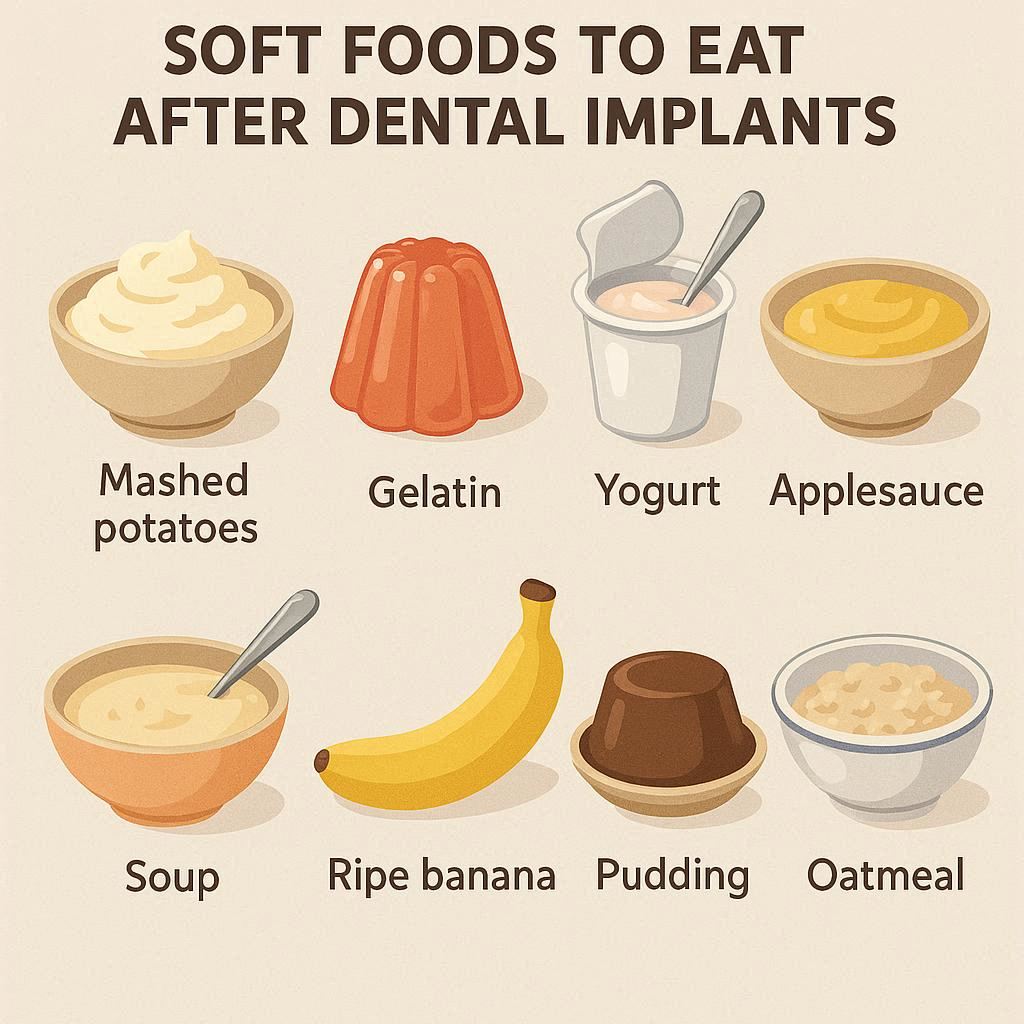
| Custard or Pudding | Calorie-dense for energy | Make homemade pudding to control sugar levels. |
Fruits (No Seeds or Skins)
Raw fruits are generally off-limits because of their fibrous skins. However, cooked or blended fruits are perfect.
- Applesauce: The gold standard of soft foods. Opt for unsweetened varieties.
- Blended Smoothies: Combine banana, mango, and a scoop of protein powder. Critical rule: Use a spoon, not a straw. Suction from a straw can pull blood clots out of the socket.
- Baked Pears: Peel the pear, core it, and bake at 350°F until soft (about 20 minutes).
- Avocado: Mash it up. It has healthy fats that reduce inflammation.
- Ripe Papaya: Naturally soft and contains enzymes that help clean the mouth.
Vegetables (Always Cooked)
Raw vegetables are your enemy right now. Carrots, celery, and salad greens require too much chewing force.
- Mashed Potatoes: A classic for a reason. Whip them with butter, cream cheese, or bone broth for extra protein.
- Butternut Squash Soup: Puree it until silky smooth. The beta-carotene helps tissue repair.
- Steamed Zucchini: It becomes so soft you can squish it with your tongue.
- Cauliflower Mash: A lower-carb alternative to potatoes. Boil cauliflower florets until fork-tender, then blend.
- Creamed Spinach: Chop cooked spinach finely and mix with heavy cream and parmesan.
Grains & Starches
Bread is tricky because it turns into a gummy paste that can stick to your sutures. Stick to these alternatives.
Warning: Avoid rice. Small grains can get lodged inside the implant site, leading to infection.
- Oatmeal: Choose “quick oats” or “steel-cut” that have been cooked for a long time. Add milk to thin it out.
- Cream of Wheat: Very smooth and easy to swallow.
- Polenta (Soft): Not the fried kind. Soft, creamy polenta is like Italian mashed corn.
- Quinoa (Well-cooked): Only if you are in Phase 3. Overcook it until the grains burst open.
- Protein Pancakes: Make a pancake, then blend it with milk to create a “porridge” texture.
Proteins & Meats
Chewing steak is impossible. But you still need protein to heal. Here is how to get your meat fix.
- Refried Beans: Black or pinto beans mashed with lard or oil. High in fiber and iron.
- Flaked Salmon: Bake salmon until it falls apart easily. Mix with mayonnaise or avocado.
- Chicken Salad (Blended): Take cooked chicken, add broth or mayo, and pulse in a food processor until it looks like tuna salad.
- Silken Tofu: Unflavored silken tofu can be added to smoothies for protein without taste.
- Pâté: Chicken liver pâté is smooth, savory, and nutrient-dense (high in iron for blood production).
Soups & Broths
Soup is your best friend, but with one restriction: No hot temperature. Heat increases blood flow, which can restart bleeding.
| Soup Type | Texture | Best Phase |
|---|---|---|
| Bone Broth | Liquid | Phase 1 |
| Tomato Soup (strained) | Smooth | Phase 1-2 |
| Cream of Mushroom (blended) | Thick liquid | Phase 2 |
| Lentil Soup (pureed) | Gritty paste | Phase 3 |
| Miso Soup | Liquid | Phase 1 |
Desserts & Treats (Yes, you can have fun)
Recovery is hard. You deserve a treat.
- Ice Cream: Cold is excellent for reducing swelling. Just avoid nuts, cookie dough, or chocolate chips.
- Gelato: Smoother and denser than ice cream.
- Popsicles: Homemade popsicles made from 100% fruit juice and water. The cold numbs pain naturally.
- Mousse: Chocolate or vanilla mousse melts in your mouth.
- Jell-O (Gelatin): Easy to swallow and provides amino acids for healing.
The “No-Go” List: Foods to Avoid at All Costs
Knowing what not to eat is just as important as knowing what to eat. Making a mistake here could cost you your implant.
1. Crunchy & Hard Foods
These physically break the implant or cut your gums.
- Examples: Chips, nuts, popcorn, hard tacos, crusty bread, raw carrots, ice cubes.
2. Sticky & Chewy Foods
These pull on the surgical site and can loosen the protective clot.
- Examples: Caramels, taffy, dried fruit (raisins), gummy vitamins, chewing gum, licorice.
3. Small & Granular Foods
These act like tiny knives that wedge into the wound.
- Examples: Popcorn kernels, rice, quinoa (if undercooked), chia seeds, strawberries (seeds), pepper, sesame seeds.
4. Spicy Foods
Capsaicin (the heat in peppers) increases inflammation and pain signals.
- Examples: Hot sauce, curry, wasabi, kimchi, salsa.
5. Alcoholic & Caffeinated Beverages
Both dehydrate you and interfere with blood clotting.
- Examples: Beer, wine, spirits, coffee, black tea, energy drinks.
A note from the dentist: Avoid using a straw for at least two weeks. The suction motion creates negative pressure in your mouth. This pressure is strong enough to pull the blood clot out of the socket, exposing the bone and nerves underneath. This condition, called dry socket, is extraordinarily painful.
A 7-Day Sample Meal Plan for Dental Implant Recovery
Here is a realistic, day-by-day guide to take the guesswork out of your meals.
Day 1 (Liquids only)
- Breakfast: Warm (not hot) bone broth + a smoothie (banana, pea protein, almond milk).
- Lunch: Chilled tomato soup + a glass of kefir.
- Dinner: Pureed butternut squash soup + melted ice cream for dessert.
- Snack: Jell-O.
Day 2 (Liquids + Purees)
- Breakfast: Thin oatmeal (blended smooth) + a spoonful of honey.
- Lunch: Cream of mushroom soup (strained).
- Dinner: Mashed potatoes mixed with pureed chicken and gravy.
- Snack: Vanilla pudding.
Day 3 (Introducing soft textures)
- Breakfast: Scrambled eggs (loose, not dry) + avocado mash.
- Lunch: Smooth refried beans with sour cream.
- Dinner: Baked salmon flakes mixed into cream cheese polenta.
- Snack: Applesauce.
Day 4 to 7 (Mashable fork foods)
- Breakfast: Greek yogurt with banana puree.
- Lunch: Flaked tuna salad (finely mashed) on soft white bread (crusts cut off).
- Dinner: Shepherd’s pie (ground meat, corn, carrot, mashed potato topping).
- Snack: Cottage cheese blended with peach nectar.
Week 2 (Soft chew)
- Breakfast: Protein pancakes soaked in syrup.
- Lunch: Macaroni and cheese (overcook the pasta slightly).
- Dinner: Shredded chicken in a creamy sauce with sweet potato mash.
- Snack: Frozen yogurt (no chunks).
How to Prepare Normal Meals to Be Implant-Safe
You do not need fancy “medical” food. You just need a blender, a strainer, and a little creativity.
The “Blender Method” for Family Meals
If your family is eating tacos, you can too. Take the taco filling (ground beef, beans, tomato sauce) and put it in a blender with a splash of beef broth. Blend until smooth. Pour it over mashed potatoes.
The “Strainer Trick” for Soups
Make a hearty vegetable soup. Then, pour it through a fine-mesh strainer. Drink the broth for flavor, and discard the solids (carrots, celery, onions). You get the nutrients and taste without the chewing.
The “Mash and Mix” Rule
Never eat a dry soft food. Dry foods stick to stitches. Always mix soft foods with a liquid sauce (gravy, butter, oil, yogurt, broth).
Nutritional Priorities for Faster Healing
You are not just eating to survive. You are eating to build bone and close tissue. Focus on these three nutrients.
1. Protein (The Builder)
Without protein, your body cannot create new tissue. Aim for 20-30 grams of protein per meal.
- Best sources: Eggs, Greek yogurt, bone broth, protein shakes (whey or plant-based).
2. Vitamin C (The Glue)
Vitamin C helps produce collagen, the protein that holds your gums together.
- Best sources: Mashed sweet potatoes, pureed bell peppers (roasted first), orange juice (without pulp).
3. Calcium & Vitamin D (The Bone)
Your jawbone is literally fusing to titanium. Give it the bricks it needs.
- Best sources: Fortified oatmeal, blended cottage cheese, almond milk smoothies.
4. Zinc (The Healer)
Zinc helps wounds close faster.
- Best sources: Pureed beef, blended pumpkin seeds (finely ground), oysters (chopped fine).
When Can You Eat Normally Again?
Let’s set realistic expectations.
- 2 weeks: You can eat soft pasta, pancakes, and tender fish.
- 4 weeks: You can eat chicken nuggets, soft breads, and steamed vegetables.
- 8 weeks: Most patients can eat steak and raw carrots, but carefully.
- 6 months (or more): After the final crown is placed, you can eat everything you used to eat. In fact, implants are stronger than natural teeth.
Realistic warning: Some people heal faster than others. Smokers, diabetics, or those with osteoporosis may need to stay on soft foods for twice as long. Always listen to your body. If it hurts, do not eat it.
Frequently Asked Questions (FAQ)
Can I eat pizza after dental implants?
No, not for the first month. The crust is too hard and chewy. Even the soft tip of a pizza slice requires tearing with your front teeth, which places stress on the implant. If you absolutely must, eat only the very center of a thin crust pizza that has gone cold (so the cheese is solid and not stringy).
Can I eat french fries?
Yes, but with modifications. Only thick-cut “steak fries” or “wedges” that are fully soft inside. Avoid crispy, crunchy fries. Dip them in ketchup or gravy to soften them further. No fast-food french fries for three weeks.
What happens if I accidentally eat something crunchy?
Do not panic. One small chip will likely not ruin your implant. Rinse your mouth gently with warm salt water (1/2 tsp salt in 1 cup water). Check the site for bleeding. If you feel a sharp pain or see bleeding, call your dentist. Do not try to pick the food out with a toothpick.
Can I drink coffee after dental implants?
You should wait 72 hours. Caffeine constricts blood vessels, which reduces blood flow to the healing site. After three days, you may have lukewarm coffee. Never hot. And obviously, no sugar cubes or hard candies in it.
How do I manage hunger while on a liquid diet?
Liquid diets fail because they are not satiating. You feel hungry because your stomach empties quickly. Fix this by adding fats. Put a tablespoon of coconut oil, peanut butter (smooth), or heavy cream into every smoothie or soup. Fat signals satiety to your brain.
Additional Resource
For a free downloadable PDF chart of “Safe vs. Unsafe Foods” that you can stick on your refrigerator, visit the American Academy of Implant Dentistry’s patient resource page:
👉 Link to resource: AAID Patient Recovery Guidelines (Note: This is a representative link. Always verify direct URLs with your provider.)
Final Checklist for the First 48 Hours
Before we wrap up, print this checklist out.
- Ice packs: 20 minutes on, 20 minutes off.
- Medication: Take painkillers before the numbness wears off.
- Elevation: Sleep with your head propped up on two pillows (reduces bleeding).
- No spitting: Let saliva dribble out. Do not spit.
- First meal: A cold smoothie or ice cream.
Conclusion
Recovering from dental implant surgery requires patience, but it does not require starvation. By focusing on nutrient-dense soft foods like scrambled eggs, blended soups, and protein smoothies, you provide your body with the exact tools it needs to fuse bone to titanium. Avoid the dangerous “no-go” foods like rice, nuts, and hot peppers for at least three weeks. Follow the three phases (liquid, mashable, gentle chew) and you will be eating steak again before you know it.
Disclaimer: This article is for informational purposes only and does not constitute medical advice. Always follow the specific post-operative instructions provided by your oral surgeon or dentist. Individual recovery times vary based on health status and the complexity of the surgery.