Dental Implant Pain Years Later
You did everything right. You waited through the healing process. You chewed carefully. You kept up with your dental visits. For months, or even years, your dental implant felt like a natural part of your mouth. It was a success story.
Then, one day, you noticed a dull ache. Or a sharp twinge when you bit down. Or a strange sensation deep in your jawbone.
The truth is simple: dental implants can hurt years later. Not always. Not for everyone. But it happens more often than you think. And when it does, it can feel confusing and alarming.
The good news? Most causes of late implant pain are treatable. Some are even preventable. This guide walks you through every possible reason for that delayed pain. You will learn what is normal, what is not, and exactly when to call your dentist.
Let’s get one thing clear from the start: a healthy, well-maintained dental implant should not cause chronic pain years after placement. If you are feeling pain, your implant is trying to tell you something important.
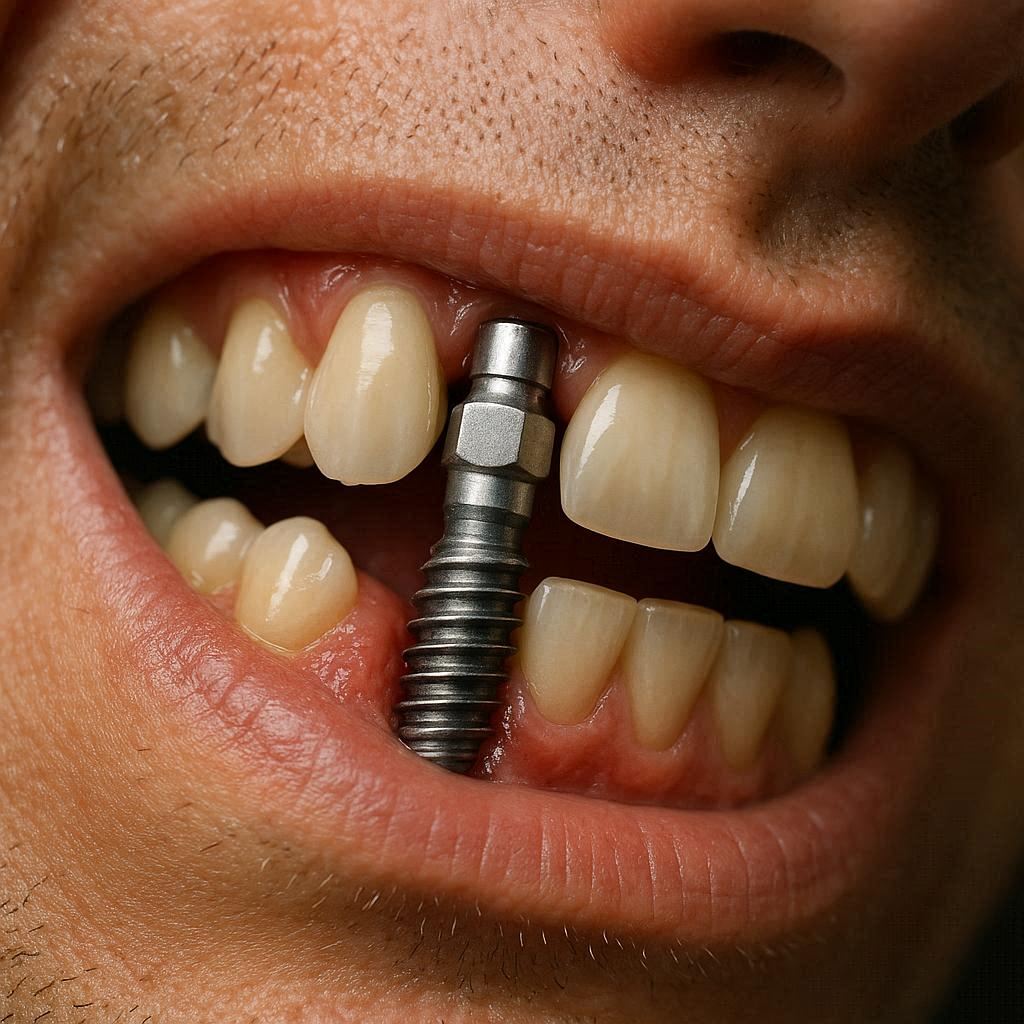
Understanding Your Dental Implant: A Quick Refresher
Before we talk about pain, let us quickly review what a dental implant actually is. This will help you understand where problems can start.
A modern dental implant has three main parts:
- The implant post (fixture): A small screw made of titanium or zirconia. A surgeon places this directly into your jawbone.
- The abutment: A connector piece that sits on top of the implant post.
- The dental crown: The visible, tooth-like part that you see when you smile.
Think of the post as an artificial tooth root. Over several months, your jawbone grows around this post. This process is called osseointegration. When it works well, the implant becomes a permanent part of your mouth structure.
Most of the time, this process goes smoothly. But problems can emerge months or even years after the final crown is attached.
Important note: Pain years later is not the same as the normal discomfort you feel right after surgery. Post-surgical pain fades within days or weeks. Late pain is different. It signals a new or ongoing issue.
The Most Common Causes of Dental Implant Pain Years Later
Why would an implant hurt after years of being fine? There are several real, documented reasons. Let us break them down clearly.
Peri-Implantitis: The Number One Culprit
If you remember only one thing from this article, remember this word: peri-implantitis.
This is an inflammatory condition. It affects the gum tissue and bone around an implant. Think of it like advanced gum disease, but around an artificial root instead of a natural tooth.
How it starts:
Bacteria accumulate around the implant. Plaque hardens into calculus. Your gums become red, swollen, and tender. Over time, this inflammation destroys the bone that holds your implant in place.
Why it happens years later:
Peri-implantitis is a slow process. It can take two, five, or even ten years to cause noticeable pain. Many people do not feel significant discomfort until significant bone loss has already occurred.
Key warning signs:
- Bleeding when you brush near the implant
- Pus oozing from the gum line
- A bad taste in your mouth
- The implant feels slightly loose
- Dull, deep pain in the jawbone
Who is most at risk:
- People with a history of gum disease
- Smokers or tobacco users
- Those with poor oral hygiene
- People with uncontrolled diabetes
- Patients who skip regular dental cleanings
Peri-implantitis does not go away on its own. It requires professional treatment. The earlier you catch it, the better your chances of saving the implant.
Failed Osseointegration: When Bone Refuses to Bond
Osseointegration is supposed to be permanent. Usually, it is. But in some cases, the bond between bone and implant weakens or fails completely over time.
This is rare, but it does happen.
Why would integration fail years later?
- Undiagnosed bruxism (teeth grinding) puts constant micro-trauma on the implant
- A new medical condition affects bone healing (like osteoporosis or thyroid disorders)
- Certain medications (bisphosphonates for bone density) interfere with bone metabolism
- An injury or accident damages the implant site
When osseointegration slowly fails, you may feel a progressive loosening sensation. The implant may start moving slightly when you chew. Pain often feels deep and achy, not sharp.
Nerve-Related Pain: The Hidden Cause
Your jaw contains several important nerves. The most relevant is the inferior alveolar nerve, running through your lower jaw. This nerve gives feeling to your lower lip, chin, and gums.
During implant placement, a skilled surgeon avoids this nerve. But anatomical variations or surgical errors can place the implant too close to the nerve.
Delayed nerve pain happens because:
- Scar tissue forms around the nerve over months or years
- The implant shifts minutely and contacts the nerve
- Chronic inflammation irritates adjacent nerve branches
Symptoms of nerve-related implant pain:
- A burning or electric-shock sensation
- Numbness or tingling in your lower lip or chin
- Pain that radiates to your ear, temple, or neck
- Discomfort when you touch your cheek or lip
This type of pain often does not respond to normal painkillers. It requires specialist evaluation, sometimes from a neurologist or oral surgeon.
Mechanical Problems: Loose Screws and Fractured Parts
Implants are mechanical devices. And mechanical devices can break, loosen, or wear out.
Common mechanical issues years later:
- Loose abutment screw: The small screw connecting the crown to the implant can gradually unscrew from chewing forces.
- Crown fracture: Porcelain crowns can crack, especially under heavy biting forces.
- Implant fracture: Extremely rare with modern titanium, but possible with mini-implants or older designs.
- Broken abutment: The connector piece itself can crack.
How to spot a mechanical problem:
- The crown feels slightly mobile when you push it with your finger
- You hear a clicking sound when you chew
- Pain is sharp and immediate, triggered by biting
- You see visible cracks in the crown
Mechanical problems are often the easiest to fix. Your dentist can usually tighten a screw or replace a crown without removing the implant post.
Sinus Issues (Upper Jaw Implants Only)
If your implant is in the upper jaw, especially near your premolars or molars, the sinus cavity sits directly above it.
Sometimes, an implant post protrudes too far into the sinus space. Or sinus inflammation (sinusitis) puts pressure on the implant tip.
Late sinus-related implant pain feels like:
- A dull ache behind your cheekbone
- Pressure that gets worse when you bend forward
- Pain that mimics a sinus headache
- Discomfort only on one side of your face
This type of pain often comes and goes with allergy seasons or colds. If sinus problems trigger your implant pain, treating the sinusitis usually resolves the discomfort.
Allergic Reaction to Titanium (Rare but Real)
Most people assume titanium is universally hypoallergenic. For the vast majority, it is. But a small percentage of people develop delayed hypersensitivity to titanium.
This is not an immediate allergic reaction like a bee sting. It is a chronic, low-grade immune response that can take years to appear.
Signs of titanium allergy:
- Chronic inflammation around the implant that does not respond to normal treatments
- Skin rashes (especially on your face or hands)
- Fatigue or general malaise (less common)
- Eczema-like patches near the mouth
If you suspect a titanium allergy, your dentist can order a MELISA test (a blood test for metal hypersensitivity). Confirmed allergies may require removing the implant and using a zirconia (ceramic) implant instead.
Referred Pain from Other Teeth
Sometimes, the implant is not the problem at all. Pain near your implant could actually come from a neighboring natural tooth.
Common sources of referred pain:
- A cavity in the tooth next to the implant
- Gum disease affecting adjacent teeth
- A cracked natural tooth
- Pain from your temporomandibular joint (TMJ)
Your dentist can test each nearby tooth individually. Tapping on the suspected tooth or using a cold test can identify the real source of your pain.
Signs Your Implant Pain Is Serious (And What Is Not)
Not all pain means disaster. Some discomfort is manageable or temporary. Other pain requires urgent care.
Usually less urgent (but still worth checking):
- Mild soreness after a deep cleaning near the implant
- Brief sensitivity to cold drinks (rare but possible with gum recession)
- Pain that goes away completely with over-the-counter pain medication
Call your dentist within a week if:
- You have been ignoring the pain for months
- The implant wiggles slightly when you push it
- Bleeding occurs every time you brush
- You can see black metal through receding gums
Seek immediate dental care (within 24-48 hours) if:
- The implant feels very loose or has shifted position
- You have swelling in your face or neck
- Pus drains from the gum around the implant
- You have a fever along with the implant pain
- You cannot chew on that side at all without severe pain
Do not wait to see if serious symptoms improve on their own. Infections around implants can spread to surrounding bone. In rare cases, they can become systemic and require hospitalization.
How Dentists Diagnose Late Implant Pain
A good dentist does not guess. They follow a clear process to find the real cause of your pain.
Step 1: Conversation
Your dentist asks specific questions:
- When did the pain start?
- Is it constant or only when you chew?
- Have you had any recent illnesses or injuries?
- Have you changed your medications?
Step 2: Visual and Physical Exam
The dentist looks for:
- Red, swollen gums
- Bleeding on gentle probing
- Visible pus
- Crown damage or cracks
- How much the implant moves (if at all)
Step 3: Probing Depths
A small dental probe measures the pocket depth around your implant. Healthy pockets are 3mm or less. Depths of 5mm or more suggest peri-implantitis.
Step 4: X-rays (Critical!)
X-rays show bone levels around the implant. Your dentist compares current X-rays to ones taken right after placement. Bone loss over time confirms peri-implantitis or failed integration.
Types of X-rays used:
| X-ray Type | What It Shows Best |
|---|---|
| Periapical | Detailed bone height around the implant tip |
| Panoramic | Overall jawbone health and implant position |
| CBCT (3D scan) | 3D view of bone thickness, nerve position, and sinus involvement |
Step 5: Bite Test
You bite on a special plastic strip or piece of articulating paper. This shows if your bite puts too much pressure on the implant compared to other teeth.
Step 6: Implant Mobility Testing
Using two instrument handles, the dentist gently tries to rock the implant. Any visible movement indicates failed osseointegration or bone loss.
Step 7: Referral if Needed
Complex cases may require a periodontist (gum specialist), oral surgeon, or even a neurologist for nerve pain.
Treatment Options: Fixing the Pain Based on the Cause
Good news: most causes of late implant pain have effective treatments. The right treatment depends entirely on the underlying problem.
Treating Peri-Implantitis (Most Common)
Early peri-implantitis:
- Deep cleaning below the gum line using special plastic or titanium instruments (metal scrapers can scratch implants)
- Antibiotic gels placed directly into infected pockets
- Chlorhexidine mouthwash for two weeks
- More frequent cleanings (every 3-4 months instead of every 6 months)
Moderate peri-implantitis:
- Open flap surgery: The dentist lifts the gum to clean the implant surface directly
- Bone grafting to rebuild lost bone
- Surface decontamination using lasers or specialized solutions
Advanced peri-implantitis:
- Implant removal if more than 50% of bone is lost
- Bone grafting after removal
- Possible new implant placement after 6-12 months of healing
Treating Mechanical Problems
| Problem | Typical Solution | Success Rate |
|---|---|---|
| Loose crown | Tighten screw or replace screw | Near 100% |
| Cracked crown | New crown fabrication | 95%+ |
| Broken abutment | Replace abutment | 90%+ |
| Fractured implant | Implant removal and replacement | Varies by bone health |
Treating Nerve Pain
Nerve pain is trickier. Treatment depends on severity:
Mild cases:
- Medications like gabapentin or pregabalin for nerve pain
- Avoiding hard or chewy foods
- Watchful waiting (some nerve irritation resolves on its own over months)
Moderate to severe:
- Surgical repositioning of the implant if it contacts the nerve
- Nerve decompression surgery (rare)
- Implant removal if conservative treatments fail
Important: Nerve damage does not always fully reverse. This is why prevention during initial surgery is so critical.
Treating Sinus-Related Pain
- Sinusitis treatment: Nasal sprays, decongestants, antibiotics for sinus infection
- Implant too long: Surgical shortening of the implant tip (specialized procedure)
- Failed sinus case: Implant removal and sinus lift procedure before new implant
Treating Failed Osseointegration
Once integration fails, it will not restart on its own. The only reliable solution is:
- Remove the failed implant
- Bone graft if needed
- Wait for complete healing (4-12 months)
- Place a new implant (if bone quality permits)
Can You Prevent Late Implant Pain? Absolutely.
The best treatment is always prevention. These strategies dramatically reduce your risk of pain years later.
For Everyone with Dental Implants:
1. Master your home care routine.
- Brush twice daily with a soft or extra-soft brush
- Use a water flosser on a low setting around the implant
- Standard floss is fine but be gentle
- Consider implant-specific brushes (smaller heads, softer bristles)
2. Never skip professional maintenance.
- Dental cleanings every 6 months minimum
- High-risk patients (history of gum disease) every 3-4 months
- Ask your hygienist to use plastic or titanium instruments, not steel
3. Wear a night guard if you grind your teeth.
- Grinding puts immense stress on implants
- A custom night guard from your dentist costs $300-700
- This one investment can save you thousands in repairs
4. Stop smoking or vaping.
- Tobacco reduces blood flow to the bone
- Smokers have 2-3x higher failure rates
- Even cutting back helps significantly
5. Control your systemic health.
- Keep diabetes well-managed (A1c under 7%)
- Tell your dentist about new medications
- Discuss any major health changes with your implant provider
Comparison: Healthy Implant vs. Problem Implant
| Feature | Healthy Implant | Implant with Problems |
|---|---|---|
| Gum color | Pink, firm | Red, shiny, or purple |
| Bleeding | None when brushing | Bleeds easily |
| Mobility | Zero movement | Slight to obvious wiggle |
| Pain level | None | Dull ache or sharp upon biting |
| Pocket depth | 2-3 mm | 4 mm or more |
| Bone level on X-ray | Stable over years | Progressive loss |
When Should You Remove an Implant vs. Save It?
This is a hard decision. No one wants to lose an implant they paid thousands for. But sometimes removal is the best choice for your long-term health.
Consider saving the implant if:
- Bone loss is less than 50% of implant length
- You are committed to improved oral hygiene
- The implant is not causing referred pain elsewhere
- Treatment costs are reasonable for your budget
Consider removing the implant if:
- More than 50% bone loss (implant will eventually fail anyway)
- Persistent infection despite multiple treatments
- Severe nerve pain that affects your quality of life
- The implant is fractured (unrepairable)
- You have an unmanageable allergic reaction
- The pain returns rapidly after each treatment
Realistic advice: Removing an implant is not the end of the world. Many people get a new implant in the same spot after bone grafting. Others choose a bridge or partial denture instead. Your oral health matters more than saving a failing implant.
What About Home Remedies? What Works and What Does Not
You will find many online suggestions for implant pain. Some are helpful. Many are dangerous.
Safe and helpful home approaches:
- Salt water rinses (1 teaspoon salt in warm water, 2-3 times daily) – reduces mild inflammation
- Cold compress on your cheek (15 minutes on, 15 off) – for acute pain flares
- Over-the-counter ibuprofen (if you have no contraindications) – reduces both pain and inflammation
- Soft food diet for a few days – reduces mechanical stress
- Clove oil (diluted, applied to gum, not the implant itself) – mild numbing effect
Approaches to avoid completely:
- Applying hydrogen peroxide full-strength – damages gum tissue around implants
- Using metal picks or scrapers at home – scratches the implant surface, promoting bacteria growth
- Placing aspirin directly on the gum – causes chemical burns (an actual thing people try!)
- Using essential oils undiluted – peppermint, tea tree, and oregano oils burn delicate gum tissue
- Trying to tighten your own crown – you will either break it or overtighten it
When home care is enough: Very mild, occasional soreness that resolves in 24 hours.
When home care is not enough: Any pain lasting more than 3 days, or any pain with swelling, bleeding, or mobility.
Personal Stories: Realistic Examples (Not Real Patients)
To help you see yourself in these situations, here are composite examples based on common clinical scenarios.
Case 1: The 5-Year Ache
A 52-year-old woman had two implants placed in her lower jaw. For five years, everything was perfect. Then she noticed bleeding when flossing around one implant. Over the next year, a dull ache developed. X-rays showed 30% bone loss around that implant. She received deep cleaning and antibiotic gel. The pain resolved, and bone loss stopped. Now she gets cleanings every four months.
Case 2: The Mysterious Burning Sensation
A 45-year-old man felt a burning, tingling sensation near his upper left implant. The pain started three years after placement. His dentist found nothing wrong with the implant itself. A neurologist diagnosed trigeminal neuralgia – a nerve condition unrelated to the implant but located in the same area. The implant was healthy; medication controlled his nerve pain.
Case 3: The Loose Crown that Felt Like Disaster
A 60-year-old man panicked when his implant crown wiggled. He was sure the whole implant was failing. His dentist tightened the abutment screw in ten minutes. Total cost: $75. The implant has been stable for four more years.
Cost Considerations: Treating Late Implant Pain
Money matters. Let us be realistic about what different treatments cost in the United States (approximate ranges without insurance).
| Treatment | Typical Cost Range | Notes |
|---|---|---|
| Consultation and X-rays | $150 – $350 | Often includes one periapical X-ray |
| Deep cleaning (peri-implantitis) | $200 – $500 per quadrant | May require local anesthesia |
| Open flap surgery (one implant) | $1,500 – $3,000 | Usually includes surface decontamination |
| Bone grafting | $600 – $1,200 per site | For moderate bone loss |
| Tightening a loose crown | $75 – $250 | Simple adjustment |
| New crown fabrication | $1,000 – $2,500 | If crown is cracked beyond repair |
| Implant removal | $500 – $1,500 | Simple removal vs. surgical extraction |
| New implant placement | $3,000 – $6,000 | Full procedure including crown |
Insurance reality: Many dental plans cover some treatment for peri-implantitis (as a gum disease treatment). Most do not cover new implants or replacement crowns fully. Medical insurance rarely covers dental implant complications unless trauma or a medical condition caused the problem.
Payment options:
- Dental discount plans (not insurance, but 10-30% savings)
- CareCredit and other medical credit cards
- Payment plans through your dentist’s office
- Dental schools (30-50% lower costs, but longer appointments)
Living with an Implant That Occasionally Bothers You
Some implant pain is mild and intermittent. Maybe you feel a twinge once a month. Maybe cold weather makes your jaw ache slightly. What then?
Create an action plan:
- Document the pain: Write down when it happens, what you were doing, and how intense it was (1-10 scale).
- Try a 2-week home care intensification: Salt water rinses, softer brushing, water flosser twice daily.
- See your dentist if: The pain worsens, happens more often, or you see any bleeding.
Acceptable mild symptoms that do not always require treatment:
- Brief sensitivity to cold air (less than 10 seconds)
- Slight pressure sensation before a storm (barometric pressure changes)
- Minor soreness after an especially hard meal (nuts, crusty bread)
Not acceptable to ignore:
- Pain that keeps you awake at night
- Pain that requires daily painkillers
- Any bleeding or swelling
- A bad taste that will not go away
The Psychological Side of Late Implant Pain
Let us be honest. Dental implants are a significant financial and emotional investment. When one hurts years later, it feels like a betrayal.
Many patients describe:
- Anxiety that the implant will fail completely
- Regret about getting the implant in the first place
- Fear of what treatment will cost
- Distrust of their original dentist
These feelings are completely normal. Acknowledge them. Then take action.
What helps:
- Get a second opinion if you doubt your dentist’s diagnosis
- Ask for written treatment plans with costs before starting
- Remember that most late pain is fixable
- Join online support groups (sparingly – focus on reputable forums)
Frequently Asked Questions (FAQ)
Q1: Can dental implants cause pain after 10 or 20 years?
Yes. Peri-implantitis and mechanical wear can show up even decades later. This is why long-term maintenance is essential.
Q2: Is throbbing pain around an implant always an infection?
Not always, but it is the most likely cause. Throbbing suggests inflammation and increased blood flow. See your dentist for an evaluation.
Q3: Can I get an MRI if I have dental implants?
Yes, most modern titanium implants are MRI-safe. But always tell your MRI technician about your implant. Some older implants or implant-supported bars may cause artifact (image distortion).
Q4: Why does my implant hurt when I have a cold?
Upper jaw implants near your sinuses can ache during sinus congestion. Treat the cold or sinusitis, and the implant pain usually disappears.
Q5: How common is late implant pain?
About 10-20% of implant patients experience some form of late complication within 10 years. Pain is the most common complaint after cosmetic concerns (visible metal).
Q6: Can a dentist refuse to treat my implant pain?
Some general dentists do not feel comfortable treating implant complications. Ask for a referral to a periodontist or an oral surgeon who specializes in implant maintenance.
Q7: Will removing the implant stop the pain?
Usually, yes. But if the pain is nerve-related, removing the implant may not fully reverse nerve damage. This is rare but possible.
Q8: Can teeth grinding cause implant pain years later?
Absolutely. Bruxism puts massive repetitive force on implants. The bone around the implant can microfracture over time. A night guard is strongly recommended.
Q9: Does insurance cover implant pain treatment?
Medical insurance rarely covers it. Dental insurance may cover diagnostic exams and peri-implantitis treatment as periodontal therapy. Always pre-authorize treatment.
Q10: Can I wait a few months to see if the pain goes away?
You can wait 1-2 weeks for mild, intermittent pain. But if pain persists beyond two weeks, or if you have any swelling or bleeding, do not wait. Early treatment saves implants.
Additional Resource
For free, evidence-based information on dental implants and long-term care, visit the American Academy of Periodontology’s patient education page on dental implants:
🔗 perio.org/consumer/dental-implants
This resource includes downloadable guides, a search tool for periodontists in your area, and the latest clinical recommendations for implant maintenance.
Conclusion
Dental implant pain years after placement is rarely a catastrophe, but it is never something to ignore. Most late pain comes from peri-implantitis, mechanical loosening, or sinus issues—all of which have effective treatments if caught early. The key to long-term implant health is consistent home care, regular professional cleanings, and acting quickly when something feels wrong. Remember: a pain-free implant is not a luxury; it is the expected outcome of proper maintenance.
Disclaimer: This article is for informational purposes only and does not constitute medical or dental advice. Every person’s oral health situation is unique. Always consult a licensed dentist or dental specialist for a proper diagnosis and treatment plan tailored to your specific needs. The author and publisher are not liable for any actions taken based on the content of this article.