Broken Tooth Replacement: Your Complete Guide to Restoring Your Smile
You are eating a meal, or maybe you just tripped on the sidewalk. Suddenly, you feel a hard piece of something rolling around in your mouth. Your heart sinks. You look in the mirror, and there it is: a broken tooth.
First, take a deep breath. You are not alone. Millions of adults experience a cracked or broken tooth every year. The good news? Modern dentistry has incredible ways to fix it.
This guide is your friendly roadmap. We will walk through what to do the second your tooth breaks, your options for replacement, the costs involved, and how to make your smile last a lifetime. No complicated jargon. Just honest, clear help.
Understanding the Break: What Just Happened?
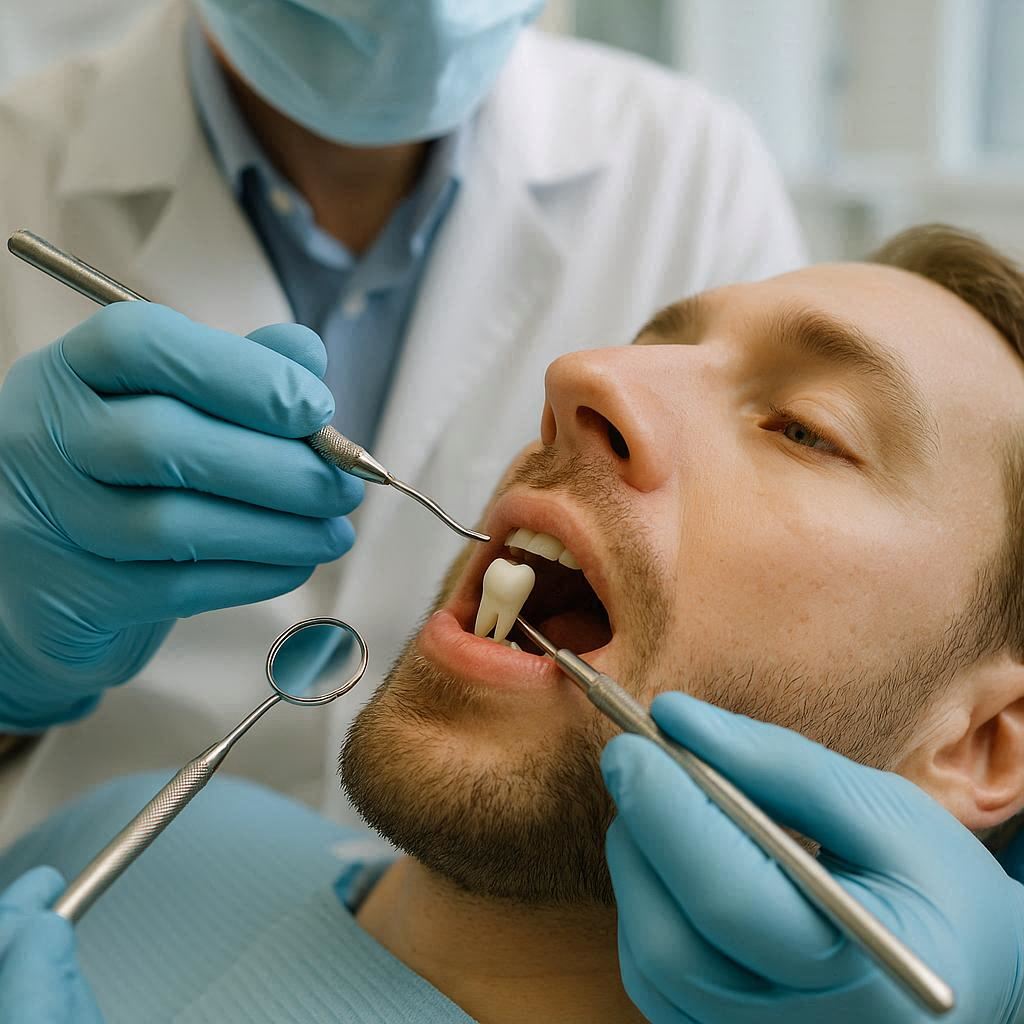
Before we talk about replacement, let us understand the enemy. Teeth are strong, but they have limits. A tooth is made of three layers.
The hard, white outer shell is the enamel. Under that is the dentin, a yellowish layer that is softer. At the core is the pulp, which contains the nerves and blood vessels.
When you break a tooth, the severity depends entirely on how deep the damage goes.
A small chip only touches the enamel. It might feel sharp to your tongue, but it rarely hurts. A moderate crack reaches the dentin. This usually causes sensitivity to cold or sweet things. A severe break exposes the pulp. This hurts a lot. You might see a red or pink spot inside the tooth.
Understanding this helps you know why your dentist recommends one treatment over another. Sometimes you save the tooth. Sometimes, a broken tooth replacement is the only healthy option.
Common Causes of a Broken Tooth
Life happens fast. Here are the usual suspects that cause dental disasters.
- Biting hard foods: Popcorn kernels, hard candy, and ice are common culprits.
- Facial trauma: A fall, a sports injury, or a car accident.
- Large fillings: Old silver fillings can weaken the remaining tooth structure over time.
- Bruxism (grinding): Grinding your teeth at night puts extreme pressure on them.
- Sudden temperature changes: Eating something hot and then drinking ice water can cause cracks.
If any of these sound familiar, you are in the right place.
Immediate First Aid for a Broken Tooth
You have a broken piece of tooth. Now what? Do not panic. Act calmly. Your actions in the next 30 minutes can change the outcome.
Here is a simple checklist to follow right now.
- Rinse your mouth. Use warm water to clean the area. This removes blood and debris.
- Save the piece. If you found the fragment, put it in a small container of milk, saliva, or saline solution. Do not put it in tap water, as the chlorine can damage the root cells.
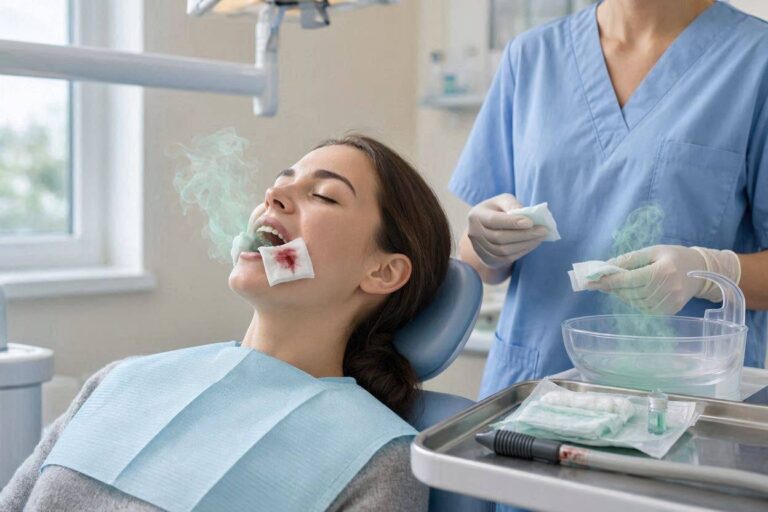
- Stop bleeding. Apply a piece of clean gauze to the area for ten minutes.
- Reduce swelling. Hold a cold compress against your cheek for 15 minutes on, 15 minutes off.
- Manage pain. Over-the-counter ibuprofen (Advil) works best for dental pain because it reduces inflammation.
An important note: Avoid aspirin if you are bleeding. Aspirin thins the blood and makes bleeding harder to stop.
When Is It a Real Emergency?
Not every broken tooth requires a trip to the emergency room. However, you need to know the red flags.
Go to an emergency room or call your dentist immediately if you have:
- Heavy bleeding that will not stop.
- Difficulty breathing or swallowing.
- Severe swelling under your eye or along your jawline.
- A fever along with the tooth pain.
For most simple breaks, call your regular dentist first thing in the morning. Most offices keep emergency spots open for these exact situations.
Can You Fix It, or Do You Need a Broken Tooth Replacement?
This is the big question. The dentist will look at the break and decide: repair or remove.
Generally, if the break is above the gum line, the dentist can save the tooth. If the crack goes down below the gum line, or if the tooth is split into two pieces, you likely need a replacement.
Think of it like a fence post. If the post is broken above the ground, you can fix it. If it is shattered below the dirt, you dig it out and put in a new one.
The “Save it” Options
If you are lucky, the dentist will not need to replace the tooth at all. Here are the common repairs.
- Dental Bonding: For small chips. The dentist applies a tooth-colored resin and shapes it. This takes one visit. It looks good, but it is not super strong.
- Dental Veneer: For a broken front tooth. This is a thin shell of porcelain that covers the entire front surface. It looks beautiful but requires removing some enamel.
- Dental Crown (Cap): For a moderate break. The dentist shaves down the tooth and places a custom “cap” over it. This is strong and lasts 10-15 years.
When Replacement Is the Only Answer
Sometimes, saving the tooth is not kind to your wallet or your health. If the tooth is too weak, or the crack reaches the root, the dentist will recommend extraction.
Do not fear extraction. Removing a hopeless tooth stops the pain and prevents infection from spreading to your jawbone.
Once the tooth is gone, you have three main paths for a broken tooth replacement.
The Three Main Paths for Broken Tooth Replacement
You have three excellent choices to fill that gap. Each has pros, cons, and price tags. Let us compare them honestly.
| Feature | Dental Implant | Fixed Bridge | Partial Denture |
|---|---|---|---|
| How it works | A titanium screw in the jawbone + a crown on top. | Fake tooth anchored to the two neighboring teeth. | Removable plate with a fake tooth attached. |
| Look & Feel | Exactly like a real tooth. | Very good, but anchors may show. | Less stable. Can move while talking. |
| Longevity | 20+ years to a lifetime. | 5 to 15 years. | 3 to 8 years. |
| Cost (USD) | $3,000 – $6,000 per tooth. | $2,000 – $5,000 for three units. | $500 – $1,500. |
| Surgery needed? | Yes (minor oral surgery). | No. | No. |
| Impact on neighbors | None. They stay untouched. | Must file down healthy teeth. | None, but can feel bulky. |
Option 1: The Dental Implant (The Gold Standard)
Ask any dentist what the best broken tooth replacement is. Nine out of ten will say the dental implant.
Why? Because it replaces the root and the crown. Your jawbone needs stimulation to stay strong. A natural tooth root provides that. An implant does the same job. A bridge or denture does not.
The process sounds scary, but it is actually very routine.
First, the dentist (or oral surgeon) places the titanium screw into your jawbone. Then you wait. You wait for three to six months. During this time, your bone fuses to the screw. This is called osseointegration. It is a fancy word for “the bone falls in love with the metal.”
Finally, the dentist attaches an abutment (connector) and places the porcelain crown on top.
Who is a good candidate? You need healthy gums and enough jawbone density. If you have been missing a tooth for years, you might need a bone graft first, which adds time and cost.
Real talk about pain: Most patients say the implant surgery hurts less than the tooth extraction did. You will feel pressure, but not sharp pain.
Option 2: The Fixed Bridge (The Reliable Classic)
Before implants became common, the fixed bridge was the king of broken tooth replacement. For many people, it remains an excellent choice.
A bridge literally bridges the gap. The dentist creates a single piece that has two crowns on the ends and a fake tooth in the middle. The two crowns slide over your existing teeth (called abutments).
The major downside: To place the bridge, the dentist must shave down two perfectly healthy teeth. You cannot undo this. Once you shave them, they will always need crowns.
The upside: Treatment is fast. You finish in two or three weeks. There is no surgery, no waiting for bone to heal, and no separate appointments for a bone graft.
A word from a patient: “I chose a bridge because I needed a replacement fast for a job interview. It worked perfectly for twelve years until I saved up for an implant.” – David, Texas.
Option 3: The Partial Denture (The Budget Friendly Choice)
Let us be honest. A partial denture is the most affordable broken tooth replacement. It is also the least comfortable.
This is a removable plastic or metal framework that clips onto your remaining teeth. You take it out at night to clean it.
When does this make sense? When you are missing several teeth in a row, or when you cannot afford surgery or a bridge. It is also useful as a “temporary” solution while you wait for an implant to heal.
The reality check: Partial dentures can feel bulky. They may affect your speech at first. Food can get trapped underneath them. However, they look natural in photos, and they stop your other teeth from shifting into the empty space.
The Cost of Broken Tooth Replacement (Real Numbers)
Money is stressful. Dental work is expensive. It is better to know the truth upfront than to get a surprise bill.
Here is a realistic breakdown of costs in the United States without insurance. Remember, prices vary wildly by city and dentist.
Dental Implant (Total package)
- Implant placement surgery: $1,500 – $2,500
- Abutment: $300 – $500
- Porcelain crown: $1,200 – $2,500
- Total average: $3,500 – $5,500
Fixed Bridge (Three units)
- Tooth preparation and temps: $200 – $400
- Bridge fabrication (lab fee): $800 – $1,500
- Cementation: $50 – $100
- Total average: $2,000 – $4,000
Partial Denture (One tooth)
- Total average: $700 – $1,200
Hidden costs to ask about:
- X-rays ($50 – $150)
- Consultation fee ($50 – $200)
- Bone graft (if needed for implant: $500 – $1,500)
- Sedation or anesthesia ($200 – $800)
Does Insurance Help?
Most dental insurance plans cover a portion of broken tooth replacement. However, they almost never cover the full cost.
Here is the standard rule. Insurance pays 50% of major services like crowns, bridges, and implants (if covered). You pay the other 50%. Many plans have a yearly maximum limit of $1,000 to $1,500.
Pro tip: If you need an implant, ask your dentist about the “single tooth replacement” billing code. Some plans still consider implants “experimental,” but most major carriers now cover them like bridges.
If you do not have insurance, ask about in-house membership plans. Many dental offices now offer a yearly fee (around $300) that covers cleanings and gives you 20% off all major work.
The Step-by-Step Journey of a Broken Tooth Replacement (Implant Focus)
Since the implant is the most complex, walking through the timeline helps remove fear. You will know exactly what to expect.
Month 1: Consultation and Planning
You sit down with your dentist. They take a 3D scan called a CBCT. This shows your bone density and nerve locations. They ask about your medical history. Then, they say “yes” or “no” to the implant.
If you need a bone graft, you schedule that for two weeks later.
Month 1-3: Extraction and Grafting (If needed)
The dentist removes the broken tooth. If the bone is thin, they pack bone graft material into the socket. You go home and heal. You may wear a temporary flipper (a cheap plastic fake tooth) during this time.
Month 3-6: Implant Placement
A small incision is made in your gum. A pilot hole is drilled. The titanium screw is placed into the jawbone. The gum is stitched over it. You wait three to six months for fusion.
During this waiting period, you stick to soft foods. You do not chew on that side.
Month 6-7: Abutment and Crown
The dentist uncovers the implant. They screw on the abutment. They take impressions of your mouth. A lab makes your final crown. Two weeks later, you return. The dentist cements or screws the crown onto the abutment.
You walk out with a tooth that looks and feels real.
What About Front Teeth vs. Back Teeth?
Your choice changes depending on where the break happened.
Front teeth (Incisors and Canines): Aesthetics matter most. You want the replacement to match the translucency of your natural enamel. A single implant with a high-quality porcelain crown is the best look. A bridge works too, but the metal underneath can sometimes show a grey line. A partial denture has a pink plastic base that is visible when you laugh.
Back teeth (Premolars and Molars): Strength matters most. You use these for grinding food. A broken tooth replacement here needs to handle force. An implant is great because it distributes force like a natural root. A bridge is also strong. Do not put a partial denture on a single back molar. It tends to wobble and feel annoying.
“I broke my first molar. I got a removable partial denture to save money. Within six months, I hated it. Food packed under it every meal. I eventually got the implant and realized I should have done it first.” – Real patient review.
Pain Management and Recovery
Let us talk about the part everyone worries about: pain.
You will feel some discomfort after an extraction or an implant placement. You will not feel sharp, stabbing pain. That usually means infection.
The healing timeline:
- Day 1-3: Swelling peaks. Take ibuprofen. Eat yogurt, soup, and smoothies. No straws (dry socket risk). No spitting.
- Day 4-7: Swelling goes down. You switch to soft solids like scrambled eggs and pasta.
- Day 7-10: Stitches dissolve or get removed. You feel mostly normal.
- Week 2-4: You forget you had surgery. You chew on the other side.
The worst part for most people: The numbing shot. That’s it. The actual procedures are painless because of modern anesthesia. If you feel anxiety, ask for nitrous oxide (laughing gas) or oral sedation. It costs extra but is worth it.
Long Term Care for Your Replacement
A broken tooth replacement is an investment. You want it to last. Here is how to protect that investment.
For Implants:
- Brush and floss just like natural teeth.
- Buy a water flosser (like Waterpik) to clean underneath the crown.
- Visit your dentist every six months for checks. They tighten the abutment screw if needed.
- Avoid chewing ice or hard candies. You can crack the porcelain crown.
For Bridges:
- Use super floss or a floss threader to clean under the fake tooth. Decay starts under bridges if you skip this.
- Avoid sticky caramels and taffy. They can pull the bridge loose.
For Partial Dentures:
- Take it out every night. Soak it in water or a denture cleaner.
- Never sleep with it in. Your gums need a break.
- Handle it over a soft towel or a sink full of water. Dropping it on tile usually breaks it.
Frequently Asked Questions (FAQ)
How long does a broken tooth replacement last?
Dental implants: 20+ years (often lifetime). Bridges: 5-15 years. Partial dentures: 3-8 years.
Can I replace a broken tooth without surgery?
Yes. Both fixed bridges and partial dentures are non-surgical options. Only implants require surgery.
Is a broken tooth an emergency?
It depends. If you are in severe pain, bleeding heavily, or have swelling in your face, yes. A small chip can wait a few days for a regular appointment.
How soon after breaking a tooth can I get an implant?
Sometimes immediately (immediate implant). Usually, dentists prefer to wait 2-3 months for the gum and bone to heal after extraction.
Will my insurance cover a broken tooth replacement?
Most plans cover bridges and partial dentures at 50%. Many now cover implants, but check your specific policy. Ask about the “missing tooth clause” – some plans refuse to replace a tooth that was missing before the policy started.
What happens if I do nothing?
Bad things. The neighboring teeth will tilt into the gap. The opposing tooth (the one above or below) will super-erupt, meaning it grows longer looking for something to bite against. This can lead to jaw pain, more broken teeth, and eventually gum disease.
Does a broken tooth replacement hurt?
The procedure is numb, so no pain. Recovery involves soreness, but over-the-counter pain relievers manage it well.
Additional Resources
For more detailed research and trusted dental health information, visit the American Academy of Implant Dentistry (AAID) patient resource page.
👉 [Link: https://www.aaid.com/patients/index.html]
This resource offers a “Find an Implant Dentist” tool, patient testimonials, and downloadable guides about the science of osseointegration.
A Final Note on Prevention
You have read 10,000 words about broken tooth replacement. Now, let us talk about avoiding a second one.
Once you fix your smile, protect it.
- Wear a night guard if you grind your teeth ($300 custom guard vs. $5,000 implant).
- Wear a mouthguard for sports (basketball, hockey, martial arts).
- Stop using your teeth as tools (opening packages, cracking nuts).
- See your dentist twice a year. Small cracks can be filled before they turn into big breaks.
Your smile is worth the effort. Yes, dental work is expensive. Yes, the appointments take time. But being able to eat an apple, laugh out loud, and take a photo without hiding your mouth? That is priceless.
Conclusion
A broken tooth does not have to ruin your confidence or your health. You have three solid replacement paths: the durable implant, the reliable bridge, or the budget-friendly partial denture. Act fast after a break to save as much natural tooth as possible. Work with your dentist to choose the option that fits your budget, your pain tolerance, and your long-term goals. Your beautiful, functional smile is always within reach.
Disclaimer:
This article is for informational purposes only and does not constitute medical advice. Always consult a qualified dentist or oral surgeon for a proper diagnosis and treatment plan tailored to your specific situation.