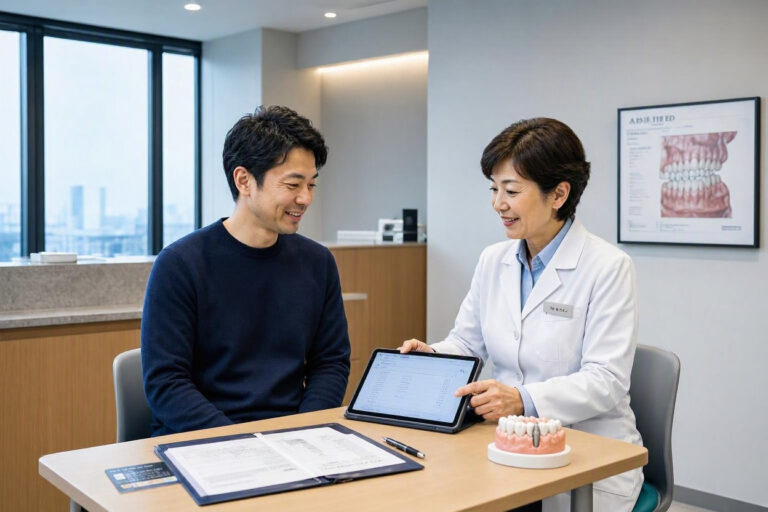
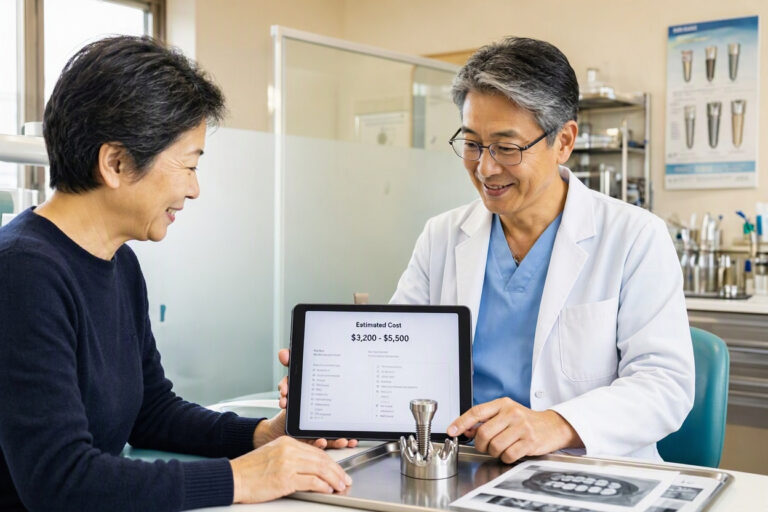
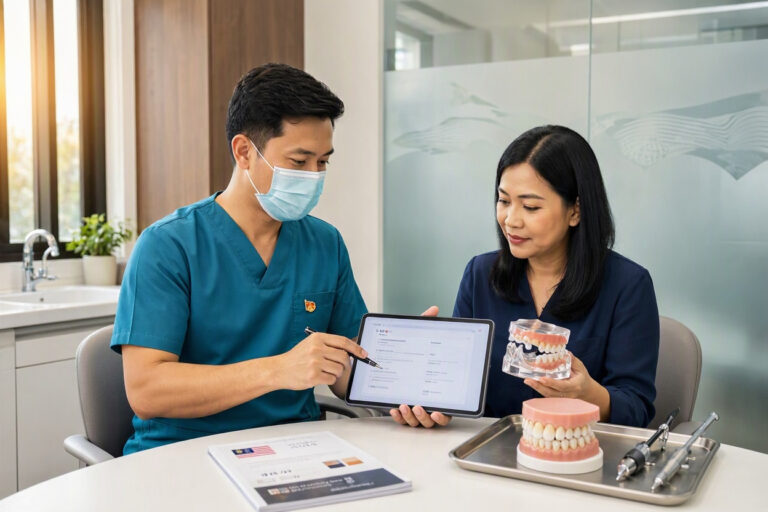
Cheap Dental Implants: A Realistic Guide to Affordable Tooth Replacement
Let’s be honest for a moment. If you’ve been told you need dental implants, the first thing you probably did was search for the price. And then you sat down.
A single implant can cost as much as a used car. For a full mouth? That’s a down payment on a house.
But here is the good news: “cheap dental implants” do exist. You just have to know where to look, what questions to ask, and—most importantly—where not to cut corners.
This guide will walk you through every realistic way to lower your costs. No fake promises. No “get implants for $99” nonsense. Just honest, practical advice from a writer who has spent weeks researching this topic.
By the end, you will know exactly how to save money without destroying your health.
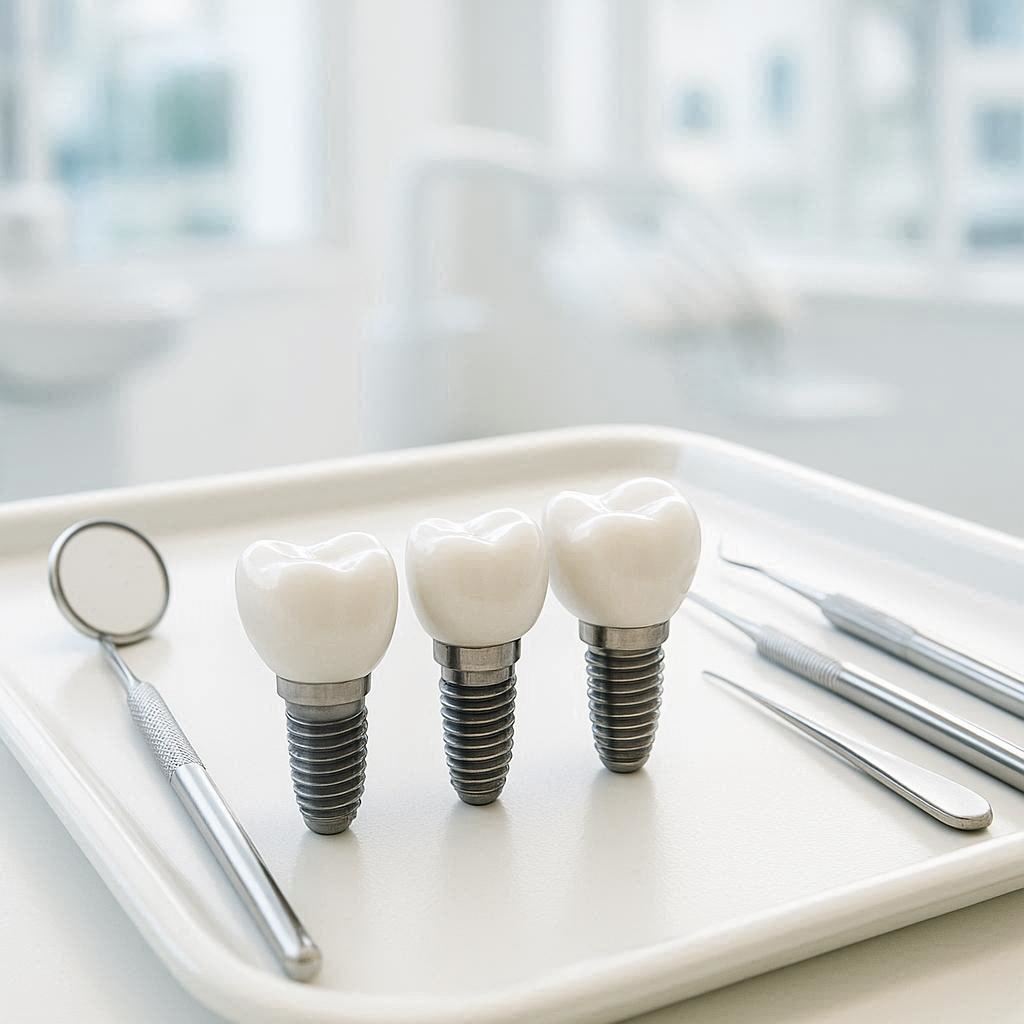
What Exactly Are Cheap Dental Implants? (And What They Are Not)
First, let’s clear up a huge misunderstanding.
When most people hear “cheap dental implants,” they imagine a low-quality product. That is not always true.
A cheap implant usually means one of three things:
- A lower price from a skilled dentist (good cheap)
- A stripped-down treatment plan (risky cheap)
- An overseas clinic with different standards (variable cheap)
What cheap dental implants are not is a scam. Real, functioning implants can be affordable. However, you must separate realistic low-cost options from dangerous bargains.
Important note: If a clinic offers dental implants for under $500 per implant including the crown, walk away. That is not a bargain. That is a red flag with flashing lights.
Why Are Dental Implants So Expensive in the First Place?
To understand how to find cheap dental implants, you first need to understand why they cost so much.
Let me break it down for you.
| Cost Component | Percentage of Total | What It Covers |
|---|---|---|
| The implant itself (screw) | 15-20% | Titanium or zirconia body, manufacturing, sterilization |
| The abutment and crown | 20-25% | Connector piece + ceramic tooth |
| Surgeon’s fee | 25-30% | Experience, skill, overhead |
| Lab work | 10-15% | Custom fabrication of the crown |
| Imaging and planning | 5-10% | CBCT scan, X-rays, 3D modeling |
| Overhead and staff | 10-15% | Rent, nurses, sterilization, insurance |
As you can see, the actual metal screw is not the main cost. The real money goes to skill, technology, and customization.
This matters because when you try to get cheap dental implants, you are not just bargaining on a piece of metal. You are bargaining on someone’s training and the materials in your mouth for the next 20 years.
The Honest Truth About Low-Cost Implants
Before we jump into strategies, let me give you three truths you need to tattoo on your brain.
Truth #1: Cheap does not always mean bad. Some dental schools and nonprofit clinics offer excellent work at half the price. The dentist doing the work is often supervised by a specialist.
Truth #2: The cheapest option today might become the most expensive option tomorrow. A failed implant costs more to remove and replace than the original procedure.
Truth #3: You get what you pay for most of the time. But with research, you can find the rare exceptions.
I have spoken to people who got affordable implants that lasted over a decade. I have also spoken to people who paid “too good to be true” prices and ended up with infections, loose screws, and bills three times higher to fix the mess.
Your job is to become the first type of person.
Where to Find Affordable Dental Implants (6 Real Options)
Let us get into the practical part. Here are six legitimate ways to find cheap dental implants.
1. Dental Schools
This is the number one answer for a reason.
Dental schools need patients for their residents to practice on. But “practice” does not mean “experiment.” These are graduate dentists who already have degrees. They are training to become specialists.
Typical savings: 30% to 60% off private practice prices.
What to expect:
- Longer appointments (students work slower)
- More supervision (which is actually safer for you)
- You might need to be flexible with scheduling
Example: A private dentist might charge $4,500 for a single implant. A dental school might charge $2,200 to $2,800.
2. Clinical Trials and Research Studies
This is a hidden gem.
Dental implant manufacturers and universities run trials to test new materials or techniques. They need healthy volunteers. In exchange, you get free or heavily discounted treatment.
Where to look:
- ClinicalTrials.gov
- Major university dental schools
- Implant manufacturer websites (Straumann, Nobel Biocare, Zimmer)
Catch: You might be randomly assigned to a control group. You need to meet specific health requirements. And you cannot choose your implant type.
3. Nonprofit and Sliding Scale Clinics
Some community health centers receive government funding to offer dental care at reduced rates.
Organizations to check:
- HRSA-funded health centers (US)
- Mission of Mercy events
- Local dental charity organizations
These are not always implant-focused, but many will do single-tooth replacements or can refer you.
4. Overseas Dental Tourism
This option gets a lot of attention. Some of it is deserved. Some of it is not.
Popular countries for cheap dental implants include:
- Mexico (especially Los Algodones and Tijuana)
- Costa Rica
- Colombia
- Turkey
- Thailand
- Hungary
Typical price abroad: $800 to $1,500 per implant including crown.
Compare that to the US: $3,000 to $6,000 per implant.
The savings are real. But so are the risks.
Warning: If you go overseas, do not pick the absolute cheapest clinic. Pick the one with the best reviews, modern equipment (CBCT scan on site), and English-speaking dentists with international training.
5. Negotiate with Local Dentists
Most people do not realize this: you can negotiate dental prices.
Dentists would rather have a patient at a reduced rate than no patient at all. This is especially true for cash-paying patients.
How to do it:
- Call 3 to 5 offices
- Ask for their cash price (no insurance)
- Ask if they offer a discount for paying upfront
- Mention you are comparing prices
- Ask if they have any “loss leader” promotions for new implant patients
One reader told me they got a $4,800 implant down to $3,600 just by asking politely and paying cash the same day.
6. Dental Discount Plans
These are NOT insurance. They are membership plans.
You pay an annual fee ($100 to $200). In return, you get access to negotiated rates from participating dentists.
Example: A plan might offer implants at 40% off the regular fee.
Caveat: Not all discount plans are good. Check the provider network before joining. Make sure your dentist accepts the plan.
Comparing Pricing Models: A Quick Reference Table
| Option | Price Range (per implant) | Risk Level | Time Investment | Best For |
|---|---|---|---|---|
| Private dentist (US) | $3,000 – $6,000 | Low | Low | People who want convenience |
| Dental school | $1,800 – $3,000 | Very low | High | People with flexible schedules |
| Overseas clinic | $800 – $2,000 | Medium to high | High | People needing multiple implants |
| Clinical trial | $0 – $500 | Low | Medium | Healthy people who meet criteria |
| Nonprofit clinic | $1,500 – $2,500 | Low | Medium | Low-income individuals |
| Negotiated cash price | $2,500 – $4,000 | Low | Low | People paying without insurance |
Are Cheap Dental Implants Safe? The Real Answer
This is the question everyone is afraid to ask.
Yes, cheap dental implants can be safe. But safety depends on three things, not the price tag.
Factor 1: Sterilization and Equipment
A cheap clinic that reuses single-use components? Dangerous.
A cheap dental school that follows hospital-grade sterilization? Safe.
Ask these questions before committing:
- Do you use a new, sterile implant from a sealed package for each patient?
- Do you have a CBCT machine for 3D planning? (If they say “X-ray is enough,” leave.)
- Do you use a surgical guide for placement?
Factor 2: The Dentist’s Training
Implantology is a specialty, but many general dentists place implants after a weekend course.
That is… not ideal.
Who you want:
- Oral surgeon
- Periodontist
- Prosthodontist
- General dentist with a one-year+ implant fellowship
Okay to avoid: A general dentist who took a two-day course and now advertises “$999 implants forever.”
Factor 3: Your Own Health
This is the part no one likes to talk about.
A cheap implant will fail faster if you have uncontrolled diabetes, smoke heavily, or have gum disease. That is not the implant’s fault. That is biology.
If you want affordable success, first stabilize your health. Treat gum disease. Quit smoking for at least two weeks before and after surgery. Get your blood sugar under control.
Hidden Costs Nobody Tells You About
When you search for “cheap dental implants,” the advertised price is rarely the final price.
Here is what clinics often leave out.
The bone graft. If your jawbone is too thin or soft, you need a graft. That can add $300 to $2,000 per site.
The extraction. If the broken tooth is still in your mouth, removing it costs extra. Usually $150 to $400.
The temporary tooth. While the implant heals (3 to 6 months), you might want a temporary flipper or bridge. That is $200 to $500.
The final crown. Some ads quote the implant screw only. Then they hit you with a $1,500 crown fee at the end.
Sedation fees. If you want to be asleep for surgery (IV sedation), that adds $300 to $800.
Travel costs. For overseas clinics, remember flights, hotels, and lost work days. A second trip is often required for the crown.
Pro tip: Always ask for a “complete treatment plan” in writing. Every single line item. If they refuse, find another dentist.
Dental Schools in Detail (Your Best Bet for Cheap Dental Implants)
Since dental schools offer the safest “cheap” option, let me go deeper here.
How to Get on the List
Most dental schools have a screening process. You cannot just walk in and ask for an implant.
Typical steps:
- Call the school’s patient intake line
- Attend a screening appointment ($50 to $150)
- Get placed on a waitlist (3 to 12 months is normal)
- Attend a full treatment planning session
- Start the actual implant process
Which Schools Have Implant Programs?
Here are well-regarded dental schools with strong implant programs in the US:
- University of Texas Health Science Center (Houston and San Antonio)
- University of Michigan School of Dentistry
- UCLA School of Dentistry
- University of Florida College of Dentistry
- New York University College of Dentistry
- University of Washington School of Dentistry
Do not limit yourself to this list. Almost every state has at least one dental school. Search “[your state] dental school implant clinic.”
The Time Commitment
This is the real cost of cheap dental implants at a school.
- 4 to 6 appointments before surgery
- Surgery appointment: 2 to 3 hours
- Healing period: 3 to 6 months with monthly check-ins
- Crown placement: 2 to 3 appointments
Total time from first call to final crown: 6 to 14 months.
If you need speed, a dental school is not for you. If you need savings and safety, it is perfect.
Overseas Dental Implants: A Balanced Look
Let me be neither a cheerleader nor a fearmonger.
I have seen amazing overseas implant work. I have also seen disasters.
The Good
Clinics in countries like Colombia and Turkey often use the same implant brands as US dentists (Straumann, Nobel Biocare). The surgeons have often trained in Europe or the US. The facilities can be stunning—marble floors, TV screens, coffee bars.
Why so cheap?
- Lower labor costs (assistants earn $5/hour instead of $25)
- Lower rent
- No malpractice insurance crisis
- Government subsidies for medical tourism
The Bad
Follow-up care. This is the killer.
If your implant hurts after six months, you cannot fly back to Turkey for a quick check. Your local dentist will either refuse to touch it or charge you full price to fix someone else’s work.
Language barriers. Even with an English-speaking dentist, the lab technician or night nurse might not understand instructions.
Different standards. Some countries allow implant brands we banned in the West for safety reasons. Ask for the brand name and check it yourself.
How to Do Overseas Safely
If you choose this route, follow these rules:
- Stay for at least 10 days (enough time for the initial healing and to address any immediate complications)
- Get everything in writing (brand names, warranty on parts, what happens if it fails)
- Video call the surgeon before booking anything. Trust your gut.
- Ask for before/after photos of patients with similar bone structure to yours.
- Use a medical tourism facilitator (a company that vets clinics for you). Yes, you pay extra. Yes, it is worth it.
Financing and Payment Plans for Cheap Dental Implants
Sometimes “cheap” does not mean low total cost. It means low monthly payments.
Here are legitimate ways to spread out the cost.
CareCredit
This is the most popular medical credit card in the US.
How it works: You apply for a line of credit. For implant work, you often get 6, 12, or 18 months with no interest if paid in full. After that, interest rates are high (around 27%).
Good for: People who can pay within the promotional period.
Bad for: People who miss a payment (deferred interest hits you for the full original amount).
Lending Club and PatientFi
These are newer options. They offer fixed rates over 24 to 60 months.
Example: A $5,000 implant might cost $120 per month for 48 months at 9.9% interest.
Not cheap overall, but affordable month to month.
In-House Financing
Some independent dentists offer their own payment plans. No credit check. No interest. Just a handshake and automatic payments.
This is rare, but it exists. Ask: “Do you have an in-house, no-interest payment plan?”
FSA and HSA Accounts
If you have a Flexible Spending Account or Health Savings Account, use it. Pre-tax dollars save you 20% to 40% depending on your tax bracket.
This does not make implants cheaper. It makes your after-tax cost lower.
Mini Implants vs. Standard Implants: The Affordable Alternative
You might have seen ads for “mini dental implants” at half the price of standard ones.
Let me explain the difference.
| Feature | Standard Implant | Mini Implant |
|---|---|---|
| Width | 3.5mm to 5mm | 1.8mm to 3mm |
| Strength | Very high (can replace molars) | Lower (best for small teeth) |
| Longevity | 20+ years typical | 5 to 10 years typical |
| Cost | $3,000 to $6,000 | $1,500 to $3,000 |
| Procedure | Two steps (implant then crown) | One step (often) |
When mini implants make sense:
- Replacing small lower front teeth
- Securing a loose denture (snap-on denture)
- Patients with very narrow bone who refuse grafting
When to avoid mini implants:
- Molars (high chewing force)
- Anyone who wants a 20-year solution
- Patients with bruxism (teeth grinding)
Mini implants are a real option for cheap dental implants. Just know the trade-off: lower price for shorter lifespan.
How to Avoid Scams and “Too Good to Be True” Offers
The internet is full of dental implant deals that are outright lies.
Here are the most common scams to recognize.
The “Free Implant” Scam
An ad says “Free dental implant with consultation.” You go in. The implant is free. But the abutment is $1,200. The crown is $1,800. The extraction is $400. The CT scan is $500.
You leave with a $3,900 bill and a “free” screw.
How to avoid: Ask “What is included in the free offer?” Get it in writing.
The “Lifetime Warranty” Trap
A clinic promises a lifetime warranty. Great. But the warranty requires you to come in for a cleaning every 90 days forever. Each cleaning costs $150. And if you miss one, the warranty is void.
How to avoid: Read the warranty terms before surgery.
The “Same-Day Implants” Hype
True same-day implants exist (Teeth in a Day, All-on-4). But they are not cheap. If a clinic offers cheap same-day implants, they are cutting corners on either diagnostics or materials.
How to avoid: Understand that quality same-day full-arch implants cost $15,000 to $30,000 per arch. Not $7,000.
Questions You Must Ask Before Getting Cheap Dental Implants
Print this list. Take it to every consultation.
- What brand of implant do you use? (Good answers: Straumann, Nobel Biocare, Zimmer Biomet, Dentsply, MegaGen. Be cautious with no-name brands.)
- How many implants have you placed in the last 12 months? (Good answer: Over 50. Great answer: Over 200.)
- What is your failure rate? (Honest answer: 1% to 5% for lower jaw, 5% to 10% for upper jaw. Anyone saying 0% is lying.)
- Do you have a CBCT scanner on site? (If no, walk out.)
- Do you provide a surgical guide? (Yes = modern, precise. No = old-school guessing.)
- What happens if the implant fails? (Good answer: We replace it at no cost within one year. Bad answer: That never happens.)
- Can I speak to a previous patient who had a similar case? (A confident dentist will say yes.)
Insurance and Dental Implants: What Actually Works
Most dental insurance does not cover implants. I am sorry to be the bearer of bad news.
What traditional insurance covers:
- Extractions (maybe)
- Crowns (partially, but only if it is a “standard crown”)
- Exams and X-rays
What it usually does NOT cover:
- The implant screw itself
- The abutment
- Bone grafting
That said, some PPO plans now offer implant coverage with a waiting period (6 to 12 months). If you are planning ahead, you can buy a plan, wait, then save 30% to 50% on the implant.
Example: A $4,000 implant with 50% coverage saves you $2,000. Minus the $600 annual premium. Net savings = $1,400.
Not amazing. But something.
A Realistic Timeline for Getting Affordable Implants
Let me walk you through what the process actually looks like for someone chasing cheap dental implants.
Month 1: Research. You read this guide (check!). You call 5 clinics, 2 dental schools, and 1 overseas facilitator.
Month 2: Consultations. You pay for 2 to 3 exams ($150 to $400 total). You get treatment plans in writing.
Month 3: Decision. You choose the best combination of price, safety, and convenience.
Month 4: Preparatory work. Extractions, bone grafts, gum treatment if needed.
Month 5: Implant placement surgery.
Months 6 to 9: Healing and osseointegration (the bone grows around the screw). You wear a temporary tooth.
Month 10: Abutment placement (minor procedure).
Month 11: Crown impression and fabrication.
Month 12: Final crown placement. Done.
Total time: 10 to 14 months for a single tooth.
Total real cost for cheap but safe implants: $2,000 to $3,500 per tooth, all-in.
Maintaining Your Cheap Dental Implants (So They Last)
You found cheap dental implants. Congratulations. Now protect that investment.
Daily care is simple:
- Brush twice a day (electric toothbrush is best)
- Floss daily. Yes, even around implants. Use superfloss or implant-specific floss.
- Use a water flosser on a low setting
Professional care:
- See a hygienist every 6 months for implant maintenance. Do not skip.
- Ask for plastic or carbon fiber scalers. Metal scalers can scratch the implant surface.
Warning signs to watch:
- Bleeding when brushing around the implant (not normal)
- The implant feels loose (go to a dentist immediately)
- Bad taste or smell (possible infection)
A well-maintained cheap implant can last 20 years or more. A neglected expensive implant can fail in 2 years.
When to Pay More for Dental Implants
I have spent this whole article talking about cheap dental implants. Now let me tell you when cheap is the wrong choice.
Pay full price if:
- You have complex medical issues (uncontrolled diabetes, autoimmune disease, osteoporosis meds)
- You need a full mouth reconstruction (All-on-4 or full arch)
- You are a heavy smoker who cannot quit
- You live in a very rural area with no nearby dental school or specialist
- You have extreme dental anxiety and need sedation
In these cases, paying for an experienced local specialist is cheaper in the long run than managing complications from afar.
Frequently Asked Questions (FAQ)
Q: Can I get a single cheap dental implant for under $1,000?
A: Realistically, no. Not in the US. Overseas or in a clinical trial, possibly. But $1,000 all-in is extremely rare for a complete implant with crown.
Q: Are cheap dental implants painful?
A: The price does not affect the pain level. All implants are placed with local anesthesia. You will feel pressure but not sharp pain. Post-surgery soreness is normal for 3 to 5 days regardless of cost.
Q: How long do cheap dental implants last?
A: If placed correctly and maintained well, cheap implants last as long as expensive ones—15 to 25 years on average. The difference is not the price tag. The difference is the skill of the dentist and your home care.
Q: Can I get cheap dental implants with no money down?
A: Yes, through CareCredit, Lending Club, or in-house financing. But “no money down” means you still pay the full amount over time. You are not getting a discount. You are getting a loan.
Q: Do dental implants ever go on sale?
A: Yes, but be very careful. Some clinics run “implant sales” during slow months (January and August are common). A legitimate discount is 10% to 20% off. A 50% off sale is a marketing gimmick hiding extra fees.
Q: Will dentures always be cheaper than cheap dental implants?
A: Yes. Dentures are always the cheaper upfront option ($300 to $1,500). But over 20 years, replacing dentures, buying adhesives, and treating sores can cost more than a single implant. Cheap implants can be better long-term value, not lower upfront cost.
Additional Resources
For a current list of accredited dental schools with implant programs and verified patient reviews, visit:
American Academy of Implant Dentistry – Patient Resources (external link – open in new tab)
This organization maintains a searchable directory of implant dentists who have passed written and oral exams. Not all are cheap, but all meet minimum standards of competence.
Conclusion
Let me summarize everything in three sentences.
Cheap dental implants are possible through dental schools, overseas clinics, negotiation, and smart financing, but safety depends on the dentist’s training and your health, not the price tag alone. Always get a complete written treatment plan, ask about brand names and failure rates, and never choose a clinic based solely on the lowest advertised number. With patience and research, you can replace missing teeth affordably without sacrificing quality—but be realistic: truly safe implants will still cost $2,000 to $3,500 per tooth in most cases.
Disclaimer: This article is for informational purposes only and does not constitute medical or dental advice. Dental implant outcomes vary based on individual health, anatomy, and provider skill. Always consult with a licensed dentist or oral surgeon before making any treatment decisions. The author and publisher are not liable for any actions taken based on this content. Prices and clinic information are estimates based on 2024-2025 data and may change.