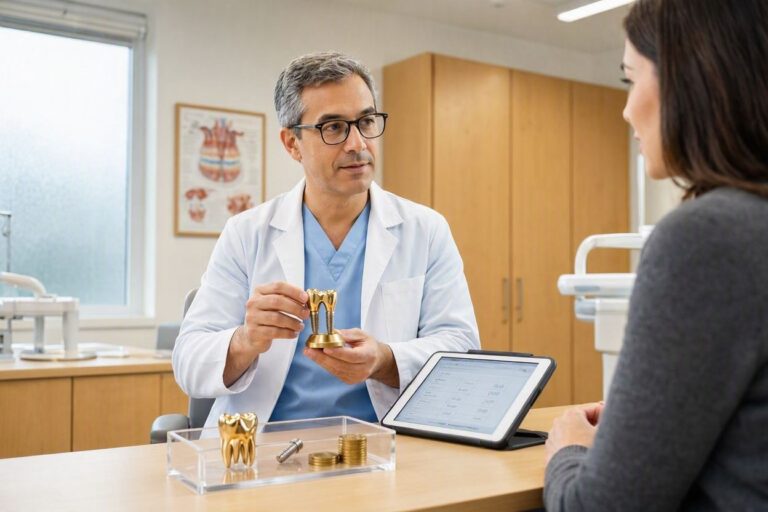
Are Dental Implants Safe?
If you are missing one or more teeth, you have probably heard that dental implants are the “gold standard” for replacement. But before you let anyone put a titanium screw into your jawbone, a very natural question pops into your head: Are dental implants safe?
It is a fair question. After all, this is a surgical procedure. It involves metal, bone, and gum tissue. You want to know if you are making a smart, long-term decision or signing up for future headaches.
Here is the short answer: yes, dental implants are very safe for the vast majority of healthy people. But like any medical procedure, they come with some risks. The good news? Most of those risks are preventable, predictable, and manageable.
In this guide, we will walk you through everything you need to know. No complicated medical jargon. No unrealistic promises. Just honest, clear, and friendly information to help you feel confident about your smile.
First Things First: What Exactly Is a Dental Implant?
Before we talk about safety, let us quickly understand what an implant actually is.
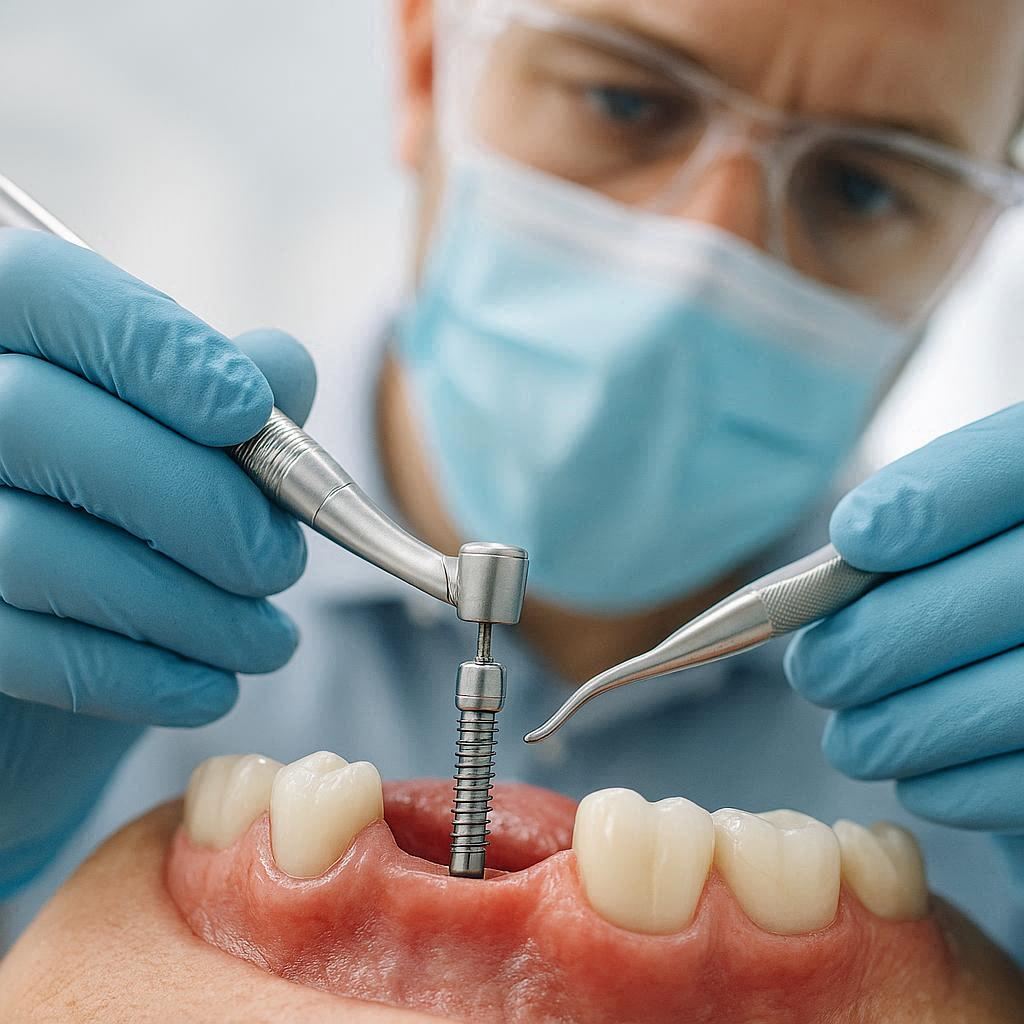
A dental implant is not the same as a crown or a bridge. It is a small, screw-like post made of titanium (or zirconia) that your dentist places into your jawbone. This post acts like an artificial tooth root.
Once the implant fuses with your bone—a process called osseointegration—your dentist attaches a connector (abutment) and finally a custom-made crown on top.
So, an implant has three parts:
- The implant post (in the bone)
- The abutment (connector)
- The crown (the visible tooth)
Why does this matter for safety? Because the safety of an implant depends on how well each of these parts works with your body.
Important note: A dental implant is the only tooth replacement option that replaces both the root and the crown. This is why it feels stronger and more natural than dentures or bridges.
The Honest Bottom Line: Are Dental Implants Safe for You?
Let us give you the straight answer upfront.
Yes, dental implants are one of the safest and most successful surgical procedures in modern dentistry. The long-term success rate is between 95% and 98% for lower jaw implants and slightly lower (around 90% to 95%) for upper jaw implants.
But—and this is a big BUT—safety depends on three main things:
- Your overall health
- The skill of your dentist or oral surgeon
- How well you care for your implants afterward
To put it simply: a healthy person with a good surgeon and good oral hygiene has an excellent chance of a safe, trouble-free implant that lasts 20, 30, or even 40 years.
If you have certain medical conditions or unhealthy habits (like smoking), your risks go up. But that does not mean you cannot get implants. It just means you need extra planning.
Let us break down exactly what “safe” means in this context.
Short-Term Safety: What Happens During and Right After Surgery?
Most people worry about the surgery itself. Will it hurt? Will something go wrong? Will my body reject the implant?
Here is the reality.
The Surgery Is Routine and Minimally Invasive
Placing a single dental implant is a relatively simple procedure. It usually takes 30 to 60 minutes. Your dentist will use local anesthesia, so you feel pressure but no sharp pain. Some people choose sedation or general anesthesia for multiple implants or anxiety.
Complications during the surgery are rare. However, like any oral surgery, possible immediate risks include:
- Bleeding (usually minor and controlled)
- Swelling and bruising (normal and temporary)
- Nerve injury (very rare and usually temporary if it happens)
- Perforation of the sinus cavity (for upper back teeth)
Let us talk about nerve injury for a moment. The lower jaw contains the inferior alveolar nerve. If your dentist places an implant too close to this nerve, you may experience numbness, tingling, or a “pins and needles” feeling in your lip, chin, or gum. In most cases, this numbness goes away within a few weeks or months. Permanent nerve damage is extremely rare with modern imaging (CBCT scans).
What About Pain?
You will feel sore for a few days after the anesthesia wears off. Think of it like healing from a tooth extraction. Over-the-counter pain relievers (ibuprofen or acetaminophen) usually do the job. Most people return to work and normal activities within one to three days.
The Body Does Not “Reject” Titanium
One common fear is rejection. Your body cannot reject titanium the way it rejects a transplanted organ. Titanium is biocompatible, meaning your body accepts it as a friend, not a foreign invader.
However, your body can fail to fuse the implant to the bone. That is called failed osseointegration. This is not rejection; it is a lack of healing. We will talk more about that later.
Long-Term Safety: What Happens Years After Getting Implants?
This is where most people have real concerns. Will the implant cause infections? Will it damage my other teeth? Can it lead to cancer or autoimmune disease?
Let us address each of these long-term safety questions honestly.
Infection: Peri-Implantitis
The number one long-term risk for dental implants is a condition called peri-implantitis. It is similar to gum disease (periodontitis), but it happens around an implant instead of a natural tooth.
Peri-implantitis starts with inflammation of the gum tissue (mucositis). If you do not clean around the implant properly, bacteria build up. Over time, this inflammation can spread deeper, destroying the bone that holds the implant in place.
How common is it?
- Up to 30% of people with implants develop peri-implantitis at some point (mild to moderate cases).
- Severe bone loss happens in about 10% to 15% of implant patients over 10 to 15 years.
The good news: Peri-implantitis is preventable and treatable. Regular cleanings, good brushing, flossing, and using special tools (water flossers or interdental brushes) keep the area healthy.
Important note: Peri-implantitis does not happen overnight. It develops over years of neglect. If you visit your dentist twice a year and clean your implant daily, your risk drops dramatically.
Will Implants Damage My Other Teeth?
No. Unlike a dental bridge, an implant does not rely on neighboring teeth for support. A traditional bridge requires shaving down the healthy teeth next to the gap. An implant stands alone. It actually protects your other teeth because it prevents them from shifting into the empty space.
Can Dental Implants Cause Cancer or Autoimmune Disease?
This question has appeared online, and it deserves a clear, factual answer.
There is no credible scientific evidence that dental implants cause cancer. The American Dental Association, the National Institutes of Health, and multiple international studies have found no link between titanium implants and cancer.
What about autoimmune disease? Some people worry that metal ions from titanium implants could trigger an immune response. In theory, any metal can cause a reaction in extremely sensitive individuals. However, true titanium allergies are incredibly rare (less than 1% of the population). Most reported “allergies” turn out to be unrelated infections or other issues.
If you have a known allergy to metals (like nickel or cobalt), talk to your dentist. You can choose zirconia implants, which are metal-free and ceramic-based.
Do Implants Affect Your Sinuses or Breathing?
Implants in the upper back jaw sit very close to your maxillary sinuses. If an implant is too long or placed incorrectly, it can protrude into the sinus cavity. That can cause sinus infections, pressure, or chronic stuffiness.
Good dentists prevent this by taking a 3D CT scan before surgery. They measure exactly how much bone height you have. If you do not have enough bone, they can perform a sinus lift (adding bone to the area) before placing the implant.
This adds time and cost, but it makes the procedure much safer.
Who Should Avoid Dental Implants? (Honest Truth)
Let us be realistic. Dental implants are very safe, but they are not for everyone. Some people have a higher risk of failure or complications.
Medical Conditions That Increase Risk
| Condition | Risk Level | What You Can Do |
|---|---|---|
| Uncontrolled diabetes | High (delayed healing) | Get your blood sugar under control first |
| Active cancer (chemo/radiation) | High (poor bone healing) | Wait until treatment is finished |
| Severe osteoporosis | Moderate (medication-related) | Talk to your doctor about bisphosphonates |
| Autoimmune diseases (lupus, rheumatoid arthritis) | Moderate | Your specialist and dentist should coordinate care |
| Bleeding disorders | Moderate | Your hematologist must approve surgery |
| Heavy smoker (1+ pack/day) | High (reduced blood flow) | Quit or reduce dramatically before and after |
Lifestyle Factors That Impact Safety
- Smoking: This is the biggest enemy of dental implants. Nicotine constricts blood vessels, so your jawbone gets less oxygen. Smokers have failure rates two to three times higher than non-smokers.
- Poor oral hygiene: If you do not brush or floss your natural teeth, you will not take care of your implants. And implants need even more attention than natural teeth.
- Teeth grinding (bruxism): Clenching and grinding puts enormous pressure on implants. Natural teeth have ligaments that absorb shock. Implants are rigid and transfer all force directly to the bone. Grinding can fracture the crown, loosen the implant, or break the screw.
Who Is an Ideal Candidate?
A person with the highest chance of safe, long-lasting implants:
- Is in good general health
- Has healthy gums and enough jawbone
- Does not smoke (or quit at least two weeks before surgery)
- Is committed to daily cleaning and regular dental visits
- Understands the process and has realistic expectations
If you do not fit the “ideal” profile, do not worry. Many people with health conditions still get implants safely. They just need extra precautions, a customized treatment plan, and possibly a different type of implant or bone grafting first.
Comparing Implant Safety to Other Tooth Replacement Options
Many people ask: “Are implants safer than bridges or dentures?”
The answer depends on how you define “safe.” Let us compare.
Dental Implants vs. Traditional Dental Bridge
| Factor | Implant | Bridge |
|---|---|---|
| Affects healthy teeth | No | Yes (shaves down adjacent teeth) |
| Risk of decay | None (titanium does not decay) | Moderate (under the crown) |
| Risk of infection | Peri-implantitis (around gum) | Decay or gum disease on abutment teeth |
| Lifespan | 20+ years (often lifetime) | 10–15 years (then replacement) |
| Surgical risk | Minor surgery | No surgery |
Safety verdict: Bridges avoid surgery, but they damage healthy teeth and need replacement more often. Implants are surgically more invasive but preserve your natural teeth for life.
Dental Implants vs. Removable Dentures
| Factor | Implant | Denture |
|---|---|---|
| Stability | Very stable (fixed in bone) | Can slip or fall out |
| Bone loss | Prevents bone loss | Accelerates bone loss |
| Speech impact | None | May cause clicking or slurring |
| Gum irritation | Rare | Common (sore spots) |
| Sleep safety | No risk | Can become loose and pose choking risk (rare) |
Safety verdict: Dentures have no surgery risk, but they cause long-term bone loss and have functional risks (slipping, falling, difficulty eating). Implants are much safer for long-term oral health.
Quotation from a real patient (anonymous):
“I wore dentures for eight years. They broke twice and never felt secure. I was always afraid to laugh or eat in public. Getting implants was the best decision I ever made. Yes, the surgery scared me, but the safety and confidence I feel now are priceless.”
Step-by-Step: How Dentists Keep You Safe During Implant Surgery
Let us walk through the safety measures that happen before, during, and after your implant procedure.
Before Surgery: Planning and Evaluation
A responsible dentist will never place an implant without a thorough exam. This is where most safety problems get prevented.
Medical history review: Your dentist will ask about your medications, allergies, and health conditions. Be honest. If you take blood thinners, bisphosphonates (for osteoporosis), or immunosuppressants, your dentist needs to know.
Comprehensive exam: This includes checking your gums, existing teeth, bite alignment, and jawbone.
Imaging (X-rays and CT scan): A panoramic X-ray shows general bone height. A 3D cone beam CT scan shows exact bone volume, nerve location, and sinus position. A good dentist will not skip the CT scan for complex cases.
Treatment planning: Your dentist creates a surgical guide (often 3D-printed) that shows exactly where to place the implant. This reduces the risk of hitting nerves or sinuses.
During Surgery: Sterile and Precise
- The procedure happens in a clean, sterile environment.
- Your dentist uses local anesthesia (or sedation if needed).
- A small incision in your gum exposes the bone.
- A special drill creates a hole exactly the size of your implant.
- The implant screw is placed into that hole.
All of this is done with guidance from the pre-planned surgical guide. Modern implant surgery is incredibly precise.
After Surgery: Healing and Follow-Up
- You receive detailed instructions (what to eat, how to clean, when to rest).
- Your dentist will schedule a follow-up visit 1 to 2 weeks later to check healing.
- After 3 to 6 months (when the bone bonds to the implant), you return for the abutment and crown.
The most dangerous time is actually not during surgery. It is the first two weeks of healing. You must avoid disturbing the implant, smoking, or eating hard foods.
Important note: Signs of problems after surgery include severe pain that gets worse (not better), fever, pus, or swelling that spreads to your neck or eye. Call your dentist immediately if you notice these. Do not wait.
The Safety of Different Implant Materials: Titanium vs. Zirconia
We have focused on titanium implants because they are the most common. But zirconia (ceramic) implants are becoming more popular. Which is safer?
Titanium Implants
- Pros: 50+ years of research, excellent success rate, very low allergy risk, flexible (can be used in any location)
- Cons: Tiny metal ions can be detected in blood (no proven harm), visible gray color through thin gums, rare allergy potential
Zirconia Implants
- Pros: Metal-free, white color (cosmetic advantage), extremely biocompatible, zero corrosion
- Cons: Newer technology (less long-term data), more brittle (can crack), one-piece design (harder to customize), higher cost
Which is safer for you?
| If you have… | Titanium | Zirconia |
|---|---|---|
| Metal allergy (confirmed) | No | Yes |
| Very thin or receding gums | Acceptable | Better (no gray show-through) |
| Need for multiple connected implants | Yes (stronger) | Not recommended (bridges prone to fracture) |
| Sensitivity to any metal (even unproven) | Maybe not | Yes |
For 99% of people, titanium is perfectly safe. If you are part of the 1% with a confirmed metal sensitivity or if you simply prefer a metal-free body, zirconia is a good alternative.
Real Risks vs. Internet Myths: What You Should Actually Worry About
The internet is full of scary stories about dental implants. Let us separate fact from fiction.
Myth 1: “Dental implants cause brain fog and chronic fatigue.”
Fact: There is no scientific evidence linking properly placed implants to neurological symptoms. Some people attribute general health problems to dental work, but correlation is not causation. If you feel unwell after implants, see a doctor. Do not assume the implant is the cause.
Myth 2: “Your body will reject the implant like an organ transplant.”
Fact: As we explained, rejection does not happen with titanium. Failure is either lack of bone fusion (osseointegration) or infection, not immune rejection.
Myth 3: “Implants set off metal detectors and cause MRI problems.”
Fact: Titanium is non-magnetic. It does not set off standard metal detectors. It is also MRI-safe. You can safely get an MRI with titanium implants. Zirconia is also MRI-safe.
Myth 4: “Once you get an implant, you can never have a CT scan or MRI again.”
Fact: Absolutely false. Titanium causes minor artifacts (image distortion) on CT scans, but radiologists are trained to work around this. MRIs are completely safe.
Myth 5: “Dental implants last forever.”
Fact: This one is not a myth but a half-truth. The implant post can last a lifetime if it integrates well and remains infection-free. However, the crown on top wears down, chips, or needs replacement every 10 to 20 years. Also, peri-implantitis can destroy the bone and cause implant failure even 15 or 20 years later.
How to Know If Your Dentist Is Safe and Skilled
The #1 factor in implant safety (after your own health) is your dentist’s training and experience. Not all dentists place implants. Not all implant dentists are equal.
Here is a checklist to help you choose a safe provider.
| Question to Ask | Why It Matters |
|---|---|
| “How many implants have you placed?” | Experience reduces complications. Look for hundreds or thousands. |
| “Do you use a CT scan and surgical guide?” | Planning prevents nerve and sinus injuries. |
| “What is your failure rate?” | A good dentist will be honest (2% to 5% is normal). |
| “Do you treat peri-implantitis?” | This shows they know how to handle complications. |
| “Who handles emergencies after hours?” | Safety includes knowing who to call on a weekend. |
| “Are you a prosthodontist or oral surgeon?” | Specialists have extra training beyond general dentistry. |
Red Flags to Avoid:
- A dentist who promises implants in one day without a CT scan
- Prices that seem too low ($1,000 for a full implant is unrealistic and dangerous)
- No discussion of your medical history
- No written treatment plan or consent form
- Pressure to decide immediately
Important note: Cheap implants often cut corners on planning, materials, or sterilization. Your mouth is not a place to bargain hunt. Look for reasonable pricing, not rock-bottom deals.
Living with Dental Implants: Daily Safety Habits
Once your implants are in place and healed, your daily habits determine whether they stay safe for decades.
Do These Things Every Day:
- Brush twice a day with a soft toothbrush (electric brushes are great)
- Floss around the implant using special implant floss or super floss
- Use a water flosser on a low setting to clean under the crown
- Avoid chewing ice, hard candy, or pens (these can crack the crown)
- Wear a nightguard if you grind your teeth
Do These Things Regularly:
- Visit your dentist every 6 months for professional cleaning (regular hygienists know how to clean implants without scratching them)
- Take periapical X-rays every 1 to 2 years to check the bone level around the implant
- Monitor your gums for redness, bleeding, or recession
Signs Something Is Wrong:
- Bleeding when you brush around the implant (early sign of mucositis)
- A bad taste or smell from the implant area (infection)
- The implant feels loose (advanced bone loss)
- Gum recession exposing the metal threads
- Pain when biting or chewing
Do not ignore these signs. Early peri-implantitis is treatable with deep cleaning and antibiotics. Advanced peri-implantitis may require surgery or even implant removal.
Special Cases: Are Implants Safe for Older Adults and Children?
Older Adults (65+)
Yes, dental implants are safe for healthy seniors. Age alone is not a risk factor.
In fact, many older adults benefit greatly from implants because they struggle with loose dentures. However, bone healing may be slower after age 70. Your dentist might recommend a longer healing time (4 to 8 months instead of 3 to 6).
Special considerations for seniors:
- Medications (blood thinners, bisphosphonates, dry mouth drugs)
- Reduced immune response (slower healing)
- Arthritis (difficulty with flossing – consider a water flosser)
Children and Teenagers
In general, dentists do not place implants in children whose jaws are still growing. Implants do not move or grow like natural teeth. If you place an implant in a growing child, the implant will eventually look “sunken” as the rest of the jaw grows around it.
Most dentists wait until age 18 for females and 20 to 22 for males (when jaw growth stops). For a child missing a front tooth, a removable partial denture or a bonded bridge is a safer temporary option.
The Cost of Safety: Is It Worth the Investment?
Dental implants are more expensive upfront than bridges or dentures. A single implant can cost between 3,000and6,000 (including the crown). Multiple implants or full-arch restorations can reach 20,000to50,000.
But safety is not just about upfront cost. It is about long-term value.
| Replacement Option | Upfront Cost | 20-Year Cost (including maintenance) | Risk of Future Problems |
|---|---|---|---|
| Dental implant | 3,000–6,000 | 4,500–8,000 (crown replacement once) | Low |
| Bridge | 2,000–5,000 | 6,000–15,000 (multiple replacements, decay on adjacent teeth) | Moderate |
| Denture | 1,000–3,000 | 6,000–12,000 (new dentures every 5–10 years, bone loss) | High (bone loss, fit issues) |
From a safety and cost perspective, implants often win over a 20- to 30-year timeline. You pay more upfront, but you pay less in emergency visits, replacements, and treating problems caused by other options.
Important note: Many dental insurances cover part of the implant crown but not the implant post. Some cover nothing at all. Always get a written estimate before starting treatment.
Conclusion (Summarized in Three Lines)
Dental implants are extremely safe for the majority of healthy people, with success rates above 95% when performed by skilled professionals. The most common risks—infection and bone loss—are largely preventable with good oral hygiene and regular dental checkups. If you are in good health and do not smoke, implants offer a safe, long-lasting, and life-changing solution for missing teeth.
Frequently Asked Questions (FAQ)
1. Are dental implants painful to place?
No. The procedure uses local anesthesia, so you feel pressure but not pain. Most people report less discomfort than a tooth extraction. Soreness after surgery is mild to moderate and lasts a few days.
2. Can dental implants fail years later?
Yes, but failure after integration is almost always due to peri-implantitis (infection) or excessive force from teeth grinding. With proper care, most implants last 20+ years.
3. Are dental implants safe for diabetics?
Yes, but only if your diabetes is well-controlled. Uncontrolled blood sugar slows healing and increases infection risk. Work with your doctor to stabilize your A1c below 7% before surgery.
4. Can I get an MRI with dental implants?
Yes. Titanium is non-magnetic and MRI-safe. However, it can cause minor image distortion in the immediate area of the implant. For most scans (brain, knees, spine), this is not a problem.
5. What is the most common complication of dental implants?
Peri-implantitis (chronic infection around the implant) is the most common long-term complication. It affects up to 30% of implant patients over 10 to 15 years but is preventable with good hygiene.
6. Are zirconia (metal-free) implants safer than titanium?
For most people, both are equally safe. Zirconia is a good choice if you have a confirmed metal allergy or want a white-colored implant. However, titanium has a longer track record and is less brittle.
7. Can I smoke with dental implants?
You can, but you should not. Smoking significantly increases the risk of implant failure (up to 20% failure rate vs. 2% to 5% for non-smokers). If you cannot quit, at least stop smoking for two weeks before and two months after surgery.
8. How do I clean my dental implant?
You need a soft toothbrush, implant-specific floss (or super floss), and ideally a water flosser. Do not use metal scrapers or harsh toothpaste. Your dentist or hygienist will show you the proper technique.
9. Are dental implants safe during pregnancy?
Most dentists recommend postponing implant surgery until after delivery. Hormonal changes increase gum inflammation, and elective surgery with X-rays and anesthesia is generally avoided during pregnancy unless absolutely necessary.
10. What happens if my implant fails?
If an implant fails to fuse to the bone (early failure), your dentist can remove it, let the bone heal for several months, and try again. If it fails later from infection or fracture, you may need bone grafting before placing a new implant.
Additional Resource
For more reliable, science-based information on dental implants, including patient stories and dentist search tools, visit the American Academy of Implant Dentistry (AAID) at www.aaid.com.
This non-profit organization provides:
- An online directory of qualified implant dentists
- Educational videos about the implant process
- Patient FAQs reviewed by experts
- Information on implant costs and financing
Disclaimer
This article is for informational purposes only and does not constitute medical or dental advice. Every person’s health situation is unique. You should always consult a licensed dentist or oral surgeon for a thorough examination and personalized treatment recommendations. The author and publisher are not responsible for any outcomes resulting from the use of this information.