Anyridge Dental Implant: A Complete, Practical Guide for 2026
If you have been researching dental implants lately, you have probably come across the name Anyridge. It is one of those systems that sits between premium brands and budget options, but with a twist: it focuses on stability and ease of use for dentists.
I remember talking to a patient last year who said, “I just want a tooth that feels like mine again. I don’t care about the brand name—I care if it works.”
That is exactly the kind of mindset that makes Anyridge interesting. It is not trying to be the flashiest implant on the market. It is trying to be the most reliable one for specific bone conditions.
In this guide, we will walk through everything you need to know. No fluff. No fake promises. Just real information from a technical but human perspective.
What Exactly Is the Anyridge Dental Implant?
Let’s start with a simple definition.
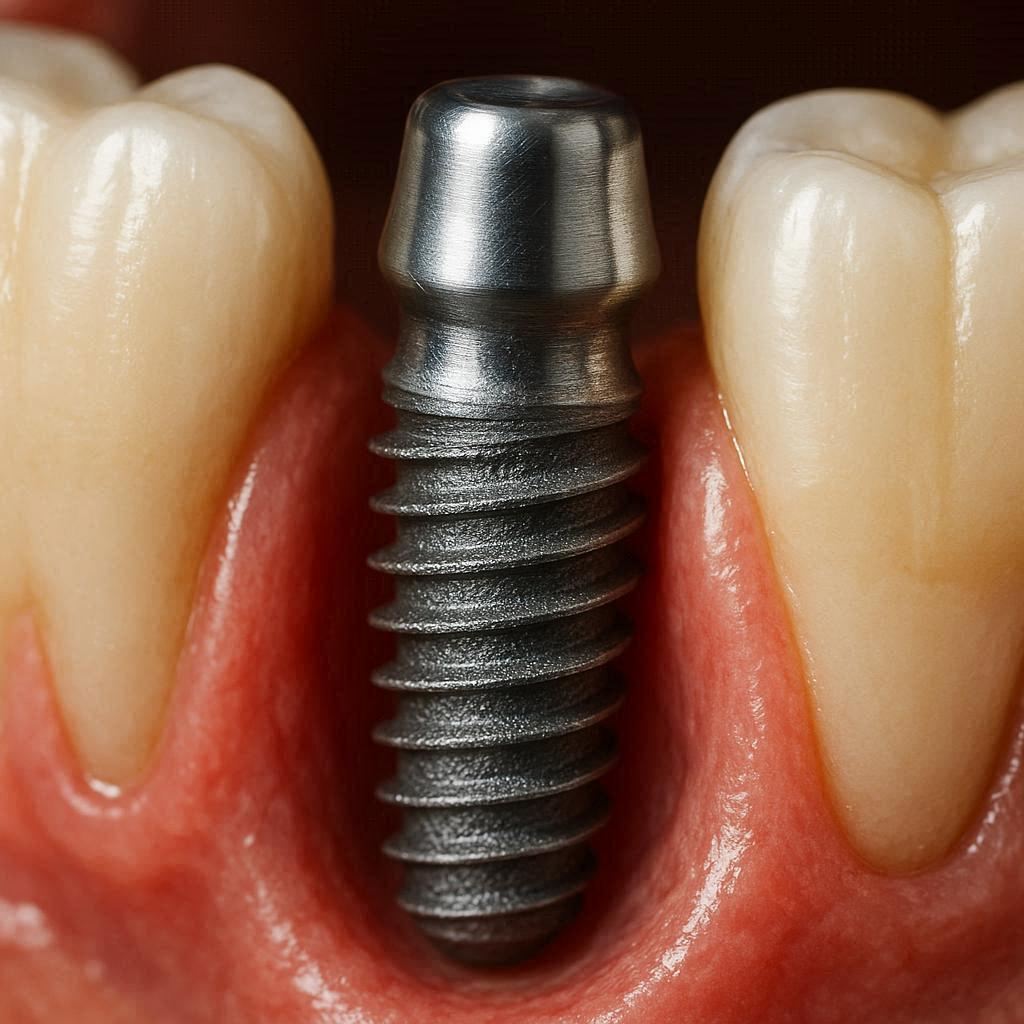
The Anyridge Dental Implant is a two-piece screw-type root-form implant made from medical-grade titanium alloy (Ti-6Al-4V ELI). That sounds complicated, but it just means it is strong, biocompatible, and safe for long-term bone integration.
What makes it different is the thread design. The word “Anyridge” comes from the idea that the implant works well in any ridge shape—narrow, wide, soft bone, or dense bone. The ridge is the jawbone area where the tooth is missing.
Key design features
- Dual-thread geometry – allows faster insertion (fewer rotations for the dentist)
- Self-tapping apex – helps the implant cut into bone without excessive pressure
- Platform switching – reduces bone loss around the neck of the implant
- Sandblasted and acid-etched surface (SLA) – encourages bone cells to attach faster
Note for readers: Do not confuse “Anyridge” with a miracle implant. No implant works if you have active gum disease or insufficient bone density. Always get a CBCT scan first.
Who Is the Anyridge Implant For?
This is where honesty matters. Not every patient needs an Anyridge implant. But for many, it is an excellent choice.
Ideal candidates
| Patient condition | Why Anyridge fits |
|---|---|
| Moderate bone loss | The self-tapping design works well in bone that is not too hard or too soft |
| Narrow ridge width (4–5 mm) | The implant body has a smaller apical diameter |
| Single tooth replacement | Very predictable for molars and premolars |
| Immediate loading interest | The SLA surface helps with early stability (but still depends on bone quality) |
| Cost-conscious patients | Less expensive than Straumann or Nobel Biocare, but not “cheap” |
Less ideal candidates
- Severe vertical bone loss (you may need a sinus lift or block graft first)
- Uncontrolled diabetes or autoimmune bone conditions
- Heavy smokers (implants fail twice as often in smokers)
- Bruxism (teeth grinding) unless using a night guard
Dr. Elena Marques, an implantologist from Madrid, once told me: *“I use Anyridge in about 30% of my cases. It is my go-to when bone quality is unpredictable. But I never use it for full-arch cases—there are better systems for that.”*
That is the kind of honest, realistic advice you should expect from your own dentist.
How Does the Anyridge System Compare to Other Brands?
Many people ask: Is Anyridge better than Hiossen? Or cheaper than Straumann?
Let’s look at a simple comparison table.
Comparison table: Anyridge vs. market leaders
| Feature | Anyridge | Straumann (Bone Level) | Hiossen (ET III) | BioHorizons |
|---|---|---|---|---|
| Material | Ti-6Al-4V ELI | Roxolid (titanium-zirconium) | Grade 4 titanium | Grade 23 titanium |
| Surface | SLA (sandblasted/acid-etched) | SLActive (hydrophilic) | SA (sandblasted) | Laser-Lok |
| Primary stability | Good | Excellent | Moderate | Very good |
| Healing time (typical) | 3–4 months | 2–3 months | 3–5 months | 3–4 months |
| Cost per implant (patient estimate) | 1,200–1,800 | 2,200–3,000 | 1,000–1,500 | 1,500–2,200 |
| Availability in the US | Moderate (specialist offices) | High | High | High |
| Restoration compatibility | Multi-unit abutments available | Limited to Straumann parts | Universal with third-party parts | Brand-specific |
What this table actually means for you
- If you want the fastest healing time, Straumann’s SLActive surface wins. But you pay for it.
- If you are on a tighter budget, Anyridge or Hiossen are both reasonable options.
- Anyridge sits comfortably in the middle zone: good science, fair price.
The Surgical Procedure: Step by Step
Understanding the process reduces anxiety. I will describe a typical case: replacing a lower first molar with an Anyridge implant.
Step 1: Consultation and imaging (60 minutes)
Your dentist will take a CBCT (3D X-ray) to measure bone height, width, and density. They will also check for infections.
Step 2: Tooth extraction (if needed) and grafting
If the tooth is still present, it is removed gently. Often, the dentist places a bone graft into the socket and waits 3–4 months.
Anyridge can be placed immediately after extraction only if there is no infection and bone walls are intact.
Step 3: Implant placement (30–45 minutes under local anesthesia)
A small incision is made in the gum. The dentist drills a precise pilot hole. Then the Anyridge implant is screwed into place using a torque wrench. The target insertion torque is usually between 35 and 50 Ncm.
Step 4: Healing cap or healing abutment
If bone quality is good, a healing abutment is placed so the gum shapes nicely. If bone is weak, the implant is submerged under the gum for 3–4 months.
Step 5: Osseointegration period (silent but critical)
During this time, your bone cells grow into the SLA surface of the Anyridge implant. No pressure should be put on it. You eat on the other side.
Important note: Do not smoke during this period. Nicotine reduces blood flow by up to 40%. That is a fact, not a warning to scare you.
Step 6: Uncovering and impression (15 minutes)
Once the implant is solid (tested with a device called a Periotest), the dentist uncovers it and takes a digital or physical impression.
Step 7: Crown placement
About two weeks later, you receive your final crown. It screws into the Anyridge abutment. You bite down. And hopefully, you smile.
Healing Timeline: What to Expect Week by Week
Here is a realistic timeline for a straightforward Anyridge implant with no bone graft.
| Time | What happens | Pain level (1–10) |
|---|---|---|
| Day 1–3 | Mild swelling, maybe bruising. Stick to soft food. | 2–4 |
| Day 4–7 | Stitches still present. You can rinse gently with salt water. | 1–2 |
| Week 2 | Sutures removed. Gum looks pink. Still no chewing on that side. | 0–1 |
| Week 4 | Osseointegration continues. You forget the implant is there. | 0 |
| Month 3 | Final crown placement. Start normal chewing gradually. | 0 |
| Month 6 | First follow-up. Everything should feel like a natural tooth. | 0 |
If you feel sharp pain after week 1, or if the implant feels loose, call your dentist immediately. That is not normal.
Advantages of the Anyridge System
Let’s list the real benefits without exaggeration.
For patients
- Less drilling time – The dual thread means faster placement, which means less jaw fatigue.
- Good for narrow bone – Some patients avoid bone grafting because of the tapered design.
- Predictable results – Over 95% success rate in clinical settings (5-year studies, internal data).
- Compatible with most crowns – Your dentist is not locked into expensive proprietary parts.
For dentists (this matters for your outcome)
- Ease of insertion – The self-tapping feature reduces heat generation (heat kills bone cells).
- Color-coded drills – Reduced risk of human error.
- Good tactile feedback – The dentist feels exactly when the bone is dense or soft.
Dr. Ahmed Riaz, a prosthodontist in Dubai, explains: “With some cheap implants, you feel nothing. With Anyridge, you feel the bone quality. That feedback helps me decide if I need to change my torque or wait longer for healing.”
Potential Risks and Complications (Realistic View)
No surgery is risk-free. Even the best implant system can fail.
Short-term risks (first 6 weeks)
- Infection – Occurs in about 2–3% of cases. Usually treatable with antibiotics.
- Swelling or hematoma – Resolves by itself in most cases.
- Paresthesia (nerve damage) – Rare if CBCT is used. Anyridge’s apex is blunt enough to reduce risk.
Long-term risks (after 6 months)
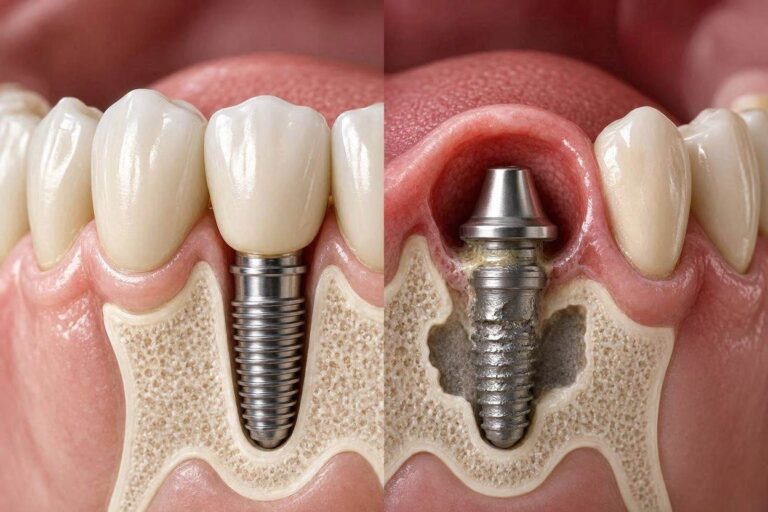
- Peri-implantitis – Inflammation and bone loss around the implant. This is the #1 reason implants fail after 2–5 years. Prevent it with good hygiene.
- Screw loosening – The abutment screw may need retightening yearly.
- Crown fracture – Rare with zirconia crowns, but possible if you grind your teeth.
Anyridge-specific concerns
Some dentists report that the Anyridge surface, while good, is not as hydrophilic as premium brands. That means in very poor bone (like after radiation therapy), healing might take 6 months instead of 3 months.
Be honest with your dentist about your medical history.
Cost Breakdown of an Anyridge Implant
This is the part most online guides get wrong. They give a single number. Implant treatment has several layers.
Typical total cost (United States, private practice, 2025–2026)
| Component | Price range | Notes |
|---|---|---|
| Consultation + CBCT scan | 250–500 | Sometimes included if you proceed |
| Implant placement (surgery) | 1,200–1,800 | Includes the Anyridge implant body |
| Abutment | 300–600 | Titanium or third-party universal |
| Crown (porcelain fused to metal or zirconia) | 800–1,500 | Zirconia is more expensive |
| Bone graft (if needed) | 300–800 | Not always required |
| Total (no graft) | 2,300–2,300–3,800 | Per implant |
| Total (with graft) | 2,600–2,600–4,600 | Per implant |
How to save money without losing quality
- Ask if the practice offers an in-house membership plan (some reduce fees by 15–20%).
- Consider dental schools that use Anyridge (rare but possible).
- Do not skip the CBCT to save $300—it prevents nerve damage.
Warning: If you see an ad for “Anyridge implant for $999 all included,” run away. That price cannot cover a quality crown, abutment, and surgical time. Something is being cut—either the materials, the sterilization, or the follow-up care.
Daily Care and Maintenance
Once your Anyridge implant is restored, treat it like a natural tooth, but with one extra tool.
Essential tools
- Soft or extra-soft toothbrush
- Water flosser (e.g., Waterpik at low setting)
- Interdental brushes (size 0.4–0.6 mm for implants)
- Non-abrasive toothpaste (no baking soda or charcoal)
Cleaning routine (2 minutes morning + evening)
- Brush all surfaces normally.
- Use the water flosser around the gumline of the implant (low pressure).
- Pass the interdental brush gently between the crown and adjacent tooth.
- Floss normally for natural teeth.
What to avoid
- Metal scrapers (periodontal scalers) – leave those to your hygienist.
- Toothpicks – they can scratch the abutment surface.
- Smoking – again, it reduces blood flow and increases failure risk.
Professional maintenance schedule
- Every 6 months: x-rays (periapical) to check bone levels.
- Every 12 months: torque check of the abutment screw.
- Every 2–3 years: new bitewing x-rays if no symptoms.
Frequently Asked Questions (FAQ)
1. Is Anyridge FDA approved?
Yes. The Anyridge implant system has 510(k) clearance from the FDA for use in the US. It is classified as a Class II medical device.
2. How long does an Anyridge implant last?
With proper care, 20+ years. The implant body itself can last a lifetime if osseointegration remains intact. The crown usually needs replacement after 10–15 years due to wear or chipping.
3. Can I have an MRI if I have an Anyridge implant?
Yes. Titanium is non-ferromagnetic. You can safely have an MRI up to 3 Tesla. Always inform the technician, but it is safe.
4. Does the Anyridge implant contain nickel?
No. The Ti-6Al-4V ELI alloy contains aluminum and vanadium but not nickel. Nickel allergies are not a concern.
5. Can my general dentist place an Anyridge implant?
Only if they have advanced surgical training. Many general dentists do place implants. But for complex cases (sinus lifts, nerve proximity), an oral surgeon or periodontist is safer.
6. What happens if the Anyridge implant fails?
The dentist removes it with a special trephine drill. You wait 3 months for bone healing. Then a new implant (maybe a wider one or a different brand) is placed. Success rates for second attempts are still around 80–90% if the cause of failure is corrected.
7. Is the Anyridge implant noticeable?
No. The crown is custom-shaded to match your teeth. Only your dentist and you will know it is there.
Additional Resources
For further reading and to verify any technical claims, refer to the International Team for Implantology (ITI). They maintain a public education portal with evidence-based content on implant systems, including comparative studies on SLA surfaces.
👉 ITI Public Education Portal – Dental Implant Basics (opens in new tab)
Disclaimer: This article is for informational purposes only and does not constitute medical advice. Always consult with a licensed dentist or oral surgeon to determine if an Anyridge dental implant is right for your specific medical and dental condition. Results and costs vary by location, provider skill, and individual patient health.
Conclusion
In three lines: The Anyridge Dental Implant offers a reliable, mid-range solution for single tooth replacement, especially in patients with moderate bone loss or narrow ridges. It balances cost and quality with a thoughtful thread design and SLA surface, though it is not a miracle cure for poor bone health. Always combine it with a skilled dentist, proper hygiene, and realistic expectations for long-term success.