Anterior Dental Implant Bridges
Losing a tooth is never fun. But losing a front tooth? That hits differently. It is the first thing people see when you smile, laugh, or speak. If you are reading this, you are probably looking for a solution that feels secure, looks natural, and lasts. You want more than just a fake tooth. You want your confidence back.
You have likely heard about dental implants. You may have also heard about bridges. But what happens when you combine them in the front of your mouth? That is where anterior dental implant bridges come into play. This guide walks you through everything you need to know. No fluff. No confusing dental jargon. Just honest, clear, and helpful information.
What Exactly Is an Anterior Dental Implant Bridge?
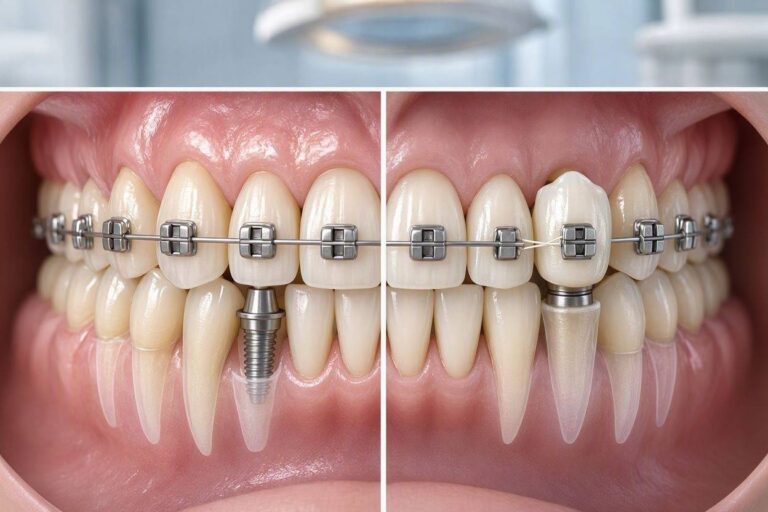
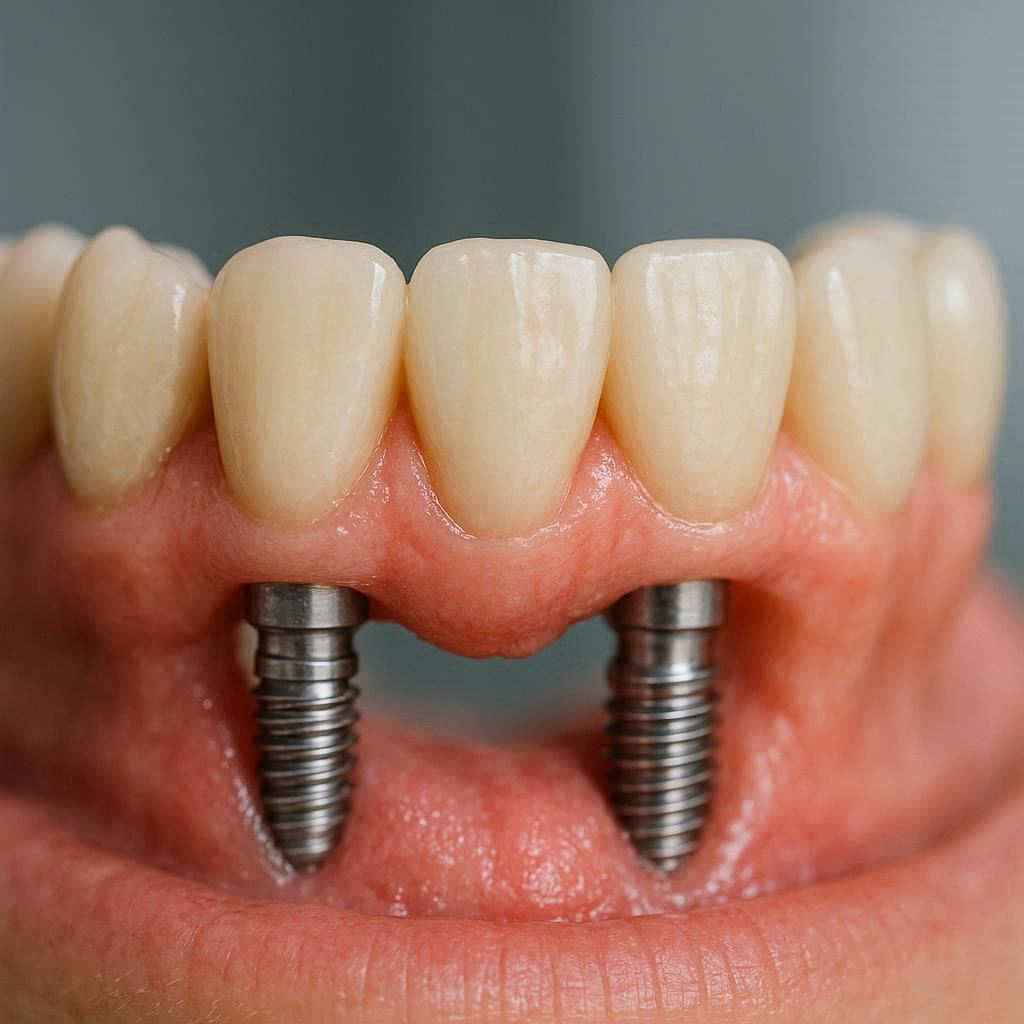
Let us start with the basics. The word “anterior” simply means front. Your anterior teeth are your incisors and canines—the six to eight teeth visible when you smile widely. An anterior dental implant bridge is a restoration that replaces two or more missing front teeth using dental implants as the anchors.
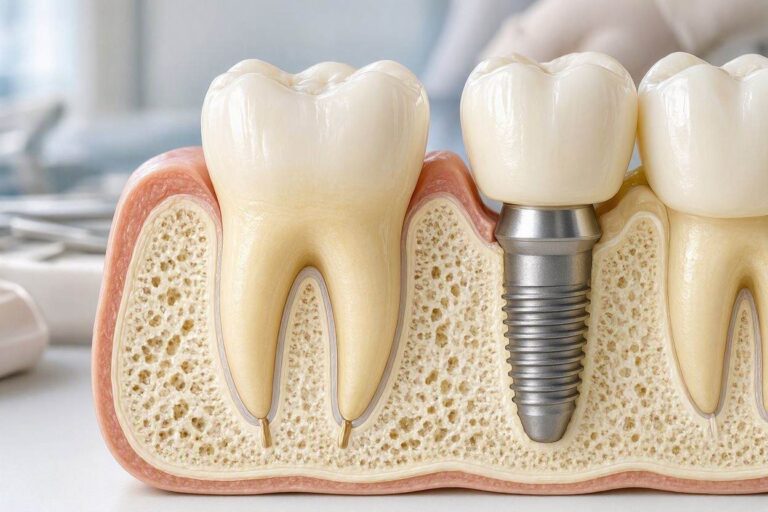
Think of it this way: a traditional bridge uses your natural teeth as support poles. An implant-supported bridge uses titanium posts (implants) surgically placed into your jawbone as the support poles. The bridge itself is a set of artificial teeth fused together. It attaches securely to those implants.
How Is It Different from a Single Implant?
A single implant replaces one missing tooth with one crown. An anterior implant bridge replaces multiple missing teeth in a row with fewer implants. For example, if you are missing three front teeth, you might only need two implants. The bridge spans the gap.
Why Choose This Over Other Options?
Many people consider dentures or traditional bridges first. But an implant bridge offers unique advantages in the front of the mouth, where appearance and stability matter most.
Key Insight: In the aesthetic zone (the front of your mouth), every detail matters—tooth shape, gum line symmetry, and even how light reflects off the porcelain. An implant-supported bridge mimics nature better than removable options.
Why the Front Teeth Are So Special (And Challenging)
Replacing a back molar is mostly about function. Chewing. Grinding. Strength. But replacing a front tooth is about art. Your front teeth do not just bite into apples. They shape your smile, support your lips, and help you pronounce certain sounds.
The Aesthetic Challenge
Dental laboratories must match:
- Color: Not just one shade, but a gradient from gum to tip.
- Translucency: Natural teeth are not solid white. Light passes through the edges.
- Surface texture: Subtle ridges and grooves that catch light naturally.
- Gum contour: The way the gum curves around each tooth is unique.
The Biomechanical Challenge
Your front teeth experience different forces than back teeth. You do not crush hard nuts with your incisors. But you do bite into sandwiches, tear food, and sometimes grind or clench. An anterior implant bridge must resist lateral (sideways) forces. This requires precise implant placement and angulation.
The Psychological Weight
Let us be real. A missing front tooth affects your social interactions. You may smile less. Cover your mouth when you laugh. Feel self-conscious in photos. This is not vanity. It is human nature. A good anterior implant bridge does more than restore function. It restores peace of mind.
Who Is a Good Candidate for Anterior Implant Bridges?
Not everyone qualifies immediately. But many people do after some preparation. Let us look at the ideal candidate profile.
Ideal Candidate Checklist
| Criterion | Why It Matters |
|---|---|
| Good overall health | Healing requires a functional immune system |
| Adequate jawbone density | Implants need solid bone to fuse with |
| No active gum disease | Inflammation prevents proper healing |
| Non-smoker (or willing to quit temporarily) | Smoking drastically increases failure rates |
| Realistic expectations | Implants look great but are not magic |
| Commitment to oral hygiene | Plaque buildup around implants causes disease |
What If You Lack Bone?
Many people who have been missing front teeth for years have bone loss. The jawbone resorbs (shrinks) when it no longer has a tooth root stimulating it. That is normal. The good news? Bone grafting is routine today.
A bone graft adds synthetic or natural bone material to the area. After four to six months of healing, you usually have enough bone for implants. Do not let bone loss scare you away. Your dentist will take a 3D scan (CBCT) and show you exactly what your bone situation looks like.
Medical Conditions to Discuss
Certain conditions do not automatically disqualify you, but they require extra planning:
- Diabetes: Must be well-controlled.
- Autoimmune diseases: May slow healing.
- Osteoporosis medications (bisphosphonates): Risk of osteonecrosis.
- Hemophilia or bleeding disorders: Surgical risks increase.
Always share your full medical history. Your dentist is not judging you. They are keeping you safe.
The Step-by-Step Process: What to Expect
Getting an anterior implant bridge is not a single appointment. It is a journey. The total timeline ranges from four to twelve months, depending on your bone health and whether you need grafting. Here is what each phase looks like.
Step 1: Initial Consultation and Imaging
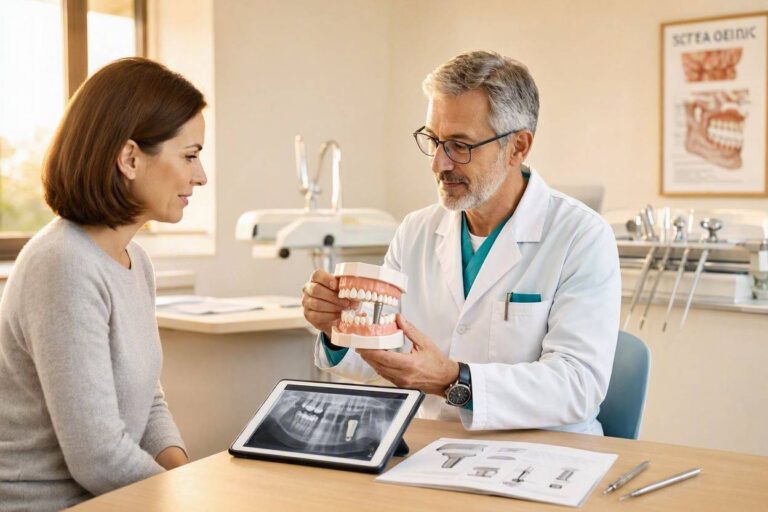
Your dentist examines your mouth, reviews your medical history, and takes a CBCT scan. This 3D image shows bone volume, nerve locations, and sinus position (for upper front teeth). They will also take photos and impressions for the treatment plan.
What to ask at this visit:
- “How many implants do you recommend for my gap?”
- “Do I need a bone graft?”
- “Can you show me similar cases you have done?”
Step 2: Treatment Planning
Using specialized software, your dentist plans the exact position, angle, and depth of each implant. They may create a surgical guide—a 3D-printed template that fits over your teeth and shows precisely where to place the implants. This is called guided implant surgery, and it is the gold standard for anterior aesthetics.
Step 3: Bone Grafting (If Needed)
If your bone is insufficient, the first procedure is the graft. This is often done under local anesthesia. The dentist makes a small incision in your gum, places the graft material, and closes with sutures. You wait four to six months for the graft to turn into your own living bone.
Step 4: Implant Placement Surgery
On surgery day, you receive local anesthesia. Many dentists also offer sedation (pill, nitrous oxide, or IV) for anxiety. The procedure itself is surprisingly quick—often 30 to 90 minutes for two to four implants.
The dentist:
- Makes tiny incisions in your gum
- Creates a precise channel in the bone
- Inserts the titanium implant
- Places a healing cap or a temporary tooth
Does it hurt? You feel pressure and vibration but not sharp pain. Most patients compare it to a straightforward extraction. Afterward, over-the-counter pain relievers usually suffice.
Step 5: Osseointegration (The Waiting Period)
This is the most critical phase. Osseointegration means your jawbone grows tightly around the implant surface. It takes three to six months. During this time, you wear a temporary partial denture or a bonded temporary bridge. You must avoid putting heavy biting force on the healing implants.
Step 6: Abutment Placement
Once the implants are integrated, your dentist uncovers them (if they were buried under gum) and attaches small connectors called abutments. These protrude through the gum and hold the final bridge. A second, shorter healing period of two to four weeks allows the gum to mature around the abutment.
Step 7: Final Bridge Fabrication
Your dentist takes highly detailed impressions or a digital scan. A master dental technician custom-makes your bridge. This is where artistry happens. The technician shapes each tooth individually, layers ceramic colors, and creates natural translucency. Expect two to four weeks for fabrication.
Step 8: Final Placement
You return for the big day. Your dentist removes the temporary restoration, checks the fit of the new bridge, adjusts the bite, and permanently screws or cements it onto the abutments. You look in the mirror. And for many patients, there are happy tears.
Note: Some clinics offer “immediate loading” where they place a temporary bridge on the same day as implant surgery. This is possible only in perfect conditions—excellent bone, good initial stability, and no clenching habit. Most anterior cases benefit from the traditional waiting period.
Comparing Anterior Implant Bridges to Other Options
You have choices. Let us compare the most common solutions for missing front teeth side by side.
| Feature | Implant Bridge | Traditional Bridge | Removable Partial Denture | Single Implants (per missing tooth) |
|---|---|---|---|---|
| Bone preservation | Excellent (implants stimulate bone) | Poor (accelerates bone loss) | Poor | Excellent |
| Adjacent teeth affected | None | Shaved down | Clasps may loosen | None |
| Stability | Fixed, feels like natural teeth | Fixed but relies on natural teeth | Can rock or move | Fixed, feels natural |
| Aesthetics | Excellent (no metal showing) | Good but gum may recede over time | Fair (visible clasps) | Excellent |
| Lifespan | 20+ years | 7–15 years | 3–8 years | 20+ years |
| Upfront cost | Higher | Moderate | Lower | Highest (per tooth) |
| Maintenance | Brush and floss normally (special floss) | Flossing requires threaders | Removed for cleaning | Normal brushing and flossing |
A Note on Cost Comparisons
Do not let the higher upfront price of an implant bridge scare you. A $1,500 traditional bridge seems cheaper today. But when it fails in ten years and you have damaged the anchor teeth, you may spend more over a lifetime. Implant bridges are an investment in long-term value.
The Art of Aesthetics: Why Front Bridges Are Different
Anyone can replace a tooth. Creating a smile that looks completely natural? That takes skill. Anterior implant bridges demand attention to details most people never notice—until something looks wrong.
The Pink Aesthetic (Gum Management)
Natural teeth emerge from gum tissue that has a specific contour, color, and texture. When you lose a front tooth, the gum collapses. A skilled dentist and technician work together to recreate:
- Interdental papillae: The little triangles of gum between teeth
- Gum zenith: The highest point of gum contour on each tooth
- Pink ceramic: Sometimes used if you have missing gum tissue
In cases of significant gum loss, your dentist may refer you to a periodontist for soft tissue grafting before the final bridge.
Screw-Retained vs. Cement-Retained Bridges
Two technical options affect how the bridge attaches:
Screw-retained: The bridge has a small access hole on the back (lingual) side. The dentist screws it directly into the abutment and fills the hole with composite resin. Pros: retrievable, no excess cement to harm gums. Cons: tiny hole may be visible if not placed perfectly.
Cement-retained: The bridge is cemented onto custom abutments. Pros: no access hole, potentially better aesthetics. Cons: excess cement can get trapped under the gum and cause peri-implantitis (inflammation and bone loss).
For anterior bridges, many experts prefer screw-retained designs with the access hole placed on the palatal (roof of mouth) side for upper teeth or the lingual side for lower teeth. This offers the best of both worlds.
The Smile Line
Your dentist evaluates your smile line—how much gum shows when you smile widely. If you have a “high smile line” that shows a lot of gum, implant positioning must be surgically perfect. Even half a millimeter of asymmetry becomes visible.
What About Immediate Implants After Extraction?
If you have a failing front tooth that must be removed, you may wonder: “Can you place the implant right away?” Yes, in many cases. This is called immediate implant placement.
Ideal Conditions for Immediate Placement:
- No active infection at the extraction site
- Thick, healthy gum tissue
- Intact bone walls around the socket
- You are a non-smoker
The Process:
- The dentist extracts the damaged tooth very gently
- They clean the socket thoroughly
- They place the implant directly into the socket
- They add bone graft material around the gap
- They place a temporary crown (non-biting) or a healing cap
Immediate placement shortens your total treatment time by two to four months. But it is not appropriate for everyone. If the infection or bone loss is severe, waiting for the socket to heal first yields more predictable results.
Important Note: Even with immediate implant placement, you typically cannot use a permanent bridge right away. You will wear a temporary restoration until osseointegration completes.
Recovery and Healing: What Is Normal?
Your recovery experience depends on how many implants were placed and whether you had bone grafting. Here is a realistic timeline.
Days 1–3
- Swelling and mild bruising (ice packs help)
- Slight bleeding (biting on gauze stops it)
- Soft food diet only (yogurt, smoothies, soup, mashed potatoes)
- No spitting, no straws, no rinsing vigorously
- Take prescribed or OTC pain medication as needed
Days 4–7
- Swelling peaks around day 3 then decreases
- You can gently rinse with warm salt water
- Resume gentle brushing near the site (avoid direct contact)
- Most patients return to work after 2–3 days
Weeks 2–4
- Gum tissue heals and turns pink again
- Sutures dissolve or are removed
- You can eat soft solid foods (pasta, eggs, soft bread)
- Avoid biting anything hard with the implant area
Months 3–6 (Osseointegration Phase)
- No pain or visible signs of healing
- You live normally with your temporary restoration
- Regular checkups ensure implants are integrating properly
After Final Bridge Placement
- Mild sensitivity to cold for a few days (normal)
- Your bite may feel slightly different (adjusts in one to two weeks)
- Full function: eat apples, corn on the cob, nuts
Signs You Should Call Your Dentist
- Increasing pain after day three
- Swelling that worsens instead of improves
- Fever over 100.4°F (38°C)
- Implant feels mobile
- Unusual taste or discharge from the site
Costs of Anterior Dental Implant Bridges (Realistic Numbers)
Let us talk money. Prices vary significantly by location, dentist experience, and materials. These are realistic estimates in US dollars as of 2025.
Breaking Down the Bill
| Component | Low Estimate | High Estimate |
|---|---|---|
| Consultation and CBCT scan | $150 | $500 |
| Bone graft (if needed) | $300 | $1,200 per site |
| Implant placement (per implant) | $1,500 | $3,000 |
| Abutments (per implant) | $300 | $600 |
| Final bridge (3–4 units) | $2,500 | $5,000 |
| Temporary restoration | $200 | $600 |
| Total for 2-implant, 3-tooth bridge | $5,450 | $13,900 |
Why Such a Wide Range?
- Geographic location: NYC or LA costs double rural areas
- Specialist vs. general dentist: Prosthodontists or oral surgeons charge more
- Material quality: High-translucency zirconia costs more than PFM (porcelain-fused-to-metal)
- Digital workflow: Guided surgery and same-day milling add fees
Insurance Coverage
Most dental insurance plans cover a portion of implant bridges, but rarely all of it. Typical coverage:
- 50% of the bridge cost (up to annual max, often 1,000–2,000)
- 0% of implant surgery (some plans are starting to cover this)
- 80% of extractions and bone grafting
Pro tip: Ask your dentist’s financial coordinator for a pre-treatment estimate. They submit the treatment plan to your insurance and tell you exactly what is covered.
Payment Options
- CareCredit (healthcare credit card)
- In-house financing (many dental offices offer 6–12 months interest-free)
- Dental schools (costs 40–60% less, but longer appointments)
Long-Term Care and Maintenance
An implant bridge cannot get a cavity (porcelain and zirconia do not decay). But it can fail from peri-implantitis—inflammation and bone loss around the implant caused by bacteria. Good home care is non-negotiable.
Daily Cleaning Routine
What you need:
- Soft-bristled toothbrush
- Water flosser (Waterpik)
- Super floss or implant-specific floss (thicker with stiff ends)
- Interdental brushes (small cone-shaped brushes)
- Non-abrasive toothpaste (avoid baking soda or charcoal)
Step-by-step:
- Brush normally for two minutes, paying extra attention to the gumline around the bridge.
- Use a water flosser on low pressure. Aim the tip at the gum between each implant and the adjacent tooth.
- Thread super floss under the bridge (between implants). Gently clean side-to-side.
- Use interdental brushes for wider gaps.
Professional Maintenance
Visit your dentist every six months for:
- Peri-implant probing: Measuring gum pocket depths around implants (should be 3mm or less)
- Radiographs (X-rays): Annual or biennial to check bone levels
- Professional cleaning: Special plastic instruments (metal scalers can scratch implants)
Signs of Trouble
- Bleeding when you brush near the implant
- Bad taste or odor
- Gum redness or swelling that does not go away
- The bridge feels slightly loose
Do not ignore these. Early peri-implantitis is treatable. Late-stage requires surgery or implant removal.
Lifestyle Factors
| Behavior | Effect on Implant Bridge |
|---|---|
| Smoking | Major risk factor (5x higher failure rate) |
| Teeth grinding (bruxism) | Requires nightguard to prevent screw fracture |
| Chewing ice or pens | Can crack porcelain |
| Poor hygiene | Guaranteed implant failure within 5–10 years |
Complications and How to Avoid Them
Honest dentistry means talking about risks. Anterior implant bridges have a very high success rate (over 95% at ten years). But things can go wrong.
Early Complications (First 6 Months)
| Complication | Cause | Solution |
|---|---|---|
| Failed osseointegration | Poor bone quality, infection, smoking, grinding | Remove implant, graft, retry after healing |
| Nerve injury (lower front) | Implant placed too deep | Avoidable with CBCT and surgical guide |
| Screw loosening | Insufficient torque or clenching | Retighten or replace screw |
| Infection at surgery site | Contamination or poor aftercare | Antibiotics, drainage if abscess forms |
Late Complications (After 1+ Years)
| Complication | Cause | Solution |
|---|---|---|
| Peri-implantitis | Chronic plaque accumulation | Deep cleaning (Laser or mechanical debridement) |
| Porcelain fracture | Biting hard objects or grinding | Replace the fractured crown or bridge |
| Gum recession around bridge | Thin gum tissue or implant position | Soft tissue grafting or pink ceramic |
| Aesthetic failure (gray shadow) | Implant metal showing through thin gum | Replace with zirconia abutment or pink ceramic |
How to Minimize Your Risk
- Choose an experienced provider. Ask to see before-and-after photos of anterior bridges.
- Follow post-op instructions perfectly. No cheating on soft food diets.
- Stop smoking. Even cutting back helps, but quitting is best.
- Wear a nightguard if you grind your teeth.
- Never skip hygiene visits.
Realistic expectation: Even with perfect care, your implant bridge will eventually need maintenance. Screws may need retightening after years. Porcelain may chip and need repair. This is normal prosthetic upkeep—not failure.
Zirconia vs. Porcelain-Fused-to-Metal: Which Is Better?
The material of your bridge affects appearance, strength, and cost. Here is the breakdown.
Porcelain-Fused-to-Metal (PFM)
- Structure: Metal core (titanium or gold alloy) with ceramic baked on top
- Pros: Very strong, proven for decades, lower cost
- Cons: Metal may show as a dark line near the gum; opaque appearance; potential metal allergy
Best for: Back teeth or patients on a tight budget who cannot see the metal line
Full Zirconia (Monolithic)
- Structure: Solid, single-block zirconia (ceramic)
- Pros: Extremely strong (even stronger than metal), no dark lines, biocompatible, scratch-resistant
- Cons: Less translucent than natural teeth; can look opaque in very thin areas
Best for: Patients with high bite forces or limited space for bulk
Layered Zirconia
- Structure: Zirconia framework with translucent ceramic layered on top
- Pros: Excellent aesthetics, no metal, strong foundation
- Cons: Higher cost; ceramic layer can chip
Best for: Most anterior bridges – the current gold standard
What Most Experts Recommend for Anterior Bridges
Layered zirconia or high-translucency zirconia offers the best combination of strength and natural appearance. Avoid PFM for front teeth unless cost absolutely demands it—the gray metal line at the gum becomes visible as gums recede naturally with age.
How to Find the Right Dentist for Your Anterior Implant Bridge
Not all dentists are created equal when it comes to anterior aesthetics. Here is how to choose wisely.
Credentials to Look For
- Prosthodontist: Specialist in replacing and restoring teeth (three extra years of training)
- Oral surgeon or periodontist: Surgical placement of implants
- Fellow of the ICOI (International Congress of Oral Implantologists): Advanced implant training
Many general dentists also do excellent implant work. The key is experience, not just title.
Questions to Ask Before Booking
- “How many anterior implant bridges do you place per year?” (Look for 20+)
- “Can I speak to a past patient or see photos of your work?”
- “Do you use a surgical guide for implant placement?”
- “Who makes your final bridges? In-house lab or master technician?”
- “What is your protocol if an implant fails?”
Red Flags to Avoid
- “We can do this in two weeks.” (Rushed treatment rarely looks natural.)
- “You do not need a CBCT scan.” (Absolute requirement.)
- “All bridges look the same.” (They clearly do not understand aesthetics.)
- Prices that seem too good to be true (usually are).
Frequently Asked Questions (FAQ)
1. Is an anterior implant bridge painful?
The surgery itself is not painful due to anesthesia. Afterward, most patients describe mild soreness similar to a tooth extraction—manageable with ibuprofen. Day two is typically the most uncomfortable. By day five, most people feel fine.
2. How long does an anterior implant bridge last?
With excellent care, 20 to 30 years or longer. The implants themselves can last a lifetime. The bridge (porcelain teeth) may need replacement after 15–20 years due to wear or chipping. This is similar to replacing a crown on a natural tooth.
3. Can I get an implant bridge if I have gum disease?
Not actively. Gum disease must be treated and stabilized first. Active infection prevents osseointegration and leads to implant failure. Once your gums are healthy (pockets 3mm or less, no bleeding on probing), you can proceed.
4. Will my implant bridge look 100% natural?
In the hands of a skilled team, yes—to the point that even dentists have trouble identifying it from natural teeth. However, no restoration is perfect. Under very bright light or extremely close inspection, subtle differences may exist. But in daily life, people will simply see a beautiful smile.
5. What happens if an implant fails?
Your dentist removes the failed implant (a minor procedure). The site heals for two to four months. Then you can try again, often with bone grafting this time. Many patients who experience one failed implant succeed on the second attempt.
6. Can I whiten my implant bridge?
No. Porcelain and zirconia do not whiten with bleaching products. If you want to whiten your natural teeth, do it before having the bridge made. The technician matches the bridge to your desired whiteness. After that, whiten only your natural teeth carefully—they can become lighter than your bridge.
7. Do implant bridges feel like real teeth?
Yes, remarkably so. The main difference is that you cannot feel temperature as intensely (implants have no nerve). But the sense of pressure, texture, and stability feels very natural. Most patients forget they have an implant within a few months.
8. Is age a limiting factor?
No. Healthy 80-year-olds receive implants successfully. The more relevant factor is overall health and bone quality, not calendar age.
9. Can I have an MRI with implant bridges?
Yes. Dental implants are made of titanium or zirconia, which are non-ferromagnetic (not magnetic). They do not cause problems with MRI machines. You can safely undergo MRI scans.
10. How many implants do I need for three missing front teeth?
Usually two. The two outer implants support a three-unit bridge (two implants carrying three teeth). In some cases with very wide spaces, three individual implants are used. For two missing teeth, one or two implants depending on space and forces.
Additional Resources
For more reliable information, visit the American Academy of Implant Dentistry (AAID) patient education page:
You will find:
- A “find a dentist” directory of accredited implant providers
- Patient education videos showing implant surgery
- Downloadable guides on implant care and maintenance
Important Notes for Readers
📌 This guide is for educational purposes only. It does not replace professional medical advice. Every mouth is unique. Always consult a licensed dentist for a personal evaluation.
📌 Do not shop for dental implants purely on price. The cheapest option often uses lower-quality materials, rushed techniques, or inexperienced providers. Revision surgery is more expensive and complex than getting it right the first time.
📌 If you have dental anxiety, speak up. Most dentists offer multiple sedation options. You do not need to suffer in fear. Modern implant dentistry can be a calm, comfortable experience.
📌 Take before photos. You will want them six months after your final bridge to see the transformation.
Conclusion
Anterior dental implant bridges offer a lifelike, long-lasting solution for replacing missing front teeth. They preserve your jawbone, protect adjacent healthy teeth, and restore both function and confidence. The process requires commitment—time, investment, and careful home care—but the reward is a smile that feels completely your own. With modern materials, guided surgery, and an experienced dental team, you can smile, laugh, and eat without a second thought.
Disclaimer: The information provided in this article is for general informational purposes only and does not constitute medical advice. Always seek the advice of your dentist or other qualified health provider with any questions you may have regarding a medical condition or treatment. Never disregard professional medical advice because of something you have read here.