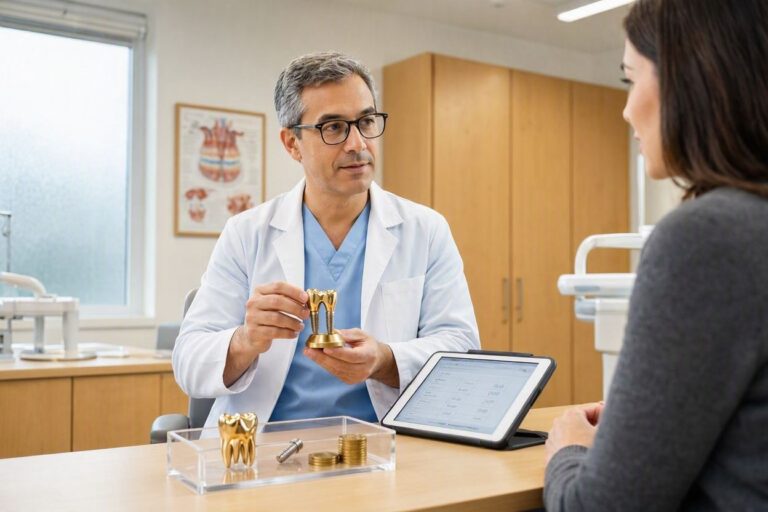
Alternatives To Dental Implants: A Realistic Guide for a Healthy Smile
Losing a tooth can feel frustrating. You might worry about your smile. You could also struggle to chew your favorite foods.
Dental implants are a popular solution. They are strong and look natural. But they are not for everyone.
Sometimes the cost is too high. Other times, your jawbone might be too thin. You might have a medical condition that slows healing. Or perhaps you simply prefer a less invasive option.
The good news? You have choices.
This guide explores honest, reliable alternatives to dental implants. We will look at what works, what does not, and who each option suits best. No hype. Just real information to help you decide.
Note for readers: This guide is for educational purposes. Always consult a licensed dentist before making a decision about your oral health.
Why People Look for Alternatives to Dental Implants
Before we dive into solutions, let us understand the reasons. Dental implants are wonderful. But they come with challenges.
High upfront cost
Implants are expensive. A single implant can cost between 3,000and6,000. Full-mouth reconstruction might reach $30,000 or more. Many insurance plans cover only part of the cost.
Surgical procedure
Some people fear surgery. Others have health conditions like uncontrolled diabetes or heart disease. These conditions can make surgery risky.
Long treatment time
Implants take months. You need healing time between steps. This is not ideal if you want a faster fix.
Bone loss requirements
Implants need healthy jawbone. If you have bone loss, you might need a bone graft. This adds time, cost, and complexity.
Age considerations
Older adults sometimes choose simpler options. Younger patients might wait until their jaw finishes growing.
The good news is that modern dentistry offers many effective alternatives.
Quick Comparison Table: Alternatives to Dental Implants
Here is a fast overview of your main options.
| Alternative | Best For | Average Lifespan | Cost Range (USD) | Invasive? |
|---|---|---|---|---|
| Fixed Bridge | One or two missing teeth | 5-15 years | 1,500−5,000 | Minimally |
| Removable Partial Denture | Multiple missing teeth | 3-8 years | 300−2,500 | Not invasive |
| Complete Dentures | All teeth missing (upper or lower) | 5-10 years | 600−8,000 | Not invasive |
| Resin-Bonded Bridge | Front teeth, low bite force | 3-8 years | 1,000−3,000 | Minimally |
| Flipper (Temporary) | Short-term replacement | 6-24 months | 300−1,000 | Not invasive |
| No Treatment | Non-visible missing tooth | N/A | Free | Not invasive |
Now let’s explore each option in detail.
1. Fixed Dental Bridge
A fixed bridge is one of the most common alternatives to dental implants. It works by using your natural teeth as anchors.
How it works
The dentist files down the teeth next to the gap. These are called abutment teeth. Then a false tooth (called a pontic) sits in the middle. A dental crown covers each abutment tooth. The whole piece is fused together and cemented in place.
You cannot remove it yourself. It feels stable and natural.
Best for
- One or two missing teeth right next to each other
- Healthy teeth on both sides of the gap
- Patients who want a non-removable option
Advantages
- No surgery required
- Faster completion (usually 2-3 visits)
- Feels more stable than removable options
- Looks natural and aesthetic
Disadvantages
- Your healthy teeth get filed down (this is permanent)
- Harder to clean around and under the bridge
- Higher risk of decay on anchor teeth
- May need replacement after 10-15 years
Realistic quote from a dentist:
“Bridges are excellent for patients who have strong neighboring teeth and want something fixed in place. Just remember: you are sacrificing healthy enamel on those anchor teeth.”
— Dr. Elena Marsh, General Dentist
Care tips
Clean under the bridge with floss threaders or water flossers. See your dentist every six months for checkups. Avoid sticky or hard candies that could loosen the bridge.
2. Removable Partial Denture
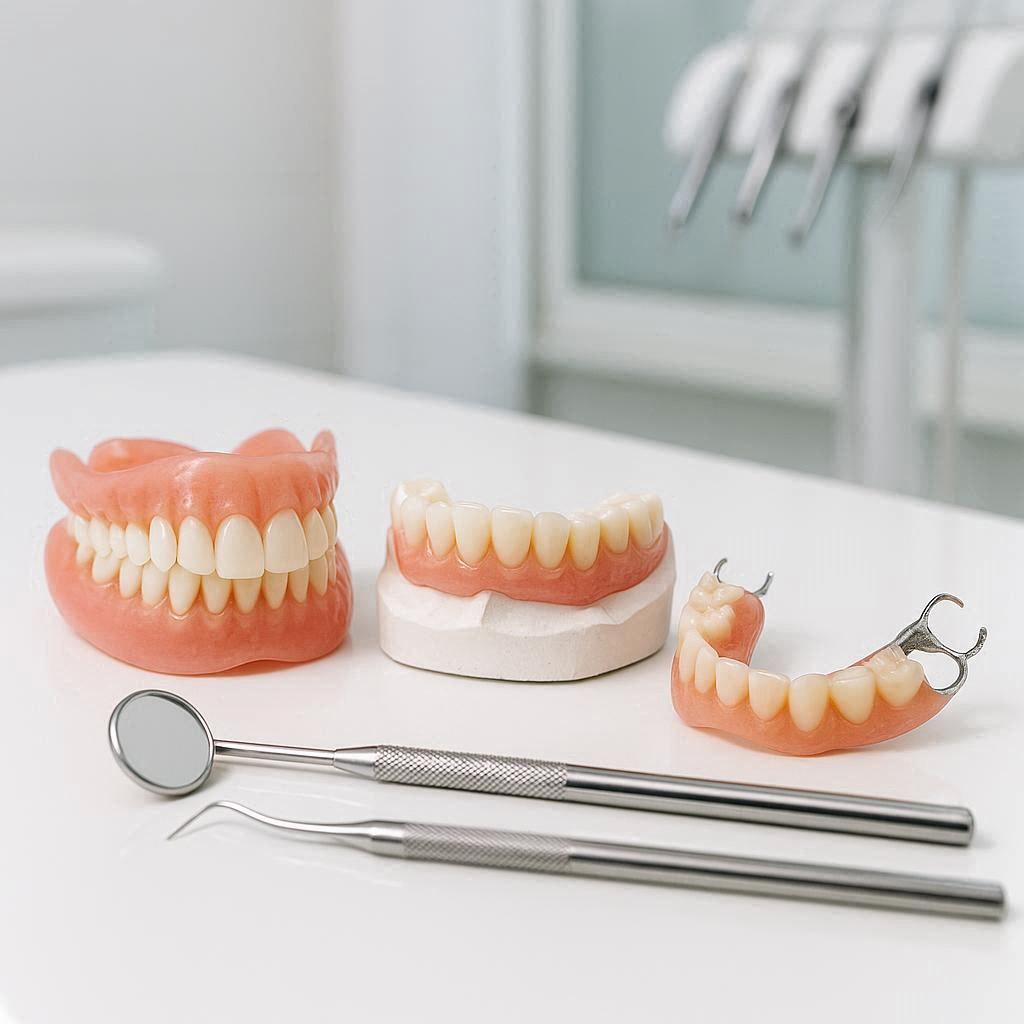
This is a classic solution. It works like a retainer with false teeth attached.
How it works
A partial denture has a gum-colored plastic base. Artificial teeth are attached to it. Small metal or acrylic clasps hook onto your remaining natural teeth. You take it out at night for cleaning.
Best for
- Multiple missing teeth scattered around your mouth
- Patients who want an affordable option
- People who cannot have surgery
- Those who prefer a non-invasive treatment
Advantages
- Lowest upfront cost
- No drilling or surgery
- Can replace many teeth at once
- Easy to repair if damaged
- No damage to natural teeth structure
Disadvantages
- Less stable than fixed options (may move while eating)
- Can feel bulky or uncomfortable at first
- Metal clasps might show when you smile
- Requires good daily cleaning
- May affect taste or speech initially
Modern improvements
Today’s partial dentures are better than your grandparent’s version. Flexible partials (Valplast) use soft, gum-colored material. They have no metal clasps. They look more natural and feel more comfortable.
Average lifespan
With good care, expect 5-8 years. The denture may need relining as your jawbone changes shape.
3. Complete Dentures (Full Dentures)
When you are missing all your teeth on one arch (upper or lower), complete dentures are a reliable solution.
How they work
A full denture sits directly on your gums. It uses suction (for the upper arch) or careful contouring (for the lower arch) to stay in place. Modern dentures look very natural.
Best for
- Patients with no remaining teeth on a full arch
- Older adults who have worn dentures before
- Budget-conscious patients
- Those who cannot have extensive surgery
Advantages
- Restores ability to chew and speak
- Non-surgical and non-invasive
- Most affordable full-arch solution
- Easy to adjust as your gums change
- Can be made same-day (immediate dentures)
Disadvantages
- Lower stability (especially for the lower jaw)
- May click or slip while eating
- Reduced chewing power (about 30-40% of natural teeth)
- Can cause sore spots on gums
- Requires adhesive for better hold
- Your jawbone will shrink over time without tooth roots
The lower denture challenge
Lower dentures are notoriously tricky. Your tongue and floor muscles want to dislodge them. Many patients prefer implant-supported dentures for the lower arch. But standard lower dentures still work for many people.
Quote from a denture wearer:
“My upper denture feels great. The lower one took me months to get used to. I use adhesive every day. But I am glad I avoided surgery.”
— Robert, age 68
4. Resin-Bonded Bridge (Maryland Bridge)
This is a conservative alternative. It is perfect for certain situations.
How it works
A resin-bonded bridge has a false tooth with small metal or ceramic wings on each side. The dentist bonds these wings to the back of your adjacent natural teeth. No filing is needed.
Best for
- Missing front teeth (low chewing force)
- Young patients with healthy enamel
- Temporary solution for teenagers waiting for implants
- Patients who refuse to file healthy teeth
Advantages
- Preserves your natural tooth structure
- No anesthesia needed
- Quick procedure (one or two visits)
- Lower cost than traditional bridges
- Easy to reverse if needed
Disadvantages
- Less strong than traditional bridges
- Not suitable for molars (too much biting force)
- The bonding can fail over time
- Shorter lifespan (3-8 years on average)
- May look slightly bulkier from behind
Important note
This option works best when your bite is light and your adjacent teeth are very healthy. Ask your dentist if you are a candidate.
5. Flipper (Acrylic Temporary Partial Denture)
A flipper is exactly what it sounds like. It is a very simple, small removable partial denture.
How it works
The dentist makes a small acrylic plate with one or two false teeth. It snaps into place gently. It is very lightweight.
Best for
- Temporary tooth replacement
- Waiting period for implants or bridges
- Children or teens with missing teeth
- Patients who need an immediate, cheap solution
Advantages
- Fastest option (sometimes same-day)
- Lowest possible cost for a tooth replacement
- No tooth preparation needed
- Easy to adjust or modify
- Can serve as a space maintainer
Disadvantages
- Not durable (cracks easily)
- Poor chewing ability
- Can break if you eat hard foods
- Not comfortable for long-term wear
- May affect your speech
Realistic expectation
Expect a flipper to last 6 to 24 months. Think of it as a temporary bandage, not a permanent solution. It works well while you save money or heal from an extraction.
What About Doing Nothing?
Yes, leaving a gap is technically an alternative. But you should know the risks.
Short-term (first year)
- Other teeth may shift into the gap
- Your bite might feel different
- You may chew on one side more
Long-term (several years)
- Teeth opposite the gap can super-erupt (grow downward)
- Bone loss occurs where the tooth root is missing
- Your face shape can change (sunken appearance)
- Higher risk of decay on shifted teeth
- More difficult and expensive treatment later
When doing nothing is acceptable?
- The missing tooth is a wisdom tooth
- The gap is at the very back and not visible
- You have a medical condition preventing any treatment
- You understand the risks and accept them
Important: Even if you do nothing, continue to brush and floss the gap area. Keep your regular dental checkups.
Lifestyle and Budget Considerations
Your choice depends on more than just your mouth. Let us look at real-life factors.
Budget-friendly ranking (lowest to highest cost)
- Doing nothing (free)
- Flipper (300−1,000)
- Removable partial denture (300−2,500)
- Complete dentures (600−8,000)
- Resin-bonded bridge (1,000−3,000)
- Fixed bridge (1,500−5,000)
- Dental implants (3,000−6,000+)
Time commitment ranking (fastest to slowest)
- Flipper (1-2 appointments)
- Removable partial denture (2-3 appointments)
- Complete dentures (3-4 appointments)
- Resin-bonded bridge (2 appointments)
- Fixed bridge (2-3 appointments)
- Dental implants (3-9 months)
Maintenance level (easiest to most involved)
- Doing nothing (no maintenance)
- Fixed bridge (normal brushing + flossing under bridge)
- Resin-bonded bridge (normal brushing)
- Removable partial denture (daily removal + soaking)
- Complete dentures (daily removal + overnight soaking)
- Flipper (daily removal + careful handling)
Medical Conditions That Rule Out Implants
Some health issues make implants risky. In these cases, alternatives are not just convenient—they are necessary.
Conditions that may prevent implants:
| Condition | Why Implants Are Risky | Better Alternative |
|---|---|---|
| Uncontrolled diabetes | Poor healing, infection risk | Dentures or bridges |
| Osteoporosis (severe) | Jawbone density too low | Removable partial denture |
| Blood thinning medication | Bleeding risk | Partial denture |
| Active cancer treatment | Weakened immune system | Flipper or denture |
| Heavy smoking | Implant failure common | Bridge or denture |
| Bruxism (teeth grinding) | Implants can fracture | Flexible partial denture |
| Autoimmune diseases | Chronic inflammation | Traditional denture |
Pregnancy
Dental implants require x-rays, anesthesia, and sometimes antibiotics. Most dentists postpone implants until after delivery. A flipper or bridge is a safer temporary solution.
How to Choose the Right Alternative
Ask yourself these seven questions. Your answers will guide you.
1. How many teeth are missing?
- One tooth → Fixed bridge, resin-bonded bridge, or partial denture
- Several teeth scattered → Removable partial denture
- All teeth on one arch → Complete denture
2. Where are the gaps?
- Front teeth → Resin-bonded bridge or flexible partial
- Molars → Fixed bridge or traditional partial
- Very back teeth → Possibly no treatment needed
3. What is your budget right now?
- Under $500 → Flipper or save up
- 500−2,000 → Partial denture or resin-bonded bridge
- 2,000−5,000 → Fixed bridge or better denture
- Over $5,000 → Consider implants or implant-supported dentures
4. Do you mind something removable?
- Prefer fixed → Bridge
- Okay with removable → Partial denture
5. How is your oral hygiene?
- Excellent → Bridge or resin-bonded
- Average → Partial denture (easier to clean around)
- Struggles with hygiene → Dentures (can clean outside the mouth)
6. Are your adjacent teeth healthy?
- Strong, no fillings → Bridge or partial denture
- Weak, many fillings → Partial denture (no extra stress on weak teeth)
7. Can you tolerate surgery?
- Yes, but not for implants → Bridge (no cutting into bone)
- No → Dentures or partials
Step-by-Step Decision Flowchart (Text Version)
If you cannot see a visual flowchart, follow this logic path:
Start here → Are you missing one tooth?
- Yes → Are adjacent teeth healthy?
- Yes → Consider fixed bridge or resin-bonded bridge
- No → Consider removable partial denture
- No → Go to next question
Are you missing multiple teeth in a row?
- Yes → Fixed bridge (if 2-3 teeth) or partial denture (if more)
- No → Go to next question
Are you missing all teeth on an arch?
- Yes → Complete denture (upper or lower)
- No → Go to next question
Are your teeth missing in different areas?
- Yes → Removable partial denture
- No → Flipper or do nothing
Common Myths About Implants and Alternatives
Let us clear up some confusion.
Myth 1: “Dentures are old-fashioned and ugly.”
Truth: Modern dentures use high-quality teeth and pink acrylic. Many look completely natural. The “fake” look comes from cheap dentures or poor fit.
Myth 2: “Bridges never last.”
Truth: With good hygiene, a bridge can last 15+ years. The weak point is not the bridge but the anchor teeth. Keep them clean, and they last.
Myth 3: “Partial dentures ruin your other teeth.”
Truth: Metal clasps can cause wear over decades. But flexible partials and well-designed clasps minimize damage. Proper cleaning prevents decay.
Myth 4: “Implants are the only way to stop bone loss.”
Truth: Implants do preserve bone. But partial dentures and bridges cause less bone loss than doing nothing. And complete dentures cause the most bone loss. So implants are best, but others are not useless.
Myth 5: “Alternatives are painful.”
Truth: Bridges and partials cause no more discomfort than a routine filling. Dentures may cause sore spots during adjustment. But this is temporary.
Care and Maintenance for Each Alternative
Long life depends on how you care for your restoration.
For fixed bridges:
- Use super floss or bridge floss daily
- Consider a water flosser on low pressure
- Avoid chewing ice or hard candy
- Get professional cleanings every 6 months
For removable partial dentures:
- Remove and rinse after meals
- Brush with a soft brush and mild soap (not toothpaste)
- Soak in denture cleaner weekly
- Handle over a towel (they break if dropped)
- Remove at night to let your gums rest
For complete dentures:
- Brush daily with a denture brush
- Soak overnight in water or cleaning solution
- Never use hot water (warping risk)
- Remove adhesive daily with a soft cloth
- Visit your dentist yearly for fit checks
For resin-bonded bridges:
- Avoid biting directly with the false tooth
- Do not eat sticky caramels or taffy
- Tell your dentist if you feel movement
- Normal brushing and flossing is fine
For flippers:
- Same care as partial dentures
- Replace as soon as possible (temporary only)
- Do not sleep while wearing it
When Should You Consider Implants Anyway?
Alternatives are great. But sometimes implants are worth saving for.
Consider implants if:
- You are under 50 with good bone density
- You want a 20+ year solution
- You have the budget or dental insurance coverage
- You hate the idea of removable teeth
- Your adjacent teeth are perfectly healthy (do not file them for a bridge)
A middle path: Implant-supported dentures. These use 2-4 implants to lock a denture in place. You get the stability of implants with lower cost and less surgery than full-mouth implants.
Questions to Ask Your Dentist
Before deciding, print this list and bring it to your appointment.
- “Based on my x-rays, am I a candidate for a fixed bridge?”
- “How much tooth reduction would my anchor teeth need?”
- “Do you offer flexible partial dentures without metal clasps?”
- “What is the total cost including adjustments and follow-ups?”
- “Does my insurance cover this alternative?”
- “How long do your patients typically keep this restoration?”
- “What are the failure rates for this option in your practice?”
- “Can I see before-and-after photos of similar cases?”
- “Would an implant be significantly better for my specific mouth?”
- “What happens if this alternative fails in five years?”
Resources for Low-Cost Dental Care
If cost is your main barrier, here are real options.
Dental schools
Dental students need patients for training. Supervising professors check every step. Prices are 30-50% lower. Search for “dental school near me.”
Public health clinics
Many counties offer sliding-scale dental clinics. Fees depend on your income. Wait times vary.
Dental discount plans
These are not insurance. You pay an annual fee (around 100−150). Then you get 20-40% off at participating dentists. Good for partials and bridges.
CareCredit
A medical credit card. Many dental offices accept it. Offers 6-12 months interest-free financing.
Dental tourism
Mexico, Costa Rica, and Thailand offer quality dentistry at lower prices. Research carefully. Choose clinics with international accreditation. Factor in travel costs.
Frequently Asked Questions (FAQ)
Q: What is the cheapest alternative to dental implants?
A: A flipper partial denture costs as little as 300.Butitistemporary.Foralonger−termcheapoption,astandardremovablepartialdenturestartsaround500.
Q: Can you eat normally with alternatives to implants?
A: Fixed bridges allow normal eating within 24 hours. Partial dentures require a 1-2 week adjustment. Lower dentures are the hardest for eating. Avoid very hard or sticky foods with any alternative.
Q: How long do alternatives to implants last?
A: Fixed bridges: 10-15 years. Partial dentures: 5-8 years. Complete dentures: 5-10 years. Resin-bonded bridges: 3-8 years. Flippers: 6-24 months.
Q: Do alternatives to implants damage your other teeth?
A: Fixed bridges require filing healthy teeth (irreversible). Partial denture clasps can cause wear over many years. Resin-bonded bridges cause no damage. Dentures cause no damage to other teeth.
Q: Are there alternatives to implants for a single missing tooth?
A: Yes. Fixed bridge, resin-bonded bridge, removable partial denture, or flipper are all options for one missing tooth.
Q: Can I sleep with removable alternatives?
A: No. Remove partial dentures and complete dentures at night. Your gums need rest. Sleeping with them raises infection risk and speeds bone loss.
Q: Will my insurance cover alternatives to implants?
A: Most dental insurance covers bridges and dentures better than implants. Many plans pay 50% of the cost up to a yearly maximum. Check your specific plan.
Q: What is the most natural-looking alternative?
A: A high-quality fixed bridge or flexible partial denture looks very natural. The material and lab work matter more than the type.
Q: Can I switch from a bridge to an implant later?
A: Yes. But your anchor teeth will already be filed down. You would need crowns on those teeth anyway. It is still possible.
Q: Are there natural or home remedies as alternatives?
A: No. Do not try DIY teeth. Superglue, acrylic kits, or at-home dentures are dangerous. See a dentist.
Additional Resource
For a detailed cost comparison and dentist locator tool, visit the American College of Prosthodontists (gotoapro.org). They specialize in tooth replacement and can help you find a specialist near you.
Disclaimer
This article is for general informational purposes only. It does not constitute medical or dental advice. Oral health needs vary from person to person. Always seek the advice of a licensed dentist with any questions regarding your specific condition. Never disregard professional advice because of something you read here. The author and publisher are not liable for any outcomes related to the use of this information.
Conclusion
Dental implants are excellent but not the only answer. Fixed bridges, removable partial dentures, and complete dentures offer realistic, effective alternatives based on your budget, health, and preferences. Talk to your dentist, weigh your priorities, and choose the option that fits your life—not someone else’s.