All on 6 Dental Implants Problems: What Your Dentist Might Not Tell You
You’ve seen the ads. Beautiful smiles. A full set of new teeth in just one day. The promise is tempting: six tiny screws hold an entire arch of teeth, and you walk out feeling like a new person.
But here’s the truth no one likes to talk about.
All-on-6 dental implants are a medical procedure. And like any medical procedure, things can go wrong. Not always. Not for everyone. But often enough that you need to know what lurks beneath the glossy marketing.
I’ve spoken to patients, read the studies, and sifted through the forums where people share their real stories. This guide is for you if you want the unfiltered version of what life with All-on-6 can actually look like.
What Exactly Is All-on-6? (A Quick Refresher)
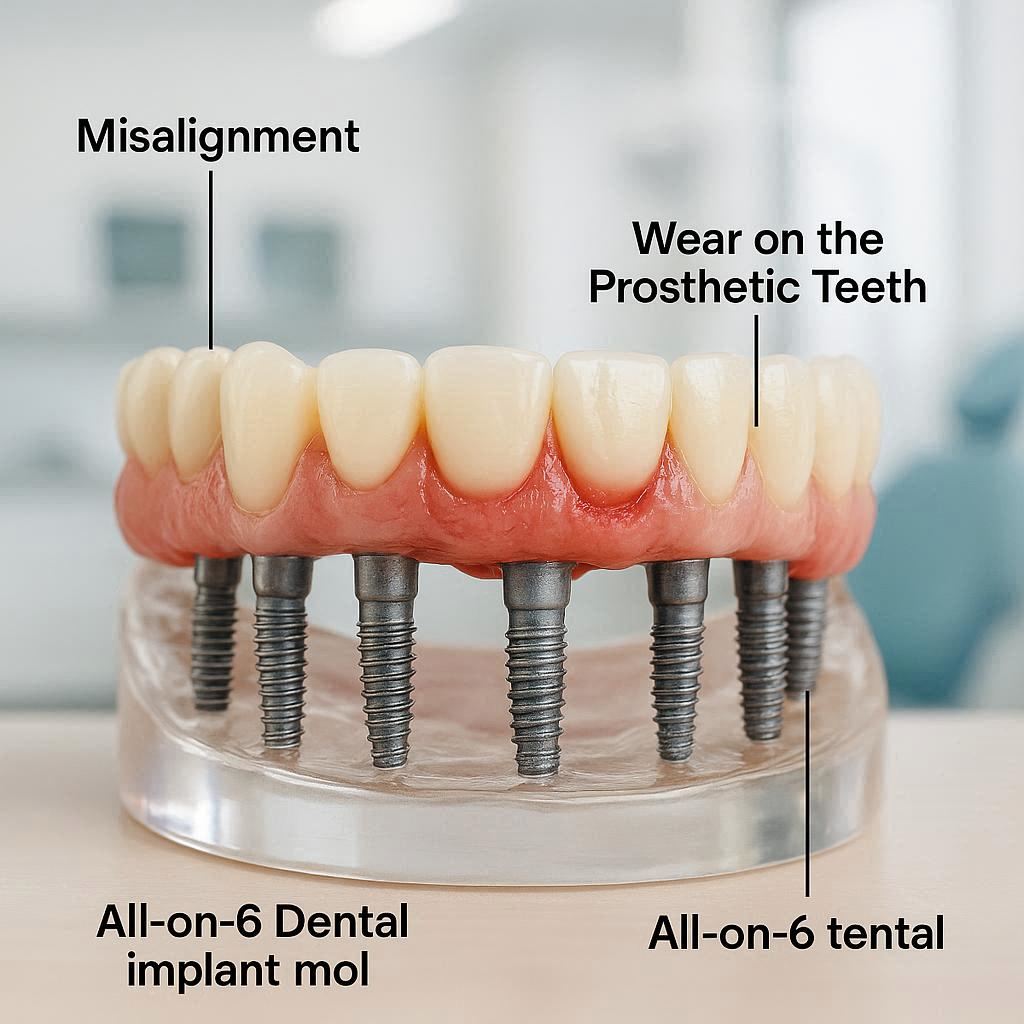
Before we dive into the problems, let’s make sure we’re on the same page. The All-on-6 concept is a technique where a dentist places six titanium implants into your jawbone. These implants act as anchors. Then, a fixed bridge of prosthetic teeth is screwed onto them.
The idea is to replace all teeth in one arch (upper or lower) with a non-removable solution. It’s often faster than placing individual implants for each missing tooth. And it can feel more stable than dentures.
Sounds great, right? It can be. But only when everything goes perfectly.
The Most Common All on 6 Dental Implants Problems
Let’s cut to the chase. What actually goes wrong?
The problems fall into several categories. Some happen right after surgery. Others appear months or even years later. And a few are simply part of living with this type of restoration.
Here is the honest list.
1. Implant Failure: When One or More Implants Don’t Fuse
The most serious problem? An implant fails to integrate with your bone. This is called osseointegration failure. The bone simply refuses to grow around the titanium screw.
In an All-on-6 procedure, you have six implants. But here is the uncomfortable truth: if one fails, the entire structure is at risk.
“I had two implants fail within the first three months. My dentist said it was rare. But then I joined a support group and saw how common it actually is.” — Former All-on-6 patient, online forum.
Why does this happen?
- Poor bone density
- Infection at the surgical site
- Overheating of the bone during drilling
- The patient smokes (smoking dramatically increases failure rates)
- Uncontrolled diabetes
What does this mean for you? If one implant fails, the bridge can become loose. It may rock back and forth when you chew. In some cases, the dentist can remove the failed implant and try again with a different angle. In other cases, you drop down to five implants. And if multiple implants fail? The entire restoration may need to be redone.
2. Peri-Implantitis: The Silent Bone Destroyer
You need to know this word. Peri-implantitis.
It’s the inflammatory disease that affects the soft and hard tissues surrounding a dental implant. Think of it as gum disease, but for implants. And it is devastating.
Here is how it works. Bacteria build up around the implant. The gums become red, swollen, and they bleed. Over time, this infection eats away at the bone that holds the implant in place. The implant becomes loose. And eventually, it fails completely.
Peri-implantitis is alarmingly common. Some studies show that up to 20-30% of patients develop this condition within 10 years of implant placement.
Signs to watch for:
- Bleeding when you brush around the bridge
- A bad taste in your mouth
- Pus coming from the gums
- The bridge feels like it is moving
The scary part? By the time you feel pain, you have already lost significant bone.
3. Difficulty Cleaning: The Hidden Maintenance Nightmare
Let me ask you something. How often do you floss?
If you struggle with regular flossing on natural teeth, All-on-6 might not be for you.
Cleaning an All-on-6 bridge is not simple. You cannot floss between the teeth in a normal way. Instead, you need special tools: super floss, water flossers, and tiny brushes that thread underneath the bridge.
Imagine trying to clean underneath a fixed bridge that sits close to your gums. Food gets trapped. Bacteria multiply. And if you do not remove that debris daily, you are inviting peri-implantitis to your doorstep.
The daily cleaning routine for All-on-6:
- Water flosser (minimum once per day)
- Interdental brushes of varying sizes
- Threader floss to go underneath the bridge
- Regular brushing of the prosthetic teeth
This takes time. Patients who are not committed to this routine almost always develop problems.
4. The Food Trap Problem
Certain foods become your enemy.
Fibrous foods like steak, raw vegetables, and even bread can wedge themselves between the bridge and your gums. Once trapped, they are difficult to remove without a water flosser.
Patients report that eating in restaurants becomes stressful. You finish a meal, and you feel that uncomfortable pressure of food lodged under your bridge. You excuse yourself to the bathroom to flush it out.
This is not a rare complaint. It is a daily reality for many All-on-6 patients.
5. Fracture of the Prosthetic Bridge
The bridge itself is not indestructible.
All-on-6 bridges are typically made of acrylic or zirconia. Acrylic is cheaper but much weaker. It can chip, crack, or even break in half if you bite into something hard.
Zirconia is stronger but more brittle. Drop it on a hard floor during a cleaning appointment? It can crack.
What happens when the bridge breaks?
You cannot simply glue it back on. The bridge is screwed into your implants. If it fractures, you may need to send it to a lab for repair. That can take days or weeks. In the meantime, you might be left with a broken, uncomfortable appliance in your mouth—or no teeth at all.
6. Bone Loss Under the Bridge
Even when implants integrate successfully, the bone underneath the bridge can shrink over time. This is called bone resorption.
Why does this happen? Your jawbone needs stimulation from chewing to maintain its density. Natural teeth provide that stimulation through the periodontal ligament. Implants do not have that ligament. They are rigidly fixed.
Over years, the bone around the implants can recede. This exposes the threads of the implant. It creates dark triangles between the gum and the bridge. And it can make cleaning even more difficult.
7. Speech Changes and Lisping
This one surprises many people.
Your new teeth are larger than your natural teeth. They sit differently in your mouth. For the first few weeks—sometimes months—you might lisp or slur certain sounds.
The “s” sound is particularly difficult. So is “th.”
For most patients, this improves as your tongue adapts. But for some, the changes are permanent. The roof of your mouth is now covered by the bridge. Your tongue has less space. That changes how you speak.
8. The High Cost and Repair Expenses
Let’s talk money. Honestly.
The initial cost of All-on-6 typically ranges from 20,000to40,000 per arch. But that is just the beginning.
Ongoing costs include:
- Professional cleanings every 3-4 months (not every six months like natural teeth)
- Replacement of the prosthetic bridge every 10-15 years (5,000to15,000)
- Repair of chipped or cracked teeth
- Treatment for peri-implantitis (which can cost thousands)
- Replacement of failed implants
Many patients assume the upfront cost covers everything forever. It does not.
9. Difficulty Adjusting to the Bite Force
Your natural teeth can feel how hard you are biting. They send signals to your brain that say, “That’s too hard—stop.”
Implants cannot do this. They have no nerve endings.
This means you can bite down with excessive force without realizing it. Over time, this can damage the bridge, the screws, or even the implants themselves.
Patients who grind or clench their teeth (bruxism) are at especially high risk. If you grind at night, you will almost certainly need a night guard to protect your All-on-6 bridge.
10. Nerve Damage and Numbness
Implant surgery involves drilling into your jawbone. In the lower jaw, there is a large nerve called the inferior alveolar nerve. If that nerve is damaged during surgery, you can experience permanent numbness in your lower lip, chin, and gums.
This complication is rare but real. One study estimated nerve injury occurs in about 1-2% of lower jaw implant surgeries. For the patient affected, it is devastating. Imagine a numb chin for the rest of your life. You drool without knowing it. You cannot feel food on your lip.
Comparing All-on-6 Problems to Other Tooth Replacement Options
To help you make a fair comparison, here is a table showing how All-on-6 stacks up against other options for full-arch replacement.
| Problem | All-on-6 | Traditional Dentures | Individual Implants (Full Arch) |
|---|---|---|---|
| Implant failure risk | Moderate (6 implants means more chances) | Not applicable | Lower (but more surgeries) |
| Peri-implantitis risk | High (hard to clean) | Not applicable | Lower (easier to clean) |
| Cleaning difficulty | Very high | Moderate (removable) | Low (like natural teeth) |
| Bone loss over time | Slow but continuous | Severe (no stimulation) | Minimal |
| Food trapping | Significant | Variable | Low |
| Repair cost | Very high | Low | Moderate |
| Speech issues | Temporary or permanent | Temporary | Rare |
| Nerve damage risk | Low | None | Low |
Who Should Be Extra Cautious About All-on-6?
Not everyone is a good candidate. And many dentists will not tell you no—because they want your business.
Be very careful if you:
- Smoke. Smokers have significantly higher failure rates. Some studies show a 15-20% higher risk.
- Have uncontrolled diabetes. High blood sugar impairs healing and increases infection risk.
- Take bisphosphonates (osteoporosis medications). These drugs can lead to osteonecrosis of the jaw—a condition where the bone dies.
- Grind your teeth. Without protection, you will damage the bridge.
- Have poor oral hygiene habits. If you rarely brushed your natural teeth, you will not maintain an All-on-6 bridge.
- Have insufficient bone height. Many patients need bone grafting before All-on-6. That adds time, cost, and risk.
The Emotional and Psychological Impact
We talk about physical problems. But what about the emotional ones?
Patients who experience All-on-6 problems report anxiety around eating in public. Fear of food getting stuck. Fear of the bridge breaking. Fear of implants failing.
Some develop depression after a failed restoration. They spent $30,000 expecting a perfect smile. Instead, they got pain, repeated dental visits, and uncertainty.
This is not to scare you. It is to prepare you. Going into this surgery with realistic expectations is the best protection against disappointment.
Real Solutions: How to Minimize All-on-6 Problems
I promised you honest information. So here is the good news: many of these problems can be prevented or minimized.
Choose Your Surgeon Carefully
Do not go to the cheapest place. Do not go to the place advertising “teeth in a day” on a billboard. Go to a board-certified prosthodontist or oral surgeon who has placed hundreds of All-on-6 restorations.
Ask them:
- How many All-on-6 procedures have you done?
- What is your implant failure rate?
- How do you manage peri-implantitis when it occurs?
- Can you show me before-and-after photos of your own patients (not stock photos)?
A good surgeon will answer these questions openly. A bad one will deflect or become defensive.
Commit to Meticulous Home Care
This is non-negotiable.
Buy a water flosser. Use it after every meal. Buy interdental brushes. Use threader floss every night before bed. See your hygienist every three to four months.
If this sounds like too much work, All-on-6 is not for you. Choose removable dentures instead.
Stop Smoking
I know. Easier said than done. But smoking and implants are a terrible combination. Smoking reduces blood flow to your gums. That means less oxygen for healing. Your implants are far more likely to fail.
If you cannot quit, consider a different tooth replacement option.
Wear a Night Guard
If you grind your teeth, get a custom night guard from your dentist. Wear it every night. It will protect your bridge from fracture and your implants from excessive force.
Plan for the Long-Term Cost
Do not spend your entire savings on the initial surgery. Keep money aside for future repairs, replacement bridges, and extra cleanings.
A reasonable reserve is 20-30% of the initial cost. For a 30,000procedure,thatmeanshaving6,000 to $9,000 available for long-term maintenance.
When All-on-6 Is Still a Good Choice
Despite all these problems, All-on-6 is the right choice for many people. It offers stability that dentures cannot match. It prevents the severe bone loss that comes with traditional dentures. And for patients who are committed to care, it can last 20+ years.
You are a good candidate if:
- You have adequate bone density
- You are a non-smoker
- You have excellent oral hygiene habits
- You understand the maintenance requirements
- You have realistic expectations
A Note on Alternative Options
Before committing to All-on-6, explore these alternatives:
All-on-4. Four implants instead of six. Fewer implants means less risk of implant failure (because there are fewer to fail). But the bridge has less support, so you may have more movement when chewing.
Removable implant-supported dentures. The denture clips onto 2-4 implants but comes out for cleaning. Cleaning is much easier. But the denture can move slightly.
Traditional dentures. No surgery. Lower upfront cost. But bone loss continues, and many patients hate the feeling of loose teeth.
Fixed bridge on individual implants. One implant per missing tooth. Best cleaning access. But much more expensive and requires more surgeries.
Conclusion: Three Lines You Need to Remember
All-on-6 dental implants can fail due to implant rejection, peri-implantitis, or bone loss—problems that require costly repairs. Cleaning the bridge is difficult and time-consuming, making good oral hygiene essential for success. Before choosing All-on-6, honestly assess your smoking status, oral hygiene habits, and budget for long-term maintenance.
Frequently Asked Questions (FAQ)
1. How long does All-on-6 last before problems appear?
Most patients get 10-15 years of use before the bridge needs replacement. Implants themselves can last much longer if properly maintained. However, peri-implantitis can begin as early as 1-2 years after placement if cleaning is poor.
2. Can All-on-6 implants be removed if they fail?
Yes. Failed implants can be surgically removed. However, this leaves holes in your jawbone that may require bone grafting before placing new implants. The process is expensive and takes months.
3. Is All-on-6 painful?
The surgery is performed under anesthesia, so you feel no pain during the procedure. Post-surgical pain is typically moderate and manageable with medication. However, if implants fail or peri-implantitis develops, you may experience chronic pain.
4. Can I get All-on-6 if I have gum disease?
No. Active gum disease must be treated and resolved before implant surgery. Placing implants into infected gums almost guarantees failure.
5. How do I clean underneath my All-on-6 bridge?
You need a water flosser (like Waterpik) aimed at the gum line from both the cheek side and tongue side. You also need super floss or implant-specific floss that threads underneath the bridge. Your dentist should teach you this technique before you leave the office.
6. What is the success rate of All-on-6?
Studies show a 90-95% success rate over 5-10 years. However, “success” means the implants are still in place—not that you have no problems. Many patients with successful implants still struggle with cleaning, food trapping, or peri-implantitis management.
7. Does insurance cover All-on-6 problems?
Most dental insurance plans do not cover implants or their complications. Medical insurance rarely covers dental implant problems unless the issue stems from a covered medical condition. You will likely pay out of pocket for repairs.
8. Can I replace just one tooth on my All-on-6 bridge if it breaks?
Yes, but it is not simple. The bridge is one solid piece. Repairing a single tooth usually means removing the entire bridge, sending it to a lab, and wearing a temporary bridge for 1-2 weeks. The cost is typically 500−2,000 per repair.
9. Will my face look different with All-on-6?
Your face may look fuller because the bridge replaces lost bone volume and supports your lips and cheeks. For most patients, this is a positive change. However, if the bridge is too bulky, it can cause an unnatural, “horse-like” appearance.
10. What should I do if I think I have peri-implantitis?
See your dentist immediately. Early peri-implantitis can be treated with deep cleaning, antibiotics, and laser therapy. Advanced peri-implantitis may require flap surgery or implant removal. Do not wait.
Additional Resource
For a deeper understanding of implant complications, including clinical studies on peri-implantitis rates and long-term survival of All-on-6 restorations, visit the American Academy of Implant Dentistry patient education section:
🔗 www.aaid.com/patient-resources
(Note: This link is a resource suggestion. Always verify current URLs and consult your own dentist for personalized advice.)
Disclaimer: This article is for informational purposes only and does not constitute medical advice. Dental implant surgery carries risks. Always consult with a licensed dental professional to determine the best treatment for your specific health situation. The author and publisher are not responsible for any outcomes resulting from the use of this information.