Dental Implants in Bartlesville
If you have missing teeth, you already know it can affect more than just your smile. Chewing becomes tricky. Speaking feels different. Over time, your confidence takes a hit. That is where dental implants come in. For residents of Bartlesville, this tooth replacement option has grown into a popular, reliable, and long-lasting solution.
But let us be honest. The idea of getting implants can feel overwhelming. You might have questions about pain, price, or how long the process takes. And with so many dentists offering services in Washington County, how do you choose?
This guide will walk you through everything you need to know about dental implants in Bartlesville. No fluff. No confusing medical jargon. Just clear, practical information to help you make a smart decision for your oral health.
What Are Dental Implants? A Simple Explanation
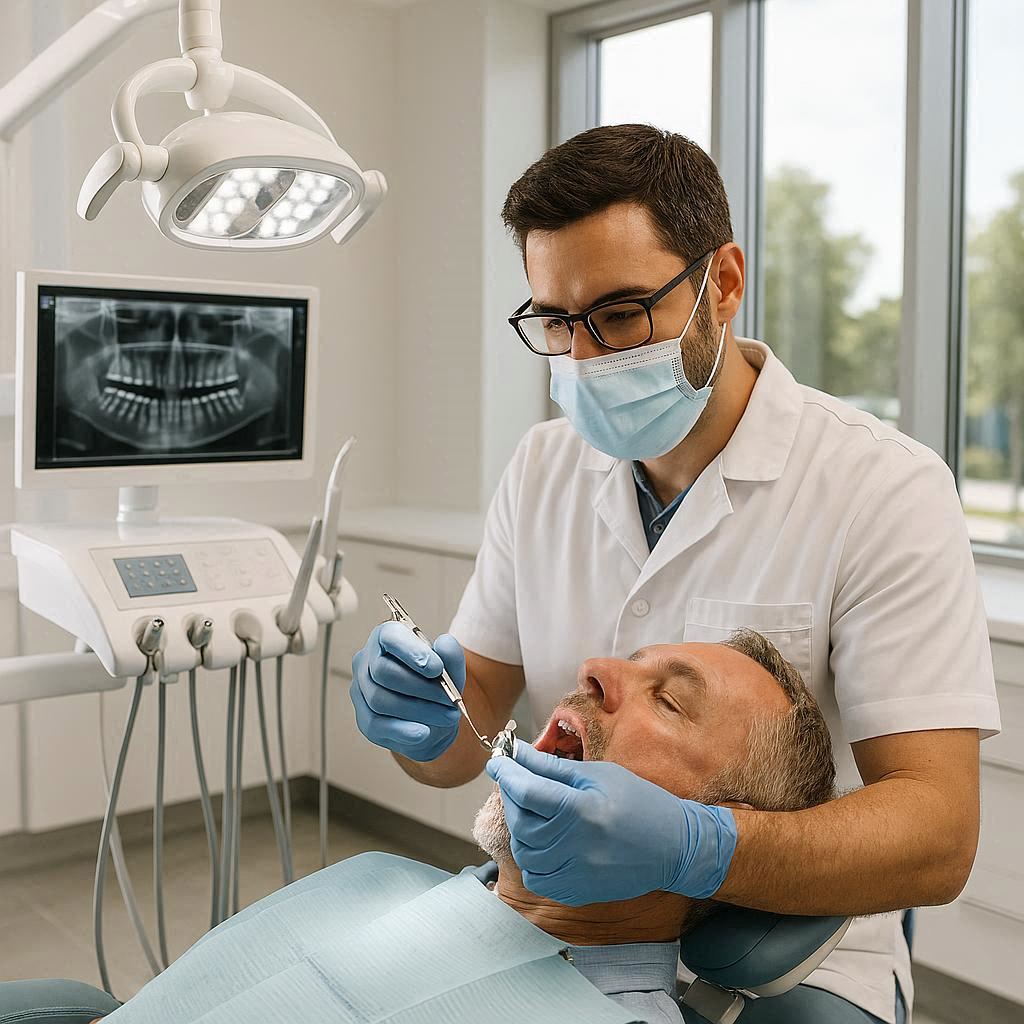
Think of a dental implant as an artificial tooth root. A skilled dentist places a small titanium post into your jawbone. Over time, that post fuses with the bone through a process called osseointegration. Once healed, we attach a custom-made crown on top. The result looks, feels, and functions like a natural tooth.
Unlike dentures or bridges, implants stand alone. They do not rely on neighboring teeth for support. This means your healthy teeth stay untouched.
*“Dental implants are the closest thing to natural teeth that modern dentistry can offer,” says Dr. Emily Hart, a Bartlesville-based prosthodontist. “For most patients, they restore 98% of natural biting force.”*
Why Choose Dental Implants in Bartlesville?
Bartlesville offers a unique advantage. The city has a strong network of experienced general dentists, oral surgeons, and periodontists. Many have trained at top institutions and bring advanced technology to their practices.
But beyond local expertise, here is why people in Bartlesville are turning to implants:
- Long-term value – With proper care, implants can last 25 years to a lifetime.
- Natural appearance – Modern crowns match the color, shape, and translucency of real teeth.
- Improved comfort – No slipping, clicking, or sore spots like dentures.
- Bone preservation – Implants stimulate your jawbone, preventing the sunken look that follows tooth loss.
- Easy maintenance – Brush, floss, and see your dentist regularly. No special cleaners or adhesives.
Who Is a Good Candidate for Dental Implants?
Most healthy adults qualify for implants. However, certain conditions can affect success.
Ideal candidates usually have:
- One or more missing teeth
- Sufficient jawbone density
- Healthy gums (no active periodontal disease)
- Good overall health (controlled diabetes, no uncontrolled autoimmune disorders)
- A commitment to oral hygiene
What if you lack enough bone?
You are not automatically disqualified. Many Bartlesville dentists offer bone grafting procedures. This involves adding bone material to thin or soft areas. After several months of healing, you can proceed with implants.
Important note for smokers
Tobacco use significantly increases implant failure rates. It reduces blood flow to the gums and slows healing. If you smoke, talk openly with your dentist. Some practices in Bartlesville offer smoking cessation programs to improve your odds.
Types of Dental Implants Available in Bartlesville
Not all implants are the same. Your dentist will recommend a type based on how many teeth you are missing and the condition of your jawbone.
| Implant Type | Best For | Number of Implants | Restoration |
|---|---|---|---|
| Single tooth implant | One missing tooth | 1 implant | 1 crown |
| Implant-supported bridge | 2–4 adjacent missing teeth | 2 implants | 3–4 unit bridge |
| All-on-4 (full arch) | All upper or lower teeth missing | 4 implants | Fixed denture/bridge |
| Overdenture | Edentulous jaw with bone loss | 2–4 implants | Removable but stable denture |
Single tooth implant
This is the most common type. The dentist places one post and attaches one crown. It does not affect neighboring teeth.
Implant-supported bridge
Instead of placing an implant for every missing tooth, the dentist uses two or three implants to support a bridge. This reduces cost and surgery time.
All-on-4
For patients missing all teeth on an arch, All-on-4 provides a fixed, non-removable set of teeth using just four implants. Recovery is faster than traditional methods.
Overdentures
These are removable dentures that snap onto implants. They offer more stability than conventional dentures but can be taken out for cleaning.
The Step-by-Step Process: What to Expect Locally
Getting dental implants in Bartlesville is not a one-day affair. The full journey typically takes 4 to 9 months. Here is what each phase looks like.
Step 1: Initial consultation (1–2 hours)
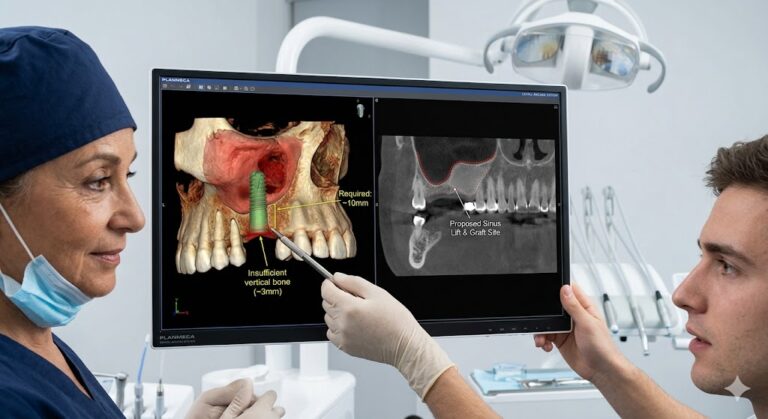
Your dentist performs a comprehensive exam. This includes digital X-rays and often a 3D cone beam CT scan. The scan maps your jawbone, nerves, and sinuses. You discuss medical history, goals, and budget. The dentist determines if you need preliminary work like extractions or bone grafting.
Step 2: Treatment planning
Using the scan data, your dentist creates a surgical guide. This ensures precise implant placement. You receive a detailed timeline and cost estimate.
Step 3: Implant placement surgery (1–2 hours per arch)
On surgery day, the dentist numbs the area with local anesthesia. Sedation options (like nitrous oxide or oral sedatives) are available for nervous patients. The dentist makes a small incision in the gum, drills a precise hole, and inserts the titanium post. The gum is then stitched closed. You go home the same day.
Step 4: Osseointegration (3–6 months)
This is the healing phase. The implant fuses with your jawbone. During this time, you wear a temporary partial denture or bridge to maintain appearance and function. You stick to soft foods for the first week.
Step 5: Abutment placement (30 minutes)
Once the implant is stable, the dentist reopens the gum to attach a small connector piece called an abutment. This piece will hold the final crown. Healing caps are placed for two weeks as gum tissue shapes around the abutment.
Step 6: Final crown delivery (1–2 hours)
Your dentist takes impressions or uses a digital scanner to design your permanent crown. A dental lab fabricates it. At your final visit, the dentist cements or screws the crown onto the abutment. You walk out with a fully restored smile.
Note: Some Bartlesville clinics offer same-day implants using advanced technology. However, this is only suitable for specific cases. Your dentist will explain if you qualify.
Dental Implants vs. Alternatives: An Honest Comparison
Before committing to implants, it helps to see how they stack up against other options.
| Feature | Dental Implant | Fixed Bridge | Removable Denture |
|---|---|---|---|
| Longevity | 25+ years | 7–15 years | 5–10 years |
| Bone preservation | Yes | No | No |
| Affects adjacent teeth | No | Yes (shaving down) | No |
| Chewing efficiency | ~98% | ~75% | ~30–50% |
| Initial cost | Higher | Moderate | Lower |
| Maintenance | Regular brushing/flossing | Special floss required | Adhesives, soaking |
| Comfort | Like natural teeth | Can trap food | May slip or click |
The bottom line: Implants cost more upfront but offer superior function, comfort, and longevity. For many Bartlesville residents, the investment pays off within five years when you factor in replacements, repairs, and dietary restrictions of other options.
Cost of Dental Implants in Bartlesville
Let us talk numbers. This is the most common concern, and transparency matters.
Average price ranges (per tooth)
| Procedure | Estimated Cost |
|---|---|
| Single implant + crown | 3,500–6,000 |
| Implant-supported bridge (3 units) | 6,000–12,000 |
| All-on-4 per arch | 15,000–30,000 |
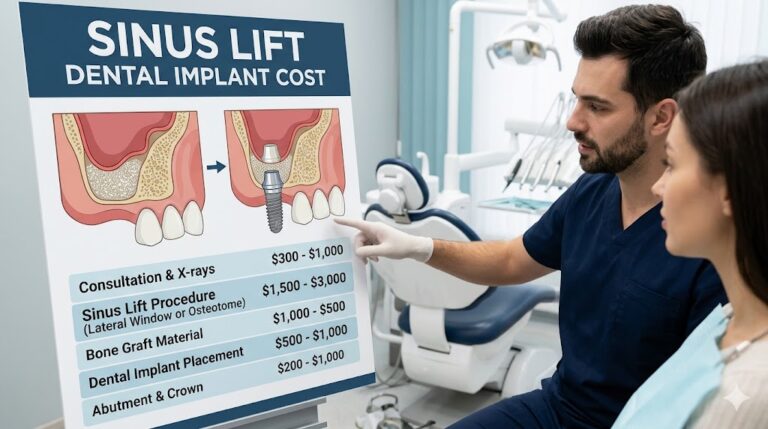
| Bone grafting (if needed) | 500–2,000 |
| Sinus lift (upper back jaw) | 1,500–3,000 |
These figures include surgery, materials, and the final crown. They do not include X-rays or CT scans (200–500) or sedation (200–600).
Why the range?
Several factors influence price:
- Dentist’s experience – A board-certified oral surgeon may charge more than a general dentist.
- Material quality – Zirconia (metal-free) crowns cost more than porcelain-fused-to-metal.
- Lab fees – Premium dental labs charge higher fees for lifelike aesthetics.
- Location – Practices in central Bartlesville might have different overhead than those on the outskirts.
Does insurance cover implants?
It depends. Most traditional dental insurance plans classify implants as a cosmetic or major procedure. They may cover 10–30% of the crown portion but not the implant surgery. However, some PPO plans are starting to include implant benefits.
Pro tip: Call your insurance provider and ask for the “implant code” (D6010). Also ask about the annual maximum. Many Bartlesville dental offices will file claims on your behalf.
Financing options in Bartlesville
If you cannot pay upfront, do not worry. Local dentists often partner with:
- CareCredit – Healthcare credit card with promotional financing (6–24 months no interest if paid in full).
- LendingClub – Fixed-rate loans specifically for dental work.
- In-house payment plans – Some Bartlesville clinics offer monthly payments with no credit check.
Always ask for a written treatment plan before starting. It should list every fee, from the initial CT scan to the final crown adjustment.
Choosing the Right Dentist for Dental Implants in Bartlesville
You want someone skilled, honest, and easy to talk to. Here is how to find that person.
Credentials to look for
- DDS or DMD – Doctor of Dental Surgery or Doctor of Dental Medicine.
- Additional implant training – Look for terms like “Fellow of the International Congress of Oral Implantologists (ICOI)” or “Diplomate, American Board of Oral Implantology.”
- Years of experience – Ask: “How many implants have you placed in the last year?” A good answer is 50 or more.
Questions to ask during your consultation
- “What is your success rate with implants in patients like me?”
- “Do you use 3D imaging and surgical guides?” (Yes improves precision.)
- “What happens if the implant fails? Do you offer a warranty or replacement guarantee?”
- “Who handles each step – you or a referred specialist?” (Some general dentists place and restore. Others refer the surgery to an oral surgeon.)
- “Can I speak to a previous patient who had the same procedure?”
Red flags to avoid
- A dentist who guarantees 100% success (no ethical practitioner does).
- Prices that seem too good to be true (e.g., $1,500 for a full implant and crown).
- Pressure to decide immediately or “sign today for a discount.”
Local recommendations
Ask friends, family, or your general dentist for referrals. You can also check online reviews on Google Maps and Healthgrades. Focus on recent reviews that mention implant experiences specifically.
Recovery and Aftercare: Your First Week
The first seven days after surgery set the stage for long-term success. Follow these guidelines closely.
Day 1 (surgery day)
- Bite on gauze for 30–60 minutes to control bleeding.
- Apply an ice pack to your cheek (15 minutes on, 15 off) for the first 6 hours.
- Do not spit, rinse, or use a straw. This can dislodge the blood clot.
- Eat cold, soft foods like yogurt, smoothies, or pudding.
Days 2–3
- Swelling peaks around 48 hours. Continue ice packs.
- Rinse gently with warm salt water (1 teaspoon salt in 8 oz water) 2–3 times daily.
- Start prescribed antibiotics and pain relievers as directed.
- Avoid hot foods, alcohol, and vigorous exercise.
Days 4–7
- Swelling and bruising should subside.
- Introduce warm, soft foods: scrambled eggs, mashed potatoes, oatmeal.
- Brush other teeth normally but avoid the surgery site.
- Do not lift heavy objects or bend over excessively.
Long-term aftercare
Once your final crown is in place, treat it like a natural tooth:
- Brush twice daily with a soft-bristled brush.
- Floss daily. Use a water flosser or implant-specific floss.
- Visit your Bartlesville dentist every 6 months for cleanings.
- Avoid chewing ice, hard candy, or pens.
*“Most implant failures happen within the first year due to infection or overloading,” explains Dr. Marcus Webb, a periodontist serving Bartlesville. “Once you pass the 12-month mark with good hygiene, your success rate exceeds 95%.”*
Risks and Complications: An Honest Look
No medical procedure is risk-free. Being informed means you can recognize problems early.
Common (but manageable) issues
- Swelling and bruising – Normal. Resolves in 5–7 days.
- Minor bleeding – Normal for 24–48 hours.
- Pain – Peaks on day 2–3 then decreases.
Less common but serious risks
- Infection (peri-implantitis) – This is gum disease around the implant. Symptoms include redness, bleeding, or pus. Treatable with deep cleaning and antibiotics.
- Nerve damage – Rare with modern 3D imaging. Can cause temporary or permanent numbness in the lip, chin, or tongue.
- Implant failure – The implant does not fuse with bone. Risk factors include smoking, uncontrolled diabetes, or clenching teeth. Failed implants can usually be removed and replaced after healing.
- Sinus problems – For upper back implants, a poorly placed post can penetrate the sinus cavity. A sinus lift before surgery prevents this.
Signs you need to call your dentist immediately
- Fever over 101°F (38.3°C)
- Inability to control bleeding after 2 hours of pressure
- Severe pain not relieved by prescribed medication
- The implant feels mobile or makes a clicking sound
Frequently Asked Questions (FAQ)
1. Are dental implants painful?
Not during the procedure. Local anesthesia numbs the area completely. After surgery, most patients describe discomfort as mild to moderate, similar to a tooth extraction. Over-the-counter ibuprofen usually suffices.
2. How long do dental implants last?
With proper care, the implant itself can last a lifetime. The crown may need replacement after 10–15 years due to normal wear.
3. Can I get implants if I have gum disease?
Yes, but only after treatment. Active gum disease must be controlled first. This may involve scaling, root planing, or laser therapy.
4. Will my insurance cover any part of dental implants in Bartlesville?
Many plans cover the crown and abutment but not the implant surgery. Check your policy for “major restorative” coverage. Some plans have a separate implant rider you can purchase.
5. How do I clean implant-supported bridges?
You need special tools: superfloss, interdental brushes, or a water flosser. Your dentist will show you the correct technique.
6. Can implants be done in one day?
Yes, if you qualify for immediate loading. The dentist places the implant and attaches a temporary crown on the same day. However, you must wait 3–6 months for the permanent crown. Not everyone is a candidate.
7. What is the age limit for implants?
There is no upper age limit. Healthy patients in their 80s and 90s have received implants successfully. The lower limit is around age 18 for females and 20 for males, when the jaw stops growing.
8. Do implants rust or set off metal detectors?
Titanium is biocompatible and does not rust. It is non-magnetic, so it will not activate airport metal detectors.
9. What happens if an implant fails?
Your dentist removes it, allows the bone to heal for several months, and places a new implant. Success rates for second attempts are still high, especially if the cause of failure is corrected.
10. Are mini implants as good as standard implants?
Mini implants are narrower and used primarily for stabilizing dentures. They are not recommended for single crowns because they lack the strength of standard-diameter implants.
Helpful Tips to Prepare for Your Implant Journey
Doing a little homework upfront saves stress later.
Before your consultation
- Write down all medications (including supplements and herbs). Some blood thinners may need to be paused.
- Note any allergies, especially to antibiotics or metals.
- Bring your insurance card and a list of questions.
Before surgery
- Arrange for a friend or family member to drive you home if you choose sedation.
- Stock your fridge with soft foods: applesauce, soups, protein shakes.
- Fill any prescriptions beforehand.
- Wash your sheets and prepare a comfortable resting area with extra pillows.
During recovery
- Sleep with your head elevated for the first 3 nights.
- Do not smoke or vape for at least 2 weeks (longer is better).
- Avoid crunchy or sticky foods for the entire osseointegration phase.
Additional Resource
For more detailed, science-backed information on dental implants, visit the American Academy of Implant Dentistry (AAID) patient education page:
https://www.aaid.com/patients/
This resource offers implant animations, a dentist locator tool, and answers to advanced clinical questions.
Conclusion
Dental implants in Bartlesville offer a permanent, natural-looking solution for missing teeth that outperforms bridges and dentures in comfort and durability. While the process requires time and investment, local dentists provide advanced technology, sedation options, and flexible payment plans to make treatment accessible. By choosing an experienced provider and committing to good oral hygiene, you can enjoy a fully functional smile for decades to come.
Disclaimer: This article is for informational purposes only and does not constitute medical advice. Every patient’s situation is unique. Always consult a licensed dentist in Bartlesville for a personal examination and treatment recommendation. The author and publisher are not liable for any outcomes resulting from the use of this information.