How Long Does a Tooth Extraction and Bone Graft Take for Recovery?
If you just heard the words “bone graft” after “tooth extraction,” you probably have one main question on your mind: How long is this going to take?
It is a fair question. Nobody wants to sign up for a process that feels like it lasts forever. The good news is that much of this journey is passive healing. You are not stuck in a dentist chair for weeks.
The honest answer depends on a few things. Are you removing a small front tooth or a large molar? Are you getting a dental implant later, or just preserving the bone?
Let us break down the real timeline. No fluff. No scary stories. Just a clear, friendly guide to help you plan your life.
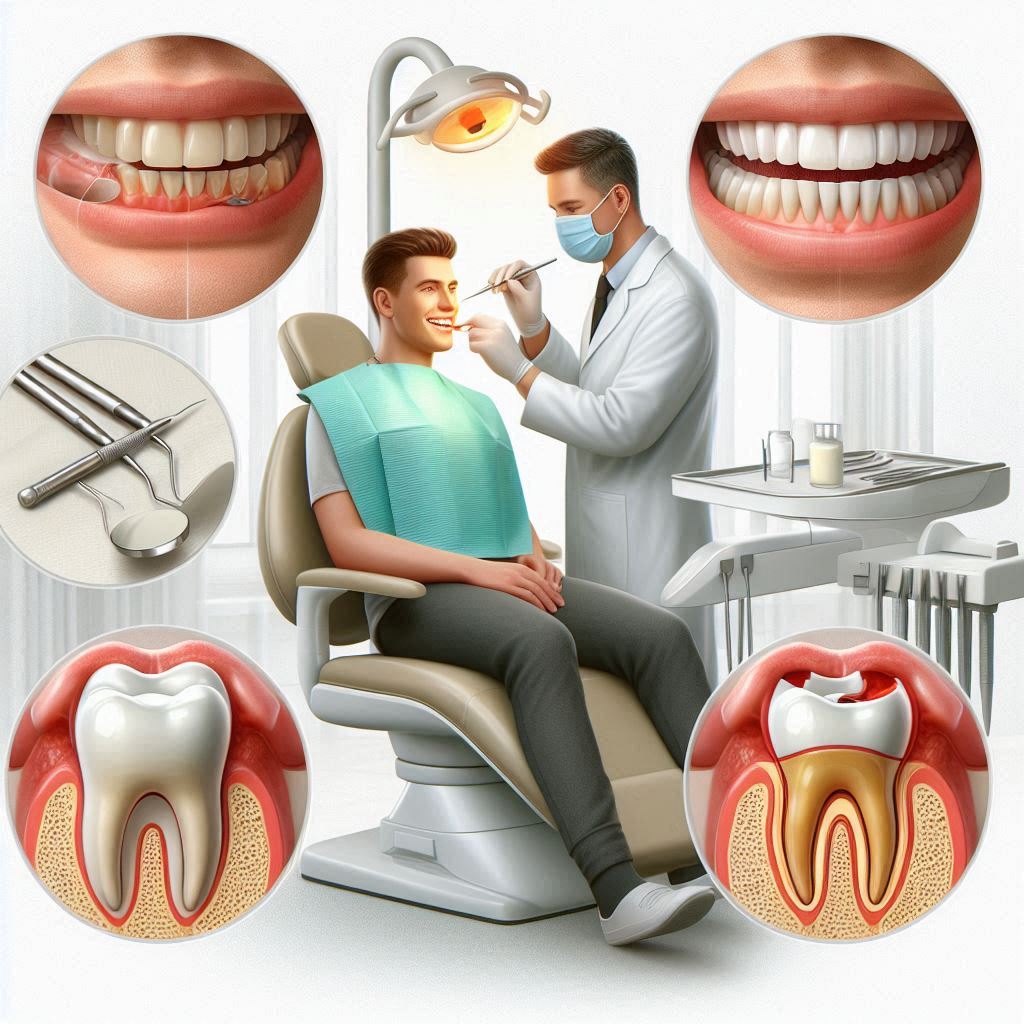
The Short Answer (For The Impatient Reader)
Here is the direct answer you came for.
- The actual procedure: 45 to 90 minutes total.
- The extraction alone: 5 to 20 minutes.
- The bone graft placement: 10 to 30 minutes.
- The initial healing (return to normal food and work): 7 to 14 days.
- Full bone healing before an implant: 4 to 6 months.
Most people are in and out of the dental office in under two hours. You will drive yourself home (if you only had local anesthesia). You will eat soft food that night.
The long wait is not the surgery. It is your body doing its job. Bone takes time to turn that graft material into your own hard tissue.
Why Do You Need a Bone Graft Anyway?
Before we dive into minutes and months, let us quickly talk about the “why.” This helps you understand the timing.
When a tooth comes out, a hole remains. Your body wants to fill the hole. It usually does that with gum tissue, not bone. That is a problem if you want a dental implant later.
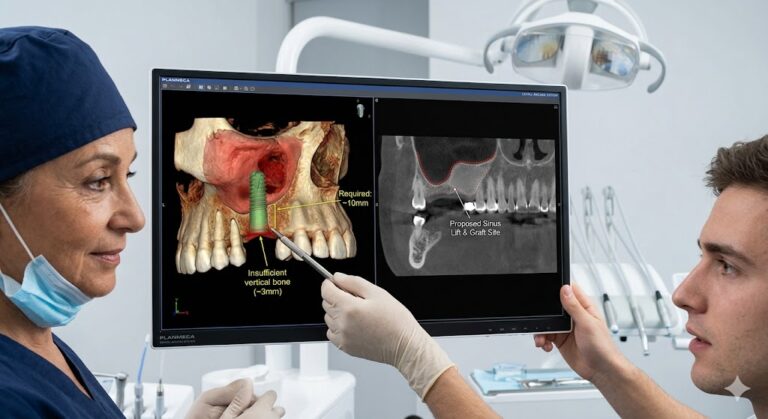
An implant needs a solid block of bone to hold it. Think of the bone graft as saving your spot. The dentist places tiny bone particles into the socket. Over several months, your body replaces those particles with living bone.
Without the graft, you might wait too long and lose too much bone. Then you would need a much bigger surgery later.
Important Note: Not every extraction needs a bone graft. If you are removing a tooth and not replacing it, you probably do not need one. If you are getting an implant, a graft is often the smart move.
The Complete Timeline (From Arrival to Fully Healed)
Let us walk through the entire experience. I will break it down into phases so you know exactly what to expect.
Phase 1: The Day Of The Procedure (0 to 90 Minutes)
This is what most people worry about. Let me put your mind at ease. The surgery itself is faster than a movie.
Step 1: Numbing and Setup (10 to 15 minutes)
You sit in the chair. The dentist talks you through the plan. Then comes the numbing. You might feel a small pinch from the needle. That lasts about five seconds.
After that, the dentist waits a few minutes to make sure you are completely frozen. You will feel pressure during the work, but not sharp pain. If you feel anything uncomfortable, you raise your hand. They add more freezing.
Step 2: The Tooth Extraction (5 to 20 minutes)
This part varies wildly.
- Simple extraction (visible tooth): The dentist uses an instrument called an elevator to loosen the tooth. Then forceps pull it out. This takes 5 to 10 minutes.
- Surgical extraction (broken or impacted tooth): The dentist makes a small cut in the gum. They might remove some bone around the tooth. They may even cut the tooth into pieces. This takes 15 to 20 minutes.
If your tooth is severely infected, this step might take a little longer. The dentist works carefully to clean out all the infected tissue. That is a good thing for your healing.
Step 3: The Bone Graft Placement (10 to 30 minutes)
The dentist looks into the empty socket. They check for any remaining infection. If the socket has sharp edges or thin bone, they may smooth things out first.
Then they place the graft material. This usually looks like white sand or tiny granules. They pack it gently into the hole. Sometimes they place a membrane over the top. This membrane acts like a barrier. It keeps your gum tissue from growing into the bone space.
Finally, they place stitches. Most modern stitches dissolve on their own after 7 to 14 days. You will not need to return for removal.
Step 4: Bite on Gauze and Go Home (5 minutes)
The dentist places a piece of damp gauze over the site. You bite down firmly. This creates pressure to stop bleeding. You wait in the waiting room for about 20 to 30 minutes. Then the assistant checks the bleeding. If it looks good, you go home.
Total time in the office: Usually 60 to 90 minutes. Sometimes 45 minutes for a simple case. Sometimes 2 hours for a complex one.
Phase 2: The First 24 to 72 Hours (The “Be Gentle” Phase)
Now you are home. The anesthesia wears off after 2 to 4 hours. You might start to feel a dull ache. That is normal.
| Time After Surgery | What You Feel | What To Do |
|---|---|---|
| 0 to 4 hours | Numb. No pain. | Bite on gauze. Change it every 30 minutes until bleeding stops. |
| 4 to 12 hours | Numbness fades. Dull ache begins. | Take pain medication as prescribed. Ice your cheek for 15 minutes on, 15 minutes off. |
| 12 to 24 hours | Swelling peaks. Sore but manageable. | Eat cold soft food (yogurt, smoothie, ice cream). No spitting or straws. |
| 24 to 72 hours | Bruising may appear. Soreness improves daily. | Switch to warm salt water rinses (do not swish, just tilt your head). |
How much time does this phase “take” out of your life? You are functional but tired. Most people take the day of surgery off work. Many take the next day off too. If you have a desk job, you can often return on day two. If you have a physical job, wait three to five days.
Phase 3: The First Two Weeks (Soft Food and Caution)
From day four to day fourteen, you start feeling human again. The swelling goes down. The soreness becomes a mild annoyance.
But do not get too confident. Your body is doing delicate work inside that graft site.
What happens inside during week one:
- Blood vessels grow into the graft.
- A blood clot stabilizes the graft particles.
- Your gums begin to close over the site.
What happens inside during week two:
- The stitches dissolve (or fall out).
- The graft settles into place.
- New bone cells start forming at the edges.
How much time does this phase take? You live your normal life but with food restrictions. You avoid crunchy, sticky, or spicy foods. You chew on the opposite side. You skip the gym for heavy lifting.
By the end of week two, most people feel 90% normal. The extraction site might still feel a bit tender if you press it. That is fine.
Phase 4: The Waiting Game (4 to 6 Months)
Here is the part that surprises people. Your mouth looks healed on the outside after two weeks. But inside, the magic is just beginning.
This is the actual bone healing phase. It has a fancy name: osseointegration of the graft. But all you need to know is that your body is slowly transforming that graft material into your own bone.
| Time After Graft | Bone Healing Milestone |
|---|---|
| 4 to 6 weeks | Soft callus forms. The graft is fragile but connected. |
| 8 to 12 weeks | Hard bone begins replacing the graft particles. |
| 4 months | Most graft sites have enough strength for an implant. |
| 6 months | Maximum bone density achieved. Ideal for implants. |
Does this require any time from you? No. You just live your life. But you do need to be careful. During these months, the graft is like wet cement. It is hardening, but it can still crumble.
You avoid biting directly on the graft site. You wear a night guard if you grind your teeth. You keep your checkup appointments so the dentist can monitor progress.
Phase 5: The Dental Implant Placement (Another 60 Minutes)
If you are getting an implant, here is the final timeline. At the 4 to 6 month mark, you return to the dentist.
The implant placement itself takes about 60 minutes. It sounds scary, but most people say it is easier than the extraction.
Here is the difference:
- Extraction and graft: You had an infection or a broken tooth. That hurts before you even start.
- Implant placement: The area is healthy. You are just placing a titanium post into solid bone. The recovery is often milder.
After the implant goes in, you heal for another 3 to 4 months. Then you get your crown. That is two more appointments of 30 minutes each.
But for the purpose of your original question? The extraction and graft heal fully for an implant in 4 to 6 months.
Factors That Change Your Timeline
You are unique. Your mouth is unique. Here are the things that make your timeline longer or shorter.
1. The Location Of The Tooth
- Front tooth (incisor or canine): Faster. These teeth have one root. The socket is small. Healing takes 3 to 4 months.
- Premolar (mid-mouth): Medium. One or two roots. Healing takes 4 to 5 months.
- Molar (back tooth): Slower. Two or three roots. The socket is large and wide. Healing takes 5 to 6 months.
2. Your Age
Younger people heal faster. That is just biology. A healthy 25-year-old might heal in 3 months. A healthy 65-year-old might need a full 6 months. That is not a problem. It is just reality.
3. Your Health History
| Health Factor | Effect On Healing Time |
|---|---|
| Non-smoker | Optimal healing (4 months) |
| Light smoker (less than 5 per day) | 1 to 2 months slower |
| Heavy smoker | Do not get a graft. It will likely fail. |
| Well-controlled diabetes | 1 month slower than average |
| Uncontrolled diabetes | High risk of graft failure |
| Osteoporosis medications | Consult your specialist. May need a drug holiday. |
| Good vitamin D and calcium levels | Faster, denser healing |
Important Note: Be honest with your dentist about your health. They are not judging you. They want the graft to succeed. Smoking and uncontrolled blood sugar are the two biggest reasons bone grafts fail.
4. The Type Of Graft Material
- Your own bone (autograft): Heals fastest (4 months). You need a second surgery site (like your chin or hip).
- Donor human bone (allograft): Very common. Heals well in 4 to 6 months.
- Animal bone (xenograft): Common. Heals slightly slower (5 to 6 months).
- Synthetic bone (alloplast): Heals predictably (5 to 6 months).
Most dentists use donor human bone. It is safe, tested, and works beautifully. You do not need to panic about “someone else’s bone.” The processing removes all cells. It leaves only the mineral scaffold.
What Does The Procedure Actually Feel Like?
Let me walk you through the sensations. Knowledge lowers fear.
During The Extraction
You feel firm pressure. You might hear a crackling or popping sound. That is the ligament breaking, not your tooth shattering. It sounds worse than it is.
If the tooth is stubborn, the dentist might rock it back and forth. Your head will move a little. That is normal.
You should not feel sharp pain. If you do, raise your hand.
During The Bone Graft
You feel more pressure and some scraping sensations. The dentist is cleaning the socket walls. Then you feel the packing of the graft. It feels like someone pressing firmly on a bruise.
Duration of discomfort: 30 seconds to 2 minutes for the actual graft placement.
After The Numbing Wears Off
This is the hardest part for most people. The first 6 to 8 hours after surgery can be moderately uncomfortable. Think of a deep, throbbing ache.
But here is the honest truth: It is rarely worse than the toothache that made you need the extraction in the first place. If you lived with a bad tooth for weeks, this is easier.
Most people manage with:
- Ibuprofen (Advil) 600mg every 6 hours
- Acetaminophen (Tylenol) 500mg every 6 hours (alternate with ibuprofen)
- A prescription for something stronger (used by less than 20% of patients)
By day three, most people only need over-the-counter pain relief.
Realistic Recovery Timeline For Your Daily Life
You want to know when you can do normal things. Here is the honest answer.
When Can You Eat Normal Food?
| Food Type | When You Can Eat It |
|---|---|
| Cold liquids (water, smoothies) | Immediately |
| Warm soup (not hot) | Day 1 |
| Yogurt, applesauce, pudding | Day 1 |
| Scrambled eggs, mashed potatoes | Day 2 to 3 |
| Soft bread, pasta, rice | Day 4 to 5 |
| Cooked vegetables, soft fish | Day 5 to 7 |
| Chicken (shredded), tender meat | Day 7 to 10 |
| Crunchy foods (chips, nuts) | Day 14 to 21 |
| Chewy foods (steak, bagels) | Day 21 to 30 |
When Can You Return To Work?
- Desk job from home: Next day.
- Desk job in an office: Day 2 (swelling may be visible).
- Teacher, salesperson (talking all day): Day 3 to 4.
- Light physical job (retail, barista): Day 4 to 5.
- Heavy physical job (construction, warehouse): Day 7 to 10.
- Professional athlete or fitness trainer: 14 days (ask your dentist first).
When Can You Exercise?
- Walking, light stretching: Day 2.
- Yoga (no inversions): Day 3.
- Light jogging, stationary bike: Day 5 to 7.
- Weight lifting (light weights): Day 7 to 10.
- Heavy lifting, high-intensity interval training: Day 14.
- Contact sports, martial arts, swimming: 4 weeks.
Why the wait? Increased blood pressure can dislodge the clot or graft. That means you start over. A few days of rest is cheaper than another surgery.
When Can You Fly On An Airplane?
You can fly the next day. The pressure changes will not harm the graft. Just bring your pain medication and soft snacks. Chew gum on the opposite side during takeoff and landing.
When Can You Drink Alcohol?
Wait 72 hours (3 days). Alcohol thins your blood and delays healing. It also interacts poorly with pain medication. After day 3, an occasional drink is fine. But heavy drinking slows bone healing significantly.
When Can You Use A Straw?
Wait 14 days. The suction can pull out the blood clot and the graft material. That is a disaster. Do not use straws, spit aggressively, or smoke during these two weeks.
Signs Your Graft Is Healing Properly (Vs. Signs Of Trouble)
Let me give you a simple checklist. This helps you sleep at night.
Normal Healing Signs (Good)
- Mild to moderate pain that decreases daily
- Swelling that peaks at day 2 and goes down by day 5
- Bruising on your cheek or neck (blood settling)
- A white or gray film over the graft site (this is healing tissue, not infection)
- A strange taste in your mouth for a few days
- A few graft granules coming out (tiny grains, like sand)
Signs You Need To Call Your Dentist
- Severe pain that gets worse after day 3 (not better)
- Swelling that spreads to your eye or neck
- Fever over 101°F (38.3°C)
- Bleeding that soaks through a gauze pad every hour for more than 6 hours
- Pus or a foul taste that smells like rot (not just a strange taste)
- Numbness in your lip or chin that lasts beyond the anesthetic (rare, but call)
Important Note: A small amount of graft material escaping is normal. You might see a few grains in your mouth. That is fine. But if a large chunk comes out, or if you feel a sudden empty space, call your dentist immediately.
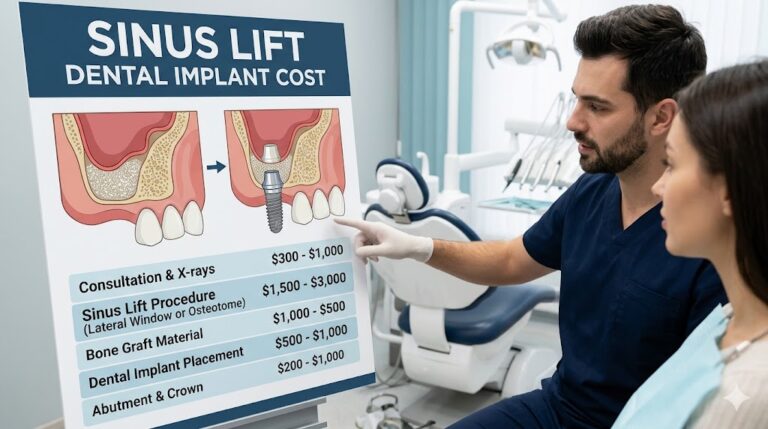
The Cost Factor (Briefly)
You asked about time, not money. But cost often affects how people plan their timeline. So let me give you a quick, honest look.
| Procedure | Typical Cost (USA, no insurance) |
|---|---|
| Simple extraction | 150to300 |
| Surgical extraction | 250to500 |
| Bone graft (small, one tooth) | 300to800 |
| Bone graft with membrane | 500to1,200 |
| Dental implant (post only) | 1,500to2,500 |
| Abutment and crown | 1,000to2,000 |
Total for extraction, graft, and implant: 3,500to6,000 per tooth.
Dental insurance rarely covers implants. It may cover the extraction and a small portion of the graft. Ask your dentist for a payment plan. Many offer CareCredit or in-house financing.
A Week-By-Week Visual Timeline
Here is a simple reference table for the first six months.
| Time Period | Your Graft Site | Your Activity Level | Food Texture |
|---|---|---|---|
| Day 1 | Fresh wound. Blood clot. | Rest. Ice packs. | Cold liquids. |
| Days 2 to 3 | Swollen and sore. | Netflix on couch. | Lukewarm soups, smoothies. |
| Days 4 to 7 | Swelling fading. | Light housework. | Scrambled eggs, oatmeal. |
| Week 2 | Gums closing. | Back to normal (no heavy lifting). | Pasta, soft bread, fish. |
| Week 3 | Feels mostly healed. | Light exercise allowed. | Most soft foods. |
| Week 4 | Gums look normal. | Normal exercise (except contact sports). | Chew carefully on opposite side. |
| Month 2 | No visible signs of graft. | Full normal activity. | Most crunchy foods allowed carefully. |
| Month 3 | Bone consolidation begins. | You forget it is there. | Normal diet. |
| Month 4 | Ready for implant (front teeth). | Full activity. | Normal diet. |
| Month 6 | Maximally healed (molars). | Full activity. | Normal diet. |
Frequently Asked Questions (FAQ)
Q: Can I get a tooth extraction and bone graft at the same appointment?
Yes. That is the standard approach. Doing them together saves time, money, and healing. You only get numbed once.
Q: Does the bone graft hurt more than the extraction?
No. Most people cannot tell the difference. The graft adds a few minutes of pressure. The recovery is similar to extraction alone.
Q: How long does the numbness last after the procedure?
Local anesthesia wears off in 2 to 4 hours. If you received sedation, you may feel groggy for 4 to 8 hours. Do not drive or sign legal documents on sedation day.
Q: Can I see or feel the bone graft after surgery?
Not usually. Your gum covers it completely. If you feel a hard lump under your gum, that is often the graft. It softens as it heals.
Q: What happens if I wait too long to get the implant after the graft?
The graft will maintain its volume for about 12 to 18 months. After that, slow resorption begins. You have about 2 years to place the implant before the graft significantly shrinks.
Q: Can I have two bone grafts at the same time?
Yes. Many people have multiple extractions and grafts in one visit. The total time increases but rarely exceeds 2.5 hours.
Q: Will people see swelling or bruising when I return to work?
Possibly. Swelling peaks on day 2. It is usually mild to moderate. Most people look like they have a chipmunk cheek for 2 to 3 days. Bruising, if it occurs, shows up on day 3 and fades by day 7.
Q: Can a bone graft fail, and how would I know?
Yes. Signs of failure include severe pain after week one, graft material coming out in large pieces, a persistent bad taste, and visible collapse of the gum shape. Failure rates are low (under 5% in healthy non-smokers).
Q: How long after a bone graft can I get a temporary tooth?
You can get a temporary flipper (removable plastic tooth) immediately. You can get a bonded temporary bridge after 2 weeks. You cannot get a screw-retained temporary implant until 4 to 6 months.
Q: Is the 4 to 6 month wait absolutely necessary?
Yes. Placing an implant too early is a common reason for failure. The bone needs time to become hard enough to hold the implant. Rushing costs you more money and time in the long run.
Additional Resources
For a deeper look at dental implant technology and the science of bone healing, the American Association of Oral and Maxillofacial Surgeons (AAOMS) provides free patient guides.
👉 Link: AAOMS Patient Resources – Dental Implants and Bone Grafting (Note: This link leads to an authoritative, non-commercial source for further reading.)
You can also ask your dentist for before-and-after photos of their own graft cases. Seeing real results on real people (with normal teeth and normal smiles) reduces anxiety more than any article can.
Conclusion
Here is what you need to remember.
The actual tooth extraction and bone graft procedure takes about 45 to 90 minutes. You feel pressure but not sharp pain. The first week of recovery requires soft food and rest. You return to most normal activities within 7 to 14 days.
The full bone healing before a dental implant takes 4 to 6 months. That is not time you actively spend in recovery. It is time your body spends turning graft material into your own hard bone. You live your normal life during that period, with only minor food and exercise adjustments.
The process is predictable, safe, and successful in over 95% of healthy patients. It asks for patience, not bravery. And when it is done, you have a solid foundation for a dental implant that can last 20, 30, or even 50 years.
Disclaimer: This article provides general information and does not constitute medical advice. Every patient heals differently. Always consult with a licensed dentist or oral surgeon for a treatment plan specific to your health history and dental condition. The author and publisher are not responsible for any outcomes resulting from the use of this information.