Implant Dentist in Pittsburgh: Your Complete, No-Gimmick Guide to a Lasting Smile
If you’re reading this, you’re probably tired of hiding your smile. Maybe a denture clicks when you laugh, or a missing tooth makes you feel self-conscious during dinner with friends.
You want a solution that feels real. That works like real teeth. And you want to find the right implant dentist in Pittsburgh without feeling pushed into a decision.
Let’s be honest: dental implants are an investment. But they’re also one of the most researched, reliable solutions in modern dentistry. This guide walks you through everything you need to know—without the hype, without the hidden agenda, and without confusing medical jargon.
By the end, you’ll know exactly what questions to ask, what a fair price looks like in Pittsburgh, and how to find a dentist who puts your long-term health first.

What Exactly Does an Implant Dentist Do? (And Why It Matters)
Not every general dentist places implants. An implant dentist has advanced training in surgical placement and restoration of titanium posts that act as artificial tooth roots.
Think of it this way:
- General dentist – your primary care for teeth.
- Implant dentist – a specialist (or highly trained general dentist) who performs the surgical part of implant placement.
- Prosthodontist or oral surgeon – often works alongside implant dentists for complex cases.
In Pittsburgh, many implant dentists offer both surgery and the final crown. That means one provider, one office, and fewer headaches coordinating appointments.
“I thought I’d need two separate specialists. My implant dentist in Pittsburgh did everything from the CT scan to the final screw-in crown. That simplicity changed my whole experience.”
— Mark, 58, Lawrenceville
Why Pittsburgh Residents Are Choosing Implants Over Dentures
Let’s keep this real. Traditional dentures work for some people. But if you’ve ever dealt with slipping, sore spots, or the embarrassment of denture adhesive failing during a meal, you already know the limitations.
Here’s what implants offer that dentures cannot:
| Feature | Dental Implants | Traditional Dentures |
|---|---|---|
| Bone preservation | Yes – stimulates jawbone | No – bone shrinks over time |
| Eating restrictions | None (eat steak, apples, corn) | Many soft foods only |
| Speech clarity | Natural | Possible slurring or clicking |
| Long-term cost | Higher upfront, lower over 20+ years | Lower upfront, high ongoing costs |
| Maintenance | Brush and floss normally | Special cleaners, overnight soaking |
Implants also protect your facial structure. When you lose a tooth, the jawbone begins to resorb (melt away). Over years, this changes the shape of your lower face—making you look older. Implants stop that process.
Types of Implant Procedures Available in Pittsburgh
One size does not fit all. A good implant dentist will explain at least three different approaches based on your bone density, budget, and number of missing teeth.
Single Tooth Implant
Best for one missing tooth. The dentist places a small titanium post into the jawbone. After healing (usually 3–6 months), they attach a custom crown that matches your neighboring teeth.
No grinding down healthy adjacent teeth—unlike a traditional bridge.
Implant-Supported Bridge
For two or more missing teeth in a row. Instead of one implant per tooth, the dentist places implants at the ends, and a bridge spans between them. Fewer implants = lower cost, but still excellent stability.
All-on-4 or All-on-6
This is the heavy hitter. For patients missing all teeth in an arch (upper or lower), the dentist places four or six implants strategically angled to maximize bone contact. On the same day (or within a few months), you receive a fixed, non-removable set of teeth.
Many Pittsburgh implant dentists offer All-on-4 as a more affordable alternative to placing 8–10 individual implants.
Implant-Retained Dentures
Think of this as a hybrid. A denture snaps onto two to four implants via locator attachments. You can remove it for cleaning, but it won’t shift while eating or talking. Much more secure than regular dentures.
What a Realistic Timeline Looks Like (From CT Scan to Final Crown)
Patients often ask: “Can I get this done in a weekend?”
The honest answer: no—not safely. Same-day implants exist for very specific cases, but rushing surgical healing invites failure. Here’s a typical timeline in Pittsburgh:
Month 1 – Consultation & Imaging
Your implant dentist takes a 3D CBCT scan (low radiation) to measure bone thickness and locate nerves. You discuss medical history, smoking habits (major factor), and goals.
Month 2 – Implant Placement Surgery
Local anesthesia (or sedation if you prefer). The procedure for a single tooth takes about 60–90 minutes. You leave with a healing cap or a temporary tooth.
Months 3 to 6 – Osseointegration
The magic phase. Your bone grows tightly around the titanium surface. No heavy chewing on that side during this time.
Month 6 or 7 – Abutment & Final Crown
A small connector piece (abutment) is attached. Then an impression is sent to a dental lab. Two weeks later, you bite into an apple for the first time in years.
“I was nervous about the healing time. But my dentist gave me a temporary flipper so I never walked around with a gap. That made the months fly by.”
— Denise, 47, Shadyside
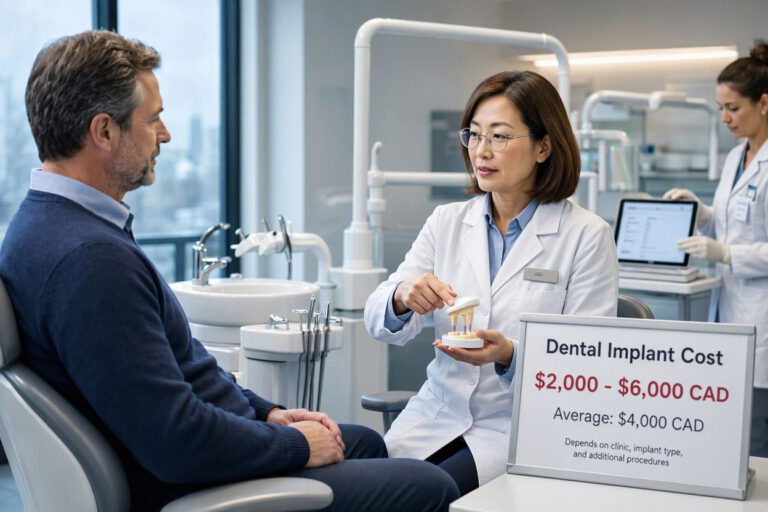
How Much Does an Implant Dentist in Pittsburgh Cost? (Real Numbers)
Let’s talk money. Prices vary widely depending on location, materials, and whether you need bone grafting.
Below are realistic ranges for Pittsburgh in 2026. These include surgery, abutment, and final crown—not just the implant itself.
| Procedure | Low End | High End | Notes |
|---|---|---|---|
| Single tooth implant | $3,200 | $5,500 | Zirconia crowns cost more |
| Implant-supported bridge (3 units) | $6,000 | $10,000 | Two implants + three crowns |
| All-on-4 (per arch) | $15,000 | $28,000 | Includes fixed temporary and final teeth |
| Implant-retained denture (2 implants) | $4,500 | $8,000 | Removable denture |
| Bone grafting (if needed) | $500 | $2,500 | Per site, often required for upper molars |
Important note for Pittsburgh residents:
Many dental insurance plans now cover part of the crown (up to 50%), but rarely the implant itself. Some Pittsburgh implant dentists offer in-house financing or third-party plans like CareCredit and Proceed Finance.
Bone Grafting: Do You Really Need It?
This is one of the most misunderstood parts of implant dentistry.
When you lose a tooth, the bone that once surrounded the root starts to disappear. If you’ve been missing that tooth for years, you might not have enough bone height or width to hold an implant.
A bone graft adds synthetic or donated bone material to that area. It heals for 4–8 months, creating a solid foundation.
Signs you might need a graft:
- Missing tooth for 3+ years
- History of periodontal disease
- You wear a denture that has rubbed bone away
- Previous failed implant
A skilled implant dentist in Pittsburgh will never place an implant into insufficient bone just to make a sale. If they skip the graft, run.
“I wanted the cheapest option. One dentist said ‘no graft needed.’ Another took a CT scan and showed me the hole in my bone. I chose honesty over speed. Zero regrets.”
— Tom, 62, Squirrel Hill
How to Choose the Right Implant Dentist in Pittsburgh (5 Non‑Negotiables)
Not all implant dentists deliver the same quality. Use this checklist during your consultations.
1. They Use a CBCT Scanner In‑House
3D imaging is the standard of care. If a dentist places implants using only 2D X‑rays, that’s a red flag.
2. They Show You Before/After Photos of Similar Cases
Ask specifically for cases like yours: single molar, full arch, or lower denture stabilization. A confident dentist will have a portfolio.
3. They Discuss Alternative Options Without Pressure
A trustworthy provider explains why implants are better and when a bridge or denture might make more sense for you (medical reasons, budget, healing capacity).
4. They Have a Clear Protocol for Implant Failure
Implant success rates are 95–98%, but failure happens. Ask: “What do you do if an implant doesn’t integrate?” The answer should include replacement at reduced or no cost.
5. They Coordinate with Your Other Doctors
If you have diabetes, osteoporosis, or take blood thinners, your implant dentist should request medical clearance. Any provider who skips this is cutting corners.
Top Questions to Ask During Your Free Consultation
Walk into any Pittsburgh implant dentistry office with these questions printed out. Write down the answers.
- How many implants have you placed in the last 12 months?
- Do you place AND restore implants, or do I need another office for the crown?
- What type of implant brand do you use? (Nobel Biocare, Straumann, Zimmer – all reputable)
- Is sedation available? What type?
- What happens if the implant fails to integrate?
- Can I see a patient testimonial or speak with a past patient?
- Do you offer a written warranty for the implant and crown?
If they hesitate or give vague answers, consider it a sign to keep looking.
Sedation Options: From Numb to Asleep
Fear of dental surgery is real. Luckily, Pittsburgh implant dentists offer several levels of comfort.
Local anesthesia only – You’re awake, but the area is completely numb. Most single-tooth implants feel no different than a filling.
Nitrous oxide (laughing gas) – You stay awake, but relaxed. Wears off quickly so you can drive yourself home.
Oral sedation – A pill taken one hour before. You’ll be drowsy but responsive. You need a driver.
IV sedation – The deepest option. You’re asleep and remember nothing. Often used for All-on-4 or multiple implants. Requires a driver.
Most patients do fine with local + nitrous. But if your hands shake at the thought of an injection, ask about IV sedation upfront.
Recovery and Healing: What No One Tells You
Let’s clear up social media myths. Healing from dental implants is not painful in the way a tooth extraction is. Most patients report mild soreness, not agony.
Days 1–3:
Some swelling, maybe a bruise. Soft foods only: yogurt, smoothies, scrambled eggs. No spitting or using a straw (dry socket is still a risk).
Days 4–14:
Swelling drops. You can eat softer solids like pasta or fish. Keep the area clean with a special rinse or salt water.
Weeks 3–12:
The implant feels forgotten. You can chew on the other side normally. The dentist will check integration at follow-ups.
Signs of trouble:
- Bleeding that doesn’t stop after 72 hours
- Severe pain that worsens after day 5
- The implant feels loose (very rare)
Call your implant dentist immediately if any of these happen.
Long-Term Care: How to Make Your Implant Last 30+ Years
Here’s the truth people often ignore: implants don’t decay, but the gum tissue around them can get infected. Peri‑implantitis is gum disease around an implant, and it’s the #1 cause of late failure.
Your new daily routine:
- Brush twice a day with a soft or extra‑soft brush
- Floss normally, but add a water flosser on low pressure
- Use a special implant‑friendly proxy brush to clean under the crown
- Never use metal scrapers or harsh whitening toothpaste
Professional care:
- See your hygienist every 6 months for implant‑specific cleaning (plastic scalers only)
- Annual X‑ray to check bone levels around the implant
Smoking dramatically increases failure rates. If you smoke, be honest with your dentist. Some will still place implants but with a lower long‑term guarantee.
Pittsburgh‑Specific Considerations: Weather, Water, and Accessibility
Living in Pittsburgh comes with two unique factors worth mentioning.
Hard water and mineral buildup – Our tap water is moderately hard. Over years, minerals can deposit around the implant crown margin. Using a water flosser with a dash of white vinegar once a month helps dissolve buildup.
Winter and healing – Cold weather doesn’t affect implant integration, but dry indoor heating can cause mouth breathing, which dries gum tissues. Keep a humidifier in your bedroom for the first month after surgery.
Driving to appointments – Many top implant dentists are in Oakland, Wexford, Monroeville, and Cranberry. If you live in the South Hills, factor in tunnel traffic for follow-ups.
Comparison Table: Implant Dentist vs. Oral Surgeon vs. General Dentist
| Implant Dentist (Advanced training) | Oral Surgeon | General Dentist | |
|---|---|---|---|
| Places implants | Yes | Yes | Sometimes (basic cases) |
| Performs bone grafts | Yes | Always | Rarely |
| Restores with final crown | Usually yes | No (refers back) | Yes |
| Handles complex medical cases | Sometimes | Yes | Rarely |
| Cost for single implant | $$ – $$$ | $$$$ | $ – $$ |
For a straightforward single tooth in healthy bone, a trained implant dentist is often the most cost‑effective and convenient choice.
What About Mini Implants? Are They a Real Option?
Mini implants are thinner (about 2mm vs. standard 4mm) and placed with a less invasive technique. They cost less upfront.
But here’s the honest take:
Mini implants are best for stabilizing lower dentures, not for supporting individual crowns. They’re more likely to fracture over time because they lack the surface area for long‑term chewing forces.
A responsible implant dentist in Pittsburgh will use mini implants only when bone volume is severely limited and a patient refuses a graft. For single‑tooth replacement, stick with standard‑diameter implants.
Financing and Insurance: Making Implants Affordable
Let’s be realistic. Even with insurance, implants cost thousands. But there are pathways.
Dental insurance – Some PPO plans (Delta Dental, Cigna, Aetna) cover the crown portion as a “major service” after a 12‑month waiting period. Call your provider and ask: “What is my implant crown benefit?”
Health savings account (HSA) / Flexible spending account (FSA) – Implants are eligible. Use pre‑tax dollars.
In‑house membership plans – Several Pittsburgh implant dentists offer annual plans (300–500/year) that give you 10–15% off all surgical procedures. No insurance required.
Third‑party financing – CareCredit (6–12 months no interest) and Proceed Finance (longer terms, lower rates for good credit).
One pro tip:
Ask if the dentist offers a “multiple implant discount.” Many do: 5% off for two implants, 10% off for four or more.
Common Myths About Implant Dentists (Debunked)
Myth 1: “Implants are experimental.”
Fact: Modern implants have over 50 years of clinical research. They’re the most studied dental device in history.
Myth 2: “I’m too old for implants.”
Fact: Age is not a factor. Healthy 90‑year‑olds get implants successfully. It’s about bone quality and healing capacity, not calendar age.
Myth 3: “Any dentist who places implants is the same.”
Fact: Experience matters. A dentist who places 200 implants a year has fewer complications than one who places 10.
Myth 4: “The surgery is extremely painful.”
Fact: Most patients rate implant surgery discomfort lower than a tooth extraction. Modern anesthetics and techniques make it very manageable.
Red Flags to Avoid When Choosing an Implant Dentist
Trust your gut. If you experience any of these, walk out and schedule a second opinion elsewhere.
- No CT scan offered (“We work with standard X‑rays”)
- Same‑day implants for a full arch without discussing bone grafting
- Pressure to sign a contract before you’ve seen a treatment plan
- No clear written warranty or failure policy
- Rushing the consultation (less than 15 minutes for complex cases)
- Poor online reviews mentioning hidden fees or redone work
“I ignored red flags because the price was low. After two failed implants, I paid more to fix the mess than the original ‘deal.’ Don’t be me.”
— Rachel, 41, Ross Township
How to Prepare for Your First Implant Consultation
You’ll get more value from the visit if you come prepared.
Bring:
- List of current medications (including aspirin, blood thinners)
- Recent dental X‑rays if you have them
- Your insurance card and HSA/FSA card
- Written questions from the list above
Do not do:
- Show up without brushing (yes, it happens)
- Hide your smoking or drinking habits
- Expect a same‑day treatment plan without imaging
A thorough consultation takes 45–60 minutes. If you’re out in 15 minutes, they didn’t do their job.
Real Patient Journey: From Missing Tooth to Final Crown in Pittsburgh
Let me walk you through a composite case based on dozens of real Pittsburgh patients.
Susan, 55, from Mount Lebanon. Missing tooth #19 (lower left first molar) for 8 years. Wore a flipper but hated it.
Month 1: Consultation and CBCT scan showed moderate bone loss. Dentist recommended a bone graft. Susan agreed. Graft cost $1,200. Insurance covered zero.
Month 2: Graft surgery. Local anesthesia only. She ate soft foods for 10 days.
Month 6: CBCT confirmed enough new bone. Implant placement took 75 minutes. Healing abutment placed.
Month 9: Impressions for the final zirconia crown.
Month 10: Crown delivery. Susan said: “I forgot what it felt like to chew on the left side. Now I can’t tell the difference from my real teeth.”
Total out‑of‑pocket: $4,800. She used CareCredit at 0% interest for 12 months.
At‑Home Care Kit for Implant Patients
Your implant dentist will give you post‑op instructions. Here’s what to buy before surgery day.
- Soft‑bristled toothbrush (Curaprox or Nimbus)
- Water flosser (Waterpik, low pressure setting recommended)
- Proxy brushes (TePe or GUM, pink size for implants)
- Non‑alcoholic mouth rinse (CloSYS or TheraBreath)
- Ice packs with soft covers
Avoid these:
- Electric toothbrushes with oscillating heads for the first 2 weeks
- Whitening strips (they can irritate the gum cuff)
- Metal tongue scrapers near the implant site
When an Implant Isn’t the Right Answer (Honesty Matters)
I promised to be realistic. So here it is: implants are not for everyone.
Medical reasons to reconsider:
- Uncontrolled diabetes (A1c above 8.0)
- Active chemotherapy or head/neck radiation
- Severe bruxism (tooth grinding) without a nightguard
- Untreated gum disease (must be resolved first)
Situational reasons:
- You cannot commit to 6–10 months of healing time
- Budget is extremely tight and you need a solution now
- You’re a very heavy smoker who won’t quit
In these cases, a well‑made traditional bridge or precision denture may actually serve you better. A good implant dentist will tell you that honestly.
Frequently Asked Questions (FAQ)
1. How long do dental implants last?
With proper care, 30+ years. The crown may need replacement after 15–20 years, but the titanium implant generally lasts a lifetime.
2. Does an implant dentist in Pittsburgh accept Medicaid?
Most do not. Medicaid in Pennsylvania covers dentures but rarely implants. Contact your local county health center for low‑cost options.
3. Can I get implants if I have gum disease?
Yes, but only after the gum disease is treated and stabilized. Placing implants into infected gums almost guarantees failure.
4. Are implants covered by medical insurance?
Rarely. Some policies cover implants lost due to trauma or cancer surgery. Dental insurance is the primary payer.
5. What is the success rate for implants?
95–98% for lower jaw, slightly lower for upper jaw. Smoking lowers success to 85–90%.
6. How soon can I return to work after surgery?
Next day for desk jobs. Wait 3–5 days for physical labor or heavy lifting.
7. Can I have an MRI with dental implants?
Yes. Titanium is non‑ferromagnetic and MRI‑safe. Inform the technician beforehand.
8. Do implant dentures ever break?
The denture acrylic can crack (repairable). The implants themselves rarely fail after integration.
9. What if I don’t have enough bone for implants?
Bone grafting, sinus lifts, or zygomatic implants (very advanced) can solve this. A Pittsburgh implant dentist will refer you if necessary.
10. Is the final crown removable?
No. Your implant crown is cemented or screwed in permanently. Only a dentist can remove it.
Additional Resource
For independent, unbiased information on implant dentistry, including clinical studies and patient forums, visit the American Academy of Implant Dentistry (AAID) patient education section:
👉 https://www.aaid.com/patients (external resource – open in new tab)
Conclusion
Choosing an implant dentist in Pittsburgh is a big decision—financially and personally. A skilled, honest provider will not rush you, hide costs, or skip necessary steps like bone grafting or CT scans. Focus on experience, transparency, and long‑term support rather than the lowest price. With the right care, a dental implant can restore not just your smile, but your confidence in everyday life.
Disclaimer:
This article is for informational purposes only and does not constitute medical or dental advice. Always consult with a licensed dental professional in Pittsburgh for a personal evaluation and treatment plan. Individual results vary based on health, anatomy, and adherence to post‑operative instructions.