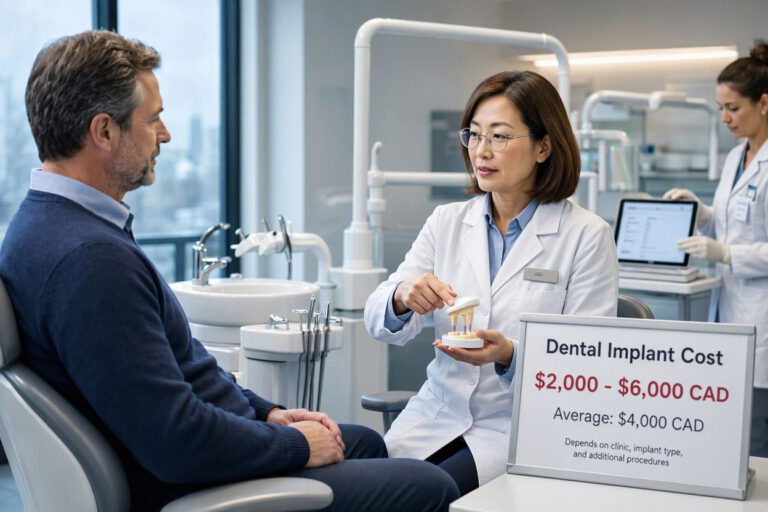
Will Dental Implants Lift My Face?
You have probably seen the claims online. A person gets dental implants, and suddenly their jawline looks sharper. Their cheeks seem fuller. Their whole face appears lifted, almost like they had a mini facelift. It sounds almost too good to be true, right?
If you are missing teeth, you might feel like your face has started to sag or collapse inward. You might notice deeper lines around your mouth or a shorter distance between your nose and chin. Naturally, you want a solution that does more than just help you chew. You want to look like yourself again.
So, let’s answer the big question honestly: Will dental implants lift my face?
The short answer is yes, but not in the way you think. Implants do not pull your skin back like surgery does. Instead, they restore what time and tooth loss have taken away. They rebuild the foundation. They stop the collapse. This article will walk you through the science, the realities, and what you can truly expect from this treatment.
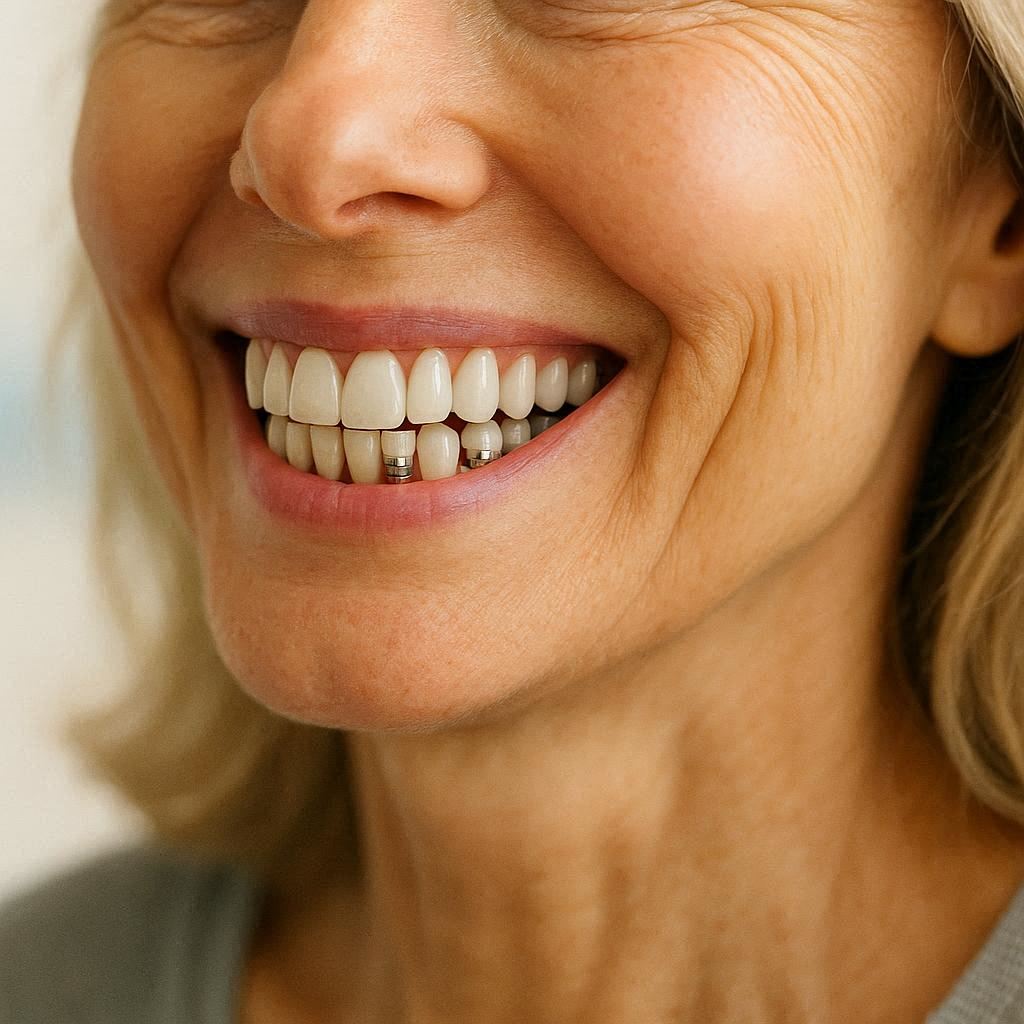
Understanding the Link Between Your Teeth and Facial Structure
Before we discuss lifting, we need to understand how your face stays upright in the first place. Your teeth are not just tiny tools for grinding food. They are pillars. Think of your mouth like a three-story building.
The Role of Tooth Roots in Supporting Your Face
Every natural tooth has a root. That root sits deep inside your jawbone. When you bite and chew, the force travels from the tooth down into the bone. This pressure signals your body to keep the bone strong and dense.
Now, look at your face from the side. Your teeth hold up the lower third of your face. That is the area from your nose to your chin. When all your teeth are present, they maintain a specific height. They keep your cheeks full. They stop your lips from rolling inward.
Important note: Your teeth act like the legs of a table. Remove one leg, and the table does not instantly collapse. But over time, the remaining legs have to work harder. Eventually, the structure weakens.
What Happens When You Lose Teeth
When a tooth goes missing, the root goes with it. The jawbone no longer receives stimulation in that spot. Your body, being efficient, thinks: “We do not need this bone anymore.” So it starts to resorb it. That means the bone melts away.
This process is called resorption. It does not happen overnight. It is slow, silent, and steady. In the first year after an extraction, you can lose 25% of the bone width. Over a few years, the height drops too.
As the bone shrinks, the soft tissues have nothing to rest on. Your cheeks sink inward. Your chin rotates upward and forward. Your lips lose their support. The distance between your nose and chin decreases. This creates deep smile lines, a pointed chin, and that sunken look we associate with aging.
How Dental Implants Interact With Your Face
Now we reach the core of the matter. Can a titanium screw reverse all of that?
The Science of Osseointegration
A dental implant is a small post made of titanium. A surgeon places it directly into your jawbone. Over a few months, your bone grows tightly around the implant. We call this osseointegration. It is a biological weld.
Here is the key difference: A denture rests on your gums. It does not touch the bone. An implant becomes part of the bone. When you chew on an implant, the force goes straight down into the jaw. This stimulates the bone just like a natural root would.
Because of this, implants stop bone loss. In fact, they can even restore some bone density over time. This is the real secret behind the “lift.”
Does an Implant Physically Pull Your Skin Up?
No. And we must be very clear about this. Dental implants do not attach to your skin, your muscles, or your facial ligaments. You cannot tighten a screw in your mouth and watch your cheeks rise like curtains.
What actually happens is more subtle and more natural.
When you replace missing teeth with implants, you restore the original vertical dimension of your face. Your lower face returns to its proper height. Your jawbone stops collapsing. Your lips have something to rest against again. The muscles around your mouth relax back into their original positions.
Imagine a deflated balloon. If you blow a little air into it, the rubber does not stretch. It just fills back out to its original shape. Implants do not pull. They fill. They rebuild. They support.
Realistic expectation: An implant restoration will make you look younger than you did with missing teeth. It will not make you look younger than you did when you had all your natural teeth at age 20.
The Difference Between a “Lift” and Restoring Volume
We need to separate cosmetic surgery from restorative dentistry. They are cousins, not twins.
Comparing Implants to a Facelift
| Feature | Dental Implants | Surgical Facelift |
|---|---|---|
| What it targets | Jawbone support, lower facial height | Skin laxity, muscle tightening, fat repositioning |
| How it works | Stops bone resorption, restores foundation | Removes excess skin, tightens underlying tissues |
| Effect on cheeks | Fills out midface by supporting bone | Lifts and repositions cheek pads |
| Effect on jowls | Reduces jowl formation by supporting jawbone | Removes or tightens jowl skin directly |
| Results last | Decades with proper care | 7 to 10 years typically |
| Invasiveness | Surgical but limited to mouth | Full facial surgery |
As you can see, implants focus on the infrastructure. A facelift focuses on the finish.
If your face has sagged because your bones shrank, implants will help tremendously. If your face has sagged because your skin lost elasticity and gravity took over, implants alone will not fix that.
The “Lip Flip” Effect
Many patients notice their upper lip appears fuller after implant treatment. Why? Because the teeth underneath support the lip. When you lose front teeth, your upper lip collapses backward. It looks thinner and longer.
An implant restoration pushes the lip forward to its natural position. This is not a lift. It is a restoration of original projection. But it looks like a lift to the casual observer.
Types of Implant Solutions and Their Facial Impact
Not all implant procedures affect your face the same way. The outcome depends on how many teeth you replace and where.
Single Tooth Implants
If you are missing one tooth, the facial change will be minimal. You might not see any visible difference. However, you will stop the bone loss in that exact spot. This preserves your face for the future. Think of it as prevention rather than correction.
Multiple Tooth Implants (Implant Bridge)
Replacing two or three teeth in a row can make a noticeable difference. You will restore the contour of your dental arch. Your cheek may regain a small amount of support. The change is subtle but real.
Full Arch Implants (All-on-4 or All-on-6)
This is where the magic happens for most people. When you replace an entire upper or lower arch of teeth with implants, the facial transformation can be dramatic.
- Upper arch: Restores the height of the midface. Smooths out nasolabial folds (smile lines). Reduces the sunken look under the eyes.
- Lower arch: Defines the jawline. Reduces the appearance of jowls. Restores the correct chin position.
Patients often report looking 5 to 10 years younger after full arch reconstruction. But remember: they are comparing themselves to how they looked with missing teeth or ill-fitting dentures. Not to their 25-year-old photograph.
Implant-Supported Dentures
These are removable dentures that snap onto implants. They offer more stability than traditional dentures but less than fixed implants.
Facial impact: Better than a standard denture because the implants preserve bone. However, because the denture still sits over the gums, you will not get the same level of lip support as a fixed implant bridge.
Realistic Timeline of Facial Changes
You will not walk out of surgery looking lifted. The face changes slowly, just as it collapsed slowly.
Immediately After Surgery
You will have swelling. Your face may look rounder or distorted. Do not evaluate anything during this phase. You are healing, not lifting.
3 to 6 Months (Healing Phase)
The implants integrate with your bone. Swelling subsides. If you wore a temporary denture before, you might already notice your lips sit better. But the major facial changes have not started yet.
After Final Restoration (6 to 12 Months)
This is when you see the difference. Your permanent teeth attach to the implants. For the first time in months or years, your mouth has proper support. Your cheeks fill out slightly. Your chin relaxes downward. Friends might ask if you lost weight or changed your hairstyle. They will not say “nice implants.” They will say “you look well.”
1 to 5 Years Post-Treatment
This is where implants outperform every other tooth replacement. While a denture wearer continues to lose bone, you do not. Your face stays stable. Other people your age may develop more sunken cheeks and deeper wrinkles. You will not. This is the long-term lift.
A note from the author: I have seen patients who received implants a decade ago. Their facial structure looks remarkably preserved compared to denture wearers. The difference is honest and visible.
What Dental Implants Cannot Do
We must talk about limitations. Honesty builds trust.
They Cannot Remove Wrinkles
Implants support bone and soft tissue. They do not erase forehead lines, crow’s feet, or neck bands. Those are skin issues. If you want those gone, you need a dermatologist or a plastic surgeon.
They Cannot Tighten Loose Skin
If you lost a significant amount of weight or have advanced skin laxity, implants will not tighten your neck or jawline skin. The underlying bone will look better. But the skin envelope remains the same. In some cases, restoring bone volume can make loose skin look slightly more full. But do not expect a neck lift.
They Cannot Change Your Nose or Eyes
Some marketing materials suggest implants lift the entire face, including the eyes. This is not accurate. Implants affect the lower third of your face. Your eye position, eyelid hooding, and nasal shape will not change.
They Cannot Fix Muscle Atrophy
Facial muscles can shrink from disuse if you have been unable to chew properly for years. Implants restore your ability to chew. Over time, your masseter and temporalis muscles may build back up. This adds some fullness to the lower face. But severe muscle wasting may not fully reverse.
The Psychological Lift: An Honest Chapter
We have focused on physical changes. But what about how you feel?
Smiling With Confidence
When you hide your smile, you contract your facial muscles differently. You might keep your lips tight. You might avoid laughing. Over years, this creates a resting face that looks tense or unhappy.
After implants, people smile freely. That change in muscle use softens the face. You look approachable. You look happy. Is that a physical lift? No. But it is a real transformation that people notice.
Eating Without Fear
Denture wearers often avoid hard, crunchy, or chewy foods. They eat a soft diet. This changes the way they use their jaw muscles. Implants allow you to bite into an apple or eat a steak. The increased chewing force stimulates your jawbone and muscles. Your lower face becomes more defined.
One patient told me: “I did not realize I had stopped chewing on my left side for five years. After implants, my face evened out.”
The Social Lift
You walk into a room differently when you are not worried about your teeth falling out or the way your mouth looks. Your head position changes. You hold your chin higher. This postural change can make your neck and jawline look better instantly.
Again, this is not the implant pulling your skin. It is you standing taller because you feel whole again. That counts.
Factors That Influence Your Results
Every face responds differently. Here is what determines your outcome.
Amount of Existing Bone Loss
If you lost teeth recently, you have minimal bone loss. Implants will preserve what you have. Your face will not change much because it hasn’t changed much yet.
If you have been missing teeth for 20 years and wore dentures, you have significant bone loss. The improvement will be dramatic because you have so much to restore.
Your Age
Younger patients have better bone healing and more skin elasticity. The results often look more dramatic. Older patients still benefit, but loose skin may not fully conform to the restored bone volume. That is normal.
Your Skin Quality
Thicker, oilier skin tends to bounce back better after bone restoration. Thin, sun-damaged skin may show less improvement. This is not something you can control, but it helps to have realistic expectations.
The Skill of Your Surgeon
Implant placement is not just about drilling holes. A skilled surgeon considers your facial anatomy. They place implants at the correct angle and depth to maximize soft tissue support. Some surgeons specialize in “smile lifts” or “facial rejuvenation with implants.” Seek those out if facial aesthetics are your priority.
The Quality of Your Final Restoration
The implant itself is just the anchor. The crown or bridge attached on top matters just as much. A poorly designed restoration will not support your lip correctly. A well-designed one will.
Work with a restorative dentist who understands facial proportions. Ask to see before-and-after photos of their implant cases.
Comparing Implants to Other Facial Rejuvenation Options
You have choices. Let us lay them side by side.
| Treatment | Cost Range | Lifts Face? | Duration | Recovery |
|---|---|---|---|---|
| Dental Implants | 3,000−30,000+ | Restores support, stops collapse | 20+ years | Weeks |
| Facelift Surgery | 8,000−20,000 | Yes, directly tightens skin | 7-10 years | Months |
| Dermal Fillers | 600−2,000 per session | Temporarily adds volume | 6-18 months | Days |
| Thread Lift | 2,000−5,000 | Mild lift | 1-2 years | Days to weeks |
| Traditional Dentures | 1,000−5,000 | No, accelerates collapse | 5-8 years (replace) | Weeks to adjust |
| Bone Grafting alone | 500−3,000 | No, just prepares for implants | Permanent (bone) | Months |
Can You Combine Treatments?
Absolutely. Many patients do this:
- Get dental implants to restore bone support.
- Wait six months for healing.
- Add fillers or a mini facelift for skin and volume refinement.
The order matters. Do the bone work first. Then address the skin. If you tighten the skin first and then restore the bone, you may overcorrect or create unnatural tension.
The Cost-Benefit Analysis of the “Lift”
Implants are expensive. There is no way around that. A full arch restoration can cost 20,000to50,000. Is the facial benefit worth that price?
What You Pay For
- Surgery and anesthesia
- Implant components (titanium posts)
- Temporary restorations
- Final teeth (porcelain or zirconia)
- Bone grafting if needed
- Follow-up care
The Facial Benefit Value
If you are missing all your teeth, the facial collapse is real. Dentures cannot stop it. Over 20 years, a denture wearer’s face shortens by several millimeters. The chin becomes more pointed. The nose and chin nearly meet.
Paying for implants stops that process. It also restores much of what you lost. Think of it as buying back your facial structure.
One patient told me: “I spent $10,000 on botox and fillers over five years. It helped, but my face still looked collapsed. The implants cost more upfront, but they fixed the root cause. I wish I had done them first.”
Financing Reality
Most dental offices offer payment plans. Some patients travel to countries with lower costs (medical tourism). If you choose that route, research thoroughly. Poorly placed implants can damage your face permanently.
Common Myths About Implants and Facial Lifting
Let us clear up misinformation.
Myth 1: “Implants will make my cheeks look like a chipmunk.”
Truth: No. Implants restore natural volume. They do not overfill. If your cheeks look puffy after surgery, that is swelling. It goes away.
Myth 2: “One single implant will lift my whole face.”
Truth: No. One implant preserves one spot. The overall facial change is microscopic.
Myth 3: “Implants work like face yoga.”
Truth: No. Face yoga stretches muscles. Implants replace missing bone support. Different mechanisms entirely.
Myth 4: “Only old people need facial support from implants.”
Truth: Young people with missing teeth also experience bone loss. Starting early prevents the collapse before it starts.
Myth 5: “If I get implants, I will never need a facelift.”
Truth: You might still need a facelift if you have significant skin laxity. Implants address the bone. Facelifts address the skin and muscle. They complement each other.
Patient Case Studies (Hypothetical but Realistic)
Let me paint pictures of common scenarios.
Case 1: Sarah, Age 58, Full Dentures for 12 Years
Before: Sarah’s face looked sunken. She had deep marionette lines (lines from mouth to chin). Her upper lip nearly disappeared. She could not wear her lower denture because it floated.
Treatment: All-on-4 on top, implant-supported overdenture on bottom.
Facial Result at 1 Year: Her midface filled out noticeably. The marionette lines softened. Her upper lip returned to normal projection. Her chin dropped to a more youthful position. She looked 7 years younger compared to her before photo.
Her words: “I did not expect this. I thought implants were just for eating. My friends think I had a procedure done. I tell them it was my teeth.”
Case 2: Mark, Age 42, Missing Two Upper Premolars for 8 Years
Before: Mark had a small dip in his right cheek. His smile looked asymmetrical. He did not notice facial collapse because it happened slowly.
Treatment: Two single implants with crowns.
Facial Result at 6 Months: The cheek dip filled in slightly. His smile symmetry improved. Most people would not notice, but Mark did. He stopped the bone loss before it spread.
Case 3: Helen, Age 71, Loose Skin and Missing Teeth
Before: Helen had significant skin laxity in her neck and jowls. She also had no lower teeth. Her chin had rotated up and forward.
Treatment: Lower implant bridge.
Facial Result at 1 Year: Her lower face regained vertical height. Her chin moved down and back to a normal position. However, her neck skin remained loose. She looked better from the front but still had a “turkey neck” from the side.
Resolution: Helen later had a lower facelift. The combination gave her an excellent result. The implants provided the foundation; the surgery refined the skin.
Lesson: Implants are not a facelift. Know the difference.
What the Research Says
We rely on science, not marketing.
A 2015 study in the Journal of Oral Rehabilitation measured facial changes after full arch implant restoration. Participants showed a significant increase in lower facial height. The nasolabial angle improved. The lips moved forward by an average of 2.5 millimeters.
Another study in Clinical Implant Dentistry and Related Research followed patients for 10 years. Those with implants maintained their facial dimensions. The control group (denture wearers) showed progressive collapse.
The conclusion is consistent: Implants preserve and restore facial support. They do not pull, but they fill.
Step-by-Step: What to Expect During Treatment
If you decide to move forward, here is the journey.
Consultation (1 visit)
The dentist examines your mouth. They take X-rays or a CT scan. They discuss your facial goals. Do not be shy. Say: “I want to improve the way my face looks. What can implants do for me?”
Bone Grafting (if needed, 1 visit)
If you have too much bone loss, you need a graft. This adds material to your jaw. You heal for 4 to 9 months. During this time, your face does not change much.
Implant Placement (1 surgery)
The surgeon places the titanium posts. You receive either immediate temporary teeth or you wait with no teeth. Swelling peaks at day 2 or 3. Use ice packs.
Osseointegration (3 to 6 months)
Your bone bonds with the implants. You eat a soft diet. Your face slowly heals. Most swelling disappears by month 2.
Final Restoration (2 to 4 visits)
The dentist takes impressions. A lab makes your permanent teeth. When the dentist screws or cements them in place, you will see the final facial result.
Follow-Up (Annual visits)
Your dentist checks the implants. You clean them like natural teeth (but they never decay). Your face stays stable for decades.
Who Is NOT a Good Candidate for Implants?
We must discuss contraindications.
Uncontrolled Medical Conditions
- Uncontrolled diabetes (impedes healing)
- Severe osteoporosis on certain medications
- Active cancer treatment (radiation/chemo)
- Autoimmune diseases affecting healing
Behavioral Factors
- Heavy smoking (drastically increases failure rate)
- Unmanaged teeth grinding (bruxism) without a nightguard
- Poor oral hygiene habits
Anatomical Limitations
- Insufficient bone that cannot be grafted
- Anatomical structures (nerve canals, sinuses) blocking placement
If you fall into these categories, do not lose hope. Some conditions can be managed. Others point you toward alternative solutions like implant-supported dentures or traditional dentures with facial fillers.
How to Maximize the Facial Benefits of Your Implants
You want the best possible result. Follow these guidelines.
Before Surgery
- Quit smoking. Even cutting back helps.
- Optimize your nutrition. Bone healing requires protein, vitamin D, and calcium.
- Get a nightguard if you grind your teeth.
- Discuss your facial goals explicitly with your surgeon. Bring photos of your face from 10 years ago if you have them.
After Surgery
- Follow all healing instructions. Do not chew on the implants early.
- Do facial massage only if your dentist approves (usually after 6 months).
- Stay hydrated. Dry mouth affects soft tissue tone.
- Practice good posture. Forward head posture makes the lower face look collapsed.
Long-Term Maintenance
- Chew on both sides equally. This stimulates bone evenly.
- Get annual implant checkups. Loose components affect facial support.
- Consider adjunctive treatments like microneedling or laser for skin quality.
Frequently Asked Questions (FAQ)
Q1: Will dental implants get rid of my jowls?
A: Partially. By supporting your jawbone, implants reduce the appearance of jowls. But existing jowl skin may still hang. Some patients need a minor lift to remove the excess skin.
Q2: How many implants do I need to see a facial difference?
A: For visible change, most patients need a full arch restoration (4 to 6 implants per jaw). Single implants are for prevention, not correction.
Q3: Can implants fix my sagging neck?
A: No. The neck is largely skin and muscle. Implants stop below the chin. For neck sagging, consider a neck lift or radiofrequency treatments.
Q4: Will my face look unnatural after implants?
A: Not if done correctly. Skilled dentists aim for natural restoration, not overcorrection. Your face should look like a healthier, younger version of itself.
Q5: How long does the facial lift last?
A: The bone support lasts as long as your implants remain healthy. That can be 20 years, 30 years, or a lifetime. However, your skin will continue to age. You may still develop wrinkles and some laxity over time.
Q6: I have dentures now. Will switching to implants lift my face immediately?
A: No. Dentures already provide some soft tissue support. The real lift happens over months and years as the implants stop bone loss. The most dramatic change appears 6 to 12 months after final restoration.
Q7: Can I combine implants with filler?
A: Yes. Many patients do this. Get the implants first. Then, after healing, use fillers to add volume to lips, cheeks, or tear troughs. Your injector will have a better foundation to work with.
Q8: Do mini implants provide the same facial support?
A: Mini implants are smaller diameter posts. They offer less bone stimulation and less stability. For facial support, standard diameter implants (3.5mm or wider) are superior.
Q9: Will my insurance cover implants for facial reasons?
A: Rarely. Most medical insurance excludes dental implants. Some dental insurance plans cover part of implant crowns but not the surgery. You will likely pay out of pocket.
Q10: At what age should I get implants for facial preservation?
A: As soon as you lose a tooth. Every year you wait, you lose bone. Bone loss is not reversible without grafting. Early intervention preserves your face at its current state.
Additional Resources
For a deeper dive into jawbone health and facial aging, visit the American Academy of Implant Dentistry (AAID) patient education section.
🔗 Link: https://www.aaid.com/patients/
This resource offers implant dentist finders, procedure guides, and before-and-after galleries.
Important Notes for Readers
📌 Disclaimer: This article is for educational purposes. It does not replace professional medical or dental advice. Every mouth is different. Consult a licensed dentist or oral surgeon before making treatment decisions.
📌 Remember: The “lift” from dental implants is a restoration of lost support, not a surgical pull. If you expect a facelift result, you may feel disappointed. If you expect to look healthier, more rested, and less sunken, you will likely be thrilled.
📌 Your face tells a story. Tooth loss is a chapter. Implants can be the chapter where you take back control. But be patient. Healing takes time. The best results appear slowly, just like the best relationships.
Conclusion
Dental implants do not lift your face like a surgical facelift. Instead, they restore the foundation. They stop bone loss. They return your lower face to its proper height. They support your lips and cheeks. The result is a fuller, more youthful appearance that looks natural because it is natural—it is simply you, with your original architecture rebuilt.
If you have missing teeth and feel your face collapsing, implants offer the only permanent solution. They will not erase wrinkles or tighten loose neck skin. But they will make you look like a healthier version of yourself. And for most people, that is more than enough.