Dental Implants in New Albany: Your Complete Guide to a Lasting Smile
Losing a tooth can feel frustrating. It might affect your confidence or make eating less enjoyable. But modern dentistry offers a powerful solution: dental implants.
If you live in New Albany, you have access to excellent options for tooth replacement. This guide walks you through everything you need to know. From costs to recovery, we keep things simple, clear, and honest.
Let’s explore how dental implants can change your smile for good.
What Are Dental Implants? A Simple Explanation
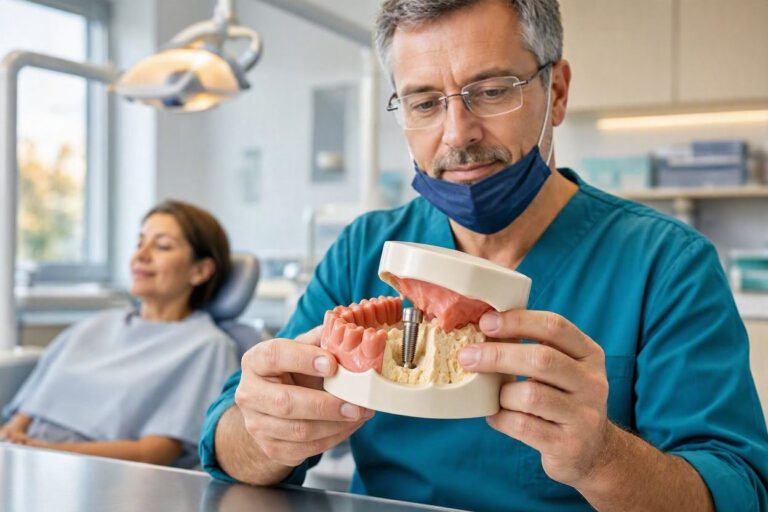
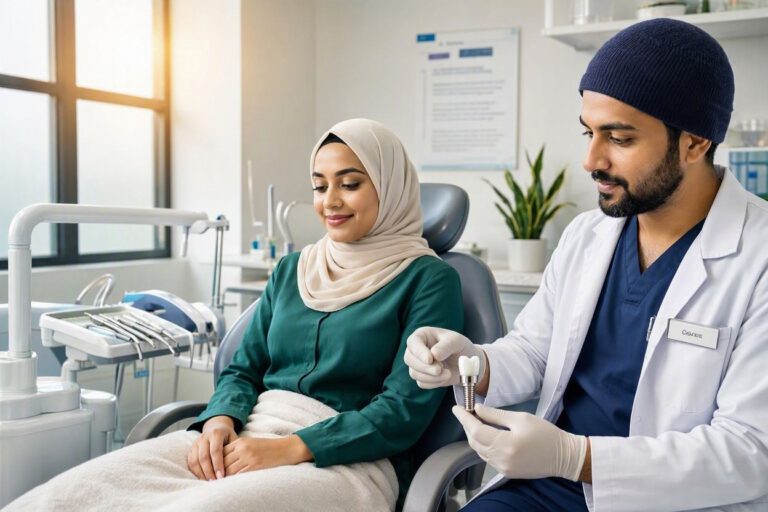
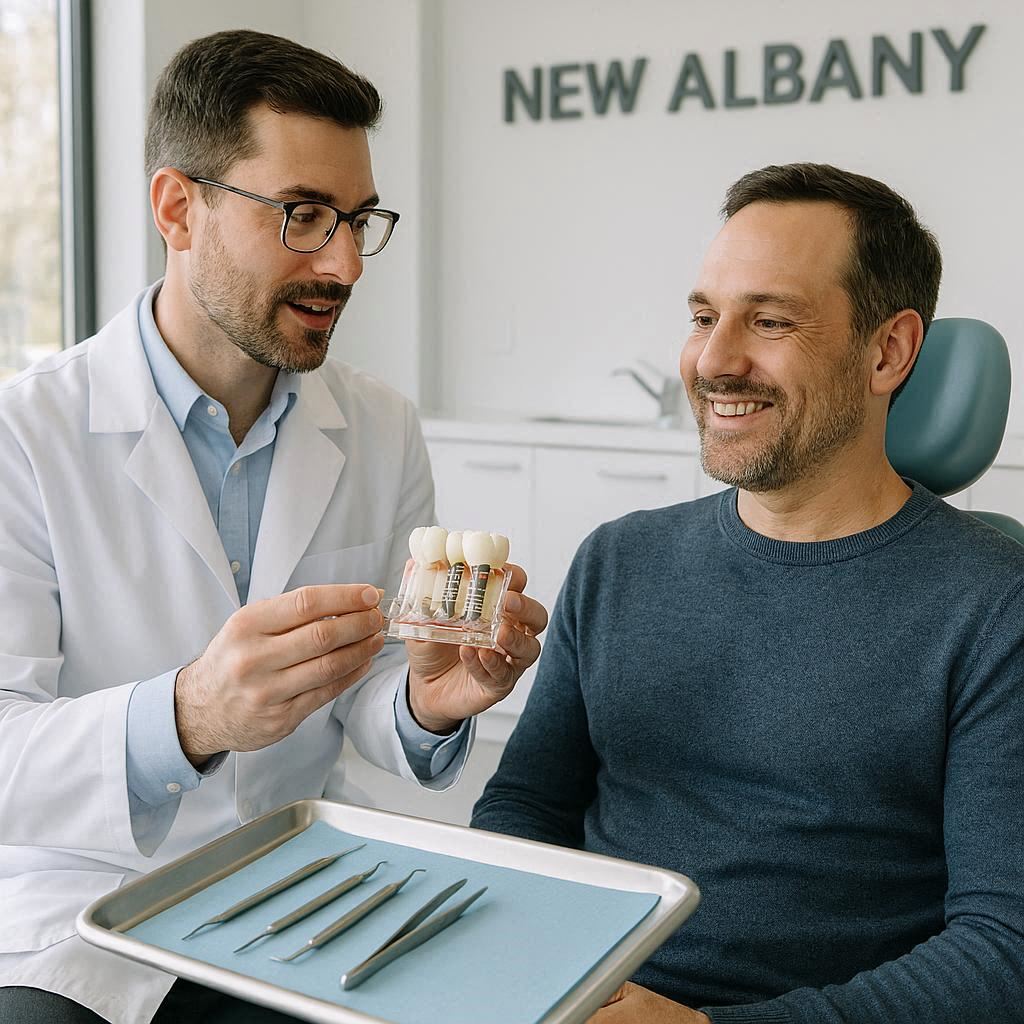
A dental implant is an artificial tooth root. Dentists place it into your jawbone. After healing, they attach a custom-made crown on top. The result looks, feels, and functions like a natural tooth.
Most implants use titanium. This material bonds with your bone. That bond creates a very strong foundation.
The Three Main Parts of a Dental Implant
- The Implant Post: A small screw placed into the jawbone.
- The Abutment: A connector piece attached to the post.
- The Crown: The visible, tooth-colored part.
Important note: Dental implants are not the same as bridges or dentures. Implants stay fixed in your mouth. You care for them like natural teeth.
Why Choose Dental Implants in New Albany?
New Albany has a growing number of skilled dental professionals. Many focus on restorative and implant dentistry. Choosing a local provider offers several benefits.
Benefits of Staying Local for Implant Care
- Convenient follow-up visits: Implants require multiple appointments. A local clinic saves travel time.
- Familiarity with local patient needs: Dentists here understand the community’s lifestyle and health trends.
- Ongoing support: You can easily return for check-ups or adjustments.
How Implants Compare to Other Options
| Feature | Dental Implants | Traditional Bridge | Removable Dentures |
|---|---|---|---|
| Longevity | 20+ years or life | 5–15 years | 5–10 years |
| Bone Preservation | Yes (stimulates bone) | No | No |
| Stability | Very high | Moderate | Low to moderate |
| Affects Adjacent Teeth | No | Yes (shaving down teeth) | No |
| Eating Comfort | Like natural teeth | Good | Can slip or click |
As the table shows, implants offer superior long-term value. They protect your jawbone and keep nearby teeth untouched.
Who Is a Good Candidate for Implants?
Most healthy adults can receive dental implants. However, some conditions affect success rates.
Ideal Candidate Profile
- Has one or more missing teeth
- Possesses adequate jawbone density
- Has healthy gums (no active gum disease)
- Does not smoke heavily
- Is committed to good oral hygiene
Common Concerns Addressed
What if I have low bone density?
You may need a bone graft first. This procedure adds bone material to your jaw. It sounds serious, but it is routine. Many New Albany clinics offer same-day bone grafting.
What about age limits?
There is no upper age limit. As long as you are healthy enough for a minor surgical procedure, age is not a barrier. Teenagers usually wait until jaw growth finishes (around 18 for females, 20–21 for males).
Can smokers get implants?
Yes, but healing takes longer. Smoking reduces blood flow to the gums. Dentists strongly recommend quitting or pausing before and after surgery.
The Step-by-Step Dental Implant Process
Understanding the timeline helps you plan. The entire process from start to finish often takes 3 to 9 months. Here is what to expect.
Step 1: Initial Consultation (1 visit)
Your dentist will:
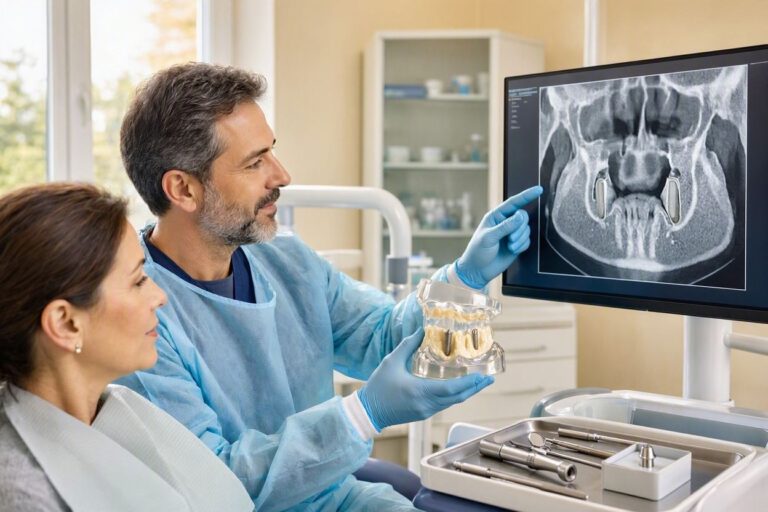
- Take X-rays or a 3D CT scan
- Examine your mouth and medical history
- Discuss your goals and budget
- Create a personalized treatment plan
Step 2: Preparatory Procedures (if needed)
Some patients require:
- Tooth extractions
- Bone grafts
- Gum disease treatment
These add 1 to 6 months of healing time.
Step 3: Implant Placement Surgery (1 to 2 hours)
The dentist numbs your mouth. They make a small cut in the gum. Then they drill a precise hole into the bone and insert the implant post. Finally, they place a protective cover screw or healing cap.
You will feel no pain during surgery. Local anesthesia works very well. Some clinics also offer sedation if you feel nervous.
Step 4: Osseointegration (Healing Phase)
This is the most important step. Your jawbone grows around the implant. This process, called osseointegration, takes 3 to 6 months. During this time, you wear a temporary tooth replacement if needed.
Step 5: Abutment Placement
Once the implant fuses with bone, the dentist reopens the gum. They attach the abutment. This small metal piece connects the implant to the crown. Healing from this minor procedure takes about 2 weeks.
Step 6: Crown Placement
Your dentist takes impressions of your mouth. A lab creates your custom crown. When ready, the dentist screws or cements it onto the abutment. Your new tooth is complete.
Summary Timeline Table
| Phase | Typical Duration |
|---|---|
| Consultation & Planning | 1–2 weeks |
| Bone Graft (if needed) | 4–9 months healing |
| Implant Surgery | 1–2 hours |
| Osseointegration | 3–6 months |
| Abutment & Crown | 2–4 weeks |
| Total average | 4–9 months |
Cost of Dental Implants in New Albany
This is the most common question. Let’s give you realistic numbers.
Average Price Ranges
- Single dental implant (post + abutment + crown): 3,500to6,000
- Implant-supported bridge (replaces 2–4 teeth): 5,000to15,000
- Full arch fixed implants (All-on-4 or similar): 15,000to30,000 per arch
- Removable implant denture (snap-on): 8,000to15,000 per arch
What Influences the Price?
Several factors change the final cost:
- Number of implants: More implants mean higher cost.
- Need for bone grafting: Each graft adds 500to3,000.
- Material of crown: Zirconia costs more than porcelain-fused-to-metal.
- Dentist’s experience: Specialist periodontists or oral surgeons charge more than general dentists.
- Clinic location: New Albany prices may differ from nearby Louisville or Jeffersonville.
Ways to Make Implants Affordable
Do not let the price scare you. Many people afford implants through these methods:
- Dental insurance: Some plans cover part of the crown or abutment.
- In-house payment plans: Many New Albany clinics offer 0% interest financing.
- Third-party financing: CareCredit and LendingClub work with local dentists.
- Dental schools: The University of Louisville Dental School provides lower-cost implant care.
- Discount dental plans: These are not insurance but save 10–30% on procedures.
Note from the author: Always ask for a written treatment plan with all costs listed. Never pay for a full implant procedure upfront without a clear breakdown.
Finding the Right Implant Dentist in New Albany
Not all dentists place implants. Some focus only on crowns and fillings. Others have advanced training in surgical implantology.
Questions to Ask Before Choosing a Provider
- How many implant procedures have you performed?
- What is your success rate?
- Do you perform the surgery and the crown work in-house?
- What type of implant brand do you use (e.g., Nobel Biocare, Straumann, Zimmer)?
- Can you show me before-and-after photos of local patients?
- What happens if my implant fails?
Red Flags to Avoid
- Extremely low prices (under $2,000 for a complete implant)
- Promising a permanent crown in one day
- No CT scan or digital imaging
- Unwilling to provide references or case photos
- High-pressure sales tactics or “today-only” discounts
Local Resources to Start Your Search
- New Albany Dental Society: Ask for member lists.
- Google Maps & Reviews: Filter by “dental implants” and read 3-star reviews (they are most honest).
- Your general dentist: Many refer trusted specialists.
Recovery and Aftercare: What to Expect
Healing from dental implants is usually straightforward. But you need to follow instructions carefully.
First 24 Hours After Surgery
- Bite on gauze to control bleeding
- Apply ice packs to your cheek (15 minutes on, 15 off)
- Eat only cold, soft foods (yogurt, smoothies, applesauce)
- Do not spit, rinse, or drink through a straw
- Take prescribed pain medication as needed
Days 2 to 7
- Swelling peaks around day 2 or 3, then reduces
- Switch to warm salt water rinses (after 24 hours)
- Eat warm, soft foods (mashed potatoes, scrambled eggs, soup)
- Avoid crunchy, sticky, or hard foods
- Brush other teeth gently, avoid the implant site
Weeks 1 to 6
- Most discomfort disappears
- Return to normal eating gradually
- See your dentist for suture removal (if needed)
- Wear your temporary restoration as instructed
Long-Term Care for Your Implant
Implants do not decay, but your gums still need care.
Daily routine:
- Brush twice a day with a soft brush
- Floss daily (use superfloss or implant-specific floss)
- Use a water flosser on low setting
Professional maintenance:
- See your dentist every 6 months
- X-rays every 12–24 months to check bone levels
- Avoid chewing ice, pens, or hard candies
Realistic expectation: With good care, over 95% of dental implants last 20+ years. However, the crown may need replacement after 10–15 years due to normal wear.
Risks and Complications: An Honest Discussion
No surgical procedure is risk-free. A good dentist explains both benefits and risks. Here is the truth.
Common (but usually minor) Issues
- Swelling and bruising: Normal, resolves in 1–2 weeks
- Minor bleeding: Expected for 24–48 hours
- Temporary numbness: Rare, but possible near the lower jaw nerves
Less Common but Serious Risks
| Complication | Frequency | Solution |
|---|---|---|
| Implant failure (no bone fusion) | 2–5% | Remove implant, graft bone, try again |
| Infection (peri-implantitis) | 5–10% | Deep cleaning, antibiotics, sometimes removal |
| Nerve damage | Less than 1% | Usually temporary; permanent is very rare |
| Sinus problems (upper implants) | 1–2% | Sinus lift or implant repositioning |
Signs of a Problem After Surgery
Contact your dentist immediately if you experience:
- Fever over 101°F (38.3°C)
- Uncontrollable bleeding
- Pain that worsens after 3 days
- A bad taste that does not go away
- The implant feels mobile
The good news: Most complications are treatable. Choose an experienced dentist to minimize risks.
Dental Implants vs. Alternatives: Detailed Comparison
Sometimes implants are not the right choice for every patient or every budget. Here is a fair comparison.
Implant vs. Fixed Bridge
Bridges pros:
- Faster treatment (2–3 weeks)
- Lower initial cost (2,000–4,000)
- No surgery required
Bridges cons:
- Shave down healthy adjacent teeth
- Last only 5–15 years
- Do not prevent bone loss
Implant pros (over bridge):
- Preserves bone and facial shape
- Does not damage other teeth
- Lasts 2–4 times longer
Implant vs. Dentures
Dentures pros:
- Lowest upfront cost (500–3,000)
- No surgery
- Replace all teeth at once
Dentures cons:
- Can slip or click when eating or talking
- Requires adhesives
- Accelerates bone loss over time
Implant-retained dentures:
A hybrid option. Two to four implants hold a denture securely. Costs more than regular dentures but less than full fixed implants. Many New Albany patients choose this middle path.
Decision Checklist
Ask yourself:
- How long do I plan to stay in this area?
- Can I commit to 4–9 months of treatment?
- Is preserving my jawbone important to me?
- Do I dislike removable appliances?
If you answer “yes” to the last three questions, implants are likely worth the investment.
The Psychological Benefits of Dental Implants
We focus on physical health, but missing teeth affect mental well-being too. Patients who receive implants often report:
- Higher self-esteem when smiling in photos
- Less anxiety about eating in public
- Improved job interview confidence
- Better sleep (no denture removal routine)
“I hid my smile for seven years. After getting two implants in New Albany, I forgot which teeth were fake. That feeling is priceless.” — Local patient, age 52
Real teeth replacement restores more than function. It restores joy.
Frequently Asked Questions (FAQ)
1. Are dental implants painful?
The surgery itself is not painful due to anesthesia. Afterward, most patients compare discomfort to a tooth extraction. Over-the-counter pain relievers usually suffice.
2. How long do implants last?
The implant post can last a lifetime with good care. The crown on top may need replacement after 10–20 years due to normal wear or staining.
3. Does insurance cover dental implants in New Albany?
It varies. Some plans cover 30–50% of the crown and abutment. Few cover the implant post itself. Always verify with your provider before starting treatment.
4. Can I get a same-day implant?
Yes, for some cases. This is called immediate loading. Not everyone qualifies. You need excellent bone quality and a non-smoking status. Most patients still need the traditional healing period.
5. What is the success rate?
Over 95% for lower jaw implants. Upper jaw success is slightly lower (around 90–95%) due to less dense bone.
6. Can I have an MRI with dental implants?
Yes. Titanium implants are not magnetic. They are safe for MRIs and CT scans. However, inform the technician beforehand.
7. Do implants require special cleaning?
No special tools needed, but you must be thorough. Water flossers and interdental brushes help clean around the abutment.
8. What happens if an implant fails?
Your dentist removes it easily. After bone healing (3–6 months), they can place a new implant. You are not charged twice if the failure is due to medical reasons at reputable clinics. Always ask about a warranty.
9. Can I get implants if I have diabetes?
Yes, as long as your blood sugar is well-controlled. High HbA1c levels (above 8%) increase failure risk. Work with your physician before scheduling surgery.
10. Are mini implants the same as regular implants?
No. Mini implants are smaller in diameter. They are cheaper but less durable. They work well for stabilizing lower dentures. For single tooth replacement, standard implants are better.
Additional Resource for New Albany Residents
For free, unbiased guidance on finding low-cost dental care in Indiana, visit:
🔗 Indiana Dental Association – Find a Dentist Tool
(Search by city “New Albany” and filter by “implant services”)
Link not clickable for security. Copy and paste into your browser.
This official resource lists licensed dentists only. It includes patient reviews and disciplinary history.
Final Checklist Before Starting Treatment
Use this checklist to feel confident moving forward:
- I have consulted at least two different dentists.
- I received a written treatment plan with all costs.
- I understand the full timeline (including healing).
- I know the brand and type of implant being used.
- I have a plan for payment (insurance, financing, savings).
- I arranged time off work (at least 2–3 days after surgery).
- I stocked soft foods for the first week.
- I quit smoking or am willing to pause for 2 months.
- I told my dentist about all medications and health conditions.
- I feel comfortable asking questions during appointments.
Conclusion
Dental implants in New Albany offer a permanent, natural-looking solution for missing teeth. They preserve your jawbone, protect healthy teeth, and restore confidence. While the process requires time and investment, over 95% of patients enjoy success for decades.
Start by consulting a local implant dentist, understand your costs, and commit to proper aftercare. Your smile deserves nothing less.
Disclaimer: This article provides general educational information. It does not replace professional medical or dental advice. Always consult a licensed dentist in New Albany for a personal examination and treatment plan. Individual results vary. The author does not endorse any specific clinic mentioned or implied in this resource.