Portland Perio Implant Center
When you hear the words “periodontal specialist” or “dental implant surgeon,” it is easy to feel a little nervous. You might think about pain, complicated procedures, or high costs. But taking care of your gums and replacing missing teeth is one of the best investments you can make for your long-term health.
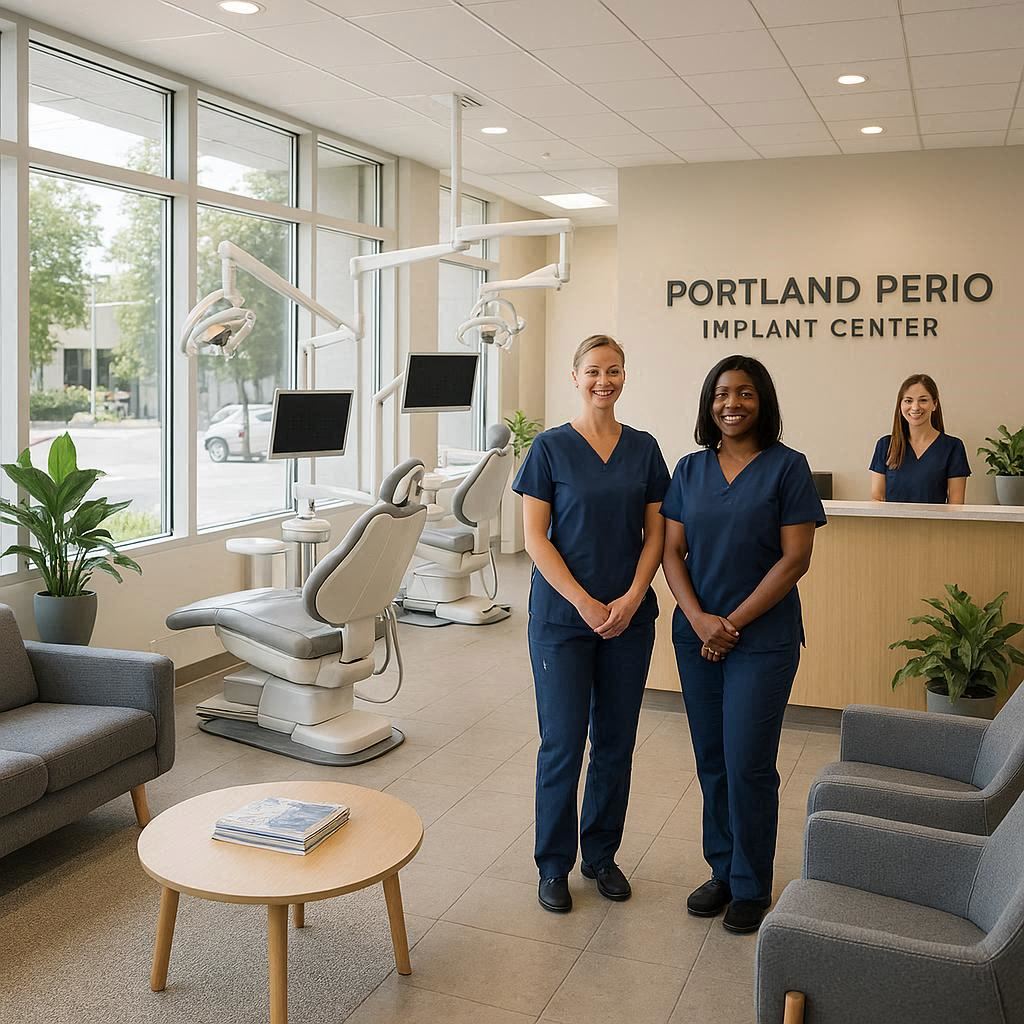
If you live in or around Portland, you have likely come across the name Portland Perio Implant Center. This center has built a reputation for helping people restore their smiles with a gentle, science-based approach.
In this guide, we will walk you through everything you need to know. You will learn what periodontal disease actually is, when you might need an implant, what makes a specialized center different from a general dentist, and how to prepare for your first visit. We will also share realistic costs, recovery timelines, and practical tips to keep your results healthy for decades.
What Is a Periodontal and Implant Center?
A periodontal and implant center is a specialized dental facility. It focuses exclusively on two main areas:
- The gums and supporting bone (periodontics)
- Replacing missing teeth with artificial roots (dental implants)
General dentists are excellent for cleanings, fillings, crowns, and basic checkups. But when the gum disease becomes advanced, or when you need surgical placement of implants, a specialist brings extra training.
Most periodontists complete three additional years of education after dental school. They study the biology of gum tissue, bone regeneration, and microsurgical techniques. They also learn how to manage complex cases, including patients with diabetes, heart conditions, or severe bone loss.
Note: Portland Perio Implant Center employs board-certified periodontists. That means they have passed rigorous written and oral exams beyond their basic license.
Why Does Specialization Matter for Implants?
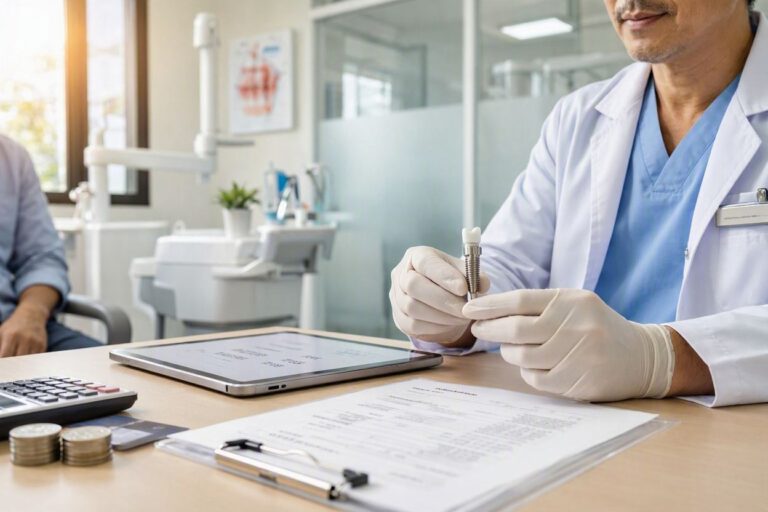
Think of a dental implant like building a house. The implant itself is the foundation. If the foundation is placed poorly, everything on top—your crown, bridge, or denture—will fail. A periodontist uses 3D imaging and surgical guides to place implants with extreme precision.
Additionally, periodontists are experts at handling soft tissue. They can make sure the gum around your implant looks natural and healthy. That is something many general dentists are not trained to do.
Common Conditions Treated at Portland Perio Implant Center
Before we dive into procedures, let us look at the everyday problems that bring people to a periodontal specialist. You may recognize one or more of these.
Gum Disease (Periodontitis)
Gum disease starts silently. You might notice a little blood when you brush. Or maybe your breath has changed. Over time, the gums pull away from the teeth, creating pockets where bacteria multiply. Eventually, the bone that holds your teeth dissolves.
There are four stages:
| Stage | Symptoms | Treatment Level |
|---|---|---|
| Gingivitis | Red, swollen gums that bleed | Deep cleaning + improved home care |
| Mild periodontitis | Pockets of 4-5 mm, early bone loss | Scaling and root planing (SRP) |
| Moderate periodontitis | Pockets of 5-6 mm, visible bone loss on X-rays | SRP + possibly laser or gum surgery |
| Advanced periodontitis | Pockets >6 mm, loose teeth, severe bone loss | Surgery, bone grafts, or extractions |
The Portland Perio Implant Center sees many people in the moderate to advanced stages. The good news? With proper treatment, even advanced disease can be stopped.
Missing Teeth
Losing a tooth is more common than you think. Accidents, decay, and gum disease all lead to tooth loss. When a tooth goes missing, the surrounding teeth start to shift. The jawbone beneath the empty space begins to melt away. This process is called resorption.
Implants are the only tooth replacement option that stops bone loss. Unlike a bridge or denture, an implant replaces the root. That keeps the bone stimulated and healthy.
Receding Gums
Do your teeth look longer than they used to? That is gum recession. It can happen from brushing too hard, grinding your teeth, or genetic factors. Recession exposes the sensitive root surface, which leads to pain, cavities, and eventual tooth loss.
Gum grafting is a common solution. The surgeon takes a small piece of tissue from the roof of your mouth (or uses donor tissue) and attaches it to the receded area.
Bone Loss
Without enough bone, an implant cannot be placed. Bone loss occurs from:
- Long-term missing teeth
- Advanced gum disease
- Trauma or injury
- Tumors or cysts
Periodontists can rebuild bone using bone grafting. They place natural or synthetic bone material into the deficient area. Over several months, your body replaces it with living bone.
Services Offered at Portland Perio Implant Center
Let us explore the specific treatments you can expect. This list is not exhaustive, but it covers 95% of what patients need.
Comprehensive Periodontal Evaluation
Your first visit is all about information. A specialist will:
- Review your medical and dental history
- Take a full set of X-rays (often 3D cone beam CT)
- Measure the pockets around each tooth with a tiny probe
- Check for bleeding, pus, and mobility
- Assess your bite and any grinding habits
This sounds like a lot, but it takes about 45 minutes. You leave with a clear diagnosis and a written treatment plan.
Scaling and Root Planing (Deep Cleaning)
Scaling and root planing is the gold standard for non-surgical gum disease treatment. It goes far below the gumline. The hygienist or periodontist uses specialized instruments to remove tartar and bacterial toxins from the root surfaces.
Most patients receive local anesthesia. The procedure is not painful during, but you may feel sore for a few days afterward.
What to expect after deep cleaning:
- Some tooth sensitivity to cold (lasts 1-2 weeks)
- Gums may feel tighter and look lighter pink
- Bleeding stops within a few days
Your specialist will likely ask you to return for a re-evaluation in four to six weeks. That way, they can see how your gums healed and if pockets have reduced.
Periodontal Laser Therapy
Laser treatment is an alternative to traditional gum surgery for some patients. The periodontist uses a special dental laser to remove infected tissue and kill bacteria. Lasers are precise and often cause less bleeding and swelling.
However, lasers are not for everyone. Deep pockets or irregular bone shapes still require traditional surgery. A good specialist will explain both options honestly.
Gum Graft Surgery
For receding gums, a gum graft covers exposed roots. There are three main types:
- Connective tissue graft: Most common. Tissue is taken from the roof of your mouth.
- Free gingival graft: Used for thin gums that need thickness.
- Pedicle graft: Tissue is rotated from neighboring gum. Only works if you have enough healthy tissue nearby.
Recovery from a gum graft takes about two weeks for the initial healing. The roof of your mouth feels like a pizza burn, but it heals quickly. Most patients return to normal eating within ten days.
Dental Implant Placement
This is the flagship service at Portland Perio Implant Center. The process unfolds over several months:
Step 1: Consultation and planning
3D imaging shows exactly where the bone is thickest. The surgeon plans the implant position to avoid nerves, sinuses, and adjacent tooth roots.
Step 2: Bone grafting (if needed)
If your bone is too thin or soft, you need a graft first. This adds three to six months to the timeline.
Step 3: Implant surgery
The surgeon makes a small incision in the gum, drills a precise hole, and places the titanium implant into the bone. The gum is stitched closed over or around the implant.
Step 4: Osseointegration
This is a fancy word for “bone grows onto the implant.” It takes three to six months. During this time, you wear a temporary tooth replacement if needed.
Step 5: Abutment placement
A small connector is attached to the implant. This part pokes through the gum.
Step 6: Crown or restoration
Your general dentist or a prosthodontist makes the visible tooth and screws or cements it onto the abutment.
Important: Many centers place the implant and abutment in the same surgery. That reduces visits by one. Ask your surgeon if you are a candidate for same-day abutment.
Sinus Lift
The maxillary sinuses are air-filled spaces above your upper back teeth. When those teeth are missing, the sinus can expand downward, leaving no bone for implants. A sinus lift adds bone to that area.
There are two techniques:
- Internal sinus lift: Done through the implant hole. Minimal discomfort.
- External (lateral) sinus lift: Requires a small window in the side of the sinus. More invasive but necessary for large defects.
Sinus lifts sound scary, but they are routine. Thousands are performed every year with a high success rate.
Ridge Preservation
When a tooth is extracted, the bone collapses by 30-60% within six months. Ridge preservation fills the empty socket with bone graft material immediately after extraction. This keeps the bone shape intact for future implants.
If you know you want an implant later, always ask for ridge preservation at the time of extraction. It saves you from much larger grafts later.
The Patient Experience: What to Expect from Start to Finish
Let us walk through a realistic patient journey. Meet Sarah, a 52-year-old teacher who came to Portland Perio Implant Center with bleeding gums and a missing lower molar.
First Phone Call and Scheduling
Sarah called and spoke to a patient coordinator. The coordinator asked about her insurance, her main concerns, and any medical conditions (diabetes, heart issues, blood thinners). She was scheduled for a consultation within one week.
Day 1: Consultation
Sarah arrived 15 minutes early to fill out paperwork. The office was modern and calm. Soft music played in the background.
She met the periodontist, Dr. Chen. Dr. Chen asked about her symptoms and then performed the periodontal exam. He measured pockets: most were 3-4 mm, but her lower molars had 6 mm pockets. The X-ray showed bone loss around those teeth.
Dr. Chen explained:
- Sarah had moderate periodontitis
- She needed scaling and root planing first
- After healing, they would re-evaluate for the missing molar implant
- Total estimated cost with insurance: 1,200outofpocketforgumtreatment+3,500 for implant (without crown)
Sarah appreciated that Dr. Chen did not push surgery immediately. He recommended starting with the least invasive approach.
Deep Cleaning Visit (2 weeks later)
The hygienist numbed Sarah’s mouth completely. Over 90 minutes, she cleaned deep below the gumline. Sarah felt pressure but no pain. Afterwards, the hygienist gave her a prescription rinse and recommended a soft diet for two days.
What Sarah felt that evening:
Mild throbbing, like a deep workout soreness. She took ibuprofen and ate yogurt and soup. By day three, she felt normal.
Re-evaluation (6 weeks later)
Dr. Chen re-measured Sarah’s pockets. Most had reduced to 3 mm. The 6 mm pockets were now 4 mm. No bleeding. Her gums were pink and firm.
Good news: she was ready for the implant evaluation.
Implant Surgery (3 weeks later)
Sarah received a detailed instruction sheet before surgery. She arranged for a friend to drive her home.
The morning of surgery:
- She took prescribed antibiotics one hour before
- The team numbed the area with local anesthetic
- Dr. Chen placed the implant in 35 minutes
- Two stitches were placed
Sarah felt no pain during. She described it as “lots of weird vibrations but nothing sharp.”
Recovery week:
- Day 1-2: Ice packs, soft foods, rest. Mild swelling.
- Day 3-4: Swelling peaked, then began to go down.
- Day 7: Stitches removed. Sarah could eat soft solid foods.
Healing Period (4 months)
Sarah wore a temporary flipper (a small plastic tooth) during healing. She visited her general dentist for a cleaning at the 2-month mark. Everything looked perfect.
Abutment and Crown (Month 5)
A quick 20-minute visit placed the abutment. Two weeks later, her general dentist cemented the final crown. Sarah cried happy tears. She had not chewed on that side for eight years.
Long-term maintenance
Now Sarah returns to Portland Perio Implant Center once per year for a “perio maintenance” visit. This is deeper than a standard cleaning but less intense than deep cleaning. She also continues seeing her general dentist for regular checkups.
Cost Breakdown: What You Will Really Pay
Dental care costs vary widely based on insurance, location, and the complexity of your case. Below are realistic, uninsured ranges for the Portland area as of 2025. Use these as estimates only.
| Procedure | Typical cost (no insurance) | With PPO insurance |
|---|---|---|
| Consultation + X-rays | 200−350 | 0−50 copay |
| Scaling and root planing (full mouth) | 1,000−1,800 | 300−700 |
| Perio maintenance (each visit) | 150−250 | 20−60 |
| Gum graft (one area) | 1,200−2,500 | 600−1,200 |
| Single dental implant (surgery only) | 1,800−3,500 | 1,000−2,500 |
| Implant crown (from general dentist) | 1,500−3,000 | 700−1,800 |
| Bone graft (small, with implant) | 500−1,200 | 250−700 |
| Sinus lift | 1,500−3,000 | 800−1,800 |
Note: Most dental insurance has a yearly maximum between 1,500and2,500. If you need multiple procedures, you may split them over two plan years.
Portland Perio Implant Center offers payment plans through third-party financing like CareCredit. They also accept most major PPO plans. Always ask for a written treatment plan with codes before you commit.
Hidden Costs to Ask About
- CT scan (sometimes separate from consultation)
- Sedation (if you choose oral or IV sedation)
- Temporary tooth during healing
- Follow-up visits for complications
Honest centers will tell you all of this upfront. Avoid any office that pressures you to start treatment without a full financial discussion.
How to Choose the Right Periodontal Center in Portland
Portland has many dental specialists. How do you know if Portland Perio Implant Center is right for you? Ask these seven questions before booking.
1. Are the periodontists board-certified?
Board certification means they went beyond basic licensing. They passed additional exams and regularly complete continuing education. Look for “Diplomate of the American Board of Periodontology.”
2. What technology do they use?
Modern centers use:
- Cone beam CT (3D X-ray)
- Laser therapy options
- Digital impression scanners (no goopy material in your mouth)
- Piezosurgery (gentle bone cutting)
3. Do they offer sedation options?
Fear of dental work is real. Good centers offer:
- Nitrous oxide (laughing gas)
- Oral sedation (a pill)
- IV sedation (you sleep through the procedure)
4. What is their success rate for implants?
Reputable centers track their own data. Ask: “What percentage of your implants are still successful after five years?” A good answer is 95% or higher.
5. Do they coordinate with your general dentist?
Periodontists and general dentists should communicate like a team. The center should ask for your dentist’s contact information and send updates after each visit.
6. How do they handle emergencies?
If an implant feels loose on a Friday night, can you reach someone? Ask about after-hours coverage.
7. What do patient reviews say?
Look for patterns in reviews. Ignore one-star complaints about wait times or billing disputes. Pay attention to comments about:
- Pain management during procedures
- Clear communication
- Follow-up care
Here is a quick comparison checklist:
| Factor | Look for this | Avoid this |
|---|---|---|
| Credentials | Board-certified periodontist | General dentist doing implants without extra training |
| Technology | 3D CT scanner on-site | Sending you elsewhere for scans |
| Sedation | Multiple options available | “We don’t really do sedation” |
| Transparency | Written quote before treatment | Vague estimates, pressure to book surgery |
| Reviews | 4+ stars, many mentions of kindness and skill | Repeated complaints about unexplained pain or failed implants |
Realistic Risks and Complications
No medical procedure is 100% risk-free. A trustworthy center will discuss complications openly. Let us cover the most common ones so you are not caught off guard.
After Deep Cleaning
- Tooth sensitivity: Normal for a few weeks. Use sensitivity toothpaste.
- Gum soreness: Usually gone in 2-5 days.
- Infection: Rare (less than 1%). Signs include fever, spreading redness, or pus.
After Gum Graft
- Bleeding: Minor oozing is normal. Active bleeding is not.
- Graft failure: Occurs in 5-10% of cases. More likely if you smoke or grind your teeth.
- Numbness: Temporary altered sensation in chin or lip (very rare).
After Dental Implant
- Peri-implantitis: This is like gum disease around an implant. It causes bone loss and can lead to implant failure. Prevent it with excellent home care and regular perio maintenance.
- Implant failure: Early failure (first four months) happens in 1-3% of cases. Late failure (after crown is placed) is even rarer.
- Nerve injury: In the lower jaw, implants placed too close to the inferior alveolar nerve can cause permanent lip numbness. Good 3D planning prevents this almost completely.
After Bone Graft
- Graft exposure: Sometimes the gum opens and graft particles fall out. Small exposures heal on their own. Large ones need a second surgery.
- Graft rejection: Synthetic and bovine grafts almost never reject. Cadaver bone is processed to remove all cells, so rejection is similarly rare.
Quote from a patient (shared with permission):
“I was terrified of implant failure. My periodontist sat with me for 20 minutes and explained exactly how many she had placed and what the actual failure rate was. That honesty made me trust her completely.” — David, Portland
Preparing for Your First Appointment
You can make your first visit smoother with a few simple steps.
What to bring
- Your insurance card (even if you think you are not covered)
- A list of all medications and supplements (including aspirin, blood thinners, and herbal products)
- Any recent X-rays from your general dentist (or their contact info)
- A form of ID
What to tell the periodontist
- Medical conditions: Diabetes, high blood pressure, heart valve issues, osteoporosis, cancer history
- Pregnancy or planning to become pregnant (elective surgery is often delayed)
- Allergies: To latex, antibiotics, anesthetics, or metals
- Smoking or vaping history (this dramatically affects healing)
What to ask
Write down your top three questions before you go. Examples:
- “Is my gum disease reversible, or is the bone loss permanent?”
- “Can I get all my treatment done in one center, or will I need other specialists?”
- “What happens if I do nothing?”
What not to do
- Do not consume caffeine or energy drinks right before (they can make you jittery during the exam)
- Do not lie about your flossing habits. Specialists can tell immediately. They are not there to judge you. They need accurate information to help you.
Recovery Guides by Procedure
Let us get practical. Below are day-by-day recovery guides for the three most common procedures.
Deep Cleaning (Scaling and Root Planing)
| Time after procedure | What to expect | What to do |
|---|---|---|
| 0-24 hours | Numbness wears off. Mild soreness. Gums may bleed a little. | Rest. Soft foods only. No flossing in treated areas. |
| Day 2-3 | Soreness peaks. Teeth feel slightly loose (normal). | Warm salt water rinses 2-3x/day. Ibuprofen as needed. |
| Day 4-7 | Soreness fades. Gums look less red. | Resume gentle flossing. Use prescribed rinse if given. |
| Week 2 | Almost back to normal. | Return to normal hygiene. Avoid aggressive brushing. |
Single Dental Implant
| Time | Expectation | Action |
|---|---|---|
| Day 0 (surgery day) | Numb for 3-4 hours. Gauze in mouth. | Bite on gauze for 30 min. Ice packs 20 min on/off. Eat cold soft food. |
| Day 1-3 | Swelling peaks. Bruising possible. Mild pain controlled by OTC meds. | No spitting, no straws. Sleep with head elevated. Rinse very gently. |
| Day 4-7 | Swelling down. Stitches intact. | Progress to warm soft foods (mashed potatoes, eggs, pasta). |
| Week 2 | Stitches removed. Feeling normal. | Avoid chewing on implant side. Resume normal brushing except near surgery site. |
| Month 1-4 | No symptoms. Bone is healing. | Wear your temporary as directed. Continue perio maintenance schedule. |
Gum Graft
| Time | Expectation | Instructions |
|---|---|---|
| Day 0 | Numb palate and graft site. Donor site (palate) feels like a bad burn. | Ice packs on face. No hot liquids. No crunchy foods for 2 weeks. |
| Day 1-3 | Palate pain peaks. Graft site may look white (that is healing tissue, not infection). | Pain meds as prescribed. Soft, cool foods only (smoothies, pudding, yogurt). |
| Day 4-7 | Palate begins to form a scab. Graft pinkening. | Rinse with salt water gently. Avoid pulling lip to look at graft. |
| Week 2-3 | Palate heals. Graft firmly attached. | Return to soft solids. Avoid toothbrush near graft. |
| Week 4 | Almost normal. | Resume gentle brushing with ultra-soft brush. |
Important note: Do not smoke or vape for at least two weeks after any surgery. Nicotine constricts blood vessels and dramatically increases failure rates. If you cannot quit, be honest with your surgeon so they can adjust their treatment plan.
Long-term Success: How to Keep Your Gums and Implants Healthy
Treatment does not end when you leave the office. Your daily habits determine whether your results last five years or fifty.
For natural teeth after gum treatment
- Brush twice a day for two full minutes. Use an electric brush if possible.
- Floss once a day. If standard floss is hard for you, try floss picks, water flossers, or interdental brushes.
- Use a fluoride or prescription rinse if your periodontist recommends it.
- Return for perio maintenance every 3-6 months. This is non-negotiable for people with a history of gum disease.
For dental implants
Implants do not get cavities, but they are not immune to disease. Peri-implantitis is the number one cause of late implant failure.
Special care for implants:
- Use a soft or extra-soft toothbrush
- Clean around the abutment with implant-specific floss or a water flosser on low pressure
- Avoid metal scrapers (your hygienist uses plastic or titanium instruments)
- Do not chew ice, pens, or hard candy on the implant side
- Wear a night guard if you grind your teeth (grinding can fracture implant components)
Lifestyle factors
| Factor | Effect on gums and implants |
|---|---|
| Smoking | 6x higher risk of implant failure. Reduces gum healing by 40%. |
| Diabetes (uncontrolled) | Slows healing. Increases infection risk. |
| Osteoporosis meds (bisphosphonates) | Rare risk of jaw bone necrosis. Tell your periodontist before any surgery. |
| Poor oral hygiene | Guarantees eventual failure of both natural teeth and implants. |
| Regular perio maintenance | 95% success rate at 10+ years. |
Frequently Asked Questions (FAQ)
1. Is periodontal treatment painful?
Most procedures are done with local anesthesia, so you should not feel sharp pain during. Afterwards, you can expect soreness similar to a deep workout. Most patients manage with over-the-counter ibuprofen or acetaminophen.
2. How long do dental implants last?
With proper care and regular perio maintenance, a dental implant can last 30 years to a lifetime. The crown on top may need replacement after 10-15 years due to normal wear.
3. Can I get an implant if I have gum disease?
Not usually. Active gum disease increases implant failure risk. You must complete gum treatment first and prove you can maintain healthy gums before implant surgery.
4. Does insurance cover periodontal treatment?
Most dental PPO plans cover a portion of scaling, root planing, and perio maintenance. Implants are covered less often, but many plans now include them (usually 50% after deductible). Call your insurance or ask the center to verify benefits.
5. How do I know if I need a gum graft?
Signs include: visible tooth roots, notches at the gumline, sensitivity to cold, and teeth that look longer. Your periodontist will measure the amount of recession and recommend a graft if the root is exposed or if gum thickness is dangerously thin.
6. What is the difference between a periodontist and an oral surgeon?
Periodontists focus on gums, bone, and implants. Oral surgeons focus on extractions, jaw surgery, and facial trauma. There is overlap—both can place implants. For gum disease or receding gums, see a periodontist. For impacted wisdom teeth or jaw realignment, see an oral surgeon.
7. Can I have an implant and crown in one day?
Some centers offer “teeth in a day,” but that is not always ideal. Immediate loading (placing a temporary crown on the same day as implant surgery) works only when bone quality is excellent and the implant is very stable. Your periodontist will tell you if you are a candidate. Most people benefit from a traditional healing period.
8. What happens if I ignore my gum disease?
Gum disease does not stop on its own. Over years, you will lose more bone, teeth will loosen, and eventually you will lose teeth. Treatment becomes more expensive and invasive the longer you wait. Early gum disease is reversible. Late gum disease is manageable but not curable.
9. How often do I need perio maintenance?
People with a history of periodontitis should return every 3-4 months. People with stable gums and one implant may need only 1-2 visits per year beyond their regular cleaning. Your periodontist will prescribe a personalized schedule.
10. Does Portland Perio Implant Center treat children?
Most periodontal centers focus on adults and teenagers with mature teeth. Children with gum problems are usually treated by a pediatric dentist or a general dentist. Call the center directly if you have a child with unusual gum swelling or bleeding.
Additional Resources
For more reliable, non-commercial information about gum health and dental implants, visit the American Academy of Periodontology patient education page.
👉 Link: perio.org/for-patients
This site offers downloadable guides, videos, and a “Find a Periodontist” tool. All content is reviewed by board-certified specialists.
Conclusion
In three lines:
Portland Perio Implant Center provides expert, compassionate care for gum disease, receding gums, and dental implants. From deep cleanings to full-mouth restorations, their board-certified periodontists use modern technology and honest communication. With proper home care and regular maintenance, your results can last a lifetime.
Disclaimer: This article is for informational purposes only and does not constitute medical or dental advice. Always consult a licensed periodontist or dentist for a personal evaluation. The information about costs, success rates, and recovery times is based on national averages and may vary at Portland Perio Implant Center. Do not rely solely on this article for treatment decisions.