Porcelain Veneers vs. Composite Veneers
Choosing to redesign your smile marks a significant personal milestone. You stand at a crossroads where dental artistry meets material science, and the path you choose will influence your confidence for years to come. The debate surrounding porcelain veneers vs. composite veneers dominates cosmetic dentistry discussions for a good reason. This choice involves balancing budget, time, durability, and the final aesthetic result.
We will walk through every detail together. You won’t encounter exaggerated marketing promises or confusing dental terminology here. We will look at the real experiences of patients, the honest limitations of each material, and the long-term financial commitment. Think of this guide as a long conversation with a trusted friend who has done all the research for you. By the time you reach the end, the fog of confusion will lift, and a clear, personalized decision will stand in its place.
A Candid Look at the Core Differences
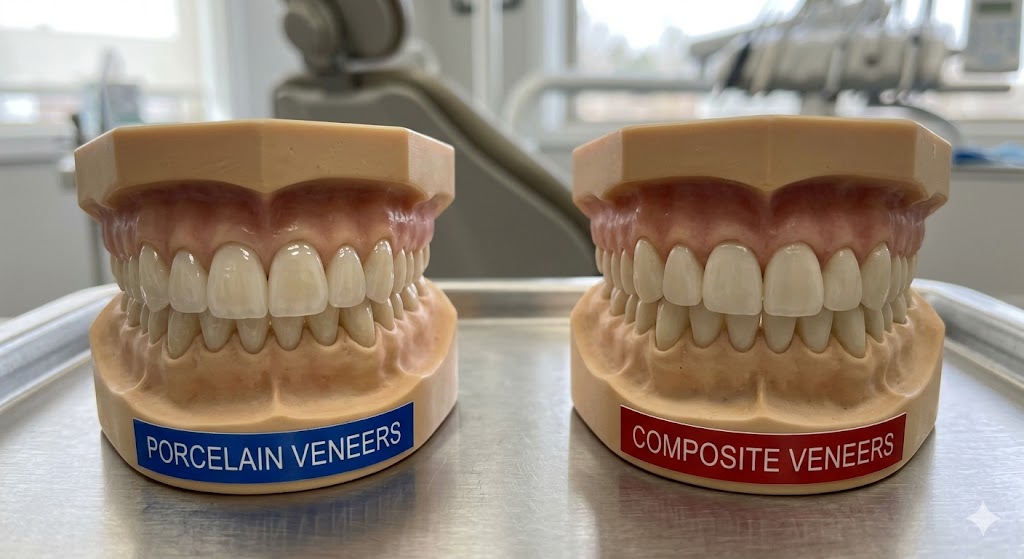
Before we dissect the microscopic structure of these materials, let’s place them side by side in a physical context. You can think of porcelain veneers as custom-tailored, high-thread-count Italian suits. Composite veneers, on the other hand, resemble expertly fitted, high-quality cotton dress shirts. Both make you look sharp and polished. One relies on a distant laboratory and meticulous craftsmanship, while the other depends on the freehand sculpting skill of an artist working directly on your teeth, moment by moment.
The fundamental divergence lies in the application technique, the structural integrity of the material, and the light interaction. Porcelain is a ceramic that glass-like qualities permeate. Composite is a resin, a plastic-based mixture that offers malleability. Neither is inherently “worse.” Each fills a specific need. Your lifestyle, the condition of your natural teeth, and your aesthetic demands dictate which material aligns with your life.
Understanding the physical nature of these restorations helps demystify the cost structure. You aren’t just paying for a piece of material. You are paying for the time required to manipulate it, the equipment needed to set it, and the talent required to make it look like a tooth, not a Chiclet.
The Deep Dive: Understanding Porcelain Veneers
When we talk about porcelain, we often hear terms like “high-end” and “lifelike.” The reality supports the reputation, but the journey to that perfect finish involves a meticulous process of reduction, impression, temporary wear, and bonding. Many people underestimate the emotional impact of wearing temporary teeth while waiting for the final product. We need to explore this process with total transparency.
The Science of the Shell
Porcelain veneers are thin, custom-made shells of ceramic material designed to cover the front surface of teeth. The magic of porcelain lies in its semi-translucent properties. Light does not just bounce off a porcelain surface. It penetrates slightly into the material and reflects back, mimicking the behavior of light interacting with natural tooth enamel.
Dental technicians fabricate these shells in a laboratory. They build layers of ceramic, much like a painter layers oils on a canvas. They incorporate subtle color variations, slight surface textures, and a level of translucency at the incisal edge that composite struggles to replicate over time. This layered fabrication creates a “depth” of color. A natural tooth is not monochromatic; it shifts from a slightly opaque body to a translucent biting edge. Porcelain captures this gradient beautifully.
The Manufacturing Journey: From Prep to Lab
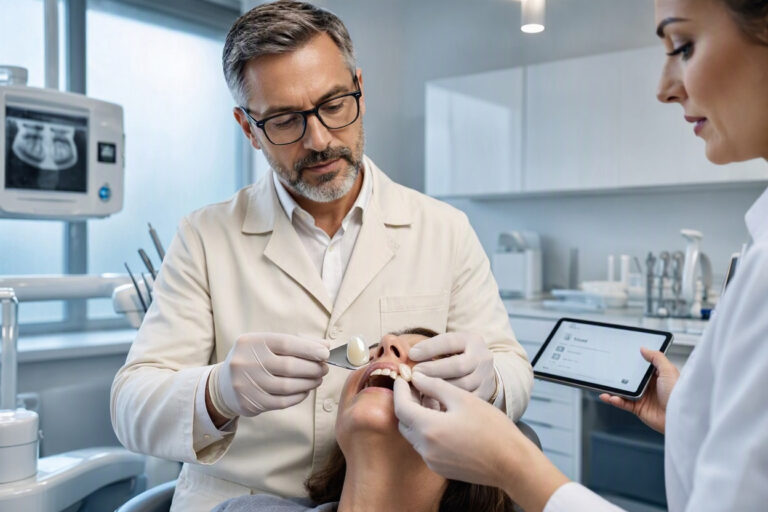
Getting porcelain veneers requires a collaboration between your dentist and a master ceramist. The process traditionally begins with tooth preparation. We must address this frankly. To fit a porcelain shell without making the tooth look bulky, the dentist must remove a small amount of enamel—often 0.3 to 0.5 millimeters—from the front and biting edge of the tooth.
This is an irreversible act. Once that enamel vanishes, it never grows back. For teeth that are already healthy and straight, some patients feel a deep psychological hurdle at the thought of sanding down healthy tooth structure. Dentists do this to ensure the veneer sits flush with the gum line and feels like a natural extension of the body, not a fake cap. However, the “prep-less” or “minimal prep” movement has gained traction, and we will discuss that shortly.
After preparation, the dentist takes an impression. This can involve a gooey alginate material or a digital intraoral scanner that creates a 3D model in minutes. This model travels to a dental lab. The waiting period usually spans two to three weeks. During this interval, you wear temporary veneers. These temporaries are plastic and much weaker. They test your commitment to hygiene and your tolerance for dietary restrictions. If a temporary pops off on a Friday night, you learn very quickly about the anxiety of unscheduled dental visits.
The ceramist at the lab invests hours into handcrafting your restoration. They do not use a machine to mass-produce a smile. They use refractory dies and build up feldspathic porcelain powder, firing it in an oven at high temperatures. The slow cooling process solidifies the glass matrix. The final step involves custom staining and glazing to match the reference photos your dentist sent.
The Bonding Appointment: The Birth of a Smile
The removal of temporaries and the bonding of the final porcelain shells represents a procedure that demands absolute dryness and precision. The dentist isolates your teeth, often with a rubber dam, to prevent saliva contamination. Saliva is the enemy of the bonding agent. Even a microscopic droplet of moisture can compromise the seal and lead to debonding or leakage years later.
The inner surface of the porcelain veneer gets etched with hydrofluoric acid, a potent gel that creates microscopic porosities on the glass surface. The tooth surface receives a phosphoric acid etch. The dentist then applies a silane coupling agent to the porcelain and a bonding resin to the tooth. When the veneer seats on the tooth, the dentist shines a powerful curing light to polymerize the cement. This creates a single, unified structure—porcelain chemically fused to tooth. The removal of excess cement requires meticulous flossing. A bonded porcelain veneer feels impossibly smooth and solid. The transformation is immediate and emotional.
The Deep Dive: Understanding Composite Veneers
If porcelain is the suit made by a distant tailor, composite veneers are the dress sculpted directly onto the body by an artist using fabric and pins. The material starts as a soft, putty-like paste. The dentist applies it directly to the prepared or unprepared tooth surface, sculpting the anatomy by hand, layer by layer, before curing it with a high-intensity light. This is direct chairside work. No lab. No temporaries. Just you, the dentist, and a collection of sculpting instruments.
The Chemistry of Resin
Composite resin is a blend of acrylic monomers and inorganic fillers like silica or quartz. The filler particles give the material its strength, wear resistance, and ability to hold a polish. Modern composites use nano-hybrid technology, meaning the filler particles are incredibly small. This allows the material to mimic the opalescence of natural teeth better than older macro-filled composites, which looked dull and chalky.
However, the resin matrix is fundamentally organic. It absorbs water over time. It degrades under the constant assault of temperature changes, alcohol, and acidic foods. Think of a plastic container that goes through the dishwasher thousands of times. Eventually, it loses its shine and becomes brittle. Composite resin undergoes a similar aging process inside the mouth. Porcelain, being a glass, is immune to this organic breakdown.
The Art of the Chairside Sculpt
This is where the discussion of porcelain veneers vs. composite veneers becomes intensely personal. A composite procedure relies solely on the dentist’s hands and eyes. There is no safety net of a lab technician spending ten hours adjusting the morphology.
You sit in the chair. The dentist might not need to remove any enamel, or just a microscopic amount to roughen the surface for bonding. They apply a bonding agent. Then, they select different shades of composite. A polychromatic layering approach uses an opaque dentin shade to block out darkness, a body shade for the main mass, and a translucent enamel shade for the incisal edge. The dentist uses a small brush, a spatula, and a Teflon instrument to contour the material. They push it against the gum line, shape the line angles, and create the central developmental grooves that make a tooth look like a tooth, not a white blob.
This takes time. A single tooth might take 45 minutes. A full smile of six to eight teeth might require a full day in the chair, broken into two sessions. The final finish comes from a series of polishing disks and diamond-impregnated rubber points. These tools bring out the shine. A well-polished composite can look stunningly beautiful on day one. The question remains: how does it look on day 1,000?
Aesthetics: The Photographic Truth
We judge our smiles in harsh lighting. The selfie camera, the elevator mirror with overhead fluorescent lights, the direct sunlight at brunch—these conditions expose the truth about a dental restoration. Porcelain and composite behave entirely differently under these lighting scenarios, and you must understand this difference.
Depth, Translucency, and Chroma
Porcelain offers a “color from within” effect. Because light enters the glass matrix and bounces around, the tooth does not look like a flat white panel. It exhibits value shifts. The incisal edge looks slightly blue-gray or amber, depending on your natural tooth structure. The gingival third looks warmer and more saturated. The lab technician bakes these effects in.
Composite, even in the hands of a master, relies on a surface-level application of tint and a physical mixture of resins. The light hits the outer layer and reflects. While modern nano-composites offer excellent optical diffusion, they rarely achieve the infinite depth of a layered ceramic. If you place a porcelain veneer and a composite veneer side-by-side, the porcelain will often look “wetter” and more glassy. Composite, under macro photography, often reveals a micro-texture that scatters light slightly more, making it look a bit more opaque in certain conditions.
The Graying Effect and Stain Resistance
Here lies the critical aesthetic dividing line: long-term color stability. Porcelain is a glass. It has zero porosity once glazed. It resists coffee, red wine, curry, and cigarette smoke with total indifference. You can scrub a glazed porcelain surface with a pumice paste, and it will emerge unscathed.
Composite resin, despite claims of “stain resistance,” possesses an inherent affinity for pigments. The resin matrix slowly absorbs chromagens from dark foods. More importantly, the outer layer degrades. The microscopic peaks and valleys of the polished resin catch stain. A composite veneer that looked brilliant white on insertion day might appear dull, slightly gray, or yellow-tinged after three years in a heavy coffee drinker’s mouth.
A skilled hygienist can repolish composite to remove surface stains and restore the shine. This is a maintenance routine. If the stain penetrates the resin matrix, repolishing won’t fix it. The veneer will need replacement or resurfacing. This drives a long-term cost analysis we will cover later.
The Artificial White Wall
A common aesthetic failure occurs when a patient demands “the whitest white possible.” Natural teeth exhibit polychromaticity. If you demand a BL1 super-white shade for a full set of composite veneers, the dentist must use a monolithic block of pure white resin. The result looks flat. It lacks depth. It screams “dental work.” Porcelain, with its glass layers, handles extreme whiteness slightly better because the translucent glaze breaks up the light. However, even with porcelain, the most beautiful smile designs incorporate subtle warmth and translucency. The goal is a smile that looks authentic, not a toilet bowl.
The Physical Encounter: Feel and Function
Your smile is not a museum exhibit you observe from a distance. You live with it. Your tongue flicks against the back of your teeth thousands of times a day. Your lips slide over the surface when you speak. The tactile feedback matters as much as the mirror image.
The Tongue Test and Lip Feel
Porcelain, when glazed, feels like smooth glass. It is harder than natural tooth enamel. Your tongue will feel a slick, frictionless surface. For some, this is a luxury sensation. For others, it feels slightly too slippery, lacking the natural texture of a tooth.
Composite resin, despite high polishing, retains a slightly softer tactile quality. It has a “gentle” bite feel. It does not click against a metal fork with the same high-pitched ring as porcelain. For patients with parafunctional habits like minor clenching, the slightly softer feel of composite can feel less jarring. However, if the composite is not polished to a high gloss, it feels rough. This roughness attracts biofilm. A smooth surface is a clean surface.
Edge Integrity and Chipping
This is a crucial functional parameter. Porcelain is glass. It is extremely hard but brittle. If you torque a porcelain veneer against a bone, a bottle cap, or a hard piece of crusty bread, the edge can chip. A chipped porcelain veneer is difficult to repair seamlessly. The repair often uses composite, which leaves a visible patch.
Composite resin is softer and more flexible. It bends slightly under stress. It wears down before it chips. A chip in a composite veneer is easily repaired. The dentist roughens the area, adds a tiny bit of new composite, shapes it, and polishes it. Twenty minutes later, it looks new. If you are a “tooth breaker”—someone who chews ice, opens packages with teeth, or grinds heavily—the repairability of composite represents a massive functional advantage. Porcelain demands a high level of behavioral discipline.
The Biological Cost: Enamel Preservation
We must talk about the biological ethics of veneers. A dentist’s primary oath is “do no harm.” The preparation of teeth for porcelain veneers cuts through this ethical boundary. You are sacrificing healthy, living tooth structure for aesthetic gain. This is neither good nor bad; it is a trade-off adults can make. But you must make it with full knowledge.
The Irreversibility of Porcelain Prep
A natural tooth possesses an enamel layer that is 1.5 to 2 millimeters thick. To fit a porcelain veneer, the dentist must remove approximately 0.5 millimeters, or sometimes more if the tooth is severely misaligned. This exposes the dentin underneath. Dentin is softer, more yellow, and contains microscopic tubules that communicate with the nerve.
If you ever remove the veneer, the tooth cannot remain uncovered. It will be sensitive, discolored, and prone to decay. You are locked into a lifetime of veneers. If the bond fails, you need a new veneer. If you cannot afford it, you face a compromised smile. The decision to prep teeth for porcelain is a permanent shift in your biological status.
Composite veneers often require zero tooth reduction. The dentist can add the material directly onto virgin enamel using an acid-etch technique. If you decide ten years later that you dislike the composite, the dentist can cut it off, polish the enamel, and your natural tooth remains intact underneath. This reversibility makes composite the ethical darling of biomimetic dentistry. You can test-drive a smile without signing a lifetime contract.
Gum Health Integration
The biological response of the gum tissue to the restorative margin dictates the longevity of a smile. Porcelain, being a glass, is biocompatible. If the margin is smooth and sits passively against the gum, the tissue will wrap around it like a tight turtleneck. A poorly fitted porcelain margin, however, is a ledge of glass scraping the tissue. It causes redness and bleeding.
Composite resin is more forgiving of margin placement. A skilled dentist can burnish the composite margin to a feather-thin edge that blends invisibly with the tooth. However, composite is more prone to biofilm accumulation if it degrades. A rough composite margin becomes a plaque trap. The key factor here is not the material, but the precision of the clinician. Gingivitis does not discriminate; it attacks poorly executed work, whether it is $2,500 porcelain or $500 composite.
The Financial Landscape: Price and Value
The cost difference between these two options is staggering, yet the long-term financial picture often inverts expectations. A budget choice today might become an expensive retreatment burden tomorrow. We must analyze the dollars over a 15-year horizon to understand true value.
The Upfront Investment
Let’s establish realistic pricing. These numbers reflect average U.S. market rates in 2024 for high-quality cosmetic dentists. Bargain dentistry exists, but the cost often reflects the laboratory quality and the dentist’s skill.
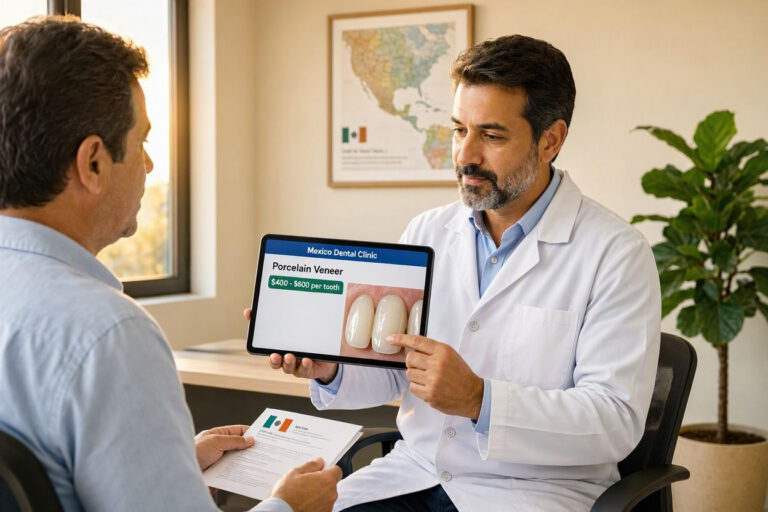
- Porcelain Veneer (per tooth): $1,800 to $4,000. At the top end, a ceramist-drive case with a master lab technician can push toward $4,500.
- Composite Veneer (per tooth): $400 to $1,200. A direct chairside single-layer approach costs less. A full, multi-layered artistic build-up by an expert costs more, approaching the $1,500 mark in major metropolitan areas.
A set of eight upper anterior porcelain veneers can easily cost $25,000. A similar set of premium composite veneers might cost $8,000. The immediate cash-flow difference is $17,000. This is not pocket change. For a young professional buying a home or raising children, the composite route provides access to a smile transformation that might otherwise be financially out of reach.
The True Cost of Ownership
This is where the porcelain veneers vs. composite veneers debate gets interesting. Porcelain, despite its high entry fee, often proves cheaper per year over two decades. Composite requires a maintenance budget that rivals a luxury car.
Let’s build a 15-year cost projection model.
| Cost Factor | Porcelain Veneers (8 teeth) | Composite Veneers (8 teeth) |
|---|---|---|
| Initial Placement | $24,000 ($3,000 avg/tooth) | $8,000 ($1,000 avg/tooth) |
| Polishing Visits (every 6 months) | Included in hygiene (just a gentle clean) | $100 per visit (specialized repolishing) |
| Repair/Chipping (over 15 years) | $1,500 (re-bond one debond; minor fix) | $2,000 (multiple chip repairs, edge re-surfacing) |
| Replacement Cycle | Not typically needed in 15 years if bonded well | Full replacement at year 7-10 |
| Replacement Cost | $0 (within 15 years) | $10,000 (due to inflation & material wear) |
| Total 15-Year Investment | $25,500 | $20,500 |
The gap narrows significantly. You save $17,000 upfront but spend roughly $12,500 of it on maintenance and early replacement for composite. The real shock comes if we extend the model to 30 years. Porcelain might need replacement at year 20, bringing the total to $50,000+. Composite would need its third full set, pushing the total past $35,000. Porcelain remains a luxury product with a luxury maintenance schedule, but composite is not the “budget” option when viewed through a long lens. It is a “high-maintenance” option.
Insurance and Financing Logic
Dental insurance rarely covers cosmetic veneers unless you can prove structural damage from an accident. They classify these procedures as “elective.” You will likely pay out-of-pocket. However, the financing structure differs. Porcelain cases often allow for staged treatment—four teeth now, four teeth later—because the lab work is separate. Composite cases are often done in one sitting per arch, requiring the full cash outlay immediately. Discuss payment plans directly with the dental office. Many offer 12-month interest-free options through healthcare credit companies.
The Longevity Equation: A Battle Against Time
Dentists often quote averages: “Porcelain lasts 10-15 years, composite lasts 5-7 years.” These numbers are dangerously oversimplified. The survival rate of a veneer depends almost entirely on the occlusion (bite), the bonding protocol, and the patient’s habits.
The Bond is Everything
A porcelain veneer does not decay. The porcelain-glass interface remains pristine forever. The failure point is the adhesive interface between the tooth and the ceramic. If the dentist contaminates the bond with saliva, or if the bite forces exert a shearing stress on the cement layer, the bond fails. The veneer pops off. You find yourself holding a tiny piece of ceramic, trying not to swallow it. A properly bonded porcelain veneer—one placed under rubber dam isolation, etched perfectly, and bonded with a dual-cure resin cement—can last 20+ years without a single debonding event.
Composite veneers face a different failure mode. The bond is stronger because the material flexes with the tooth. However, the material itself degrades. The external surface wears down. The margins discolor. The composite loses its structural integrity. A ten-year-old composite veneer looks tired. It looks like a ten-year-old car seat—functional but clearly worn.
Bite Forces and Nighttime Parafunction
If a dentist places veneers without addressing a destructive bite, the material choice becomes secondary to the impending failure. A patient with a heavy bruxism habit (grinding) can shatter porcelain like a walnut in a vice grip. Composite will wear down flat over time, looking like a bald tire, but it rarely catastrophically shatters.
The responsible approach requires a diagnostic phase. Wear a night guard. The night guard becomes the sacrificial layer. If you grind, you chew through the acrylic appliance, not the $3,000 porcelain shell. If you refuse to wear a night guard, your risk of porcelain fracture jumps dramatically. I have seen patients destroy a set of eight porcelain veneers in two years because they ground their teeth down to the dentin. They then switched to composite, which they flattened, but it cost less to rebuild.
The Procedural Clock: Time in the Chair
Your time is valuable. The temporal investment for these procedures differs vastly, and this impacts your professional and social life.
The Porcelain Journey
- Consultation & Records: 1 hour.
- Preparation & Temporaries: 2-3 hours. This involves local anesthesia, the sound of the drill, the impression material, and the final placement of temporaries.
- Temporary Phase: 2-3 weeks. You live with plastic teeth. You cannot bite into a hard apple. You worry about them falling off during a client dinner.
- Bonding Appointment: 2-3 hours. This is a long, meticulous session. The dentist isolates teeth, tries in the ceramic shells, adjusts contacts, etches, bonds, and cleans up cement. Your jaw will be tired.
Total active chair time: approx. 6 hours plus lab time.
The Composite Session
- Consultation & Mock-up: 1 hour.
- Direct Bonding Session: 4-8 hours for a full arch. This is a marathon. The dentist does not leave your side. They sculpt. You close your mouth. You open. They cure. They check the bite. They polish.
Total active chair time: approx. 6-8 hours, all in one or two blocks without a multi-week wait. You walk out with the final smile. No temporaries. No second appointment. For a patient with dental anxiety or a busy travel schedule, the “single-visit” nature of composite is a profound advantage. The pain of the procedure is also different. Composite prep usually requires no drilling. No needles. Just a slight chemical etching sensation. Porcelain prep involves a dental drill and local anesthetic.
The Clinical Scenarios: When to Choose What
Theory becomes useless without contextual application. Let’s examine specific patient profiles. These scenarios will ground the decision in reality.
Scenario 1: The Young Professional with Minor Gaps
Sophia, age 26, has peg lateral incisors (small, pointy teeth) and a gap between her front two teeth. Her enamel is thick and healthy. Her bite is stable. She has a wedding in three months and a budget of $4,000.
Composite is her clear winner. The dentist can conservatively add resin to the lateral incisors to widen them and close the diastema (gap) by adding to the central incisors. No drilling destroys her virgin enamel. She achieves a stunning transformation in two visits. She must budget $300 a year for polishing, but her immediate wedding timeline and budget align perfectly with resin bonding. Porcelain would require cutting down six perfectly healthy teeth and a budget of $18,000. It would be a biological overreaction.
Scenario 2: The Executive with Tetracycline Stains
Mark, age 45, has dark, intrinsic banding stains from childhood antibiotics. Bleaching has failed for decades. He wants a brilliant white smile. The dark base tooth structure must be blocked out completely.
Porcelain is the superior solution. To block dark stains with composite, the dentist must layer an extremely opaque resin, which looks flat and artificial. Porcelain allows for a very thin opaque core covered by translucent ceramic, hiding the darkness while maintaining depth of color. Mark can bleach his lower teeth to match the new upper ceramic brightness. The investment is $30,000. At his stage in life, the permanence and stain-immune nature of ceramic fit his lifestyle of cigar lounges and espresso.
Scenario 3: The Bruxer with Worn Teeth
David, age 35, has ground his teeth down to flat nubs. The dentin is exposed. His bite is collapsed. He complains of jaw pain. His dentist recommends a full-mouth rehabilitation to open the bite.
This is complex. Composite offers a “reversible trial.” The dentist can build up David’s bite with composite resin to a new, therapeutic height. David can wear this plastic bite for two years to see if his jaw pain resolves. If it does, the dentist can eventually convert the composite to all-porcelain crowns and onlays. Porcelain from the start would be a gamble on a bite that hasn’t been tested. The composite acts as a diagnostic functional appliance as well as an aesthetic one.
The Maintenance Manual: Keeping Them Pristine
You have invested in your smile. Now you must protect it. The maintenance protocols differ sharply. Ignoring the specific needs of your chosen material will accelerate failure.
Hygiene for Porcelain
The seam where the veneer meets the tooth is your vulnerability. You do not get cavities in the porcelain. You get cavities on the natural tooth root at the margin.
- Flossing: You must thread floss through the contacts and wrap it around the tooth, sliding under the gumline. Pull the floss through sideways; do not snap it back out, as the snap can shear the bonding cement over time.
- Waterpik: A water flosser is a fantastic addition. It flushes out the gingival sulcus, keeping the margin pristine. Use the lowest pressure setting initially to avoid agitating the tissue.
- Toothpaste: Avoid abrasive “whitening” or smoker’s toothpaste. Silica and baking soda pastes will roughen the glaze on porcelain. Once the glaze is scuffed, the veneer loses its luster and attracts plaque. Use a low-abrasion gel toothpaste.
- Professional Care: Tell your hygienist you have veneers. They should avoid power-scaling instruments on the margins. A titanium scaler can chip a porcelain edge instantly. They must use plastic or nylon tips, or hand scale with extreme caution.
Hygiene for Composite
Composite is a plastic. It scratches more easily and stains more readily.
- Stain Management: This is a constant battle. Rinse with water immediately after consuming coffee, red wine, or beet juice. Do not let the pigments dry on the surface.
- Polishing Paste: Use a non-abrasive, composite-specific polishing paste at home with a soft rubber cup on a low-speed brush. This is a minor investment that saves multiple dental visits.
- Repolishing Sessions: Schedule a “flash polish” with your dentist every four to six months. This is not a dental cleaning. It is a 15-minute appointment using a series of sandpaper-like disks to recapture the high-gloss shine. This costs money but extends the life by years.
- Hardness Awareness: Do not chew ice. Do not bite your fingernails. These habits do not just chip teeth; they cause micro-crazing in the composite matrix, which eventually picks up deep stain that cannot be polished out.
The Comparative Matrix: A Data-Driven Summary
To bring the narrative into a scannable format, let’s lay everything in a table you can reference quickly.
| Feature | Porcelain Veneers | Composite Veneers |
|---|---|---|
| Composition | Pressed or layered ceramic glass | Nano-hybrid resin composite |
| Aesthetic Potential | Superior; deep translucency, glassy surface, unchanging color | Excellent on day one; lacks depth of glass; prone to discoloration |
| Application Method | Indirect (Lab fabricated), requires 2-3 visits | Direct (Chairside sculpted), 1-2 visits |
| Tooth Preparation | Usually 0.3-0.5mm reduction (Irreversible) | Often zero reduction (Reversible/Additive) |
| Procedure Sensation | Shots, drilling, temporaries | Acid etching, no temporaries, long appointments |
| Feel | Hard, slick, glass-like | Softer, warmer, slight texture |
| Stain Resistance | Infinite (non-porous) | Limited (porous resin matrix) |
| Repairability | Difficult (patch looks different) | Easy (invisible repair) |
| Average Lifespan | 15-20+ years with good care | 5-8 years with polishing; 10+ with expert care |
| Cost (per tooth) | $1,800 – $4,500 | $400 – $1,500 |
| Risk of Catastrophic Break | High (brittle fracture) | Low (flexible wear) |
| Feel on Tongue | Slippery, smooth | Textured, tooth-like |
| Gum Health | Excellent if margin is flush | Good if highly polished; rough if degrading |
The Psychological Transformation: More Than Just Teeth
We must discuss the psychological return on investment. This is not a quantifiable metric, but it is the reason you are reading this article.
A smile transformation fixes more than just a chipped lateral incisor. It fixes a posture. It fixes an inhibition to laugh with an open mouth. It fixes the reflex to cover your mouth with your hand when you meet someone new. The material you choose influences this psychological recovery.
Porcelain provides a sense of permanence and security. You feel you have “graduated” to a final state. You brush and floss without seeing edges or seams. The weight and solidity feel like a fortress. For someone who has deeply hated their teeth for 30 years, this solidity can be profoundly healing.
Composite provides a gentler entry. It allows a patient to see a “new” smile before fully committing to irreversible changes. It creates a “wax-up” reality. The patient lives with the shape for a year or two. They decide if they want that exact shape in porcelain later. It is a journey, not a single surgical strike.
The Marketing Myths You Should Ignore
The cosmetic dentistry industry thrives on selling dreams. You will encounter certain claims that need immediate debunking.
- Myth: Composite is “No-Prep” and therefore painless. The truth: The acid etch opens the enamel prisms. If you have sensitive teeth, this feels like a cold, sharp zap. It is usually painless compared to a drill, but it is not a magical zero-sensation event.
- Myth: Porcelain lasts a lifetime. The truth: It does not. The enamel-cement interface degrades. The ceramic can fracture. A lifetime of coffee soaks the microscopic margin. A 15-year-old veneer shows age, even if intact.
- Myth: Composite is just “bonding” and looks cheap. The truth: Bad composite looks cheap. Good composite, layered by an artist with specialized stains, looks indistinguishable from porcelain in a photograph. The difference emerges over time, not at the moment of insertion.
- Myth: Once you get porcelain, you need no maintenance. The truth: You must aggressively floss and wear a night guard. The maintenance shifts from the material to the surrounding biological system.
The Technological Frontier: Digital Smile Design (DSD)
Modern technology is blurring the line between the two options. Digital Smile Design allows the dentist to take a 3D scan of your face and teeth. They project the new smile design over your face in real time. You see the new smile before a single tooth is touched.
From this scan, a dentist can 3D-print a mock-up model. They fill this clear plastic mold with a bis-acryl provisional material and seat it over your unprepared teeth. You open your mouth, and a temporary, snap-on smile emerges.
This “Test Drive” is the single most important step in modern cosmetic planning. It reveals if the length is comfortable. It shows if the smile line is too horizontal or too curved. It exposes phonetic issues—do you whistle when saying “S”? Do you bite your lip?
You can then decide: Do I stop here and replicate this exactly in composite? Or do I send this design to the lab for porcelain fabrication? The test drive prevents permanent mistakes. It should be non-negotiable regardless of your material choice.
The Re-treatment: When Good Smiles Go Bad
Nothing lasts forever. You must mentally prepare for the end-of-life scenario. It is not a question of “if,” but “when.”
Exchanging Composite for Porcelain
This is a common upgrade path. A patient gets composite at 25, enjoys it for 8 years, and at 33, has the financial means to switch to porcelain. The removal of composite is mechanical. The dentist uses a high-speed carbide bur and cuts off the resin. They stop when they hit the natural enamel. Because composite is a different color and hardness, an experienced dentist can remove every trace without cutting into the tooth. This is a long, dusty appointment, but it leaves the tooth ready for a new impression for porcelain. The tooth underneath is pristine. This is the greatest strength of composite.
Replacing Old Porcelain
Removing a failed porcelain veneer is a delicate, stressful operation. The ceramic is the same color and hardness as enamel. The dentist cannot “feel” where the porcelain ends and the tooth begins. They must use a diamond bur and cut through the ceramic shell. They risk gouging the natural tooth structure underneath. They risk leaving ceramic shards that block the fit of the new piece.
The process is slower, more expensive, and biologically costly. You lose a few more microns of tooth structure each time you replace a porcelain veneer. After three replacements over a lifetime, the tooth is a mere peg. This eventually leads to the need for a full-coverage crown, which is much more invasive. When you sign up for porcelain, recognize that the “re-do” carries a higher biological price tag than the “re-do” for composite.
The Geographic and Ethical Variance
Your location impacts your outcome more than you might think. The “porcelain veneers vs. composite veneers” debate shifts depending on if you are in Beverly Hills versus a small town in the Midwest.
In high-end cosmetic hubs, the lab technician is likely a master ceramist who charges the dentist $500 just to make the porcelain shell. The final product is a work of art. However, the dentist might push porcelain because the profit margin is higher and the chair time is delegated to the lab. Composite, in these high-rent districts, is often priced equally high per hour, but the dentist might lack the passion for the grueling chairside sculpting. They prefer to prep and delegate.
In rural areas or community health centers, composite is the great equalizer. The material is cheap. The equipment is minimal. A dedicated dentist can change a teenager’s life with a composite edge-bonding for a few hundred dollars that requires no lab bill. You must find the provider who loves the material you want, not the provider who just sells the material they want to deliver. Ask to see a portfolio. If you want composite, find the dentist who posts their composite cases with pride.
The Environmental and Health Impact
A brief note on safety and environment. Composite resin contains monomers like Bis-GMA and UDMA. A tiny fraction of these monomers remains unpolymerized after curing. The body metabolizes them. For 99.9% of the population, this poses no issue. If you have a severe resin allergy or a history of unusual immune responses to plastics, discuss this with an allergist.
Porcelain is inert. It is absolutely biocompatible. It is essentially sand, melted and shaped. There is no chemical leaching. For the environmentally conscious patient, the lab process for porcelain involves mining of minerals and high-energy furnaces. Composite involves plastic production. Both have a carbon footprint, but considering the volumes are microscopic (grams), the environmental impact is trivial compared to daily plastic bottle consumption.
Preparing for the Consultation: The Smart Patient’s Script
Walk into the consultation room armed with questions. Do not just nod and say, “You’re the doctor, what should I do?” This is a collaborative art project. You are the client commissioning a piece.
- “Can I see a mock-up first? I want to see the shape before we pick the material.”
- “Show me 5 cases of the exact material you recommend, specifically of patients with my tooth shape.”
- “If I choose composite, how do you plan to manage the shine long-term? What is your polishing protocol?”
- “If I choose porcelain, who is your ceramist, and can I see their work under a macro lens?”
- “What is your repair policy? If a porcelain veneer pops off in 3 months, is the re-bond covered under warranty?”
- “Do you recommend a night guard, and can you make me one that is comfortable enough to sleep in?”
A dentist who bristles at these questions is the wrong dentist. A good artist welcomes an educated client.
The Conclusion: The Three-Line Summary
Your choice between porcelain and composite hinges on a trade-off between immediate irreversibility and long-term maintenance. Porcelain delivers unmatched stain resistance, optical depth, and potentially lower long-term cost, but requires permanent enamel removal and carries a risk of brittle fracture. Composite offers reversible beauty, zero biological damage, and easy repair, but demands consistent polishing and will degrade visually over time. Let your budget, your commitment to maintenance, and your philosophy on tooth preservation guide the final call.
Frequently Asked Questions
Can composite veneers look as natural as porcelain?
Yes, in skilled hands, composite can look indistinguishable from natural tooth structure on day one. The difference emerges over years as composite absorbs stains and loses its polish, while porcelain retains its glassy luster indefinitely with proper care.
Is it true that porcelain veneers don’t require any tooth removal?
While “prep-less” porcelain exists, most cases require 0.3-0.5mm of enamel removal to prevent a bulky, over-contoured look. True “no-prep” porcelain is rare and highly case-specific. If the tooth is not reduced, the transition at the gum line may feel thick.
Can I whiten composite veneers?
No. The resin matrix does not respond to bleaching chemicals like hydrogen peroxide. If you bleach natural teeth around the veneers, the natural teeth will lighten, and the composite will remain exactly the same shade, creating a mismatch. You must bleach first, then match the composite.
How often do porcelain veneers fall off?
Annual debonding rates for well-placed porcelain veneers are very low, around 1-3%. If a veneer pops off, it is usually due to moisture contamination during bonding or heavy, eccentric grinding forces. A debonded veneer can usually be rebonded immediately.
Are there any alternatives to both porcelain and composite?
Yes. Teeth whitening and orthodontics (like Invisalign) can often address the underlying aesthetic issues without any restorative material. A cosmetic dentist should evaluate if moving and bleaching teeth can achieve a similar result without the 15-year maintenance cycle.
Additional Resource:
For a visual gallery of clinical cases comparing the optical qualities of both materials, visit the American Academy of Cosmetic Dentistry’s public gallery. This resource helps you calibrate your eye to realistic results.
Link: AACD Smile Gallery
Disclaimer: This article is for educational and informational purposes only and does not constitute medical advice. Always consult a qualified dental professional for a personalized assessment and treatment plan.