How Much Are Dental Implants in Mesa? A Complete Cost Guide for Arizona Residents
Living in Mesa, Arizona, means enjoying sunshine, stunning desert landscapes, and a growing community with excellent healthcare options. If you need dental implants, you probably have one pressing question: how much will this cost? The answer depends on several factors specific to your situation and the Mesa dental market.
Dental implant costs in Mesa reflect both national pricing patterns and local market conditions. Understanding what drives these costs helps you budget appropriately and evaluate treatment proposals from different providers. This guide provides realistic, detailed information about implant pricing in Mesa, helping you make informed decisions about your oral health investment.
I wrote this guide because I have seen too many people delay needed dental care due to cost uncertainty. When you understand what goes into implant pricing and what options exist, you can plan effectively and avoid financial surprises. The information here comes from research into Mesa’s dental market, current pricing data, and conversations with dental professionals who practice in the area.
The Real Cost of Dental Implants in Mesa
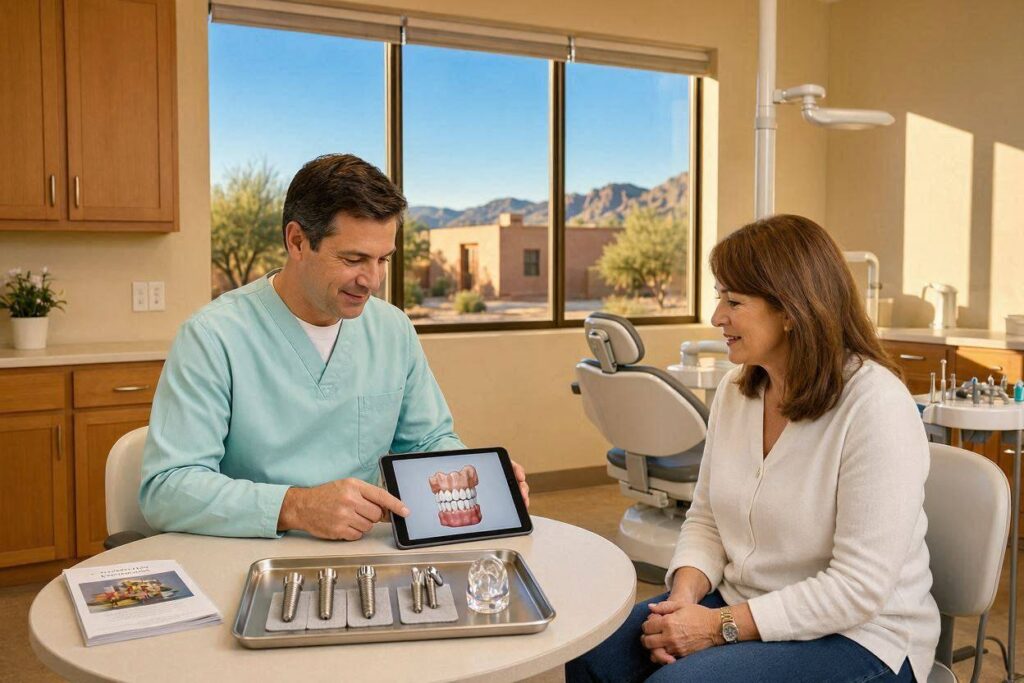
Let me give you straightforward numbers before diving into the details. A single dental implant in Mesa typically costs between three thousand and six thousand dollars for the complete treatment, including the implant, abutment, and crown. This range reflects treatment by qualified providers using quality materials and appropriate technology.
Some practices advertise implants for significantly less, sometimes under two thousand dollars. Others charge more than eight thousand for a single implant. Understanding why these prices differ helps you evaluate what you are actually getting for your money.
What the Base Price Includes
A complete single implant treatment involves three main components. The implant fixture itself is the titanium or zirconia post surgically placed in your jawbone. The abutment connects the implant to the restoration. The crown is the visible tooth portion attached to the abutment.
When comparing prices, confirm that quotes include all three components plus the necessary imaging, surgical placement, and follow-up care. Some advertised low prices include only the implant placement, with the abutment and crown billed separately at additional cost.
Additional Procedures That Affect Total Cost
Many patients require procedures beyond simple implant placement. Bone grafting adds to the total cost when your jaw lacks sufficient bone volume. A socket preservation graft at the time of extraction helps maintain bone for future implant placement. Sinus lift procedures increase bone height in the upper posterior jaw.
Extractions of damaged teeth before implant placement add to the total. Temporary restorations to wear during healing incur additional fees. Sedation or anesthesia beyond local anesthetic increases cost. Each of these additional procedures affects your final total.
Price Breakdown by Implant Type
Different implant approaches carry different costs in the Mesa market.
Single Tooth Implants
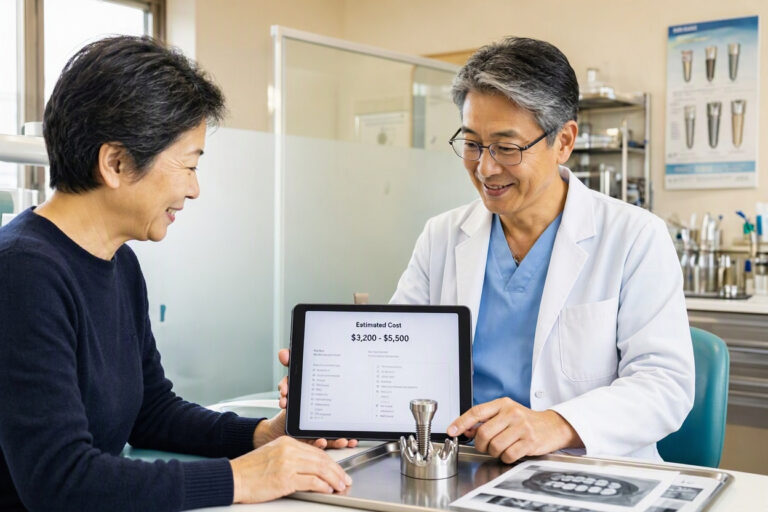
A single implant replacing one missing tooth represents the most straightforward implant treatment. Mesa pricing for single implants typically ranges from three thousand to five thousand five hundred dollars for the complete treatment from start to finish. This assumes adequate bone and healthy gums without need for grafting.
Premium providers charging toward the higher end of this range typically use premium implant systems, advanced imaging technology, and custom abutments with high-quality ceramic crowns. Lower-priced options may use different implant systems, stock abutments, or different crown materials.
Implant-Supported Bridges
When multiple adjacent teeth are missing, an implant-supported bridge may replace them using fewer implants than the number of missing teeth. A three-unit bridge supported by two implants might cost between six thousand and twelve thousand dollars in Mesa, depending on the specific circumstances.
This approach costs more than a single implant but typically less than placing individual implants for each missing tooth. The exact cost depends on the number of implants placed, the bridge material, and any grafting requirements.
Implant-Retained Dentures
For patients missing all teeth in an arch, implant-retained overdentures provide significantly better stability than conventional dentures. A lower overdenture supported by two implants might cost between eight thousand and fifteen thousand dollars in Mesa, including the implants, attachments, and denture fabrication.
Fixed full arch restorations using four or more implants per arch, sometimes called All-on-Four or similar branded procedures, typically range from twenty thousand to thirty-five thousand dollars per arch in Mesa. These premium restorations provide fixed teeth that function most like natural dentition.
Full Mouth Reconstruction
Complete oral rehabilitation using implants throughout both arches represents the most extensive and costly implant treatment. Full mouth reconstruction in Mesa can range from forty thousand to eighty thousand dollars or more, depending on the number of implants, type of restorations, and complexity of required grafting.
Factors That Drive Implant Costs in Mesa
Understanding what influences pricing helps you evaluate quotes and make informed choices.
The Implant System Used
Several major implant manufacturers supply the Mesa market. Straumann, Nobel Biocare, Zimmer Biomet, and Astra Tech represent premium systems with extensive research support and long track records. These systems typically command higher prices than lesser-known brands.
The implant system affects both the component cost and the provider’s familiarity with the system. Established systems offer comprehensive parts inventories for managing complications and future maintenance needs. The additional cost may be justified by long-term reliability and serviceability.
Provider Training and Expertise
Mesa implant providers range from general dentists with basic implant training to board-certified surgical specialists. Specialist fees typically exceed general dentist fees, reflecting additional training and experience. This price difference may be worthwhile for complex cases or when complications are more likely.
Provider experience also affects pricing. Practitioners who place hundreds of implants annually often charge more than those who place implants occasionally. This premium reflects both demand for their services and the value of extensive experience.
Technology and Facility Factors
Practices investing in cone beam computed tomography, intraoral scanners, and computer-guided surgery systems typically charge more than those using conventional techniques. These technologies improve precision and predictability but add to practice overhead costs.
The facility where surgery occurs affects pricing. Implants placed in hospital operating rooms cost more than those placed in dental office surgical suites. Most routine implant surgery occurs in office settings, but patients with significant medical conditions may require hospital-based care.
Materials Used for the Restoration
The crown material significantly affects the final cost. Porcelain fused to metal crowns cost less than all-ceramic crowns made from zirconia or lithium disilicate. The esthetic demands of the specific tooth location influence material selection.
Custom abutments milled specifically for your case cost more than stock abutments but provide better support for the crown and improved esthetic outcomes, particularly in visible areas.
Comparing Mesa Implant Costs to National Averages
Understanding how Mesa pricing compares to broader trends provides context for evaluating local quotes.
Mesa vs. National Pricing
Mesa implant costs generally align with national averages, perhaps trending slightly above due to the Phoenix metropolitan area’s cost of living. The national average for a single implant ranges from three thousand to five thousand dollars, consistent with Mesa pricing.
Coastal cities like Los Angeles, New York, and San Francisco typically have higher implant costs than Mesa. Rural areas and smaller Midwestern or Southern cities may have lower costs. Mesa occupies a middle to slightly above-average position in national pricing comparisons.
Mesa vs. Phoenix Metro Area
Implant pricing across the Phoenix metropolitan area, including Mesa, Scottsdale, Tempe, Chandler, and Gilbert, is relatively consistent. Affluent areas like Scottsdale may have slightly higher average pricing reflecting practice overhead and patient demographics.
Prices do not vary dramatically within the metro area for comparable providers and treatment approaches. Traveling across town to save a small amount rarely justifies the inconvenience of distance from your implant provider during treatment and follow-up care.
Mesa vs. Tucson
Tucson implant costs are generally comparable to Mesa, though the smaller market may have slightly lower average pricing. The difference is typically not large enough to justify traveling between cities for treatment, especially considering the multiple appointments implant treatment requires.
Dental Insurance and Implant Coverage in Mesa
Insurance can significantly affect your out-of-pocket implant costs in Mesa.
Typical Dental Insurance Coverage
Many dental insurance plans now include some implant coverage, a change from historical exclusions. Coverage typically follows major service rates, often around fifty percent coinsurance after meeting your deductible. Annual maximums, typically between one thousand and two thousand dollars, limit the total benefit available in any year.
A plan covering implants at fifty percent with a fifteen hundred dollar annual maximum would pay a maximum of fifteen hundred dollars toward your implant treatment in a given year. The remainder would be your responsibility.
Medical Insurance Possibilities
Medical insurance may cover implants in specific circumstances. Trauma-related tooth loss, congenital conditions, and cancer reconstruction may qualify for medical coverage. Medical plans do not have annual maximums like dental plans, potentially providing more substantial coverage.
Medical coverage requires documentation of medical necessity and typically involves preauthorization. Your implant provider and physician may need to coordinate documentation supporting the medical necessity of implant treatment.
Mesa Providers and Insurance Networks
Many Mesa implant providers participate in dental insurance networks. In-network providers accept contracted fees that may be lower than their usual charges. Out-of-network providers may charge higher fees, with insurance reimbursing based on usual and customary rates that might not cover the full charge.
Check whether your preferred provider participates in your insurance network. Understand how your plan handles out-of-network benefits if you choose a non-participating provider.
Financing Options Available in Mesa
When insurance coverage falls short, financing can make implant treatment accessible.
Dental Office Payment Plans
Many Mesa dental practices offer in-house payment plans for implant treatment. These plans may spread costs over several months, often with little or no interest. Payment plans tied to treatment phases allow you to pay as treatment progresses rather than all at once.
Discuss payment options during your consultation. Practices vary in their payment flexibility, and some may accommodate your specific financial situation.
Third-Party Healthcare Financing
Companies like CareCredit, LendingClub, and Proceed Finance specialize in healthcare financing. These lenders offer dedicated dental loans with various terms and interest rates. Many offer promotional interest-free periods if the balance is paid within a specified timeframe, typically six to twenty-four months.
Approval depends on your credit history and income. Apply before committing to treatment to understand your financing options. Read terms carefully, as deferred interest promotions may charge retroactive interest if the balance is not paid in full by the promotional deadline.
Health Savings Accounts and Flexible Spending Accounts
If you have a high-deductible health plan with a health savings account, you can use HSA funds for dental implants. HSA contributions are tax-deductible, and withdrawals for qualified medical expenses including dental treatment are tax-free. This effectively reduces your implant costs by your marginal tax rate.
Flexible spending accounts through employers also allow pre-tax payment for dental treatment. FSA funds must generally be used within the plan year, so coordinate treatment timing with your FSA schedule.
Questions to Ask During Your Mesa Implant Consultation
The consultation provides an opportunity to understand costs and avoid surprises.
Price Quote Questions
What is included in your quoted price? Does the quote cover all three components: implant, abutment, and crown? Are imaging and surgical guides included? What about follow-up visits and any necessary adjustments?
Insist on a written treatment plan with procedure codes and fees. This document provides clarity and prevents misunderstandings about what is and is not included.
Additional Procedure Questions
Based on my examination and imaging, do I need bone grafting? What about a sinus lift? Do you anticipate any other procedures beyond simple implant placement? How would these additional procedures affect the total cost?
Understanding potential additional procedures upfront prevents surprise bills during treatment.
Payment and Financing Questions
What payment options do you offer? Do you provide in-house payment plans? What third-party financing do you work with? Do you offer any discount for payment in full at the start of treatment?
Financial discussions may feel uncomfortable, but they are essential for planning. Reputable practices welcome these questions and provide clear answers.
Long-Term Cost Questions
What warranty or guarantee applies to your implant work? What costs might I incur for implant maintenance over time? How do you handle complications or implant failures, and what costs would I bear in those situations?
Understanding long-term costs helps you evaluate the total value of your implant investment, not just the initial treatment cost.
Finding Affordable Quality Implant Care in Mesa
Balancing cost concerns with quality requirements helps you find appropriate care.
Avoid Choosing on Price Alone
The cheapest implant option is rarely the best value. Implants placed with inadequate planning, inferior materials, or insufficient surgical precision may fail or cause complications requiring costly revision. The money saved initially may be spent many times over addressing problems.
Quality implant treatment costs what it costs for good reasons. Provider training, quality materials, appropriate technology, and adequate time for planning and execution all contribute to successful outcomes.
Consider Total Value Rather Than Initial Cost
A higher-priced implant placed well may last decades, providing excellent value over time. A lower-priced implant that fails after a few years costs far more when replacement and associated procedures are considered. Evaluate implant treatment as a long-term investment rather than a one-time expense.
Ask about expected longevity and factors affecting long-term success. Understanding the value proposition helps justify appropriate investment in quality care.
Explore Dental Schools and Residency Programs
The Arizona School of Dentistry and Oral Health in Mesa offers implant treatment through its clinics at reduced cost. Treatment is provided by dental students or residents under close faculty supervision. Appointments take longer and the process moves more slowly than in private practice, but cost savings can be substantial.
Nearby Midwestern University in Glendale also operates a dental clinic offering reduced-cost treatment. Both programs provide quality care at prices significantly below private practice rates.
Frequently Asked Questions About Mesa Dental Implant Costs
What is the average cost of a single dental implant in Mesa?
A single dental implant in Mesa typically costs between three thousand and five thousand five hundred dollars for the complete treatment including implant, abutment, and crown. This range assumes adequate bone without need for grafting. Premium providers may charge toward the higher end of this range.
Why do some Mesa dentists advertise implants for much less?
Low advertised prices often include only the implant placement, with abutment and crown billed separately. Some may use different implant systems or materials. Others may be promotional offers for specific situations. Ask what the complete treatment costs, not just the advertised component.
Does Medicare cover dental implants in Mesa?
Original Medicare does not cover routine dental care or dental implants. Some Medicare Advantage plans available in Maricopa County offer dental benefits that may include partial implant coverage. Check your specific plan for coverage details.
How much do full mouth dental implants cost in Mesa?
Full mouth reconstruction with implants in Mesa typically ranges from forty thousand to eighty thousand dollars or more. Implant-retained overdentures cost less, typically fifteen thousand to thirty-five thousand per arch for fixed restorations. The exact cost depends on the number of implants, restoration type, and grafting requirements.
Are there low-cost implant options in Mesa?
The Arizona School of Dentistry and Oral Health in Mesa offers reduced-cost implant treatment through its dental clinics. Community health centers may offer sliding-scale fees based on income. These options involve longer treatment timelines but can substantially reduce costs.
Can I negotiate dental implant costs in Mesa?
Some dental practices may offer discounts for full payment at the start of treatment or for multiple implants placed simultaneously. Practices rarely negotiate fees like car dealerships, but asking about payment options and potential discounts is appropriate during consultation.
Conclusion
Dental implant costs in Mesa range from approximately three thousand to five thousand five hundred dollars for a single implant, with full arch and full mouth restorations costing significantly more. Factors affecting cost include the implant system, provider expertise, technology used, and need for additional procedures like bone grafting. Insurance may offset some costs, and financing options including payment plans and third-party lending can make treatment accessible. Quality implant treatment represents a long-term investment whose value extends well beyond the initial cost.