Does SIDS Cover Dental Implants?
Dental implants can restore your smile and your ability to eat comfortably, but the cost often creates a significant barrier. If you receive benefits through the Saskatchewan Income Disability Support program, you may wonder whether this coverage extends to dental implant treatment. The answer requires understanding how SIDS dental benefits work and what options exist when coverage falls short.
Navigating government disability benefits can feel frustrating and confusing. The rules seem complex, the paperwork overwhelming, and the answers often unclear. This guide provides straightforward information about SIDS dental coverage, specifically addressing whether dental implants are covered and what alternatives might be available to you.
I created this resource because I believe everyone deserves clear information about their healthcare coverage. People living with disabilities face enough challenges without having to fight for basic information about their benefits. The details here come from careful research into Saskatchewan’s income assistance programs and conversations with people who understand the system.
Understanding SIDS: What the Program Covers
The Saskatchewan Income Disability Support program provides financial assistance to people with disabilities who have limited income and assets. Understanding the program’s structure helps you navigate its dental benefits.
SIDS Program Overview
SIDS replaced the former Saskatchewan Assured Income for Disability program, consolidating disability income support under a newer framework. The program provides monthly financial assistance for basic living expenses including food, shelter, and clothing. Additional benefits may cover specific health-related costs.
The program aims to support people with disabilities in maintaining independence and participating in their communities. Dental coverage represents one component of the health benefits potentially available through the program.
Basic Dental Coverage Under SIDS
SIDS provides coverage for basic dental services through the Saskatchewan Ministry of Health dental program or through supplementary health benefits. This coverage typically includes diagnostic services like examinations and x-rays, preventive services like cleanings, basic restorative services like fillings, and extractions when teeth cannot be saved.
The program focuses on maintaining basic oral health and addressing acute dental problems. Coverage prioritizes services that relieve pain, treat infection, and preserve remaining natural teeth.
What SIDS Dental Coverage Does Not Include
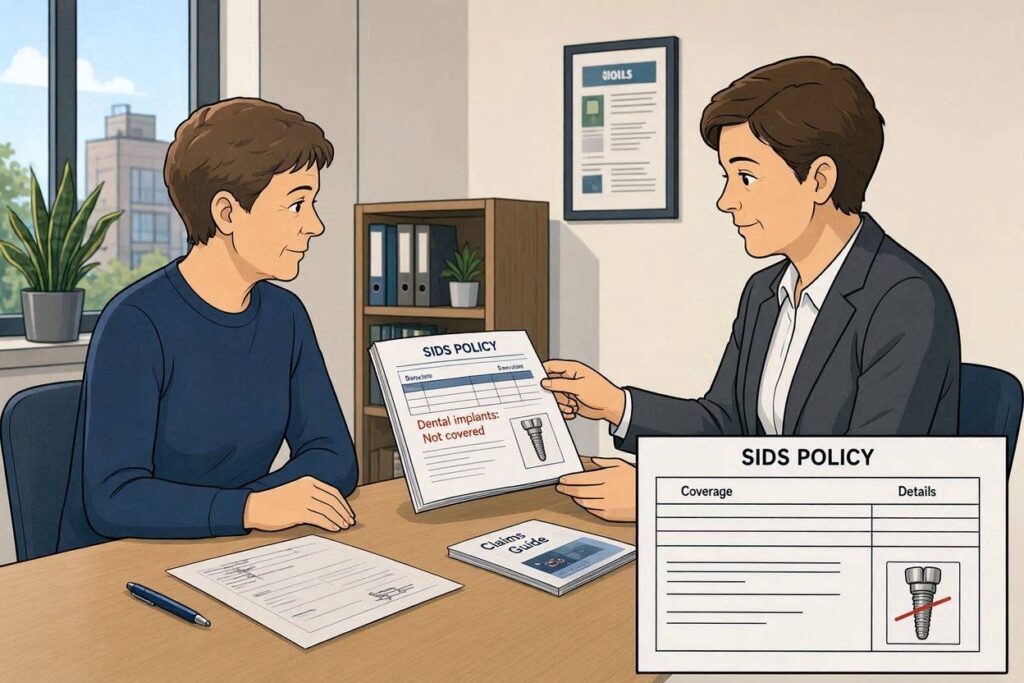
SIDS dental coverage generally excludes major restorative procedures including crowns, bridges, and dental implants. These services are classified as major or prosthodontic treatment rather than basic dental care. The program’s limited budget focuses on essential services rather than comprehensive restorative options.
Understanding these limitations upfront prevents disappointment and helps you explore alternative solutions. Dental implants are almost never covered through basic SIDS dental benefits.
Why Dental Implants Are Not Covered
Understanding the reasoning behind coverage limitations helps you navigate the system effectively.
Program Budget Constraints
SIDS operates within limited government funding allocated through the provincial budget. Dental benefits must cover essential services for all eligible participants within these financial constraints. Major restorative procedures like dental implants, which can cost several thousand dollars per tooth, would quickly consume resources needed for basic care for many people.
Program administrators must make difficult decisions about allocating limited funds. Covering basic dental services for more people takes priority over funding expensive restorative procedures for fewer people.
Classification of Dental Services
Dental benefits typically categorize services into preventive, basic, and major tiers. SIDS coverage focuses on the preventive and basic tiers. Dental implants fall into the major tier along with crowns, bridges, and other prosthodontic services. This classification reflects both cost and the perception that major restorative treatment exceeds essential healthcare.
Medical Necessity vs. Dental Necessity
Government health programs sometimes distinguish between medical and dental necessity. Life-threatening conditions requiring hospitalization receive priority over conditions affecting quality of life but not survival. Missing teeth, while significantly affecting quality of life, nutrition, and social function, are not typically classified as medically necessary conditions requiring government-funded surgical intervention.
This distinction may seem unfair, particularly when missing teeth affect your ability to eat properly or interact socially. Understanding this framework helps you advocate effectively for any exceptions that might apply to your situation.
Potential Pathways to Implant Coverage
While routine dental implants are not covered, certain circumstances might create coverage pathways.
Medical Necessity Exceptions
In rare circumstances, dental implants might be considered medically necessary rather than purely dental treatment. Examples include reconstructive surgery following oral cancer treatment, reconstruction after traumatic injury, and treatment of congenital conditions affecting oral function.
When dental implants are part of medically necessary reconstructive treatment, coverage may come through Saskatchewan Health medical benefits rather than dental benefits. This pathway requires physician involvement and documentation establishing medical necessity.
Prior Authorization and Special Consideration
Some government benefit programs allow for prior authorization requests or special consideration for services not routinely covered. Contact your SIDS caseworker to ask whether any process exists for requesting coverage of non-routine dental services.
Documentation supporting such requests should include a letter from your dentist explaining why implants are necessary rather than optional, why alternative treatments like dentures are inadequate or inappropriate, and how implants would improve your health and quality of life.
Coordination with Other Benefits
If you have other insurance coverage in addition to SIDS benefits, those other plans might provide implant coverage. Some people receiving SIDS benefits also have coverage through a spouse’s employment plan, private insurance, or other government programs.
Coordination of benefits rules determine which plan pays first and how much each contributes. SIDS typically serves as the payer of last resort, meaning other available coverage must be used first.
Alternative Tooth Replacement Options Covered by SIDS
While implants are not covered, SIDS may provide coverage for alternative tooth replacement options.
Removable Partial Dentures
SIDS dental benefits may cover partial dentures for replacing missing teeth in some circumstances. Partial dentures cost significantly less than implants and can restore reasonable function and esthetics. The coverage may require prior authorization before treatment begins.
Partial dentures have limitations compared to implants. They are removable, may affect speech and eating, and do not prevent the bone loss that follows tooth extraction. However, they provide functional tooth replacement at a fraction of implant costs.
Complete Dentures
For people missing all teeth in an arch, complete dentures may be covered through SIDS benefits. Standard complete dentures restore basic function and appearance. Coverage may include initial denture provision and replacement after a specified period.
Denture quality can vary significantly. Basic dentures provided through government programs may not offer the fit, comfort, or esthetics of premium dentures available through private payment. However, they provide essential function that supports nutrition and social participation.
Extractions and Pain Relief
When teeth cannot be saved and replacement is not covered, SIDS at minimum covers extraction to relieve pain and infection. Removing problematic teeth addresses immediate health concerns even when replacement options are limited.
After extraction, discuss replacement options with your dentist. Even when implants are not covered, understanding all available choices helps you plan for future treatment.
Advocacy Strategies for Better Dental Coverage
While individual implant coverage remains unlikely, broader advocacy efforts may improve dental benefits over time.
Working with Your Caseworker
Build a positive relationship with your SIDS caseworker. They can help you understand current benefits and any options for special consideration. Caseworkers often know about programs and resources that are not widely publicized.
Communicate clearly and respectfully about your dental needs. Document how your dental problems affect your health, nutrition, and quality of life. Written documentation creates a record that may support future requests.
Connecting with Advocacy Organizations
Organizations advocating for people with disabilities may work on expanding dental coverage. Groups like the Saskatchewan Disability Income Support Coalition and provincial chapters of national disability organizations sometimes campaign for improved health benefits.
Connecting with these organizations provides information about policy changes and opportunities to participate in advocacy efforts. Collective advocacy often achieves more than individual requests.
Exploring Other Assistance Programs
Beyond SIDS, other programs may provide dental assistance. Dental schools sometimes offer reduced-cost treatment provided by students under supervision. Community health centers may offer sliding-scale fees based on income. Charitable organizations occasionally provide dental care assistance.
Research resources in your community. Your SIDS caseworker, local health region, or community information center may know about programs not widely advertised.
Practical Considerations for People with Missing Teeth
While working within coverage limitations, practical steps can help you manage oral health.
Maintaining Remaining Teeth
Protecting your remaining natural teeth prevents additional tooth loss and the need for further replacement. Brush twice daily with fluoride toothpaste, clean between teeth daily, limit sugary foods and drinks, and attend regular dental checkups when coverage allows.
Prevention costs far less than treatment. Taking excellent care of your remaining teeth reduces future dental problems and associated expenses.
Exploring Affordable Denture Options
If SIDS covers dentures, work with your dentist to obtain the best possible fit and function within coverage limits. Well-made dentures improve eating ability, speech clarity, and facial appearance. Poorly fitting dentures can cause discomfort and discourage use.
Communicate openly with your dentist about any problems with your dentures. Adjustments and relines may be covered to improve fit. Addressing problems early prevents more significant issues.
Saving for Future Implant Treatment
If implants remain your goal, consider saving toward treatment over time. Even small monthly amounts accumulate. Some dental offices offer payment plans that make implant treatment more accessible. Financing companies provide dedicated healthcare loans for dental procedures.
Future changes in your financial situation or insurance coverage might make implants possible even if they are not feasible currently. Delaying treatment while saving or waiting for coverage changes is often preferable to ruling out implants permanently.
Frequently Asked Questions About SIDS and Dental Implants
Does SIDS cover any dental implants?
Routine dental implants are not covered through SIDS dental benefits. The program focuses on basic dental services and typically excludes major restorative procedures. Very rare exceptions might exist for medically necessary reconstructive situations, but these require extensive documentation and prior approval.
What tooth replacement options does SIDS cover?
SIDS may cover removable partial or complete dentures for replacing missing teeth. Coverage varies based on individual circumstances and requires prior authorization. Contact your caseworker or consult your program documentation for specific coverage details applicable to your situation.
Can I appeal if SIDS denies dental coverage?
Yes, appeal processes exist for SIDS benefit decisions. Request information about appeal procedures from your caseworker. Appeals typically require submitting additional documentation supporting your request. Timelines for appeals are limited, so act promptly upon receiving a denial.
Does SIDS cover dental extractions?
Yes, SIDS typically covers dental extractions when teeth cannot be saved and are causing pain or infection. Extractions address immediate health concerns and prevent complications from infected teeth.
Can I get implants if I pay for them myself while receiving SIDS?
Receiving SIDS benefits does not prevent you from obtaining dental implants through private payment if you have the financial means to do so. However, discuss any concerns with your caseworker, as significant assets or spending may affect benefit eligibility depending on program rules.
Are there any programs that help with implant costs in Saskatchewan?
Limited charitable programs may provide dental assistance in specific circumstances. Dental schools offer reduced-cost treatment. Some dentists offer payment plans. However, no dedicated government program currently covers routine dental implants for adults in Saskatchewan.
Conclusion
SIDS dental benefits do not cover routine dental implants, focusing instead on basic dental services and extractions. Limited coverage for removable dentures may be available for tooth replacement. Medical necessity exceptions exist in rare circumstances involving reconstructive needs. Understanding these limitations while exploring alternative replacement options, maintaining oral health, and investigating community resources helps you make informed decisions about your dental care within program constraints.