Who Makes the Best Dental Implants?
Choosing a dental implant involves more than selecting a skilled provider. The implant itself, the small post that becomes your new tooth root, comes from a manufacturer whose research, engineering, and quality control directly affect your long-term results. Understanding who makes the best dental implants helps you have informed conversations with your provider and feel confident about the hardware becoming part of your body.
No single implant manufacturer holds a monopoly on excellence. Several companies produce outstanding implants with decades of research supporting their designs. The best implant for you depends on your specific clinical situation, your provider’s experience with particular systems, and the long-term track record of the manufacturer.
I wrote this guide because patients often feel excluded from the implant selection conversation. Your dentist or surgeon typically chooses which implant system to use, but understanding why they made that choice empowers you as an informed participant in your care. The information here reflects current implant dentistry knowledge without favoring any particular manufacturer.
What Makes an Implant System Excellent
Before comparing manufacturers, we need to understand the qualities that distinguish excellent implants from adequate ones.
Scientific Research and Clinical Evidence
The best implant manufacturers invest heavily in research. They conduct laboratory studies examining implant surfaces, designs, and materials. They sponsor clinical trials following patients over many years to document long-term success rates. They publish findings in peer-reviewed journals where other experts can evaluate the evidence.
A manufacturer with decades of published research provides something valuable: predictability. When your dentist places an implant from a well-researched system, they know what success rates to expect because thousands of documented cases support those expectations.
Research commitment also indicates a company’s long-term dedication to implant dentistry. Manufacturers that invest in ongoing research continue improving their products rather than simply maintaining existing designs.
Surface Technology
The implant surface where bone meets titanium critically influences healing. Early dental implants had relatively smooth surfaces. Modern premium implants feature micro-roughened surfaces created through processes like sandblasting, acid etching, or anodization.
These modified surfaces encourage faster, stronger bone integration. The specific surface technology varies between manufacturers and represents significant research investment. Companies continuously refine surface technologies seeking improved healing times and stronger bone-to-implant contact.
Surface technology particularly matters for patients with compromised healing potential, including those with diabetes, smokers, or patients with softer bone quality. Advanced surfaces may improve success rates in these challenging situations.
Design Features and Connection Types
Implant design encompasses the shape of the implant body, thread patterns, and the connection between the implant and the abutment that supports the restoration. These design features affect surgical handling, initial stability, long-term bone maintenance, and ease of restoration.
The implant-abutment connection deserves particular attention. Modern premium implants use internal conical connections that create a seal minimizing bacterial leakage and micromovement. This connection design helps maintain bone levels around the implant over time.
Platform switching, where the abutment is narrower than the implant platform, represents another design innovation. This approach may help preserve crestal bone around implants, contributing to long-term esthetic stability.
Material Quality and Manufacturing Precision
Premium implant manufacturers use medical-grade titanium alloys or zirconia produced to exacting specifications. Manufacturing precision ensures consistent dimensions, proper thread geometry, and reliable connection interfaces.
Quality control processes including thorough inspection and testing separate premium manufacturers from budget alternatives. The implant you receive should exactly match the specifications your provider expects based on the manufacturer’s documentation.
Prosthetic Flexibility and Component Availability
The best implant systems offer comprehensive prosthetic components allowing your restorative dentist to create optimal restorations for your specific situation. Multiple abutment options, a range of restoration attachment methods, and compatibility with digital workflows all support excellent restorative outcomes.
Long-term component availability matters tremendously. An implant system should still offer replacement parts years or decades later when your restoration needs maintenance or replacement. Established manufacturers with long histories provide confidence that components will remain available throughout your lifetime.
Leading Implant Manufacturers
Several manufacturers consistently rank among the best in implant dentistry based on research support, clinical track records, and market presence.
Straumann
Straumann stands among the most respected names in implant dentistry. This Swiss company has manufactured dental implants for decades, building a reputation for research investment, precision engineering, and clinical excellence.
The Straumann implant system features their proprietary SLActive surface technology, designed to accelerate bone healing. Research suggests this surface may allow earlier loading of implants in appropriate situations. Their Roxolid material, a titanium-zirconium alloy, provides higher strength than pure titanium, allowing smaller-diameter implants in situations with limited bone.
Straumann invests continuously in research, with extensive published literature supporting their products. Their prosthetic components offer comprehensive solutions for single teeth, bridges, and full arch restorations. The company also provides digital workflow solutions integrating implant planning, surgical guides, and restoration fabrication.
Dentists choosing Straumann typically value the research heritage, documented long-term success, and comprehensive system integration. The premium pricing reflects these investments, which may affect treatment costs.
Nobel Biocare
Nobel Biocare holds a unique place in implant history. The company traces its roots to Professor Per-Ingvar Brånemark, the Swedish researcher who discovered osseointegration and placed the first modern dental implants. This heritage gives Nobel Biocare unmatched historical credibility.
The Nobel Biocare system features the TiUnite surface, a moderately rough anodized surface with extensive research documentation. Their implant designs include parallel-walled and tapered options for different clinical situations. The NobelActive implant, with its self-cutting features, provides high initial stability even in compromised bone.
Nobel Biocare pioneered the All-on-Four treatment concept, which uses four implants to support a full arch restoration. Their prosthetic components support this and other treatment approaches comprehensively. Digital workflow integration through their DTX Studio platform connects planning, surgery, and restoration.
Dentists choosing Nobel Biocare often value the historical legacy, documented long-term research spanning decades, and innovative treatment concepts the company has contributed to implant dentistry.
Zimmer Biomet
Zimmer Biomet combines dental implant expertise with broader medical device manufacturing experience. The company produces implants for orthopedic and other surgical applications alongside their dental implant line.
The Zimmer Biomet dental implant system includes the Trabecular Metal technology, a unique porous material designed to mimic natural bone structure. This material may support bone ingrowth and vascularization, potentially benefiting patients with compromised healing.
Their implant designs emphasize bone preservation and soft tissue integration. The platform-switched connection design aims to maintain crestal bone levels around implants long-term. Comprehensive prosthetic components support various restoration types.
Dentists choosing Zimmer Biomet may value the connection to broader medical device expertise, the unique Trabecular Metal technology, and the company’s substantial research investment in both dental and orthopedic applications.
Dentsply Sirona
Dentsply Sirona formed through the merger of Dentsply International and Sirona Dental Systems, creating a comprehensive dental products company. Their implant systems include the Astra Tech and Xive brands, each with distinct design philosophies.
The Astra Tech implant system features a unique conical connection design and fluoride-modified surface aimed at promoting bone formation. Research on Astra Tech implants documents excellent marginal bone maintenance over time, an important factor in long-term esthetics and health.
Dentsply Sirona’s comprehensive product portfolio includes imaging equipment, CAD/CAM systems, and restorative materials alongside implants. This integration supports digital workflows connecting implant planning, surgical guidance, and restoration fabrication within a single ecosystem.
Dentists choosing Dentsply Sirona implant systems may value the connection to comprehensive digital dentistry solutions and the documented bone maintenance around Astra Tech implants.
BioHorizons
BioHorizons has grown from a focused implant company to a broader dental products provider. Their implant system emphasizes bone and tissue preservation through specific design features.
The Laser-Lok surface technology, which uses laser-created microchannels on the implant collar, represents BioHorizons’ distinctive contribution. These microchannels are designed to attract and organize connective tissue and bone cells, potentially creating a biological seal around the implant that resists bacterial invasion and bone loss.
Their implant designs accommodate various clinical situations with tapered and straight options. The prosthetic platform offers comprehensive restorative solutions including custom abutments and screw-retained restorations.
Dentists choosing BioHorizons may value the unique Laser-Lok technology, the company’s focus on tissue integration, and their comprehensive prosthetic solutions.
Factors Beyond the Manufacturer
The best implant from the best manufacturer can still fail if other factors are not optimized.
Provider Experience With Specific Systems
Your dentist’s familiarity with a particular implant system significantly affects outcomes. A provider who has placed hundreds of implants from one manufacturer knows the system’s nuances, instrumentation, and prosthetic components intimately. This experience contributes to efficient, predictable treatment.
Changing implant systems requires learning new instrumentation, surgical protocols, and prosthetic procedures. Providers who frequently switch between systems may not develop the deep familiarity that comes from focused experience with a particular manufacturer.
Ask your provider which implant system they use and why. Their answer should reflect thoughtful consideration of your specific needs rather than simply what sales representative visits most frequently.
Case-Specific Implant Selection
Different clinical situations benefit from different implant features. Immediate placement into extraction sockets may benefit from tapered designs with aggressive thread patterns that engage fresh socket walls. Areas with limited bone height may require shorter implants with specific surface technologies. Soft bone may benefit from implant designs that condense bone during placement.
The best implant for your case depends on these specific clinical factors. A manufacturer offering multiple implant designs within their system allows your provider to select the appropriate implant for your anatomy rather than making one design work for every situation.
The Importance of Surgical Technique
Even premium implants fail if placed poorly. Surgical technique including atraumatic preparation, proper implant positioning, appropriate torque control, and adequate irrigation all affect outcomes. The provider’s skill matters as much as the implant manufacturer.
A well-trained provider placing a good-quality implant will typically achieve better results than a poorly trained provider placing a premium implant. Focus your selection process primarily on provider qualifications while recognizing that implant quality contributes to long-term success.
Budget and Value Implant Options
Not all quality implants come from the premium manufacturers discussed above.
Mid-Range Implant Manufacturers
Several manufacturers produce excellent implants at lower cost than premium brands. These companies may invest less in research and marketing but still produce clinically sound products. Their implants may lack some advanced surface technologies or design features of premium brands but demonstrate acceptable clinical performance.
Providers using mid-range implants should still demonstrate familiarity with the system and access to necessary components. The cost savings may make implant treatment accessible for patients who cannot afford premium-brand treatment.
The Risks of Generic or Clone Implants
Some manufacturers produce implants designed to copy premium systems, sometimes called clones or compatibles. These implants may claim compatibility with premium prosthetic components while costing significantly less.
The risks of clone implants include uncertain manufacturing quality, limited research support, and unknown long-term performance. The company may not exist in the future when you need replacement components. Regulatory oversight may be less rigorous than for established manufacturers.
Most experienced implant providers avoid clone implants due to these concerns. If a provider proposes an unfamiliar implant system with significantly lower costs, ask about the manufacturer’s history, research support, and long-term track record.
Frequently Asked Questions About Implant Manufacturers
Which dental implant brand has the highest success rate?
Multiple premium manufacturers report success rates above 95 percent in appropriate patients. Straumann, Nobel Biocare, Zimmer Biomet, Dentsply Sirona, and BioHorizons all document excellent long-term results. Differences between these manufacturers are small compared to the impact of provider skill and patient health factors.
Does the implant manufacturer affect the cost of treatment?
Yes. Premium implant manufacturers charge more for their implants and components than mid-range or budget manufacturers. These component costs contribute to the fees your provider charges. However, the implant component represents only a portion of the total treatment cost, which also includes provider expertise, facility costs, imaging, and laboratory fabrication.
Can I request a specific implant brand from my dentist?
You can discuss implant manufacturer preferences with your provider. However, most dentists work primarily with one or two implant systems they know well. Asking your provider to use an unfamiliar system may compromise outcomes. A better approach is discussing why they prefer their chosen system and how it serves your specific needs.
How long have the major implant manufacturers been in business?
Nobel Biocare traces its origins to the 1950s and Professor Brånemark’s discovery of osseointegration. Straumann began implant development in the 1970s. Zimmer Biomet’s dental division developed from companies with decades of implant experience. This longevity provides confidence that these companies will continue supporting their products long-term.
Do implant manufacturers offer warranties?
Manufacturers typically warrant their implants against manufacturing defects. Some offer extended warranty programs providing implant replacement if failure occurs. These warranties cover the implant component cost, not the surgical or restorative fees associated with replacement. Your provider may offer additional guarantees beyond the manufacturer warranty.
Are cheaper dental implants less safe?
Cost differences between implants often reflect research investment, manufacturing precision, surface technology, and marketing rather than safety differences. Regulatory-approved implants from established manufacturers, whether premium or mid-range, meet safety standards. The greatest safety concerns relate to unapproved or clone implants from manufacturers with limited quality control and regulatory oversight.
Additional Resources
The Academy of Osseointegration provides evidence-based information about implant dentistry including manufacturer-supported research. The International Congress of Oral Implantologists offers educational resources about implant treatment. Peer-reviewed journals including the International Journal of Oral and Maxillofacial Implants and Clinical Oral Implants Research publish implant research from various manufacturers. Your implant provider can explain their specific choice of implant system and how it serves your clinical needs.
Conclusion
The best dental implant manufacturers, including Straumann, Nobel Biocare, Zimmer Biomet, Dentsply Sirona, and BioHorizons, distinguish themselves through extensive research investment, innovative surface technologies, precise engineering, and long-term clinical documentation. However, the best implant for any individual patient depends on clinical circumstances, provider experience with specific systems, and surgical technique quality. Premium manufacturers offer excellent performance, while mid-range options may provide acceptable results at lower cost. Provider skill and appropriate implant selection matter as much as manufacturer reputation in determining treatment success.
Meta Description: Discover which companies make the best dental implants. Compare leading manufacturers including Straumann, Nobel Biocare, and Zimmer Biomet. Learn what makes implant systems excellent and how to choose the right one for your treatment.
continue
How to Make Your Dental Implant Last: A Complete Guide to Long-Term Success
You have invested significant time, money, and emotional energy into your dental implants. Now you want them to last. The good news is that dental implants can last decades, even a lifetime, when properly maintained. The better news is that the factors most critical to implant longevity are largely within your control.
Dental implants do not decay like natural teeth. The titanium or zirconia implant cannot get cavities. However, implants can fail from other causes, primarily peri-implantitis, a condition similar to gum disease affecting the tissues around implants. Preventing this condition through consistent care represents your most powerful strategy for implant longevity.
I wrote this guide because I want your implant investment to pay off for decades. Too many patients receive excellent implant treatment but lack the detailed guidance needed to protect that investment over time. This guide provides practical, evidence-based strategies for making your dental implants last as long as possible.
Understanding What Threatens Dental Implant Longevity
Before discussing prevention, you need to understand what you are preventing against.
Peri-Implantitis: The Primary Threat
Peri-implantitis is an inflammatory condition affecting the soft and hard tissues surrounding dental implants. Bacteria accumulate around the implant, triggering inflammation similar to what occurs with gum disease around natural teeth. Over time, this inflammation causes bone loss around the implant.
Unlike natural teeth, which have a periodontal ligament providing some defense against bacterial invasion, implants rely entirely on the soft tissue seal where the gum meets the implant or abutment. This seal provides less robust protection than the attachment around natural teeth, making diligent hygiene essential.
Peri-implantitis often progresses without pain in its early stages. Many patients do not notice symptoms until significant bone loss has occurred. This silent progression makes regular professional monitoring essential for early detection and intervention.
Mechanical Complications
Implants can experience mechanical problems even when tissues remain healthy. Abutment screws may loosen over time, causing the restoration to feel loose or unstable. The crown, bridge, or denture attached to the implant may chip, crack, or wear. Implant components may fracture in rare cases, particularly under excessive force.
Mechanical complications often result from excessive biting forces, grinding or clenching habits, or inadequate restoration design. Protecting implants from excessive forces helps prevent these problems.
Biological Failure from Systemic Factors
Certain medical conditions and medications can affect implant longevity. Uncontrolled diabetes impairs healing and increases infection susceptibility. Osteoporosis medications, particularly bisphosphonates, may affect bone metabolism around implants. Smoking dramatically increases implant failure risk through multiple mechanisms.
Managing systemic health conditions and avoiding tobacco use supports implant longevity alongside local oral care.
Daily Home Care for Dental Implants
Your daily routine forms the foundation of implant longevity. Consistency matters more than perfection, though both help.
Brushing Around Implants
Brush at least twice daily using a soft-bristled toothbrush. Hard bristles can damage gum tissue around implants and scratch implant surfaces. Electric toothbrushes can be excellent for implant care when used properly with gentle pressure.
Pay particular attention to the area where the implant meets the gum. This junction requires thorough cleaning to disrupt bacterial biofilm before it can cause inflammation. Angle your brush to access this area from multiple directions.
Use non-abrasive toothpaste. Abrasive toothpastes can scratch implant and restoration surfaces, creating rough areas where bacteria adhere more readily. Avoid toothpaste marketed as whitening or tartar control, which often contains more abrasive ingredients.
Cleaning Between Implants
Flossing around implants requires different technique than flossing natural teeth. Implants lack the periodontal ligament that provides natural teeth with some flexibility. Aggressive flossing can damage the soft tissue attachment around implants.
Implant-specific floss features a smooth leader section and a textured cleaning section. Thread the smooth section between the implant and adjacent teeth, then use the textured section to clean the implant surface. Floss daily, using gentle pressure to avoid traumatizing the tissue.
Interdental brushes provide an excellent alternative or supplement to floss. These small brushes clean between teeth and around implants effectively. Select the appropriate size for your spaces and use gentle back-and-forth motions to clean implant surfaces without damaging tissue.
Water Flossers for Implant Care
Water flossers use pulsating water streams to clean between teeth and around implants. These devices can be particularly effective for implant care, reaching areas that traditional floss or brushes cannot access easily.
Use the water flosser on a moderate pressure setting. Direct the water stream at the junction where the implant meets the gum, moving systematically around each implant. Water flossers also help clean around implant-supported bridges and under implant-retained dentures.
Add an antimicrobial mouth rinse to the water flosser reservoir when recommended by your dental professional. This addition enhances bacterial reduction around implants.
Antimicrobial Mouth Rinses
Therapeutic mouth rinses can supplement brushing and interdental cleaning for implant patients. Chlorhexidine rinses provide powerful antimicrobial action but are typically recommended for short-term use due to side effects including staining and taste alteration.
Over-the-counter antimicrobial rinses containing essential oils or cetylpyridinium chloride offer gentler alternatives for long-term use. Your dental professional can recommend the most appropriate rinse for your specific situation.
Use mouth rinse as a supplement to mechanical cleaning, not a replacement. Rinsing cannot dislodge established biofilm the way brushing and interdental cleaning can.
Professional Maintenance Care
Regular professional care complements your daily home care routine.
Recommended Recall Intervals
Most implant patients benefit from professional maintenance every three to six months. This interval allows your dental professional to monitor implant health, perform thorough cleaning, and identify potential problems early.
Patients with a history of periodontal disease, peri-implantitis, or compromised hygiene may benefit from three-month recall intervals. Patients with excellent home care and no risk factors may maintain implants successfully with six-month visits.
Your dental professional will recommend an appropriate interval based on your individual risk factors and clinical findings. Following this recommendation represents one of the most important commitments you can make to implant longevity.
What Professional Maintenance Includes
Implant maintenance visits include several components beyond what occurs during routine teeth cleaning. Your provider will assess peri-implant tissue health, measuring probing depths and evaluating for bleeding or suppuration. These assessments detect inflammation before you notice symptoms.
Radiographs taken periodically allow your provider to evaluate bone levels around implants. Comparing current images to baseline images taken when implants were restored reveals bone changes that might indicate developing problems.
Professional cleaning around implants uses specialized instruments that do not scratch implant surfaces. Metal instruments can damage titanium or zirconia implants, creating surface roughness that promotes bacterial adhesion. Your provider uses plastic, graphite, or titanium instruments designed specifically for implant maintenance.
At-Home vs. Professional Care
A common misconception suggests that because implants are artificial, they require less care than natural teeth. The opposite is true. Implants require more meticulous care because they lack the biological defense mechanisms natural teeth possess.
You cannot delegate implant longevity to your dental professional and neglect home care. Professional visits, even at three-month intervals, cannot compensate for inadequate daily cleaning. The combination of consistent home care and regular professional maintenance provides optimal protection.
Lifestyle Factors Affecting Implant Longevity
Your daily habits and choices significantly influence how long your implants last.
Smoking and Tobacco Use
Smoking represents one of the strongest risk factors for implant failure and peri-implantitis. Tobacco use affects implants through multiple mechanisms. Nicotine causes vasoconstriction, reducing blood flow to oral tissues. Smoking impairs immune function, compromising the body’s ability to fight bacterial challenges. Heat from smoking may directly damage oral tissues.
Smokers experience significantly higher rates of peri-implantitis and implant loss compared to non-smokers. The effects are dose-dependent, with heavier smokers facing greater risk. However, even light smoking increases risk compared to complete abstinence.
Smoking cessation provides substantial benefits for implant longevity. Patients who quit smoking reduce their implant complication risk, though the risk may remain somewhat elevated compared to never-smokers. If you cannot quit completely, reducing smoking still provides some benefit.
Alcohol Consumption
Excessive alcohol consumption can affect implant health through several pathways. Alcohol may irritate oral tissues and contribute to dry mouth. Heavy drinking often correlates with neglected oral hygiene. Chronic excessive alcohol use may affect bone metabolism and immune function.
Moderate alcohol consumption does not appear to significantly threaten implant longevity for most patients. The concern relates primarily to heavy, chronic use. Be honest with your dental provider about your alcohol consumption so they can provide appropriate guidance.
Dietary Considerations
Implants restore the ability to eat a normal diet, but certain dietary habits help protect them. Limit sugary foods and beverages that promote bacterial growth and plaque formation. Avoid using implants to chew extremely hard items like ice, hard candy, or bones that could damage restorations.
Be cautious with sticky foods that can dislodge temporary restorations or challenge implant-supported dentures. Cut hard foods into smaller pieces rather than biting directly into whole apples or similar items with implant-supported front teeth.
A balanced diet supporting overall health also supports oral health. Adequate calcium and vitamin D intake supports the bone maintaining your implants. Vitamin C supports gum tissue health. Good nutrition provides the building blocks for tissue maintenance and repair.
Parafunctional Habits
Teeth grinding and clenching, collectively called bruxism, place excessive forces on implants and their restorations. These forces can loosen abutment screws, chip or fracture restorations, and in severe cases, cause bone loss around implants or implant fracture.
If you grind or clench your teeth, particularly during sleep, discuss protective strategies with your dental provider. A custom-fabricated night guard protects both natural teeth and implant restorations from grinding forces. Stress reduction techniques may reduce daytime clenching.
Pay attention to clenching during waking hours. Many people clench unconsciously while concentrating, driving, or experiencing stress. Noticing and consciously relaxing jaw muscles helps reduce these forces.
Monitoring for Early Warning Signs
Early detection of developing problems allows intervention before significant damage occurs.
Signs That Require Professional Evaluation
Several symptoms warrant prompt professional evaluation. Bleeding around implants when brushing or flossing indicates inflammation requiring attention. Redness, swelling, or tenderness of gums around implants suggests infection or irritation.
Pus or drainage from around an implant represents a serious sign requiring immediate evaluation. This indicates active infection that can cause rapid bone loss if not treated promptly.
Changes in how an implant feels, including mobility, looseness, or a sensation that the restoration has shifted, require professional assessment. Stable implants should feel solid like natural teeth with no perceptible movement.
Changes in how you bite or chew, including a sense that your bite feels different or that you are hitting the implant restoration before other teeth, may indicate component loosening or other mechanical issues.
Self-Monitoring Between Professional Visits
Perform regular visual inspection of the tissues around your implants. Look for changes in gum color, contour, or texture. Healthy peri-implant tissue should appear pink and firm, similar to healthy gum tissue around natural teeth.
Notice any changes in sensation around implants, including discomfort, pressure, or unusual feelings when biting or chewing. Implants lack the nerve supply of natural teeth, so pain from implant problems may feel different from tooth pain.
Report concerns to your dental provider promptly rather than waiting for the next scheduled appointment. Early intervention for peri-implant inflammation often involves non-surgical treatment that can arrest the condition before significant bone loss occurs.
Special Considerations for Different Implant Restorations
Different types of implant restorations require specific maintenance approaches.
Single Implant Crowns
Single implant crowns generally allow the most straightforward maintenance. You can brush and floss around them similarly to natural teeth. Pay particular attention to the area where the crown meets the gum, as this junction can accumulate plaque.
The connection between the implant and crown is not visible, so changes in feel or function may be your first indication of developing problems. Report any looseness or movement promptly.
Implant-Supported Bridges
Implant-supported bridges replace multiple adjacent missing teeth, typically using fewer implants than the number of replaced teeth. The bridge spans between implants, creating areas underneath the bridge that require specialized cleaning.
Use floss threaders or specialized bridge floss to clean under the bridge where it contacts the gum. Water flossers excel at cleaning these areas. Your dental provider will demonstrate appropriate techniques for your specific bridge design.
Pay attention to the gums under the bridge. Inflammation in these hidden areas can progress significantly before becoming visible. Regular professional maintenance including assessment of these hidden areas is essential.
Implant-Retained Overdentures
Overdentures attach to implants but are removable for cleaning. This design facilitates excellent hygiene access when you remove the denture daily. Clean the denture thoroughly according to your provider’s instructions, typically using a denture brush and appropriate cleaning solution.
Clean the implants and supporting attachments carefully after removing the denture. These attachments accumulate plaque that can cause tissue inflammation if not cleaned properly. Your provider will demonstrate appropriate cleaning techniques for your specific attachment type.
Inspect the attachments and the corresponding components in the denture for wear or damage. Worn attachments may not retain the denture securely, leading to movement that can irritate tissues.
Fixed Full Arch Restorations
Fixed full arch restorations, sometimes called All-on-Four or similar terms, replace all teeth in an arch using four or more implants. The restoration remains fixed in place and is removed only by your dental provider for professional cleaning and maintenance.
Cleaning under fixed full arch restorations presents challenges because the space between the restoration and the gum is limited. Water flossers with specialized tips help access these areas. Interdental brushes of appropriate size clean between the restoration and the gum.
Your provider will schedule periodic maintenance visits during which they remove the restoration for thorough cleaning and implant assessment. These visits are essential for long-term success and should not be skipped.
Managing Medical Conditions for Implant Health
Your overall health directly affects your implant health.
Diabetes Management
Well-controlled diabetes supports implant longevity. Poorly controlled diabetes with chronically elevated blood sugar impairs healing, compromises immune function, and increases infection susceptibility.
Maintain regular medical care for diabetes management. Follow your physician’s recommendations for blood sugar monitoring, medication, diet, and lifestyle. Communicate with both your physician and dental provider about your diabetes status.
Osteoporosis and Bone Health
The bone supporting your implants requires the same nutritional and metabolic support as the rest of your skeleton. Adequate calcium and vitamin D intake supports bone health. Weight-bearing exercise stimulates bone maintenance.
Discuss your osteoporosis status and any medications with your dental provider. Certain osteoporosis medications, particularly bisphosphonates, require special consideration for dental procedures. Your medical and dental providers should coordinate care to optimize both bone health and implant health.
Medication Awareness
Medications affecting oral health can influence implant longevity. Medications causing dry mouth reduce saliva’s protective effects. Some medications affect bone metabolism. Others may affect immune function or healing.
Keep your dental provider informed about all medications you take, including over-the-counter products and supplements. Changes in your medication regimen should prompt discussion of any implications for implant health.
Frequently Asked Questions About Implant Longevity
How long do dental implants typically last?
Dental implants can last decades or a lifetime with proper care. Research documents implant survival rates exceeding 95 percent at ten years and 90 percent at twenty years. However, survival does not equal complication-free success. Many implants surviving long-term require maintenance or component replacement during their lifespan.
Can dental implants fail after many years?
Yes. Implants that have functioned successfully for many years can develop problems, particularly peri-implantitis. Late failure often relates to cumulative effects of bacterial challenge, changing health status, or new medications. Continued maintenance and monitoring remain important even after decades of success.
What is the most common cause of implant failure?
Peri-implantitis represents the most common cause of late implant failure. This inflammatory condition causes progressive bone loss around implants, eventually compromising support. Consistent oral hygiene and regular professional maintenance provide the best prevention.
Do implants require more care than natural teeth?
Implants require at least as much care as natural teeth, and arguably more diligent care. Natural teeth have biological defense mechanisms, including the periodontal ligament and immune factors in crevicular fluid, that implants lack. The artificial nature of implants makes meticulous cleaning essential.
Can a failed implant be replaced?
In many cases, yes. Failed implants can often be removed, the site allowed to heal, and a new implant placed. However, bone loss from the failed implant may require grafting before replacement. Some sites cannot be successfully re-implanted. Prevention remains far better than dealing with failure.
How often should I have my implants professionally checked?
Most implant patients benefit from professional evaluation every three to six months. Your provider recommends an interval based on your individual risk factors. Following this schedule represents one of the most important commitments you can make to implant longevity.
Additional Resources
The American Academy of Periodontology provides information about peri-implant disease and maintenance. The Academy of Osseointegration offers educational resources about implant care. The International Congress of Oral Implantologists provides patient education materials. Your implant provider and dental hygienist can demonstrate personalized home care techniques for your specific implant restorations.
Conclusion
Making dental implants last requires consistent daily home care, regular professional maintenance, healthy lifestyle choices, and prompt attention to warning signs. Brush and clean between implants meticulously every day. Attend professional maintenance visits at recommended intervals. Avoid smoking, manage systemic health conditions, and protect implants from excessive forces. Monitor for signs of inflammation or mechanical problems and report concerns promptly. Your daily commitment to implant care determines whether your implants last years or decades.
Meta Description: Learn proven strategies to make your dental implants last decades. Discover essential daily care techniques, professional maintenance requirements, lifestyle factors affecting longevity, and early warning signs of implant problems.
continue
Can My Regular Dentist Do Implants? Understanding Your Options for Implant Treatment
You trust your regular dentist. They know your dental history, understand your concerns, and have cared for your teeth through cleanings, fillings, and maybe even more complex procedures. When you need dental implants, the natural first question is whether your familiar, trusted dentist can provide this treatment. The answer depends on your dentist’s specific training, experience, and practice focus.
Some general dentists place dental implants routinely and achieve excellent results. Others refer all implant surgery to specialists while providing the restorative phase. Still others refer the entire implant process to specialists. Understanding where your dentist falls on this spectrum helps you make informed decisions about your implant care.
I wrote this guide because patients deserve clear, honest information about who can provide their implant treatment. The relationship between general dentists and implant procedures has evolved significantly over recent decades, and understanding this evolution helps you evaluate your options effectively.
General Dentists and Implant Training
Dental school provides the foundation for all dental practice, but implant training specifically varies significantly among general dentists.
What Dental School Provides
Dental school education includes introduction to implant concepts. Students learn about osseointegration, implant components, and treatment planning principles. They may observe implant surgeries or assist in implant procedures during clinical rotations.
However, dental school typically does not provide comprehensive hands-on implant placement training. Graduating dentists understand implant theory but have not placed enough implants to achieve clinical competence independently. This foundational knowledge requires post-graduate development to translate into clinical practice.
Post-Graduate Implant Education
General dentists develop implant placement skills through continuing education after dental school. The training they pursue varies enormously in depth, duration, and quality.
Comprehensive implant training programs may span a year or more, combining didactic education with extensive hands-on experience. Participants place implants under close supervision, learning surgical techniques, complication management, and restorative principles. These programs produce general dentists with solid implant placement skills.
Weekend courses provide introduction to implant placement but cannot develop full competence in such limited time. Dentists attending these shorter courses must supplement with mentorship, additional training, and carefully selected early cases to build skills responsibly.
Mentorship programs pair less experienced implant dentists with experienced mentors who provide guidance during initial cases. This relationship supports skill development while protecting patient safety. Mentored experience represents a valuable component of implant training.
Residency and Fellowship Programs
Some general dentists pursue hospital-based general practice residencies or advanced education in general dentistry programs that include implant training. These programs provide supervised clinical experience placing implants in diverse situations.
Implant fellowships offer focused training specifically in implant dentistry. These programs vary in length and intensity but provide concentrated implant experience beyond what typical continuing education offers.
Dentists completing these programs bring more extensive supervised training to their implant practice than those relying solely on shorter continuing education courses.
Questions to Ask Your Regular Dentist About Implants
The best way to determine whether your dentist should place your implants involves direct conversation about their training and experience.
Training-Specific Questions
What specific training have you completed in implant placement? When did you complete this training? How many implants did you place during your training? Do you participate in ongoing implant education? Have you completed any implant-specific credentials or certifications?
Your dentist should answer these questions comfortably and specifically. Vague responses about general experience or courses taken years ago may indicate limited current implant focus.
Experience-Specific Questions
How many dental implants do you place annually? How many years have you been placing implants? What types of implant cases do you handle most frequently? What complications have you managed, and how many implant failures have you experienced?
Numbers matter in surgical skill development. Dentists placing hundreds of implants annually develop proficiency that occasional implant placers cannot match. Both the volume and continuity of experience affect clinical competence.
Case-Specific Questions
Based on my examination and imaging, what complexity level would you assign to my case? Do you anticipate any challenges or special considerations? Have you treated many cases similar to mine? Would you recommend involving a specialist for any aspect of my treatment?
Your dentist’s willingness to discuss case complexity honestly indicates professionalism. Dentists who recognize their limitations and refer appropriately serve patients better than those who attempt cases beyond their capabilities.
When Your Regular Dentist Is the Right Choice
Several factors support having your general dentist place your implants.
Straightforward Cases in Healthy Patients
Single implant placement in a healthy patient with adequate bone represents a straightforward case that many trained general dentists can manage successfully. These cases involve predictable anatomy, minimal risk factors, and well-established surgical protocols.
When your dentist has appropriate training and experience with these straightforward cases, they can achieve results comparable to specialist care. The convenience of receiving both surgical and restorative care from one provider adds value for many patients.
Established Provider-Patient Relationship
Your long-term relationship with your regular dentist provides advantages in implant care. They understand your dental history, know your esthetic preferences, and will manage your long-term implant maintenance. This continuity supports coordinated care throughout your implant journey and beyond.
Communication flows more naturally with a provider you know and trust. You may feel more comfortable discussing concerns or asking questions than with a specialist you have just met. This comfort matters for treatment satisfaction.
Coordinated Surgical and Restorative Care
When one provider handles both implant placement and restoration, coordination challenges disappear. The dentist placing the implant understands exactly what the restorative phase requires. The dentist restoring the implant knows exactly what was done surgically.
This integration can streamline treatment, reduce appointments, and improve communication between treatment phases. Patients value the simplicity of working with one provider throughout their implant journey.
When Specialist Referral Makes More Sense
Certain situations warrant specialist involvement, and good general dentists recognize these circumstances.
Complex Medical Histories
Patients with significant medical conditions benefit from specialist surgical care. Uncontrolled diabetes, immunocompromise, bleeding disorders, and certain medications increase surgical risk and require specialized management.
Oral and maxillofacial surgeons train extensively in managing medically complex patients. Their hospital-based residency experience prepares them for situations where medical conditions complicate surgical care.
Challenging Anatomy
Cases involving limited bone volume, proximity to critical structures like nerves and sinuses, or unusual anatomy benefit from specialist surgical expertise. Oral surgeons and periodontists manage these challenges routinely and can perform advanced grafting procedures when needed.
Complications are more likely and potentially more serious in anatomically challenging cases. Specialist training includes extensive experience recognizing and managing these complications.
Extensive or Complex Treatment Plans
Full mouth reconstruction, multiple implant placement, and cases requiring coordination of implants with other treatments benefit from specialist involvement. These complex cases require sophisticated treatment planning and surgical execution that specialists provide through focused experience.
The stakes are higher with extensive treatment. The financial investment and impact on quality of life justify seeking the highest level of surgical expertise available.
The Middle Ground: Shared Care Models
Your dentist and a specialist can collaborate on your implant treatment, combining their respective expertise.
Dentist Coordinates, Specialist Places
In this common model, your general dentist manages your overall care while referring the surgical placement to a periodontist or oral surgeon. After the implant integrates, you return to your general dentist for the restorative phase.
This arrangement leverages surgical expertise for implant placement while maintaining your relationship with your regular dentist for ongoing care. Your dentist and the specialist communicate about treatment planning and progress.
Prosthodontist-Led Complex Cases
For complex restorative cases, a prosthodontist may lead the treatment team, designing the final restoration and directing implant positioning. The prosthodontist may place implants or work with a surgical specialist who places implants according to the prosthodontist’s restorative plan.
This restorative-driven approach ensures that implant positions support optimal final restorations. The prosthodontist’s specialized training in tooth replacement informs the entire treatment sequence.
Red Flags When Discussing Implants with Your Dentist
Certain responses during implant discussions should prompt caution.
Reluctance to Discuss Training
A dentist who deflects questions about implant training or seems uncomfortable discussing their experience may lack the background you seek. Confident, competent providers answer training questions directly and specifically.
No Discussion of Alternatives
Implants represent one of several tooth replacement options. Ethical providers discuss alternatives including bridges and dentures, explaining advantages and disadvantages of each. Dismissing alternatives without discussion raises concern about treatment recommendations.
Dismissal of Specialist Involvement
Dentists who never refer to specialists, insisting they can handle any case regardless of complexity, may overestimate their capabilities. The best general dentists recognize their limitations and maintain referral relationships with trusted specialists.
Unrealistic Promises
No implant treatment carries guaranteed success. Dentists promising perfect results without discussing risks or limitations may prioritize case acceptance over informed consent.
Frequently Asked Questions About General Dentists and Implants
Can any dentist place dental implants?
Legally, any licensed dentist may place dental implants. However, competence requires specific training beyond dental school. Not all dentists have pursued this training. The question is not whether a dentist legally can place implants but whether they are clinically competent to do so.
How do I know if my dentist is qualified to place implants?
Ask about their implant training, years of experience, annual implant volume, and complication rates. Request before and after photos of cases similar to yours. Ask whether they would refer your specific case to a specialist if you presented for consultation.
Is it better to have a specialist place my implant?
For straightforward cases in healthy patients, properly trained general dentists achieve excellent results comparable to specialists. For complex cases, specialists bring additional training and experience that may improve outcomes. The provider’s specific experience with cases like yours matters more than their professional title.
What if my dentist places implants but rarely does so?
Implant placement requires regular practice to maintain skills. A dentist placing only a few implants annually may not maintain optimal proficiency. Consider whether their implant volume supports ongoing competence.
Can my dentist do the implant crown even if a specialist places the implant?
Yes. This shared care model is very common. A periodontist or oral surgeon places the implant, and after healing, your general dentist creates and places the crown. This arrangement combines surgical expertise with your established dental relationship.
What training should a general dentist have before placing implants?
At minimum, comprehensive continuing education including hands-on surgical training, mentored initial experience, and ongoing education to stay current. Ideally, a year-long comprehensive program or hospital-based residency with significant implant experience. Ask specifically about supervised clinical experience during training.
Additional Resources
The Academy of General Dentistry provides information about general dentist education and credentials. The American Academy of Implant Dentistry offers resources about implant training standards. The American Academy of Periodontology and American Association of Oral and Maxillofacial Surgeons provide specialist perspectives on implant care. Your state dental board can verify licensure and any disciplinary history.
Conclusion
Your regular dentist may be able to place your dental implants if they have pursued appropriate training and maintain active implant experience. Straightforward cases in healthy patients often succeed with properly trained general dentists. Complex medical histories, challenging anatomy, and extensive treatment plans warrant specialist involvement. Honest conversation with your dentist about their training, experience, and assessment of your case complexity helps determine whether they should provide your implant treatment or refer you to a trusted specialist.
Meta Description: Find out if your regular dentist can place dental implants. Learn about general dentist implant training, questions to ask your provider, when specialist referral makes sense, and shared care models for implant treatment.
continue
Does Receiving Dental Implants Hurt? An Honest Guide to Pain and Comfort During Treatment
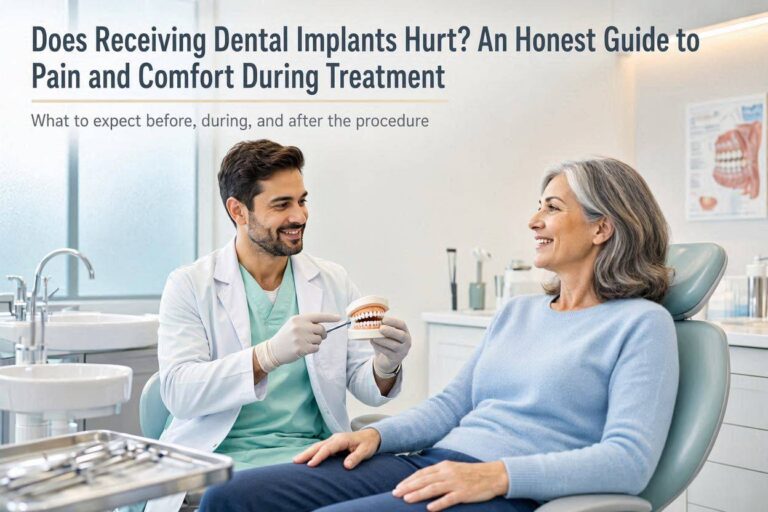
Pain ranks among the top concerns for anyone considering dental implants. The thought of having a metal post placed into your jawbone sounds intimidating. You may have heard stories from friends or family members, or read accounts online that range from completely painless to quite uncomfortable. What should you actually expect?
The honest answer is that dental implant surgery involves less discomfort than most patients anticipate. Modern anesthesia, refined surgical techniques, and effective pain management protocols make the experience manageable for the vast majority of patients. Understanding what to expect at each stage helps you prepare mentally and physically for a comfortable treatment experience.
I wrote this guide because fear of pain prevents too many people from pursuing implant treatment that could significantly improve their quality of life. When you understand the reality of implant discomfort rather than imagining worst-case scenarios, you can make decisions based on facts rather than fear.
The Surgical Experience: What Happens During Implant Placement
Understanding the procedure itself helps demystify the experience and reduce anxiety.
Local Anesthesia: The Foundation of Comfort
Dental implant surgery begins with profound local anesthesia. Your dentist or surgeon injects local anesthetic to completely numb the surgical site and surrounding tissues. This injection creates a small, brief sting, similar to what you experience during a filling or other dental procedure.
Once the anesthetic takes effect, you should feel no sharp pain during the procedure. The anesthetic blocks nerve transmission from the surgical area, preventing pain signals from reaching your brain. You remain conscious and aware of activities around you, but the surgical site itself feels numb and disconnected.
Providers test anesthesia effectiveness before beginning surgery. They ask whether you feel sharp sensation when they touch the area. Honest communication at this stage ensures complete numbness before the procedure proceeds. If you feel anything sharp, your provider can administer additional anesthetic.
Pressure and Vibration Sensations
While anesthesia eliminates sharp pain, you will likely experience sensations of pressure and vibration during implant placement. These sensations result from the physical forces involved in preparing the implant site and placing the implant.
The pressure can feel strange or intense, but it should not feel sharp or painful. Think of the difference between someone pressing firmly on your arm versus pinching it. Pressure registers as a sensation without triggering pain responses. Vibration from the surgical drill creates a buzzing sensation you may feel through your skull and jaw.
These sensations surprise some patients who expect complete absence of feeling. Understanding that pressure and vibration are normal while sharp pain indicates a problem helps you interpret sensations accurately during surgery.
Procedure Duration
Single implant placement typically takes between thirty minutes and one hour of surgical time. More complex cases involving multiple implants or bone grafting take longer. Knowing the expected duration helps you prepare mentally for the experience.
The time passes more quickly than many patients anticipate. Focused concentration on the procedure makes time feel compressed. Breathing exercises, visualization, or simply closing your eyes and relaxing help the time pass comfortably.
Sedation Options for Enhanced Comfort
Beyond local anesthesia, various sedation options provide additional comfort and anxiety reduction.
Nitrous Oxide Sedation
Nitrous oxide, sometimes called laughing gas, provides light sedation through inhalation. You remain conscious and able to respond to instructions, but feel relaxed and somewhat detached from the procedure. Time may seem to pass more quickly, and anxiety diminishes significantly.
Nitrous oxide takes effect within minutes and wears off equally quickly when inhalation stops. You can typically drive yourself home after the procedure and resume normal activities the same day. This option suits patients with mild to moderate anxiety who want to feel more relaxed during treatment.
Oral Sedation
Oral sedation involves taking prescribed medication before your appointment. The medication produces a deeper state of relaxation than nitrous oxide. You remain conscious but feel drowsy and may have limited memory of the procedure afterward.
Oral sedation requires advance preparation. You must take the medication as directed before arriving, and someone must drive you to and from the appointment. The effects linger for several hours after the procedure, so you need to rest at home for the remainder of the day.
This option suits patients with moderate anxiety or those who prefer to remember as little of the procedure as possible.
Intravenous Sedation
IV sedation delivers sedative medication directly into your bloodstream, producing rapid, controllable sedation. The depth of sedation can be adjusted throughout the procedure. Many patients experience twilight sleep, remaining technically conscious but deeply relaxed with minimal awareness of the procedure.
IV sedation requires specialized training and certification. Oral surgeons and some periodontists and trained general dentists offer this option. You must fast before IV sedation and arrange transportation home. Recovery takes the remainder of the day.
This option suits patients with significant anxiety, those undergoing lengthy or complex procedures, and those who strongly prefer to be unaware during surgery.
General Anesthesia
General anesthesia renders you completely unconscious during the procedure. You experience nothing, remember nothing, and wake up after the surgery concludes. This option is typically reserved for complex cases, patients with special needs, or those with extreme anxiety unmanageable by other methods.
General anesthesia requires hospital or surgical center settings and anesthesia professionals to administer and monitor. Most routine implant surgery does not require general anesthesia, but it remains available when clinically appropriate.
Post-Surgical Discomfort: What to Expect After Anesthesia Wears Off
The anesthetic that kept you comfortable during surgery wears off gradually over several hours after the procedure. Understanding the expected post-surgical course helps you prepare appropriately.
The First Twenty-Four Hours
As local anesthesia wears off, typically two to four hours after surgery, discomfort begins. Most patients describe this discomfort as soreness rather than sharp pain. The sensation resembles the achiness after intense exercise or the soreness after dental extraction.
Pain typically peaks during the first twelve to twenty-four hours after surgery and then begins improving. Your provider prescribes or recommends pain medication to manage this initial discomfort. Taking medication before anesthesia fully wears off helps prevent pain from establishing itself.
Apply ice packs to the outside of your face over the surgical area. Twenty minutes on, twenty minutes off cycles help reduce swelling and provide comfort. Keep your head elevated, even while sleeping, to minimize throbbing and swelling.
Days Two Through Four
Pain typically decreases significantly after the first day. Many patients transition from prescription pain medication to over-the-counter options like acetaminophen or ibuprofen. Some find that over-the-counter medication alone manages discomfort adequately from the beginning.
Swelling peaks around day two or three before beginning to subside. Bruising may appear, particularly for lower jaw implants. These visible signs of surgery often look more dramatic than they feel. The discomfort level does not necessarily match the appearance of swelling or bruising.
Stick to soft foods that require minimal chewing. Avoid hot foods and beverages that might irritate the surgical site. Continue gentle oral hygiene as directed, being careful around the surgical area.
One Week and Beyond
By the end of the first week, most patients feel substantially recovered. Residual soreness may persist, particularly when touching or pressing on the area, but daily activities typically resume comfortably.
Stitches may dissolve or require removal depending on the type used. Your provider will advise you about suture care and any follow-up appointments needed.
Full soft tissue healing continues for several weeks, but discomfort is usually minimal after the first week. Most patients describe any remaining sensation as awareness of the area rather than pain.
Comparing Implant Discomfort to Other Dental Procedures
Context helps set realistic expectations about implant discomfort.
Implant Surgery vs. Tooth Extraction
Most patients report that implant surgery hurts less than tooth extraction. Extraction involves removing a tooth from its socket, often requiring significant force and manipulation. Implant placement involves precise preparation of bone and careful implant insertion.
The tissue trauma from implant surgery is typically more controlled and less extensive than surgical extraction. Post-operative discomfort follows a similar pattern but often with less intensity for implant placement.
Implant Surgery vs. Root Canal Treatment
Root canal treatment addresses infected or inflamed nerve tissue inside a tooth. The procedure itself should be comfortable with adequate anesthesia, but the infection leading to root canal treatment can cause significant pre-procedure pain.
Implant surgery involves placing something into bone where a tooth is already missing. There is typically no active infection or inflammation at the time of surgery. This distinction often makes implant surgery more comfortable than the conditions leading to root canal treatment.
Implant Surgery vs. Periodontal Surgery
Periodontal surgery treats gum disease through various techniques. The post-operative discomfort following periodontal surgery often exceeds that of implant placement. Both involve oral soft tissues, but periodontal surgery typically affects larger tissue areas.
Factors That Influence Implant Surgery Discomfort
Individual factors significantly affect pain experience during and after implant surgery.
Surgical Complexity
Simple implant placement into adequate bone with healthy gums causes less post-operative discomfort than complex cases. Bone grafting, sinus lifts, multiple implant placement, and other additional procedures increase tissue manipulation and healing demands.
Your provider can estimate the complexity of your case during treatment planning. Understanding this complexity helps you anticipate the likely discomfort level and prepare accordingly.
Individual Pain Tolerance
Pain perception varies dramatically between individuals. What one person describes as mild soreness another experiences as significant pain. This variation reflects genuine differences in nervous system processing, not weakness or strength of character.
Do not compare your experience to others. Honor your own pain experience while recognizing that most people find implant surgery manageable. If your pain feels more intense than expected, contact your provider for guidance and support.
Anxiety and Pain Perception
Anxiety amplifies pain perception. When you feel anxious, your body produces stress hormones that sensitize pain pathways. A procedure that feels manageable to a relaxed patient may feel more painful to an anxious patient, even with identical surgical technique and anesthesia.
Addressing anxiety through sedation, relaxation techniques, or counseling improves the pain experience. Many patients find that the actual procedure causes far less discomfort than their anxious anticipation suggested.
Provider Skill and Technique
Gentle surgical technique, adequate anesthesia, and attention to tissue handling affect post-operative comfort. Experienced implant providers develop techniques that minimize tissue trauma and optimize healing.
This factor reinforces the importance of selecting a qualified, experienced provider for your implant treatment. Skill matters not only for implant success but also for your comfort during and after the procedure.
Pain Management Strategies
Proactive pain management supports a comfortable recovery experience.
Medication Management
Take pain medication as recommended before anesthesia wears off completely. Staying ahead of pain prevents it from establishing and becoming harder to control. Follow your provider’s instructions regarding medication timing, dosing, and duration.
Prescription pain medication typically provides the strongest relief for the first day or two. Transition to over-the-counter options as discomfort decreases. Most patients need prescription medication for only a day or two, if at all.
Do not drink alcohol while taking pain medication. Do not drive or operate machinery while taking prescription pain relievers. Follow all medication precautions and contact your provider with questions.
Cold Therapy
Ice packs applied to the outside of the face reduce swelling and provide comfort. Use twenty minutes on, twenty minutes off cycles during the first twenty-four to forty-eight hours. Continue longer if swelling persists or cold therapy provides comfort.
Frozen gel packs, bags of frozen peas wrapped in a thin cloth, or specialized facial ice packs all work effectively. Avoid applying ice directly to skin, which can cause tissue damage.
Diet Modification
Soft, cool foods feel most comfortable during the initial healing period. Yogurt, smoothies, pudding, applesauce, and similar foods require no chewing and do not irritate surgical sites. Avoid hot foods that can increase bleeding and swelling.
Gradually advance to more substantial soft foods as comfort allows. Scrambled eggs, mashed potatoes, pasta, and similar foods provide nutrition without challenging healing tissues. Avoid crunchy, hard, or spicy foods that could irritate the surgical site.
Rest and Activity Modification
Rest during the first twenty-four to forty-eight hours after surgery. Avoid strenuous exercise, heavy lifting, and activities that increase blood pressure or heart rate. Elevated blood pressure can increase bleeding and swelling at the surgical site.
Keep your head elevated, even while sleeping. Use extra pillows or sleep in a recliner for the first few nights. This positioning reduces throbbing and swelling.
When to Contact Your Provider About Pain
While some discomfort is normal, certain pain patterns warrant professional attention.
Normal Post-Operative Pain
Normal post-surgical discomfort improves steadily after the first day or two. Pain responds to recommended medication. Discomfort localizes to the surgical area without spreading to distant areas. Swelling and bruising may be present but do not expand rapidly.
Concerning Pain Patterns
Contact your provider if pain worsens after initially improving. Progressive increase in pain after day three or four may indicate infection or other complication requiring treatment.
Pain unresponsive to prescribed or recommended medication warrants evaluation. While some discomfort persists despite medication, complete lack of response suggests something beyond normal healing discomfort.
Pain spreading away from the surgical site, particularly toward the ear, eye, or neck, requires prompt evaluation. Spreading infection can cause pain in areas remote from the surgical site.
Pain accompanied by fever, purulent drainage, or expanding swelling suggests infection requiring treatment. Do not wait for scheduled follow-up if these signs develop.
Frequently Asked Questions About Implant Pain
Does getting a dental implant hurt more than a filling?
Implant surgery typically causes more post-operative discomfort than a routine filling. However, with adequate anesthesia, the procedure itself should be equally painless. Post-operative soreness lasts longer and may be more intense than after a filling, but it remains manageable for most patients.
How long does pain last after dental implant surgery?
Significant discomfort typically lasts twenty-four to forty-eight hours. Milder soreness may persist for several days to a week. Most patients resume normal activities within a day or two, with awareness of the surgical site gradually fading over weeks.
Can I go to work the day after implant surgery?
Many patients return to work the day after routine implant surgery, particularly for sedentary jobs. Physical labor or jobs requiring extensive talking may require additional recovery time. Plan for at least one day of reduced activity, with flexibility to take additional time if needed.
Do I need sedation for dental implant surgery?
Sedation is optional, not required. Many patients complete implant surgery comfortably with local anesthesia alone. Sedation provides additional relaxation and anxiety reduction for patients who want it. Discuss your preferences and anxiety level with your provider to determine the best approach for you.
Which hurts more, the top or bottom jaw?
Neither location consistently causes more pain. Lower jaw implants may cause more noticeable swelling due to gravity and tissue characteristics. Upper posterior implants may cause more sinus-related sensations. Individual anatomy and surgical factors influence discomfort more than jaw location.
Will I be in pain during the implant healing period?
The healing period after the first week typically involves minimal discomfort. You may feel awareness of the implant site and mild soreness when pressing on the area. Significant pain during the healing period suggests a problem requiring evaluation.
Additional Resources
The American Academy of Implant Dentistry provides patient education about implant treatment and recovery. The Academy of Osseointegration offers information about implant procedures and what to expect. Your implant provider can discuss specific pain management strategies based on your health history and the planned procedure.
Conclusion
Dental implant surgery causes less discomfort than most patients anticipate. The procedure itself should be painless with adequate local anesthesia, though pressure and vibration sensations are normal. Post-operative soreness typically peaks in the first day and improves steadily, managed effectively with medication, ice, rest, and diet modification. Sedation options provide additional comfort for anxious patients. Individual factors including surgical complexity, pain tolerance, and anxiety affect the experience. Most patients find the discomfort easily manageable and well worth the long-term benefits implants provide.
Meta Description: Discover how much dental implants actually hurt. Get honest information about pain during surgery, post-operative discomfort, sedation options, recovery timeline, and strategies for comfortable implant treatment and healing.
continue
Why Are Dental Implants Important? Understanding Their Value Beyond Tooth Replacement
A missing tooth creates more than a gap in your smile. It sets off a cascade of changes throughout your mouth that affect your health, function, and confidence. Dental implants address these changes more completely than any other tooth replacement option. Understanding why implants matter helps you appreciate their value and make informed decisions about your oral health.
Dental implants have transformed restorative dentistry over the past several decades. What once seemed like science fiction, placing an artificial tooth root that fuses with living bone, has become a routine procedure with success rates exceeding 95 percent. Yet many people still view implants as a luxury rather than recognizing their profound health benefits.
I wrote this guide because I want you to understand what implants truly offer. Not just a replacement tooth, but preservation of your jawbone, protection of your remaining teeth, restoration of proper function, and maintenance of your facial structure. These benefits extend far beyond the cosmetic improvement that first motivates many patients to seek treatment.
Preserving Jawbone Health
The most important benefit of dental implants operates beneath the surface, where you cannot see it.
The Consequences of Tooth Loss on Bone
Your jawbone requires stimulation to maintain its density and volume. Natural teeth provide this stimulation through their roots, which transmit chewing forces into the surrounding bone. These forces signal your body to continue maintaining and rebuilding bone tissue.
When you lose a tooth, this stimulation disappears. Without the signals generated by the tooth root, your body begins resorbing the bone in that area. Bone that serves no functional purpose is gradually broken down and its minerals recycled elsewhere in your body.
Bone loss begins within months of tooth extraction and continues progressively over years. The most rapid loss occurs during the first year, but the process never completely stops. Over time, significant bone volume disappears.
How Implants Prevent Bone Loss
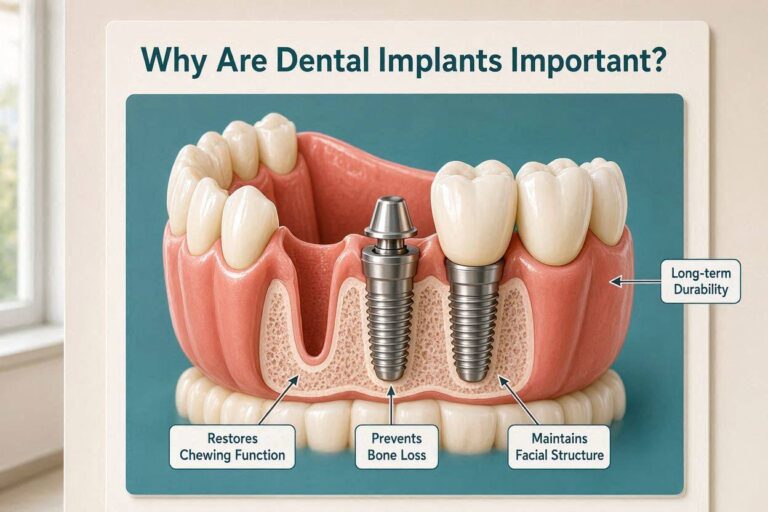
Dental implants replace both the visible crown and the root structure of missing teeth. The implant post, embedded in your jawbone, transmits chewing forces into the surrounding bone just as a natural tooth root did. This stimulation signals your body to maintain bone density around the implant.
This preservation of bone represents the single most important benefit of dental implants. No other tooth replacement option provides this bone stimulation. Bridges rest on top of the gums without engaging the underlying bone. Dentures sit on the surface and may actually accelerate bone loss through pressure on the ridge.
The Functional Significance of Bone Preservation
Maintaining jawbone volume matters for both health and appearance. Adequate bone supports adjacent natural teeth, preventing them from shifting or becoming unstable. It maintains the contours of your face, preventing the sunken appearance that develops with extensive bone loss.
Bone preservation also keeps future treatment options open. If an implant eventually requires replacement, adequate bone makes re-implantation possible. When bone has been lost, additional grafting procedures become necessary before new implants can be placed.
Protecting Remaining Natural Teeth
Dental implants protect your healthy teeth in ways that other replacement options cannot.
Traditional Bridges Require Tooth Sacrifice
A conventional fixed bridge replaces a missing tooth by crowning the adjacent teeth and suspending a false tooth between them. This approach requires removing healthy tooth structure from the neighboring teeth, sometimes teeth that have never had decay or restorations.
Removing enamel from healthy teeth creates lifelong consequences. Crowned teeth remain vulnerable to decay at the crown margins. They may eventually require root canal treatment if preparation irritates the nerve. They become potential failure points in the restoration.
Dental implants replace missing teeth without involving adjacent teeth at all. The implant stands independently, supported by the jawbone rather than by neighboring teeth. Your healthy teeth remain untouched and intact.
Preventing Teeth from Shifting
When a tooth is lost, the surrounding and opposing teeth begin to shift over time. Adjacent teeth tilt into the gap. The opposing tooth over-erupts because it no longer contacts anything during chewing. These movements create bite problems, increase decay risk due to food trapping, and complicate future replacement.
Implants fill the gap and maintain proper tooth positioning. Adjacent teeth have no space to shift into. Opposing teeth contact the implant restoration during chewing, preventing over-eruption. The dental arch maintains its proper form and function.
Distributing Bite Forces
Missing teeth concentrate chewing forces on fewer remaining teeth. This overload can cause excessive wear, fracture, or mobility of the overworked teeth. The remaining dentition ages faster under increased functional demands.
Implants restore normal distribution of chewing forces across the dental arch. Each implant takes its share of the functional load, protecting natural teeth from overload. This balanced force distribution supports the longevity of your entire dentition.
Restoring Proper Function
The ability to eat comfortably and speak clearly affects daily quality of life profoundly.
Eating Without Compromise
Missing teeth impair chewing function. Patients with missing teeth often avoid certain foods, particularly those requiring significant biting force or thorough chewing. Dietary restrictions develop that may affect nutrition and enjoyment of meals.
Dental implants restore chewing function most closely to natural teeth. Because implants are anchored in bone, they provide stable, strong support for chewing. Implant patients can eat virtually any food without restriction, including tough meats, crunchy vegetables, and crusty breads.
This functional restoration supports better nutrition. Patients who previously avoided fiber-rich fruits and vegetables or protein-rich meats due to chewing difficulty can resume a varied, healthy diet. The nutritional benefits of restored chewing function extend throughout the body.
Speaking Clearly and Confidently
Missing teeth, particularly front teeth, affect speech. Air escapes through gaps, creating whistling sounds. The tongue positions differently when teeth are missing, altering pronunciation. Denture wearers often experience clicking or slipping that affects speech clarity.
Implant-supported restorations remain stable during speaking. There is no movement, no clicking, and no air escape through gaps. Speech returns to natural patterns without the compensations required by missing teeth or removable appliances.
The confidence to speak without self-consciousness affects social interactions, professional communication, and personal relationships. People who previously covered their mouths when laughing or smiling can express themselves freely.
Maintaining Facial Structure and Appearance
Your teeth support more than your smile. They support your entire lower face.
The Facial Collapse That Follows Tooth Loss
Natural teeth and the bone that supports them provide structure for your lips, cheeks, and lower face. When teeth are lost and bone resorbs, this support diminishes. The distance between your nose and chin decreases as bone height reduces. Lips roll inward and lose their fullness. Cheeks sink, creating a prematurely aged appearance.
These changes develop gradually over years following tooth loss. Patients may not notice the progression until significant change has occurred. Photographs taken years apart reveal the facial aging that accompanies tooth loss and bone resorption.
How Implants Preserve Facial Structure
By preserving bone and replacing tooth structure, implants maintain facial support. The implant-supported restoration fills the space left by missing teeth, supporting lips and cheeks from within. The bone stimulation provided by the implant prevents the resorption that causes facial collapse.
Patients who receive implants soon after tooth loss maintain their facial structure most effectively. Those who have already experienced bone loss may require grafting to restore adequate support before implant placement.
The Psychological Impact of Tooth Loss
Missing teeth affect self-image and emotional well-being. Many people with visible tooth loss avoid smiling, limit social interactions, and feel self-conscious about their appearance. These psychological effects can be as damaging as the physical consequences.
Restoring a complete, natural-looking smile with dental implants often transforms self-confidence. Patients report feeling comfortable smiling again, engaging more freely in social situations, and feeling better about their overall appearance.
Comparing Implants to Alternative Treatments
Understanding how implants compare to other options highlights their importance.
Dental Implants vs. Fixed Bridges
Fixed bridges replace missing teeth without surgery, which appeals to some patients. However, bridges have significant disadvantages compared to implants. They require damaging healthy adjacent teeth. They do not prevent bone loss beneath the pontic. They have limited lifespan, typically ten to fifteen years before requiring replacement.
Implants preserve adjacent teeth, prevent bone loss, and can last decades or a lifetime with proper care. The initial investment may be higher, but the long-term value often favors implants when considering longevity and avoidance of future complications.
Dental Implants vs. Removable Partial Dentures
Partial dentures offer the least expensive initial replacement option. However, they come with significant functional and health compromises. They move during eating and speaking. They exert pressure on remaining teeth through clasps that can loosen teeth over time. They accelerate bone loss by pressing on the edentulous ridge. They require removal for cleaning and feel unnatural to many patients.
Implant-supported restorations remain fixed in place, protect remaining teeth, and preserve bone. Patients with partial dentures often express profound satisfaction when converting to implant-supported restorations.
Dental Implants vs. Complete Dentures
Complete dentures replace all teeth in an arch but with substantial limitations. Lower dentures in particular often fit poorly due to lack of retention on the resorbed ridge. Denture adhesives become daily necessities. Eating becomes challenging, with many foods eliminated from the diet. Bone loss accelerates under denture pressure, progressively worsening fit over time.
Implant-retained overdentures dramatically improve stability and function compared to conventional dentures. Even two implants supporting a lower denture transform the experience from constant frustration to reliable function. Fixed implant restorations provide the ultimate stability, feeling most like natural teeth.
The Systemic Health Connection
Oral health connects to overall health in ways that make tooth replacement medically significant.
Nutrition and General Health
Chewing is the first step in digestion. Adequate chewing breaks food into smaller particles, mixes it with saliva, and begins the digestive process. Impaired chewing leads to swallowing larger food particles, potentially compromising nutrient extraction.
The dietary restrictions that accompany tooth loss often result in reduced intake of fiber, fresh fruits and vegetables, and protein sources. These dietary changes affect overall nutrition and health status. Restoring chewing function with implants supports better nutrition and the health benefits it provides.
Oral Health and Systemic Disease
Chronic oral inflammation from periodontal disease has been linked to cardiovascular disease, diabetes complications, respiratory infections, and adverse pregnancy outcomes. Missing teeth with associated bone loss and food trapping can contribute to ongoing oral inflammation.
Dental implants, properly maintained, do not decay and support healthy oral tissues. By restoring a complete, cleanable dentition, implants contribute to oral health and potentially to systemic health as well.
Frequently Asked Questions About Implant Importance
Why can’t I just leave a missing tooth alone if it doesn’t show?
Even back teeth that do not show when you smile serve important functions. They maintain proper bite relationships, distribute chewing forces, and prevent adjacent teeth from shifting. Bone loss occurs regardless of tooth location. Replacing missing back teeth protects your overall oral health.
Are dental implants really worth the investment?
For most patients, yes. Implants preserve bone, protect adjacent teeth, restore function, and can last decades or a lifetime. When considering the long-term costs of alternative treatments including replacement, repairs, and management of complications, implants often prove cost-effective over time despite higher initial cost.
How do implants compare to doing nothing about missing teeth?
Leaving missing teeth untreated leads to progressive bone loss, shifting of remaining teeth, bite problems, and increased risk to remaining teeth. The longer tooth loss goes untreated, the more complex and costly eventual treatment becomes. Early implant placement prevents these cascading problems.
Can young people get dental implants?
Implants are generally not placed until jaw growth is complete, typically late adolescence to early adulthood. Once growth is complete, there is no upper age limit. Young adults benefit particularly from implants because they prevent decades of bone loss and protect remaining teeth for a lifetime.
What happens to my face if I don’t replace missing teeth?
Progressive bone loss leads to facial collapse over time. The lower face shortens, lips thin and invert, cheeks hollow, and premature aging appearance develops. These changes are gradual but irreversible without extensive grafting. Implants prevent this process by preserving bone.
Additional Resources
The American Academy of Implant Dentistry provides comprehensive patient education about implant benefits. The Academy of Osseointegration offers research-based information about implant treatment. The American College of Prosthodontists provides resources about tooth replacement options and their comparative benefits.
Conclusion
Dental implants are important because they replace both the visible crown and the root structure of missing teeth, providing benefits no other replacement option can match. They preserve jawbone through functional stimulation, protect adjacent healthy teeth from damage and shifting, restore natural chewing function and clear speech, and maintain facial structure and appearance. Compared to bridges and dentures, implants offer superior long-term outcomes and better protection of overall oral health. Understanding these benefits helps patients make informed decisions about replacing missing teeth with the option that most completely restores oral health and function.
Meta Description: Discover why dental implants are important beyond just filling gaps. Learn how implants preserve jawbone, protect natural teeth, restore function, maintain facial structure, and provide health benefits no other tooth replacement option can match.
continue
Does Every Dentist Do Implants? Understanding Which Dental Professionals Offer Implant Treatment
Walking into any dental office and expecting implant treatment would be like walking into any doctor’s office and expecting heart surgery. Dental implants require specific training, specialized equipment, and ongoing experience that not every dentist possesses. Understanding which dentists offer implant services and why others do not helps you navigate your tooth replacement options effectively.
The answer to whether every dentist does implants is a clear no. Many general dentists do not place dental implants. Some choose not to pursue the necessary training. Others prefer to focus on different areas of dentistry. Still others offer implant restoration but refer the surgical placement to specialists. This diversity in practice patterns means you need to understand the landscape before assuming your regular dentist provides implant treatment.
I wrote this guide because patients often feel confused when their trusted dentist tells them they need to see someone else for implants. Understanding why dentists make different choices about offering implant services helps you appreciate the referral process and make informed decisions about your care.
The Training Gap: Why Implant Placement Is Not Universal
Dental school education and implant competency exist in different realms.
What Dental School Teaches About Implants
Dental schools introduce students to implant concepts, including the biology of osseointegration, implant components, and treatment planning principles. Students learn to identify cases where implants might be appropriate and understand the restorative phase of implant treatment.
However, dental school curricula typically do not include comprehensive hands-on implant placement training. Students may observe implant surgeries or assist during clinical rotations, but most graduate without the experience needed to place implants independently.
Dental school prepares graduates to recognize when implants are indicated and to restore implants once placed. The surgical placement skills require post-graduate development that not all dentists pursue.
The Post-Graduate Training Requirement
Dentists who place implants have invested in additional education beyond dental school. This training ranges from weekend introductory courses to year-long comprehensive programs to multi-year surgical residencies.
The quality and depth of this training varies dramatically. Some dentists complete rigorous programs with extensive supervised clinical experience. Others attend shorter courses with limited hands-on practice. The variation in training explains much of the variation in which dentists offer implant services.
Training also requires significant financial investment and time away from practice. Not all dentists can or choose to make this commitment. Those who do not pursue implant training have made a professional choice, not demonstrated a lack of ability.
Licensing and Scope of Practice
Legally, any licensed dentist may place dental implants. Dental licensure provides broad scope of practice that includes surgical procedures. Unlike medicine, where practitioners are restricted to their specialty training, dentistry allows general practitioners to perform any procedure they feel competent to provide.
This legal framework places responsibility on individual dentists to determine their own competence. Ethical dentists recognize their limitations and refer procedures beyond their training and experience. The dental board may evaluate competence if complaints arise, but no prior certification is required to place implants.
Why Some Dentists Choose Not to Place Implants
Several legitimate reasons explain why your dentist may not offer implant surgery.
Practice Focus and Professional Preference
Dentistry encompasses many disciplines, and practitioners naturally gravitate toward areas that interest them. Some dentists love the precision of restorative dentistry and focus their practices on crowns, bridges, and cosmetic procedures. Others enjoy the diagnostic challenges of comprehensive treatment planning. Still others find their passion in endodontics, periodontics, or orthodontics.
A dentist who does not place implants has not necessarily failed to pursue adequate training. They may simply prefer to focus their practice on other aspects of dentistry that they find more professionally satisfying. This focus benefits patients, as dentists who concentrate on specific procedures develop greater expertise in those areas.
Surgical Aptitude and Comfort
Implant placement requires surgical skills that differ from restorative dentistry. Some dentists recognize that surgery is not their strength and choose to refer these procedures to colleagues with greater surgical aptitude.
This self-awareness represents professional integrity, not deficiency. A dentist who acknowledges their limitations and refers appropriately serves patients better than one who performs procedures beyond their comfort zone.
Equipment and Facility Investment
Implant placement requires specific equipment including surgical handpieces, implant kits for each system used, and ideally, three-dimensional imaging capability. These investments cost tens of thousands of dollars.
For dentists who would place only occasional implants, this investment may not make financial sense. The cost of equipment, training, and maintaining skills through regular practice may exceed the revenue from limited implant procedures. Referring to a specialist who has already made these investments makes economic sense for both the dentist and the patient.
Risk Management Considerations
Implant surgery carries risks including nerve injury, sinus complications, and implant failure. Dentists must carry professional liability insurance that covers surgical procedures. Some dentists choose to limit their surgical exposure to manage insurance costs and reduce liability risk.
Referring surgical procedures to specialists transfers this liability risk while allowing the general dentist to maintain their relationship with the patient through restorative care.
The Different Levels of Implant Involvement
Dentists participate in implant treatment at various levels.
Dentists Who Place and Restore Implants
Some general dentists offer comprehensive implant care, placing implants surgically and restoring them with crowns, bridges, or dentures. These dentists have invested in training, equipment, and experience development. They typically place implants regularly as a significant component of their practice.
These dentists provide the convenience of single-provider treatment. Patients receive both surgical and restorative care from one practitioner in one location. Communication between treatment phases is seamless because one provider manages everything.
The quality of care depends on the individual dentist’s training and experience. Some general dentists achieve excellent implant outcomes comparable to specialists. Others may have less training or experience than ideal. Evaluating each provider individually matters more than assuming quality based on practice model.
Dentists Who Restore But Do Not Place Implants
Many general dentists offer the restorative phase of implant treatment while referring surgical placement to periodontists or oral surgeons. This shared-care model combines specialist surgical expertise with the general dentist’s restorative skills and ongoing patient relationship.
Your general dentist plans the restorative aspect of treatment, designs the final restoration, and coordinates with the surgical specialist. The specialist places the implant according to the restorative plan. After healing, you return to your general dentist for restoration.
This model benefits patients by providing surgical expertise for placement while maintaining the relationship with their regular dentist. The general dentist manages long-term implant maintenance as part of your continuing oral health care.
Dentists Who Refer All Implant Treatment
Some dentists refer both surgical and restorative implant phases to specialists. They may refer to a periodontist or oral surgeon for placement and a prosthodontist for restoration. This approach concentrates all implant treatment with specialists who focus exclusively on these procedures.
Dentists choosing this model may practice in areas with convenient specialist access. They may have practice patterns that do not include significant restorative implant volume. They may prefer to focus their practice on other procedures entirely.
These dentists still serve an important role by identifying the need for tooth replacement and facilitating referral to appropriate specialists. They continue providing preventive care and other dental services while specialists manage implant treatment.
Specialists and Implant Treatment
Specialists offer implant services as a core component of their practices.
Periodontists
Periodontists specialize in the supporting structures of teeth, including gums and bone. Implant placement represents a significant component of most periodontal practices. These specialists complete three years of residency training with extensive implant experience.
Periodontists bring particular expertise to cases involving gum disease, bone deficiency, or soft tissue challenges. Their understanding of the biological factors affecting implant success informs treatment planning and surgical technique.
Most periodontists place implants routinely and many also provide associated grafting procedures. Some also restore implants, while others collaborate with general dentists or prosthodontists for the restorative phase.
Oral and Maxillofacial Surgeons
Oral surgeons complete four to six years of hospital-based surgical residency. Their training encompasses complex procedures involving the mouth, jaws, and face. Implant placement represents one component of their broader surgical practice.
These specialists handle complex implant cases including full arch reconstruction, cases requiring extensive grafting, and patients with significant medical conditions. They offer the full range of sedation and anesthesia options.
Most oral surgeons focus on implant placement and associated surgical procedures, referring patients back to general dentists or prosthodontists for restoration.
Prosthodontists
Prosthodontists specialize in restoring and replacing teeth. Their three-year residency focuses on complex restorative cases including implant-supported restorations.
Some prosthodontists place implants surgically in addition to restoring them. Others focus exclusively on the restorative phase, designing and placing the crowns, bridges, or dentures that attach to implants placed by surgical colleagues.
Prosthodontists bring particular value to complex restorative cases involving multiple implants, full arch restorations, or situations where achieving optimal esthetics presents challenges.
How to Find Out If Your Dentist Offers Implants
Several approaches help you determine whether your dentist provides implant treatment.
Direct Communication
The simplest approach is asking your dentist directly. During your next appointment, inquire whether they place dental implants. If they do, ask about their training, experience, and the types of cases they handle. If they do not, ask whether they offer implant restoration and who they recommend for surgical placement.
Your dentist should answer these questions comfortably. If they place implants, they should discuss their experience with confidence. If they do not, they should have established referral relationships with trusted specialists.
Practice Website and Marketing
Dental practice websites typically list the services they provide. A practice offering implant surgery usually features this prominently in their service descriptions. Look for specific language about implant placement, not just implant restoration.
Be aware that some practices list implants as a service when they only restore implants placed by specialists. Look for language distinguishing between surgical placement and restoration. Phrases like implant placement, implant surgery, or surgical implant placement indicate the dentist performs the surgical phase.
Staff Communication
Front desk staff and dental assistants often know which services their practice provides. Asking when scheduling an appointment can clarify whether the practice offers implant surgery.
Staff members can also explain the practice’s approach to implant treatment. They may describe the dentist’s training, the technology used for implant planning and placement, and whether the practice completes both surgical and restorative phases.
Questions to Ask Any Dentist About Their Implant Services
When evaluating whether a dentist should provide your implant care, specific questions provide valuable information.
Training and Experience Questions
What specific training have you completed in implant dentistry? How many years have you been placing implants? How many implants do you place annually? What types of implant cases do you handle most frequently?
These questions help you understand the depth of the dentist’s implant experience. Answers should be specific and forthcoming.
Complication Questions
What complications have you managed in your implant practice? How do you handle implant failures? When do you refer cases to specialists?
Dentists who have placed many implants have encountered complications. Their willingness to discuss these experiences indicates transparency and honesty about the realities of implant treatment.
Referral Questions
When would you refer an implant case to a specialist? Do you have established relationships with specialists for cases exceeding your comfort level?
Dentists who recognize their limitations and maintain specialist relationships demonstrate professional judgment that benefits patients.
Frequently Asked Questions About Dentists and Implants
Why doesn’t my dentist place implants?
Your dentist may not have pursued implant training, may prefer to focus on other areas of dentistry, may find the equipment investment unjustified for their practice volume, or may choose to refer surgical procedures to specialists while providing the restorative phase themselves. These are legitimate professional choices.
Should I switch dentists if mine doesn’t offer implants?
Not necessarily. A dentist who does not place implants but maintains referral relationships with trusted specialists can coordinate excellent implant care. The question is whether your dentist provides quality general dental care and facilitates appropriate specialist treatment when needed.
Can a dentist who rarely places implants do a good job?
Implant placement, like any surgical procedure, benefits from regular practice. Dentists who place implants only occasionally may not maintain optimal skills. However, occasional placement with appropriate case selection and continuing education can still produce acceptable results. Ask about their annual implant volume to inform your decision.
How can I verify a dentist’s implant credentials?
Ask about specific training programs completed, implant-related credentials earned, and professional organization memberships. State dental board records may indicate specialty status or additional certifications. Implant organizations like the American Academy of Implant Dentistry maintain directories of members with verified credentials.
Is it better to see a dentist who does everything in one office?
Single-office treatment offers convenience and simplified communication. However, quality matters more than convenience. A skilled specialist placing your implant and a skilled restorative dentist creating your crown may provide better outcomes than a single dentist with less experience in both phases. Evaluate individual qualifications rather than assuming one model is superior.
Additional Resources
The American Academy of Implant Dentistry provides educational resources and dentist directories. The Academy of General Dentistry offers information about general dentist continuing education. The American Academy of Periodontology and American Association of Oral and Maxillofacial Surgeons provide specialist perspectives on implant care. Your state dental board can verify licensure status.
Conclusion
Not every dentist places dental implants. Implant surgery requires post-graduate training, specialized equipment, and ongoing experience that many general dentists choose not to pursue. Dentists who do not place implants may focus their practices on other areas, recognize surgical limitations, or find the investment unjustified for their practice patterns. Many provide implant restoration while referring surgical placement to specialists. Specialists including periodontists, oral surgeons, and prosthodontists offer implant services as core components of their practices. Understanding these practice patterns helps patients navigate implant treatment decisions and appreciate the value of appropriate specialist referral.