An Implant from the Dental Industry: Understanding the Technology, Innovation, and Future of Tooth Replacement
The dental implant represents one of the most significant technological achievements in modern dentistry. From its serendipitous discovery in a Swedish laboratory to the sophisticated, digitally planned treatments of today, the dental implant has transformed how dentistry approaches tooth replacement. Understanding the dental implant as a product of the dental industry provides insight into the technology, the business forces shaping its evolution, and what future innovations may mean for patients.
This article examines dental implants through the lens of the dental industry, exploring how these remarkable devices developed, how the industry operates today, and where implant technology is headed. Whether you are a patient considering implant treatment, a dental professional, or someone interested in medical technology, understanding the industrial and commercial context of dental implants enriches your appreciation of this transformative treatment.
I wrote this article to provide a perspective different from typical patient-focused implant information. The dental implant industry involves fascinating technology, significant research investment, and complex market dynamics that directly affect the treatment options available to patients and the practices of dental professionals worldwide.
The Discovery That Launched an Industry
The modern dental implant industry traces its origins to a discovery that exemplifies how scientific breakthroughs sometimes happen accidentally.
Per-Ingvar Brånemark and Osseointegration
In the 1950s, Swedish orthopedic surgeon Per-Ingvar Brånemark conducted research studying blood flow in bone tissue. He inserted titanium optical chambers into rabbit leg bones to observe healing at the microscopic level. When he attempted to remove these chambers at the conclusion of his experiments, he discovered something remarkable: the titanium had fused so completely with the surrounding bone that the chambers could not be removed without cutting away bone.
Brånemark recognized the significance of this discovery. Titanium could bond with living bone in a process he named osseointegration. This biological phenomenon meant that titanium implants could potentially serve as anchors for prosthetic teeth, providing stable, long-term tooth replacement.
The first dental implant patient received treatment in 1965. Brånemark placed titanium implants in a Swedish patient named Gösta Larsson, who had been unable to wear conventional dentures. Those implants functioned successfully for the remainder of Larsson’s life, demonstrating the long-term viability of osseointegrated dental implants.
From Discovery to Commercial Reality
Brånemark’s discovery might have remained a laboratory curiosity without the commercialization efforts that followed. He founded Nobelpharma, later renamed Nobel Biocare, to manufacture and market dental implants based on his research. The company’s establishment in 1981 marked the beginning of the dental implant industry as we know it today.
Early adoption faced significant resistance from the dental establishment. Conventional wisdom held that metal implants would inevitably fail, that the body would reject foreign materials placed in bone. Brånemark faced skepticism and criticism from colleagues who considered implant dentistry unscientific and potentially harmful.
Persistence, accumulating clinical evidence, and growing patient demand gradually overcame this resistance. By the 1990s, dental implants had gained widespread acceptance as a predictable, evidence-based treatment option. Today, millions of dental implants are placed annually worldwide.
The Modern Dental Implant Industry Structure
The dental implant industry has evolved into a sophisticated global market with multiple major players and continuous innovation.
Major Manufacturers and Market Dynamics
Several companies dominate the global dental implant market. Straumann, headquartered in Switzerland, holds the largest market share, known for premium products and substantial research investment. Nobel Biocare, now part of the Danaher Corporation, maintains strong brand recognition based on its historical connection to osseointegration’s discovery. Dentsply Sirona, formed through merger of dental equipment and implant companies, offers comprehensive dental solutions including implant systems. Zimmer Biomet brings orthopedic and dental implant expertise together under one corporate umbrella. BioHorizons has grown from a focused implant company to a broader dental products provider.
These major manufacturers compete on research, product innovation, and relationships with dental professionals. They sponsor clinical research, provide professional education, and develop digital workflows integrating their implant systems with planning software and restorative solutions.
The Premium vs. Value Segmentation
The implant market has segmented into premium, mid-range, and value tiers. Premium manufacturers invest heavily in research, maintain extensive clinical documentation, and charge higher prices reflecting these investments. Mid-range manufacturers offer quality products with less research investment and lower prices. Value manufacturers compete primarily on price, often with limited research support.
This segmentation creates options for different market needs. Premium implants suit patients and providers prioritizing maximum research support and long-term track records. Value implants may make treatment accessible for patients who cannot afford premium options, though long-term documentation may be limited.
The Rise of Clone and Compatible Implants
A controversial segment involves manufacturers producing implants designed to be compatible with premium systems’ prosthetic components. These clone or compatible implants offer lower component costs while allowing use of the premium system’s restorative parts.
Clone implants raise concerns about manufacturing quality, regulatory oversight, and long-term reliability. The companies producing them may not invest in research or maintain the quality control standards of major manufacturers. Many implant dentists avoid clone implants due to these concerns, while others use them to reduce treatment costs for patients.
Implant Technology: Materials and Design Evolution
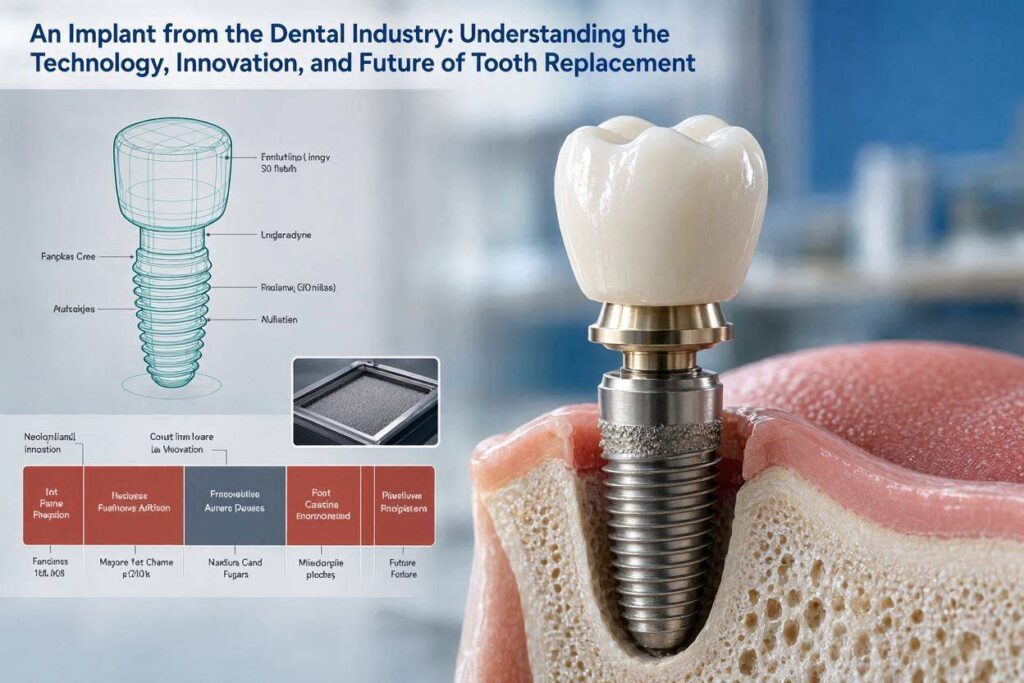
The implant itself has evolved considerably from Brånemark’s original machined titanium screws.
Titanium and Its Alloys
Commercially pure titanium remains the most widely used implant material. Its biocompatibility, strength, and documented long-term performance make it the standard against which other materials are measured.
Titanium alloys, particularly titanium-aluminum-vanadium and titanium-zirconium, offer higher strength than pure titanium. These alloys allow smaller-diameter implants that still withstand functional forces. Straumann’s Roxolid material, a titanium-zirconium alloy, exemplifies this approach.
Titanium’s gray color can create esthetic challenges when thin gum tissue reveals the implant beneath. This limitation drove interest in ceramic alternatives for esthetically demanding situations.
Zirconia: The Ceramic Alternative
Zirconia dental implants, made from yttria-stabilized zirconium dioxide ceramic, offer an alternative to titanium. Zirconia is white, eliminating the gray show-through concern with titanium implants. It is also metal-free, appealing to patients with metal sensitivities or preferences for metal-free dentistry.
Zirconia implants were initially one-piece designs, limiting restorative flexibility. Two-piece zirconia implants with separate abutments have been developed, though long-term clinical data remains more limited than for titanium. Zirconia’s brittleness compared to titanium raises concerns about fracture risk, though design improvements continue addressing this limitation.
The zirconia implant segment continues growing as manufacturing techniques improve and clinical evidence accumulates. For now, titanium remains the dominant implant material based on its extensive track record and favorable mechanical properties.
Surface Technology: The Critical Interface
The implant surface where bone meets titanium critically influences osseointegration. Early implants had relatively smooth machined surfaces. Modern implants feature micro-roughened surfaces that accelerate and strengthen bone integration.
Surface modification techniques include sandblasting with various media, acid etching creating microscopic pits, anodization creating controlled oxide layers, and laser treatment creating precise surface patterns. Each manufacturer has proprietary surface technology representing significant research investment.
These surfaces have reduced healing times and improved success rates, particularly in compromised bone. Some surfaces claim bioactive properties, actively promoting bone formation rather than simply being passively accepted by bone.
Design Features: Threads, Connections, and Platforms
Implant design has evolved based on biomechanical research and clinical experience. Modern implants feature tapered bodies that match extraction socket anatomy more closely than parallel-walled designs. Thread patterns vary in pitch, depth, and shape to optimize initial stability and load distribution.
The implant-abutment connection has received particular design attention. Internal conical connections create bacterial seals and resist micromovement better than earlier external hex connections. Platform switching, where the abutment is narrower than the implant platform, may help preserve crestal bone around implants.
These design features reflect cumulative learning from decades of implant use. Each iteration addresses limitations identified through clinical experience and research.
Digital Technology and the Implant Industry
Digital technology has transformed implant treatment planning and delivery.
Cone Beam Computed Tomography
Cone beam computed tomography provides three-dimensional imaging of the jaw with lower radiation than medical CT scans. This technology reveals bone dimensions, identifies anatomical structures, and enables precise implant planning.
CBCT has become standard of care for implant treatment planning, replacing two-dimensional radiographs for most cases. The ability to visualize the surgical site in three dimensions has improved diagnostic accuracy and reduced surgical complications.
Computer-Guided Implant Surgery
Digital implant planning software allows virtual placement of implants within the three-dimensional bone model. This virtual planning can be transferred to surgery through computer-fabricated surgical guides.
Guided surgery improves implant positioning accuracy compared to freehand placement. It helps avoid anatomical structures, optimizes implant position for restorative requirements, and can reduce surgical time. The technology particularly benefits complex cases involving multiple implants or limited bone.
Intraoral Scanning and Digital Impressions
Intraoral scanners capture digital impressions of teeth and implants without conventional impression materials. These digital records support computer-aided design and manufacturing of implant restorations.
Digital workflows improve accuracy, reduce patient discomfort compared to conventional impressions, and speed the restorative process. Combined with in-office milling or 3D printing, digital technology enables same-day implant restorations in some cases.
Industry Integration of Digital Solutions
Major implant manufacturers have developed integrated digital ecosystems connecting imaging, planning, surgical guidance, and restoration fabrication. These systems aim to provide seamless digital workflows within a single manufacturer’s product environment.
This integration represents competitive strategy as much as clinical advancement. Manufacturers seek to capture the full digital workflow, encouraging providers to use their implant systems, planning software, and restorative components together.
Regulatory Framework and Quality Assurance
The dental implant industry operates within regulatory frameworks designed to ensure product safety and effectiveness.
FDA Regulation in the United States
Dental implants are Class II medical devices requiring FDA clearance through the 510(k) premarket notification process. Manufacturers must demonstrate that their implants are substantially equivalent to previously cleared devices.
This regulatory pathway requires less clinical testing than the premarket approval process required for higher-risk devices. Implant manufacturers submit data on materials, manufacturing processes, sterilization, and mechanical testing rather than new clinical trials.
Critics argue this regulatory approach does not adequately ensure new implant systems are clinically proven. Supporters note the extensive clinical history of dental implants provides sufficient predicate data for substantial equivalence determinations.
International Regulatory Standards
The International Organization for Standardization maintains standards for dental implants through ISO technical committees. These standards address materials, mechanical testing, and biological evaluation requirements.
European regulation requires CE marking for dental implants, indicating conformity with health, safety, and environmental requirements. The European Union’s Medical Device Regulation has increased requirements for clinical evidence compared to previous directives.
Quality Manufacturing and Traceability
Premium implant manufacturers maintain quality management systems ensuring consistent production. Each implant receives unique identification allowing traceability from manufacturing through patient placement. This traceability supports product recalls if manufacturing problems are identified.
Quality differences between premium and value manufacturers may not be visible in the finished product but can affect long-term reliability. Consistent dimensions, proper surface characteristics, and material purity all depend on manufacturing quality control.
Industry Trends and Future Directions
Several trends are shaping the dental implant industry’s future development.
Consolidation and Corporate Ownership
The dental implant industry has experienced significant consolidation. Large dental and medical device corporations have acquired independent implant manufacturers. Danaher’s acquisition of Nobel Biocare and Dentsply’s merger with Sirona exemplify this trend.
Private equity investment has entered the implant market, both through manufacturer acquisition and through consolidation of dental practices placing implants. These financial influences affect industry dynamics, pricing, and innovation priorities.
Biologics and Growth Factors
Research continues exploring biological enhancements to implant treatment. Growth factors including bone morphogenetic proteins may accelerate osseointegration or enable implant placement in compromised bone. Platelet-rich plasma and platelet-rich fibrin, derived from the patient’s own blood, are used clinically to enhance healing.
These biological approaches aim to improve success rates, reduce healing times, and expand implant candidacy for patients with compromised healing capacity.
Mini Implants and Reduced-Diameter Solutions
Mini dental implants, with diameters less than three millimeters, offer less invasive placement in limited bone. Originally marketed primarily for denture stabilization, mini implants are increasingly used for single tooth replacement in narrow ridges.
The evidence base for mini implants remains less extensive than for standard-diameter implants. Their long-term performance compared to standard implants continues to be evaluated.
3D Printing and Custom Implants
Additive manufacturing is entering implant dentistry. 3D-printed surgical guides are already standard. 3D-printed custom implants and abutments are emerging applications.
The potential for truly custom implants designed for individual patient anatomy could optimize fit, reduce surgical complexity, and improve outcomes. Regulatory frameworks and manufacturing standards for 3D-printed implants continue developing.
The Business of Dental Implants in Practice
The implant industry’s products reach patients through dental practices operating in a complex business environment.
Pricing and Cost Dynamics
Implant component costs represent a portion of the total treatment fee patients pay. Provider expertise, facility costs, imaging, and laboratory fabrication all contribute to final treatment costs.
Component costs vary significantly between premium and value implant systems. A premium implant may cost the provider several hundred dollars, while value implants cost less. These component cost differences contribute to variation in treatment fees.
Dental Service Organizations and Implant Treatment
The growth of corporate dental practices, often backed by private equity, is changing implant treatment delivery. These organizations may emphasize implant treatment as a profitable service line, with marketing focused on implant solutions.
Corporate practices may negotiate favorable implant component pricing through volume purchasing. They may also employ standardized protocols and emphasize efficiency. The impact on treatment quality depends on how these business considerations balance against clinical priorities.
Direct-to-Consumer Marketing
Implant manufacturers have traditionally marketed to dental professionals rather than patients. This is changing as some companies and treatment centers advertise directly to consumers.
Direct-to-consumer marketing raises questions about whether patients receive balanced information. Marketing messages may emphasize benefits while minimizing risks and limitations. Patients should supplement marketing information with consultation from qualified providers who can offer personalized assessment.
Frequently Asked Questions About the Dental Implant Industry
Who invented dental implants?
Professor Per-Ingvar Brånemark discovered osseointegration in the 1950s and placed the first modern dental implants in 1965. His research established the scientific foundation for implant dentistry. He founded Nobelpharma, now Nobel Biocare, to commercialize his discovery.
What materials are dental implants made from?
Most dental implants are made from commercially pure titanium or titanium alloys. Zirconia ceramic implants offer an alternative for patients seeking metal-free options or concerned about titanium visibility through thin gums.
How long have modern dental implants been available?
Modern osseointegrated dental implants have been available since the 1980s, though the first patient was treated in 1965. Widespread adoption occurred in the 1990s and has accelerated since.
Are all dental implants the same quality?
No. Premium manufacturers invest heavily in research, maintain rigorous quality control, and document long-term clinical results. Value manufacturers may offer lower prices with less research support. Regulatory clearance indicates basic safety, but quality differences exist between manufacturers.
How is the dental implant industry regulated?
In the United States, dental implants are Class II medical devices requiring FDA clearance through the 510(k) process. International standards from ISO address materials, testing, and biological evaluation requirements. European regulation requires CE marking.
What innovations are coming in implant dentistry?
Emerging innovations include biologic enhancements to accelerate healing, improved ceramic materials, 3D-printed custom implants, and continued refinement of digital workflows. Mini implants and reduced-diameter designs continue evolving for specific applications.
Conclusion
The dental implant represents a remarkable achievement of the dental industry, evolving from Brånemark’s serendipitous discovery of osseointegration to sophisticated, digitally planned treatments that restore function and quality of life for millions of patients. Today’s implant industry features multiple major manufacturers competing on research, design innovation, and digital integration. Titanium remains the dominant material, while zirconia offers an emerging alternative. Surface technology, connection design, and digital workflows continue advancing. The industry operates within regulatory frameworks ensuring basic safety, while quality differences between manufacturers reflect varying research investment and manufacturing standards. Understanding the industrial context of dental implants enriches appreciation of this transformative technology.