Do You Get Sedated for Dental Implants?
Sitting in a dental chair while someone places a metal post into your jawbone sounds intimidating to almost everyone. The question of sedation during dental implant surgery ranks among the most common concerns patients raise during consultations. You want to know whether you will be awake during the procedure, what you will feel, and what options exist for making the experience as comfortable as possible.
The answer is reassuring for most patients. You do not have to be awake and aware during dental implant surgery unless you want to be. Multiple sedation options exist, ranging from light relaxation to complete unconsciousness. The right choice depends on your anxiety level, the complexity of your procedure, your medical history, and your personal preferences.
I wrote this guide because fear of the dental experience prevents too many people from pursuing implant treatment that could transform their oral health and quality of life. Understanding your sedation options helps you approach implant surgery with confidence rather than dread.
The Foundation: Local Anesthesia
Every dental implant procedure begins with local anesthesia, regardless of what additional sedation you may receive.
How Local Anesthesia Works
Local anesthetic medication blocks nerve signals in the surgical area. Your provider injects the anesthetic into the soft tissue near the implant site. Within minutes, the area becomes profoundly numb. You feel no sharp pain, though pressure and vibration sensations often remain.
The injection itself causes brief stinging as the medication enters the tissue. This sensation passes quickly, and the area becomes numb. Your provider tests the anesthesia by touching or pressing on the area and asking what you feel. Communication at this stage ensures you are completely numb before surgery begins.
Local Anesthesia Alone as an Option
Many implant patients complete treatment with local anesthesia alone. They remain fully conscious and aware throughout the procedure. They can respond to instructions, swallow normally, and breathe comfortably. They simply feel no pain from the surgical site.
This option suits patients who are comfortable with dental procedures, have manageable anxiety levels, and prefer to avoid the grogginess and recovery time associated with sedation. Single implant placement in straightforward cases lends itself well to this approach.
The experience resembles having a filling placed, though the procedure takes longer and involves more pressure and vibration sensations. Patients who have tolerated dental procedures well in the past often do fine with local anesthesia alone for implant surgery.
Nitrous Oxide: Light Sedation for Mild Anxiety
Nitrous oxide, often called laughing gas, provides light sedation that takes the edge off dental anxiety.
The Nitrous Oxide Experience
You inhale nitrous oxide mixed with oxygen through a small mask placed over your nose. Within minutes, you feel relaxed, warm, and somewhat detached from your surroundings. Your anxiety diminishes. Time may seem to pass more quickly. You remain conscious and able to respond to your provider, but you care less about what is happening.
The sedation level is easily adjustable. Your provider can increase or decrease the nitrous oxide concentration throughout the procedure to maintain your optimal comfort level. The effects wear off within minutes of discontinuing the gas, allowing you to recover quickly.
Advantages and Limitations
Nitrous oxide offers several advantages. It requires no needles beyond the local anesthetic injection. It takes effect and wears off rapidly. You can typically drive yourself home after the procedure and resume normal activities the same day. It is safe for most patients, including many with medical conditions that might complicate deeper sedation.
The limitation is that nitrous oxide provides only light sedation. Patients with moderate to severe anxiety may need something stronger. The effects, while pleasant, do not approach the deep relaxation of oral or IV sedation.
Nitrous oxide works well for patients with mild anxiety who want to feel more relaxed during implant surgery but do not need or want heavy sedation.
Oral Sedation: Deeper Relaxation with a Pill
Oral sedation involves taking prescribed medication by mouth before your appointment, producing deeper relaxation than nitrous oxide.
The Oral Sedation Experience
You take a prescribed sedative pill, typically from the benzodiazepine family, about an hour before your procedure. By the time you arrive at the dental office, you feel significantly relaxed and drowsy. Some patients become so relaxed they doze lightly during the procedure, though they remain arousable.
Your perception of the procedure changes. Time passes quickly or seems to disappear entirely. You may have limited memory of the surgical experience afterward. You remain conscious enough to respond to simple instructions but feel deeply detached from what is happening.
Important Safety Considerations
Oral sedation requires preparation and precautions. You must arrange for someone to drive you to and from the appointment, as you cannot safely operate a vehicle after taking sedative medication. The effects linger for several hours after the procedure, requiring rest at home for the remainder of the day.
Your provider needs a thorough medical history before prescribing oral sedation. Certain medical conditions and medications affect how you metabolize sedatives and whether oral sedation is safe for you. Never take sedative medication without your provider’s knowledge and prescription.
The level of sedation with oral medication is less precisely controllable than with IV sedation. The medication’s effect depends on your metabolism, what you have eaten, and individual sensitivity. Your provider cannot easily adjust the sedation level once the medication is absorbed.
IV Sedation: Controlled, Deeper Sedation
Intravenous sedation delivers sedative medication directly into your bloodstream, providing rapid, controllable, deeper sedation.
The IV Sedation Experience
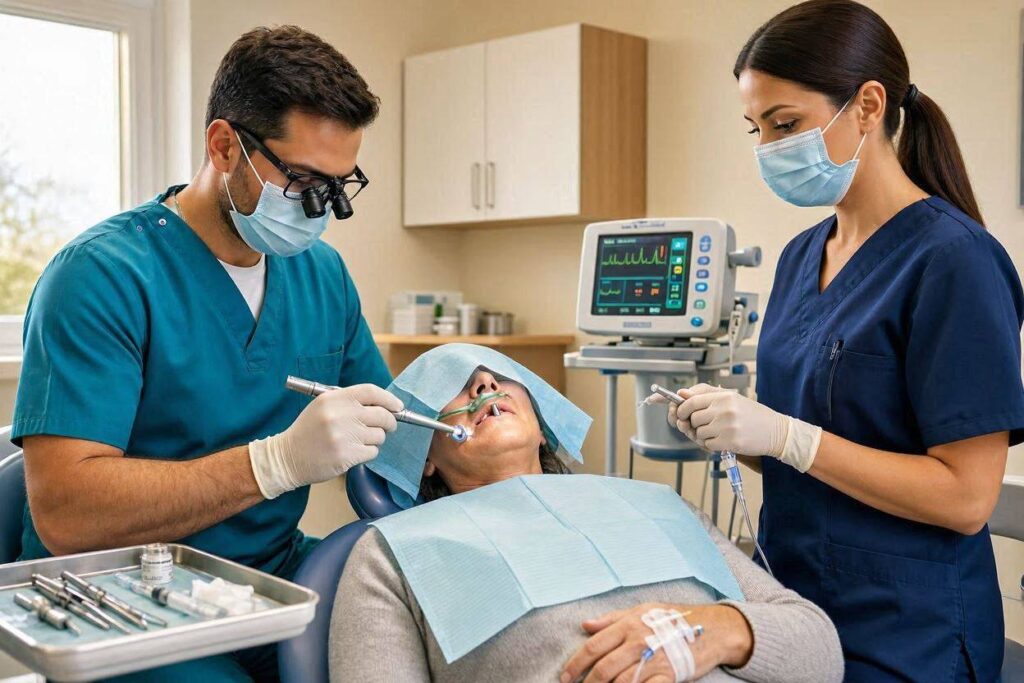
Your provider places a small intravenous line, typically in your arm or hand. Sedative medication enters your bloodstream directly, taking effect within seconds. The sedation level can be precisely adjusted throughout the procedure by varying the medication infusion rate.
Most patients experience twilight sleep under IV sedation. You remain technically conscious, able to breathe independently and respond to strong stimulation. However, you feel deeply relaxed and typically remember little or nothing of the procedure afterward. Time seems to disappear. You simply feel like you took a brief nap while the surgery occurred.
Advantages of IV Sedation
IV sedation offers several advantages over oral sedation. The onset is immediate rather than delayed. The sedation level is continuously adjustable. The medications used typically produce amnesia, so you remember little of the procedure. The sedation can be deepened or lightened as needed throughout the surgery.
This option suits patients with moderate to severe dental anxiety, those undergoing lengthy or complex implant procedures, and those who strongly prefer minimal awareness during surgery. It also works well for patients who have difficulty getting numb with local anesthesia alone.
Requirements and Recovery
IV sedation requires specialized training and certification. Oral surgeons and some periodontists and trained general dentists offer this service. You must fast before IV sedation, typically nothing by mouth after midnight before your procedure.
You must arrange transportation home, as you cannot drive after IV sedation. Recovery takes the remainder of the day, with grogginess and reduced coordination gradually resolving. Most patients return to normal activities the following day.
General Anesthesia: Complete Unconsciousness
General anesthesia renders you completely unconscious during the procedure, with no awareness or memory whatsoever.
When General Anesthesia Is Appropriate
General anesthesia is typically reserved for complex cases, patients with special needs, or those with extreme anxiety unmanageable by other methods. It may be used for extensive procedures involving multiple implants, significant bone grafting, or full arch reconstruction performed in a single lengthy surgery.
Patients with severe gag reflexes, certain medical conditions, or developmental disabilities may benefit from general anesthesia for implant surgery. Young children requiring implants, though rare, typically receive general anesthesia.
The General Anesthesia Experience
An anesthesia professional administers medication that induces complete unconsciousness. You are entirely unaware during the procedure, feeling nothing and remembering nothing. You wake up after the surgery concludes, with no recollection of the experience.
General anesthesia requires hospital or surgical center settings and dedicated anesthesia professionals to administer and monitor. It carries additional risks beyond other sedation methods, though modern anesthesia is very safe for appropriately selected patients.
Recovery Considerations
Recovery from general anesthesia takes longer than from other sedation methods. Grogginess, nausea, and disorientation may persist for hours. You need transportation home and supervision during initial recovery. Return to normal activities typically occurs the following day, though some patients need additional recovery time.
Comparing Sedation Options
Understanding the differences between sedation options helps you discuss preferences with your provider.
| Sedation Type | Consciousness Level | Memory of Procedure | Recovery Time | Transportation Needed |
|---|---|---|---|---|
| Local Only | Fully conscious | Full memory | None | No |
| Nitrous Oxide | Conscious, relaxed | Partial memory | Minutes | Usually no |
| Oral Sedation | Drowsy, minimally aware | Limited memory | Several hours | Yes |
| IV Sedation | Twilight sleep | Little to no memory | Rest of day | Yes |
| General Anesthesia | Unconscious | No memory | Day or more | Yes |
Factors That Influence Sedation Choice
Several factors specific to your situation affect which sedation option is most appropriate.
Anxiety Level and Past Dental Experiences
Your anxiety level significantly influences sedation choice. Patients with minimal anxiety often do well with local anesthesia alone or nitrous oxide. Those with moderate anxiety may prefer oral sedation. Severe anxiety or past traumatic dental experiences may warrant IV sedation or general anesthesia.
Be honest with your provider about your anxiety. They cannot address concerns you do not share. Dental professionals understand dental anxiety and want to help you receive treatment comfortably.
Procedure Complexity and Duration
Simple single implant placement in an accessible location with adequate bone may require only local anesthesia for a comfortable experience. Multiple implant placement, extensive grafting, or full arch procedures benefit from deeper sedation due to procedure duration and increased tissue manipulation.
Longer procedures challenge patients to remain comfortable and still. Sedation helps both patient comfort and surgical efficiency during lengthy treatments.
Medical History and Medications
Your medical history affects which sedation options are safe for you. Certain heart conditions, lung diseases, sleep apnea, and other medical problems influence sedation safety. Medications you take may interact with sedative drugs.
Your provider needs complete medical history including all medications, supplements, and recreational substances. This information determines safe sedation options for your specific situation.
Personal Preference
Your preference matters. Some patients want to be as unaware as possible during dental surgery. Others prefer to remain conscious and feel in control. There is no right or wrong preference. Discuss your wishes with your provider to find an approach that respects your preferences while maintaining safety.
The Role of the Provider in Sedation
Not all implant providers offer all sedation options.
Training and Certification Requirements
Local anesthesia administration is taught in dental school and within the scope of all dentists. Nitrous oxide requires minimal additional training and is widely available.
Oral sedation requires understanding of sedative pharmacology and patient monitoring. Many general dentists offer oral sedation with appropriate training.
IV sedation requires more extensive training and typically certification or permitting by state dental boards. Oral surgeons routinely provide IV sedation as part of their specialty training. Some periodontists and general dentists pursue IV sedation training and certification.
General anesthesia requires specialized training. Dental anesthesiologists complete residency training in anesthesia. Oral surgeons provide general anesthesia as part of their surgical training. Most general dentists and periodontists do not offer general anesthesia.
Discussing Sedation Options During Consultation
Ask about sedation options during your implant consultation. What does the provider offer? What do they recommend for your specific case? Who administers the sedation? What training and experience do they have?
If your preferred sedation option is not available from a particular provider, you can seek treatment elsewhere. Your comfort during the procedure matters enough to influence provider selection.
Frequently Asked Questions About Implant Sedation
Is sedation required for dental implants?
No. Many patients complete implant surgery with local anesthesia alone. Sedation is optional and chosen based on anxiety, procedure complexity, and patient preference.
What is the most common sedation for dental implants?
Local anesthesia alone or with nitrous oxide likely represents the most common approach for routine single implant placement. IV sedation is common for more complex cases and anxious patients.
Will I feel anything during implant surgery with sedation?
With local anesthesia, you should feel no sharp pain regardless of sedation level. Pressure and vibration sensations may be noticeable with lighter sedation. With deep sedation or general anesthesia, you feel nothing and remember nothing.
How long does sedation last after implant surgery?
Nitrous oxide wears off within minutes. Oral sedation effects persist for several hours. IV sedation grogginess lasts most of the day. General anesthesia recovery takes a day or more. Plan accordingly for transportation and post-procedure rest.
Is dental sedation safe?
Dental sedation has excellent safety records when administered by trained providers to appropriately selected patients. Your provider evaluates your medical history before recommending sedation. Monitoring during sedation ensures your safety throughout the procedure.
Can I eat before implant surgery with sedation?
For local anesthesia alone or nitrous oxide, eating before the appointment is generally fine. For oral sedation, follow your provider’s instructions about eating. For IV sedation and general anesthesia, fasting is typically required, usually nothing by mouth after midnight before the procedure.
Additional Resources
The American Dental Association provides information about sedation options and safety standards. The American Association of Oral and Maxillofacial Surgeons offers resources about anesthesia in oral surgery practice. The American Society of Dental Anesthesiologists provides information about dental anesthesia. Your implant provider can discuss specific sedation options appropriate for your situation.
Conclusion
You have multiple sedation options for dental implant surgery, ranging from local anesthesia alone to general anesthesia. Local anesthesia prevents pain while allowing full consciousness. Nitrous oxide provides light relaxation. Oral sedation offers deeper relaxation with a pill. IV sedation provides controlled, adjustable sedation with limited procedure memory. General anesthesia renders you completely unconscious. The right choice depends on your anxiety level, procedure complexity, medical history, and personal preference. Discuss options with your provider during consultation to develop a comfort plan that allows you to receive implant treatment with confidence rather than fear.