What Does A Partial Dental Implant Cost?
The term “partial dental implant” is a colloquial phrase that patients use to describe a specific clinical scenario: replacing one or a few missing teeth with implant-supported crowns or an implant-supported bridge, as opposed to replacing an entire arch of teeth. It is the middle ground between a single-tooth implant and a full-mouth rehabilitation. The question “What does a partial dental implant cost?” is one of the most frequently asked and most difficult to answer without a detailed clinical examination. The cost is a composite number, a sum of the surgical and prosthetic components multiplied by the number of implants and the complexity of the case. It is not a fixed retail price. It is a medical treatment plan with a wide financial spectrum.
A “partial” implant restoration can range from a single implant replacing one missing tooth, to two implants supporting a three-unit bridge, to multiple single implants placed in different parts of the mouth. The cost varies from approximately $3,000 for a straightforward single-tooth replacement to $15,000 or more for a multi-unit implant bridge in a complex anatomical situation requiring bone grafting. Understanding this cost requires dismantling the total fee into its component parts: the implant fixtures, the abutments, the crowns, the diagnostic workup, and the bone grafting. This comprehensive guide will provide a transparent, realistic, and itemized breakdown of what a partial dental implant restoration costs, the factors that drive the price up, and the financing strategies that can make it affordable. We will focus on the United States market, with a specific lens on standard private practice fees.
Defining the Scope: What is a “Partial” Implant Restoration?
Before we can discuss numbers, we must define the clinical scenarios that fall under the umbrella of a partial implant restoration. The term is not a billing code; it is a patient-friendly description.
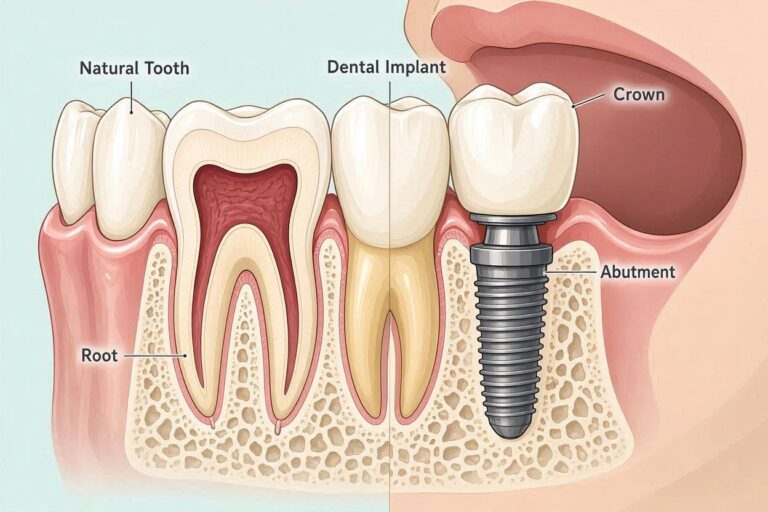
The most common partial implant case is a single-tooth implant. A single posterior tooth, such as a first molar, is missing. One titanium implant fixture is surgically placed. After healing, one custom abutment and one ceramic crown are attached. This is a one-to-one replacement of a single tooth.
A multiple single-tooth implant case involves two or three individual implants placed in different, non-adjacent locations. For example, a patient might be missing a lower right molar and an upper left premolar. Each site receives its own implant and its own crown. The cost is simply the cost of a single implant multiplied by the number of implants, minus a small discount for consolidated surgical time.
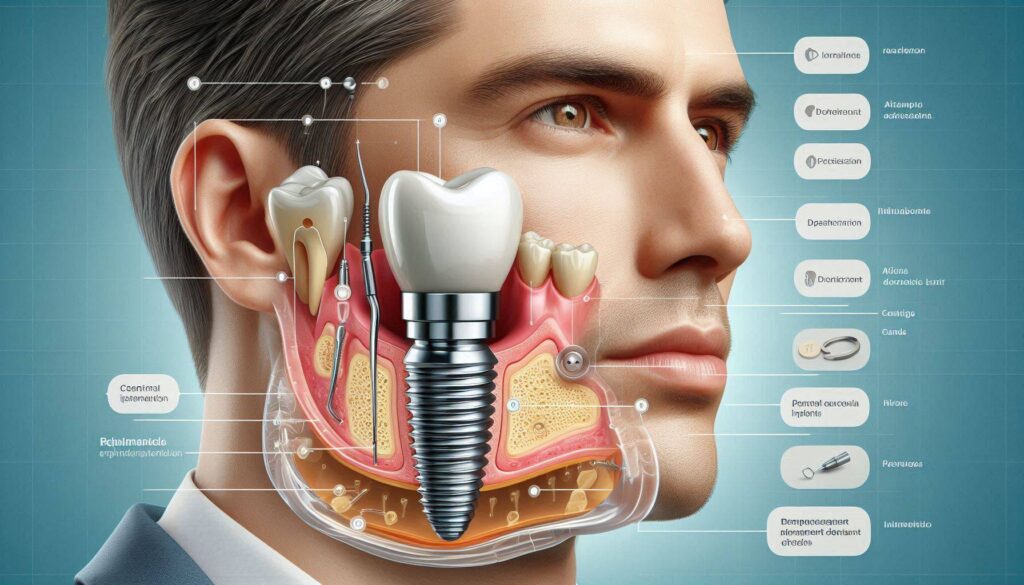
An implant-supported bridge is a partial restoration that replaces multiple adjacent missing teeth. If three teeth in a row are missing, the surgeon may place two implants, one at each end of the space. The laboratory fabricates a three-unit bridge: two implant-supported crowns with a false tooth (pontic) suspended between them. This is a fixed, non-removable restoration that does not require damaging the adjacent natural teeth, as a traditional tooth-supported bridge does.
These three scenarios constitute the “partial” implant landscape. Each has a different cost equation.
The Itemized Cost Breakdown for a Single-Tooth Implant
The foundational unit of cost in the partial implant world is the single-tooth implant. The national average all-inclusive cost in the United States for a single dental implant, including the fixture, the abutment, and the crown, ranges from $3,000 to $6,000. Let us break this down item by item.
| Line Item | Typical Fee Range (USD) | Notes |
|---|---|---|
| Initial Consultation and 3D CBCT Scan | $150 – $500 | Often credited toward the surgery if you proceed. The 3D scan is essential. |
| Surgical Implant Placement (D6010) | $1,500 – $3,000 | Includes the surgeon’s fee, local anesthesia, and the implant fixture. |
| Abutment (D6056 or D6057) | $500 – $1,000 | The custom or stock connector piece that emerges from the gum. |
| Implant Crown (D6058 or D6059) | $1,000 – $2,500 | The final, visible ceramic tooth. Screw-retained or cemented. |
| Total Single Implant | $3,150 – $7,000 | The all-in, walk-out-of-the-office cost. |
This table assumes a straightforward case with no need for a tooth extraction at the same time and no need for a bone graft. A patient with a long-healed, healthy extraction site, adequate bone volume, and no medical complications can expect a cost in the lower to middle portion of this range. The brand of the implant, the geographic location of the practice, and the specialist status of the surgeon (general dentist vs. oral surgeon vs. periodontist) are the primary variables.
The Implant-Supported Bridge: Cost for Replacing Multiple Adjacent Teeth
When multiple adjacent teeth are missing, the implant-supported bridge becomes the ideal, bone-preserving solution. The cost calculation is not simply the cost of a single implant multiplied by the number of missing teeth. The number of implants is less than the number of missing teeth.
Consider a three-tooth space in the posterior lower jaw. The standard protocol is to place two implants and fabricate a three-unit bridge. The cost structure is as follows: two implant surgeries, two abutments, and a single three-unit bridge prosthesis. The laboratory fee for a three-unit bridge is significantly higher than for a single crown because of the complexity of the metal framework and the ceramic layering.
The estimated all-inclusive cost for a two-implant, three-tooth bridge in the United States ranges from $7,000 to $14,000. This represents a significant saving compared to placing three individual implants, which would cost $9,000 to $18,000. The bridge design is mechanically efficient. The implants are placed at the ends of the space, and the pontic in the middle is supported by the rigid metal framework. The patient can chew on the entire span. The long-term maintenance of an implant bridge requires meticulous hygiene under the pontic, using specialized floss threaders or a water flosser to clean between the gum and the false tooth.
The Major Cost Variable: Bone Grafting and Sinus Lifts
The single greatest factor that inflates the cost of a partial implant from the “straightforward” range to the “complex” range is the need for a preparatory bone grafting procedure. A patient who has been missing a tooth for several years has experienced jawbone resorption. The bone has melted away. The surgeon must rebuild it before the implant can be placed.
The cost of a bone graft is additive to the implant cost and is broken down into the graft material, the barrier membrane, and the surgical fee for the grafting procedure. A simple socket preservation graft, performed at the time of extraction, adds approximately $400 to $1,200. A more extensive lateral ridge augmentation, where the surgeon opens a flap and builds out the width of the ridge, adds $1,500 to $3,500 per site. A sinus lift in the upper back jaw adds $2,000 to $5,000 per sinus. If a patient needs two implants in the upper posterior quadrant and requires a sinus lift, the total treatment cost can easily exceed $10,000 to $14,000 for that quadrant alone.
The surgeon will diagnose the need for a graft on the 3D CBCT scan. The scan reveals the exact dimensions of the bone. If the bone is less than 6 millimeters wide or less than 10 millimeters high, a graft is a medical necessity, not an optional upsell. The surgeon must be transparent and show you the measurement on the screen. You are not paying for an unnecessary procedure; you are paying for the biological foundation that makes the implant possible.
Regional Price Variation and the Specialist Premium
Geography is a powerful pricing lever in dentistry. A single tooth implant that costs $4,500 in a suburban practice in the Midwest may cost $6,500 in a Manhattan specialist’s office. The overhead costs—commercial rent, staff salaries, laboratory fees, and malpractice insurance—are dramatically higher in major metropolitan coastal cities. The price reflects the cost of doing business in that zip code.
The credentials of the surgeon also drive the fee. A board-certified oral and maxillofacial surgeon or a board-certified periodontist has undergone years of additional hospital-based surgical training. Their professional fee is higher than that of a general dentist who places implants. For a straightforward single posterior implant, a well-trained general dentist may provide an excellent outcome at a lower cost. For a complex anterior aesthetic case, a sinus lift, or a case with medical comorbidities, the specialist’s fee is an investment in risk reduction and a predictable, beautiful outcome.
Dental Insurance and the “Partial” Implant Benefit
Dental insurance is a limited financial contributor to implant therapy. Most traditional dental PPO plans were designed in an era when implants were considered experimental. They typically provide a benefit for the “least expensive alternative treatment,” which is often a partial denture. If your plan covers major restorative services at 50 percent, it may pay 50 percent of the allowed fee for the implant crown, up to your annual maximum. The surgical placement of the implant body is often a separate surgical benefit with its own coverage limitations.
A patient with a $1,500 annual maximum and a 50 percent co-insurance for major services will receive a contribution toward the cost, but the out-of-pocket expense for a partial implant restoration will still be several thousand dollars. The insurance company may cover the extraction and the bone graft under the oral surgery benefit, but the implant fixture and the abutment may be excluded. The only way to know your exact financial responsibility is to have the dental office submit a pre-treatment estimate with the exact procedure codes. You will receive a document from the insurance company that spells out the allowed amount, the covered percentage, and your co-pay, eliminating any surprise billing.
Conclusion
The cost of a partial dental implant restoration ranges from about $3,000 for a straightforward single-tooth replacement to over $14,000 for a multi-unit implant bridge that requires a bone graft or a sinus lift, with the price being a precise sum of the surgical fixtures, the custom abutments, and the laboratory-fabricated crowns. The major variables that push the cost upward are the need for volumetric bone reconstruction, the specialist credentials of the operating surgeon, and the geographic practice location. A transparent, itemized treatment plan with a pre-operative insurance estimate is the patient’s best tool for understanding the investment and planning their path back to a functional, fixed smile.
FAQ
What is the cheapest way to get a partial dental implant?
The lowest cost is typically a single, straightforward implant placed by a general dentist in a lower-cost geographic area, using a value-brand implant, and without the need for a bone graft. Dental schools offer another highly discounted pathway.
How much does a dental implant for one tooth cost without insurance?
The all-in cash fee for a single tooth implant, including the surgery, abutment, and crown, ranges from $3,000 to $6,000 in the United States.
Does dental insurance cover a partial implant bridge?
It may cover a portion. Insurance often pays a percentage of the crown and the bridgework, up to the annual maximum, but the implant body and the surgical fees are frequently subject to separate surgical benefit limits or exclusions.
Is a dental bridge cheaper than a partial implant?
A traditional tooth-supported bridge is cheaper in the short term ($2,500 to $5,000) but requires grinding down the adjacent healthy teeth. An implant bridge preserves the adjacent teeth and the jawbone, making it a better long-term value.
How long does a partial implant last?
The titanium implant fixture itself can last a lifetime with proper care. The ceramic crown or the bridge may need replacement due to wear or fracture every 15 to 25 years.
Additional Resources
For a deeper understanding of the long-term value and cost-effectiveness of implant dentistry, visit the American College of Prosthodontists: https://www.gotoapro.org/