What Is a Dental Implant Overdenture? A Complete Guide to Implant-Retained Dentures
For millions of people who wear conventional dentures, the daily struggle with looseness, slipping, and discomfort is a quiet, persistent burden. A dental implant overdenture offers a transformative solution. It bridges the gap between a fully removable, gum-supported denture and a permanently fixed set of implant-supported teeth. This guide explains exactly what an implant overdenture is, how it works, the different types available, and the life-changing benefits it provides. You will understand why this option is often the most practical, effective, and financially accessible way to escape the limitations of conventional dentures.
The Core Concept: Implants as Anchors, Not Replacements
A conventional complete denture rests entirely on the gum tissue and the underlying bone ridge. It relies on suction, oral muscle control, and sometimes adhesive pastes to stay in place. The fundamental problem is that the jawbone, deprived of tooth roots, progressively resorbs over the years. The denture that fit well when it was first made becomes loose and unstable as the bony foundation melts away. The patient adapts by eating softer foods, avoiding social situations, and using ever-increasing amounts of adhesive. This is not a denture failure. It is a predictable biological consequence of tooth loss.
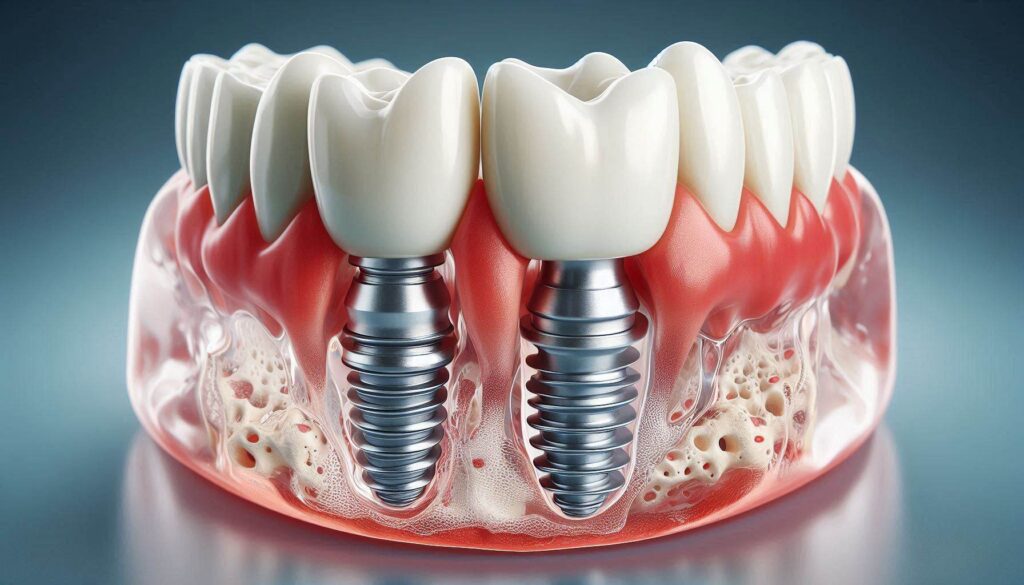
A dental implant overdenture changes the physics of the situation completely. The “over” in overdenture means that the denture fits over and attaches to something solid. That something is a set of strategically placed dental implants. The implants are not placed to replace every single tooth root. They are placed as anchors, as retention mechanisms. The denture still covers the gums and replaces the full arch of teeth. It is still removable by the patient for cleaning. But when it is in the mouth, it snaps, clips, or attaches securely to the implants. It does not float. It does not dislodge during eating or speaking. The implants provide a rigid, bone-anchored connection. The patient gains the retention and stability that a tissue-supported denture can never achieve. The overdenture is a hybrid solution: the economy and simplicity of a denture combined with the bone-anchored security of dental implants.
The Biological Benefit of the Implant Overdenture
Beyond the dramatic improvement in stability and confidence, the implant overdenture provides a crucial biological benefit. The implants placed in the jawbone transmit chewing forces into the bone. This reintroduces the piezoelectric stimulation that was lost when the natural teeth were extracted. The bone around the implants is preserved. The relentless resorption of the edentulous ridge is significantly slowed or halted in the areas where the implants are placed. The denture itself still rests on the gums, and some posterior bone loss will continue over the years, but the critical anterior bone, which provides the foundation for the denture’s retention, is maintained.
This bone preservation is not just an abstract radiographic finding. It has a direct, visible impact on the patient’s facial appearance. The bone around the implant sites remains, supporting the lip and the facial soft tissues. The sunken, collapsed facial profile that characterizes long-term denture wearers is prevented. The denture itself can be fabricated with a thinner, less bulky base because it does not need to rely on large flanges for retention. The palate can be left uncovered in an upper overdenture, restoring the patient’s ability to taste food and sense temperature fully. This is a quality-of-life transformation. The implant overdenture does not just hold the teeth in. It preserves the face, the function, and the sensory experience of eating.
The Two Fundamental Types of Overdentures
Implant overdentures are categorized by the method of attachment. The two primary systems are bar-retained overdentures and ball or locator-retained overdentures. Each has specific advantages and clinical indications. The choice between them is made by your restorative dentist based on the number and position of your implants, the available restorative space, your hygiene dexterity, and your budget.
A bar-retained overdenture uses a custom-fabricated, precision-milled metal bar that is screwed onto the implants. The bar connects the implants together, splinting them into a single, rigid structure. The denture contains special clips or a plastic housing inside its fitting surface that snaps onto this bar. The bar design provides the highest level of retention and distributes chewing forces evenly across all the implants. It is an excellent choice when the implants are not ideally aligned or when the bone quality is compromised. The bar itself is a precision device, similar to the framework of a fine piece of engineering. It is durable, reliable, and provides a very solid connection. The downside is that the bar assembly requires more vertical space within the denture and can be slightly more challenging for the patient to clean around and under. A water flosser is an essential tool for the bar-retained overdenture patient.
The Locator Attachment System
The alternative system, and the most popular today, is the independent attachment system, most commonly using Locator attachments. With this system, each implant has its own small, low-profile abutment that protrudes through the gum. This abutment has a metal or coated hemispherical top. The denture has a corresponding nylon or PEEK housing with a retention insert that snaps directly onto this abutment. Each implant is an independent anchor. The advantages of this system are numerous. It is low-profile, requiring less vertical space, which is often critical in cases with limited room. It is self-aligning. The patient does not need to perfectly position the denture. The attachments guide it into place. The nylon retention inserts are replaceable and come in different levels of retention force, allowing the dentist to customize the grip. The individual attachments are easier for many patients to clean than a full bar. An implant-supported overdenture can be retained by as few as two implants in the mandible or as many as four or more in the maxilla, each implant with its own independent Locator attachment.
The Mandibular Two-Implant Overdenture: The Minimum Standard of Care
The most extensively researched, published, and clinically successful implant overdenture design is the two-implant mandibular overdenture. This is considered the minimum standard of care for restoring the completely edentulous lower jaw. The landmark McGill Consensus Statement in 2002 and the York Consensus Statement in 2009 declared that a two-implant overdenture should be the first-choice standard of care for the edentulous mandible, rather than a conventional denture.
The two implants are placed in the anterior mandible, in the canine positions, in the dense, cortical bone between the mental foramina. This bone is almost always present, even in patients who have been edentulous for decades. The implants are typically left to heal and integrate for three to four months. Then, independent Locator abutments are attached. The patient’s existing lower denture, or a new one, is retrofitted with the matching housings. The result is a lower denture that is completely stable. The embarrassing flotation and dislodgement of the lower denture during speaking or eating is eliminated. The patient can chew with significantly improved force. The cost is a fraction of a full-arch fixed prosthesis. The surgical procedure is minimally invasive. The transformation in quality of life is, by every study and patient testimonial, dramatic. This is not a compromise solution. It is a gold-standard treatment backed by a mountain of evidence.
The Maxillary Overdenture: A Different Biomechanical Challenge
The upper jaw presents a more challenging environment for an overdenture. The bone of the maxilla is softer and more cancellous than the mandible. The maxillary sinus expands downward after tooth loss, often leaving insufficient bone in the posterior region. The forces that act on an upper denture are different and include the downward pull of gravity and the lateral forces of the tongue and cheeks. For these reasons, a maxillary overdenture typically requires a minimum of four implants, and the implant distribution should be spread as widely as possible around the arch to create a stable, tripodal or quadrilateral support.
If the posterior bone is adequate, implants are placed in the first molar or premolar areas in addition to the anterior sites. If the posterior bone is deficient and the patient is not a candidate for sinus grafting, a four-implant anterior bar-supported overdenture can be successful, provided the posterior cantilever is kept short and the denture base is well-adapted. A maxillary overdenture also usually requires the palate to be covered for structural integrity, though a horseshoe-shaped design that leaves the central palate open may be possible with excellent implant support. The maxillary overdenture is a highly successful, life-changing restoration, but it demands careful biomechanical planning and a full appreciation of the anatomical limitations.
The Fixed Full-Arch Prosthesis: The Next Rung on the Ladder
The implant overdenture should be clearly distinguished from the fixed full-arch implant prosthesis, often called an All-on-4 or a hybrid denture. The critical difference is patient removability. An overdenture is designed to be taken out by the patient daily for cleaning. A fixed prosthesis is screwed into the implants and is only removed by the dentist at periodic maintenance visits. The fixed prosthesis is the ultimate solution for patients who desire a permanent, non-removable set of teeth that feels closest to natural dentition.
The fixed prosthesis has significant advantages. It is often smaller and more natural-feeling because it replaces only the teeth and a small amount of gum tissue. It does not have a bulky denture base. It completely eliminates any movement. However, the fixed prosthesis is significantly more expensive than an overdenture. It requires a higher number of implants, a more complex prosthetic framework, and a more technically demanding fabrication process. The hygiene regimen is also more demanding, requiring specialized floss threaders and water flossers to clean under the bridge. The overdenture, because it is removable, is often much easier for the patient to keep clean. The choice between a fixed prosthesis and a removable overdenture is a personal one, balancing cost, ease of cleaning, personal preference, and the available bone and tissue support.
Conclusion
A dental implant overdenture is a removable full-arch denture that gains its retention and stability from snapping or clipping onto a small number of strategically placed dental implants, most commonly a two-implant design in the lower jaw that is the evidence-based minimum standard of care for the edentulous mandible. This system dramatically improves chewing function, prevents embarrassing denture slippage, and preserves the critical jawbone that supports facial structure, using either a precision bar or independent Locator attachments. It occupies a highly valuable middle ground between a conventional, unstable soft-tissue-supported denture and a permanently fixed full-arch implant bridge, offering a life-changing enhancement in quality of life at a more accessible cost.
Frequently Asked Questions
Can I sleep with my implant overdenture in?
No. The implant overdenture must be removed at night. The gum tissue and the peri-implant tissues need a period of rest and exposure to saliva. Sleeping with the overdenture traps bacteria against the implants and the gums, dramatically increasing the risk of peri-implant mucositis and fungal infections.
How many implants do I need for a lower overdenture?
The standard is two implants placed in the anterior mandible, between the mental foramina. This is the most researched and successful design. In cases of severe bone resorption or for patients who desire even greater stability, four implants can be placed.
Is the palate covered in an implant overdenture?
In a maxillary overdenture, the palate is typically covered to provide structural strength and additional tissue support. In some cases with excellent implant support, a horseshoe-shaped design that leaves the anterior palate open may be possible. The mandibular overdenture has no palatal coverage.
How long will an implant overdenture last?
The implants themselves are designed to last a lifetime with proper care. The denture and the locator inserts or clips are prosthetic components that will wear over time. The nylon retention inserts typically need replacement every 6 to 12 months, a simple, inexpensive, in-office procedure. The denture itself will need to be relined or remade every 5 to 10 years due to changes in the supporting tissues.
What is the difference between a snap-on denture and an All-on-4?
A snap-on denture, or overdenture, is removable by the patient and clips onto a small number of implants. An All-on-4 is a fixed, non-removable bridge that is screwed into the implants and is only removed by the dentist. The All-on-4 is a more expensive and complex prosthetic that most closely mimics the feel of natural teeth.
Additional Resource
The American College of Prosthodontists provides comprehensive, evidence-based patient education on the full spectrum of implant-supported denture options. Their resources detail the differences between removable overdentures and fixed prostheses. Visit: https://www.gotoapro.org/