Does The NHS Cover Dental Implants?
The National Health Service provides medical care largely free at the point of delivery to UK residents. However, NHS dental treatment operates under a different framework, with significant limitations on what is available. Dental implants represent one of the most restricted treatments under NHS dental care. This article explains when, if ever, the NHS covers dental implants, what criteria must be met, and what alternatives and pathways exist for patients who cannot obtain NHS implant treatment.
The NHS Dental Treatment Framework
Understanding NHS dental coverage begins with how the service categorizes and funds treatment.
The Three Bands of NHS Dental Charges
NHS dental treatment in England groups procedures into three charge bands. Wales and Scotland operate similar but distinct systems. Northern Ireland uses yet another structure.
| Band | Treatments Included | Patient Charge (England, 2024) |
|---|---|---|
| Band 1 | Examination, diagnosis, preventive advice, X-rays, scale and polish | £25.80 |
| Band 2 | Fillings, root canals, extractions, periodontal treatment | £70.70 |
| Band 3 | Crowns, dentures, bridges, laboratory work | £306.80 |
Dental implants do not fit neatly into this structure. They are generally not available as a standard NHS treatment option.
Clinical Need vs. Cosmetic Preference
The NHS operates on a principle of clinical need. Treatment must be necessary to secure and maintain oral health, not merely desirable for aesthetic improvement. The NHS does not provide cosmetic dental treatment. This principle fundamentally limits implant availability because many implant requests relate to appearance rather than functional necessity.
When the NHS Might Provide Dental Implants
NHS implant provision is rare but not non-existent. Specific clinical circumstances may qualify.
Congenital Absence of Teeth
Some individuals are born missing certain permanent teeth, a condition called hypodontia. When hypodontia affects multiple teeth and causes significant functional or psychological problems, the NHS may consider implant treatment. The threshold for psychological impact is high. Patients typically require assessment by a consultant in restorative dentistry within a hospital setting.
Trauma and Accident Victims
Loss of teeth due to trauma, particularly when multiple teeth are involved and the patient is young, may qualify for NHS implant consideration. Road traffic accidents, falls, and sports injuries represent the most common scenarios. The treatment would be provided through hospital dental services rather than general dental practice.
Oral Cancer Resection
Patients who lose jaw structures and teeth due to surgery for oral cancer represent the clearest indication for NHS implant treatment. Reconstruction following cancer surgery, including implant-retained prostheses, falls clearly within the clinical need framework. These complex cases are managed by multidisciplinary hospital teams including maxillofacial surgeons, restorative dentists, and oncologists.
Severe Developmental Conditions
Conditions such as ectodermal dysplasia, which affects the development of teeth among other structures, may warrant NHS implant provision. These patients often have few or no teeth and face significant functional impairment. Treatment involves coordinated care through specialist centers.
Unacceptable Conventional Dentures
In rare circumstances, patients who cannot tolerate conventional dentures due to anatomical limitations or severe gag reflexes may receive consideration for implant-retained prostheses. The bar for “unacceptable” is high. Multiple attempts at conventional denture construction must have failed. Assessment occurs through hospital consultants, not general dental practitioners.
The Assessment and Referral Pathway
Gaining access to NHS implant treatment requires navigating a specific pathway.
Step One: General Dental Practitioner Assessment
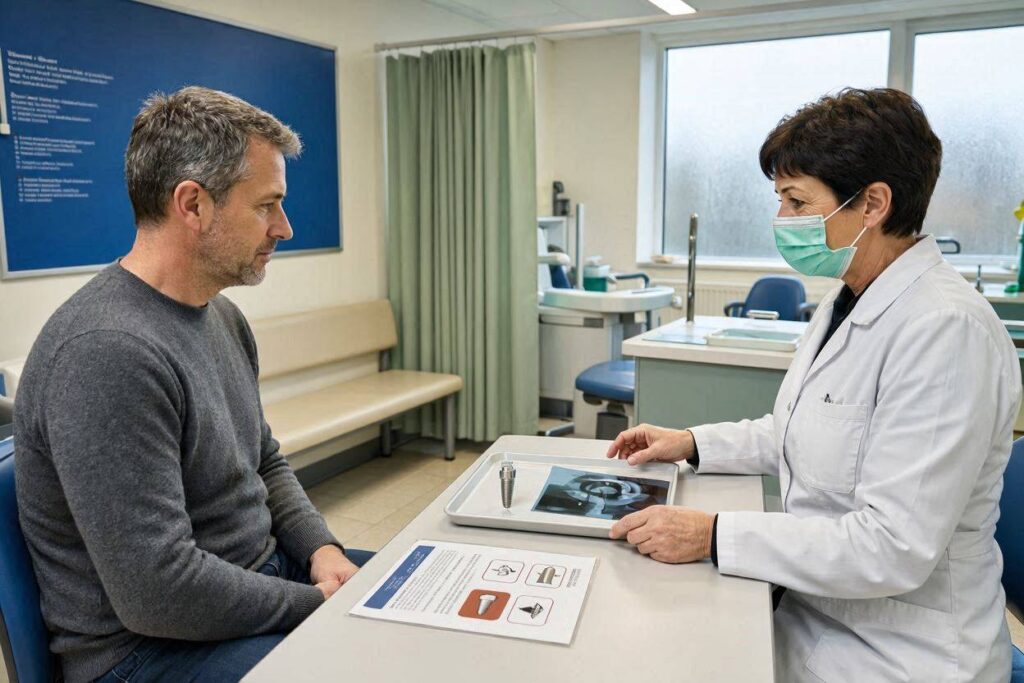
Your NHS dentist evaluates your situation. If they believe you might qualify for implant consideration, they refer you to a consultant in restorative dentistry at a hospital dental department. Your dentist cannot simply decide to provide NHS implants. The referral must document the clinical need and the failure or unsuitability of conventional alternatives.
Step Two: Hospital Consultant Assessment
The hospital consultant conducts a comprehensive assessment. This includes detailed history, clinical examination, radiographs, and often cone beam CT imaging. The consultant evaluates whether implants are clinically necessary and whether you are medically suitable for implant treatment. They also assess whether conventional alternatives truly are inadequate.
Step Three: Multidisciplinary Team Discussion
Complex cases often undergo discussion by a multidisciplinary team including restorative dentists, oral surgeons, orthodontists, and sometimes psychologists. The team determines whether implants represent the appropriate treatment and whether NHS resources should fund them.
Step Four: Treatment Planning and Provision
If approved, treatment proceeds within the hospital system. The complexity and extent of treatment influence waiting times. Patients receive treatment at the NHS hospital charge for Band 3 treatment or, if hospital-based, potentially free of charge depending on the specific funding pathway.
Why NHS Implant Provision is So Restricted
The severe limitation of implant availability stems from several factors.
Resource Allocation and Cost-Effectiveness
The NHS operates within finite budgets. Commissioners must allocate resources to maximize population health benefit. Conventional dentures and bridges provide functional tooth replacement at far lower cost than implants. The incremental benefit of implants over well-constructed conventional prostheses, while real, may not justify the cost differential when viewed from a population health perspective.
The NICE Guidance Framework
The National Institute for Health and Care Excellence provides guidance on clinical and cost-effectiveness. NICE has not produced specific guidance on dental implants, but the general principles of NHS resource allocation favor cost-effective treatments with strong evidence of clinical superiority over cheaper alternatives. For most edentulous patients, conventional dentures provide adequate function at substantially lower cost.
Capacity and Training Constraints
Providing implant treatment requires specific equipment, training, and experience. Not all NHS hospital dental departments maintain implant services. The consultant workforce trained in surgical implant placement and complex restoration is limited. Expanding NHS implant provision would require significant investment in training and infrastructure.
Historical Separation of Medicine and Dentistry
The historical development of the NHS created a separation between medical and dental care. While hospital-based oral and maxillofacial surgery services integrate with the broader NHS, community and general dental services operate on a different funding model with patient charges. This structural separation complicates funding for treatments that bridge the medical-dental divide.
Alternatives to NHS Implants
For patients who do not qualify for NHS implant treatment, several alternatives exist.
NHS Conventional Alternatives
The NHS provides conventional bridges and dentures as Band 3 treatments. While not offering the same benefits as implants, these restorations provide functional tooth replacement. Discuss these options openly with your NHS dentist.
Private Implant Treatment
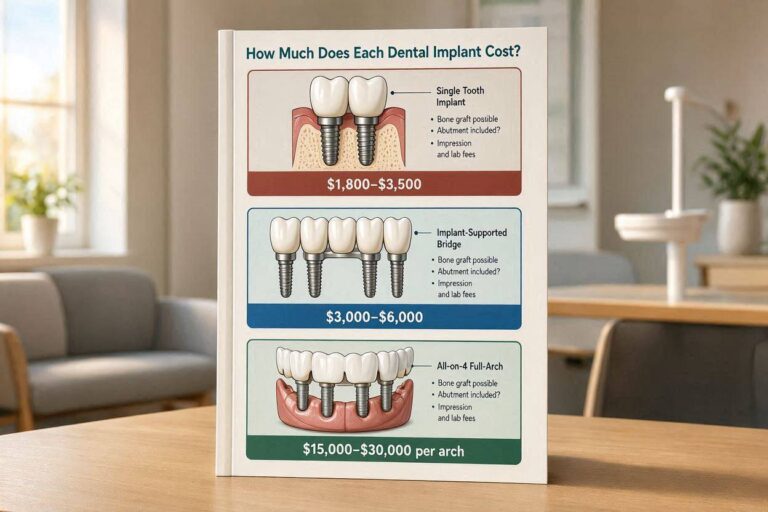
Most UK implant treatment occurs in private practice. Private fees vary by region and provider type. A single implant typically costs between £1,500 and £3,000 in private practice. Many private practices offer payment plans to spread the cost.
Dental Schools and Teaching Hospitals
Dental schools with implant training programs may offer reduced-fee treatment provided by postgraduate students under consultant supervision. These programs provide high-quality care at lower cost, though treatment takes longer due to the educational nature.
Dental Tourism Considerations
Some UK patients travel abroad for lower-cost implant treatment. Destinations include Hungary, Poland, Turkey, and increasingly, Eastern European countries. The same cautions about quality, regulation, and follow-up care discussed in earlier articles apply. Revision of failed overseas treatment often costs more than initial private treatment in the UK.
The Importance of Oral Health Maintenance
Regardless of the path you pursue, maintaining remaining teeth and oral health remains essential. NHS dentistry focuses heavily on prevention. Regular examinations, professional cleanings when available, and diligent home care prevent the progression of dental disease that leads to tooth loss. Prevention costs far less than restoration.
Conclusion
The NHS covers dental implants only in exceptional clinical circumstances, primarily involving congenital absence of multiple teeth, severe trauma, oral cancer reconstruction, or developmental conditions that make conventional prostheses impossible. The vast majority of patients seeking implants for tooth replacement must pursue private treatment. The NHS provides conventional alternatives including bridges and dentures at standard Band 3 charges. Understanding the limited scope of NHS implant provision helps patients make realistic plans for their dental care.
Frequently Asked Questions
Can my NHS dentist refer me for implants if I have one missing tooth?
Single tooth loss without exceptional circumstances does not qualify for NHS implant treatment. You would be offered conventional alternatives such as a bridge or partial denture, or you could pursue private implant treatment.
Are NHS implants free?
Most NHS dental treatment involves patient charges. Hospital-based implant treatment may fall under different funding structures. If approved, you would discuss charges with the treating team.
How long is the waiting list for NHS implants?
Waiting times vary by region and hospital trust. Assessment waiting times may range from weeks to many months. Treatment waiting times extend further. Those with urgent clinical need, such as cancer reconstruction, receive priority.
Is it worth getting private implants instead of waiting for NHS treatment?
Given the extremely limited NHS provision, most patients who want implants will need to pursue private treatment regardless. Discuss with your dentist whether your clinical situation meets the exceptional criteria for NHS consideration.
Additional Resource
For official information on NHS dental charges and treatment availability, visit the NHS website at www.nhs.uk. The site provides current charge information and guidance on accessing NHS dental services.