Can Pregnant Women Get Dental Implants?
You are expecting a child. Your body is changing in ways both beautiful and challenging. Amid the prenatal vitamins, the doctor’s appointments, and the nursery preparations, a nagging dental issue demands your attention. Perhaps you lost a tooth before your pregnancy, or a failing tooth finally gave way. You want to fix it. You have heard that dental implants are the best permanent solution. But you are pregnant. You are fiercely protective of the life growing inside you. Every medical decision now carries double weight. Can you get a dental implant while pregnant? Will the surgery harm your baby? Should you wait until after delivery?
This comprehensive guide will answer these questions with scientific precision and compassionate clarity. We will explore the physiological changes of pregnancy that affect dental treatment. We will examine the safety data on implant surgery during each trimester. We will discuss the risks of medications, anesthesia, and imaging that accompany implant placement. By the end of this article, you will have a clear, evidence-based understanding of the safest path forward for both you and your baby.
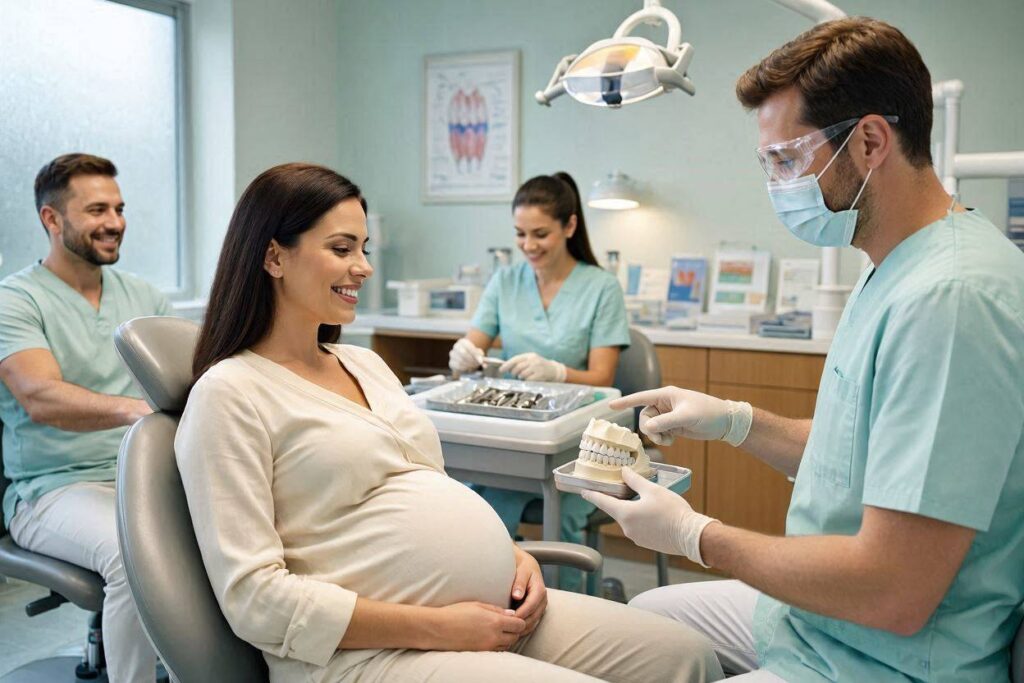
The Core Medical Consensus: Elective Surgery Should Wait
The overwhelming consensus among obstetricians, oral surgeons, and dental professionals is that dental implant placement is an elective surgical procedure. It should be postponed until after delivery and, if breastfeeding, after the postpartum period when the mother’s body has stabilized. The American College of Obstetricians and Gynecologists (ACOG) and the American Dental Association (ADA) agree that while emergency dental care is necessary and safe during pregnancy, elective procedures should be deferred.
Dental implant placement is not an emergency. A missing tooth, even if it affects your smile or chewing, does not pose an immediate threat to your health or your baby’s health. The surgical placement of a titanium post into your jawbone, the associated medications, and the recovery process all introduce variables that are best avoided during gestation. The principle of “do no harm” extends to the unborn child. When a procedure can wait safely, it should wait.
Understanding the Physiological Changes of Pregnancy
To understand why implants should be deferred, you must understand how pregnancy alters your body in ways that directly impact dental surgery.
Hormonal Shifts and Gum Tissue. Pregnancy causes a surge in estrogen and progesterone. These hormones increase blood flow to the gum tissues and alter the body’s inflammatory response to plaque bacteria. This leads to pregnancy gingivitis, characterized by swollen, red, bleeding gums. Some women develop pregnancy tumors, or pyogenic granulomas, which are benign but friable growths on the gums that bleed easily. Operating on tissues that are already hyperemic and inflamed complicates surgery. Wound healing may be impaired. The risk of excessive bleeding during and after implant surgery increases.
Immune System Modulation. Pregnancy induces a state of relative immunosuppression to prevent the mother’s body from rejecting the genetically distinct fetus. This modulated immune response can affect the healing of surgical wounds. Osseointegration, the process by which the implant fixture fuses with the jawbone, relies on a precise cascade of inflammatory and healing cells. A pregnancy-altered immune system may interfere with this process, potentially compromising the long-term success of the implant. While no large-scale studies definitively prove that implant failure rates are higher in pregnant women, the theoretical risk is sufficient to warrant caution.
Nausea and Vomiting. Morning sickness, which can occur at any time of day, is common in the first trimester. The act of vomiting exposes teeth to stomach acid, which erodes enamel. Placing an implant during a period of frequent vomiting introduces an acidic oral environment that is not conducive to healing. The physical act of vomiting also increases intraoral pressure and can disrupt a fresh surgical site.
Dietary Changes and Oral Hygiene. Pregnant women often eat smaller, more frequent meals. Cravings for sugary or acidic foods can increase. Fatigue can make meticulous oral hygiene challenging. Maintaining the sterile, clean environment required for successful implant integration becomes more difficult when these factors are at play.
Positional Discomfort. As the pregnancy progresses, lying flat on your back for an extended dental procedure becomes uncomfortable and potentially dangerous. The weight of the gravid uterus compresses the vena cava, the large vein that returns blood to the heart. This compression can cause supine hypotensive syndrome, leading to dizziness, nausea, and a drop in blood pressure. Dental implant surgery can take an hour or more. This is an unsafe position for a woman in her second or third trimester.
Trimester-by-Trimester Analysis
The risks and recommendations vary somewhat by trimester. A closer look at each stage reveals why deferring the implant is the safest course.
First Trimester (Weeks 1–13)
The first trimester is the period of organogenesis, when the baby’s major organs and structures are forming. The developing fetus is most vulnerable to teratogens, substances that can cause birth defects. The risk of spontaneous abortion is highest during this trimester. Any elective surgical procedure, including dental implant placement, introduces medications, anesthetics, and stress that are best avoided. Dental X-rays, specifically the Cone Beam CT scans often used for implant planning, deliver a dose of radiation, albeit low, that should be avoided during the first trimester unless absolutely necessary for a life-threatening emergency. The first trimester is universally considered the worst time for elective dental surgery. No responsible dentist or surgeon will place an implant during this period.
Second Trimester (Weeks 14–26)
The second trimester is often called the “golden period” of pregnancy. The nausea of the first trimester has usually subsided. The energy levels are higher. The risk of miscarriage drops significantly. The uterus is not yet large enough to cause significant positional discomfort. If any elective dental treatment must be performed during pregnancy, the second trimester is the safest window. However, “safest window” does not mean “safe for implant surgery.” Emergency extractions, root canals to treat active infection, and fillings to remove decay are appropriate. These are procedures that treat active disease. An implant remains an elective procedure. While the second trimester is theoretically the least risky time for an implant, the consensus still strongly recommends waiting. The physiological changes, the potential need for pain medication, and the risk of complications still exist.
Third Trimester (Weeks 27–40)
The third trimester brings the greatest physical discomfort. The enlarged uterus makes lying on the back hazardous due to vena cava compression. The risk of preterm labor increases, though dental procedures have not been shown to trigger preterm labor. Anxiety about the impending birth peaks. The body is preparing for delivery. Adding the stress of a surgical procedure and its recovery during this period is ill-advised. Post-operative pain management is complicated because nonsteroidal anti-inflammatory drugs (NSAIDs) like ibuprofen are contraindicated in the third trimester due to the risk of premature closure of the ductus arteriosus in the fetal heart. The only safe pain reliever is acetaminophen, which may not be adequate for post-surgical implant pain. The third trimester is a firm no for elective implant surgery.
The Dangers of Medications During Implant Surgery
Placing a dental implant requires a cocktail of medications. Understanding the pregnancy safety profile of each is critical.
Local Anesthetics. Lidocaine, the most common dental local anesthetic, crosses the placenta. It is generally considered safe in dental doses when used with vasoconstrictors like epinephrine. Epinephrine reduces bleeding and prolongs the anesthetic effect. The amounts used in dentistry are small. However, accidental intravascular injection can cause a spike in heart rate and blood pressure. The safety profile for the fetus is not zero risk, but it is low. Many dentists choose lidocaine without epinephrine for pregnant patients, which is less effective and shorter-acting, making a long implant procedure more difficult.
Sedation and General Anesthesia. Some implant surgeries are performed under intravenous sedation or general anesthesia, particularly for complex cases or anxious patients. Sedation agents like midazolam, propofol, and nitrous oxide have varying safety profiles in pregnancy. Nitrous oxide, in particular, should be avoided during pregnancy, especially in the first trimester, due to concerns about its effect on DNA synthesis and potential teratogenicity. General anesthesia during pregnancy is reserved for life-threatening surgical emergencies, not dental implants.
Post-Operative Pain Management. After implant surgery, pain is managed with analgesics. Acetaminophen is the preferred analgesic in pregnancy. NSAIDs like ibuprofen, naproxen, and aspirin are contraindicated, especially in the third trimester. Opioid pain relievers like codeine or hydrocodone are generally avoided in pregnancy due to the risk of neonatal withdrawal syndrome and respiratory depression. An implant patient who is limited to acetaminophen may suffer unnecessary pain, and uncontrolled pain itself is a stressor on the pregnancy.
Antibiotics. Implant surgery often involves a prophylactic course of antibiotics to prevent infection. Amoxicillin and penicillin are generally considered safe in pregnancy. Clindamycin, often used for penicillin-allergic patients, is also considered relatively safe. Tetracyclines, including doxycycline, are absolutely contraindicated because they permanently stain the developing fetal teeth and impair bone growth. If a pregnant woman is allergic to penicillin, the antibiotic choices narrow, complicating post-operative management.
Diagnostic Imaging: The X-Ray and CBCT Question
Implant planning relies on radiographs. A standard panoramic X-ray is often sufficient for preliminary evaluation. A Cone Beam CT scan is the gold standard for precise implant placement. Both involve ionizing radiation.
The radiation dose from a dental X-ray is extremely low. A single digital periapical X-ray exposes the patient to less radiation than a day of natural background radiation. A panoramic X-ray is slightly more. A CBCT scan delivers a higher dose, though still significantly less than a medical CT scan. The beam is collimated to the jaw, meaning the scatter radiation to the abdomen is minimal.
However, the principle of ALARA, As Low As Reasonably Achievable, governs radiation exposure in pregnancy. Even a tiny, negligible risk to the developing fetus is avoided unless the diagnostic information is medically necessary for immediate treatment. If the implant surgery is elective and deferred, the radiation exposure for the CBCT can also be deferred. There is no justification for exposing a pregnant woman to ionizing radiation for an elective procedure that can wait. If a dental X-ray is absolutely necessary for an emergency, a lead apron with a thyroid collar is used, and the X-ray is taken. This is not the scenario for implant planning, which is not an emergency.
Risks to Osseointegration
The success of a dental implant depends on osseointegration, the direct structural and functional connection between living bone and the surface of the implant. This biological process takes months. The body must accept the titanium post as a non-foreign entity and grow bone tightly against its surface. This process requires a robust, unperturbed healing response.
Pregnancy alters bone metabolism. The developing fetus demands calcium. The maternal body increases bone turnover to provide calcium to the fetus. Hormones like relaxin, which loosens the pelvic ligaments for childbirth, may affect other connective tissues and bone remodeling. The exact effect of pregnancy hormones on osseointegration has not been studied in rigorous clinical trials, because placing implants in pregnant women would be unethical research. The theoretical concern is that the altered hormonal environment could result in a poorer quality of osseointegration, leading to a higher risk of early implant failure. Given the high cost and invasive nature of implant treatment, no patient wants to risk failure. Waiting until the body returns to a non-pregnant state ensures the implant is placed under optimal biological conditions.
When Can Implants Be Safely Placed?
The standard recommendation is to wait until after delivery. The timeline depends on several postpartum factors.
After Delivery, Before Breastfeeding Is Established. Immediately postpartum, the body is recovering from the immense physical event of childbirth. Hormones are still fluctuating. Sleep deprivation is profound. The last thing a new mother needs is elective oral surgery. Surgeons generally recommend waiting at least two to three months postpartum before scheduling implant surgery, giving the body time to heal and hormones to stabilize.
During Breastfeeding. Breastfeeding presents a different set of considerations. The mother is lactating. Medications taken for the implant surgery can pass into breast milk. Lidocaine, the local anesthetic, enters breast milk in very small amounts and is considered compatible with breastfeeding. Acetaminophen and ibuprofen, the standard post-operative pain relievers, are also compatible. However, if sedation is required, or if stronger pain medications are necessary, breastfeeding may need to be interrupted. The stress of surgery can also temporarily affect milk supply. The mother must weigh the complexity of the implant procedure against the demands of breastfeeding. A straightforward implant under local anesthesia without sedation is generally safe during breastfeeding after the immediate postpartum recovery period. Many mothers choose to wait until breastfeeding is complete to simplify medication management.
Delayed Implant Placement. If you lost or had a tooth extracted during pregnancy, or shortly before, the implant does not need to be placed immediately. The extraction socket needs time to heal, typically three to six months. You can have the tooth extracted, allow the socket to heal throughout the remainder of your pregnancy and the early postpartum period, and then proceed with the implant when your body is fully recovered. A temporary replacement, such as a removable flipper or a temporary bridge, can be worn during this waiting period. There is no harm in waiting. The implant success rate is not compromised by placing the implant months or even years after the extraction, provided a bone graft is placed if needed to preserve the ridge.
Safe Dental Treatments During Pregnancy
While implant surgery should wait, other dental treatments are not only safe during pregnancy but are recommended. Maintaining oral health during pregnancy is vital. Pregnancy gingivitis, if left untreated, can progress to periodontitis, which has been linked to adverse pregnancy outcomes such as preterm birth and low birth weight.
Routine Cleanings and Exams. Regular dental cleanings and oral exams are safe and encouraged during all trimesters. Removing plaque and tartar reduces inflammation and the risk of pregnancy gingivitis.
Emergency Extractions. If a tooth is severely infected and cannot be saved with a root canal, extraction is necessary. An untreated dental infection poses a greater risk to the mother and fetus than the extraction procedure itself. Extractions are performed with local anesthesia, typically lidocaine, and with appropriate precautions.
Restorative Fillings and Crowns. Active decay should be treated. The bacteria from dental decay can enter the bloodstream and cause systemic inflammation. Fillings and temporary crowns to stabilize a tooth are safe, particularly in the second trimester. The dentist will avoid certain materials and techniques, but the goal is to eliminate infection.
Root Canal Therapy. If a tooth can be saved with a root canal, the procedure should be performed to eliminate the infection. Root canal therapy during pregnancy is safe with appropriate anesthesia and limited radiographs.
The guiding principle is treatment of active disease. Infection and pain are stressors on the pregnancy. They must be managed. Elective reconstruction, such as implant placement to replace a previously missing tooth, is not disease management. It is a quality-of-life improvement. It can wait.
Case Scenario: The Woman Who Needs an Extraction During Pregnancy
Let us walk through a realistic scenario. A woman in her second trimester presents with a fractured molar that is non-restorable. The tooth must be extracted. The surgeon extracts the tooth and places a bone graft in the socket to preserve the ridge for a future implant. This is a common sequence.
The extraction and socket grafting are considered urgent or semi-urgent because leaving a fractured, infected tooth in the mouth poses a health risk. The implant placement, which would follow months later, is elective. The patient is sent home with acetaminophen for pain and amoxicillin if an infection is present. She delivers her baby. She breastfeeds for six months. She returns to the oral surgeon eight months after delivery for the implant consultation. A CBCT is taken. The bone has healed beautifully. The implant is placed in a healthy, non-pregnant body. This sequence of care is safe, predictable, and reflects the standard of care.
Quotations from Healthcare Professionals
“I have had pregnant patients ask me to place an implant. I always decline and explain why. The risk, however small, is not worth it. The implant will be there waiting for them after the baby arrives. Their health and the baby’s health come first. There is no dental emergency that requires an elective implant.”
— Dr. Susan Park, Oral and Maxillofacial Surgeon
“The second trimester is safe for necessary dental work like fillings and extractions. But an implant is a multi-step process that requires medications and months of healing. We simply do not have the data to say it is safe during pregnancy, and we will never do a study to find out because it would be unethical.”
— Dr. Linda Martinez, OB-GYN
“I advise my pregnant patients to focus on prevention. Get your cleanings. Brush and floss. Any active decay or infection, we treat. Anything cosmetic or elective, we schedule for the postpartum period. Implants absolutely fall into the elective category.”
— Dr. Karen Cho, General Dentist
Psychological Considerations
The desire for a complete smile during pregnancy is valid. Pregnancy is a time when many women feel a loss of control over their bodies. They want to feel beautiful and confident. A missing tooth can be a source of embarrassment during baby showers, maternity photos, and the many social interactions that accompany impending motherhood.
A temporary tooth replacement addresses these concerns without the risks of surgery. A removable partial denture, a flipper, or a temporary bridge can be fabricated to fill the gap during pregnancy. These appliances are inexpensive, non-invasive, and provide excellent aesthetics. You can smile for your maternity photos without a gap. You can eat comfortably. After delivery, you can proceed with the permanent implant solution. The temporary tooth does not compromise the future implant site. It is a bridge, literally and figuratively, to the definitive treatment.
The Financial Angle
Implant treatment is expensive. Some patients worry that if they wait until after delivery, their financial situation will change, and they will not be able to afford the implant. Medical bills from childbirth, the loss of income during maternity leave, and the new expenses of caring for a baby are real financial pressures. However, proceeding with an implant during pregnancy to “lock in” a current financial situation is misguided if the surgical risks are present. Financing options exist. You can pay for the implant and schedule the surgery for a postpartum date. You can use FSA or HSA funds to prepay for the implant. You can set aside the money in a dedicated savings account. Do not let financial anxiety override medical prudence.
Summary of Key Recommendations
- Dental implant placement is an elective surgical procedure and should be postponed until after delivery.
- The second trimester is the safest window for necessary dental treatment, but not for elective implant surgery.
- Pregnancy hormones increase the risk of gingival bleeding, alter immune response, and may affect bone healing and osseointegration.
- Diagnostic radiation from CBCT scans, while low dose, should be avoided during pregnancy for elective procedures.
- Pain management after implant surgery is complicated by the contraindication of NSAIDs in pregnancy.
- Emergency dental treatment, including extractions and root canals, is safe and should be performed to eliminate infection.
- A temporary tooth replacement can address cosmetic concerns during pregnancy without surgical risk.
Conclusion
Pregnant women should not get dental implants. The procedure is elective, and the theoretical risks to the developing fetus, combined with the physiological changes of pregnancy that complicate surgery and healing, make deferral the only prudent medical recommendation. Dental professionals, obstetricians, and organized dentistry unanimously agree that implant placement can and should wait until after delivery. During pregnancy, focus on preventive care and treatment of active dental disease. A temporary tooth replacement can maintain your smile’s appearance while you wait. Your implant will be waiting for you when your body is ready, and it will have every chance to succeed and serve you for a lifetime.
Frequently Asked Questions (FAQ)
1. I had my implant placed before I knew I was pregnant. Should I be worried?
You should inform both your obstetrician and your implant surgeon immediately. The implant placement itself is unlikely to have caused harm, but you should avoid any further elective procedures, such as uncovering the implant or placing the abutment, until after delivery. Monitor the surgical site for any signs of infection and maintain excellent oral hygiene.
2. Can I get a dental implant while trying to conceive?
Yes. If you are actively trying to conceive, you can have an implant placed. The best time is early in your menstrual cycle when you are certain you are not pregnant. Inform your surgeon that you are trying to conceive so that they can choose medications with the most favorable safety profile in the event of an undetected pregnancy.
3. What about the temporary crown or healing cap during pregnancy?
If you already have an implant placed and the healing abutment or temporary crown is in place, no further surgery is needed. Maintaining the temporary restoration with good oral hygiene is safe. The final crown can be delivered after delivery.
4. Can I breastfeed after implant surgery?
Yes. The local anesthetics and standard post-operative pain medications used for implant surgery are compatible with breastfeeding. If sedation or stronger pain medications are required, you may need to pump and discard milk for a period. Discuss this with your surgeon and your pediatrician.
5. Is it safe to get a dental implant while using fertility treatments?
Fertility treatments involve high hormone levels. While no direct contraindication to implant surgery exists, the altered hormonal state could theoretically affect healing. Discuss the timing with your reproductive endocrinologist and your implant surgeon. Many women choose to complete their implant treatment before starting IVF cycles or after completing their family-building.
6. What happens if my temporary tooth replacement breaks during pregnancy?
A broken flipper or temporary bridge can be repaired or replaced. This is a simple, non-invasive procedure that is safe during pregnancy. Contact your dentist for a repair appointment.
7. Can gum disease during pregnancy affect a future implant?
Yes. Periodontitis causes bone loss. If you have active gum disease during pregnancy, the bone supporting your teeth and the bone in the implant site can be compromised. Treating gum disease during pregnancy protects your current teeth and preserves the bone you will need for a future implant.
Additional Resource
For more information on dental health during pregnancy, visit the American Dental Association’s patient resource:
ADA – Pregnancy and Dental Health