What Is The Cost Of A Dental Crown And Implant?
You have a missing tooth. Perhaps you lost it to decay, an accident, or a failed root canal. You have researched your options and learned that a dental implant with a crown is the gold standard for tooth replacement. It looks, feels, and functions like a natural tooth. But now you face the practical reality. You need to know what this will cost. You have seen numbers online ranging from $1,500 to $8,000 per tooth. The wide range confuses and frustrates you. You want a single, clear answer, but the truth is more nuanced. The cost depends on a cascade of clinical decisions, geographic factors, and material choices.
This article will serve as your definitive guide to the cost of a dental implant and crown. We will break down every component of the fee, from the surgical placement of the implant post to the final cementation of the crown. We will explain the additional procedures that can significantly increase the total bill, such as bone grafting and sinus lifts. We will compare costs across different regions of the country. We will discuss how dental insurance and financing options can make treatment affordable. By the time you finish reading, you will be able to walk into a consultation armed with the knowledge to understand your treatment plan and its associated costs.

The Anatomy of an Implant and Crown
To understand the cost, you must understand the components. A single-tooth dental implant restoration is not one procedure. It is a series of procedures performed over several months, involving multiple components.
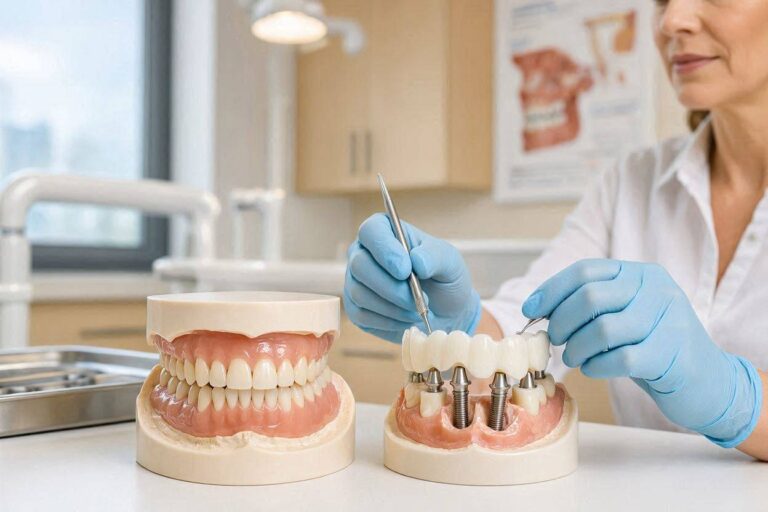
The Implant Fixture. This is a screw-shaped post, typically made of biocompatible titanium or zirconia, that is surgically placed into your jawbone. It replaces the root of your missing tooth. The implant fixture fuses with your bone through a process called osseointegration. This is the foundation of the entire restoration.
The Abutment. This is a connector piece that attaches to the top of the implant fixture. It protrudes through the gum tissue and serves as the anchor for the crown. Abutments can be stock, which are pre-fabricated and cost less, or custom, which are milled specifically for your mouth and cost more.
The Crown. This is the visible part, the false tooth that sits on top of the abutment. Crowns can be made from various materials, including porcelain fused to metal (PFM), all-ceramic or all-porcelain like zirconia or lithium disilicate, or full metal like gold. The material choice affects the cost significantly.
Each of these three components is billed separately or bundled. Understanding this triad is the first step to decoding your bill.
The Average National Cost Breakdown
Let us look at the national averages for a single dental implant and crown in the United States. These figures represent the total cost to the patient before insurance contributions, assuming no additional complex procedures are needed.
| Procedure Component | Average Cost Range | Notes |
|---|---|---|
| Initial Consultation and Imaging | $100 – $300 | Often credited toward treatment if you proceed. |
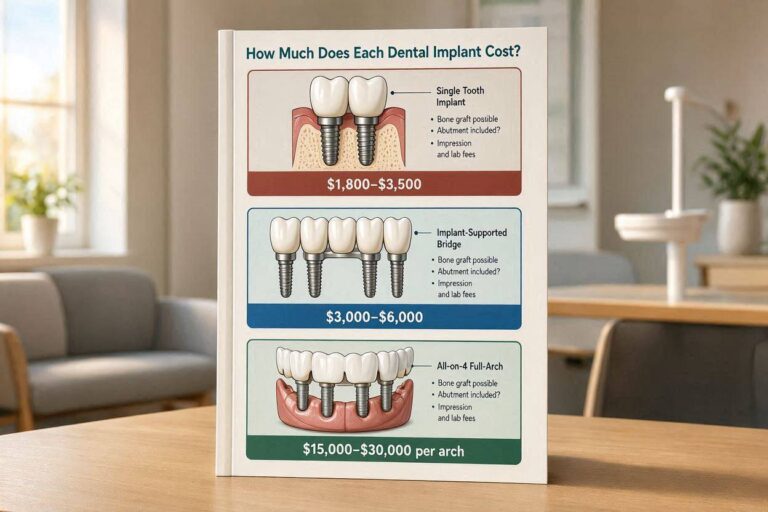
| Implant Fixture Placement (Surgical) | $1,500 – $3,000 | Per implant; includes the surgery and the post itself. |
| Abutment (Connector) | $300 – $800 | Stock is cheaper; custom is more. |
| Crown (False Tooth) | $1,000 – $3,000 | Material-dependent; all-ceramic costs more. |
| Total Average | $3,000 – $6,500 | For a straightforward single-tooth replacement. |
This table represents a straightforward case with adequate bone, no infection, and no adjacent teeth requiring work. The total fee often falls between $4,000 and $5,000 in average-cost-of-living areas. In major metropolitan areas, the total can easily reach $6,000 to $8,000 per tooth.
Additional Procedures and Their Costs
Many patients are not straightforward cases. If you have been missing a tooth for years, your jawbone has resorbed. If you had a chronic infection, the bone might be damaged. These situations require additional procedures that add significant cost to the total implant journey.
Bone Grafting
When a tooth is extracted or lost, the surrounding bone begins to shrink away. This is called resorption. The body no longer senses the need to maintain bone density in that area because there is no tooth root stimulating the bone. After several years, there may be insufficient bone volume to place an implant securely. A bone graft is a surgical procedure where bone material, either synthetic, from a donor, or harvested from your own body, is placed into the deficient area. The graft acts as a scaffold, encouraging your body to grow new bone.
The cost of a bone graft depends on the size and location of the defect. A small socket preservation graft, performed at the time of tooth extraction, costs $300 to $800. A larger ridge augmentation graft, where a significant volume of bone is rebuilt, costs $800 to $2,500. The type of bone material used affects the cost. Synthetic bone is less expensive. Donor bone is moderately priced. Autogenous bone harvested from your chin or hip is the most expensive because it requires a second surgical site and operating room time.
Sinus Lift
The upper back teeth, the maxillary molars and premolars, sit below the maxillary sinus. When these teeth are lost, the sinus can expand downward into the space previously occupied by the roots. If you need an implant in this area, there may be insufficient bone height before the sinus membrane is encountered. A sinus lift, or sinus augmentation, is a surgical procedure that lifts the sinus membrane and places bone graft material into the floor of the sinus to create adequate bone height.
A sinus lift is a more involved surgical procedure. It can be performed as a direct sinus lift, where a window is created in the lateral bone, or an indirect sinus lift, where the graft is pushed up from a vertical osteotomy. The cost of a sinus lift ranges from $1,500 to $5,000 per side. It is performed by an oral surgeon or a periodontist. This procedure is one of the main reasons an upper back tooth implant can cost significantly more than a lower tooth implant.
Tooth Extraction
If the failing tooth is still in your mouth, you must pay for its extraction. The cost of an extraction depends on the tooth’s condition. A simple extraction of a loose, erupted tooth costs $150 to $400. A surgical extraction of a broken tooth, a tooth with curved roots, or an impacted tooth costs $400 to $1,200. If the extraction is done at the same time as implant placement, an immediate implant placement, you may save on some costs, but not all patients are candidates for this protocol.
Ridge Preservation
When a tooth is extracted, the socket collapses as it heals. Ridge preservation, also called socket grafting, is the placement of bone graft material into the extraction socket immediately after the tooth is removed. This preserves the bone dimension for a future implant. Ridge preservation costs $300 to $800. It is separate from the extraction fee and the implant fee. Spending this money at the time of extraction can save you the much larger cost of a ridge augmentation graft later.
Cone Beam CT Scan
Modern implant planning uses three-dimensional imaging. A Cone Beam Computed Tomography (CBCT) scan provides a 3D view of your jawbone, nerves, sinuses, and adjacent teeth. This scan is essential for precise implant placement and avoidance of the inferior alveolar nerve, which, if damaged, can cause permanent lip numbness. Many implant surgeons include a CBCT scan in their implant fee. Some charge separately, typically $150 to $500. Do not skimp on 3D imaging. The cost of nerve damage from a blindly placed implant is infinitely higher.
Material Choices and Their Impact on Crown Cost
The crown that sits on top of the implant is not a one-size-fits-all. The material you and your dentist choose significantly impacts the laboratory fee and thus your total cost.
Porcelain Fused to Metal (PFM). A PFM crown has a metal substructure, usually a precious or non-precious alloy, covered with tooth-colored porcelain. PFM crowns are strong and durable. They have been used for decades. The cost of a PFM crown on an implant is typically $1,000 to $1,800. The downside is aesthetics. The metal substructure can sometimes show through as a dark line at the gum margin, especially if your gums are thin or recede over time. PFM crowns are a cost-effective choice for back teeth where aesthetics are less critical.
All-Ceramic or All-Porcelain Crowns. These crowns contain no metal. Materials like lithium disilicate (e.max) and layered porcelain are highly aesthetic. They transmit light like a natural tooth. They are the preferred choice for front teeth. The cost is higher, typically $1,500 to $2,500 per crown. The laboratory process for fabricating these crowns is more demanding, and the materials themselves are more expensive.
Full Zirconia Crowns. Zirconia is a ceramic material with extraordinary strength. Full zirconia crowns are monolithic, meaning they are milled from a single block of zirconia. They are virtually indestructible. They are ideal for patients who grind their teeth or have heavy bites. The aesthetics of full zirconia have improved dramatically, though some dentists still prefer layered porcelain for the highest aesthetic demand in the front. The cost of a full zirconia crown is typically $1,500 to $3,000. Zirconia is now the most commonly prescribed implant crown material in many practices because of its combination of strength and acceptable aesthetics.
Custom vs. Stock Abutments. The abutment is the connector between the implant and the crown. A stock abutment is a pre-fabricated titanium piece. The dentist selects a size and shape that approximates your needs. The laboratory then modifies it slightly. A stock abutment costs the patient $300 to $500. A custom abutment is milled specifically for your implant position and your gum contours. It is made of titanium or zirconia. A custom zirconia abutment can be used with an all-ceramic crown to provide the best possible aesthetics, especially in the front of the mouth, because no gray metal shows through the gum. Custom abutments cost $600 to $800 or more. They are strongly recommended for aesthetic zones.
The Implant Surgical Guide
Advanced implant dentistry often uses a surgical guide. This is a custom-made stent that fits over your teeth and directs the implant drill into the precise pre-planned position. A surgical guide is fabricated based on your CBCT scan and a digital impression of your mouth. It increases the accuracy, safety, and predictability of implant placement. The cost of a surgical guide ranges from $300 to $1,000. It is often included in the implant placement fee by surgeons who use guided surgery as their standard protocol. Not every case requires a surgical guide. A straightforward implant in a wide ridge of bone may be placed freehand safely by an experienced surgeon. A complex case near vital structures should use a guide. The cost of the guide is insurance against a misplaced implant.
Who Performs the Procedures and How It Affects Cost
The cost of your implant and crown depends significantly on who does the work.
Oral and Maxillofacial Surgeon. An oral surgeon is a specialist with four to six years of hospital-based surgical residency after dental school. They handle complex extractions, bone grafts, sinus lifts, and implant placement. They typically do not restore the implant with a crown; they refer you back to your general dentist or a prosthodontist for that. An oral surgeon’s fee for implant placement is often $2,000 to $3,500 per implant. Their deep expertise in managing complications and anesthesia commands a premium.
Periodontist. A periodontist is a specialist in the gums and supporting bone. They also place implants and perform bone and soft tissue grafts. Their implant placement fee is comparable to an oral surgeon’s, typically $1,800 to $3,000. They often have particular expertise in aesthetic zone cases where gum contouring is critical.
General Dentist. Many general dentists place implants now, especially after completing continuing education courses. A general dentist’s fee for implant placement is often lower, $1,500 to $2,500. Some general dentists perform both the surgery and the restoration, offering a bundled fee that can be more cost-effective. The key question to ask is how many implants the general dentist places per year. Volume correlates with success. A general dentist who places five implants a year may be less proficient than one who places 100.
Prosthodontist. A prosthodontist is a specialist in tooth replacement and complex restoration. They often design and place the final crown. Some prosthodontists also surgically place implants. Their fees are at the higher end of the spectrum, reflecting their advanced training in occlusion and aesthetics. A prosthodontist-led implant crown may cost $2,500 to $3,500 just for the restorative phase.
The combination of who places the implant and who restores the crown creates a total fee. A common model is an oral surgeon placing the implant for $2,500 and the general dentist restoring it with a crown for $2,000, totaling $4,500. A single general dentist doing both might charge $3,800 total. The coordination of care between two offices adds some complexity but also brings a second set of expert eyes to the case.
Geographic Variation in Implant Costs
Where you live dramatically influences what you will pay. Dental fees correlate with the cost of commercial real estate, labor costs for dental assistants and front desk staff, and the general cost of living index for a region.
In major coastal cities like New York City, Los Angeles, San Francisco, and Boston, a single implant and crown can range from $5,000 to $8,500. The same procedure in a rural area of the Midwest or South might cost $3,000 to $4,500. Dental tourism, traveling to another country like Mexico, Costa Rica, or Hungary for implants, can reduce the cost to $1,000 to $2,500 per implant, including travel expenses. However, dental tourism carries risks. If a complication occurs after you return home, your local dentist may be reluctant to manage another clinician’s complication, and you may face additional costs for remedial care. The low upfront cost must be weighed against the risk of no follow-up care.
Insurance Coverage for Implants
Dental insurance coverage for implants is highly variable. Traditional dental insurance was designed around a model of prevention, basic fillings, and major procedures like crowns and bridges. Implants were historically considered experimental or cosmetic and were excluded. This has changed significantly in recent years.
Many modern dental PPO plans now include implant coverage. The typical model treats the implant as a major service. The plan pays 50% of the allowed fee, up to a specified annual maximum, which is often $1,500 to $3,000 per year. The crown portion is also covered at the major service percentage. However, the annual maximum limits the total benefit. If your implant and crown cost $5,000 and your annual maximum is $1,500, the insurance will pay no more than $1,500, leaving you with $3,500 out of pocket. You may be able to time the implant placement in one benefit year and the crown in the next to access two annual maximums, maximizing your benefit.
Some plans still exclude implants entirely or have a missing tooth clause. A missing tooth clause states that if the tooth was missing before the policy was in effect, the plan will not cover its replacement. If you lost the tooth years ago and then bought dental insurance, the implant may not be covered. Read your policy carefully before assuming coverage.
Medical insurance can sometimes cover the implant surgery portion if the tooth loss was due to a traumatic accident or a medical condition, but this is the exception, not the rule. The restoration with the crown is almost always dental insurance territory.
Tax-Advantaged Accounts and Implant Costs
Dental implants are a qualified medical expense for Health Savings Accounts (HSAs) and Flexible Spending Accounts (FSAs). You can pay for your implant and crown with pre-tax dollars, effectively reducing the cost by your marginal tax rate. If you are in a 24% tax bracket and pay $5,000 from your HSA, you save $1,200 in taxes, making the effective cost $3,800. This is a significant savings mechanism that many patients overlook. Plan your implant treatment around your FSA election during open enrollment. Max out your FSA contribution for the year you anticipate implant treatment.
Financing Options for Implants
Given the high out-of-pocket cost, most dental practices offer financing options. In-house payment plans allow you to pay the fee over the course of treatment, which typically spans several months. You pay a portion at each visit. Third-party financing companies like CareCredit, Sunbit, and LendingClub offer extended payment plans, often with promotional periods of zero interest if the balance is paid within 12, 18, or 24 months. Be cautious with these plans. If you do not pay the full balance within the promotional period, interest is charged retroactively from the date of the procedure, often at a high rate exceeding 25%. Only use these plans if you are absolutely certain you can pay the balance in full within the promotional window.
The Hidden Cost of Delaying an Implant
You might read this cost breakdown and decide to wait. You might leave the missing tooth alone for a few more years to save money. This decision is understandable but carries its own hidden financial costs that often exceed the cost of the implant itself.
When a tooth is missing, the adjacent teeth begin to drift. The tooth behind the gap tilts forward. The tooth above the gap, in the opposing arch, super-erupts, meaning it drifts downward or upward into the empty space. This malocclusion created by drifting teeth can lead to food impaction, decay on the tilted tooth, gum disease, and abnormal bite forces that cause jaw pain and fractured teeth. Restoring a mouth where teeth have drifted is exponentially more expensive than restoring a single implant. You may need orthodontics to upright the tilted teeth before an implant can be placed. You may need root canals and crowns on the super-erupted tooth that now has exposed root surface and sensitivity. The single implant that would have cost $4,500 today can become a $15,000 full-mouth rehabilitation in five years. The financial case for timely tooth replacement is ironclad.
Cost Comparison: Implant and Crown vs. Other Options
To put the implant cost in perspective, you should compare it to the alternative tooth replacement options.
Dental Bridge. A traditional three-unit fixed bridge replaces one missing tooth by crowning the two adjacent teeth and suspending a false tooth between them. The cost of a three-unit bridge is typically $3,000 to $6,000. A bridge does not require surgery. It can be completed in two to three weeks. However, a bridge requires the dentist to drill down healthy adjacent teeth, potentially weakening them. Bridges have an average lifespan of 10 to 15 years. The implant has an average lifespan of 25 years or a lifetime with proper care. Over a lifetime, the implant is almost always the more cost-effective choice because it does not damage adjacent teeth and is less likely to need replacement.
Partial Denture. A removable partial denture costs $1,000 to $3,000. It is the cheapest option upfront. However, it does not preserve bone. The ridge continues to resorb under a partial denture. Partial dentures can be uncomfortable, affect speech, and trap food. They have clasps that can damage the teeth they hook onto. Most patients who choose a partial denture eventually upgrade to an implant. The partial denture money is essentially wasted. The implant is the definitive solution.
The Value of the Implant Beyond Cost
We must speak about value, not just price. A dental implant is the only tooth replacement option that replaces the root. This root replacement stimulates the bone, preventing the resorption that occurs with bridges and dentures. Patients with implants can chew with full force. They can eat a steak, an apple, or a salad without restriction. They do not have to remove an appliance at night. They brush and floss the implant crown just like a natural tooth. The psychological value of having a permanent, fixed tooth that feels like your own is immense. Patients who receive implants report increased self-esteem and quality of life. When you pay for an implant and crown, you are not just buying a medical device. You are buying the restoration of a body part and the confidence that comes with it.
How to Get a Fair Price
You can take several steps to ensure you receive a fair price without compromising on quality.
1. Get Multiple Consultations. Visit at least two implant providers. An oral surgeon and a general dentist who places implants. Compare their fees, their technology, their experience, and their communication style. Do not simply choose the cheapest. Choose the provider who instills the most confidence and who uses modern technology like CBCT imaging and guided surgery.
2. Ask for a Bundled Fee. Ask for a single fee that covers all phases of treatment: the extraction if needed, any bone grafting, the implant surgery, the abutment, and the crown. A bundled fee simplifies your financial planning and protects you from surprise bills if an additional procedure becomes necessary during surgery.
3. Inquire About the Lab Fee. The crown is fabricated in a dental laboratory. The quality of the lab correlates with the aesthetic outcome. A high-end cosmetic lab charges the dentist more. Ask where the crown will be made. If the dentist uses a local, high-quality lab, the higher lab fee is reflected in your bill, and it is worth it. If the crown is sent to a discount overseas lab, your cost should be lower.
4. Understand the Warranty. Many implant manufacturers offer a warranty on the implant fixture itself. If the implant fails to integrate or fractures, the manufacturer will provide a replacement implant at no cost. This warranty typically covers the implant component, not the surgeon’s fee for replacing it or the cost of the new crown. Some dental practices offer their own warranty on the implant and crown for a period, such as five years. Ask about the warranty policy.
5. Negotiate Politely. Dental fees are not set in stone. If you are paying cash, ask if there is a discount for payment in full upfront. A 5% to 10% discount on a $5,000 case is $250 to $500 in savings. Be respectful and straightforward. “I am ready to move forward with treatment. Is there a discount for paying the full fee in advance?” The answer may be yes.
Potential Complications and Their Costs
You must be aware that complications can occur and that they add cost. Implant dentistry is highly successful, with success rates exceeding 95%, but it is a surgical procedure, and no surgery is risk-free.
Peri-implantitis. This is an infection around the implant that causes bone loss. It is similar to gum disease around a natural tooth. Treating peri-implantitis can cost $500 to $3,000 depending on severity, involving deep cleaning, antibiotics, laser therapy, or surgical bone grafting. Severe peri-implantitis can cause the implant to fail and require removal.
Implant Failure. If the implant fails to integrate with the bone, it must be removed. The removal can cost $500 to $1,000. After a healing period, a new implant can usually be placed, often with an additional bone graft. The cost of the second implant attempt may be covered under warranty for the fixture, but the surgical and restorative fees will likely need to be paid again.
Nerve Damage. Improperly placed implants in the lower jaw can impinge on or sever the inferior alveolar nerve, causing temporary or permanent numbness of the lip and chin. Treating nerve damage is complex and costly, sometimes requiring microsurgery. This is a catastrophic complication that is almost entirely preventable with proper 3D imaging and treatment planning.
Sinus Complications. An implant in the upper jaw that protrudes into the sinus can cause chronic sinus infections. This may require removal of the implant and a sinus surgery to repair. Prevention through careful planning with a CBCT scan avoids this.
Quotations from Implant Dentistry Experts
“The single biggest mistake patients make is choosing the cheapest quote without considering the long-term. I see failed implants from discount clinics that cost the patient twice as much to fix as the original implant would have cost if done properly the first time. You are buying a medical device that should last decades. Pay for quality.”
— Dr. Alan Stein, Board-Certified Oral and Maxillofacial Surgeon
“I always tell my patients that the implant is the foundation. The crown is the house. You do not build a beautiful house on a shaky foundation. Invest in proper planning, a 3D scan, and a skilled surgeon. The crown can always be replaced later if it wears, but the implant needs to be right from day one.”
— Dr. Maria Gonzalez, Prosthodontist
“Bone grafting has changed the landscape. Twenty years ago, many patients were told they were not candidates for implants because of bone loss. Now, we can rebuild the bone predictably. It adds cost, yes, but it opens the door to implant treatment for patients who thought they had no options.”
— Dr. Robert Chen, Periodontist
Summary of Implant and Crown Costs
- A single dental implant with a crown costs between $3,000 and $6,500 on average in the United States for a straightforward case.
- Additional procedures like bone grafting, sinus lifts, and extractions can add $1,000 to $5,000 or more to the total cost.
- The choice of crown material, abutment type, and whether a surgical guide is used influences the final fee.
- Dental insurance may cover a portion, typically 50% up to an annual maximum, but many plans have missing tooth clauses or exclusions.
- Financing through HSAs, FSAs, and third-party lenders can make the cost manageable.
- Delaying an implant after tooth loss leads to drifting, bone loss, and more expensive restorative needs later.
Conclusion
The cost of a dental crown and implant reflects the surgical skill, advanced technology, and high-quality materials required to replace a missing tooth permanently and predictably. While the upfront investment is significant, ranging from $3,000 to $6,500 for a single tooth without complications, the long-term value is unparalleled. An implant preserves your jawbone, protects your adjacent teeth, and restores full function for decades. By obtaining multiple consultations, verifying your insurance benefits, and utilizing tax-advantaged savings accounts, you can make this life-changing procedure financially feasible. Do not let cost alone deter you from the best tooth replacement option modern dentistry has to offer.
Frequently Asked Questions (FAQ)
1. How long does a dental implant last?
With proper care, an implant can last a lifetime. The crown may need replacement after 15 to 25 years due to normal wear. Excellent oral hygiene and regular dental checkups are essential for implant longevity.
2. Is the implant procedure painful?
The surgery is performed under local anesthesia, so you should not feel pain during the procedure. Post-operative discomfort is usually manageable with over-the-counter pain relievers and lasts a few days.
3. Can my body reject a dental implant?
True immunologic rejection of titanium is extremely rare. Implant failure is almost always due to failure of the bone to integrate, infection, or excessive forces, not an allergic rejection.
4. How long does the entire implant process take?
From extraction to final crown, the process typically takes four to nine months. If bone grafting is required, the timeline may extend to over a year.
5. Can I get an implant years after a tooth extraction?
Yes, but you will likely need a bone graft to rebuild the resorbed bone. The longer you wait, the more bone is lost, and the more complex and costly the grafting becomes.
6. Does Medicare cover dental implants?
Original Medicare does not cover routine dental care, including implants. Some Medicare Advantage plans offer limited dental benefits that may include implant coverage.
7. Can I whiten an implant crown?
No. Porcelain and zirconia cannot be whitened. If you plan to whiten your natural teeth, do so before the implant crown is fabricated so the crown can be color-matched to your newly whitened teeth.
Additional Resource
For more information on dental implant treatment and finding a qualified implant dentist, visit:
American Academy of Implant Dentistry