Can Dental Implant Cause A Toothache?
You have a dental implant. It has been in place for months or years, a silent, functional replacement for a lost tooth. Then, one morning, you notice a pain. It is a dull ache, a sharp twinge, or a throbbing sensation that seems to be coming from the implant itself. You press on it with your tongue, and it feels tender. The question that immediately surfaces is baffling and frightening: can a dental implant, a fake tooth made of metal and ceramic, actually cause a toothache? It has no nerve, no pulp, no living tissue inside. How can it hurt?
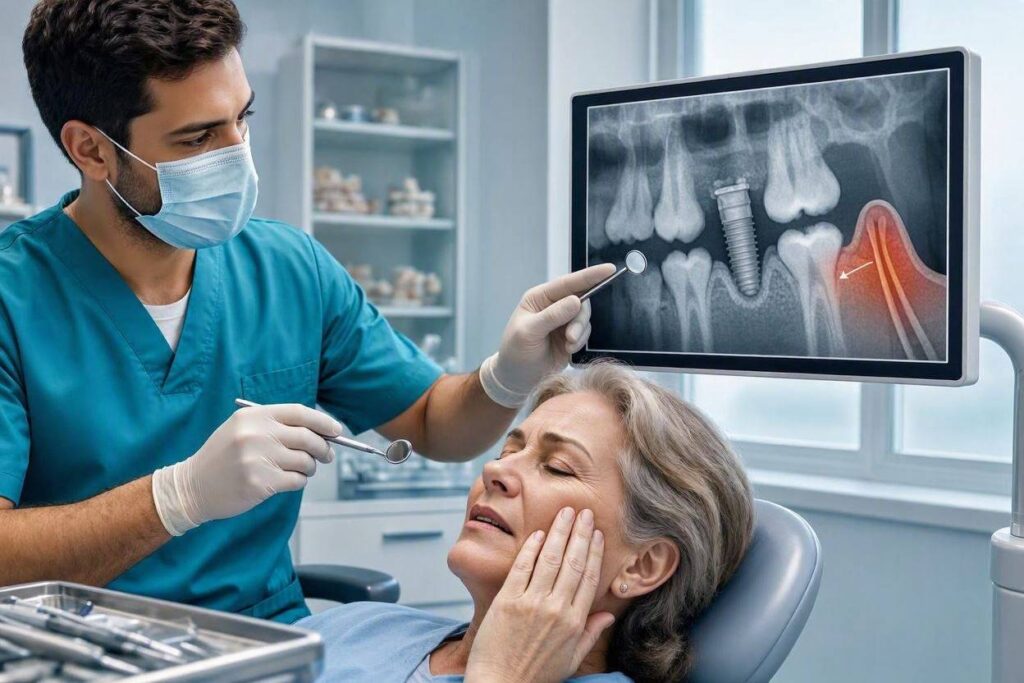
The answer is a crucial lesson in oral anatomy. The implant itself, the titanium post fused to your jawbone, has no nerve endings. It cannot feel anything. The pain you are experiencing is never from the implant post. It is from the living tissues that surround the implant: the gum, the bone, the adjacent natural teeth, or the nerves that run through the jaw. The implant is the silent, innocent bystander. The toothache is a distress signal from its biological neighbors. This article will help you trace that signal to its true source.
The Silent Implant: Understanding the Lack of Sensation
A natural tooth is a living organ. Inside the hard enamel and dentin is a soft, pulpy core filled with nerve endings and blood vessels. When bacteria invade this pulp, the nerve screams, sending a sharp, unmistakable pain signal. This is the classic toothache of pulpitis, the inflammation of the tooth’s nerve.
A dental implant has no pulp. It is a solid piece of titanium. The crown on top is a shell of ceramic or porcelain. There are no nerve endings within the implant-crown complex. You can drill into an implant crown, and you will feel the vibration of the drill in your jaw, but you will not feel any pain from the implant itself. This fundamental truth means that any sensation you identify as a “toothache” in the region of an implant must be referred from a nearby structure. The pain is real. The localization is simply misleading.
The Adjacent Natural Tooth: The Most Common Culprit
The most frequent and often overlooked cause of an apparent implant toothache is a problem with the natural tooth right next door. The periodontal ligament of a natural tooth has a rich nerve supply. The gum tissue around the tooth has nerve endings. The pulp of the tooth has a dense nerve network. Any of these can generate a pain signal that your brain, with its imperfect sensory mapping, interprets as coming from the implant.
A cavity developing on the back surface of the adjacent molar, hidden from view, can cause a pulpitis that radiates pain across the interdental space. Gum disease causing a periodontal pocket on the tooth next to the implant can generate a deep, aching pain. A crack in the adjacent tooth, invisible on an X-ray, can cause a sharp pain on biting that feels like it is coming from the implant crown. The implant, being the most prominent and “new” feature in the area, becomes the lightning rod for all regional discomfort. A skilled dentist will perform a meticulous examination of the adjacent teeth, with cold testing, percussion, and bite-stick testing, to rule them in or out as the true pain generator before ever suspecting the implant.
Peri-Implantitis: The Slow-Motion Infection
The implant itself may be inert, but the bone and gum that hold it are very much alive and vulnerable. Peri-implantitis is a bacterial infection of the tissues around an osseointegrated implant. It is the implant’s equivalent of advanced periodontal disease. Bacteria colonize the surface of the implant abutment and the threads of the implant post, if exposed. The body’s inflammatory response to this bacterial biofilm causes the progressive destruction of the surrounding jawbone.
In its early stage, called peri-implant mucositis, the gums around the implant are red, swollen, and bleed easily when probed. This is a painless, silent phase, just like gingivitis. As the disease progresses to peri-implantitis and the bone begins to resorb, the implant may lose its rigid stability. A deep, dull ache can develop. The gum tissue may become tender to touch. Pus may be expressible from the gum pocket. This is not a toothache in the traditional, pulpal sense. It is a deep, bony ache from an active, smoldering infection in the bone. It is a sign of a failing implant. The pain is the late-stage alarm of a disease that has been quietly eating away at the implant’s foundation.
A Critical Distinction: An implant with peri-implantitis does not hurt in its early, treatable stage. The absence of pain is not a sign of health. Bleeding, pus, and deep probing depths are the diagnostic indicators. Pain from peri-implantitis is often a late, ominous sign that significant bone has already been lost. Regular professional implant maintenance is essential because the patient cannot rely on pain as an early warning system.
Traumatic Occlusion: The Bruised Ligament Analogy
A natural tooth is suspended in its socket by the periodontal ligament, a flexible, shock-absorbing network of collagen fibers. When you bite down too hard on a natural tooth, this ligament gets squeezed and bruised, causing a characteristic dull ache and a sensation of the tooth being “high.” The ligament has nerves that report this overload.
An implant has no periodontal ligament. It is rigidly fused to the bone. So, what causes the sensation of a bruised, high tooth when you bite on an implant? The force of the overloaded bite is transmitted directly to the bone surrounding the implant. The bone itself has nerve endings. When the implant crown is too high, or when the patient grinds their teeth heavily, the concentrated, excessive pressure on the implant can cause a localized inflammation and pain in the bone directly around the implant threads. The pain is a deep, pressure-induced ache that feels exactly like a bruised ligament. The brain interprets the signal from the stressed bone as a familiar “toothache.”
The solution is an occlusal adjustment. The dentist uses thin articulating paper to mark where the implant crown hits the opposing tooth. The high spot, the source of the traumatic force, is polished away. The relief is often immediate and dramatic. The pain was not from a sick tooth, but from a poorly distributed bite force.
Nerve Injury and Neuropathic Pain
A more serious and persistent cause of pain related to an implant is damage to a major nerve during the surgical placement. If a lower implant is placed too close to or directly into the inferior alveolar nerve canal, the nerve can be compressed, bruised, or severed. The result is a neuropathic pain syndrome. This is not a toothache. It is a nerve injury pain, described by patients as a constant burning, electric shock, tingling, or pins-and-needles sensation in the lip, chin, gums, and teeth on that side.
This pain can be immediate after the anesthesia wears off. In other cases, the nerve damage can cause a delayed neuropathic pain, developing weeks or months later as scar tissue or bone remodeling compresses the nerve. The pain is often constant, debilitating, and can be confused with a toothache in the lower jaw. A 3D CBCT scan is the diagnostic tool that will reveal the implant’s proximity to the nerve canal. This is a surgical complication that requires immediate attention from the implant surgeon and potentially a referral to a nerve pain specialist. It is not a condition that resolves with a simple bite adjustment.
Conclusion
A dental implant itself cannot cause a toothache because it has no nerve. Any pain perceived in the implant’s area is a referral from a living neighbor: the adjacent natural tooth with a cavity or crack, the gum and bone suffering from peri-implantitis, the bone under traumatic bite force, or a damaged major nerve. The diagnostic task is to find the true, living source of the pain. Blaming the silent implant without a thorough examination of the surrounding tissues is a clinical error that delays the correct treatment.
Frequently Asked Questions
Why does my implant hurt when I tap on it?
Pain on tapping, or percussion, on an implant crown is most commonly a sign of traumatic occlusion or peri-implantitis. The tapping force stresses the bone around the implant. If the bone is inflamed from an overloaded bite or an infection, the percussion will elicit a sharp, localized pain. This is a classic clinical test to differentiate implant bone pain from adjacent tooth ligament pain.
Can an implant crown be sensitive to cold?
No. The implant and its crown have no nerve supply. True thermal sensitivity, a sharp pain in response to cold water or ice, is pathognomonic for a vital, inflamed dental pulp in a natural tooth. If you experience cold sensitivity near an implant, the source is almost certainly an adjacent natural tooth with a cavity, a crack, or an exposed root.
My implant feels tight and throbs. Is this normal?
A feeling of pressure, tightness, or a throbbing sensation around an implant that has been fine for years is not normal. It often indicates a developing infection, such as peri-implantitis, or a retained piece of cement from the crown cementation that is irritating the gum. It requires a professional evaluation, probing, and an X-ray to determine the cause.
Additional Resource:
For a detailed explanation of peri-implant diseases, their diagnosis, and treatment, visit the American Academy of Periodontology’s patient information page on peri-implantitis: https://www.perio.org/consumer/peri-implantitis