Can You Have Dental Implants Removed?
Dental implants are designed to be permanent tooth replacements, and in the vast majority of cases, they serve patients for decades or a lifetime. However, there are circumstances where implant removal becomes necessary or desirable. Understanding when and how implants can be removed, what the procedure involves, and what happens afterward helps patients make informed decisions if they face this situation.
Yes, dental implants can be removed. While they are designed for permanence, failed, infected, or poorly positioned implants can be extracted by a qualified dental professional. The removal procedure is generally less invasive than the original placement and is typically performed under local anesthesia. After removal and appropriate healing, a replacement implant can often be placed successfully, though bone grafting may be necessary to rebuild the site.
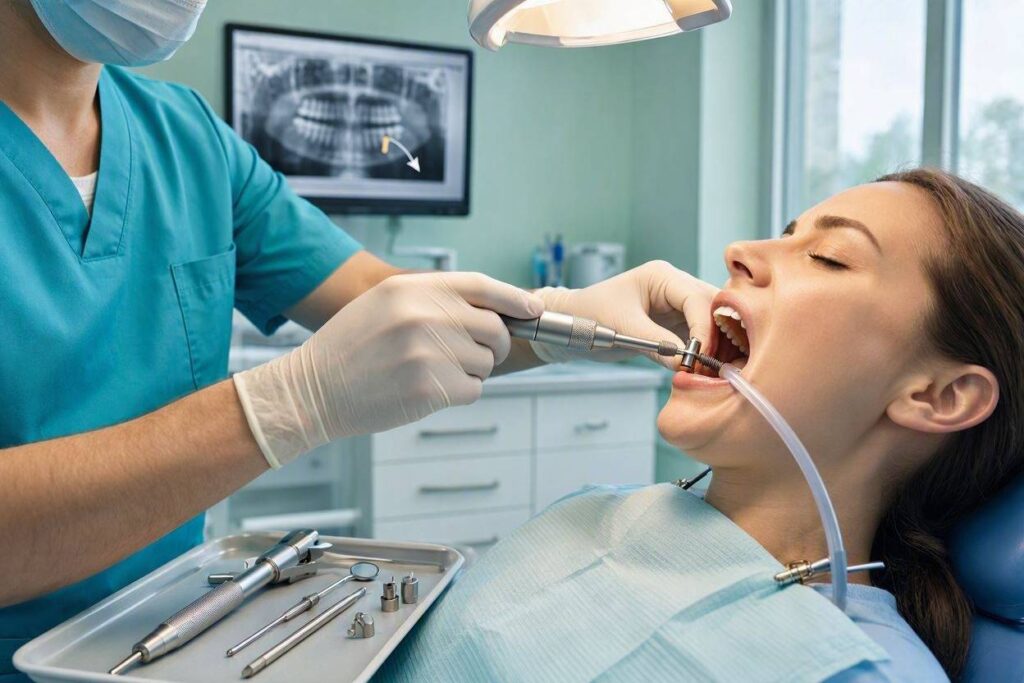
Reasons for Dental Implant Removal
Implants are removed for several distinct clinical reasons, each requiring a different approach.
Failed Osseointegration
Early implant failure occurs when the implant never successfully bonds to the surrounding bone. Instead of bone cells attaching to the implant surface, fibrous scar tissue forms around it.
Signs of Failed Osseointegration:
The implant is mobile when tested. Persistent pain or discomfort beyond the normal healing period. Signs of infection that do not resolve with treatment. Progressive bone loss visible on X-rays around the implant during the healing phase.
Why Removal Is Necessary:
An implant that has not integrated is essentially a foreign body sitting in the jawbone. Fibrous encapsulation prevents any future bone attachment. The implant cannot function as a tooth root substitute and must be removed. Leaving a failed implant in place risks continued bone loss and infection.
The good news is that early implant failure does not mean you cannot have a successful implant later. After removal and site healing, a replacement implant often integrates successfully, particularly when the cause of the initial failure is identified and addressed.
Advanced Peri-Implantitis
Peri-implantitis is an inflammatory condition that destroys the bone supporting a previously successful implant. When the disease is advanced and has not responded to treatment, removal may be the only option.
Indications for Removal Due to Peri-Implantitis:
Bone loss exceeding 60-70% of the implant length. Implant mobility indicating loss of all bony support. Infection that cannot be controlled with debridement and antibiotics. Rapidly progressive bone loss despite treatment attempts. Bone loss pattern that cannot be surgically reconstructed.
The Challenge of Saving vs. Removing:
Dentists and patients often struggle with the decision to remove an implant affected by peri-implantitis. Salvage treatments can arrest disease in many cases, but when bone loss is severe, the long-term prognosis for a treated implant is guarded. Removing a severely compromised implant before catastrophic bone loss occurs may preserve the site for future replacement.
Implant Fracture
Although rare (less than 1% of implants), implant body fracture does occur. This is a catastrophic mechanical failure that always requires removal.
Causes of Implant Fracture:
Excessive occlusal forces from bruxism or heavy biting. Narrow-diameter implants subjected to high loads. Material defects or manufacturing flaws. Corrosion or metal fatigue over decades of function. Improper implant positioning creating unfavorable leverage.
A fractured implant cannot be repaired. The remaining fragment must be surgically removed from the bone.
Malpositioned Implants
An implant placed in a position that does not allow proper restoration, compromises adjacent teeth, or creates aesthetic or functional problems may require removal even if it has integrated successfully.
Reasons for Removing Malpositioned Implants:
Implant too close to adjacent tooth roots causing damage. Implant placed at an angle that precludes a restorable position. Implant in an aesthetic zone with unacceptable soft tissue or prosthetic outcomes. Implant impinging on nerves causing pain or numbness. Implant protruding into the sinus cavity.
Removing a well-integrated but poorly positioned implant is technically challenging. The implant is not diseased or mobile, so removal requires deliberate surgical technique.
Patient Request or Medical Necessity
In some cases, patients request implant removal for personal reasons, or medical conditions necessitate removal.
Reasons for Elective Removal:
Patient dissatisfaction with the implant restoration. Development of a medical condition requiring implant removal. Need for radiation therapy to the jaw area. Severe metal allergy (extremely rare with titanium). Psychological distress related to the implant.
Implant Mobility
Any mobile dental implant requires removal. Well-integrated implants are rigidly fixed in bone. Mobility indicates complete loss of osseointegration, and no treatment can restore bone attachment once fibrous encapsulation has occurred.
The Implant Removal Procedure
Understanding what implant removal involves helps patients prepare for the experience.
How Implants Are Removed
The removal procedure varies depending on why the implant is being removed and whether it is integrated in bone.
Removing a Failed Non-Integrated Implant:
This is typically the simplest removal scenario. Because the implant is already surrounded by fibrous tissue rather than bone, it is often relatively loose. The implant can frequently be unscrewed or gently elevated from the bone with minimal surgical trauma. The procedure is usually performed under local anesthesia and takes less than 30 minutes.
Removing an Integrated or Partially Integrated Implant:
When bone has attached to the implant surface, removal requires more surgical intervention. Several techniques exist:
Reverse Torque Technique:
Specialized instruments engage the implant and apply high reverse torque. The goal is to break the bone-implant interface without removing excessive bone. This technique works best for implants that are not fully integrated or have some fibrous tissue component.
Troughing or Trephination:
A small trephine bur (hollow cylindrical drill) is used to cut a thin collar of bone around the implant. This releases the bone-implant attachment. The implant is then unscrewed or removed with forceps. This technique preserves maximum bone for future replacement.
Piezo Surgery:
Ultrasonic surgical instruments selectively cut bone while preserving soft tissue. This technique allows precise bone removal around the implant with minimal trauma.
Segmental Osteotomy:
For extensive cases, a section of bone containing the implant may be removed en bloc. This is reserved for complex situations and requires more extensive reconstruction.
Procedure Duration: 30-90 minutes depending on complexity
Anesthesia: Local anesthesia; sedation available for anxious patients
What to Expect During Removal
The implant removal procedure is generally less invasive and less uncomfortable than the original implant placement. Local anesthesia ensures comfort during the procedure. Patients experience pressure and vibration sensations but should not feel pain. Post-operative discomfort is typically managed with over-the-counter pain relievers.
Recovery After Implant Removal
Recovery after implant removal is typically faster than after implant placement.
Days 1-3: Mild to moderate discomfort managed with medication. Minor swelling and possible bruising. Soft food diet and avoidance of the surgical site during chewing.
Days 4-7: Discomfort decreases substantially. Most patients return to normal activities within 1-3 days.
Weeks 2-4: Soft tissue healing is complete. The site may still be filling in with new tissue and bone.
Months 2-6: Bone healing and remodeling continues. A decision about replacement implant placement can be made after adequate healing is confirmed through examination and imaging.
What Happens After Implant Removal
The removal of an implant is rarely the end of the treatment journey. Patients and providers must plan for what comes next.
Bone Grafting After Removal
When an implant is removed, a bone defect remains. The size of this defect depends on why the implant was removed and how much bone was lost before removal.
Socket Grafting:
Immediately after implant removal, bone graft material is packed into the defect to preserve bone volume and promote healing. A membrane may cover the graft. This proactive approach maintains the site for future implant placement.
Delayed Grafting:
If infection is present, grafting may be delayed until the site is clean and healthy. The extraction site heals for several weeks to months before grafting is performed.
No Grafting:
Small defects may heal adequately without grafting, though some bone loss is inevitable. The decision depends on future treatment plans and the defect size.
Replacement Implant Possibilities
In most cases, a new implant can be placed after the site has healed.
Timing for Replacement:
Socket grafting after removal: Wait 3-6 months before replacement implant placement. No grafting (small defect): Wait 2-4 months. Major grafting required: Wait 4-9 months.
Success Rates for Replacement Implants:
Replacement implants can succeed even after initial failure, particularly when the cause of the first failure is identified and addressed. Smoking cessation, improved diabetes control, treatment of periodontal disease, modified surgical technique, different implant selection, and more robust prosthetic design all improve the prognosis for replacement implants.
Patients who have experienced one implant failure are at higher risk for subsequent failures. This “cluster phenomenon” suggests that some individuals have inherent susceptibility to implant failure. Addressing all modifiable risk factors before replacement is essential.
Alternative Tooth Replacement After Implant Removal
If a replacement implant is not desired or not possible, alternative tooth replacement options include:
Fixed Dental Bridge:
Adjacent teeth are prepared for crowns, and a false tooth is suspended between them. This avoids implant surgery but requires preparation of healthy teeth.
Removable Partial Denture:
A removable appliance replaces the missing tooth or teeth. This is the least expensive option but provides less stability and function.
No Replacement:
Some patients choose not to replace the removed implant, particularly in non-visible areas where function is not significantly affected.
Risks and Complications of Implant Removal
While generally a safe procedure, implant removal carries specific risks.
Bone Fracture:
The jawbone could fracture during implant removal, particularly if the implant is large relative to the available bone or if the bone is thin. This is rare and managed by the surgeon if it occurs.
Nerve Damage:
Implants near the inferior alveolar nerve or mental nerve carry risk of nerve injury during removal, particularly if the implant itself has caused nerve symptoms.
Sinus Perforation:
Removing upper jaw implants may create communication with the sinus cavity. This is typically manageable with appropriate closure and post-operative care.
Incomplete Removal:
Rarely, a portion of the implant or surrounding material cannot be safely removed without excessive bone destruction. These retained fragments are typically monitored over time.
Frequently Asked Questions
Is dental implant removal painful?
The procedure is performed under local anesthesia and is painless during treatment. Post-operative discomfort is typically mild to moderate and managed with over-the-counter pain relievers.
How long does implant removal take?
Simple removal of a failed non-integrated implant takes 15-30 minutes. Removal of a well-integrated implant takes 30-90 minutes.
Can a removed implant be replaced immediately?
Rarely. Most cases require healing and bone grafting before a replacement implant is placed. Immediate replacement is possible in very specific circumstances.
Will I need bone grafting after implant removal?
Often, yes. Bone grafting at the time of removal preserves the site for future implant placement. Your surgeon will determine the need based on the defect size and future treatment plans.
How much does implant removal cost?
Simple removal costs $300-$800. Complex removal of an integrated implant costs $800-$2,500+. These are out-of-pocket estimates; insurance coverage varies.
Will dental insurance cover implant removal?
Insurance typically covers removal as a basic or major service at 50-80% after deductible. Coverage for removal of failed implants varies by plan.
Can I get my money back if my implant fails and must be removed?
This depends on the provider’s policies. Some practices offer warranties or replacement policies. Many do not guarantee implant success, as failure often results from patient factors beyond the provider’s control.
How long after implant removal can I get a replacement implant?
Typically 3-6 months, depending on whether grafting was performed and the extent of the defect. Your surgeon evaluates healing before scheduling replacement.
Additional Resources
For more information about dental implant removal:
- American Academy of Implant Dentistry: www.aaid.com
- American Association of Oral and Maxillofacial Surgeons: www.aaoms.org
- International Congress of Oral Implantologists: www.icoi.org