Can Vaping Lead To The Failure Of Dental Implants?
The explosive growth of vaping and e-cigarette use has created a new population of patients seeking dental implant treatment who may not realize the risks their habit poses. While the dental profession has decades of data demonstrating the devastating effects of traditional cigarette smoking on implant success, the long-term data on vaping is still emerging. However, the biological mechanisms by which vaping can harm implants are already well understood and deeply concerning.
Yes, vaping can lead to the failure of dental implants through multiple biological mechanisms. The nicotine in most e-cigarette products causes vasoconstriction that reduces blood flow essential for healing, directly impairs bone-forming cell function, suppresses the immune response needed to fight peri-implant infections, and creates an oral environment favorable to the bacteria that cause peri-implantitis. While long-term studies comparing implant failure rates in vapers versus non-users are still developing, the existing evidence on nicotine and wound healing provides strong biological plausibility that vaping increases implant failure risk.
The Biological Mechanisms of Vaping-Induced Implant Damage
Understanding how vaping affects the body at the cellular and tissue level explains why it threatens implant success.
Nicotine-Induced Vasoconstriction
The most immediate and well-documented effect of nicotine on oral tissues is vasoconstriction, the narrowing of blood vessels. This single effect cascades into multiple problems for implant patients.
Reduced Blood Flow:
Nicotine binds to receptors on blood vessel walls, causing smooth muscle contraction and vessel narrowing. Blood flow to oral tissues can be reduced by up to 70% after nicotine exposure. This effect lasts for 30-60 minutes after each nicotine dose, meaning that frequent vapers maintain chronically reduced blood flow throughout the day.
Oxygen Deprivation:
Reduced blood flow means reduced oxygen delivery to tissues. Osseointegration, the biological process by which bone bonds to the titanium implant surface, is highly oxygen-dependent. Bone-forming cells (osteoblasts) require adequate oxygen tension to synthesize the collagen matrix upon which bone mineral is deposited. Hypoxic (low-oxygen) conditions impair this process.
Nutrient Delivery Compromise:
Blood delivers not only oxygen but also amino acids, glucose, vitamins, and other nutrients essential for wound healing. Vasoconstriction starves the healing implant site of these building blocks.
Impaired Waste Removal:
Blood flow removes metabolic waste products and carbon dioxide from healing tissues. Stagnation of these products in a vasoconstricted environment further impairs cellular function.
Direct Suppression of Bone-Forming Cells
Nicotine does not just reduce blood flow; it directly poisons the cells responsible for bone healing.
Osteoblast Toxicity:
Research demonstrates that nicotine directly inhibits osteoblast proliferation and function. Bone-forming cells exposed to nicotine produce less collagen, less alkaline phosphatase (an enzyme essential for bone mineralization), and ultimately less bone matrix. Implant osseointegration depends on robust osteoblast activity. Nicotine effectively hobbles the very cells the patient needs most during implant healing.
Increased Osteoclast Activity:
Some research suggests nicotine may also stimulate osteoclasts, the bone-resorbing cells. This creates a double insult: less bone formation and more bone destruction. Around healing implants, this imbalance could tip the scales toward fibrous encapsulation rather than successful osseointegration.
Immune System Suppression
The body’s ability to fight infection and maintain healthy tissues around implants depends on a functioning immune system. Nicotine impairs multiple immune defenses.
Neutrophil Dysfunction:
Neutrophils are the first responders of the immune system, rushing to sites of bacterial invasion to engulf and destroy pathogens. Nicotine impairs neutrophil chemotaxis (movement toward infection), phagocytosis (engulfing bacteria), and killing capacity. With compromised neutrophils, bacteria around implants face less resistance.
Reduced Antibody Production:
Nicotine suppresses B-cell function, reducing antibody production. Lower antibody levels mean less effective defense against the specific bacteria that cause peri-implantitis.
Impaired Wound Healing Cytokines:
The complex signaling molecules that orchestrate wound healing are disrupted by nicotine exposure. The carefully timed cascade of inflammation, proliferation, and remodeling that characterizes normal healing becomes dysregulated.
Oral Microbiome Alterations
Emerging research reveals that vaping alters the bacterial community living in the mouth.
Shift Toward Pathogenic Species:
Studies comparing the oral microbiome of vapers to non-users find differences in bacterial populations. Vapers tend to harbor more bacteria associated with periodontal and peri-implant diseases. The warm, humid environment created by frequent vaping, combined with the chemical effects of e-liquid ingredients on oral tissues, appears to favor disease-causing bacteria over health-associated species.
Biofilm Formation Enhancement:
Some research suggests that the ingredients in e-liquid, particularly propylene glycol and vegetable glycerin, may enhance bacterial adhesion to surfaces. Increased biofilm formation on implant surfaces directly increases peri-implantitis risk.
Dry Mouth and Reduced Salivary Protection
Vaping frequently causes xerostomia (dry mouth). Propylene glycol, a major component of most e-liquids, is hygroscopic, meaning it attracts and holds water molecules. When vapor is exhaled through the mouth, it draws moisture from oral tissues.
Saliva is the mouth’s primary defense mechanism. It contains antimicrobial enzymes, antibodies, and minerals that protect teeth and maintain tissue health. Reduced salivary flow removes this protection, allowing bacteria to proliferate unchecked. For implant patients, dry mouth means higher bacterial loads in the environment surrounding their implants.
“The biological case against vaping for implant patients is compelling even without decades of implant-specific outcome data. Every mechanism by which smoking damages implants is also present in vaping because nicotine is the primary culprit. Waiting for long-term studies to confirm what biology already tells us would be a disservice to patients who could prevent implant failure by quitting now.” — American Academy of Implant Dentistry
Vaping vs. Smoking: Is Vaping Safer for Implants?
Patients often ask whether vaping represents a harm reduction strategy for implant treatment. The answer requires nuance.
What Vaping Eliminates
Traditional cigarette smoke contains over 4,000 chemicals, including carbon monoxide, hydrogen cyanide, ammonia, and dozens of known carcinogens. Vaping eliminates the combustion process and the tar and many carcinogens it produces.
Carbon monoxide is particularly relevant to implant healing. It binds to hemoglobin 200 times more strongly than oxygen, severely reducing the blood’s oxygen-carrying capacity. Smokers’ blood can have 5-15% of their hemoglobin bound to carbon monoxide, effectively reducing available oxygen by that amount. Vaping does not produce carbon monoxide, so this specific mechanism of implant damage is absent.
What Vaping Retains
Nicotine remains present in most vaping products, and it is the primary driver of implant complications. The vasoconstriction, osteoblast suppression, immune dysfunction, and microbiome disruption associated with smoking are largely nicotine-mediated and therefore persist with vaping.
The heat and chemical effects of vapor on oral tissues create additional concerns, though these may be less severe than the effects of smoke. The unknown long-term effects of inhaling flavoring compounds and their thermal degradation products add uncertainty that does not exist with simply not vaping.
The Verdict on Comparative Risk
Vaping is likely less harmful to implants than traditional smoking, but it is almost certainly more harmful than using no nicotine at all. Patients who switch from smoking to vaping may modestly reduce their implant risk, but they do not eliminate it. Patients who begin vaping without previously smoking are taking on unnecessary risk with no countervailing benefit.
| Risk Factor | Traditional Smoking | Vaping (Nicotine) | Vaping (Nicotine-Free) | No Nicotine Use |
|---|---|---|---|---|
| Vasoconstriction | Severe | Moderate to Severe | None | None |
| Carbon Monoxide | Present | Absent | Absent | Absent |
| Osteoblast Toxicity | Severe | Moderate to Severe | Unknown (likely minimal) | None |
| Immune Suppression | Severe | Moderate to Severe | Unknown (likely minimal) | None |
| Oral Microbiome Disruption | Documented | Emerging Evidence | Emerging Evidence | None |
| Dry Mouth | Common | Common | Common | None |
| Heat/Chemical Irritation | Severe | Moderate | Moderate | None |
The Timeline of Risk: When Vaping Threatens Implants
The risks of vaping are not uniform across all phases of implant treatment.
Pre-Surgical Period
Nicotine use in the weeks before implant surgery establishes a vasoconstricted, immune-suppressed tissue environment. Patients who vape up until the day of surgery arrive with compromised blood flow and impaired healing capacity from the first incision.
Quitting nicotine 2-4 weeks before surgery allows blood flow to improve, immune function to begin recovering, and the oral microbiome to start shifting toward a healthier profile. Longer cessation periods produce better results, but even 2 weeks of abstinence provides measurable benefit.
Immediate Post-Operative Period (Days 1-14)
This is the period of greatest vulnerability. The surgical site depends on robust blood supply for initial healing. The blood clot that fills the extraction socket and surrounds the implant is fragile. Nicotine-induced vasoconstriction during this period starves the healing site of oxygen and nutrients at the time they are most needed.
The sucking action of drawing on a vaping device is an additional concern during the first week, particularly if extractions were performed. Negative oral pressure can dislodge the protective blood clot, leading to dry socket.
Osseointegration Period (Months 1-6)
This extended period determines whether the implant successfully bonds to bone. Consistent nicotine exposure throughout osseointegration continuously impairs the bone-forming cells responsible for this process. Intermittent exposure (vaping on some days but not others) may be less harmful than continuous exposure, but there is no safe level of nicotine use for implant healing.
Long-Term Maintenance (Years After Restoration)
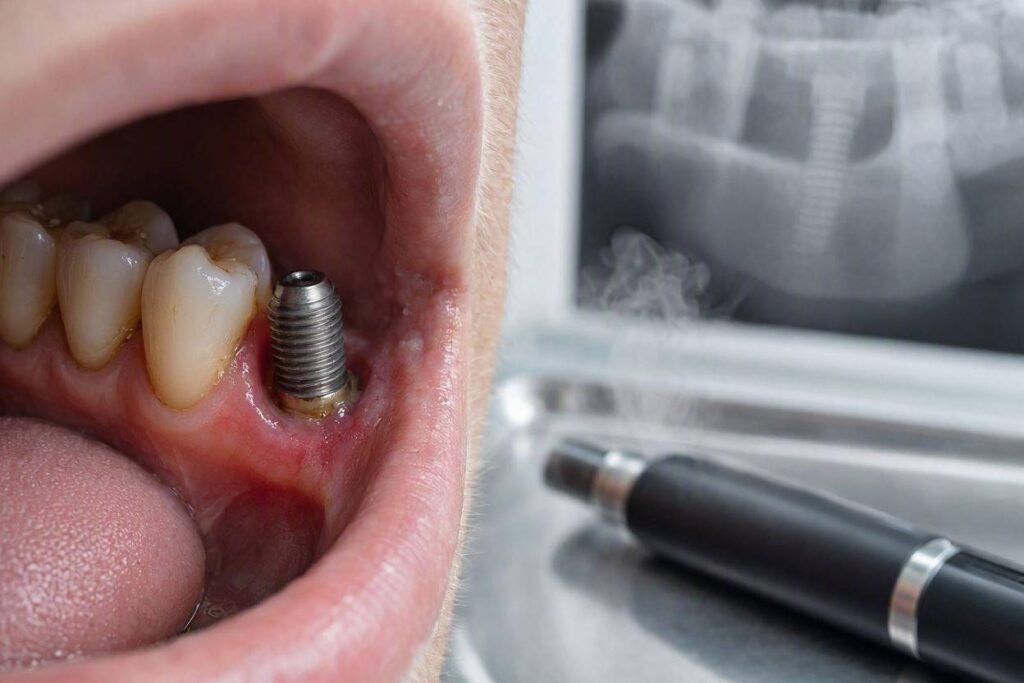
Once the implant is successfully integrated and restored, the primary threat from vaping shifts from osseointegration failure to peri-implantitis. Chronic nicotine use creates an oral environment conducive to the development and progression of peri-implant disease. The immunosuppressive effects of nicotine reduce the body’s ability to fight the bacterial challenge around implants.
Peri-implantitis often develops silently, without pain, until significant bone loss has occurred. Vapers may not realize their implants are in jeopardy until destruction is advanced and salvage becomes difficult or impossible.
Research Evidence on Vaping and Implant Outcomes
The direct clinical evidence linking vaping to implant failure is still developing, but the foundation of concerning data is substantial.
Animal Studies
Animal research provides the most direct evidence of nicotine’s effects on implant osseointegration because these studies can control for confounding variables.
Multiple animal studies demonstrate that nicotine exposure significantly reduces bone-to-implant contact, decreases the torque required to remove implants, and impairs the quality of bone formed around implants. These effects are dose-dependent, meaning higher nicotine levels produce worse outcomes. Studies isolating nicotine (delivered through pumps or patches rather than smoke) confirm that nicotine alone, without the other constituents of tobacco smoke, impairs osseointegration.
Human Studies on Nicotine and Wound Healing
Extensive human research on wound healing demonstrates that nicotine impairs healing across multiple tissue types. Plastic surgeons have long observed that smokers experience higher rates of wound dehiscence, infection, and poor scarring. Orthopedic research shows impaired bone healing and higher rates of non-union in nicotine users. Oral surgery literature consistently identifies smoking as a major risk factor for complications.
The mechanisms underlying these clinical observations apply directly to implant osseointegration. While studies specifically examining vaping cohorts and implant outcomes are still being conducted, the biological plausibility of harm is firmly established.
Peri-Implantitis Data
Smoking is the strongest known behavioral risk factor for peri-implantitis, with smokers facing two to three times higher risk than non-smokers. The extent to which this elevated risk transfers to vaping is unknown. Given that nicotine is the primary driver of peri-implantitis risk through vasoconstriction and immune suppression, it is biologically plausible that vapers share much of this elevated risk.
“The absence of long-term vaping-specific implant studies should not be interpreted as evidence of safety. We have decades of data on nicotine’s harmful effects on healing and decades of data on smoking’s devastating impact on implant success. Vaping is a nicotine delivery system. Until proven otherwise, we should assume it carries similar, though perhaps not identical, risks to implant patients.” — Journal of Oral Implantology
Frequently Asked Questions
Can vaping cause dental implant failure?
Yes. The nicotine in vaping products impairs healing, reduces blood flow, suppresses immune function, and may increase the risk of peri-implantitis leading to implant failure.
Is vaping safer than smoking for dental implants?
Vaping likely carries lower risk than smoking due to the absence of carbon monoxide and combustion byproducts, but it is not safe. The nicotine in both products threatens implant success.
How long should I stop vaping before implant surgery?
Ideally, quit all nicotine products at least 2-4 weeks before surgery and remain nicotine-free throughout the entire 3-6 month healing period.
Can I vape after my implant has healed and the crown is placed?
You can, but chronic vaping may increase your long-term risk of peri-implantitis. The same mechanisms that impair healing also reduce the body’s ability to maintain healthy tissues around functioning implants.
Does nicotine-free vaping affect implants?
Nicotine-free vaping eliminates the vasoconstrictive and bone-suppressive effects of nicotine but still exposes oral tissues to heat and chemicals. The long-term effects are unknown. Most surgeons recommend avoiding all vaping.
What if I only vape occasionally after implant surgery?
Intermittent nicotine exposure is less harmful than continuous exposure but still impairs healing during the periods when nicotine is present in your system. There is no established safe level of nicotine use for implant patients.
Will my implant definitely fail if I vape?
Not necessarily. Many vapers’ implants integrate and survive. However, your risk of failure is higher than if you did not use nicotine. The decision to vape is a decision to accept elevated risk.
Can I use nicotine pouches or gum instead of vaping after implant surgery?
These products still deliver nicotine, which impairs healing. They avoid the oral effects of vapor but do not eliminate the systemic effects of nicotine. Discuss with your surgeon.
Additional Resources
For more information about vaping and dental implant health:
- American Academy of Implant Dentistry: www.aaid.com
- American Association of Oral and Maxillofacial Surgeons: www.aaoms.org
- American Dental Association: www.ada.org
- National Institute of Dental and Craniofacial Research: www.nidcr.nih.gov