Does A Single Dental Implant Hurt?
The fear of pain is one of the most significant barriers preventing people from seeking dental care. This fear is amplified when the treatment involves surgery, and the word “implant” itself can sound intimidating. The thought of a metal post being screwed into the jawbone is enough to make anyone nervous.
If you are considering a dental implant, it is natural to ask: “How much is this going to hurt?”
The answer is often surprising to patients. The vast majority of people who undergo dental implant surgery report that the procedure is much less painful than they anticipated. This guide will walk you through the entire process—before, during, and after the surgery—so you know exactly what to expect and can put your fears to rest.
The Key to Comfort: Local Anesthesia
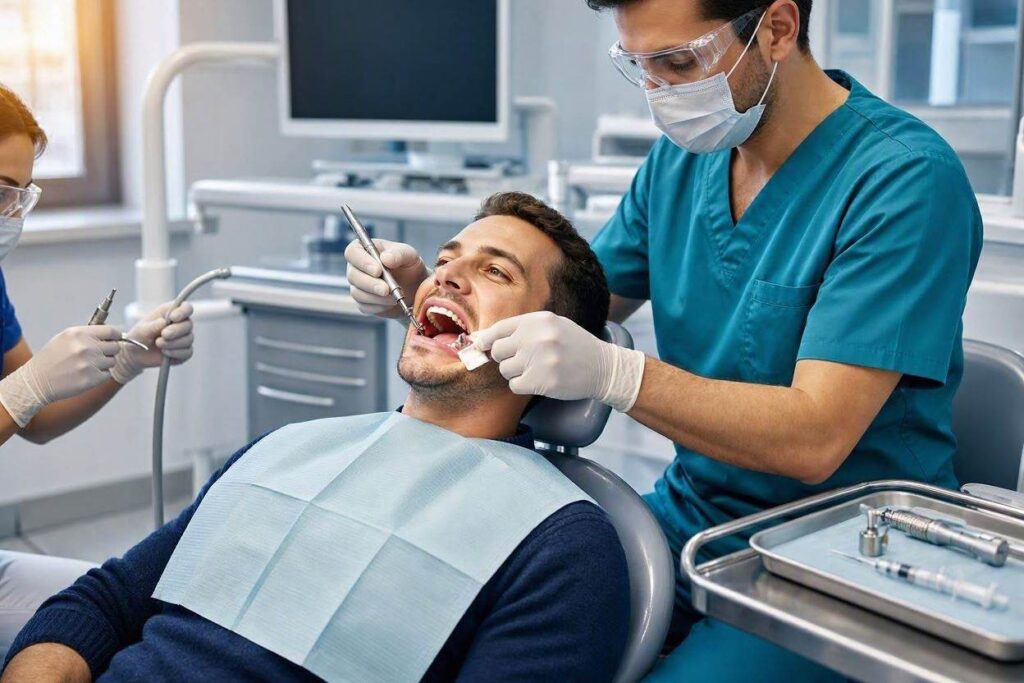
The most important thing to understand is that dental implant surgery is performed under local anesthesia. This is the same type of injection you would receive for a filling or a tooth extraction. It completely numbs the surgical area.
During the procedure, you should feel no pain.
You will feel pressure, pushing, and vibration. The dentist is working with the bone, and you will be aware of that activity. But the sharp, acute sensation of pain is blocked by the anesthetic. If you ever feel a twinge of discomfort, you can tell the dentist, and they will administer more anesthetic.
The Sedation Options: For the Anxious Patient
For patients with high dental anxiety, local anesthesia alone might not be enough to relax them. This is where sedation comes in.
1. Nitrous Oxide (Laughing Gas)
You inhale a gas through a mask. It produces a feeling of relaxation and euphoria. You remain awake but do not care about what is happening.
2. Oral Sedation
You take a pill (like Valium or Halcion) an hour before the procedure. You will feel very drowsy and relaxed. You may not remember much of the procedure.
3. IV Sedation (Twilight Sleep)
Medication is delivered directly into your bloodstream. You are in a state of deep relaxation, on the edge of consciousness. You will likely have no memory of the surgery. This is a popular option for implant surgery.
4. General Anesthesia
You are completely unconscious. This is less common for a single implant but may be used for complex cases or severe anxiety.
The choice of sedation affects the cost of the procedure, but it can be a worthwhile investment for your comfort and peace of mind.
What About After the Anesthesia Wears Off?
This is where you will experience some discomfort. Once the local anesthetic wears off (usually 2-4 hours after the surgery), you will feel soreness.
The First 24-48 Hours:
- What it feels like: The area will be tender and achy. There may be some mild swelling and bruising. It is similar to the feeling after a tooth extraction.
- How to manage it: Your dentist will recommend over-the-counter pain relievers like Ibuprofen (Advil) or Acetaminophen (Tylenol). In most cases, these are sufficient to control the pain. If the surgery was more complex, the dentist might prescribe a stronger prescription painkiller.
Days 3-7:
- The soreness should gradually subside. The swelling will go down. You should be able to return to normal activities within a day or two.
Important Note: The pain should be getting better, not worse. If the pain suddenly increases after a few days, or if you develop a fever or see pus, contact your dentist immediately. This could be a sign of an infection or a complication called a “dry socket” (though this is less common with implants than with extractions).
Comparing the Pain: Implant vs. Extraction
Many patients who get an implant have recently had a tooth extracted. They can compare the two experiences. The consensus is often that the implant surgery is less painful than the extraction.
This is because an extraction involves ripping and tearing the ligaments that hold a tooth in the socket. It is a more traumatic event for the tissue. An implant placement is a more controlled, precise procedure. The dentist is gently drilling a precise hole in the bone, not tearing tissue.
The “Psychological” Pain vs. Physical Pain
For some patients, the anxiety leading up to the procedure is worse than the procedure itself. The sounds of the drill, the pressure, and the anticipation can be stressful.
This is where a good dentist and a good team make all the difference. A compassionate dentist will talk you through every step of the procedure. They will tell you what to expect. They will check in with you constantly. If you are using sedation, you will be largely unaware of the process anyway.
Do not underestimate the power of a good chairside manner. If you are nervous, tell your dentist. They can adjust their approach to make you more comfortable.
A Realistic Perspective on Recovery
Here is a typical timeline for a single implant recovery:
| Time Period | What to Expect |
|---|---|
| Day of Surgery | Numbness wears off. Take pain meds as directed. Eat soft foods. Avoid hot liquids. Apply ice to the cheek to reduce swelling. |
| Day 2 | Peak soreness and swelling. Continue pain meds (often over-the-counter). Rest. |
| Days 3-4 | Swelling and pain begin to subside. You may see some bruising on the skin. |
| Days 5-7 | Mostly back to normal. You can resume normal eating, but still be gentle on the surgical site. |
| 1-2 Weeks | Follow-up appointment to check healing. Stitches (if any) are removed or dissolve. |
Conclusion
The fear of pain is a natural human response. But when it comes to a single dental implant, that fear is often misplaced. With modern anesthesia and sedation techniques, the procedure itself is painless. The post-operative discomfort is manageable with simple over-the-counter medication and resolves within a few days. Do not let the fear of pain keep you from getting the tooth replacement you need.
Frequently Asked Questions (FAQ)
Q: Is getting a dental implant more painful than a root canal?
A: Many patients report that a root canal (especially an infected one) can be more uncomfortable than an implant placement. A root canal is performed on an inflamed, infected tooth, which can make it harder to get numb. An implant is placed in healthy bone, which is easier to anesthetize.
Q: Can I be put to sleep for a dental implant?
A: Yes. IV sedation and general anesthesia are options for patients who want to be completely unaware of the procedure. This is usually provided by an oral surgeon or a dentist with specialized training.
Q: How long does the pain last after a single implant?
A: The acute soreness typically peaks in the first 24-48 hours and then gradually subsides. Most patients feel much better by day 3 or 4 and are back to normal within a week.
Q: What if I am allergic to local anesthesia?
A: True allergies to local anesthetics (like Lidocaine) are extremely rare. If you have a history of an allergic reaction, tell your dentist. There are alternative anesthetics that can be used.
Q: Will I need time off work for a single implant?
A: Most people can return to work the next day. If your job involves heavy lifting or strenuous activity, you may want to take an extra day or two. The main reason to stay home is to manage the initial swelling and soreness.
Additional Resource:
For more information on managing dental anxiety and understanding sedation options, you can visit the Dental Organization for Conscious Sedation (DOCS): https://www.sedationcare.com/