Do All Dental Implants Take Many Months?
The decision to get a dental implant is often accompanied by a sigh of resignation. You know you are signing up for a process. The traditional timeline for a dental implant—surgery, followed by months of healing, followed by the crown—can feel daunting. It is a common belief that all implants require this long, drawn-out waiting period.
But is that true? Do all dental implants take many months?
The answer is no. While the traditional, time-tested protocol does involve a healing period of several months, advances in dental technology have created faster alternatives. The timeline for your implant depends heavily on your specific situation, the quality of your bone, and the technique your dentist uses.
This guide will explore the different timelines for dental implants, from the traditional multi-month process to the modern “same-day” options, and help you understand which approach might be right for you.
The Traditional Timeline: Why the Wait?
To understand why some implants are faster than others, you must understand the biology of bone healing.
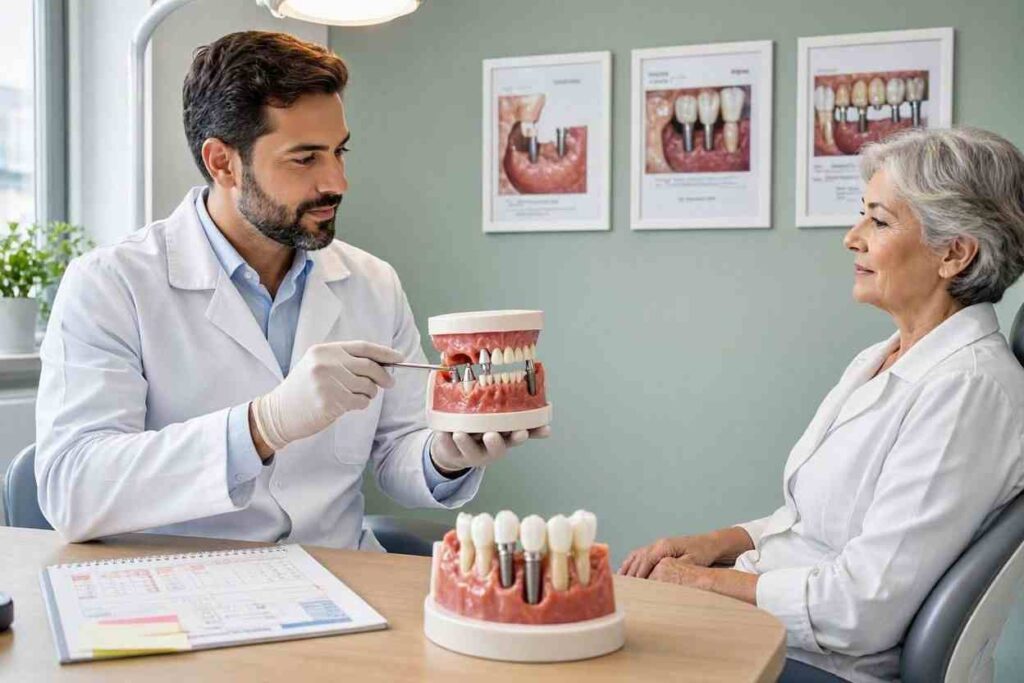
The traditional implant process is a two-stage procedure.
Stage 1: Surgery
The implant is placed into the jawbone. The gum is stitched closed over it.
Stage 2: Healing (Osseointegration)
This is the waiting period. The bone must grow onto the surface of the titanium implant and fuse with it. This process is called osseointegration. It is what makes the implant stable and permanent.
Stage 3: Restoration
After the bone has healed, the implant is uncovered, and the crown is placed.
The Timeline:
- Surgery: Day 1.
- Healing: 3 to 6 months (sometimes longer for the upper jaw or if a bone graft was needed).
- Restoration: 2-4 weeks after healing.
This multi-month process is the gold standard. It has the longest track record of success and is still recommended for many patients.
The “Faster” Options: Immediate and Early Loading
In recent years, techniques have been developed to speed up the process. These are often called “immediate load” or “early load” protocols.
1. Immediate Loading (Same-Day Teeth)
In this approach, a temporary crown (or a temporary bridge for multiple implants) is placed on the implant on the same day as the surgery.
- How it works: The surgeon places the implant and immediately attaches a temporary restoration. This temporary is “splinted” (connected) to other implants or designed to be out of the bite (no chewing pressure on it).
- The Goal: The patient leaves the office with teeth in their mouth. There is no period of being toothless.
- The Catch: The implant is still healing underneath. The temporary is for aesthetics, not for chewing. The patient must follow a strict soft food diet for several months while the bone heals.
2. Early Loading
In this approach, the crown is placed a few weeks after surgery (e.g., 6-8 weeks), rather than waiting 3-6 months. This is faster than the traditional route but not immediate.
The All-on-4 Concept: A Special Case of Immediate Loading
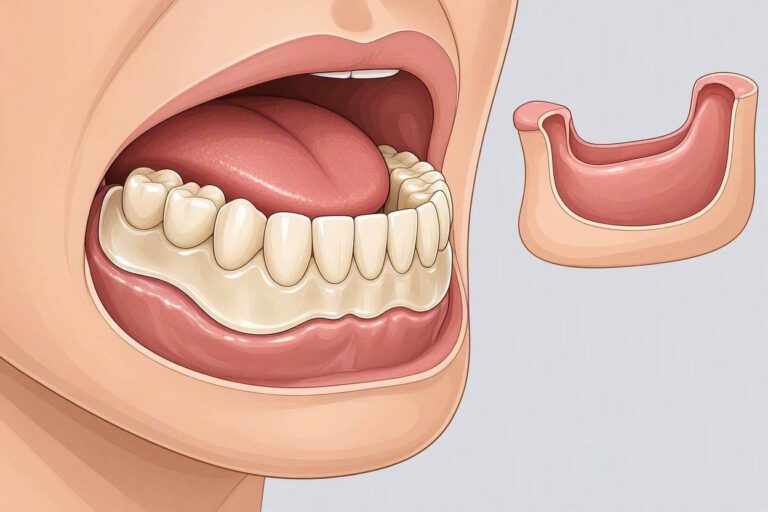
The All-on-4 treatment concept is a popular example of immediate loading. It is used for patients who are missing all their teeth in an arch.
- How it works: Four implants are placed in the jaw. A full arch of fixed, temporary teeth is attached to the implants on the same day.
- The Benefit: You walk out with a full set of functioning (though restricted) teeth.
- The Timeline: The temporary teeth are worn for several months. Once the bone has healed, the final, permanent bridge is made.
When Can You Get a Faster Implant?
Not everyone is a candidate for immediate or early loading. The dentist must evaluate several factors.
Requirements for Immediate Loading:
- Excellent Bone Quality: The bone must be dense and strong enough to hold the implant firmly at the time of surgery. This is called “primary stability.” If the implant is wobbly when it is placed, it cannot support a temporary tooth.
- No Bone Grafting: If you need a bone graft, you cannot have immediate loading. The graft needs time to heal before it can support an implant.
- Healthy Gums: No active infection.
- Patient Compliance: The patient must be willing to follow a strict soft food diet and avoid putting pressure on the implant during the healing phase.
If the implant does not have enough initial stability, or if the forces on the implant are too high, the implant can fail. This is why many dentists prefer the traditional, slower approach. They believe the risk is lower.
The Trade-Off: Speed vs. Predictability
When deciding between a fast implant and a slow implant, you are making a trade-off.
The Traditional (Slow) Approach:
- Pros: Highest success rate, most predictable, lowest risk of failure.
- Cons: Requires months of waiting, often wearing a temporary denture or a gap.
The Immediate (Fast) Approach:
- Pros: No time without teeth, faster overall process, high patient satisfaction.
- Cons: Slightly higher risk of implant failure, requires strict discipline, not suitable for all cases.
The One Step You Cannot Rush: Osseointegration
It is crucial to understand that even with “same-day teeth,” the implant itself is not instantly healed. Osseointegration is a biological process that takes time. You cannot rush it.
The temporary tooth placed on the day of surgery is not the final, permanent crown. It is a placeholder. The implant is still vulnerable. The bone is still growing. If you chew on a same-day implant too soon, you can disrupt the healing process and cause the implant to fail.
The “many months” of the traditional timeline are not just an inconvenience; they are a biological necessity. The faster options work by managing the waiting period differently, not by eliminating it.
Conclusion
Do all dental implants take many months? No. Modern techniques like immediate loading and the All-on-4 concept allow some patients to receive temporary teeth on the same day as their surgery. However, the underlying healing process still takes months. The choice between a fast and slow implant depends on your bone quality, your overall health, and your willingness to accept a slightly higher risk. Your dentist will guide you toward the option that is safest and most predictable for your unique situation.
Frequently Asked Questions (FAQ)
Q: Can I get a dental implant in one day?
A: Yes, in specific cases. If you have excellent bone quality and good oral health, you may be a candidate for a “same-day” implant, where a temporary crown is placed immediately after surgery. You will still need to return months later for the permanent crown.
Q: Why do I have to wait 3 months for an implant crown?
A: The 3-6 month waiting period is for osseointegration. The bone needs time to grow onto the titanium implant and lock it in place. If the crown is placed too early and you chew on it, the implant can fail.
Q: Is a same-day implant more expensive?
A: It can be. The technology and planning required for immediate loading are often more advanced. However, the total cost is often comparable because you may save on the cost of a temporary denture.
Q: What is the fastest way to replace a missing tooth?
A: For a single tooth, a same-day implant is the fastest fixed option. A removable flipper (partial denture) can be made in a few days, but it is not a permanent solution.
Q: Will my dental insurance cover a same-day implant?
A: The insurance coverage is usually the same regardless of the timeline. They cover the implant placement and the crown. The “same-day” aspect is a technique, not a separate billing code. Check your plan for implant coverage.
Additional Resource:
To learn more about the All-on-4 treatment concept and same-day teeth, you can visit the official All-on-4 website: https://www.allon4.com/