Can Stains On Dental Implant Be Removed?
You invested in a dental implant to restore your smile. For months, it looked perfect—bright, white, and seamless. But now, you are starting to notice something. The crown (the visible part of the implant) is looking a little dull. Maybe there is a slight brown tinge near the gum line, or the surface doesn’t shine like it used to.
You might be wondering: “Can this be cleaned? Or do I have to live with this forever?”
The answer is nuanced. While the titanium post and the porcelain crown are highly resistant to decay, they are not immune to aesthetic staining. The good news is that most stains on dental implants can be removed, but the method depends on the type of stain and the cause of the discoloration.
This guide will explain the difference between surface stains and deeper issues, how professionals remove them, and what you can do at home to keep your implant looking brand new.
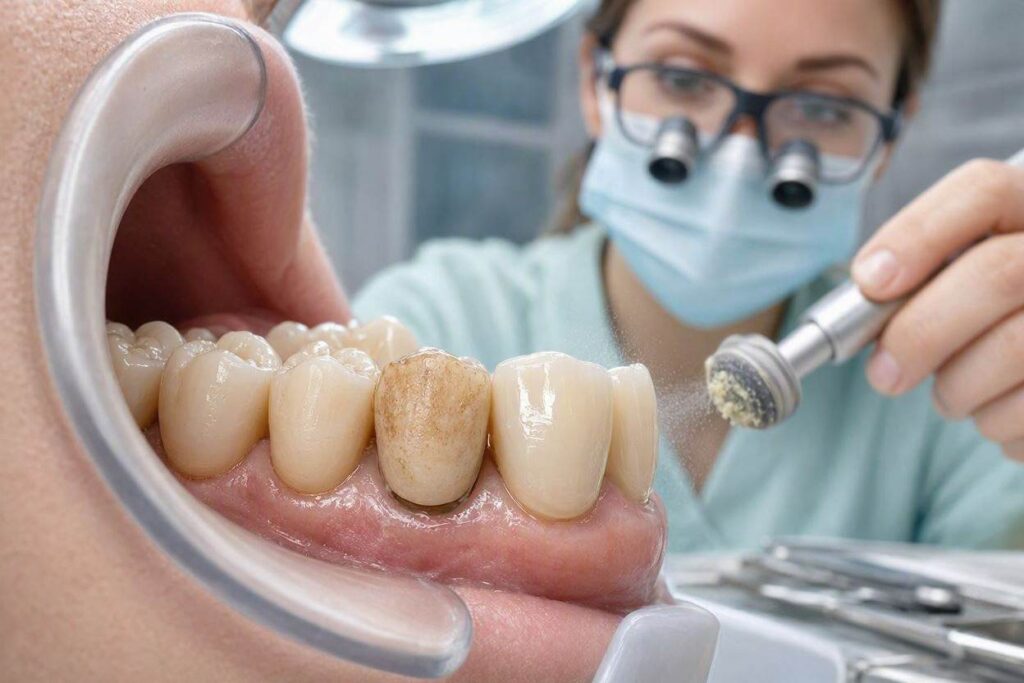
Understanding the Material: Porcelain vs. Natural Teeth
To understand staining, you must first understand that an implant crown is different from a natural tooth.
Natural Teeth have pores (tiny microscopic holes) in the enamel. When you drink coffee or red wine, the pigments seep into these pores. This is why teeth whiteners work—they penetrate the enamel and break up the stains.
Implant Crowns are usually made of porcelain, zirconia, or ceramic. These materials are highly glazed. The glazing process creates a smooth, glass-like surface that is designed to be stain-resistant. Unlike natural enamel, the surface of a well-made crown does not have pores.
This means an implant crown will not stain as easily or as deeply as a natural tooth. However, it can still discolor over time, usually due to external factors or damage to the glaze.
The Two Types of Stains: Surface vs. Subsurface
To determine if the stain can be removed, you need to identify what kind of stain it is.
1. Surface Stains (Extrinsic)
These are stains that sit on top of the glaze. They are caused by:
- Diet: Coffee, tea, red wine, dark berries, tomato sauce, and soy sauce.
- Tobacco: Smoking or chewing tobacco.
- Plaque/Tartar: If you haven’t been cleaning around the implant well, hardened plaque (calculus) can form on the crown. Calculus is usually yellow or brown.
Can they be removed?
Yes! These stains are removable by a dental professional during a cleaning. The hygienist uses special polishing tools to buff the stains off without damaging the porcelain.
2. Subsurface Damage (Intrinsic)
These are not really “stains” in the traditional sense; they are changes to the material itself. They are caused by:
- Loss of Glaze: If the shiny glaze layer is scratched or worn away (often by abrasive toothpaste or harsh dental tools), the underlying porcelain becomes rough. This rough surface catches stains much easier.
- Micro-Cracks: Tiny fractures in the porcelain can trap pigments deep inside the material. These cannot be polished away.
- Cement Leakage: If the crown was cemented onto the abutment, and the cement at the margin (edge) begins to dissolve, a dark line can appear at the gum line. This is often mistaken for a stain, but it is actually a gap or exposed cement.
Can they be removed?
Sometimes. If the glaze is damaged but the stain is on the surface, a dentist can sometimes “re-polish” the crown using special diamond polishing pastes. However, if the stain is deep in the pores of the fractured porcelain, or if the crown is chipped, the only solution is to replace the crown.
How Professionals Remove Stains from Implants
If you notice your implant crown looking dull, do not reach for a whitening kit. Schedule a visit with your dentist or hygienist.
The Professional Cleaning (Prophylaxis)
During a standard cleaning, the hygienist will:
- Use a plastic or titanium-tipped scaler to gently remove any tartar buildup. (They cannot use standard stainless steel scalers on implants because they would scratch the surface).
- Use a rubber cup polisher with a fine, non-abrasive polishing paste. This acts like a buffing wheel, removing surface stains from coffee, tea, and tobacco.
- Use a dental jet polisher (like the Prophy-Jet or Air-Flow). This uses a high-pressure spray of water, air, and fine powder (usually sodium bicarbonate or glycine) to blast away stains. This is very effective for stain removal on implants.
The “Re-Glazing” Process
If the crown has lost its shine but is still structurally sound, some dental labs can “re-glaze” it.
- The crown must be removed (if it is screw-retained, this is easy; if it is cemented, it is harder).
- The crown is sent back to the lab.
- The lab technician applies a new layer of glaze and fires it in a furnace.
- The crown is returned and re-inserted.
This is a great option for restoring the glossy, easy-to-clean surface of a dull crown.
The “Dark Line” at the Gum Line
This is the most common cosmetic complaint with older implants.
What it is:
If you have a titanium abutment and your gums have receded slightly, the dark metal edge of the abutment can become visible at the gum line. It looks like a gray or dark stain, but it is actually the metal showing through.
The Fix:
If the crown is removable (screw-retained), the dentist can often remove it and replace the metal abutment with a tooth-colored zirconia abutment. This eliminates the dark shadow. If the crown is cemented, it is more difficult to address without making a new crown.
Another Cause: The “Cement Line”
If the crown is cemented and the dentist did not remove all the excess cement under the gum, the cement can stain. This stained cement attracts bacteria and darkens. It can sometimes be removed with specialized tools under the gum line.
At-Home Care: Do’s and Don’ts
You can prevent many stains from forming in the first place by following these rules.
The Do’s:
- Rinse After Eating: If you drink coffee, red wine, or eat dark berries, swish with water immediately afterward.
- Use a Water Flosser: This flushes out pigment particles from under the gum line and around the crown edges.
- Use a Soft Toothbrush: Soft bristles protect the glaze.
- Use a Non-Abrasive Toothpaste: Look for toothpastes that are low on the Relative Dentin Abrasivity (RDA) scale. Avoid “whitening” or “smoker’s” toothpastes, which contain harsh abrasives that will scratch the porcelain.
The Don’ts:
- Do NOT Use Whitening Strips or Gels: They will not whiten the implant crown. They will only whiten your natural teeth, potentially making the implant crown look yellower in comparison.
- Do NOT Use Baking Soda: Baking soda is abrasive and will dull the glaze.
- Do NOT Use Metal Tools: Never try to scrape tartar off your implant at home with a metal pick. You will scratch it.
The “Whitening” Dilemma
If you want to whiten your smile and you have an implant, there is a specific strategy.
The porcelain on your implant crown is color-stable. It will never get whiter. If you decide to whiten your natural teeth, do it before the crown is made so the lab can match the crown to your new, whiter smile.
If you already have the crown and decide to whiten your natural teeth later, you might end up with a mismatch. The implant crown will look yellow compared to your newly whitened teeth. In this case, the only solution is to have the crown replaced with a lighter shade.
Conclusion
Most stains on dental implants are surface stains caused by diet or tobacco, and they can be effectively removed with professional polishing or a dental jet clean. If the stain is due to a damaged glaze or a dark metal abutment showing through, you may need to have the crown re-polished, re-glazed, or replaced. Avoid abrasive toothpastes and whitening strips, and maintain excellent hygiene to keep your implant crown looking bright for decades.
Frequently Asked Questions (FAQ)
1. Can I use a magic eraser or cleaning paste on my implant?
No. Household cleaners are toxic and not meant for the mouth. Abrasive pastes (like baking soda or many OTC whitening toothpastes) will scratch the porcelain, making it more prone to staining in the future.
2. Why is my implant crown turning dark while my natural teeth are fine?
This is likely due to the glaze on the crown being worn away, or the edge of a metal abutment showing through. Porcelain is inert; it doesn’t “change color” on its own. The darkening is usually trapped surface stain or the underlying metal showing through.
3. My implant crown is chipped. Can the chip be polished out?
Small chips can sometimes be smoothed and polished by the dentist. However, large chips require repair. If the chip is on a back tooth, the dentist might use a composite bonding material to patch it. If it is on a front tooth, the crown usually needs to be replaced for perfect aesthetics.
4. Does coffee really stain implants?
Yes, it can cause a surface film. However, because the porcelain is glazed, the coffee stains wipe off much easier than they do on natural teeth. Regular professional cleanings will remove this film.
5. The gum around my implant is receding, and I see a gray line. Is that a stain?
No, that is the titanium abutment or the implant post itself becoming visible. It is not a stain that can be polished off. It is a structural/aesthetic issue. You need to see a dentist to discuss gum grafting or replacing the abutment with a white zirconia one.