When Can You Eat After Dental Implants?
You have just come out of the dental implant surgery. The anesthesia is starting to wear off, and your stomach is growling. You are hungry, but you are staring at your reflection, wondering if you are allowed to eat anything with this new titanium post in your jaw.
Eating after dental implant surgery is a topic filled with anxiety. You don’t want to ruin the surgery or cause pain. But you also need to eat to heal. The good news is that you can eat, but you must follow a strict timeline of dietary progression.
The timeline for eating normally after dental implants is not a single day; it is a journey. It starts with liquids and slowly progresses to full solids over the course of several months. This guide will walk you through exactly what you can eat at each stage, what to avoid, and why following these rules is the key to your implant’s success.
The First 24-48 Hours: The Liquid and “No-Chew” Phase
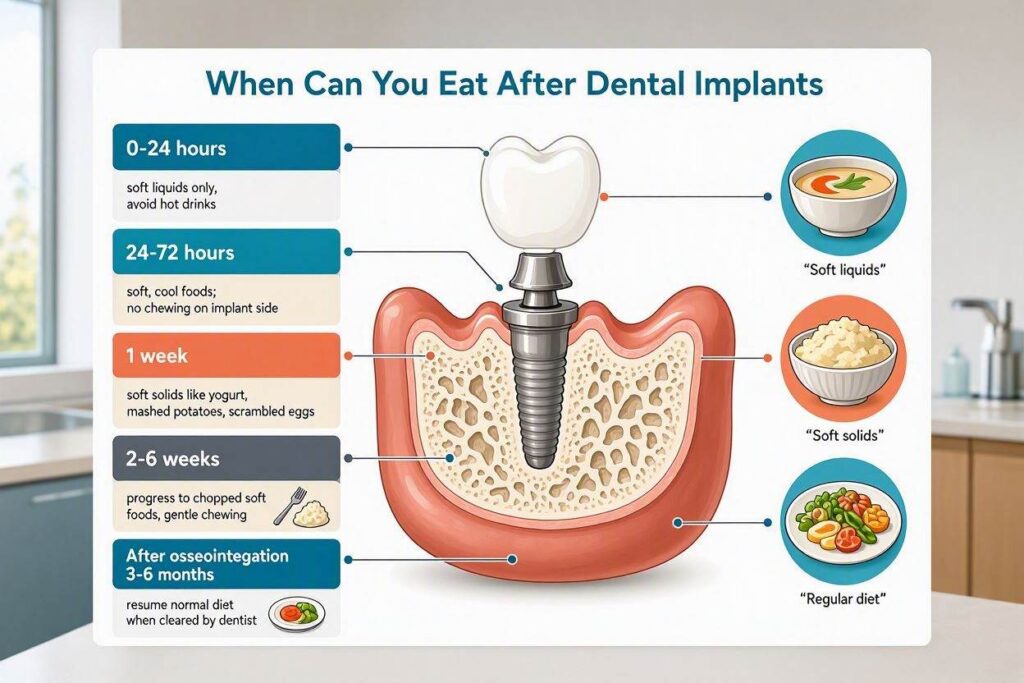
Immediately after the surgery, the site is fragile. The blood clot is forming, and the gum tissue is swollen. Your number one goal during this phase is to avoid disturbing the surgical site and prevent dry socket (where the blood clot dislodges).
The Rules for Day 1-2:
- Strict Liquid Diet: You should only consume liquids that require no chewing.
- No Straws: This is the most critical rule. The suction created by using a straw can dislodge the blood clot, leading to severe pain and failed healing.
- Cold and Warm (Not Hot): Avoid hot foods and liquids, as heat can increase swelling and dissolve the blood clot. Lukewarm or cool is best.
- Hydration: Drink plenty of water to stay hydrated.
What to Eat:
- Broths and Soups: Chicken broth, beef broth, or smooth tomato soup (strained to remove chunks). Ensure they are lukewarm, not hot.
- Meal Replacement Shakes: Ensure, Boost, or SlimFast.
- Protein Shakes: A great way to get nutrition.
- Smoothies: Milkshakes, yogurt smoothies, or fruit smoothies (without seeds like raspberry or strawberry seeds that can get stuck). Remember: No straw!
- Pudding, Jell-O, and Applesauce: These are soft, easy to swallow, and require no chewing.
Important Note: Do not skip meals. Your body needs calories and protein to heal. Malnutrition slows down the bone fusion process (osseointegration).
Days 3 to 7: The “Soft Food” Phase
By day three, the acute pain and swelling are usually starting to subside. You are still healing, but you can introduce slightly more substantial foods. The goal here is to eat foods that require minimal to no chewing.
The Rules for Week 1:
- No Chewing on the Surgical Side: If the implant is on the right side, chew on the left side.
- Soft Consistency: Food should be easy to mash with a fork or dissolve in the mouth.
What to Eat:
- Mashed Potatoes: Creamy, soft, and filling.
- Scrambled Eggs: Soft and packed with protein.
- Yogurt and Cottage Cheese: Dairy is good, but avoid drinking milk if it causes phlegm (which can make you cough).
- Oatmeal or Cream of Wheat: Very soft and warm (not hot).
- Pasta/Noodles: Macaroni and cheese or well-cooked pasta that is easy to squish.
- Bananas: Soft fruit that requires minimal effort.
- Avocado: Soft and nutritious.
What to Avoid:
- Crunchy foods (chips, raw veggies).
- Chewy foods (bread crusts, bagels, tough meat).
- Spicy foods (can irritate the gums).
Weeks 2 to 4: The “Semi-Soft” Phase
At this point, the gum tissue is healing well. However, the implant is still not fused to the bone yet. It relies on mechanical stability (the threads gripping the bone). You must still be careful not to put too much pressure on it.
The Rules for Weeks 2-4:
- Introduce Soft Solids: You can start eating foods that require a little more texture.
- Still Avoid Hard Chewing: Do not bite directly into anything with the implant.
What to Eat:
- Fish: Flaky, soft fish like salmon or tilapia.
- Ground Meat: Meatloaf, meatballs, or ground turkey.
- Soft Vegetables: Steamed broccoli, carrots, or cauliflower (cooked until soft).
- Soft Bread: Pancakes, waffles, or white bread (without the hard crust).
- Rice and Quinoa: These are easy to manage.
Months 1 to 3: The “Transitional” Phase (The Danger Zone)
This is the most deceptive phase. You might feel completely normal. The pain is gone, the swelling is gone, and you might be tempted to eat a steak or bite into an apple. Do not do it.
During this period, the bone is slowly growing and fusing to the titanium implant. This process (osseointegration) is delicate. If you put too much pressure on the implant now, you can cause “micro-movements.” If the implant moves even a tiny fraction of a millimeter, the bone cells will not attach. The implant will fail.
The Rules for Months 1-3:
- No Hard Foods: Avoid nuts, seeds, hard candies, popcorn, and ice.
- No Crunchy Foods: Avoid raw carrots, apples, and hard crusts.
- No Chewy Foods: Avoid steak, jerky, and chewy candies.
- Cut Food into Small Pieces: If you eat chicken or fish, cut it into small bites.
Month 4+ (After Osseointegration): The “Normal” Phase
Once your dentist takes an X-ray and confirms that the bone has fully fused with the implant, you get the green light. This is usually around the 3 to 6-month mark.
The Celebration Meal:
At this point, you can eat virtually anything you want. Steak, apples, corn on the cob—it is all fair game (within reason). The implant is now part of your body.
The Rule for the Final Crown:
Remember, if you only have a temporary crown or the abutment exposed, you still need to be careful. Once the permanent crown is placed, you can resume a normal diet.
The “Same-Day” Implant (Teeth in a Day) Diet
If you received a “same-day” implant (where a temporary crown is placed immediately), your diet rules are even stricter.
Because the implant is immediately loaded, it is at high risk for movement. For the first 3-6 months, you must adhere to a strict soft food diet. You cannot chew on the temporary tooth at all. If you bite down on a hard piece of food, you will almost certainly cause the implant to fail.
Your dentist will give you a specific list of allowed foods (usually soft pasta, eggs, and soups) until the permanent crown is ready.
Why Following the Diet Matters: The “Failed Implant” Risk
It is frustrating to eat mashed potatoes for months. But the alternative is much worse.
If you chew too early and the implant fails, the dentist has to remove the implant. You then have to wait 3-6 months for the bone to heal, and you have to start the entire process over again. This means more surgery, more money, and more time on a soft diet.
The Golden Rule: When in doubt, eat something softer. Your patience will be rewarded with a strong, permanent tooth.
Helpful Tips for Eating During Recovery
- Take Small Bites: This reduces the need for heavy chewing.
- Chew on the Opposite Side: Even when you progress to solids, favor the other side of your mouth.
- Avoid Extreme Temperatures: Very hot or very cold foods can cause sensitivity in the healing bone.
- Rinse Gently: After eating, rinse gently with warm salt water to keep the area clean. Do not swish vigorously.
- Stay Nutritious: Focus on protein shakes, eggs, and yogurt to ensure you are getting enough calories and protein for healing.
Conclusion
The timeline for eating after dental implants starts with liquids only for the first 24-48 hours, progresses to soft foods for the first week, and then gradually introduces semi-soft foods over the next few weeks. You must avoid hard, crunchy, or chewy foods for 3-6 months until the bone has fully fused with the implant. By following your dentist’s dietary guidelines, you protect your investment and ensure the long-term success of your new smile.
Frequently Asked Questions (FAQ)
1. Can I eat pizza after getting a dental implant?
Not immediately. In the first week, pizza crust is too hard and chewy. After about a month, you might be able to eat a soft slice of pizza (cut into small pieces) if you chew on the other side. You should wait until the 3-4 month mark before eating crispy or thick-crust pizza on the implant side.
2. What happens if I accidentally chew on the implant site too early?
If it happens once, you might be fine. You might feel a sharp pain or pressure. Rinse with salt water and monitor the area. If the pain persists, the implant feels loose, or you see swelling, call your dentist immediately. Repeated chewing on a healing implant will cause it to fail.
3. Can I drink coffee after implant surgery?
You should avoid hot coffee for the first 24-48 hours because the heat can disrupt the blood clot. After that, you can drink lukewarm or iced coffee. Just remember: no straws!
4. When can I eat chips and crunchy snacks?
You should wait until the dentist confirms osseointegration is complete (usually 3-6 months). Hard, crunchy foods put high stress on the healing bone.
5. Is it normal to lose weight after dental implant surgery?
Yes, it is common to lose a few pounds due to the restricted diet. The soft food diet is often lower in calories. This is usually temporary. Focus on high-calorie soft foods like milkshakes, avocados, and protein shakes to maintain your energy.