What Is The Cost Of A Dental Implant In My Area?
You’ve decided to replace a missing tooth with a dental implant. Or maybe you’re considering implants for multiple teeth. Either way, you’re probably wondering: How much will this cost in my area?
The answer isn’t simple. Dental implant prices vary dramatically from one city to another, one state to another, and one country to another. A implant that costs $3,000 in rural Texas might cost $6,000 in Manhattan. The same implant in Thailand might cost $1,500. In the UK, it could be £2,500.
So how do you find out what implants cost where you live? And what factors drive those prices?
In this comprehensive guide, we’ll break down everything you need to know about dental implant costs by area. We’ll look at average prices across the United States, Canada, the UK, Australia, and other countries. We’ll explain what affects local pricing. We’ll show you how to get accurate quotes for your area. We’ll also cover insurance, financing, and ways to save money.

What Is a Dental Implant?
Before we talk prices, let’s make sure we’re clear on what a dental implant actually is.
A dental implant is a small, screw-shaped titanium post that’s surgically placed into your jawbone. It serves as an artificial tooth root. Once the implant heals and fuses with your bone (a process called osseointegration), it supports a crown, bridge, or denture.
A complete implant restoration has three parts:
- The implant post: The titanium screw that goes into your jawbone.
- The abutment: The connector that attaches the crown to the implant.
- The crown: The visible tooth that sits on top.
Dental implants are considered the gold standard for tooth replacement. They look natural, feel secure, and can last decades with proper care. Unlike bridges, they don’t require grinding down adjacent teeth. Unlike dentures, they don’t slip or click.
But they’re also expensive. And the cost varies widely depending on where you live.
Why Dental Implant Costs Vary by Area
Dental implant prices aren’t set by a national or international standard. They’re determined by local market forces. Here’s why prices differ so much from one area to another.
1. Cost of Living
In areas with a high cost of living, dental fees are higher. Rent, staff salaries, insurance, and utilities all cost more. Dentists pass these costs on to patients.
2. Demand for Implants
In affluent areas, demand for cosmetic and implant dentistry is higher. Dentists can charge more because patients are willing to pay.
3. Competition
In areas with many implant dentists, prices may be lower because dentists compete for patients. In areas with few dentists, prices may be higher.
4. Dentist’s Experience and Training
A board-certified oral surgeon or periodontist charges more than a general dentist. In areas with more specialists, prices may be higher.
5. Local Regulations and Insurance
In some countries, dental fees are regulated or influenced by insurance reimbursements. In others, the market is completely free.
6. Materials and Lab Costs
The cost of implants, abutments, and crowns varies by brand and quality. Lab fees also vary by region.
7. Additional Procedures
In some areas, patients are more likely to need bone grafting or sinus lifts. These add to the cost.
8. Time of Year
Some dentists offer promotions at certain times of year. This can affect prices.
As one dental economist explains, “Dental implant pricing is a local phenomenon. There’s no single national price. It’s determined by the local market, just like real estate.”
Average Dental Implant Costs by Region
Now let’s look at real prices. We’ll start with the United States, then look at other countries.
United States
Dental implant costs in the US vary by region. Here are average prices for a single implant, including the abutment and crown.
| Region | Average Cost (Single Implant) |
|---|---|
| Northeast (NYC, Boston, Philadelphia) | $4,000 – $6,000 |
| West Coast (LA, SF, Seattle) | $3,500 – $5,500 |
| Midwest (Chicago, Columbus, Detroit) | $3,000 – $4,500 |
| South (Atlanta, Dallas, Miami) | $2,800 – $4,200 |
| Rural Areas | $2,500 – $3,500 |
Canada
Dental implant costs in Canada are similar to the US, though generally slightly lower.
| Region | Average Cost (Single Implant) |
|---|---|
| Ontario | CAD 3,000 – CAD 5,000 |
| British Columbia | CAD 3,500 – CAD 5,500 |
| Alberta | CAD 3,200 – CAD 5,200 |
| Quebec | CAD 2,800 – CAD 4,500 |
| Atlantic Provinces | CAD 2,500 – CAD 4,000 |
United Kingdom
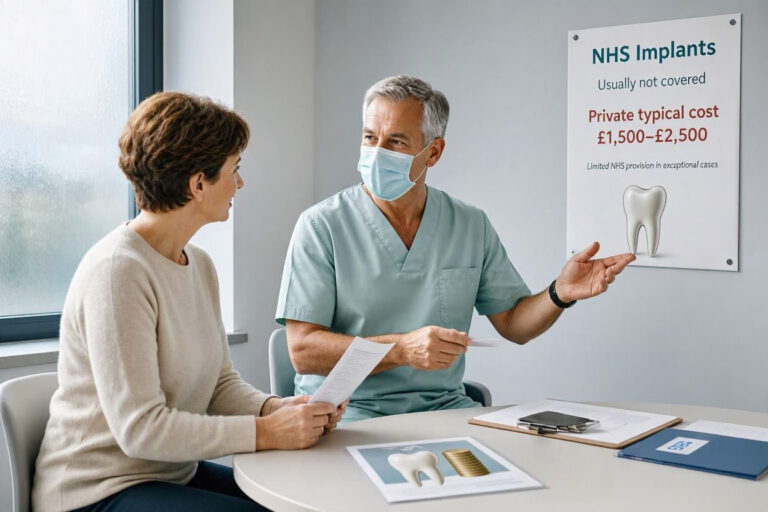
In the UK, implant costs vary between NHS and private treatment. NHS implants are rarely available for adults. Private costs are as follows.
| Region | Average Cost (Single Implant) |
|---|---|
| London | £2,500 – £4,000 |
| South East | £2,200 – £3,500 |
| South West | £2,000 – £3,200 |
| Midlands | £1,800 – £3,000 |
| North West | £1,800 – £2,800 |
| North East | £1,700 – £2,700 |
| Scotland | £1,800 – £2,800 |
| Wales | £1,700 – £2,700 |
| Northern Ireland | £1,700 – £2,700 |
Australia
Dental implant costs in Australia are among the highest in the world.
| Region | Average Cost (Single Implant) |
|---|---|
| Sydney | AUD 4,000 – AUD 6,000 |
| Melbourne | AUD 3,800 – AUD 5,800 |
| Brisbane | AUD 3,500 – AUD 5,500 |
| Perth | AUD 3,500 – AUD 5,500 |
| Adelaide | AUD 3,200 – AUD 5,000 |
| Rural Areas | AUD 3,000 – AUD 4,500 |
Other Countries
Here’s a quick comparison of average single implant costs in other popular destinations.
| Country | Average Cost (Single Implant, USD) |
|---|---|
| Mexico | $1,000 – $2,500 |
| Costa Rica | $1,200 – $2,500 |
| Thailand | $1,500 – $2,500 |
| Hungary | $1,000 – $2,000 |
| Turkey | $800 – $1,800 |
| India | $700 – $1,500 |
| South Korea | $1,500 – $2,500 |
| Germany | $1,800 – $3,500 |
| France | $1,500 – $3,000 |
| Spain | $1,200 – $2,500 |
As you can see, prices vary dramatically. A single implant can cost ten times more in one country than another. But quality and safety also vary. It’s important to do your research.
How to Find Out What Implants Cost in Your Area
Now that you know prices vary, how do you find out what they are where you live? Here are practical steps.
1. Search Online
Start with a Google search. Try queries like:
- “Dental implant cost [your city]”
- “Dental implants [your city] prices”
- “Affordable dental implants [your city]”
Many dental practices publish their prices online. Check their websites.
2. Use Dental Directories
Websites like Healthgrades, Yelp, and Google Reviews list dentists in your area. Some include pricing information.
3. Call Local Dental Offices
Call several dental offices and ask for their implant prices. Be specific: ask for the total cost, including the implant, abutment, and crown. Ask about additional fees for X-rays, CT scans, sedation, and follow-up visits.
4. Ask for a Written Quote
Once you’ve narrowed down your options, ask for a written treatment plan with itemized costs. This ensures there are no surprises.
5. Check with Your Insurance
If you have dental insurance, call your insurer. Ask what they cover for implants and what your out-of-pocket cost will be. They may have a network of dentists with negotiated rates.
6. Visit a Dental School
Dental schools often offer implants at reduced rates. Call the nearest dental school and ask about their implant program.
7. Join Local Facebook Groups
Community Facebook groups often have recommendations for local dentists. Ask for recommendations and price ranges.
8. Use a Dental Tourism Website
If you’re considering traveling for implants, websites like Dental Departures and Medical Departures list prices at clinics around the world.
9. Ask Friends and Family
People who have had implants can tell you what they paid and who they used. Personal recommendations are valuable.
10. Get Multiple Quotes
Don’t settle for the first quote. Get at least three quotes from different dentists. Compare not just price, but also experience, materials, and aftercare.
What Affects the Cost of a Dental Implant in Your Area?
Beyond location, several factors affect the price you’ll pay. Let’s look at the most important ones.
1. Type of Implant
Different implant systems have different costs.
- Standard implants: $1,000 – $3,000
- Mini implants: $500 – $1,500
- Zygomatic implants: $3,000 – $6,000
- All-on-4: $12,000 – $30,000 per arch
2. Number of Implants
The more implants you need, the higher the cost. But some dentists offer discounts for multiple implants.
- Single implant: $2,500 – $6,000
- Two implants: $5,000 – $12,000
- Full mouth (All-on-4): $12,000 – $30,000 per arch
- Full mouth (All-on-6): $18,000 – $35,000 per arch
3. Bone Grafting
If your jawbone isn’t thick or dense enough, you’ll need a bone graft.
- Minor graft: $500 – $1,500
- Major graft: $1,500 – $3,000
- Sinus lift: $1,500 – $3,000
4. Extractions
If you still have teeth that need to be removed, extractions add to the cost.
- Simple extraction: $150 – $400
- Surgical extraction: $300 – $800
5. Sedation
If you’re anxious, you may opt for sedation.
- Nitrous oxide: $50 – $150
- Oral sedation: $100 – $300
- IV sedation: $200 – $600
- General anesthesia: $500 – $1,500
6. Type of Crown
The crown that goes on top of the implant affects the price.
- Porcelain-fused-to-metal: $800 – $1,500
- All-porcelain: $1,000 – $2,000
- Zirconia: $1,200 – $2,500
7. Dentist’s Experience
A specialist charges more than a general dentist. But for complex cases, a specialist may be worth the extra cost.
8. Additional Procedures
Other procedures that may add to the cost include:
- Ridge expansion: $1,000 – $2,500
- Soft tissue grafting: $500 – $1,500
- Immediate load implants: $500 – $1,500 extra
9. Time of Year
Some dentists offer promotions. Ask about discounts.
10. Payment Method
Some dentists offer discounts for upfront payment. Others charge more for payment plans.
Does Insurance Cover Dental Implants?
Insurance coverage for dental implants varies. Let’s break it down.
Dental Insurance
Most dental insurance plans classify implants as a “major” procedure. They may cover 50% after you meet your deductible. But there’s usually an annual maximum—often $1,000 to $2,000.
Some plans specifically exclude implants. Check your policy carefully.
Medical Insurance
Medical insurance sometimes covers implants if they’re medically necessary. For example:
- Implants needed after a traumatic injury
- Implants required due to a congenital condition
- Implants as part of reconstructive surgery
Cosmetic replacement of missing teeth is usually not covered.
Medicare
Original Medicare (Part A and Part B) does not cover dental implants. Medicare Advantage plans may offer some dental coverage, but it varies widely.
Medicaid
Medicaid coverage for dental implants is limited. Some states offer coverage for medically necessary cases. Most do not cover elective implant procedures.
What About National Health Systems?
In countries with national health systems (UK, Canada, Australia), implants are rarely covered for adults. Some exceptions exist for medically necessary cases.
What If You Don’t Have Insurance?
You’ll pay the full cost. But many dentists offer payment plans or discounts for uninsured patients. Ask about these options.
How to Make Dental Implants More Affordable
Don’t let the price tag scare you away. Here are practical strategies to manage costs.
1. Get Multiple Quotes
Prices vary significantly between offices. Get at least three quotes before deciding.
2. Ask About Payment Plans
Many dental offices offer in-house financing. You might pay monthly with low or no interest.
3. Use a Health Savings Account (HSA)
If you have an HSA, you can use pre-tax dollars for dental implants. This effectively reduces your cost by your tax rate.
4. Look into CareCredit
CareCredit is a healthcare credit card with promotional financing options. You might get 6-24 months of interest-free payments.
5. Consider Dental Schools
Dental schools offer discounted treatment performed by supervised students. Savings can be 30-50%.
6. Negotiate
It never hurts to ask. Some dentists offer discounts for upfront payment or multiple implants.
7. Time It Right
If you have insurance with an annual maximum, spreading treatment across two calendar years can maximize benefits.
8. Prioritize
If you need multiple implants, you don’t have to do them all at once. Start with the most visible or functional teeth.
9. Consider All-on-4
If you need full-arch replacement, All-on-4 is often more affordable than individual implants for each tooth.
10. Travel if Appropriate
Dental tourism isn’t for everyone, but it can save thousands if you’re a good candidate.
The Process: What to Expect
Understanding the process helps you plan financially and emotionally.
Step 1: Initial Consultation
Your dentist examines your mouth, takes X-rays, and discusses your goals. You’ll get a treatment plan and cost estimate.
Timeline: 1-2 appointments
Step 2: Pre-Surgical Preparation
If needed, you’ll have extractions, bone grafting, or other preparatory procedures. This may require healing time before implant placement.
Timeline: 1-2 appointments, plus 3-6 months healing
Step 3: Implant Placement
The dentist surgically places the implant into your jawbone. This is usually done under local anesthesia, though sedation is available.
Timeline: 1-2 hours per implant
Step 4: Osseointegration
The implant fuses with your jawbone. This takes 3-6 months. You’ll wear a temporary tooth or denture during this time.
Timeline: 3-6 months
Step 5: Abutment Placement
The dentist attaches the abutment to the implant. This may require a minor procedure.
Timeline: 1 appointment
Step 6: Crown Fabrication
Impressions are taken, and your custom crown is made in a lab.
Timeline: 1-2 weeks
Step 7: Final Restoration
The crown is attached to the abutment. You now have a complete, functional tooth.
Timeline: 1 appointment
Total Timeline
From start to finish, the process usually takes 6-12 months. Some cases are faster. Complex cases take longer.
Important Notes for Readers
Get Everything in Writing: Always request a written treatment plan with itemized costs. Verbal quotes mean nothing if there’s a dispute.
Ask About Guarantees: Some dentists offer warranties on their implant work. Ask what’s covered and for how long.
Don’t Skip Follow-Ups: Post-implant checkups are essential. Problems caught early are easier and cheaper to fix.
Maintain Good Oral Hygiene: Implants require the same care as natural teeth. Brush, floss, and see your dentist regularly.
Be Skeptical of Deals That Seem Too Good: If a price seems impossibly low, ask why. There’s usually a catch.
Consider the Total Cost: The cheapest implant isn’t always the best value. Factor in longevity, follow-up care, and the dentist’s experience.
Ask About the Implant Brand: Premium implants from well-known manufacturers have better track records. Ask which brand your dentist uses.
Check Credentials: Look for board certification and extensive implant training.
Plan for the Long Term: Implants can last a lifetime, but the crown may need replacement after 10-15 years. Factor this into your budget.
Ask About Aftercare: Good aftercare is essential. Ask about follow-up appointments and what’s included.
Frequently Asked Questions
How much does a dental implant cost in my area?
Dental implant costs vary by area. In the US, they range from $2,500 to $6,000. In Canada, CAD 2,500 to CAD 5,500. In the UK, £1,700 to £4,000. In Australia, AUD 3,000 to AUD 6,000. Get local quotes for accurate pricing.
Why do dental implant costs vary so much?
Costs vary due to local cost of living, demand, competition, dentist experience, materials, and additional procedures.
How do I find out what implants cost in my city?
Search online, call local dental offices, ask for quotes, check with your insurance, and visit a dental school.
Are dental implants covered by insurance?
Most dental insurance plans cover 50% of implant costs after a deductible, up to an annual maximum. Some plans exclude implants. Medical insurance may cover implants if medically necessary.
Can I get dental implants for $1,000?
You might find discount offers, but be cautious. Very low prices often mean inferior materials, inexperienced providers, hidden fees, or no follow-up care.
Do dental implants hurt?
The surgery is done under anesthesia, so you won’t feel pain during the procedure. Afterward, you’ll have some soreness and swelling, which can be managed with pain relievers.
How long do dental implants last?
With proper care, implants can last 25 years or more. Some last a lifetime. The crown may need replacement after 10-15 years.
Am I a candidate for dental implants?
Most healthy adults are candidates. You may not be a good candidate if you smoke heavily, have uncontrolled diabetes, have severe gum disease, or have insufficient bone density.
How do I find a good implant dentist?
Look for board certification, extensive implant training, years of experience, positive patient reviews, before-and-after photos, and transparent pricing.
What if I can’t afford implants?
Consider payment plans, dental schools, dental tourism, alternative options (bridges, dentures), or saving up.
Can I get dental implants abroad?
Yes, but consider the risks: follow-up care is difficult, quality varies, and you have no legal recourse if something goes wrong. Do extensive research.
How long does the implant process take?
The full process takes 6-12 months from consultation to final restoration. Some cases are faster with immediate-load implants.
What’s the cheapest way to replace missing teeth?
Removable partial dentures are the least expensive option, costing $500-$2,500. However, they don’t prevent bone loss and typically need replacement every 5-10 years.
Do dental implants feel like real teeth?
Yes. Most patients say implants feel indistinguishable from natural teeth after healing.
What happens if I don’t replace a missing tooth?
The jawbone can shrink, adjacent teeth can shift, and your bite can change. Missing teeth also affect nutrition, speech, and self-confidence.
Can I finance dental implants?
Yes. Many dental offices offer payment plans. You can also use CareCredit, HSA funds, or personal loans.
How much does All-on-4 cost in my area?
All-on-4 costs $12,000 to $30,000 per arch in the US. Prices vary by region and dentist.
Are mini implants cheaper than regular implants?
Yes. Mini implants cost $500 to $1,500 per implant. But they’re not suitable for all cases.
Can I get implants if I have bone loss?
Yes, but you may need a bone graft first. This adds $500-$3,000 to your total cost and 3-6 months to your treatment timeline.
How do I know if a dentist is qualified to place implants?
Look for board certification, membership in implant organizations, extensive training, and a portfolio of successful cases.
Conclusion
Dental implant costs vary widely by area, from $2,500 to $6,000 in the US, CAD 2,500 to CAD 5,500 in Canada, £1,700 to £4,000 in the UK, and AUD 3,000 to AUD 6,000 in Australia. Local prices depend on cost of living, demand, competition, and dentist experience. To find accurate prices in your area, get multiple quotes, check with your insurance, and consider dental schools. With payment plans and careful planning, implants can be more affordable than you think.
Additional Resources
For more information on dental implant costs and finding a qualified implant dentist, visit the American Academy of Implant Dentistry at aaid.com.