Dental Office Furniture: A Practical Buying and Maintenance Guide
Furniture is the largest single category of spending in most dental office fit-outs after equipment. Chairs, desks, cabinetry, and casework collectively shape how a practice looks, feels, and functions. Yet furniture is often bought last, hurriedly, and from whoever can deliver fastest. That sequence produces mismatched styles, premature failures, and staff who spend years sitting at the wrong height.
This guide treats dental office furniture as a practical system. You’ll learn how to prioritize purchases, which materials survive a clinical environment, how to budget across categories, and how to extend the life of what you buy.
Prioritize Furniture Spending by Impact
Not every piece deserves the same investment. Rank purchases by how often they’re used and how much they affect the patient or staff experience.
| Priority | Furniture Category | Why It Ranks Here | Typical Spend Share |
|---|---|---|---|
| 1 | Staff seating (chairs at workstations, stools) | Used eight hours a day; directly affects health and retention. | 15–20% |
| 2 | Waiting room seating | Seen by every patient; hard to clean if poorly chosen. | 15–20% |
| 3 | Reception desk and transaction counter | First impression and daily workflow hub. | 15–25% |
| 4 | Clinical casework (operatory cabinets) | Hygiene critical; expensive to replace prematurely. | 25–30% |
| 5 | Business office and management desks | Functional rather than visible; moderate durability needs. | 5–10% |
| 6 | Break room and ancillary furniture | Staff morale matters, but failures are cheaper to fix. | 5–10% |
Spending in this order prevents the common mistake of buying a beautiful reception desk while staff work from uncomfortable chairs.
“We spent heavily on the visible stuff and cheap on staff seating. Two years later we’d replaced every stool and half the chairs. The expensive reception desk is still fine. We got the priorities backwards.” — Dr. Peter Lang, DDS
Materials That Survive a Clinical Environment
Furniture materials determine cleaning options, lifespan, and appearance. Dental offices subject furniture to moisture, disinfectants, heavy use, and occasional spills.
Upholstery Comparison
| Material | Cleanability | Durability | Comfort | Best Use |
|---|---|---|---|---|
| Commercial vinyl | Excellent | Very high | Moderate | Waiting rooms, operatory stools |
| Polyurethane leather | Very good | High | Good | Waiting areas wanting a softer look |
| Performance fabric (Crypton-type) | Very good | High | Excellent | Low-traffic seating, offices |
| Standard fabric | Poor | Moderate | Good | Avoid in patient areas |
| Mesh | Good | Moderate | Good | Task chairs, breathable seating |
For patient-facing seating, commercial vinyl remains the most practical choice. It wipes clean, handles disinfectants, and resists staining. If you want warmth, performance fabrics offer comfort with reasonable cleanability but demand more careful maintenance.
Frame and Surface Materials
- Powder-coated steel: Durable and easy to wipe. Ideal for chair frames and legs.
- Solid wood: Warm appearance but vulnerable to moisture and disinfectants. Use in offices and consultation rooms, not operatory casework.
- Laminate and thermofoil: Practical for cabinets and desks. Thermofoil handles moisture better in clinical areas.
- Solid surface (Corian and similar): Excellent for counters and transaction tops. Non-porous and repairable.
- Stainless steel: The standard for sterilization workspaces. Hygienic and durable but industrial in appearance.
Furniture by Room: What Actually Works
Different rooms have different demands. Here’s a practical rundown.
Waiting Area
Prioritize cleanability and comfort. Choose chairs with armrests, at least one or two rated for higher weights, and a mix of individual seats with one sofa for families. Keep fabric to a minimum. See our guide on dental office waiting room chairs for a full comparison.
Reception
The desk needs dual heights—around 30 inches for seated work and 42 inches for patient transactions—with a lowered section for accessibility. Specify locking drawers, cable management, and a durable transaction top.
Operatories
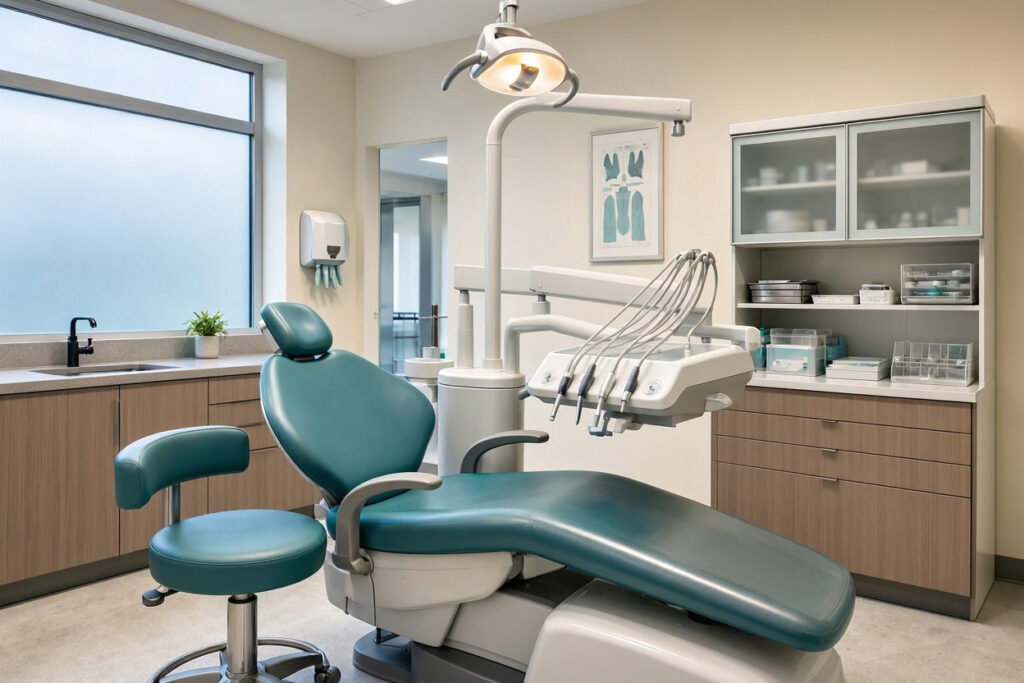
Clinical casework must withstand daily disinfection. Choose thermofoil or stainless steel cabinets with sealed edges. Avoid open shelving that collects dust. Include a charting surface that wipes clean. For material guidance, read our article on dental office cabinets.
Business Office
Invest in an adjustable-height desk, a quality ergonomic chair, monitor arms, and file storage. This is where administrative staff spend most of their day. See our guide on dental office desks for specifics.
Staff Break Room
Standard residential-grade furniture is acceptable here because moisture and chemical exposure are low. Prioritize comfort and a welcoming feel. This is the one room where you can relax the clinical rules.
Sterilization Room
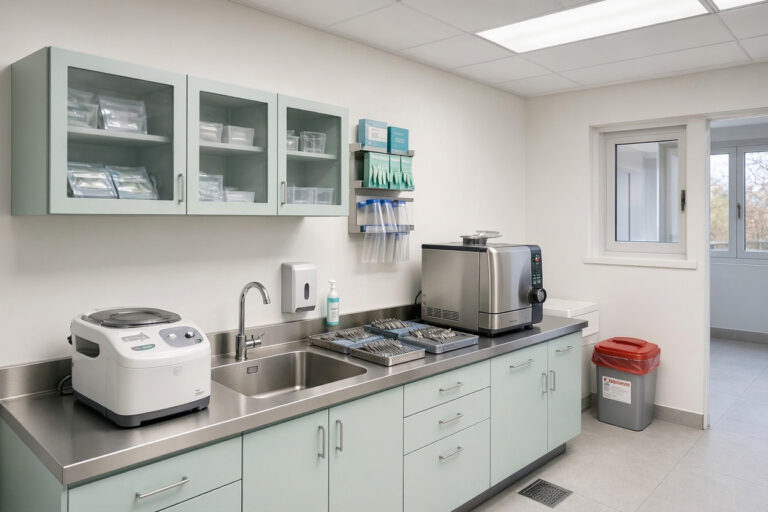
Stainless steel work surfaces and shelving. No particleboard, no wood, no fabric. Everything must withstand moisture and hospital-grade disinfectants. Read our guide on dental office sterilization room design for the full workflow.
Ergonomics: The Furniture Decisions That Protect Staff
Musculoskeletal complaints are common in dentistry. Furniture choices can reduce or worsen them.
| Ergonomic Risk | Furniture Solution |
|---|---|
| Prolonged sitting at reception | Adjustable-height desk, supportive chair with lumbar support |
| Neck strain from monitors | Monitor arms for precise positioning |
| Wrist strain from charting | Keyboard trays, wrist rests |
| Leg fatigue from standing | Anti-fatigue mats, sit-stand options |
| Operatory back strain | Adjustable operator and assistant stools |
A practical note: adjustable furniture costs more upfront but accommodates a wider range of staff body types, which reduces turnover-related refitting costs.
Budgeting Realistically
Furniture budgets vary enormously by region and practice size. These ranges offer a starting framework.
| Category | Budget Tier | Mid-Range | Commercial Grade |
|---|---|---|---|
| Waiting chair (per seat) | $60 – $150 | $150 – $400 | $400 – $800 |
| Reception desk | $800 – $2,000 | $2,000 – $5,000 | $5,000+ |
| Ergonomic task chair | $150 – $300 | $300 – $600 | $600 – $1,200 |
| Operatory casework (per linear foot) | $150 – $350 | $300 – $700 | $700+ |
| Business office desk | $300 – $800 | $800 – $2,000 | $2,000+ |
Cost-Per-Year Thinking
A $100 waiting chair that lasts two years costs $50 per year. A $500 chair that lasts ten years costs $50 per year too—but looks better, feels better, and requires no replacement disruption. Compare cost per year of use, not sticker price.
Extending the Life of Your Furniture
Good furniture fails prematurely for avoidable reasons. These habits make a measurable difference.
- Follow cleaning instructions exactly. The wrong disinfectant can degrade vinyl and finishes quickly.
- Use coasters and trays. Water rings and spills are a leading cause of surface damage.
- Tighten hardware quarterly. Wobbly chairs become broken chairs.
- Rotate high-use items. If chairs are movable, rotate their positions to distribute wear.
- Repair promptly. A loose screw fixed today prevents a broken frame next month.
- Keep spare parts. Stock replacement glides, feet, and cushion covers for high-use models.
- Protect from sunlight. UV fades upholstery and dries out materials near windows.
| Maintenance Task | Frequency | Impact |
|---|---|---|
| Wipe seating and surfaces | Daily | Hygiene and appearance |
| Tighten hardware | Quarterly | Prevents structural failures |
| Inspect upholstery for tears | Monthly | Early repair avoids replacement |
| Deep clean fabric items | Quarterly | Extends lifespan |
| Review furniture condition annually | Yearly | Informs budget planning |
Common Furniture Buying Mistakes
| Mistake | Why It Costs You | Better Approach |
|---|---|---|
| Buying residential furniture | Fails quickly under commercial use | Specify contract-grade products |
| Choosing style over cleanability | Stains and harbors bacteria | Prioritize wipeable surfaces |
| Skipping ergonomic assessment | Staff pain and turnover | Invest in adjustable items |
| Ordering without lead-time planning | Delays opening or renovation | Confirm delivery dates in writing |
| Mismatched styles across rooms | Looks unplanned | Standardize finishes and frames |
| No spare parts stock | Small repairs become replacements | Order spares with the original purchase |
| Ignoring weight capacities | Safety risk and liability | Check specs; include bariatric options |
“We now order two spare cushion covers with every waiting room chair model. When one tears, we swap it the same day. It’s the cheapest maintenance decision we’ve made.” — Alina Petrova, Practice Administrator
An FAQ on Dental Office Furniture
1. What furniture material is best for a dental office?
Commercial vinyl for patient seating, thermofoil or stainless steel for clinical casework, and solid surface for counters. Prioritize cleanability and durability over appearance in all patient and clinical areas.
2. How much should a dental office budget for furniture?
For a small practice, a full furniture package typically runs $30,000 to $80,000, covering waiting area, reception, offices, and casework. Larger practices and premium finishes push costs higher. Budget by category using the priority order above.
3. Should I buy residential or commercial furniture?
Commercial or contract-grade furniture for all patient-facing and high-use areas. Residential furniture is acceptable only in low-use, low-moisture spaces like a break room.
4. How do I make furniture last longer in a dental office?
Follow cleaning instructions, use the correct disinfectants, tighten hardware quarterly, repair damage promptly, and keep spare parts on hand. These habits typically extend life by several years.
5. Is it worth buying ergonomic furniture for staff?
Yes. Ergonomic chairs, adjustable desks, and monitor arms reduce pain and fatigue, which improves retention. The cost of replacing a trained staff member far exceeds the cost of good furniture.
6. How do I coordinate furniture styles across different rooms?
Standardize two or three elements throughout: frame finish, upholstery color family, and surface material. Vary the pieces themselves by room function, not by style.
7. When should dental office furniture be replaced?
Replace items when frames become unstable, upholstery is torn beyond repair, or surfaces can no longer be cleaned effectively. Commercial-grade furniture typically lasts seven to twelve years with proper care.
Important Note for Readers
Verify that all furniture finishes are compatible with the disinfectants your team uses daily—test on a hidden area first. Confirm weight capacities for seating and include at least one or two higher-capacity options. Check local fire codes for upholstery requirements in public spaces, and confirm any large purchases with your landlord if you rent.
Conclusion
Dental office furniture is a long-term investment that rewards careful prioritization.
Spending first on staff seating and cleanable patient furniture prevents costly early failures.
Matching materials to each room’s demands keeps clinical spaces hygienic and comfortable.
Consistent maintenance and spare parts stretch every purchase across many years.
Additional Resource: For ergonomic guidance on workplace furniture and workstations, visit OSHA’s Ergonomics page. https://www.osha.gov/ergonomics