Dental Office Signs Outside: A Complete Guide to Attract and Reassure Patients
Your exterior signage is often the very first impression a patient has of your practice. Before they meet your team or sit in your chairs, they see your sign from the street. A well-designed sign builds trust, while a poor one can create doubt. This comprehensive guide covers everything you need to know about dental office signs outside, from material choices to legal requirements and design tips that get results.
Why Exterior Signage Matters for Your Dental Practice
A sign is more than just a marker of location. It is a silent marketing tool that works 24 hours a day. For dental practices, visibility and approachability are critical. Patients feel anxious about dental visits, and a clean, professional sign can ease that anxiety before they even walk through the door.
Good signage also differentiates you from competitors. In a strip mall or medical plaza, multiple practices may compete for attention. A distinctive sign helps patients find you quickly and remember your brand later.
“Your sign is the handshake you offer before a patient walks in. Make it firm, clear, and welcoming.” — Practice Management Consultant
The Primary Goals of an Exterior Dental Sign
- Identification: Help new and returning patients locate your office with ease.
- Credibility: Signal that your practice is established, professional, and trustworthy.
- Brand Awareness: Reinforce your logo, colors, and name in the local community.
- Accessibility: Display hours, services, or directions that reduce confusion.
Types of Dental Office Signs Outside
Choosing the right type of sign depends on your location, budget, and local regulations. Here is a breakdown of the most common options.
1. Monument Signs
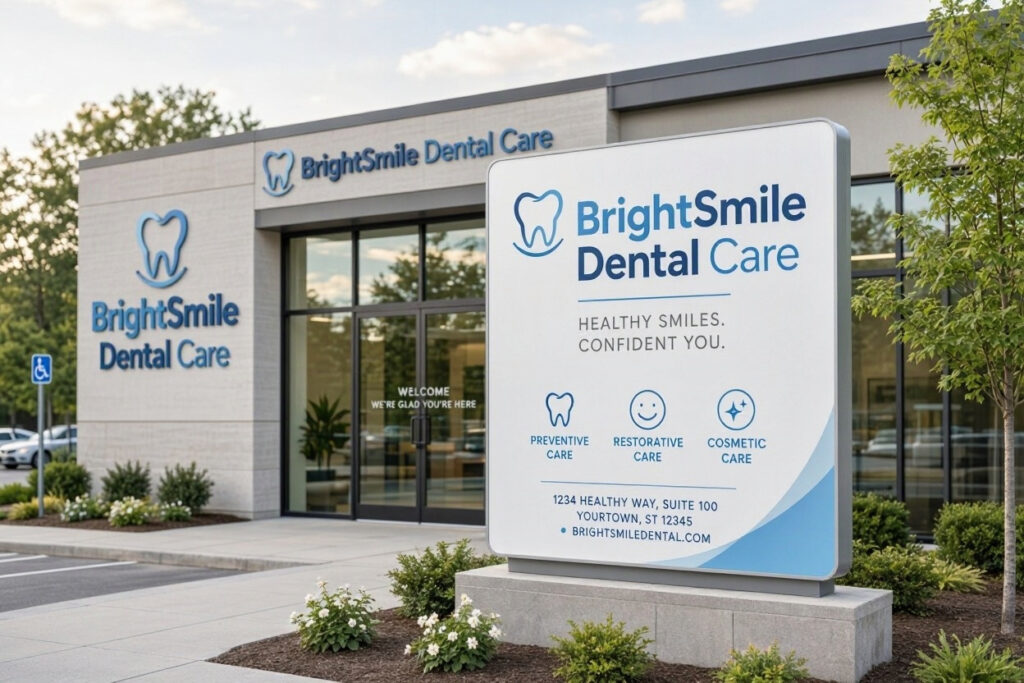
These are freestanding signs placed near the street, often mounted on a low base of brick, stone, or concrete. Monument signs work well for practices with their own building or a dedicated lot. They offer excellent visibility and a permanent, high-end look.
2. Wall-Mounted Signs
These attach directly to the exterior wall of your building. They are common in medical plazas and office parks. Wall signs are cost-effective and easy to install, but visibility may be limited if the building sits far from the road.
3. Window Graphics and Vinyl Lettering
Window signs are ideal for practices in shared buildings or retail centers. They are affordable, easy to update, and can cover large glass areas without blocking light. Frosted vinyl adds privacy while still displaying your name and logo.
4. Pylon Signs
Tall, freestanding signs that often list multiple tenants in a plaza. Pylon signs give excellent visibility from a distance and help patients spot your location in busy commercial areas.
5. Illuminated Channel Letters
These are three-dimensional letters with internal lighting. They are highly visible at night and project a modern, polished image. Channel letters are a popular choice for practices that want to stand out.
6. A-Frame and Sidewalk Signs
For practices with foot traffic, portable A-frame signs can promote special offers or new patient welcome messages. Check local ordinances first, as some areas restrict sidewalk signage.
Comparison Table: Sign Types at a Glance
| Sign Type | Best For | Visibility | Typical Cost | Maintenance |
|---|---|---|---|---|
| Monument Sign | Standalone buildings | High | High | Low |
| Wall-Mounted | Office plazas | Medium | Medium | Low |
| Window Graphics | Retail centers, shared buildings | Medium | Low | Medium |
| Pylon Sign | Busy commercial areas | Very High | High | Low |
| Illuminated Channel Letters | Night visibility, branding | Very High | High | Medium |
| A-Frame | Foot traffic, promotions | Low | Low | High |
Legal and Compliance Considerations
Before you order a sign, confirm local zoning laws and landlord requirements. Many municipalities limit sign size, height, placement, and illumination. Medical plazas often have design review boards that must approve your sign’s appearance.
Here is a quick checklist to follow:
- Check zoning ordinances with your city or county planning office.
- Review your lease agreement for signage rules and approval processes.
- Obtain necessary permits before installation.
- Confirm ADA compliance, especially if your sign includes tactile elements or Braille.
- Verify illumination restrictions if you plan to light your sign at night.
Important Note: Installing a sign without permits can result in fines and forced removal. Always get written approval first.
Design Tips That Work
Your sign should be readable from a moving car in about three seconds. That means simple, bold, and clear design wins over artistic complexity.
Key Design Principles
- Use high contrast: Dark letters on a light background or vice versa.
- Choose readable fonts: Avoid script or overly decorative typefaces for the main text.
- Keep it brief: Your practice name and primary service (e.g., “Family Dentistry”) are enough.
- Include your logo: Consistency builds brand recognition.
- Add a tagline if space allows: Something short like “Gentle Care for All Ages” reinforces your value.
- Consider your surroundings: Make sure your sign stands out against the building’s color and nearby signs.
- Test the view: Check your design from the street at different times of day.
The Three-Second Rule
Show your sign design to someone unfamiliar with your practice. Give them three seconds to look at it, then ask what they remember. If they cannot recall your name or service, simplify the design.
Illumination Options
Lighting extends your sign’s effectiveness into the evening hours. It also improves safety and security around your entrance.
| Lighting Type | Description | Pros | Cons |
|---|---|---|---|
| Internal LED | Letters light from within | Energy-efficient, modern look | Higher upfront cost |
| External Spotlight | Lights mounted above or below sign | Flexible, easy to adjust | Can cause glare if poorly placed |
| Backlit Halo | Light glows behind letters | Elegant, high-end appearance | Less visible from a distance |
| None | No lighting | Lowest cost | Invisible at night |
Important Note: LED lighting is the most energy-efficient option and lasts significantly longer than traditional bulbs. It also produces less heat, which reduces maintenance needs.
Materials and Durability
Exterior signs face sun, rain, wind, and temperature swings. Material choice affects both appearance and lifespan.
- Acrylic: Lightweight, versatile, and available in many colors. Good for illuminated signs.
- Aluminum: Durable and rust-resistant. Ideal for wall-mounted and monument signs.
- Stainless Steel: Premium look with excellent durability. Higher cost.
- High-Density Polyurethane (HDU): Carves like wood but resists moisture and insects.
- Vinyl: Best for window graphics and temporary signage.
A well-made sign should last 10 to 15 years with minimal maintenance. Clean it regularly with mild soap and water to keep it looking new.
Budgeting for Your Sign
Costs vary widely based on size, materials, lighting, and installation complexity. Here is a rough range to help you plan.
| Sign Category | Typical Price Range |
|---|---|
| Window graphics | $300 – $1,500 |
| Wall-mounted sign (non-illuminated) | $800 – $3,000 |
| Monument sign | $3,000 – $15,000 |
| Illuminated channel letters | $2,500 – $10,000 |
| Pylon sign | $5,000 – $20,000+ |
Note: These figures are estimates. Always request multiple quotes and ask about installation, permits, and warranty coverage.
Maintenance and Upkeep
A faded or damaged sign sends the wrong message. Schedule regular inspections to catch problems early.
Monthly: Wipe down surfaces and check for loose parts.
Seasonally: Inspect lighting and replace bulbs or LED modules as needed.
Annually: Deep clean and check for rust, cracks, or weather damage.
Keep a maintenance log to track repairs and replacements. This helps you budget and stay ahead of issues.
Frequently Asked Questions
How long does it take to get a sign installed?
Timelines vary from two to eight weeks depending on permits, fabrication, and installation scheduling. Custom signs take longer than stock options.
Do I need a permit for my dental office sign?
Most municipalities require a permit for exterior signage. Check with your local planning or building department before ordering.
What is the best font for a dental sign?
Sans-serif fonts like Helvetica, Arial, or Montserrat offer the best readability. Avoid thin or script fonts for the main text.
Can I change my sign’s message easily?
Window graphics and A-frame signs are easy to update. Monument and wall signs are permanent, so plan your message carefully.
How often should I update my exterior signage?
Update when your branding changes, when materials show significant wear, or when local regulations change. Otherwise, a well-maintained sign can last a decade or more.
Additional Resource
For guidance on sign permits and local regulations, visit the International Sign Association for industry standards and resources.
Conclusion
A dental office sign outside your practice is a powerful, always-on marketing asset. It identifies your location, builds trust, and reinforces your brand. Choose the right type, follow local rules, invest in durable materials, and keep the design simple and readable. With careful planning, your sign will welcome patients and strengthen your practice’s reputation for years to come.