Dental Office Hairstyles: A Complete Guide for Professionals
In a dental office, appearance matters. Patients notice how you look, and your appearance contributes to their sense of trust and comfort. Hairstyle is a big part of that impression. It is also a practical consideration. Dental professionals work in close proximity to patients, handle equipment, and maintain strict hygiene standards. The right hairstyle balances professionalism, safety, and personal style.
Many dental professionals struggle with finding hairstyles that work in a clinical environment. Long hair can fall into the treatment field. Loose hair can harbor bacteria. Styles that require frequent adjustment can be distracting. The wrong hairstyle can compromise infection control and create an unprofessional image.
This guide covers everything you need to know about dental office hairstyles. You will learn about hygiene and safety considerations, the best styles for different roles, practical tips, and common mistakes to avoid. By the end, you will have a clear understanding of how to choose a hairstyle that works for you and your practice.
Why Hairstyle Matters in a Dental Office
Hairstyle is more than a personal choice. In a dental setting, it affects hygiene, safety, and professional image. Here is why it deserves attention.
- It Affects Infection Control: Loose hair can harbor bacteria and contaminate treatment areas. Keeping hair secured reduces this risk.
- It Ensures Safety: Long hair can get caught in equipment, suction lines, or rotating instruments. Securing hair prevents accidents.
- It Projects Professionalism: A neat, well-maintained hairstyle signals competence and attention to detail. It builds patient trust.
- It Enhances Patient Comfort: Patients feel more comfortable when their clinician looks clean and professional. Hair that falls into the treatment field can be unpleasant.
- It Supports Practicality: Dental professionals bend, lean, and move throughout the day. A hairstyle that stays in place reduces distractions and the need for adjustment.
- It Reflects Your Brand: Your team’s appearance, including hairstyles, contributes to your practice’s overall image.
“Your hairstyle is part of your professional uniform. It should look clean, be secure, and allow you to focus on your patient. When your hair is out of the way, you can focus on what matters most—care.” — Dr. Susan Blake, Dental Practice Consultant
Key Considerations for Dental Office Hairstyles
Not all hairstyles work in a dental setting. Here are the key factors to consider.
1. Hygiene
Hair should be clean and well-maintained. Loose hair can shed and contaminate treatment areas. Hair that is secured away from the face and treatment field reduces this risk.
2. Safety
Long hair should be tied back or secured. Hair that hangs loose can get caught in equipment or fall into the patient’s mouth. This is a safety hazard.
3. Comfort
Dental professionals wear masks, loupes, and sometimes surgical caps. Hairstyles should accommodate these accessories without causing discomfort. Styles that require frequent adjustment are distracting.
4. Professionalism
Hairstyles should look neat and intentional. Extreme styles, bright unnatural colors, or unkempt hair may undermine patient trust. Conservative, clean styles work best in most dental settings.
5. Practicality
The style should hold up throughout a long shift. Styles that require frequent re-styling or fall apart easily are not practical.
6. Personal Expression
While professionalism is important, you can still express your personality. There are many ways to style hair that are both professional and personal.
| Consideration | Why It Matters | What to Look For |
|---|---|---|
| Hygiene | Infection control | Clean, secured hair |
| Safety | Prevents accidents | Tied back, secured |
| Comfort | Works with PPE | Accommodates masks, loupes |
| Professionalism | Builds trust | Neat, intentional styles |
| Practicality | Holds up all day | Low-maintenance, secure |
| Personal Expression | Morale and identity | Professional but personal |
Note for Readers: Always follow your practice’s dress code and infection control policies. Some practices have specific requirements for hair coverings or styling.
Best Hairstyles for Dental Professionals
Different roles and hair types call for different styles. Here are the best options.
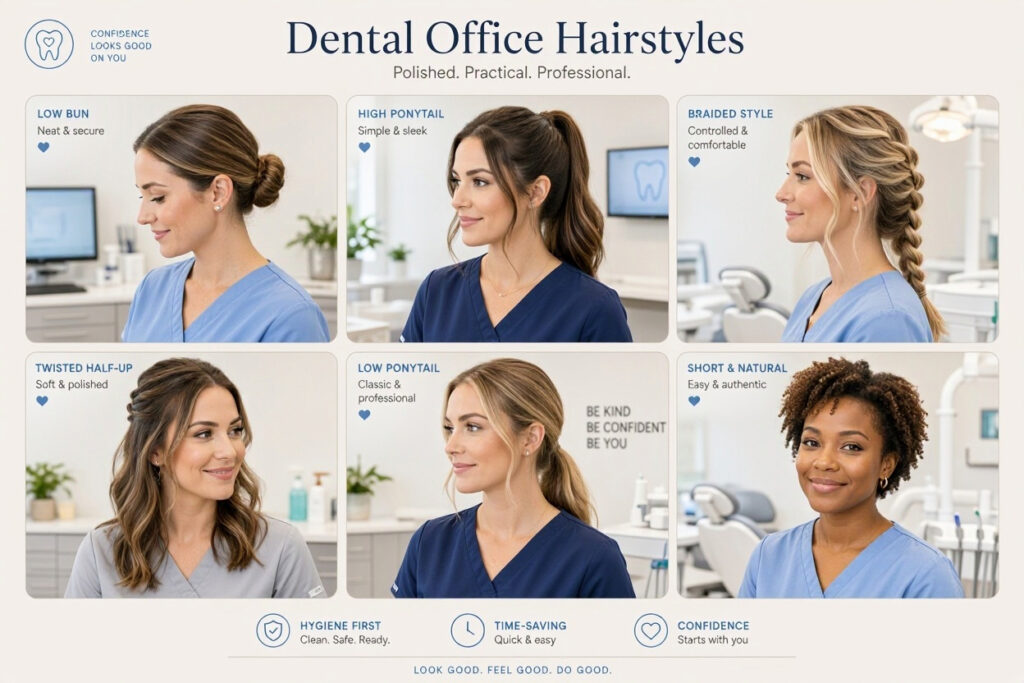
1. The Low Bun
A low bun is a classic choice for dental professionals. It keeps hair securely away from the face and treatment area. It looks polished and professional.
- Best For: Long hair, all roles
- How to Style: Gather hair at the nape of the neck and twist into a bun. Secure with pins or a hair tie.
- Pros: Secure, professional, comfortable with masks
- Cons: Can cause headaches if too tight
2. The High Bun
A high bun keeps hair completely off the neck and shoulders. It is ideal for hot environments or long shifts.
- Best For: Long hair, active roles
- How to Style: Gather hair at the crown and twist into a bun. Secure with pins.
- Pros: Keeps hair off neck, secure
- Cons: Can pull on scalp, may not suit all face shapes
3. The Ponytail
A simple ponytail is practical and easy. It keeps hair back and out of the way.
- Best For: Medium to long hair
- How to Style: Gather hair at the nape or mid-crown. Secure with a hair tie.
- Pros: Quick, easy, comfortable
- Cons: Can swing forward, may need re-tying
4. The Braid
A braid is a secure, professional style. It keeps hair contained and looks polished.
- Best For: Long hair, all roles
- How to Style: Braid hair down the back or to the side. Secure with a hair tie.
- Pros: Secure, professional, reduces shedding
- Cons: Takes time to style
5. The Pixie Cut
A short pixie cut is low-maintenance and professional. It keeps hair off the face and is easy to manage.
- Best For: Short hair, all roles
- How to Style: Keep it trimmed and styled with a light product.
- Pros: Low-maintenance, professional, comfortable
- Cons: Requires regular trims
6. The Bob
A bob is a classic, professional style. It is short enough to stay out of the way but long enough to style.
- Best For: Medium hair, all roles
- How to Style: Keep it trimmed and styled. Tuck behind ears if needed.
- Pros: Professional, versatile, comfortable
- Cons: Can fall forward, may need pins
7. The Half-Up, Half-Down
This style keeps hair off the face while allowing some length to show. It is professional and practical.
- Best For: Medium to long hair
- How to Style: Pull the top section back and secure with a clip or tie.
- Pros: Keeps hair off face, looks polished
- Cons: Lower sections can still fall forward
| Hairstyle | Best For | Pros | Cons |
|---|---|---|---|
| Low Bun | Long hair | Secure, professional | Can cause headaches |
| High Bun | Long hair, active | Keeps hair off neck | Can pull on scalp |
| Ponytail | Medium-long | Quick, easy | Can swing forward |
| Braid | Long hair | Secure, reduces shedding | Takes time |
| Pixie Cut | Short hair | Low-maintenance | Requires trims |
| Bob | Medium hair | Versatile, professional | Can fall forward |
| Half-Up | Medium-long | Keeps hair off face | Lower sections loose |
Pro Tip: Choose a style that works with your hair type and the personal protective equipment (PPE) you wear. Test styles during a busy shift to see how they hold up.
Hairstyles for Different Roles
Different roles in the dental office may have different requirements. Here are some recommendations.
Dentists and Hygienists
Dentists and hygienists work directly in the patient’s mouth. Hair must be securely tied back to prevent contamination and interference.
- Best Styles: Low bun, high bun, braid, pixie cut
- Why: These styles keep hair completely out of the treatment field and are easy to manage with masks and loupes.
Dental Assistants
Dental assistants move frequently and handle equipment. Hair should be secure and practical.
- Best Styles: Ponytail, braid, bun, bob
- Why: These styles stay in place during movement and are comfortable for long shifts.
Front Office Staff
Front office staff interact with patients but do not work directly in treatment areas. They have more flexibility in hairstyle.
- Best Styles: Any professional style, including half-up, bob, or styled short hair
- Why: These styles look polished and welcoming without the strict hygiene requirements of clinical roles.
Practice Managers
Practice managers balance professionalism with personal style. They can choose from a wide range of styles.
- Best Styles: Professional cuts, blowouts, buns, or braids
- Why: These styles project authority and approachability.
| Role | Best Styles | Key Consideration |
|---|---|---|
| Dentist/Hygienist | Bun, braid, pixie | Hygiene and safety |
| Dental Assistant | Ponytail, braid, bun | Practicality and movement |
| Front Office | Half-up, bob, styled short | Professional appearance |
| Practice Manager | Professional cuts, buns | Authority and approachability |
Note for Readers: Always check with your practice’s dress code and infection control policies. Some practices may have specific requirements for hair coverings or styling.
Hair Hygiene and Infection Control
Hair hygiene is a critical part of infection control in a dental office. Here are the key practices.
1. Wash Hair Regularly
Wash your hair regularly to remove oils, dirt, and bacteria. Clean hair is essential for a professional appearance and infection control.
2. Keep Hair Secured
Loose hair can shed and contaminate treatment areas. Keep hair tied back or secured, especially when working directly with patients.
3. Avoid Touching Hair
Frequent touching of hair transfers bacteria to your hands. Avoid touching your hair during patient care. If you must adjust it, wash your hands afterward.
4. Use Clean Accessories
Hair ties, clips, and pins should be clean. Wash them regularly to prevent bacterial growth.
5. Consider Hair Coverings
In some clinical settings, hair coverings (surgical caps) may be required. These provide an additional layer of protection and keep hair completely contained.
6. Groom Facial Hair
For professionals with facial hair, keep it neatly trimmed and clean. Facial hair can harbor bacteria and interfere with mask fit. Follow your practice’s guidelines for facial hair.
| Hygiene Practice | Why It Matters | Frequency |
|---|---|---|
| Wash Hair | Removes bacteria | Daily or every other day |
| Secure Hair | Prevents shedding | Every shift |
| Avoid Touching | Prevents contamination | Throughout the day |
| Clean Accessories | Prevents bacterial growth | Weekly |
| Hair Coverings | Extra protection | As required |
| Groom Facial Hair | Mask fit, hygiene | Daily |
Important Note: Follow CDC and OSHA guidelines for infection control. Hair hygiene is one part of a comprehensive infection control program.
Practical Tips for Managing Hair in a Dental Office
Managing hair in a clinical environment can be challenging. Here are practical tips.
1. Choose the Right Accessories
Use secure hair ties, clips, and pins that hold hair in place without causing discomfort. Avoid accessories that can fall off or become loose.
2. Keep a Styling Kit at Work
Keep a small kit with extra hair ties, bobby pins, and a comb in your locker or desk. This helps you fix any issues quickly.
3. Use Hair Products Wisely
Light-hold products can help keep hair in place. Avoid heavy gels or sprays that can leave residue or cause buildup.
4. Consider a Shorter Cut
If managing long hair becomes a daily struggle, consider a shorter cut. A pixie or bob is easier to manage and more practical for clinical work.
5. Protect Hair from PPE
Masks, loupes, and caps can cause friction and breakage. Use a silk scarf or headband to protect your hairline. Choose PPE that fits comfortably.
6. Style for Comfort
Choose styles that do not pull on your scalp or cause headaches. Comfort is key for long shifts.
7. Refresh During Breaks
Take a moment during breaks to refresh your hairstyle. A quick touch-up can make you feel more comfortable and confident.
| Tip | Why It Helps | How to Do It |
|---|---|---|
| Right Accessories | Holds hair securely | Use quality ties and clips |
| Styling Kit | Quick fixes | Keep in locker |
| Light Products | Avoids residue | Use light-hold products |
| Shorter Cut | Easier management | Consider pixie or bob |
| Protect from PPE | Prevents breakage | Use silk scarf or headband |
| Comfort | All-day wear | Avoid tight styles |
| Refresh | Feels better | Touch up during breaks |
Pro Tip: Experiment with different styles on your days off. Find what works for you before wearing it to work. This prevents surprises during a busy shift.
Common Hairstyle Mistakes to Avoid
Even well-intentioned hairstyles can go wrong. Here are the most common mistakes.
- Wearing Hair Loose: Loose hair can shed, contaminate treatment areas, and get caught in equipment. Fix it by tying hair back securely.
- Using Flimsy Accessories: Cheap hair ties and clips break easily. Fix it by investing in quality accessories.
- Ignoring Comfort: Tight styles cause headaches and breakage. Fix it by choosing comfortable styles that do not pull.
- Neglecting Hygiene: Dirty hair harbors bacteria. Fix it by washing regularly and keeping accessories clean.
- Touching Hair Frequently: Touching hair transfers bacteria to your hands. Fix it by keeping hands away from your face.
- Wearing Extreme Styles: Extreme colors or styles may undermine professional trust. Fix it by choosing conservative, clean styles.
- Forgetting Facial Hair: Facial hair can interfere with mask fit and harbor bacteria. Fix it by keeping it neatly trimmed.
“The most common mistake I see is professionals wearing their hair loose. It looks unprofessional and poses a hygiene risk. A simple ponytail or bun takes seconds and makes a world of difference.” — Sarah Mitchell, Dental Office Consultant
Frequently Asked Questions
What is the best hairstyle for a dental hygienist?
A low bun, high bun, or braid is best. These styles keep hair securely away from the face and treatment area. They are comfortable with masks and loupes and hold up throughout a long shift.
Can I have long hair and work in a dental office?
Yes. Long hair is fine as long as it is securely tied back. A ponytail, bun, or braid keeps hair contained and professional. Avoid leaving hair loose.
Are there dress code rules for hair in dental offices?
It depends on your practice. Many practices require hair to be tied back for infection control and safety. Check your employee handbook and follow your practice’s policies.
How do I keep my hair from falling into my face during procedures?
Use a secure hairstyle like a bun or braid. Use bobby pins or clips to secure stray hairs. Consider a headband or hair scarf for extra security.
What about facial hair for male dental professionals?
Keep facial hair neatly trimmed and clean. It should fit comfortably under a mask. Follow your practice’s guidelines for facial hair length and grooming.
Can I dye my hair unnatural colors in a dental office?
It depends on your practice culture. Conservative, natural colors are safest. Some modern practices are more flexible. Check with your employer before making drastic changes.
Conclusion
Choosing the right hairstyle for a dental office is about balancing hygiene, safety, and professionalism. By keeping hair secured, maintaining cleanliness, and choosing practical styles, you can look professional and feel comfortable throughout your shift.
Additional Resource
For more guidance on infection control and professional appearance in dental settings, explore the CDC’s resources on dental infection prevention. https://www.cdc.gov/oralhealth/infectioncontrol/index.html