What Is a Dental Implant and How Does It Work?
If you’ve been dealing with missing teeth or uncomfortable dentures, you’ve likely heard about dental implants. These small but mighty devices have revolutionized modern dentistry, offering a permanent solution that looks, feels, and functions like natural teeth. But what exactly is a dental implant, and how does it work its magic inside your mouth?
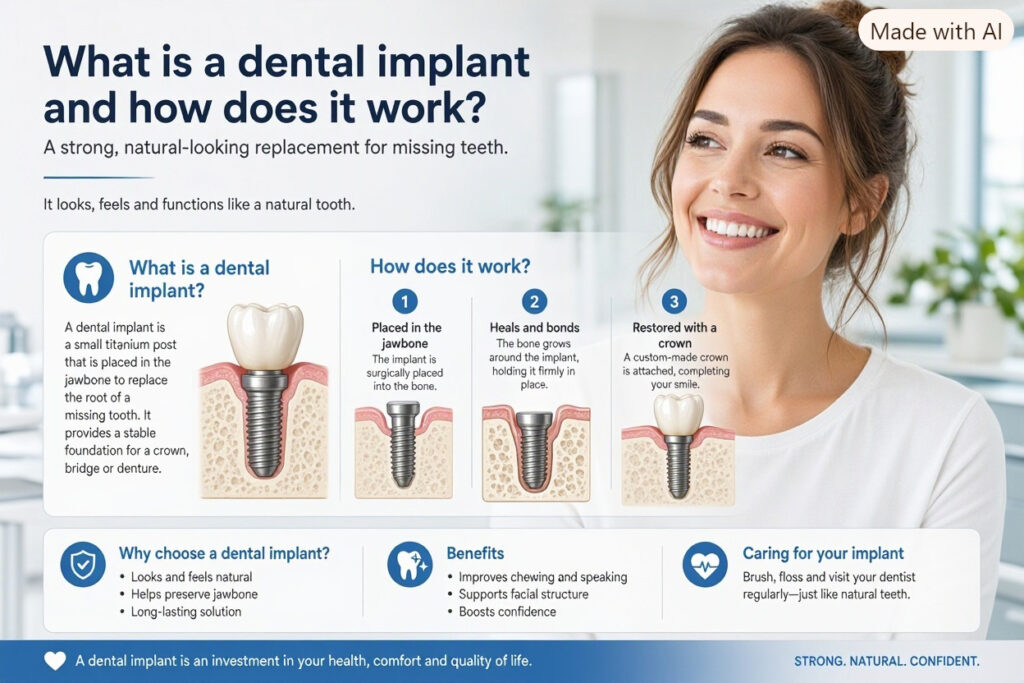
A dental implant is a titanium post surgically placed into your jawbone to serve as an artificial tooth root. Once healed, this post supports a replacement tooth or bridge, giving you a stable, durable solution for tooth loss. Unlike dentures that sit on top of your gums, implants become part of your mouth’s structure, mimicking the natural relationship between your tooth and jaw.
Understanding dental implants helps you make informed decisions about your oral health. Whether you’re missing one tooth or several, this guide will walk you through everything you need to know about this remarkable dental solution.
The Anatomy of a Dental Implant
What Are the Components?
A dental implant consists of three main parts working together seamlessly. Let’s break down each component:
The Implant Fixture (Screw)
This is the titanium post that serves as your artificial tooth root. Made from biocompatible titanium, this screw-shaped piece is surgically inserted into your jawbone. Titanium is special because your body accepts it naturally—a process called osseointegration that we’ll explore shortly.
The Abutment
The abutment is the connector piece that attaches the implant fixture to your replacement tooth. It sits just above your gum line and provides a stable base for your crown. Some abutments come as part of the implant system, while others are custom-made.
The Prosthetic (Crown)
This is the visible part—your new tooth! The crown is custom-made to match your natural teeth in color, shape, and size. It’s typically made from porcelain, ceramic, or a combination of materials that look incredibly realistic.
How These Parts Work Together
Think of your dental implant like a sophisticated building foundation. The implant fixture acts as the deep foundation buried in the ground (your jawbone). The abutment is like the pillar that rises above ground level, connecting the foundation to the structure. The crown is the beautiful building on top that everyone can see.
When you bite down, the force travels through the crown, into the abutment, and down into the implant fixture. Your jawbone then absorbs and distributes this pressure, just as it would with natural teeth. This is why implants feel so natural—your body responds to them as if they were your original teeth.
How Dental Implants Work: The Science Explained
Osseointegration: The Miracle of Titanium
The secret behind dental implants’ success lies in a biological process called osseointegration. This fancy term simply means “bone integration.” When your body detects titanium (a metal it recognizes as safe), bone cells begin growing around the implant surface.
Over several months, this process creates a strong bond between your living bone and the metal implant. The result? An anchor so stable that the implant essentially becomes part of your jaw. This is why dental implants can withstand years of chewing forces without loosening.
“Osseointegration is what separates dental implants from every other tooth replacement option. It’s a biological partnership between the implant and your body that creates a lasting foundation.” — Dr. Sarah Mitchell, Prosthodontist
The Role of Your Jawbone
Your jawbone isn’t just structure—it’s living tissue that constantly remodels itself. When you lose a tooth, the bone in that area begins to shrink because it’s no longer stimulated by chewing forces. This bone loss can change your facial appearance and make future dental work more complicated.
Dental implants prevent this bone loss by providing the stimulation your jaw needs. Every time you chew, the pressure travels through the implant and tells your bone to stay strong. This is one reason dentists recommend implants over other options—they preserve your jaw health for years to come.
The Dental Implant Procedure: Step by Step
Initial Consultation and Planning
The journey begins with a comprehensive evaluation. Your dentist will:
- Review your medical and dental history
- Perform a thorough oral examination
- Take X-rays and possibly 3D scans
- Discuss your goals and expectations
- Create a personalized treatment plan
During this phase, your dentist needs to assess your bone density, gum health, and overall readiness for surgery. Good candidates have sufficient bone volume and healthy gums. If you’ve experienced significant bone loss, you may need a bone graft before implant surgery—but don’t worry, this is a routine procedure that prepares your jaw for success.
Step 1: Implant Placement Surgery
On surgery day, your dentist or oral surgeon places the implant. Here’s what happens:
Anesthesia: You’ll receive local anesthesia to numb the area. Some patients also choose sedation to feel more relaxed.
Incision: The surgeon makes a small incision in your gum to access the bone.
Drilling: A precise drill creates a small hole in your jawbone at the exact spot and depth needed.
Insertion: The titanium implant is carefully screwed into place.
Closure: The gum is stitched around the implant, leaving it protected underneath.
The entire procedure typically takes one to two hours per implant. Most patients report that it’s far more comfortable than they expected—many compare it to a routine filling.
Step 2: Healing Period
After surgery, your body gets to work on osseointegration. This healing phase usually takes three to six months, though it varies by patient. During this time, you’ll:
- Follow a soft-food diet initially
- Take prescribed medications to prevent infection
- Attend follow-up appointments
- Allow your bone to fully integrate with the implant
Important Note: Avoid smoking during this critical healing period. Smoking significantly increases the risk of implant failure by restricting blood flow to the healing tissues.
Step 3: Abutment Placement
Once osseointegration is complete, your dentist attaches the abutment. This minor procedure involves reopening the gum tissue (often with minimal discomfort) and connecting the abutment to the implant. Some implant systems allow the abutment to be placed at the time of surgery, while others require this separate step.
Step 4: Crown Fabrication and Attachment
Now it’s time for your new tooth! Your dentist takes impressions or digital scans to create a custom crown that matches your natural teeth. This process usually takes two to three weeks.
At the final appointment, your dentist attaches the crown to the abutment. You’ll see your new smile for the first time—and feel the difference. Many patients describe this moment as life-changing.
Step 5: Follow-Up Care
Your dental team will schedule follow-up visits to ensure everything is healing correctly. Regular dental checkups and good oral hygiene keep your implant healthy for years to come.
Types of Dental Implants
Endosteal Implants: The Standard Choice
Endosteal implants are the most common type of dental implant. These are the screw-shaped titanium posts that go directly into your jawbone. They’re ideal for most patients with adequate bone density.
Best for: Single tooth replacements, multiple teeth, or complete arch restoration.
Subperiosteal Implants: Alternative Option
Subperiosteal implants sit on top of your jawbone rather than inside it. Your gum tissue holds them in place. These are used less frequently today, typically for patients who can’t undergo bone grafting or who have insufficient bone height.
Best for: Patients with minimal bone height who cannot or choose not to have bone grafting.
Zygomatic Implants: For Severe Bone Loss
Zygomatic implants are longer implants that anchor into your cheekbone (zygomatic bone) rather than your upper jaw. These are reserved for patients with severe upper jaw bone loss who need alternative solutions.
Best for: Patients with significant upper jaw bone loss who want to avoid bone grafting.
Table: Comparing Implant Types
| Implant Type | Placement Location | Bone Requirement | Complexity | Typical Use |
|---|---|---|---|---|
| Endosteal | Inside jawbone | Sufficient bone needed | Standard | Most common cases |
| Subperiosteal | On top of jawbone | Minimal bone needed | Complex | Alternative for bone loss |
| Zygomatic | Cheekbone anchor | Severe bone loss cases | Very complex | Upper jaw alternatives |
Who Is a Good Candidate for Dental Implants?
Ideal Candidates
Dental implants work best for people who:
- Have one or more missing teeth
- Have sufficient bone density and volume
- Have healthy gums
- Are in good general health
- Don’t smoke (or are willing to quit)
- Are committed to good oral hygiene
Factors That May Affect Candidacy
Some conditions require careful evaluation before implants:
Bone Loss: If you’ve lost significant bone, you may need a bone graft first. This procedure adds bone material to your jaw, creating a solid foundation for implants.
Gum Disease: Active gum disease needs treatment before implant surgery. Healthy gums are essential for implant success.
Chronic Conditions: Conditions like diabetes, autoimmune diseases, or immune deficiencies may affect healing. Your dentist will work with your physician to ensure implants are safe for you.
Smoking: Smoking impairs healing and increases implant failure risk. Quitting before surgery greatly improves outcomes.
Age Considerations: Most dentists wait until jaw growth is complete (usually late teens). There’s no upper age limit—many patients in their 70s and 80s successfully receive implants.
“The best candidates are patients who understand that implants require care and maintenance. They’re not a ‘set it and forget it’ solution—they need regular attention just like natural teeth.” — Dr. James Chen, Oral Surgeon
Benefits of Dental Implants
Why Choose Implants?
Dental implants offer numerous advantages over other tooth replacement options:
Natural Appearance: Implants look and feel like real teeth. No one will notice the difference unless you tell them.
Stable Comfort: Unlike dentures that slip and slide, implants stay firmly in place. You can eat, speak, and laugh without worry.
Preserve Jawbone: Implants stimulate your jawbone, preventing the bone loss that typically follows tooth loss.
Durability: With proper care, implants can last decades—often a lifetime.
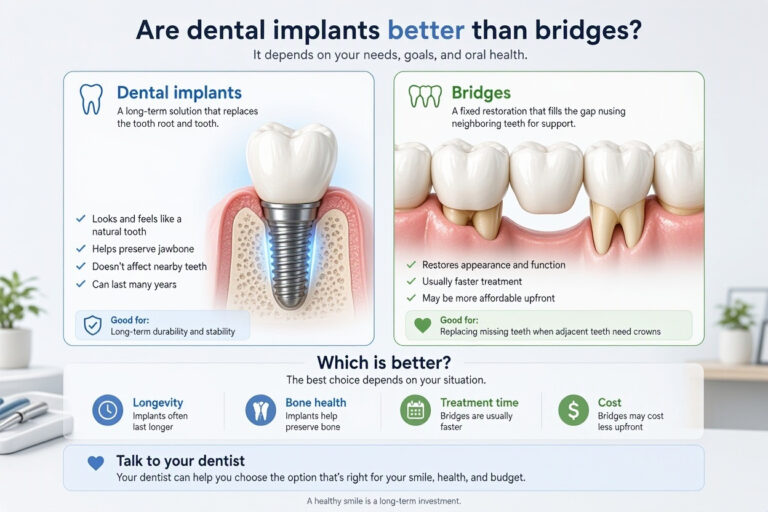
No Adjacent Tooth Damage: Unlike bridges, implants don’t require grinding down neighboring teeth for support.
High Success Rate: Dental implants have a success rate above 95%, making them one of the most reliable dental procedures.
Improved Confidence: Missing teeth can affect self-esteem. Implants restore your smile and confidence.
Long-Term Value
While implants have higher upfront costs than dentures or bridges, they often prove more economical over time. Dentures need replacement every 5-10 years, and bridges last 10-15 years. Implants, with proper care, can last a lifetime—making them excellent long-term investments in your oral health.
Potential Risks and Complications
Understanding the Reality
While dental implants are highly successful, they’re still surgical procedures with potential risks. Understanding these helps you make informed decisions.
Common Complications
Infection: As with any surgery, infection is possible. Your dentist prescribes antibiotics and provides care instructions to minimize this risk.
Implant Failure: Occasionally, an implant doesn’t integrate with the bone. This happens in about 5% of cases and requires removal and replacement.
Nerve Damage: Rare, but possible, especially in the lower jaw. Your dentist uses advanced imaging to avoid this.
Sinus Problems: Upper jaw implants can affect the sinuses in some cases. Special techniques can prevent this.
Gum Recession: Over time, gum tissue may recede around implants, though this is manageable with good hygiene.
Mitigating Risk Factors
- Choose an experienced implant dentist
- Follow all pre and post-operative instructions
- Maintain excellent oral hygiene
- Attend regular follow-up appointments
- Don’t smoke, especially during healing
Note: Most complications are treatable when caught early. Always report unusual symptoms to your dentist promptly.
Dental Implants vs. Other Tooth Replacement Options
Quick Comparison
Let’s see how implants stack up against alternatives:
| Feature | Dental Implants | Bridges | Dentures |
|---|---|---|---|
| Looks Natural | Excellent | Good | Fair to Good |
| Stability | Excellent | Good | Fair |
| Comfort | Excellent | Good | Fair to Poor |
| Bone Preservation | Yes | No | No |
| Adjacent Tooth Impact | None | Requires modification | None |
| Lifespan | 20+ years to lifetime | 10-15 years | 5-10 years |
| Maintenance | Regular brushing/flossing | Special cleaning tools | Daily removal and cleaning |
| Initial Cost | High | Moderate | Low to Moderate |
The Implant Advantage
While each option has merits, implants stand out for their natural feel and long-term value. Bridges work well for some patients, especially when adjacent teeth need crowns anyway. Dentures remain a budget-friendly option, particularly for complete tooth loss.
The choice depends on your individual needs, budget, health status, and preferences. A consultation with your dentist helps you weigh these factors.
Caring for Your Dental Implants
Daily Maintenance
Caring for implants is similar to caring for natural teeth:
Brushing: Brush twice daily with a soft-bristled toothbrush and non-abrasive toothpaste. Pay special attention to the gum line around your implant.
Flossing: Use special implant floss or interdental brushes to clean between implants and natural teeth. These tools reach areas regular floss can’t.
Rinsing: An antimicrobial mouthwash helps keep bacteria in check.
Professional Care
Regular Checkups: Visit your dentist every six months for professional cleaning and examination.
X-rays: Periodic X-rays monitor your implant and surrounding bone.
Professional Cleaning: Specialized cleaning tools safely remove plaque and tartar from around implants.
What to Avoid
- Don’t use metal instruments to scrape plaque
- Avoid abrasive toothpaste that can scratch your crown
- Don’t bite into very hard objects like ice or hard candy
- Avoid smoking, which harms gum health
“Your implant is an investment in your smile. Treat it with care, and it will serve you for decades.” — Dental Hygiene Association
Frequently Asked Questions
How much do dental implants cost?
Costs vary widely based on location, dentist experience, and complexity. Expect to pay $3,000 to $6,000 per implant, including the abutment and crown. Some cases require additional procedures like bone grafts, which add to the total. Many dentists offer payment plans.
Can anyone get dental implants?
Most adults can, but certain factors affect candidacy. Adequate bone density, healthy gums, and good general health are important. Some patients need preparatory procedures like bone grafts. A consultation determines your suitability.
How long does the process take?
From start to finish, expect three to nine months. The implant placement is quick, but osseointegration (healing) takes time. Some patients qualify for “teeth in a day” procedures, where temporary teeth are placed immediately.
Are implants removable?
No, dental implants are permanent fixtures in your mouth. You can’t take them out like dentures. They function and feel like natural teeth.
What happens if I don’t replace a missing tooth?
Bone loss, teeth shifting, bite problems, and jaw pain can result. Missing teeth also affect your appearance and confidence. Implants prevent these issues by filling the gap naturally.
Can I get implants if I have diabetes?
Many diabetic patients can receive implants successfully. Good blood sugar control is essential for proper healing. Your dentist will coordinate with your healthcare provider.
Do implants set off metal detectors?
No, dental implants are too small and made from titanium, which doesn’t trigger metal detectors at typical sensitivities.
How do implants feel compared to natural teeth?
Most patients report that implants feel very similar to natural teeth. You’ll likely forget you even have them after a while.
Conclusion
Dental implants represent one of modern dentistry’s most significant advances. These titanium marvels restore smiles, preserve jaw health, and offer a lifetime of confidence. While the process requires patience and investment, the results speak for themselves—natural-looking teeth that function beautifully.
Understanding what dental implants are and how they work empowers you to make informed decisions about your oral health. Whether you’re missing one tooth or facing complete tooth loss, implants offer a proven solution with impressive success rates.
In summary: Dental implants are titanium posts that replace tooth roots and support artificial teeth, working through osseointegration to create a permanent bond with your jawbone. The process involves surgery, healing, and crown placement over several months, resulting in natural-feeling teeth that can last decades. With proper care and regular dental visits, implants provide the closest alternative to natural teeth available today.
Additional Resource
For more information on dental implants and oral health, visit the American Academy of Implant Dentistry at www.aaid.com.