How to Maintain Dental Implants Long Term
Dental implants have revolutionized the way we replace missing teeth. They look natural, feel secure, and can last a lifetime with proper care. But here is the truth many people overlook: implants are not “set it and forget it” solutions. They require consistent attention, just like natural teeth—perhaps even more so.
If you have recently received dental implants or are considering the procedure, understanding long-term maintenance is essential. This comprehensive guide walks you through everything you need to know to protect your investment and enjoy a healthy, confident smile for decades.
Understanding Dental Implants: A Quick Overview
Before diving into maintenance strategies, let us briefly review what dental implants actually are.
A dental implant is a titanium post surgically placed into your jawbone. This post acts as an artificial tooth root. Over several months, the bone fuses with the implant through a process called osseointegration. Once healed, a connector called an abutment attaches to the implant, and finally, a crown, bridge, or denture is secured on top.
The key takeaway? Your implant has multiple components working together. The health of your jawbone, gums, and the implant itself all depend on how well you care for them.
Why Long-Term Maintenance Matters
Many patients assume that because implants are made of metal and ceramic, they are indestructible. This is a common misconception.
While the implant post itself does not decay like a natural tooth, the surrounding tissues can develop problems. Peri-implantitis—an infection affecting the gums and bone around an implant—is the leading cause of implant failure. Research suggests that peri-implantitis affects approximately 10-20% of implants over time. The good news? It is largely preventable with proper care.
Maintenance matters because:
- It prevents gum disease around the implant
- It protects the supporting bone from deterioration
- It extends the lifespan of your restoration (crown or bridge)
- It helps you avoid costly repairs or replacements
- It supports your overall oral and systemic health
Daily Oral Hygiene Routine for Dental Implants
Your daily habits form the foundation of implant longevity. Let us break down the essential steps.
Brushing Techniques That Protect Implants
Brushing is the cornerstone of oral hygiene, but technique matters—especially with implants.
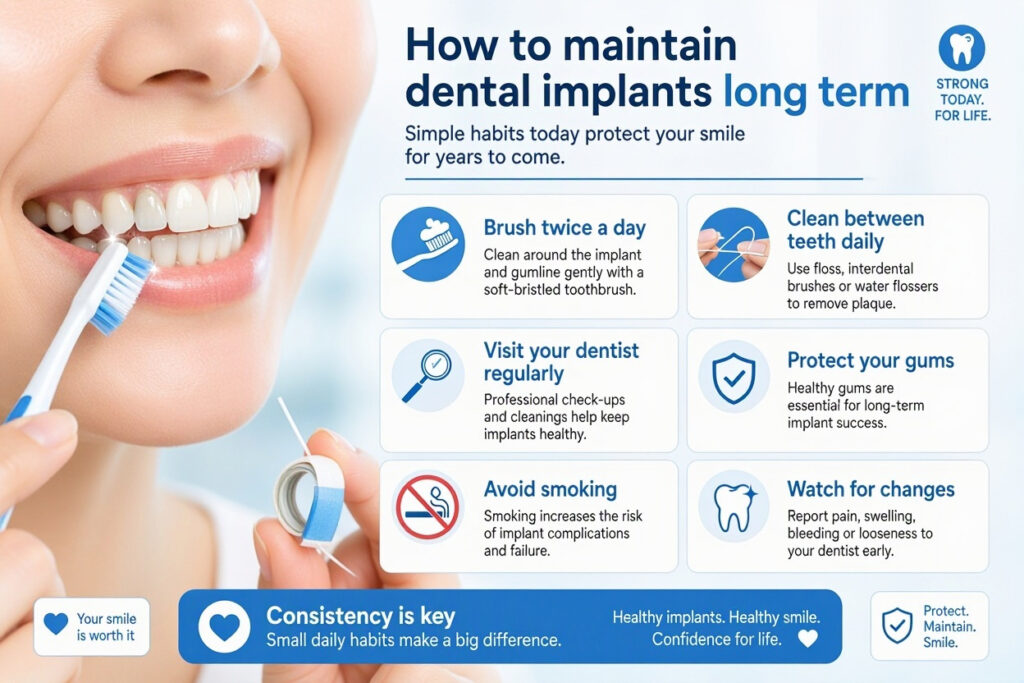
Choose the right toothbrush. A soft-bristled toothbrush is your best friend. Hard bristles can scratch the implant surface and irritate your gums. Consider an electric toothbrush with a pressure sensor; these devices help you avoid brushing too aggressively.
Use the correct angle. Hold your toothbrush at a 45-degree angle toward the gumline. This position allows bristles to clean the critical area where the implant meets the gum tissue.
Brush gently in circular motions. Avoid harsh back-and-forth scrubbing. Focus on small, circular movements that lift plaque without damaging delicate tissues.
Do not forget the back of the implant crown. Bacteria can accumulate on any surface, including the areas you cannot easily see.
Brush twice daily for at least two minutes. Set a timer or use an electric brush with a built-in timer to ensure you are brushing long enough.
The Role of Interdental Cleaning
Regular brushing alone cannot reach the spaces between teeth and around implant margins. This is where interdental cleaning becomes crucial.
Dental floss: Traditional floss works for many implant patients, but you must be careful. Avoid snapping floss against the gumline, as this can damage the implant-gum seal.
Interdental brushes: These small, cone-shaped brushes are excellent for cleaning around implant crowns and bridges. Choose a size that fits comfortably between your teeth without forcing.
Water flossers: A water flosser (oral irrigator) is a fantastic tool for implant maintenance. It uses a stream of water to remove food particles and plaque from hard-to-reach areas. Many dentists recommend water flossers as an adjunct to traditional cleaning methods.
Superfloss or implant-specific floss: If you have a bridge supported by implants, superfloss or specially designed implant floss can help you clean underneath the prosthetic.
Rinsing: Do You Need Mouthwash?
Antimicrobial mouthwash can be a helpful addition to your routine, but it should not replace brushing and flossing. Choose an alcohol-free formula to avoid dry mouth and tissue irritation. Your dentist may recommend a specific rinse, especially if you have a history of gum disease.
A Sample Daily Routine
| Time | Step | Details |
|---|---|---|
| Morning | Brush | Two minutes with soft-bristled or electric toothbrush |
| Morning | Interdental cleaning | Floss or interdental brushes around each implant |
| Morning | Rinse | Alcohol-free antimicrobial mouthwash (optional) |
| After meals | Rinse or water floss | Quick removal of food particles |
| Evening | Brush | Two minutes, focusing on gumline |
| Evening | Interdental cleaning | Thorough cleaning between all teeth |
| Evening | Rinse | Alcohol-free mouthwash |
Professional Dental Checkups and Cleanings
Even with excellent home care, professional maintenance is non-negotiable. Let us explore what to expect and how often you should schedule visits.
How Often Should You See Your Dentist?
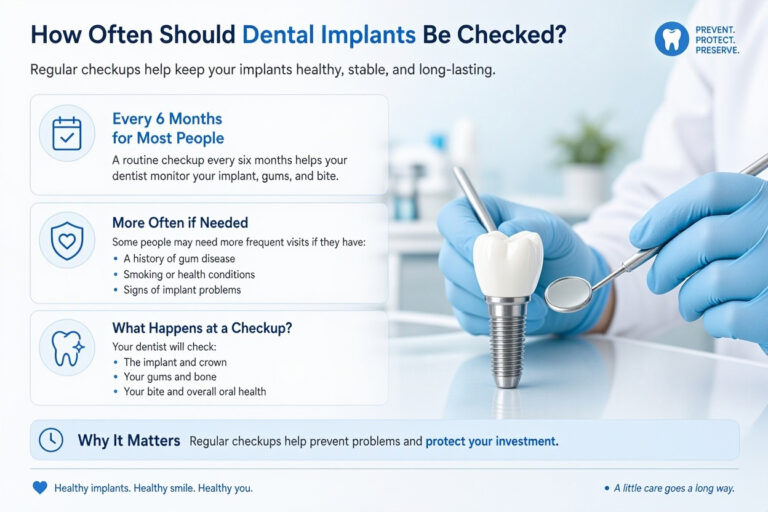
Most implant patients should visit their dentist every six months for checkups and cleanings. However, your specific schedule may vary based on several factors:
- History of gum disease: If you have or had periodontal disease, your dentist may recommend visits every three to four months.
- Systemic health conditions: Conditions like diabetes can affect healing and increase infection risk, warranting closer monitoring.
- Smoking status: Smokers face higher risks of implant complications and may benefit from more frequent professional care.
- Implant complexity: Full-arch restorations or multiple implants may require specialized maintenance protocols.
What Happens During a Professional Cleaning?
Professional cleanings for implant patients differ from standard cleanings in several ways.
Assessment: Your hygienist will examine the implant site for signs of inflammation, bleeding, or bone loss. They may measure pocket depths around the implant to track tissue health.
Specialized instruments: Titanium or plastic scalers are often used instead of metal instruments to avoid scratching the implant surface. Some offices use air-powder polishing systems designed for implants.
Plaque and calculus removal: Even with good home care, calculus (tartar) can form around implant margins. Professional removal keeps the area clean and healthy.
Radiographic evaluation: Your dentist may take X-rays periodically to assess bone levels around the implant and detect any changes early.
The Importance of Transparency With Your Dental Team
Always inform your dental hygienist and dentist about your implants—even if they placed them. They need to know the implant brand and type for proper maintenance. If you move or change dentists, request your implant records from your previous provider.
“I always tell my implant patients that their checkups are like an early warning system. We can catch small issues before they become big problems. A little inflammation today is much easier to treat than advanced bone loss tomorrow.” — Dr. Sarah Mitchell, DDS, Periodontist
Lifestyle Factors That Affect Implant Longevity
Your daily choices extend beyond brushing and flossing. Several lifestyle factors play a significant role in how long your implants last.
Smoking: The Biggest Risk Factor
If you smoke, quitting is the single most impactful thing you can do for your implants. Smoking restricts blood flow to the gums, impairs healing, and significantly increases the risk of peri-implantitis and implant failure.
Studies show that smokers are up to three times more likely to experience implant failure compared to non-smokers. The risk decreases after quitting, but some elevated risk may persist.
Diet and Nutrition
A balanced diet supports oral health in several ways:
- Calcium and vitamin D: Essential for bone health. Your jawbone must remain strong to support the implant.
- Vitamin C: Supports gum tissue health and collagen production.
- Limited sugar intake: Reduces plaque formation and bacterial growth.
- Avoiding excessively hard foods: Biting on ice, hard candies, or bones can damage implant crowns.
Alcohol Consumption
Heavy alcohol use can dry out the mouth, reduce saliva flow, and impair immune function. Moderate consumption is generally fine, but be mindful of your habits.
Bruxism (Teeth Grinding)
If you grind or clench your teeth, especially at night, your implant crowns and the implant itself face added stress. Talk to your dentist about a nightguard to protect your restorations.
Managing Systemic Health Conditions
Conditions like diabetes, osteoporosis, and autoimmune disorders can affect implant health. Work closely with your healthcare providers to manage these conditions. Good systemic health supports good oral health.
Warning Signs: When to Contact Your Dentist
Early intervention is key to preventing implant failure. Contact your dentist promptly if you notice any of the following:
Signs of Potential Problems
| Symptom | What It Might Indicate |
|---|---|
| Redness or swelling around the implant | Inflammation or infection |
| Bleeding when brushing or flossing | Gum irritation or peri-implant mucositis |
| Persistent bad breath | Bacterial accumulation or infection |
| Pain or discomfort at the implant site | Various causes—needs evaluation |
| Loosening of the crown or implant | Component failure or bone loss |
| Receding gums around the implant | Tissue loss or infection |
| Pus or discharge | Active infection |
Do Not Ignore Subtle Changes
Sometimes problems develop slowly. You might notice that your gums look slightly different or that food seems to get trapped more easily around an implant. These small changes are worth mentioning at your next visit—or sooner if they concern you.
Regular Self-Monitoring
Between professional visits, perform a simple self-check:
- Look at your implant sites in the mirror
- Feel for any swelling or tenderness
- Notice any changes in how your bite feels
- Pay attention to any unusual sensations
Protecting Your Implants From Damage
Beyond hygiene and health monitoring, protecting your implants from physical damage is important.
Avoid These Habits
- Chewing on hard objects: Pens, ice, fingernails, and hard candies can crack crowns or damage implants.
- Opening packages with your teeth: A classic mistake that can cause catastrophic damage.
- Biting your nails: This habit stresses your teeth and implants.
- Using your teeth as tools: Never use them to tear tape, hold objects, or perform similar tasks.
Sports and Mouthguards
If you play contact sports, wear a properly fitted mouthguard. Even non-contact sports like cycling or skateboarding carry risks of falls that could damage your implants.
Nightguards for Grinders
As mentioned earlier, a custom nightguard protects your implants and natural teeth from grinding forces during sleep.
Long-Term Considerations: What to Expect Over the Years
Dental implants are designed to last, but they are not entirely immune to wear and tear. Understanding what to expect helps you plan effectively.
The Implant Post vs. The Restoration
The titanium implant post, once integrated with bone, can last decades—potentially a lifetime. The crown or bridge attached to it, however, may need replacement due to wear, damage, or changes in your bite over time. Most implant crowns last 10-15 years before requiring replacement.
Bone Health Over Time
Even with excellent care, some bone remodeling occurs naturally with age. Regular checkups allow your dentist to monitor bone levels and intervene if necessary.
Advancements in Implant Technology
Implant dentistry continues to evolve. If you have an older implant, your dentist can advise on whether any updates or monitoring protocols are appropriate.
Common Myths About Dental Implant Maintenance
Let us address some misconceptions that could lead to poor care.
Myth: Implants Do Not Require Professional Cleanings
Fact: Implants absolutely require professional maintenance. Plaque and calculus can accumulate around implants just as they do around natural teeth.
Myth: You Cannot Get Gum Disease Around Implants
Fact: Peri-implantitis is a real and serious condition. It affects the tissues around implants and can lead to bone loss and implant failure if untreated.
Myth: Implants Are Permanent and Never Need Replacement
Fact: While the implant post can last a lifetime, the crown or restoration may need replacement. Additionally, implant failure can occur due to infection, trauma, or poor maintenance.
Myth: Brushing Harder Cleans Better
Fact: Aggressive brushing damages gums and can scratch implant surfaces. Gentle, thorough brushing is far more effective.
“The patients who do best long-term are not the ones who brush the hardest—they are the ones who brush smartest. Consistency beats intensity every time.” — Dr. James Chen, DMD, Implant Specialist
Building a Maintenance Plan With Your Dental Team
Every implant patient benefits from a personalized maintenance plan. Here is how to create one.
Questions to Ask Your Dentist
- What type of implant do I have?
- What cleaning products do you recommend for my specific situation?
- How often should I schedule professional cleanings?
- Are there any specific risk factors I should monitor?
- What warning signs should prompt me to call your office immediately?
Documenting Your Implant History
Keep a record of:
- The date and location of your implant placement
- The implant brand and model (if known)
- Any complications during healing
- Your maintenance schedule
- Contact information for your implant dentist
This information proves invaluable if you move, change dentists, or experience issues years later.
Conclusion
Maintaining dental implants long term comes down to three pillars: consistent daily hygiene, regular professional care, and smart lifestyle choices. Brush and clean between your teeth diligently, see your dentist at recommended intervals, avoid smoking and hard foods, and address any warning signs immediately. With this approach, your implants can serve you beautifully for decades.
FAQ: Long-Term Dental Implant Maintenance
How long do dental implants typically last?
With proper care, dental implants can last 20 years or more, and many last a lifetime. The implant post itself is highly durable. The crown or restoration may need replacement every 10-15 years due to normal wear.
Can I use a regular toothbrush on my implants?
Yes, but choose a soft-bristled brush. Hard bristles can irritate gums and potentially scratch the implant surface. Electric toothbrushes with pressure sensors are excellent choices.
Is it normal for gums to bleed around implants?
Occasional slight bleeding may occur if you brush too aggressively. However, consistent bleeding is a warning sign of inflammation or infection and should be evaluated by your dentist.
Do I need antibiotics before dental cleanings if I have implants?
Most implant patients do not require prophylactic antibiotics for routine cleanings. However, your dentist will advise based on your individual medical history.
Can I whiten my teeth if I have implants?
Yes, but understand that teeth whitening products only affect natural teeth, not implant crowns. If you whiten your natural teeth, your implant crowns will not change color, which could create a shade mismatch. Consult your dentist before whitening.
What happens if I do not maintain my implants?
Poor maintenance can lead to peri-implantitis, bone loss, and eventual implant failure. In severe cases, the implant may need to be removed and replaced.
Additional Resource: For more information on dental implant care, visit the American Academy of Implant Dentistry at https://www.aaid.com.