How Often Should Dental Implants Be Checked?
You invested time, money, and trust in your dental implants. Now you want to protect that investment. One of the most common questions patients ask is simple: how often should dental implants be checked?
The answer is not one-size-fits-all. While general guidelines exist, your ideal schedule depends on several personal factors. This article breaks down everything you need to know about monitoring your implants, from standard checkup intervals to warning signs that warrant an immediate visit.
The Standard Recommendation: Every Six Months
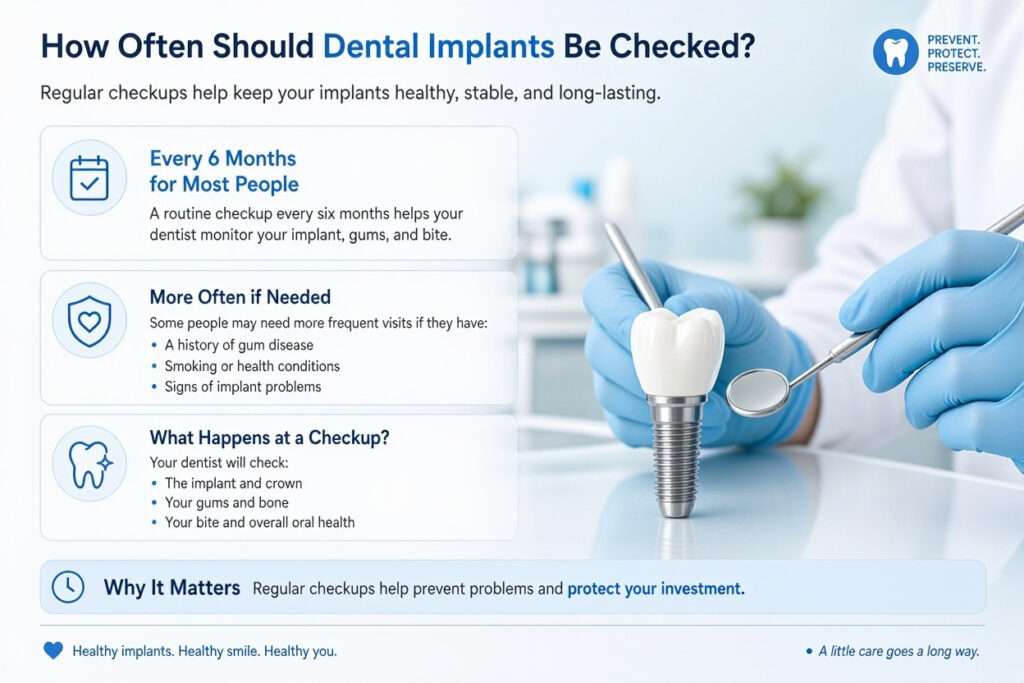
For most patients with healthy dental implants, a checkup every six months is the standard recommendation. These visits typically coincide with your regular dental cleanings and allow your dentist to:
- Inspect the implant site for signs of inflammation
- Assess gum tissue health around the implant
- Check the stability of the crown or restoration
- Measure pocket depths around the implant
- Take X-rays periodically to monitor bone levels
- Address any concerns you may have
Six months is a practical interval because it allows enough time for potential issues to be detected before they become serious, while not being so frequent that visits feel burdensome.
Why Six Months?
The six-month interval is not arbitrary. It reflects the typical rate at which plaque and calculus accumulate and the time it takes for early gum inflammation to potentially progress. For most patients, this schedule strikes a balance between prevention and practicality.
Factors That May Require More Frequent Checkups
Not everyone fits the standard six-month mold. Your dentist may recommend more frequent monitoring if you have certain risk factors.
History of Periodontal Disease
If you have a history of gum disease, you are at higher risk for peri-implantitis. Your dentist may recommend checkups every three to four months to catch any early signs of trouble.
Smoking
Smoking significantly impairs healing and increases infection risk. Smokers often benefit from more frequent professional monitoring.
Diabetes and Other Systemic Conditions
Uncontrolled diabetes affects immune function and healing. Patients with diabetes may need closer monitoring to ensure implant health.
Immunocompromised Patients
Conditions or medications that suppress the immune system can affect the body’s ability to fight infection around implants. More frequent checkups help protect against complications.
Bruxism (Teeth Grinding)
If you grind your teeth, your implant restorations face added stress. Your dentist will want to monitor for signs of wear or damage more closely.
Complex Restorations
Full-arch implant-supported prostheses or multiple implant bridges require specialized maintenance. Your dentist may recommend a customized recall schedule.
Poor Oral Hygiene
Patients who struggle with home care may benefit from more frequent professional cleanings and checkups to compensate.
Previous Implant Complications
If you have experienced peri-implant mucositis or other issues in the past, closer monitoring helps prevent recurrence.
What Happens During an Implant Checkup?
Understanding what to expect helps you get the most from your visits. Here is a breakdown of typical implant checkup components.
Visual Examination
Your dentist will visually inspect the implant site, looking for:
- Redness or swelling
- Gum recession
- Signs of infection
- Crown or restoration integrity
Probing and Pocket Depth Measurement
Using a periodontal probe, your dentist measures the depth of the space between the implant and surrounding gum tissue. Healthy implant pockets are typically shallow (3mm or less). Deeper pockets may indicate inflammation or bone loss.
Bleeding on Probing
Your dentist notes whether the gums bleed when probed. Bleeding is a sign of inflammation and warrants attention.
Mobility Testing
Your dentist may gently test the implant for any movement. A stable implant should not move. Mobility indicates a problem that requires immediate investigation.
Radiographic Evaluation
X-rays are typically taken at intervals—often annually or every two years—to assess bone levels around the implant. Comparing current images to previous ones helps detect subtle changes.
Occlusal Assessment
Your dentist checks your bite to ensure the implant crown is not bearing excessive force. Adjustments may be made if needed.
Cleaning
Professional cleaning removes plaque and calculus from around the implant, using instruments safe for implant surfaces.
Creating a Personalized Checkup Schedule
The best approach is to work with your dentist to create a schedule tailored to your needs. Here is how to have that conversation.
Questions to Ask
- Based on my health history and risk factors, how often should I schedule implant checkups?
- What specific signs should I watch for between visits?
- Do I need X-rays at every visit, or on a different schedule?
- Should I see a specialist (periodontist) for monitoring?
- Are there any changes in my health that might affect my implant care?
Documenting Your Schedule
Once you and your dentist agree on a schedule, write it down and set reminders. Consistent monitoring is key—skipping appointments undermines the purpose of regular checkups.
The Role of Your General Dentist vs. Specialist
Your implant checkups may involve both your general dentist and a specialist.
General Dentist
Your general dentist can perform routine implant checkups, cleanings, and assessments. They are often the first line of defense in detecting problems.
Periodontist or Implant Specialist
For complex cases or if problems are detected, your dentist may refer you to a periodontist or oral surgeon. Specialists have advanced training in implant maintenance and treatment of peri-implant diseases.
Coordination of Care
Ideally, your general dentist and specialist communicate about your implant health. If you see multiple providers, ensure they share records and treatment plans.
What to Do Between Checkups
Professional monitoring is essential, but daily self-checks also play a role.
Perform Regular Self-Examinations
- Look at your implant sites in a mirror regularly
- Feel for swelling or tenderness
- Notice any changes in your bite
- Check for loose crowns or unusual sensations
Maintain Excellent Home Care
Your checkups are more meaningful when you are doing your part at home. Brush, floss, and rinse consistently.
Report Changes Promptly
If you notice anything unusual between visits, call your dentist. Do not wait for your next scheduled appointment if you have concerns.
Comparison Table: Checkup Frequency by Risk Level
| Risk Level | Characteristics | Recommended Frequency |
|---|---|---|
| Low | Healthy patient, no risk factors, excellent home care | Every 6 months |
| Moderate | One or two risk factors (e.g., former smoker, controlled diabetes) | Every 4-6 months |
| High | Multiple risk factors, history of peri-implantitis, immunocompromised | Every 3-4 months |
| Very High | Active peri-implantitis, uncontrolled systemic conditions | Individualized, possibly monthly |
Conclusion
Most patients should have dental implants checked every six months, but your ideal schedule depends on your individual risk factors. Work with your dentist to create a personalized plan, attend every appointment, and report any concerns promptly. Consistent monitoring is one of the most effective ways to protect your implant investment.
FAQ: Dental Implant Checkup Frequency
Can I skip a checkup if my implants feel fine?
No. Many implant problems develop silently before symptoms appear. Regular checkups catch issues early when they are easiest to treat.
Do implant checkups hurt?
Implant checkups are generally painless. Probing may cause slight discomfort if gums are inflamed, but the process is quick and well-tolerated.
How long does an implant checkup take?
Typically 30-45 minutes, including cleaning and examination. More complex cases may take longer.
Will my insurance cover implant checkups?
Most dental insurance plans cover routine checkups and cleanings, including those for implant patients. Check with your provider for specific coverage details.
What if I move and need a new dentist?
Request your implant records from your current dentist before moving. Share these with your new provider to ensure continuity of care.
Additional Resource: For guidance on finding an implant specialist, visit the American Academy of Periodontology at https://www.perio.org.