Best Toothbrush for Dental Implants
Brushing is the foundation of oral hygiene, and for dental implant patients, the right toothbrush makes a significant difference. The wrong brush can irritate gums or fail to clean effectively; the right one protects your implants while keeping your mouth healthy.
This article helps you choose the best toothbrush for dental implants and explains how to brush correctly.
Why Toothbrush Choice Matters for Implants
Dental implants require gentle but thorough cleaning. The gum tissue around implants is more vulnerable to irritation than around natural teeth. A toothbrush that is too hard, too worn, or poorly designed can cause problems.
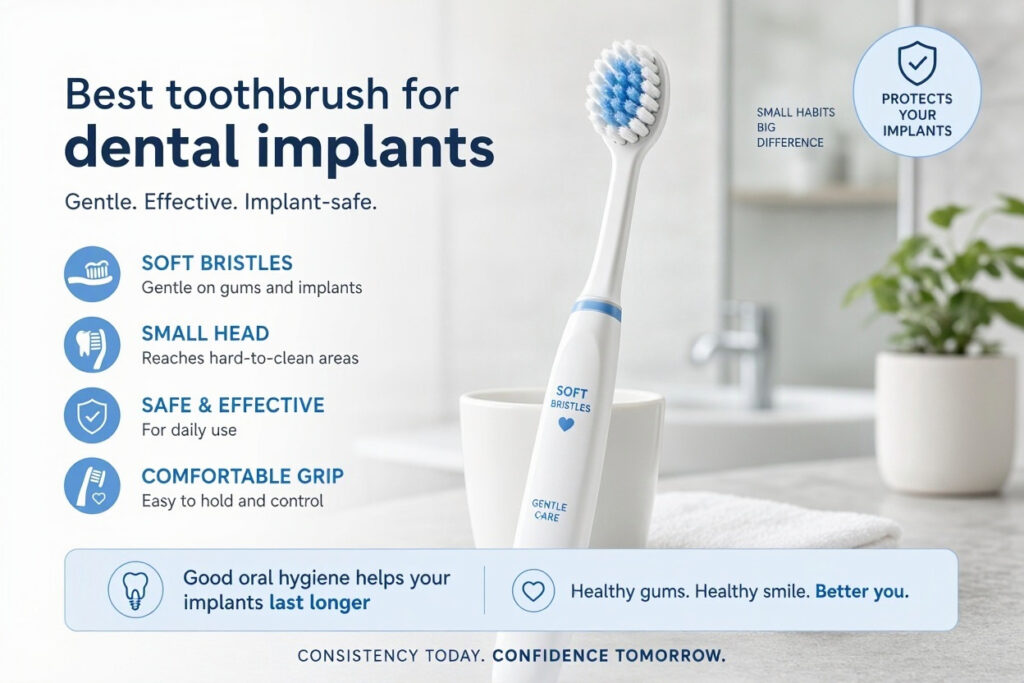
Key considerations for implant patients:
- Soft bristles: Essential for protecting gums
- Proper size: Allows access to all areas
- Comfortable handle: Ensures you can brush effectively
- Pressure control: Prevents over-brushing
Manual vs. Electric Toothbrushes
Both manual and electric toothbrushes can work well for implant patients. The best choice depends on your preferences and needs.
Manual Toothbrushes
Pros:
- Affordable
- Widely available
- No charging required
- Easy to travel with
Cons:
- Technique-dependent
- Easy to brush too hard
- May not clean as thoroughly
Best for: Patients with good technique and no dexterity issues.
Electric Toothbrushes
Pros:
- Consistent cleaning action
- Built-in timers
- Pressure sensors (on many models)
- Often more effective at plaque removal
Cons:
- More expensive
- Require charging
- Can be too intense for sensitive gums if not used correctly
Best for: Patients who want consistent cleaning, have dexterity challenges, or tend to brush too hard.
Sonic vs. Oscillating-Rotating
Electric toothbrushes come in two main types:
- Sonic: Vibrate at high frequencies to disrupt plaque. Examples include Philips Sonicare.
- Oscillating-rotating: Rotate and oscillate in small circles. Examples include Oral-B.
Both types are effective. Choose based on comfort and your dentist’s recommendation.
Key Features to Look For
Soft Bristles
Soft bristles are non-negotiable for implant patients. Medium or hard bristles can irritate gums and potentially scratch implant surfaces. Look for brushes labeled “soft” or “extra soft.”
Pressure Sensor
Electric brushes with pressure sensors alert you when you are brushing too hard. This feature is invaluable for protecting implant gums.
Timer
A built-in timer ensures you brush for the recommended two minutes. Many electric brushes have quadpacers that signal when to move to the next quadrant.
Small Head
A smaller brush head allows better access to hard-to-reach areas, including around implants and back teeth.
Comfortable Handle
The brush should feel comfortable in your hand. A good grip helps you brush effectively.
Replaceable Heads
Electric brushes require head replacement every 3-4 months. Ensure replacement heads are readily available and affordable.
Comparison Table: Toothbrush Options for Implant Patients
| Feature | Manual Soft Brush | Electric (Sonic) | Electric (Oscillating) |
|---|---|---|---|
| Cost | Low | Moderate-High | Moderate-High |
| Cleaning effectiveness | Technique-dependent | High | High |
| Pressure control | Manual | Often built-in | Often built-in |
| Timer | No | Usually | Usually |
| Access to tight spaces | Depends on head size | Good | Good |
| Gentleness | Depends on technique | Good (with pressure sensor) | Good (with pressure sensor) |
| Travel-friendly | Yes | Less so | Less so |
Brushing Technique for Implant Patients
Even with the best toothbrush, technique matters.
Step-by-Step
- Apply a pea-sized amount of non-abrasive toothpaste.
- Hold the brush at a 45-degree angle toward the gumline.
- Use gentle, circular motions—do not scrub back and forth.
- Brush all surfaces: outer, inner, and chewing surfaces.
- Spend extra time around implants, cleaning gently along the gumline.
- Brush for two minutes—use a timer.
- Rinse thoroughly after brushing.
Common Mistakes
- Brushing too hard
- Using a worn brush
- Skipping the gumline
- Not brushing long enough
- Using abrasive toothpaste
How Often to Replace Your Toothbrush
Replace your toothbrush (or brush head) every 3-4 months, or sooner if bristles are frayed. Worn bristles do not clean effectively and can harbor bacteria.
Also replace your brush after illness and if you notice visible wear.
Special Considerations
For Patients With Bridges
Implant-supported bridges may require special brushes, such as interdental brushes or a brush with a smaller head to reach under the prosthetic.
For Patients With Dexterity Issues
Electric toothbrushes with larger handles are easier to grip. Some models have adaptive features for arthritis or limited mobility.
For Patients With Sensitive Gums
Choose extra-soft bristles and a brush with a sensitive mode. Avoid aggressive brushing.
“I recommend electric toothbrushes with pressure sensors to almost all my implant patients. They take the guesswork out of brushing gently.” — Dr. Lisa Park, DDS
Conclusion
The best toothbrush for dental implants is one with soft bristles, a comfortable design, and—ideally—a pressure sensor and timer. Electric toothbrushes offer advantages for many patients, but a manual brush with good technique can also work well. Focus on gentle, thorough brushing and replace your brush regularly.
FAQ: Toothbrush for Dental Implants
Can I use a hard-bristled toothbrush on implants?
No. Hard bristles can irritate gums and potentially damage implant surfaces. Always choose soft bristles.
Is an electric toothbrush better for implants?
Electric brushes offer consistent cleaning and often include pressure sensors, making them a good choice for many patients. However, manual brushes work well with proper technique.
How often should I replace my toothbrush?
Every 3-4 months, or sooner if bristles are frayed.
Can I use a whitening toothbrush?
Whitening toothbrushes often have harder bristles. Stick with soft-bristled brushes designed for sensitive gums.
What if my gums bleed when brushing?
Occasional bleeding may indicate you are brushing too hard. Persistent bleeding warrants a dental visit.
Additional Resource: For brushing tips, visit the American Dental Association: https://www.ada.org.