Can You Feel A Dental Implant?
One of the biggest fears patients have about dental implants is that they will feel “fake.” The idea of a titanium post lodged in your jawbone can sound invasive and uncomfortable. You might imagine a constant sensation of pressure, a metallic taste, or the feeling that you have a foreign object jammed into your gums.
The truth is both surprising and reassuring. Once a dental implant has healed and the crown is placed, you should not feel it at all. It is designed to mimic a natural tooth so closely that your brain eventually forgets it is even there.
However, the answer is nuanced. There is a difference between feeling the surgery (which you definitely do) and feeling the healed implant (which you shouldn’t). There is also a subtle difference in how an implant feels compared to a natural tooth when you bite down. This guide will explain exactly what you can expect to feel at every stage of the implant process, from the numbness of surgery to the strange sensation of the final crown.
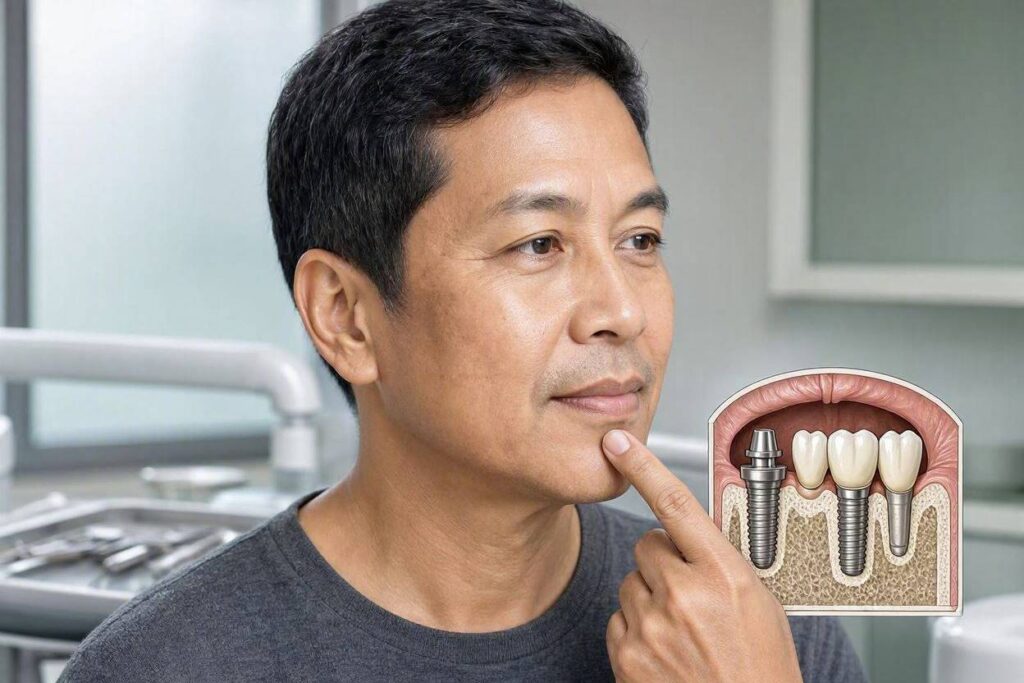
The Surgical Phase: What You Feel During Placement
Let’s start with the part everyone worries about: the surgery. The good news is that modern anesthesia ensures you feel very little during the actual placement of the implant.
1. The Anesthesia
Before the procedure begins, the dentist will numb the area with a local anesthetic (like Novocaine). This is the same shot you get for a filling. If you are anxious, you might also receive oral sedation (a pill) or IV sedation (twilight sleep). With IV sedation, you are conscious but deeply relaxed, and you likely won’t remember the surgery.
2. The Pressure, Not Pain
Even with anesthesia, you will likely feel pressure and vibration. You will feel the dentist pushing on your jaw, and you might hear the sound of the drill. But you should not feel sharp pain. If you do, you must signal the dentist immediately so they can give you more anesthetic.
3. The Immediate Aftermath
Once the anesthesia wears off (usually 2-4 hours later), you will feel soreness. This is normal. The gum tissue has been cut, and the bone has been drilled. The pain is usually described as a dull ache or a bruise. It is managed with over-the-counter pain relievers like ibuprofen or prescription medication. This soreness peaks at 48-72 hours and then subsides.
The Healing Phase: The “Ghost” Tooth
After the surgery, the implant is buried under your gum. For the next 3 to 6 months, you wait for the bone to fuse with the titanium. During this time, you might have some unusual sensations.
1. The Smooth Gum
If you run your tongue over the area where the implant is, you will just feel smooth, healed gum tissue. The implant is underneath. You cannot “poke” it.
2. The Healing Abutment
If the dentist placed a “healing abutment” (a small metal cap that sticks out through the gum), you will be able to feel it with your tongue. It feels like a small, round metal button on top of your gum. This is the part that feels most “weird” to patients because it is metal. But it is temporary. It is just there to shape the gum while you heal.
3. The “Phantom” Sensation
Some patients report a strange psychological feeling during this phase. They know something is in their jaw, and they become hyper-aware of it. This is similar to “phantom limb” syndrome. Your brain is trying to figure out why there is no tooth root there anymore, but there is pressure in the bone. This feeling fades as you get used to the implant.
The Final Restoration: The “No-Feel” Zone
This is the moment you have been waiting for: the placement of the crown. Once the white, tooth-shaped cap is secured, the sensory experience changes dramatically.
1. The Crown Itself
The porcelain crown is smooth and hard. It feels exactly like a natural, polished tooth. When you run your tongue over it, you cannot tell the difference between the implant crown and your other teeth.
2. The Gum Line
A well-designed implant crown meets the gum line perfectly. There should be no sharp edges, no gaps, and no pressure points. If you feel a ledge or a food trap, the crown needs to be adjusted.
3. The “Tight” Feeling
When the crown is first placed, it will feel “tight.” The contact points where the crown touches the adjacent teeth are snug. This is by design. It prevents food from getting stuck. This tightness usually feels normal within a few days.
The Chewing Difference: Proprioception Explained
Here is the scientific secret to why implants feel so natural, and also why they feel slightly different.
Natural teeth have a ligament (the periodontal ligament) that surrounds the root. This ligament is packed with nerve endings. When you bite down, these nerves send signals to your brain telling you how hard you are biting. This sense is called proprioception. It is like having a built-in pressure sensor.
A dental implant has no ligament. The titanium post is fused directly to the bone. Therefore, you do not have the same fine-tuned pressure sensors.
What does this mean for you?
When you bite down on a natural tooth, the ligament acts like a shock absorber. It gives slightly. An implant does not give. It is rock solid.
Patients describe the feeling of chewing on an implant as “solid” or “different.” It is not painful, but your brain knows it isn’t a natural tooth because the feedback is slightly different. You might bite down harder than you realize because you don’t have the ligament telling you to stop.
The Adaptation:
The human brain is remarkable. Within a few weeks of having the crown, your brain adapts to this new sensory input. You will stop noticing the difference. You will chew normally, and the implant will feel like a part of you.
The “Feeling” of Failure: Warning Signs to Watch For
While a healthy implant should feel like nothing, a failing implant will definitely let you know something is wrong. You should be aware of these sensations:
1. Movement or Wobble
This is the biggest red flag. A healed implant should be completely immobile. If you can wiggle the crown with your fingers or tongue, the implant has failed (it has not integrated with the bone). You might also hear a clicking sound.
2. Dull Ache or Pressure
If you feel a deep ache in the bone months after the surgery, it could be a sign of infection (peri-implantitis) or that the implant is being overloaded by biting forces.
3. Pain When Biting
If it hurts to chew on the implant, the crown might be too high, or the implant might be overloaded. This needs to be evaluated.
4. The “Metal Taste”
A persistent metallic taste can indicate that the abutment screw is loose, or that there is a reaction to the metal (rare).
The Psychological Shift: Forgetting You Have It
The ultimate measure of success for a dental implant is not how it looks, but how it feels. And the best feeling is no feeling at all.
Many patients report that after a few months, they genuinely forget which tooth is the implant. They brush, floss, and eat without thinking about it. When they look in the mirror, they see a complete smile. When they bite into an apple, they feel confident.
This is the goal of implant dentistry: to create a replacement that is so integrated, both physically and neurologically, that it becomes part of you.
Conclusion
You should not feel a healthy, healed dental implant. During surgery, you will feel pressure and vibration, followed by soreness. During healing, you might feel a temporary metal healing cap or a psychological awareness of the post. Once the final crown is placed, the tooth looks and feels natural. The only difference is a lack of the “shock absorber” ligament, which means chewing feels slightly more solid until your brain adapts. If you feel movement, pain, or a wobble, that is a sign of failure and requires immediate dental attention.
Frequently Asked Questions (FAQ)
1. Can I feel the implant screw in my bone?
No. Once the bone has healed (osseointegration), there are no nerve endings inside the bone that would allow you to “feel” the screw. The bone cells have attached directly to the titanium. You can only feel the top of the implant if it is exposed, which should not happen if the crown is fitted properly.
2. Why does my implant feel higher than my other teeth?
When the crown is first placed, the dentist checks the bite. If it feels high, it means the crown is hitting the opposing tooth too early or too hard. This can cause pain and implant overload. You should call your dentist. Adjusting the bite is a quick, simple fix that involves polishing down a small spot on the crown.
3. Will my implant feel cold when I drink ice water?
A natural tooth has nerves that sense temperature. An implant does not. You will not feel the “zing” of cold sensitivity in the implant itself. However, you might feel the cold on the surrounding gum tissue, which is normal.
4. Does food get stuck more easily around implants?
It can. Because the implant crown lacks the natural contour of a real tooth, there might be slightly larger spaces around it. This is why your dentist will recommend using a water flosser or interdental brushes to clean around the implant. Keeping the area clean prevents gum inflammation.
5. Is it normal to be constantly aware of my new implant?
Yes, in the beginning. It is similar to getting a new filling or a new pair of glasses. Your brain is processing new information. This hyper-awareness usually fades within 1 to 2 weeks. Once you stop thinking about it, you have achieved true integration.