All On 4 Dental Implants in Chicago
Losing most or all of your teeth changes your life. You might hide your smile. You might struggle to eat your favorite foods. You might even feel less confident in social situations.
You are not alone. Many Chicagoans face these same challenges.
The good news is that modern dentistry offers a powerful solution: All On 4 dental implants. This technique has helped thousands of people get a fixed set of new teeth. Often, it happens in just one day.
But you need honest information first. Not hype. Not sales pitches.
This guide gives you exactly that. You will learn how the procedure works, what it costs in Chicago, who is a good candidate, and what risks to expect. We will keep things simple, clear, and realistic.
What Exactly Are All On 4 Dental Implants?
The name says a lot. “All On 4” means all of your new teeth are supported by just four dental implants.
Traditional dentures sit on top of your gums. They can slip or click. They often require adhesives.
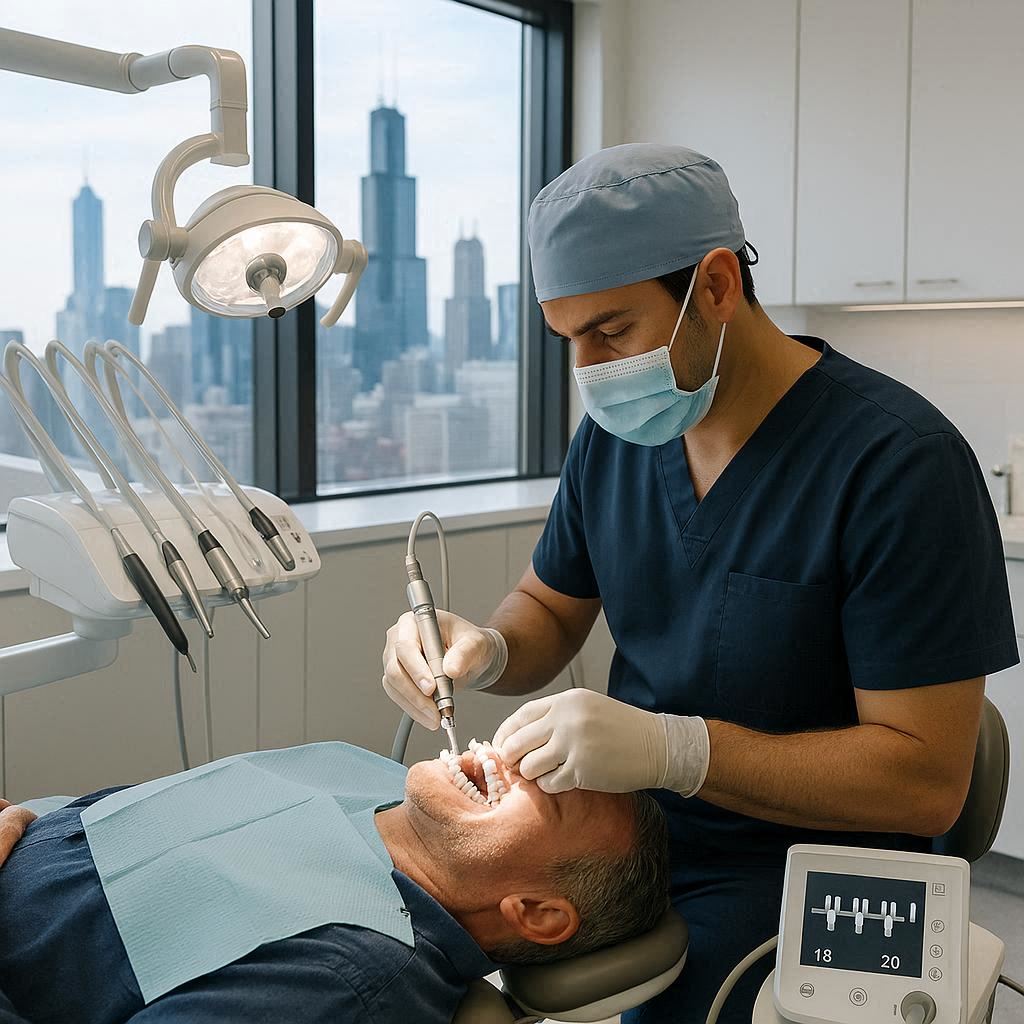
All On 4 is different. Four small titanium posts are surgically placed into your jawbone. These posts act like artificial tooth roots. Then a full arch of 12 to 14 new teeth is attached securely to those posts.
The result? A complete set of upper or lower teeth that do not move. They feel natural. They function like real teeth.
Why Four Implants? Why Not More?
Great question.
In the past, dentists often used six, eight, or even ten implants to support a full arch. That required more bone, more surgery, and more cost.
The All On 4 technique uses strategic placement. The two front implants go in straight. The two back implants go in at a 30 to 45-degree angle. This angled placement allows the implants to reach better bone, even if some bone loss has occurred.
This clever design has several advantages:
- Often avoids the need for bone grafting
- Reduces the number of surgeries
- Lowers the total cost
- Speeds up recovery
That is why it has become so popular in Chicago and across the world.
Why Chicago Residents Are Choosing All On 4
Chicago is a big city with world-class medical care. Dental implant technology here is as good as anywhere in the country.
But there are specific reasons why locals choose All On 4 over traditional dentures or individual implants.
The Weather Factor
Chicago winters are harsh. Cold temperatures can make traditional dentures contract slightly. That can lead to poor fit and discomfort. All On 4 implants are fixed in bone. Temperature changes do not affect them.
The Active Lifestyle
Chicagoans love to stay active. From lakefront runs to cycling on the 606 trail. With dentures, you worry about them falling out during exercise. With All On 4, you do not think about your teeth at all. You just live your life.
The Social Scene
Dining out is part of Chicago culture. Deep dish pizza. Italian beef. Steak houses in River North. Dentures limit what you can eat. All On 4 lets you enjoy everything on the menu.
“I had dentures for five years. I stopped going to business lunches because I was embarrassed. After my All On 4 procedure, I had steak at Gibson’s three weeks later. I cried happy tears.” — Mark, 58, Lincoln Park
How Does the All On 4 Procedure Work in Chicago?
Every dental office has its own workflow. But generally, the process follows a similar pattern across Chicago clinics.
Let us break it down step by step.
Step 1: Initial Consultation (60–90 minutes)
You meet with an implant dentist or oral surgeon. They will:
- Examine your mouth and remaining teeth
- Take a 3D CT scan of your jawbone
- Discuss your medical history
- Explain whether you are a candidate
- Give you a detailed cost estimate
What to bring: Your insurance card, a list of medications, and any recent dental X-rays.
Step 2: Treatment Planning (1–2 weeks)
The dentist uses special software to plan exactly where each implant will go. This virtual plan guides the surgery. It makes the procedure faster and safer.
Step 3: Surgery Day (2–4 hours)
Most Chicago clinics perform this procedure under local anesthesia with sedation. You will be comfortable and relaxed. You will not feel pain.
The dentist:
- Removes any failing or remaining teeth (if needed)
- Places the four implants into your jawbone
- Attaches a temporary set of teeth
You leave the same day with a fixed, non-removable set of temporary teeth. These are not your final teeth. But they look good and let you eat soft foods.
Step 4: Healing Period (3–6 months)
Your jawbone needs time to fuse with the implants. This process is called osseointegration. During this time:
- You eat a soft food diet
- You avoid chewing on the implant side
- You visit the dentist for check-ups
Do not rush this phase. Proper healing is the key to long-term success.
Step 5: Final Teeth Placement (One visit, 2–3 hours)
Once healing is complete, the dentist removes the temporary teeth. They take new impressions. Then they screw in your final, permanent teeth. These are made from high-quality materials like zirconia or acrylic reinforced with metal.
Your new smile is ready. And it is designed to last for decades with good care.
Who Is a Good Candidate for All On 4 in Chicago?
Not everyone qualifies. But more people qualify than you might think.
Ideal Candidates
You are likely a good candidate if you:
- Have lost most or all of your upper or lower teeth
- Have significant bone loss (the angled implants can help)
- Are tired of loose or uncomfortable dentures
- Do not smoke heavily (smoking reduces success rates)
- Are in generally good health
Less Ideal Candidates
You may need additional treatment first if you:
- Have uncontrolled diabetes
- Take certain osteoporosis medications (bisphosphonates)
- Have severe gum disease that is untreated
- Are a heavy smoker (more than one pack per day)
Age Is Not a Barrier
Older adults often ask if they are too old for implants. The answer is almost always no. As long as you are healthy enough for a routine dental procedure, age is not a problem. Many Chicago patients in their 70s and 80s have successfully received All On 4 implants.
Important note: A thorough medical evaluation is essential. Honest dentists will tell you if you need to see your primary care doctor first.
All On 4 vs. Other Tooth Replacement Options
This comparison table will help you see the differences clearly.
| Feature | All On 4 | Traditional Dentures | Individual Implants (per tooth) |
|---|---|---|---|
| Number of implants needed | 4 per arch | 0 | 1 per missing tooth |
| Removable? | No (fixed) | Yes | No |
| Requires bone grafting? | Usually no | No | Often yes |
| Chewing power | 80-90% of natural teeth | 20-30% of natural teeth | 90-95% of natural teeth |
| Feels like real teeth? | Yes | No | Yes |
| Cost for full arch (Chicago) | 15,000–30,000 | 1,500–5,000 | 40,000–60,000+ |
| Lifespan with good care | 20+ years | 5–7 years | 20+ years |
| Surgery required? | Yes (once) | No | Yes (multiple surgeries possible) |
Which Option Is Best for You?
- Choose dentures if: Your budget is very tight and you accept the limitations.
- Choose individual implants if: You are missing only a few teeth.
- Choose All On 4 if: You are missing most or all teeth in an arch and want a fixed, natural-feeling solution.
Realistic Costs for All On 4 Dental Implants in Chicago
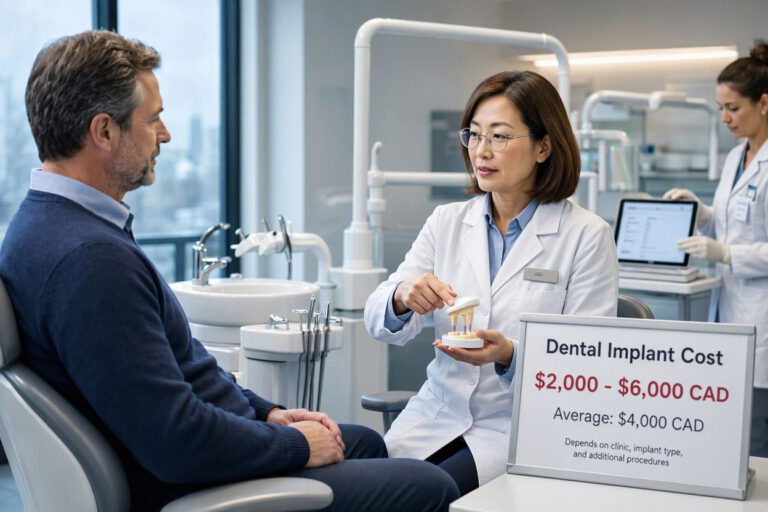
Let us talk money. This is often the biggest concern.
Chicago prices are generally higher than rural areas but comparable to other major US cities. Here is what you can realistically expect.
The Price Range
- Basic All On 4 (acrylic teeth on a titanium frame): 15,000–20,000 per arch
- Premium All On 4 (zirconia teeth, higher aesthetics): 25,000–35,000 per arch
- Both arches (upper and lower): 30,000–60,000 total
What Is Typically Included?
A transparent quote should include:
- Initial consultation and CT scan
- Extractions of remaining teeth
- Surgery and anesthesia
- Four implants per arch
- Temporary teeth
- Final teeth
- Follow-up visits for one year
What Is Usually Not Included?
- Bone grafting (if unexpectedly needed)
- Sinus lifts (for upper jaw cases with severe bone loss)
- Replacement of damaged final teeth (from accidents)
- Long-term maintenance cleanings
Does Insurance Cover All On 4?
Medical insurance usually does not cover dental implants. Dental insurance may cover a small portion, such as:
- Extractions
- Diagnostic imaging
- A small contribution toward the denture portion (often 1,000–1,500)
Most patients pay with:
- Cash or check (some clinics offer a discount)
- CareCredit or other medical financing
- A healthcare savings account (HSA) or flexible spending account (FSA)
Honest advice: Be very wary of clinics advertising “All On 4 for $9,999.” That price almost never includes the final teeth. Read the fine print. Ask for an itemized quote.
Financing Options for Chicago Patients
Many excellent Chicago implant centers offer payment plans. Here are common options.
Clinic-Specific Financing
Some larger Chicago dental groups have in-house financing. Terms vary. Ask about:
- Down payment required (often 25–50%)
- Interest rate (0% promotional rates are sometimes available)
- Length of payment plan (12 to 60 months)
Third-Party Medical Credit Cards
CareCredit is the most common. You apply online. If approved, you can use it at thousands of dental offices. Look for promotional financing like 6 or 12 months with no interest.
Alphaeon Credit is another option. It is similar to CareCredit but less widely accepted.
Personal Loans
Banks and online lenders like SoFi, LightStream, and Upgrade offer personal loans for medical procedures. These can have lower interest rates than credit cards if you have good credit.
HSA/FSA Funds
If you have a health savings account or flexible spending account, you can use those funds tax-free for All On 4. This essentially gives you a discount equal to your tax bracket.
Finding the Best All On 4 Provider in Chicago
This is the most important decision you will make. Do not choose based on price alone.
Credentials to Look For
- Prosthodontist: A specialist in replacing teeth (3 extra years of training)
- Oral surgeon: A specialist in surgical placement of implants
- Fellowship in implant dentistry: Additional training beyond general dentistry
Questions to Ask Before You Commit
- How many All On 4 procedures have you performed?
- Can I see before-and-after photos of your Chicago patients?
- What happens if an implant fails?
- Do you provide a written warranty for the implants and teeth?
- Who will perform the surgery? (Do not accept a general dentist without implant training)
Red Flags to Avoid
- Guarantees that sound too good to be true (“100% success forever”)
- Pressure to decide the same day
- No CT scan performed before surgery planning
- Unwillingness to provide patient references
Top Chicago Neighborhoods for Implant Dentistry
You can find skilled providers throughout the city. Higher concentrations exist in:
- The Loop: Many large specialty practices
- Lincoln Park: A mix of boutique and academic-affiliated clinics
- Naperville and western suburbs: Often lower prices than downtown
- Evanston: Home to some university-affiliated dental programs
Pro tip: Consider getting two or three consultations. Most Chicago clinics offer free or low-cost initial exams. This investment of time can save you thousands of dollars and prevent bad outcomes.
The Recovery Process: What to Really Expect
Online reviews often make recovery sound easier than it is. Let us be honest.
The First 24 Hours
You will go home with gauze in your mouth. Some bleeding is normal. Your face will be numb for several hours.
Do:
- Rest with your head elevated
- Apply ice packs (20 minutes on, 20 off)
- Drink cold water and protein shakes
- Take prescribed pain medication before the numbness wears off
Do not:
- Spit, rinse, or use a straw
- Smoke or drink alcohol
- Eat anything warm or solid
Days 2 to 7
Swelling usually peaks on day two or three. Bruising may appear on your cheeks or neck. This is normal.
You will eat a soft or liquid diet. Think smoothies, yogurt, mashed potatoes, and soup (cooled down).
Most patients stop prescription pain medication by day four. Over-the-counter ibuprofen or acetaminophen usually works after that.
Weeks 2 to 6
Swelling goes down. You start feeling more normal. You can begin eating softer solid foods like scrambled eggs, pasta, and fish.
You still avoid hard, crunchy, or sticky foods. No nuts, popcorn, caramel, or chewing ice.
Months 3 to 6
You gradually return to a normal diet. The implants are fusing with your bone. This is a quiet process. You should not feel any pain.
If you feel pain, tell your dentist immediately. It could be a sign of infection or implant failure.
After Final Teeth Placement
Once your permanent teeth are attached, you can eat almost anything. But remember: your new teeth cannot feel pressure the way natural teeth do. Be careful with extremely hard foods like bones, shells, and hard candies.
Risks and Complications: A Realistic Look
Every surgery has risks. Hiding them helps no one. Here is what you need to know.
Common (but usually minor)
- Swelling and bruising: Almost everyone experiences this. It fades within one to two weeks.
- Soreness in the jaw joint: Your bite changes. Your jaw muscles need time to adapt.
- Speech changes: Your tongue touches your new teeth differently. This improves within a few weeks.
Less Common (but serious)
- Implant failure (5-10%): An implant does not fuse with bone. Smoking and diabetes increase this risk. Failed implants can often be replaced.
- Infection: Signs include fever, spreading redness, or bad taste. Antibiotics usually resolve it.
- Nerve injury: Numbness in your lip, chin, or tongue. This is rare with proper planning. Most cases resolve over months.
Long-term Considerations
- Peri-implantitis: This is like gum disease but around implants. It can cause bone loss and implant failure. Good hygiene prevents it.
- Fractured teeth: The acrylic or zirconia teeth can crack. Most clinics offer repairs for a fee.
- Bone loss over time: Even with implants, your jawbone changes slowly. This is normal and rarely affects function.
Important: Choose a dentist who is honest about these risks. Anyone who claims “no risks” is not being truthful.
Day-to-Day Life After All On 4
You will need to adjust your habits. None of this is difficult, but it is essential.
Cleaning Your All On 4 Implants
You cannot remove your new teeth like dentures. So you clean them differently.
Daily:
- Brush twice a day with a soft toothbrush
- Use a water flosser (Waterpik) to flush food from under the teeth
- Floss with super floss or implant-specific floss
Weekly:
- Use a special brush to clean under the bridge
- Soak a super floss in antibacterial mouthwash
Every 3–6 months:
- Visit your dentist for professional cleaning
- They will check the screw access holes for debris
Foods to Avoid Forever
You can eat most things. But these items increase the risk of damage:
- Hard candies and ice cubes
- Popcorn kernels
- Bones from chicken, ribs, or fish
- Sticky caramels and taffy
- Unpopped popcorn kernels
Foods You Can Enjoy Again
Patients are often thrilled to rediscover:
- Steak and other grilled meats
- Fresh apples and corn on the cob
- Nuts and seeds
- Crusty bread and bagels
How It Feels
Most patients report that All On 4 feels 80–90% like natural teeth. The roof of your mouth is covered by the prosthetic (unlike natural teeth). That changes the sensation slightly. But within a few months, most people stop noticing.
Success Rates: What the Research Says
You deserve data, not opinions.
- 5-year success rate: 94–98%
- 10-year success rate: 90–95%
- Implant failure rate (smokers): 15–20% (significantly higher)
- Implant failure rate (non-smokers): 3–7%
The angled implants in the back have similar success rates to straight implants. That was not true ten years ago. Modern techniques have improved dramatically.
What Makes a Difference in Success?
Four factors predict long-term success more than anything else:
- Your oral hygiene (cleaning daily is non-negotiable)
- Regular professional maintenance (every 3–6 months)
- Not smoking (single biggest modifiable risk factor)
- Your dentist’s experience (practice matters greatly)
All On 4 in Chicago: A Comparison of Clinic Types
Not all providers are the same. Here is what to expect from different settings.
Large Implant Chain Clinics
Examples: ClearChoice, Affordable Dentures & Implants
Pros:
- One-stop shopping (everything in one building)
- Predictable processes
- Often have financing options
Cons:
- Less personalized care
- Higher pressure sales environments
- Sometimes higher prices for the brand name
Private Prosthodontic Practices
Examples: Chicago Implant Studio, Lincoln Park Smiles
Pros:
- Highly personalized care
- The same dentist sees you at every visit
- Often more flexible with scheduling
Cons:
- May have longer wait times for appointments
- Less internal resources (may refer out for CT scans)
University Clinics
Examples: UIC College of Dentistry
Pros:
- Lower costs (often 30–50% less)
- Academic oversight
- Latest techniques
Cons:
- Longer appointment times
- Students or residents perform parts of the treatment (supervised)
- Limited availability
Dental Tourism from Chicago
Some Chicago residents travel to Mexico, Costa Rica, or Colombia for lower prices (8,000–12,000 per arch).
Risks include:
- No easy follow-up care
- Different infection control standards
- Difficult if complications arise
- No legal recourse in the US
Our honest advice: If you choose dental tourism, plan to stay for several weeks. And accept that if something goes wrong, a Chicago dentist may not want to touch another dentist’s work.
Signs You Should Not Rush Into All On 4
This procedure is life-changing. But it is not always the right solution at the right time.
You Should Wait If:
- You have active, untreated gum disease. Treat the infection first.
- You smoke heavily and cannot quit. Success rates are much lower.
- You are undergoing active cancer treatment. Wait until you are stable.
- You cannot afford proper follow-up care. The teeth need maintenance.
- You are not emotionally ready. This is a big decision. Take your time.
Better Alternatives for Some Patients
- Implant-supported overdentures: Two to four implants help snap a denture in place. It is still removable but stable. Lower cost (8,000–15,000 per arch).
- Traditional dentures with relines: Not perfect, but low cost and no surgery.
- Fixed partial dentures (bridges): Good if you are missing a block of teeth but have healthy teeth on both sides.
Remember: A good dentist will offer you multiple options. They will not push you toward the most expensive choice. If they do, find another dentist.
How to Prepare for Your All On 4 Journey in Chicago
Preparation reduces stress and improves outcomes.
Medical Preparation
- See your primary care doctor for clearance
- Get any necessary blood work
- Stop smoking (or at least reduce significantly)
- Control your blood sugar if diabetic
Logistical Preparation
- Arrange time off work (plan for 3–5 days of recovery)
- Stock up on soft foods and protein shakes
- Fill pain prescriptions before surgery day
- Arrange a ride home (you cannot drive after sedation)
- Set up your sleeping area with extra pillows
Financial Preparation
- Get a detailed written quote
- Understand what is and is not included
- Secure financing before you commit to surgery
- Set aside emergency funds for unexpected complications (rare but possible)
Emotional Preparation
- Talk to former patients (ask your dentist for references)
- Join online support groups for implant patients
- Write down your questions and bring them to consultations
- Be patient with yourself during recovery
The Emotional Impact of All On 4
This is not just a dental procedure. It changes how you see yourself.
Before the Procedure
Many patients feel embarrassed, anxious, or hopeless. They stop smiling in photos. They cover their mouths when they talk. Some even avoid job interviews or dates because of their teeth.
After the Procedure
The transformation is often emotional. Patients report:
- Increased confidence in social and professional settings
- Better nutrition because they can chew vegetables and meats again
- Improved sleep (no more worrying about dentures falling out)
- Reduced anxiety about dental emergencies
“I cried in the parking lot after my final teeth were placed. Not from pain. From relief. I finally felt like myself again.” — Diane, 62, Hyde Park
You deserve to feel that way too.
Maintenance Schedule for Long-Term Success
Treat your All On 4 like a luxury car. Regular maintenance prevents expensive problems.
Daily Maintenance (5 minutes)
- Morning: Brush for 2 minutes. Water floss for 1 minute.
- Evening: Brush for 2 minutes. Water floss and floss thoroughly.
Monthly Checks (10 minutes)
- Look for any cracks or chips in the teeth
- Check for redness or swelling around the gums
- Test if any teeth feel loose (they should not)
Professional Maintenance
| Time | What Happens | Cost Range (Chicago) |
|---|---|---|
| 3 months | Implant exam, cleaning under bridge | 150–250 |
| 6 months | Same + X-rays of implants | 200–350 |
| 12 months | Full exam, bite check, torque verification | 300–500 |
| Every 2-3 years | Full CT scan to check bone levels | 300–600 |
When to Call Your Dentist Immediately
- A tooth or bridge becomes noticeably loose
- You have persistent pain when chewing
- You see pus or unusual discharge around an implant
- An implant tooth breaks
Do not wait for your next scheduled visit. These issues get worse with time.
Frequently Asked Questions (FAQ)
Are All On 4 dental implants painful?
You will not feel pain during the surgery because of anesthesia. Afterward, most patients describe soreness, not severe pain. It is similar to having a tooth extracted. Pain medication manages it well.
How long do All On 4 implants last?
The titanium implants themselves can last a lifetime with good care. The teeth (prosthetic) typically last 10–20 years before needing replacement or repair.
Can I get All On 4 if I have bone loss?
Yes. That is one of the main advantages of this technique. The angled back implants reach bone that is often still healthy, even if you have lost bone in other areas.
Will my insurance pay for any of this?
Most dental insurance plans cover a small portion. Usually extractions, diagnostics, and a denture allowance. Call your insurance company before your consultation.
How much do All On 4 implants cost in Chicago?
Expect 15,000to35,000 per arch. Both arches cost 30,000to60,000. These are realistic, all-inclusive ranges.
Can I eat normally with All On 4?
Yes. After full healing (3–6 months), you can eat almost everything. Avoid only extremely hard or sticky foods.
What happens if one implant fails?
Your dentist will assess the situation. Sometimes the failed implant can be replaced. Other times, the bridge can be supported by the three remaining implants. This is why four implants provide redundancy.
How do I clean under the bridge?
You need a water flosser (Waterpik) and special floss. Your dental team will teach you. It takes practice, but it becomes routine.
Am I too old for All On 4?
No. Age alone is not a problem. Health is what matters. Many patients in their 80s successfully receive All On 4 implants.
How do I choose the best dentist in Chicago?
Look for a prosthodontist or oral surgeon who does this procedure frequently. Ask for before-and-after photos. Get two or three opinions. Trust your gut feeling.
Additional Resources
For more reliable information, explore this guide from the American Academy of Implant Dentistry:
➡️ Patient Guide to Dental Implants (AAID)
This resource explains implant types, risks, and how to find a qualified provider.
Conclusion
All On 4 dental implants in Chicago offer a proven, reliable way to replace a full arch of missing teeth. The procedure requires surgery and a significant financial investment, but it delivers a fixed, natural-feeling smile that can last for decades. With careful provider selection, honest expectations, and daily maintenance, most patients find it to be a life-changing solution.
Disclaimer: This article is for informational purposes only. It does not constitute medical or dental advice. Always consult with a licensed dental professional in Chicago before making any decisions about your oral health. Individual results vary.