All On 4 Dental Implants In Newtown
Losing most or all of your teeth can feel overwhelming. You might find yourself hiding your smile, struggling to eat the foods you love, or feeling self-conscious in social settings. If you live in or near Newtown, you have probably heard about a solution called All On 4 dental implants. But what does this treatment actually involve? Is it right for you?
This guide will walk you through everything you need to know. We will look at the benefits, the real costs, the recovery process, and the potential risks. The goal is simple: to give you honest, clear, and practical information so you can make a confident decision about your oral health.
Important Note: This article is for educational purposes. It does not replace professional medical advice. Always consult a qualified dentist or implant specialist in Newtown for a personal examination.
What Exactly Are All On 4 Dental Implants?
Let us start with the basics. All On 4 is a modern technique for replacing a full arch of teeth (either the upper jaw, the lower jaw, or both) using just four dental implants. A traditional method might use six, eight, or even ten implants per jaw. The All On 4 approach uses only four, placed at strategic angles.
These four implants act as anchors. They support a fixed, non-removable bridge of prosthetic teeth. The bridge is usually made from high-quality materials like acrylic reinforced with titanium or zirconia. The result is a full set of teeth that look, feel, and function much like natural teeth.
Why Four Implants? The Science Behind the Name
The term “All On 4” is not just a marketing name. It refers to a specific surgical protocol developed by a dental implant company. The key features include:
- Two straight implants placed in the front part of the jawbone.
- Two tilted implants placed in the back part of the jawbone, angled at about 30 to 45 degrees.
This tilting is clever. It allows the implants to make better use of the available bone. In many cases, people do not need bone grafting surgery, even if they have some bone loss. The tilted implants also provide a wider base of support, which makes the final bridge very stable.
How Is This Different From Traditional Implants?
To help you see the difference, here is a simple comparison table.
| Feature | Traditional Full Arch Implants | All On 4 Dental Implants |
|---|---|---|
| Number of Implants | 6 to 10 per jaw | 4 per jaw |
| Bone Grafting Often Needed? | Yes, frequently required | Often not required |
| Treatment Time | 6 to 12 months or more | Usually 3 to 6 months |
| Final Prosthesis | Fixed or removable | Fixed (non-removable) |
| Cost | Higher (more implants, more surgery) | Lower (fewer implants, less surgery) |
| Immediate Teeth Possible? | Sometimes | Yes, usually on the same day |
The Real Benefits of All On 4 Implants in Newtown
If you are researching this topic, you likely want to know how this solution could improve your daily life. Let us be realistic about the benefits.
1. You Get New Teeth on the Same Day
One of the most appealing advantages is speed. On the day of your surgery, your implant dentist in Newtown will place the four implants and attach a temporary, fixed bridge. You leave the clinic with a full set of teeth. They are not your final teeth, but they are functional and natural-looking.
You do not have to walk around without teeth for months. That is a huge psychological and practical benefit.
2. No Bone Grafting for Most Patients
This is a major selling point. Bone loss is common after tooth loss. Traditional implants often require a bone graft procedure first, which adds months to the treatment and extra cost. The All On 4 technique works around areas of low bone density by using tilted implants. Many Newtown residents who have been told they do not have enough bone become good candidates for this method.
3. A Fixed, Non-Removable Solution
Unlike traditional dentures, these new teeth do not come out. You do not use adhesives or pastes. You do not worry about them clicking or slipping while you talk or laugh. You clean them like natural teeth (with some special instructions). This stability changes how you eat, speak, and smile.
4. Long-Term Value
While the upfront cost is significant, All On 4 implants are a long-term investment. With proper care, the implants themselves can last a lifetime. The prosthetic bridge lasts 10 to 15 years or longer with good maintenance. Compare that to traditional dentures, which may need replacement every 5 to 7 years.
5. Improved Quality of Life
This is not a clinical benefit. It is a human one. People who switch from failing teeth or uncomfortable dentures to All On 4 implants often report:
- Eating steak, apples, and corn on the cob again.
- Smiling confidently in photos.
- No more sore spots from dentures.
- Better nutrition because they can eat more whole foods.
- Improved self-esteem and social confidence.
Who Is a Good Candidate in Newtown?
Not everyone is a perfect fit for this procedure. A good candidate typically:
- Has lost most or all teeth in one or both jaws.
- Has worn traditional dentures for years and hates them.
- Has advanced tooth decay or gum disease.
- Has enough jawbone volume to support four implants (most adults are fine).
- Does not smoke heavily (smoking reduces implant success).
- Is in good general health, without uncontrolled diabetes or severe immune disorders.
- Has realistic expectations about the process and recovery.
The best way to know is to schedule a consultation with an experienced implant dentist in Newtown. They will take 3D cone beam CT scans of your jawbone and review your medical history.
A Note for Smokers: If you smoke, be honest with your dentist. Smoking significantly increases the risk of implant failure. Some specialists will still perform the procedure, but they will ask you to quit or reduce smoking. Others may recommend a different solution.
What to Expect: The Step-by-Step Process
Let us walk through the entire journey, from the first phone call to your final smile. This timeline is typical for most All On 4 procedures in Newtown.
Step 1: Initial Consultation and Exam (1 to 2 hours)
You meet with an implant specialist. They will:
- Examine your mouth and existing teeth.
- Take digital x-rays and a 3D CT scan.
- Discuss your medical history and medications.
- Explain whether you are a candidate.
- Provide a written treatment plan with costs.
This is your time to ask questions. Write them down before you go.
Step 2: Treatment Planning (1 to 2 weeks)
Your dental team uses special software to plan the exact position and angle of each implant. They create a surgical guide. This digital planning makes the actual surgery faster, safer, and more precise.
Step 3: Surgery Day (2 to 4 hours)
You will receive local anesthesia or IV sedation (many patients prefer sedation for comfort). The oral surgeon or implant dentist:
- Removes any remaining failing teeth.
- Places the four implants into the jawbone.
- Attaches a temporary, fixed bridge to the implants.
- Adjusts the bridge so your bite feels comfortable.
You go home the same day with a temporary set of teeth.
Step 4: Healing and Osseointegration (3 to 6 months)
This is the most critical phase. Your jawbone needs to grow and fuse with the surface of the implants. This process is called osseointegration. During this time:
- You eat soft foods.
- You avoid chewing with the temporary teeth as much as possible.
- You take any prescribed medications.
- You visit your dentist for periodic checks.
Step 5: Final Bridge Placement (1 visit, 2 to 3 hours)
Once the implants are fully integrated, you return to the clinic. The dentist removes the temporary bridge and takes new impressions. A dental lab fabricates your final, permanent bridge. This final bridge is stronger, more aesthetic, and designed to last for many years. The dentist screws it onto the implants. You walk out with your final smile.
Costs of All On 4 Dental Implants in Newtown
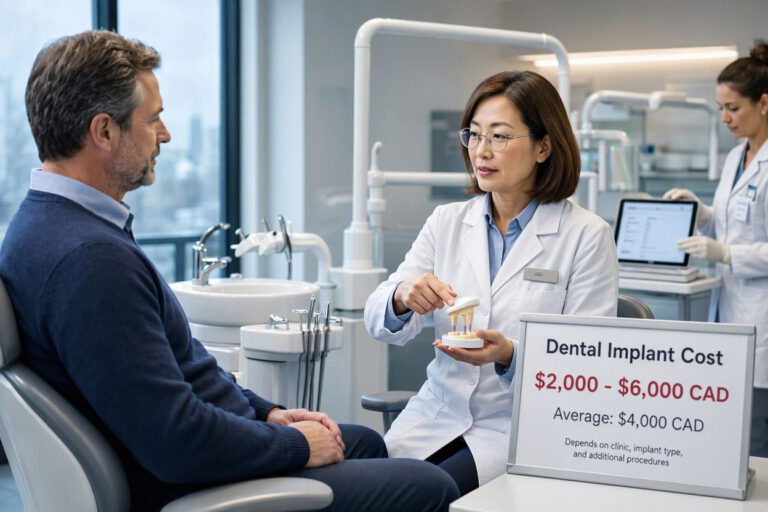
Let us talk about money honestly. This is a significant financial investment. Prices vary widely depending on the clinic, the materials used, your specific bone condition, and whether you need extractions or other pre-treatments.
Typical Cost Ranges
| Treatment Option | Estimated Cost Range (per arch) |
|---|---|
| All On 4 with Acrylic Bridge (basic, most common) | 15,000–20,000 |
| All On 4 with Hybrid Zirconia Bridge (premium) | 25,000–35,000 |
| All On 4 with Full Zirconia Bridge (top tier) | 35,000–50,000+ |
| Both Jaws (Full Mouth) | 30,000–70,000+ |
These are average estimates for Newtown and surrounding areas. Always get a written quote.
What is Included in the Price?
A transparent clinic will tell you exactly what the fee covers. Typically, it includes:
- Initial consultations and CT scans.
- Removal of any remaining teeth (extractions).
- Placement of four implants per arch.
- The temporary bridge.
- The permanent bridge.
- Follow-up visits for 1 year.
- The final prosthesis adjustment.
What Might Cost Extra?
Be aware of potential additional charges:
- Bone grafting (if you do need it).
- Sinus lift procedures.
- IV sedation or general anesthesia (often a separate fee).
- Replacement of the final bridge due to damage (not covered by warranty).
- Treatment for gum disease before implant surgery.
Does Insurance Cover All On 4?
Most dental insurance plans do not cover the full cost. However, they may cover parts of the procedure, such as:
- Extractions.
- Diagnostic x-rays and exams.
- A portion of the prosthetic bridge.
Check your policy carefully. Some people use health savings accounts (HSAs) or flexible spending accounts (FSAs) to pay with pre-tax dollars. Many implant clinics in Newtown also offer third-party financing through companies like CareCredit, LendingClub, or Proceed Finance.
Risks and Complications: Being Honest
No medical procedure is without risk. A responsible guide must list the potential downsides. Fortunately, serious complications are rare when an experienced specialist performs the surgery. But you deserve to know what could happen.
| Risk | How Common? | What Happens? |
|---|---|---|
| Implant Failure | 2% to 5% | An implant does not fuse with bone. It becomes loose. The dentist removes it. |
| Infection | Rare | The surgical site becomes infected. Treated with antibiotics or minor cleaning. |
| Nerve Damage | Very rare | Temporary or permanent numbness in the lip, chin, or tongue. |
| Sinus Issues | Only for upper jaw | An implant may protrude into the sinus cavity. Usually fixed with a minor procedure. |
| Prosthetic Fracture | Uncommon | The bridge cracks or breaks. It can be repaired or replaced. |
| Difficulty Cleaning | Common | Food traps around implants. Requires special floss and water flossers. |
How to Minimize Your Risks
You have control over many risk factors. To improve your chances of success:
- Choose an experienced provider. Ask how many All On 4 procedures they have done.
- Stop smoking. Even reducing smoking helps.
- Manage your health. Keep diabetes, blood pressure, and other conditions under control.
- Follow post-op instructions. Eat soft foods, take medications, and attend all follow-ups.
- Maintain excellent oral hygiene. Implants can get a form of gum disease called peri-implantitis.
Recovery: What Does It Really Feel Like?
People often worry about pain. You should know that most patients describe the recovery as easier than expected.
The First 24 to 48 Hours
- Swelling: Your face will swell, especially around the cheeks and lips. This peaks around day two.
- Bleeding: Minor oozing is normal. Bite on gauze pads as directed.
- Pain: You will have some discomfort, but prescription pain medication controls it well.
- Diet: Only cold or lukewarm liquids and pureed foods. Think smoothies, yogurt, soup, and protein shakes.
Days 3 to 7
- Swelling begins to go down.
- You can introduce soft, mashed foods like scrambled eggs, oatmeal, and mashed potatoes.
- You may feel some bruising on your face or neck. This is normal.
- Most people return to non-physical work or normal daily activities.
Weeks 2 to 12
- You feel much better.
- You continue eating a soft food diet.
- You learn to clean around the implants with special brushes.
- The temporary teeth feel strange at first, but you adapt.
Months 3 to 6
- You stop noticing the implants.
- You can gradually return to harder foods, but always be sensible.
- By month six, most people eat almost everything they want.
Realistic Expectation: You will not eat steak on day three. The healing process takes patience. But by the time you get your final bridge, you will experience remarkable freedom.
Caring for Your All On 4 Implants
You have invested time and money. Protect that investment with good daily care.
Daily Cleaning Routine
- Brush twice a day with a soft nylon brush. Use non-abrasive toothpaste.
- Floss once a day using superfloss or implant-specific floss.
- Use a water flosser (Waterpik) to flush out food debris from under the bridge.
- Use interdental brushes to clean around each implant post.
Regular Professional Maintenance
- See your dentist every 6 months for a checkup.
- The dentist will remove the bridge once a year to inspect the implants and clean underneath.
- Never skip these appointments. Problems caught early are easy to fix.
Things to Avoid
- Chewing ice, hard candy, or bone fragments.
- Using your teeth as tools (opening packages, biting nails).
- Grinding or clenching your teeth at night (ask about a nightguard if you do).
- Neglecting your cleaning routine.
Choosing an All On 4 Provider in Newtown
Not all dentists are the same. Some have placed hundreds of All On 4 arches. Others have placed only a few. You want the former.
Questions to Ask Before You Commit
- “How many full-arch All On 4 cases have you personally completed?”
- “Do you use digital planning and 3D surgical guides?”
- “What type of warranty do you offer on the implants and the bridge?”
- “Who will perform the surgery? An oral surgeon, periodontist, or general dentist?”
- “Can I speak to a past patient who had the same procedure?”
- “What happens if an implant fails in the first year?”
- “Do you provide the temporary bridge on the same day as surgery?”
Red Flags to Watch For
- A clinic that refuses to show before-and-after photos.
- A price that seems too good to be true (under $10,000 per arch is suspicious).
- High-pressure sales tactics or “today-only” discounts.
- No clear breakdown of costs in writing.
- A provider who cannot explain the risks.
Alternatives to All On 4 Implants
This solution is excellent for many people, but not for everyone. You owe it to yourself to compare other options.
| Alternative | Pros | Cons |
|---|---|---|
| Traditional Dentures | Lowest cost. No surgery. | Unstable. Can be painful. Requires adhesives. Limits diet. |
| Implant-Supported Dentures (2 or 4 implants) | More stable than regular dentures. Removable for cleaning. | Lower cost than All On 4. Still clicks or moves a little. |
| Traditional Full Arch Implants (6+ implants) | Very stable. Can be better for some bone types. | More implants = higher cost. Often requires bone grafting. Longer treatment time. |
| Removable Overdentures on Bars | Easier to clean. Less expensive than fixed bridges. | Not fixed. Plastic teeth wear out faster. |
Many people in Newtown choose All On 4 because it sits in the middle: more affordable than a full set of single implants, but far more comfortable and functional than dentures.
Conclusion: Is All On 4 Right for You?
We have covered a lot of information. Let us summarize the most important points. All On 4 dental implants in Newtown offer a fixed, same-day solution for people missing most or all of their teeth, often without the need for bone grafting. The upfront cost is significant, but the quality of life improvements—eating normally, smiling confidently, and forgetting you have a prosthesis—are life-changing for many patients. Your next step should be to schedule one or two consultations with experienced local implant specialists to get a personalized opinion and a clear cost breakdown.
Frequently Asked Questions (FAQ)
1. How long do All On 4 dental implants last?
The titanium implants themselves are designed to last a lifetime with proper care. The acrylic or zirconia bridge typically lasts 10 to 15 years before needing replacement or repair due to normal wear.
2. Is the procedure painful?
Most patients report mild to moderate discomfort after the anesthesia wears off. Prescription pain medication effectively manages this for the first few days. The surgery itself is not painful because you are numb or sedated.
3. Can I get All On 4 if I already have dentures?
Yes. In fact, many people switch from dentures to implants because they are tired of slipping, sore spots, and dietary restrictions. Your dentist will remove the dentures and proceed with the implants.
4. How do I clean under the bridge?
You will need a water flosser (like a Waterpik) and special implant floss or superfloss. Your dentist will teach you the technique. It adds about two minutes to your daily routine.
5. Does insurance cover any part of All On 4?
Some dental insurance plans cover extractions, exams, and a portion of the permanent bridge, but rarely the implants themselves. Medical insurance may cover part if tooth loss is due to an accident or medical condition. Check your specific policy.
6. What happens if one implant fails?
If a single implant does not fuse with the bone, your dentist may be able to continue supporting the bridge with the remaining three implants, depending on the case. Sometimes, they place a new implant in a different position. Reputable clinics offer a warranty or free replacement for failed implants within the first year.
7. Can I eat normally with temporary teeth?
You must follow a soft-food diet during the healing phase (3-6 months). The temporary bridge is not designed for heavy chewing. Respect the healing process to protect the implants.
Additional Resources
For more reliable information about dental implants, financing options, and finding a specialist, visit the American Academy of Implant Dentistry (AAID) patient information page. They offer a “Find an Implant Dentist” tool.
Link to: www.aaid.com/patients Note: Add the full, clickable URL for your website.
Disclaimer
This article provides general educational information and does not constitute medical or dental advice. Individual results vary. All On 4 dental implants carry risks, including infection, implant failure, and nerve damage. Always seek the advice of a licensed, experienced dental professional in Newtown for a personal examination and treatment plan. Do not disregard professional advice based solely on information read here.