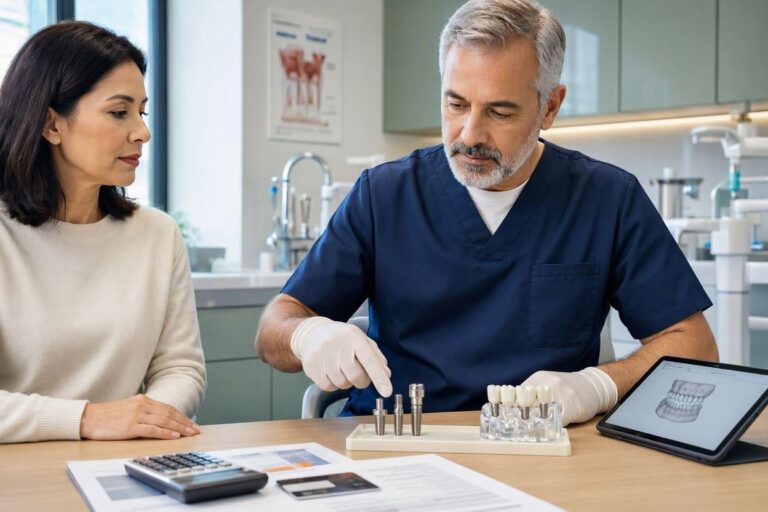
All On 4 Dental Implants in Melbourne
Losing most or all of your teeth changes more than just your smile. It affects how you eat, how you speak, and often how you feel about yourself. For many people in Melbourne, traditional dentures have been the only option for years. But dentures come with their own problems. They slip. They click. They can make eating a simple apple feel like a challenge.
That is where the concept of All On 4 dental implants enters the picture. This treatment offers a middle ground. It is not as invasive as placing an individual implant for every missing tooth. Yet it provides far more stability than a removable denture.
If you live in Melbourne or the surrounding suburbs, you have likely seen ads promising “new teeth in a day.” This guide cuts through the marketing noise. We will look at what All On 4 really involves. We will discuss realistic outcomes, potential risks, costs, and how to find a qualified provider in Melbourne.
Let us start with the basics.
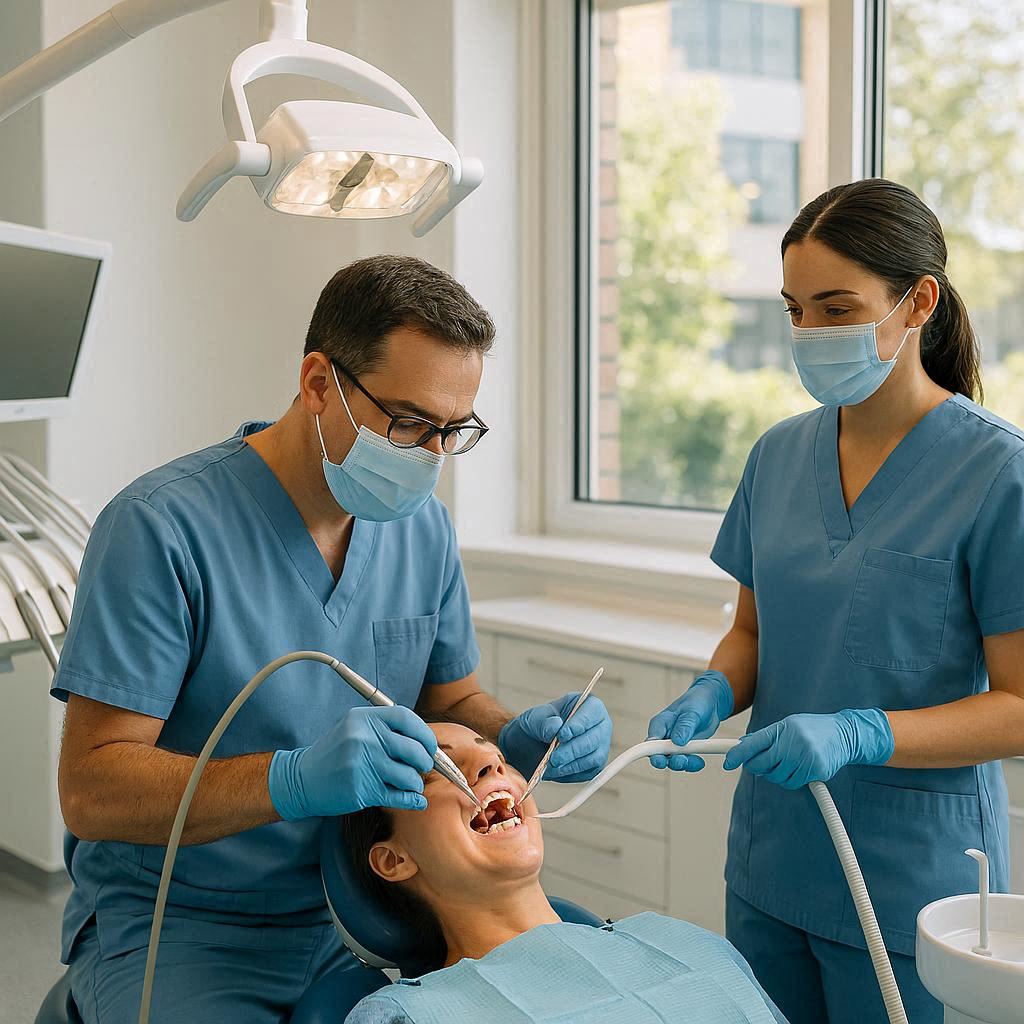
What Exactly Are All On 4 Dental Implants?
The name tells you most of what you need to know. “All On 4” means an entire arch of teeth (all of them) is supported by just four dental implants.
Here is how it works. A specialist surgically places four titanium posts into your jawbone. Two go in the front of the jaw, where the bone is typically denser. Two go in the back, but they are angled. This angled placement is the clever part. It allows the back implants to avoid areas where bone is often thinner, like the sinus cavities in the upper jaw or the nerve canal in the lower jaw.
Once these four implants are in place, a custom-made, fixed bridge is screwed onto them. You do not remove this bridge at night. It stays in your mouth permanently, just like natural teeth.
How This Differs from Traditional Implants
A traditional approach might use six, eight, or even ten implants per arch. That is more surgery, more healing time, and a significantly higher cost. Traditional implant bridges also often require bone grafting if your jawbone has shrunk due to tooth loss.
The All On 4 concept was designed to avoid bone grafting in most cases. By angling the back implants, the surgeon can use the existing bone more efficiently.
A Fixed Solution, Not Removable
This point is crucial. Many people confuse All On 4 with implant-supported overdentures. An overdenture clips onto implants but still comes out for cleaning. All On 4 is fixed. Only your dentist can remove it for professional maintenance.
Important Note: All On 4 is a major surgical procedure. It is not right for everyone. A thorough assessment by a specialist in Melbourne is essential before you commit to anything.
Who Is a Realistic Candidate in Melbourne?
Not everyone who wants All On 4 can have it. Good candidates share certain characteristics. Let us look at the profile of a typical patient.
You might be a candidate if:
- You have lost most or all of your teeth in one or both jaws.
- You have worn traditional dentures for years and hate them.
- You have enough jawbone density to support four implants. (Severe bone loss may still require grafting.)
- You do not have uncontrolled chronic conditions like advanced diabetes or autoimmune disorders that impair healing.
- You do not smoke heavily. Smoking dramatically increases the risk of implant failure. Some Melbourne clinics will refuse treatment to heavy smokers.
- You have realistic expectations. The bridge will not feel exactly like natural teeth, but it will be far better than dentures.
Who Should Look at Other Options?
Some people are better off considering alternatives. For example, if you only have three or four missing teeth, individual implants or a traditional bridge make more sense. If your bone loss is extreme and you refuse bone grafting, a conventional denture might still be your only option. If you are on a very tight budget, All On 4 requires a significant upfront investment.
The All On 4 Procedure: What Happens in a Melbourne Clinic?
Understanding the process helps reduce anxiety. Here is a step-by-step look at what you can expect.
Step 1: Initial Consultation and Imaging
Your first visit is all about information gathering. A dentist or oral surgeon will examine your mouth. They will take 3D scans, usually a CBCT (cone beam CT scan). This scan shows the exact shape and density of your jawbone. It also maps out critical structures like nerves and sinuses.
During this visit, be honest about your medical history and any medications you take. Do not hide your smoking habit or your occasional glass of wine. Your surgeon needs the full picture.
Step 2: Treatment Planning
Using the scan data, your Melbourne specialist will plan the exact position of each implant. They use special software to create a surgical guide. This guide ensures the implants go in at precisely the right depth and angle.
You will also discuss the type of temporary bridge you will receive. Most patients leave the clinic with a fixed temporary bridge on the same day as surgery.
Step 3: Surgery Day
On the day of surgery, you will receive anesthesia. This can range from local anesthesia with sedation to general anesthesia, depending on your anxiety level and the complexity of your case.
The surgeon makes small incisions in your gums to expose the bone. They then place the four implants. The whole process usually takes two to three hours per arch.
Once the implants are in, the surgeon attaches a temporary bridge. This bridge is made of acrylic or a similar material. It looks okay, but it is not your final set of teeth. You will wear this temporary bridge for three to six months while your implants fuse with your jawbone.
Step 4: Healing and Osseointegration
The term “osseointegration” sounds complicated, but it just means your bone grows tightly around the implant surface. This takes time. During this period, you must eat soft foods. You cannot chew on the temporary bridge with full force. Your surgeon will give you specific instructions.
Step 5: Final Bridge Placement
After your implants have fully integrated, you return to the Melbourne clinic. Your surgeon removes the temporary bridge. They take new impressions. A dental lab then fabricates your final bridge. This final bridge is usually made of zirconia or acrylic over a titanium framework. It looks much more natural and is far stronger than the temporary one.
The final bridge is screwed onto your implants. Your surgeon checks your bite and makes any necessary adjustments.
Benefits of Choosing All On 4 in Melbourne
Why do thousands of Australians choose this treatment each year? The benefits are substantial.
- Fewer implants needed: Four implants per arch versus eight or ten means less surgery and lower cost.
- Often no bone grafting: The angled back implants maximize the use of existing bone.
- Fixed teeth: You never take them out. No messy adhesives. No clicking sounds.
- Immediate function: Most patients get a temporary set of teeth on the same day as surgery.
- Improved chewing ability: You can eat steaks, nuts, and raw vegetables again. Not immediately, but eventually.
- Preserves jawbone: Implants stimulate the bone, preventing the shrinkage that happens with dentures.
- Natural appearance: The bridge looks and feels like a healthy set of teeth.
The Realistic Costs in Melbourne
Let us talk about money. This is where many people get confused. Prices for All On 4 dental implants in Melbourne vary widely. You might see ads for “$15,000 per arch” or “$30,000 for a full mouth.” Are these real? Sometimes yes, but you need to read the fine print.
What Influences the Price?
| Factor | Impact on Cost |
|---|---|
| Clinic location (CBD vs. suburbs) | CBD clinics often charge more |
| Surgeon’s qualifications | Oral surgeons and prosthodontists charge more than general dentists |
| Materials used | Zirconia final bridges cost more than acrylic |
| Number of arches | One arch is cheaper than two, obviously |
| Need for extractions | Removing remaining teeth adds time and cost |
| Bone grafting (if needed) | This can add $2,000 to $5,000 per arch |
| Type of anesthesia | IV sedation or general anesthesia adds fees |
| Temporary bridge quality | Better temporaries cost more |
General Price Ranges in Melbourne (2025 estimates)
- Budget option (single arch): $18,000 – $22,000. Usually uses a general dentist, acrylic final bridge, and basic materials.
- Mid-range option (single arch): $23,000 – $28,000. Typically a prosthodontist, better materials, and a stronger final bridge.
- Premium option (single arch): $30,000 – $45,000. An oral surgeon, top-tier zirconia bridge, and full sedation.
- Full mouth (both arches): $45,000 – $80,000. Discounts usually apply for doing both jaws together.
Important Note: The cheapest option is not always the best value. A failed All On 4 case costs far more to fix than a well-done initial treatment. Do not choose a Melbourne dentist based on price alone.
Risks and Complications: Being Honest
No surgical procedure is without risk. All On 4 is no exception. A responsible Melbourne clinic will discuss these with you openly. Here are the main risks.
Implant Failure
Implants can fail to integrate with the bone. This happens in about 2% to 5% of cases in healthy non-smokers. In smokers, the failure rate jumps to 10% to 15% or higher. Failed implants usually need removal and replacement.
Infection
Any surgery carries infection risk. Proper oral hygiene and prescribed antibiotics keep this risk low. But infections around implants (peri-implantitis) can develop months or years later if you neglect your cleaning routine.
Nerve Damage
The lower jaw contains the inferior alveolar nerve. If an implant is placed too close to this nerve, you might experience numbness or tingling in your lip, chin, or tongue. In most cases, this is temporary. Rarely, it can be permanent.
Sinus Issues
For upper jaw implants, the back implants sit near the maxillary sinuses. If an implant protrudes into the sinus cavity, you might experience sinus infections or a feeling of pressure. A skilled surgeon using 3D imaging prevents this in most cases.
Prosthetic Complications
The bridge itself can break. Acrylic bridges are more prone to cracking than zirconia ones. Screws can loosen over time. Your Melbourne dentist will need to check and tighten these screws during your maintenance visits.
What a Patient in Melbourne Says
“I had my All On 4 done in Richmond two years ago. The first week was rough. Lots of swelling and soft foods only. But after six months, I forgot I had implants. The only downside? The cost. It cleaned out my savings. Would I do it again? In a heartbeat.”
— Michael, 58, Melbourne
All On 4 vs. Alternatives: A Comparison
You have options. Let us compare All On 4 to the main alternatives.
| Feature | All On 4 | Traditional Dentures | Individual Implants | Implant Overdenture |
|---|---|---|---|---|
| Fixed or removable | Fixed | Removable | Fixed | Removable (snaps on) |
| Number of implants | 4 per arch | 0 | 6-10 per arch | 2-4 per arch |
| Bone grafting often needed? | Rarely | No | Often yes | Sometimes |
| Chewing efficiency | 80-90% of natural | 20-30% of natural | 90-95% of natural | 50-60% of natural |
| Cost per arch (Melbourne) | $20k-$40k | $2k-$5k | $30k-$60k | $10k-$20k |
| Lifespan (with good care) | 20+ years | 5-10 years | 20+ years | 15-20 years |
| Removes at night? | No | Yes | No | Yes |
Which One Should You Choose?
If you have the bone density and budget for individual implants, that is technically the gold standard. But most people needing a full arch do not have the bone or the budget for that.
If you simply cannot afford implants at all, modern dentures are better than nothing. But you will struggle with eating and speaking.
If you want a fixed solution that avoids bone grafting, All On 4 is the sweet spot.
How to Choose a Provider in Melbourne
Melbourne has no shortage of dental clinics offering All On 4. But not all providers have the same skill level. Here is how to separate the experts from the marketers.
Check Their Qualifications
Look for one or more of these titles:
- Oral Surgeon: Specializes in surgery only. Highest level of surgical training.
- Prosthodontist: Specializes in replacing teeth. Three years of extra training after dental school.
- Periodontist: Specializes in gums and implant placement.
A general dentist can legally place All On 4 implants. But would you want them to? For complex cases, specialists produce better outcomes.
Ask About Their Volume
How many All On 4 cases do they perform each month? A clinic that does two cases per year is not experienced enough. Look for a provider who does at least two to three cases per week.
Read Real Reviews (Not Just Google)
Look for before-and-after photos. Read reviews on multiple platforms. But be cautious. Some Melbourne clinics pay for fake positive reviews. Look for detailed negative reviews instead. They often tell you the truth about aftercare and hidden fees.
Ask These Questions at Your Consultation
- “What is your implant failure rate?”
- “Do you use 3D surgical guides?”
- “What brand of implants do you use?” (Reputable brands: Nobel Biocare, Straumann, Zimmer Biomet)
- “Who makes the final bridge? In-house or an external lab?”
- “What does the quoted price exclude?” (Extractions? Temporary bridge? Final bridge? Sedation?)
- “Do you offer any warranty on the implants or bridge?”
Recovery and Aftercare: What to Expect
The first 72 hours after surgery are the hardest. Here is a realistic timeline.
Days 1 to 3
- Significant swelling in your cheeks and lips.
- Bruising may appear on your neck or chin.
- You eat only cold, soft foods like yogurt, smoothies, and soup.
- No spitting, no using straws, and no rinsing forcefully.
- Pain medication will be necessary for most patients.
Days 4 to 7
- Swelling starts to go down.
- You can introduce warm soft foods like mashed potatoes and scrambled eggs.
- You can gently rinse with warm salt water.
- Stitches may begin to dissolve or be removed.
Weeks 2 to 4
- Most swelling and bruising are gone.
- You can eat soft but more textured foods like pasta, soft bread, and cooked vegetables.
- You start learning to clean around your implants with special brushes and floss.
Months 3 to 6
- The implants are fusing with your bone.
- You continue eating soft to medium foods. Avoid hard, crunchy, or sticky items.
- Your temporary bridge may feel loose. That is normal. Your dentist will tighten it if needed.
After Final Bridge Placement
Once your final bridge is in place, you can gradually return to a normal diet. But some foods will always be risky. Hard lollies, ice cubes, and bones can crack the bridge. Sticky toffees can pull at the screws.
Daily Cleaning Routine
This is non-negotiable. All On 4 bridges have a small gap between the bridge and your gums. Food gets trapped there. If you do not clean it daily, you will develop gum disease and bone loss around the implants.
You will need:
- A water flosser (like Waterpik) to flush out debris.
- Super floss or implant-specific floss to clean under the bridge.
- A soft toothbrush for the visible parts.
- Regular check-ups every six months for professional cleaning and screw tightening.
Financing and Payment Options in Melbourne
The cost of All On 4 is a genuine barrier for many people. Here are realistic ways to manage it.
Superannuation Early Release
Under certain circumstances, the Australian Tax Office allows early access to your superannuation for life-saving medical treatment. Dental implants may qualify if your oral health is severely impacting your general health. You will need letters from both your dentist and a medical doctor. This is not guaranteed, but it is an option.
Payment Plans
Many Melbourne clinics partner with third-party finance companies like:
- Dentacare
- National Dental Plan
- Humm (formerly zipMoney)
These plans often have interest-free periods. But read the fine print. If you miss a payment, interest rates can jump to 20% or more.
Private Health Insurance
If you have hospital cover with major dental benefits, you may claim some of the surgical costs. However, most policies have annual limits of $1,000 to $2,500 for dental. That is a tiny fraction of the total cost. Do not buy insurance expecting it to cover your implants.
Regional Travel Consideration
Some Melbourne residents choose to travel to Thailand, Vietnam, or Hungary for lower-cost All On 4. You might pay $10,000 per arch instead of $25,000. But there are risks. If something goes wrong after you return, no local Melbourne dentist will want to touch someone else’s work. You would need to fly back. For most people, paying more in Melbourne for local aftercare is worth the peace of mind.
Long-Term Success: What the Research Says
Clinical studies on All On 4 show strong long-term results. A 10-year study published in the International Journal of Oral & Maxillofacial Implants found:
- Implant survival rate: 94.8% after 10 years.
- Prosthesis survival rate (the bridge itself): 97.2% after 10 years.
- Patient satisfaction: Over 95% reported being happy or very happy.
These numbers are excellent. But they come from studies where patients followed strict maintenance routines. If you skip your cleanings and ignore your oral hygiene, your results will be worse.
Common Myths About All On 4 in Melbourne
Let us clear up some misinformation.
Myth: The procedure is completely painless.
Reality: Surgery involves cutting bone. You will have pain afterward. It is manageable with medication, but it is not painless.
Myth: You can eat anything immediately.
Reality: No. You eat soft foods for months. Only after the final bridge is placed can you return to a normal diet.
Myth: All On 4 lasts forever.
Reality: The implants themselves can last a lifetime if cared for. The bridge typically lasts 15 to 20 years before needing replacement.
Myth: Any dentist can do it.
Reality: Legally, yes. But outcomes vary dramatically based on skill and experience.
Myth: Insurance covers most of it.
Reality: No. Most patients pay entirely out of pocket.
Preparing for Your All On 4 Journey in Melbourne
If you decide to move forward, here is a checklist.
Three Months Before Surgery
- Save money. Open a dedicated savings account.
- Stop smoking. Ask your GP for cessation support if needed.
- Get any necessary medical clearance from your doctor.
One Month Before Surgery
- Have your final consultation and sign the treatment plan.
- Arrange time off work. Plan for at least one week, ideally two.
- Stock up on soft foods: yoghurt, protein shakes, soup, apple sauce, mashed potato mix.
One Week Before Surgery
- Fill any prescribed medications.
- Arrange for someone to drive you home after surgery.
- Clean your house. You will not feel like doing chores.
Day of Surgery
- Wear comfortable, loose clothing.
- Do not eat or drink anything for the time specified by your surgeon (usually six hours).
- Bring a list of all your medications.
Alternatives Within the All On Concept
The “All On 4” name is trademarked by Nobel Biocare. Other implant companies have similar concepts with different names.
- All On 6: Uses six implants instead of four. More stable but more expensive and may require bone grafting.
- All On 3 (or Trilogy): Uses three implants. Only suitable for very specific lower jaw cases.
- Fixed Hybrid Denture: A general term for any implant-supported fixed bridge, regardless of implant number.
Do not get caught up in brand names. Focus on the skill of your Melbourne provider and the quality of the materials.
What If Something Goes Wrong Years Later?
Complications can happen five, ten, or even fifteen years after your procedure. Here is what to do.
Loose Bridge
If your bridge feels wobbly, a screw has likely loosened. Do not ignore it. See your Melbourne dentist immediately. They can tighten or replace the screw. This is a simple fix if caught early.
Broken Bridge
If the acrylic or zirconia cracks, the bridge may need repair or replacement. Minor cracks can be repaired with composite resin. Major cracks require a new bridge. This costs several thousand dollars.
Implant Pain or Swelling
If you develop pain, swelling, or bleeding around an implant years later, you may have peri-implantitis. This is an infection that destroys bone around the implant. Treatment involves deep cleaning, antibiotics, and sometimes surgery. Severe cases require implant removal.
Implant Loss
If an implant fails completely, you have options. Your surgeon can often place a replacement implant in a slightly different position. In some cases, they convert your All On 4 into an All On 3. In worst-case scenarios, you go back to a denture.
The Psychological Impact
This is rarely discussed but very real. Living with failing teeth or uncomfortable dentures wears you down over time. Many patients report feeling depressed, isolated, and embarrassed.
All On 4 changes that. Patients often describe a sense of relief and regained confidence. They smile more. They go out to dinner again. They laugh without covering their mouths.
But be prepared. Some people experience a period of regret immediately after surgery. The pain, the swelling, and the limited diet can feel overwhelming. This passes. Focus on the long-term outcome.
Important Note: If you have severe dental anxiety, discuss sedation options with your Melbourne clinic. Some offer twilight sedation or even general anesthesia. You do not need to suffer through the procedure awake.
Final Checklist Before Committing
Before you sign any paperwork or pay any deposit, confirm these points.
- You have seen the surgeon’s before-and-after photos of actual Melbourne patients.
- You have a written quote that lists every single fee. No vague “estimates.”
- The quote includes extractions, temporary bridge, final bridge, anesthesia, and all follow-up visits.
- You understand exactly what is not covered.
- You have asked about their policy on failed implants. Do they replace them for free?
- You have a clear understanding of the warranty period for the bridge.
- You have read online reviews from multiple sources, including negative ones.
- You have spoken to at least one past patient (ask the clinic for a referral).
- You have confirmed the brand of implants they use.
- You have a backup plan if complications arise.
Conclusion
All On 4 dental implants in Melbourne offer a proven, reliable solution for people who have lost most or all of their teeth. The procedure uses just four implants per arch, often avoids bone grafting, and provides fixed teeth that feel and function far better than traditional dentures. However, it requires a significant financial investment, a commitment to meticulous daily hygiene, and choosing a truly qualified specialist. For the right candidate, the improvement in quality of life is life-changing.
Frequently Asked Questions (FAQ)
1. How long does the All On 4 procedure take from start to finish?
The entire process, from initial consultation to final bridge placement, typically takes four to eight months. The surgery itself takes two to three hours per arch.
2. Is the procedure painful?
You will not feel pain during surgery due to anesthesia. Afterward, you will experience swelling and discomfort for several days. Most patients manage this with prescribed pain medication.
3. Can I get All On 4 if I have bone loss?
Yes, in most cases. The angled back implants are designed to work with existing bone. However, severe bone loss may still require a bone graft. Your Melbourne specialist will determine this from your 3D scan.
4. How do I clean All On 4 implants?
You need a water flosher, special implant floss, and a soft toothbrush. You must clean under the bridge daily to remove trapped food and bacteria.
5. What happens if an implant fails?
Failed implants can usually be replaced. Your surgeon will assess the site and may place a new implant in a slightly different position. Some clinics offer free replacement within a certain period.
6. Can I smoke with All On 4 implants?
You can, but you should not. Smoking dramatically increases the risk of implant failure, gum disease, and bone loss. Many Melbourne clinics will refuse treatment to heavy smokers.
7. Will my speech be affected?
Initially, yes. The temporary bridge may feel bulky. Your tongue needs a few weeks to adjust. After that, most patients speak more clearly than they did with loose dentures.
8. Is All On 4 covered by Medicare?
No. Medicare does not cover dental implants except in very limited hospital-based oral surgery cases. Almost all patients pay privately.
9. How often do I need to see the dentist after treatment?
You need professional cleanings and check-ups every six months. Your dentist will also check and tighten the screws as needed.
10. What is the success rate of All On 4?
Clinical studies show a 94-95% implant survival rate after 10 years for non-smokers with good oral hygiene.
Additional Resource
For independent, government-backed information on dental implants and choosing a qualified provider in Victoria, visit the Australian Dental Association Victoria website:
https://www.ada.org.au/Dental-Health-Treatment/Dental-Implants