Are Appointments For Emergency Braces More Costly?
You feel the sharp stab of a wire poking your cheek. You hear the sickening pop of a bracket breaking loose while eating something you probably should have avoided. Your mouth is in pain, and your carefully planned schedule is now in chaos. You need to see the orthodontist, and you need to see them soon. As you reach for the phone, a new anxiety joins the physical discomfort. How much is this going to cost? You already paid thousands for the braces. Will this emergency visit add a surprise bill to your financial burden?
This comprehensive guide will answer every question you have about the cost of emergency orthodontic appointments. We will define what constitutes a true orthodontic emergency versus a minor nuisance you can handle at home. We will dissect the billing practices of orthodontic offices, separating standard follow-up care from chargeable emergency interventions. We will look at the fine print of your contract to find where emergency fees hide. By the end of this article, you will know exactly what to expect financially when an orthodontic emergency strikes, and you will learn strategies to minimize or avoid these costs entirely.
Defining an Orthodontic Emergency
The first step to understanding the cost is understanding the definition. An orthodontic emergency is not simply a moment of discomfort. True emergencies are rare. Most problems that patients perceive as emergencies are actually common, manageable issues that occur during routine treatment.
A true orthodontic emergency involves trauma, infection, severe uncontrolled pain, or a situation that threatens the health of the teeth or the integrity of the treatment. Examples include a broken archwire that has impaled the soft tissue of the cheek and cannot be pushed back, a loose molar band that has come completely off and is at risk of being swallowed or aspirated, significant swelling or abscess associated with a tooth, or a traumatic injury that has displaced teeth and damaged the orthodontic appliance. These situations require prompt professional attention. They cannot wait until the next scheduled adjustment.
A routine problem, which patients often call an emergency, includes a poking wire that is slightly long but manageable with wax, a loose bracket that is still attached to the wire and not causing pain, general soreness after an adjustment, or a lost elastic ligature. These issues can usually wait a few days or even until the next regular appointment. The orthodontist’s receptionist will triage your call and determine which category your problem falls into.
The Business Model of Orthodontic Pricing
To understand emergency fees, you must understand how orthodontic practices structure their fees. When you signed your contract for braces, you agreed to a comprehensive treatment fee. This fee covers a bundle of services: diagnostic records, appliance placement, a predetermined number of routine adjustment visits, appliance removal, and retention. The fee assumes a certain number of scheduled appointments and a predictable amount of chair time.
Unscheduled emergency visits fall outside this predictable model. They consume chair time that was allocated for other patients. They often require the orthodontist to drop what they are doing and attend to you immediately. They may consume sterile instruments and materials like brackets, wires, or cement. This is why emergency appointments can trigger additional charges. The comprehensive fee did not budget for them.
However, many orthodontic practices distinguish between emergencies caused by appliance failure and emergencies caused by patient behavior. An appliance failure, like a faulty bracket that debonds from a tooth despite normal eating, is often viewed as the practice’s responsibility. A bracket broken by biting into a hard pretzel is the patient’s responsibility. This distinction, which we will explore in depth, is the single greatest determinant of whether you will pay for an emergency visit.
The Direct Costs That Emergency Visits Generate
An emergency visit is not free for the practice. Understanding the real costs the orthodontist absorbs will help you appreciate why some fees exist.
Chair Time. Every minute a patient sits in the chair represents overhead. The orthodontist, the assistant, the front desk staff, the rent, the utilities, and the sterilization equipment all cost money per unit of time. An emergency appointment that lasts 30 minutes is 30 minutes that could have been used for a productive adjustment or a new patient consultation. The opportunity cost is real. A typical orthodontic practice calculates its hourly overhead rate. Emergency visits that are not budgeted into the comprehensive fee eat into the practice’s margin.
Materials. A broken bracket must be replaced. A bent archwire might need to be cut and a new section added. A loose band requires re-cementation with glass ionomer cement. These materials are not free. A single metal bracket costs the practice between $5 and $15. A ceramic bracket can cost $20 to $40. A replacement wire can cost $10 to $20. The cement, the bonding agent, the etching gel, and the disposables like gloves and cotton rolls add incremental costs. A single emergency repair can easily consume $30 to $50 in direct materials.
Sterilization and Infection Control. Every instrument that enters your mouth must be sterilized afterward. The autoclave, the ultrasonic cleaner, the sterilization pouches, and the biological monitoring all cost money. An emergency visit triggers an entire sterilization cycle that would not have been necessary otherwise.
Schedule Disruption. The orthodontist’s day is carefully blocked. Emergency patients often must be squeezed in between scheduled patients or seen during lunch. This disrupts the flow of the day, stresses the staff, and can delay other patients. This disruption, while not a billable line item to you, is a cost the practice bears. Some practices deal with this by charging an emergency fee to discourage non-urgent visits and compensate for the disruption.
Understanding the Contract Terms
Your orthodontic contract is the governing document. When you signed it, you agreed to the financial terms. You must retrieve your copy and read it. The section on additional fees or missed appointments will contain the answers you need.
Contracts That Bundle Emergencies. Some practices market a truly all-inclusive package. Their contract may state that “all office visits, including emergency appointments, are included in the comprehensive fee.” These practices build a cushion into their fee to cover an expected number of emergencies across their patient base. They view patient satisfaction and hassle-free service as a competitive advantage. If your contract has this language, you will not pay for emergency visits, regardless of the cause of the problem, as long as the number of emergencies is reasonable and not indicative of gross neglect.
Contracts That Itemize Emergency Fees. Other practices take a transparent approach. They charge a lower comprehensive fee but then charge for additional services used. Their contract will state something like “Routine adjustment visits are included in the treatment fee. Emergency visits necessitated by patient non-compliance with dietary restrictions or care instructions will incur a fee of $50 to $150 per visit.”
Contracts That Distinguish Cause. The most common and arguably fairest contracts distinguish between the cause of the emergency. If the bracket debonds because the bonding technique was imperfect or the patient’s enamel structure made bonding difficult, the practice absorbs the cost. If the bracket breaks because the patient ate a caramel apple, the patient pays. This contract language might say “Emergency visits resulting from breakage due to eating prohibited foods or other patient actions will be charged at $X per occurrence.”
Typical Emergency Fees and What They Cover
Let us talk about real numbers. What do orthodontic practices actually charge for emergency visits, and what do you get for that fee?
No-Charge Visits. Many practices do not charge for a brief emergency evaluation. If you come in, the assistant snips a poking wire, applies some wax, and sends you on your way in five minutes, there is usually no charge. This is a customer service gesture. It takes little time and almost no materials.
Minor Repair Fees ($25 – $50). This fee range typically covers a simple repair like replacing a single loose bracket, recementing a loose band, or replacing a lost elastic ligature. The fee covers the cost of materials and a small amount of chair time. It is often a break-even fee for the practice.
Moderate Repair Fees ($50 – $100). This range applies to emergencies that require more time and multiple materials. Examples include replacing a broken archwire, fixing a broken Herbst or Forsus appliance, or repairing a palatal expander that a patient has damaged. The fee compensates the practice for the extra chair time and the more expensive replacement parts.
Significant Repair Fees ($100 – $200). This fee is charged when a patient has caused substantial damage, often through clear negligence or disregard of instructions. A patient who goes to the beach and goes swimming with headgear, ruining the appliance, might face this fee. A patient who repeatedly breaks the same appliance part week after week might be charged at this level to incentivize behavioral change. This fee often represents the true cost to the practice, including the lost opportunity of the chair time.
After-Hours or Weekend Fees. If an orthodontist meets you at the office on a Saturday evening because you are in severe pain from a traumatic injury, you can expect a significant fee, potentially $200 to $500 or more. The orthodontist is giving up personal time. This is outside the scope of any standard contract. True orthodontic after-hours emergencies are rare, but they do happen, usually related to trauma from an accident.
The Cause of the Emergency: The Deciding Factor
We have touched on this, but we must explore it fully. The reason your bracket broke or your wire poked out is the central question your orthodontist will ask, explicitly or implicitly.
Appliance Failure or Body Biology
Some bracket failures are not your fault. The bond between bracket and enamel can fail due to factors outside your control. Some patients have enamel with a slightly different mineral composition that makes bonding more challenging. Patients who mouth-breathe have a drier environment that can affect the bonding adhesive. A patient with a deep bite might bite down on a lower bracket repeatedly, exerting force that no bonding agent can withstand indefinitely. The orthodontist may place bite turbos to prevent this, but sometimes a bracket pops off before the turbos are fully effective.
In these cases, most orthodontists will not charge for the repair. They recognize that the failure was in the appliance or the biological environment, not in the patient’s behavior. The repair is considered part of the comprehensive care they promised to deliver.
Patient Non-Compliance
The classic emergency caused by non-compliance is the bracket broken by eating forbidden foods. Your orthodontist gave you a list of foods to avoid: hard, sticky, crunchy, and chewy items. Popcorn kernels, hard pretzels, ice, nuts, hard candy, caramel, taffy, and gum are the usual suspects. When you eat a food on the prohibited list and break a bracket, the responsibility is yours.
The same applies to habits. Chewing on pens, biting your fingernails, opening packages with your teeth, or playing with your brackets with your tongue can dislodge hardware. These are voluntary behaviors. The orthodontist is not responsible for fixing damage you caused through your own actions.
Some orthodontists take a three-strikes approach. The first broken bracket from non-compliance is free, with a warning. The second incurs a small fee. The third and subsequent breaks incur the full fee. This policy educates the patient while not punishing them for an initial adjustment period.
How to Avoid Emergency Appointment Fees
The best way to manage the cost of emergency visits is to never need one. Prevention is entirely within your control for most emergencies.
Adhere to Dietary Restrictions. This is the single most effective prevention strategy. Do not eat the forbidden foods. Cut hard foods like apples and carrots into small, bite-sized pieces. Do not bite into corn on the cob or ribs directly from the bone. Remove meat from the bone and cut corn off the cob. Avoid popcorn. The kernels are bracket breakers. Avoid ice. Avoid hard candies. Avoid sticky caramels and taffy. Avoiding these foods eliminates the vast majority of broken brackets.
Use Orthodontic Wax Liberally. A poking wire is not an emergency if you have orthodontic wax. When a wire starts to poke, roll a small ball of wax between your fingers, dry the area with a tissue, and press the wax over the sharp end. The wax provides a smooth barrier. It will stay in place for hours. You can then call the office and schedule a repair at a convenient time, rather than rushing in for an emergency.
Practice Good Oral Habits. Stop chewing on pens, pencils, and ice. Stop biting your nails. Stop using your teeth as tools to open packages or tear tags off clothing. These habits damage teeth even without braces. With braces, they almost guarantee a broken bracket.
Communicate Early. If something feels loose but is not yet broken, call the office. A loose bracket that is still attached to the wire can often be left alone until your next scheduled visit. A sharp wire that you can manage with wax can wait a few days. The front desk can help you triage. Calling early and scheduling a repair instead of waiting for a true emergency avoids the urgency fee.
Remote Troubleshooting and Tele-Orthodontics
The COVID-19 pandemic accelerated the adoption of remote monitoring in orthodontics. Many practices now use apps like Dental Monitoring that allow you to send photos of your teeth to the orthodontist for review. For potential emergencies, you can take a photo of the broken area and send it via secure messaging.
The orthodontist or a trained team member can evaluate the photo and tell you whether you need to come in immediately or whether the issue can wait. This remote triage saves you an unnecessary trip. It also saves the practice an unnecessary chair time slot. If you do need to come in, the appointment is scheduled appropriately, not as a chaotic squeeze-in. Remote triage is often free. It is a value-added service that practices use to reduce the burden of emergencies on both sides.
What to Do When an Emergency Strikes
When you have a true emergency, how you handle the first few minutes can affect the cost and the outcome.
Step 1: Assess the Severity. Is there blood? Is there a part of the appliance that you could swallow or aspirate? Is the pain unbearable despite over-the-counter pain relief and wax? If yes, it is a true emergency. If not, it is a manageable problem.
Step 2: Call the Office. Describe the problem clearly. The receptionist will likely ask specific questions: What broke? What were you doing when it broke? Are you in pain? Can you manage with wax until a scheduled appointment? Answer honestly. If you broke a bracket eating a caramel, admit it. The receptionist is not judging you; they are coding the visit correctly for billing.
Step 3: Ask About the Cost. Before you hang up, ask directly: “Is there a charge for this type of emergency visit?” A transparent practice will tell you. If the fee is $75 and you can manage the discomfort for a week until your scheduled adjustment, you can make an informed decision. Knowledge of the cost empowers you.
Step 4: Confirm Insurance Coverage. If your dental insurance plan has an orthodontic rider, it usually pays a fixed lifetime benefit. It does not pay additional amounts for emergency visits. You should assume the emergency fee will be out of pocket. Do not rely on insurance to cover a broken bracket.
The Hidden Cost of Ignoring an Emergency
Skipping the emergency visit to save the fee can cost you far more in the long run. A broken bracket on a tooth means that tooth is no longer being moved by the archwire. It will drift back toward its original position. A broken wire can unravel weeks of progress. A loose band can allow food and bacteria to seep underneath, causing a cavity on an otherwise healthy tooth.
Ignoring a broken appliance prolongs your total treatment time. Each day a bracket is off is a day the tooth is not moving, or worse, moving the wrong direction. Extended treatment time means more total appointments, more wear and tear on your enamel, and potentially a higher risk of white spot lesions. The cost of a $75 bracket repair is trivial compared to the cost of six extra months in braces, in terms of both money and time. Do not let a small emergency fee deter you from getting the repair you need to stay on track.
Comparing Emergency Costs Across Appliance Types
Emergency profiles differ between traditional braces and clear aligners. Understanding these differences can inform your choice of treatment modality.
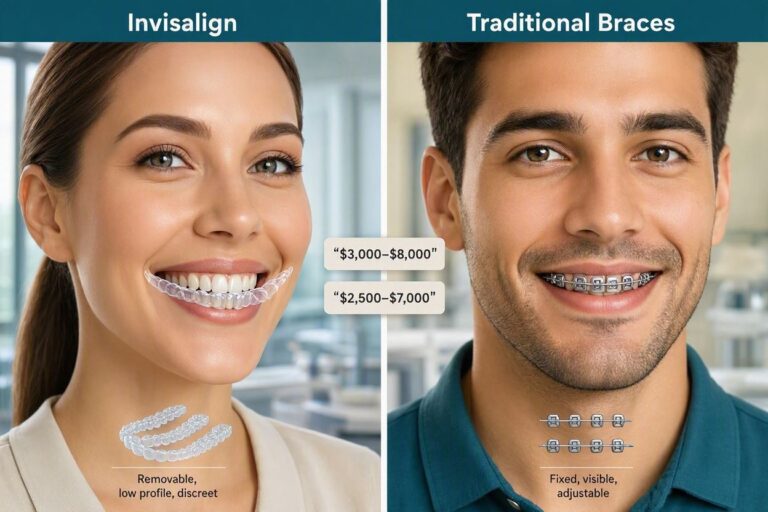
Traditional Braces Emergencies. Brackets debond, wires poke, bands loosen, ligatures pop off, elastics snap, headgear breaks, expanders loosen. The emergencies are hardware-based. They often require a trip to the office for a physical repair. The cost of these visits is variable, as discussed.
Clear Aligner Emergencies. Aligner emergencies are usually simpler. You lose an aligner. You drop an aligner in an unsanitary place. An attachment comes off. You run out of elastics. Most aligner emergencies can be resolved remotely. The orthodontist tells you to move to the next aligner or back one aligner. The cost of a lost aligner is typically a replacement fee, often $50 to $100 per aligner. Attachments can often be replaced at the next scheduled visit without an emergency appointment. The frequency and cost of emergencies are generally lower with aligners than with braces. This is a hidden financial advantage of clear aligners that many patients do not consider when comparing treatment costs.
Special Situations That Affect Emergency Costs
Several special circumstances can change how emergency fees are handled.
Traveling Patients. If you are traveling and have an orthodontic emergency, you may need to see a local orthodontist. Your home orthodontist may not be able to help you. A stranger orthodontist will charge you a full emergency exam fee, which can be $100 to $200, plus the cost of any repair. Your home orthodontist is not obligated to reimburse you for this. Some practices have reciprocal agreements with colleagues in other cities, but this is rare. If you travel frequently, discuss an emergency plan with your orthodontist before treatment begins.
Patients Who Relocate. If you move to a new city mid-treatment and need to transfer your case, the new orthodontist will evaluate you and charge a fee for the transfer. This transfer fee is essentially a large emergency fee, often $1,000 to $3,000, to cover the cost of finishing your case. The new orthodontist assumes liability for a case they did not start. This is a significant cost that many relocating patients do not anticipate.
Patients in Retention. After braces are removed, you are in retainers. A broken retainer is an orthodontic emergency. If you do not replace it promptly, your teeth will shift. The cost of a replacement retainer is typically $150 to $400 per arch. This is not covered by the original comprehensive fee in most contracts. Retainer replacement is a separate fee almost universally.
Quotations from Orthodontic Professionals
“I tell my patients on day one: ‘If you follow the dietary rules, you will likely never see me for an emergency. If you eat the forbidden foods, you will meet me often, and each visit will cost you.’ It’s a simple cause and effect. I want my patients to understand that their choices directly impact their wallet.”
— Dr. James Miller, Orthodontist, Private Practice
“We do not charge for true appliance failures. If a bracket pops off and the patient was eating a soft sandwich, that’s on us. The bond was not perfect. We eat that cost. But if you are eating a Payday bar and break three brackets, the fee is going on your account. Fairness works both ways.”
— Dr. Rebecca Torres, DMD, MS, Orthodontics
“The pandemic taught us that a lot of emergency visits are unnecessary. We now use remote monitoring for triage. A patient sends a photo. We determine if it is a true emergency or a wait-and-see. This has reduced our emergency volume by 40% and saved our patients thousands in collective fees.”
— Dr. Andrew Kim, Board-Certified Orthodontist
Strategies for Patients with Financial Hardship
If an emergency fee represents a genuine financial hardship, communicate with the practice. Orthodontic offices deal with families of all economic backgrounds. Many are willing to work with you.
You can ask to have the emergency fee added to your existing payment plan and spread over the remaining months. You can ask if there is any flexibility on the fee. If a practice has a published $75 fee but you explain that you truly cannot afford it, the office manager may reduce or waive it as a one-time courtesy. This is more likely if you are otherwise a compliant, pleasant patient. If you are a patient who routinely misses appointments and breaks brackets, your request for leniency will fall on deaf ears. Be a good patient first. Ask for grace second.
The Dental Insurance Angle
As mentioned, orthodontic insurance benefits are usually a fixed lifetime maximum. They do not provide additional funds for emergencies. However, if your emergency is a traumatic injury that damages your teeth and your braces, your medical insurance, not your dental insurance, may cover the treatment. A car accident, a fall, or a sports injury that breaks your teeth and your braces is a medical claim. The emergency room visit, the oral surgery, and the repair of the orthodontic appliance may all be billed to medical insurance under the accident provision. This is a complex claims process that requires your orthodontist and your oral surgeon to coordinate with your medical carrier. Do not assume your medical insurance will pay, but do explore this avenue if your emergency is truly traumatic in origin.
Creating an Emergency Action Plan
You can prepare for orthodontic emergencies in advance, just like you prepare for a fire drill or a power outage. Create a small kit and a plan so that when a problem happens at 9 PM on a Friday, you do not panic.
Your Orthodontic Emergency Kit Should Contain:
- Orthodontic wax. Keep multiple packs in your bathroom, your purse, your backpack, and your desk drawer.
- A small, clean pair of nail clippers or wire cutters. In a true wire emergency where wax will not suffice, you can use clean clippers to snip the poking end of the wire. Sterilize them with rubbing alcohol first.
- A pencil with a clean eraser. You can use the eraser to push a poking wire back into place gently.
- Over-the-counter pain reliever like ibuprofen or acetaminophen for pain from adjustments.
- A small mirror so you can see the problem clearly.
- The orthodontist’s business card with the after-hours emergency number.
Your Emergency Action Plan Should Include:
- Try to fix the problem at home with wax or a pencil eraser first.
- If the pain is severe, the appliance is loose and at risk of swallowing, or there is trauma, call the emergency number.
- If the problem can wait, call the office the next business day and schedule a repair.
- Document everything. Take photos of the broken appliance for your records and for the orthodontist.
Summary of Key Points on Emergency Appointment Costs
- Most orthodontic “emergencies” are manageable at home with wax and are not true emergencies requiring an immediate visit.
- The cost of an emergency visit ranges from $0 for a quick, simple fix to $200 or more for after-hours care or significant repairs caused by patient negligence.
- The primary determinant of whether you will be charged is the cause of the problem: appliance failure is usually covered; patient non-compliance usually triggers a fee.
- Clear aligners have a lower emergency rate and lower associated costs compared to traditional braces.
- Ignoring a broken appliance can extend treatment time and lead to more costly problems like cavities and enamel damage.
- Always ask about the cost of an emergency visit when you call to schedule; a transparent practice will tell you upfront.
Conclusion
Emergency orthodontic appointments can be more costly than your regular scheduled visits, but they are not automatically so. The financial responsibility hinges on your contract terms, the cause of the emergency, and the time and materials required to fix it. If you follow your orthodontist’s dietary and care instructions diligently, you will likely never face a charge for an emergency visit. If you cause the emergency by eating forbidden foods or engaging in harmful habits, you should expect to pay a fee that reflects the cost of the materials and the disrupted chair time. Prevention through compliance, coupled with a well-stocked home emergency kit, is your best defense against both the pain and the expense of orthodontic emergencies.
Frequently Asked Questions (FAQ)
1. What should I do if my wire breaks and is poking my cheek?
Apply orthodontic wax to the sharp end immediately. If the wire is long and you cannot push it in, use a clean pair of nail clippers to cut it carefully. Call the office during business hours to schedule a repair.
2. Will my dental insurance cover an emergency orthodontic visit?
Typically, no. Orthodontic insurance benefits are a fixed lifetime maximum and do not provide additional coverage for emergency visits. You should expect to pay out of pocket.
3. How can I tell if my bracket breakage is my fault or the appliance’s fault?
If you were eating something hard, sticky, or crunchy, it is likely your fault. If you were eating soft food or doing nothing specific when it detached, it may be a bond failure. Your orthodontist will make the final determination based on the condition of the bracket and your enamel.
4. Can I go to my general dentist for an orthodontic emergency?
A general dentist can help with pain, infection, or a loose band that is causing gum irritation, but they cannot repair braces. You will eventually need to see your orthodontist. A dental visit for pain relief may be a separate cost.
5. Are broken brackets on ceramic braces more expensive to repair than metal brackets?
Yes. Ceramic brackets cost the practice more, so the replacement fee charged to the patient is typically higher, often $10 to $25 more per bracket.
6. What happens if I lose an aligner while traveling?
Call your orthodontist. They will usually instruct you to go back to your previous aligner or move forward to the next one. There is typically a replacement fee for the lost aligner.
7. Is it safe to use superglue to reattach a broken bracket at home?
Absolutely not. Superglue is toxic and can permanently damage your enamel. Never use household adhesives in your mouth.
Additional Resource
For a comprehensive guide on handling common orthodontic issues at home, visit:
American Association of Orthodontists – Common Orthodontic Problems