Can Dentures Be Made Into Implants?
The question of whether dentures can be made into implants is a natural one for denture wearers seeking a more stable solution. The phrasing reflects a common hope: that the denture, familiar and already paid for, can somehow become a permanent, fixed set of teeth. As with the related question covered earlier about converting dentures to implant retention, the answer requires clarifying what implants are and what can realistically be done with existing dentures. This article explains the fundamental impossibility of turning dentures into implants, describes the conversion options that do exist, and outlines the pathways from conventional dentures to implant-supported restorations.
The Fundamental Distinction
Dentures and implants are categorically different things. Understanding this distinction is the starting point.
What Dentures Are
A denture is a removable oral prosthesis made of acrylic, sometimes with a metal framework, that replaces missing teeth and rests on the gum tissue and residual bone ridge. It has no root-like structure. It is not anchored in bone. It is a removable device that the patient takes out for cleaning and during sleep. The denture is the teeth and the pink acrylic base that supports them. It is manufactured in a dental laboratory from impressions of the patient’s mouth.
What Implants Are
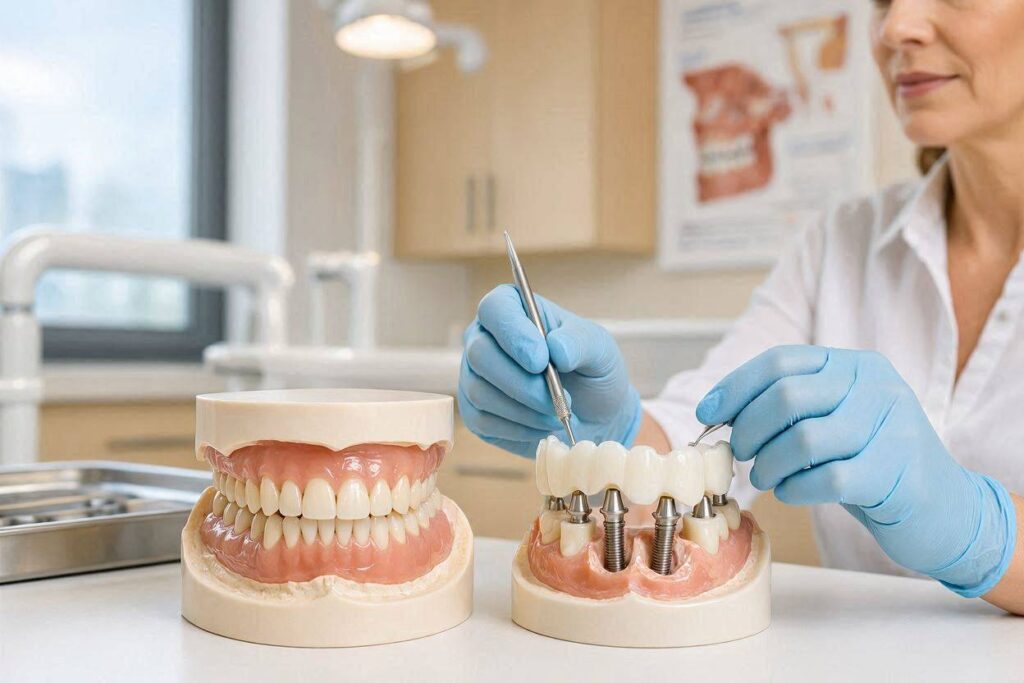
A dental implant is a titanium or zirconia fixture surgically placed into the jawbone. It serves as an artificial tooth root. The implant integrates with the bone through osseointegration, becoming a permanent part of the patient’s anatomy. Implants are not removable by the patient. They are the foundation to which restorations attach.
Why One Cannot Become the Other
A denture is an acrylic and plastic appliance. An implant is a surgical-grade metal or ceramic fixture integrated into living bone. No amount of modification can transform acrylic and denture teeth into an osseointegrated titanium fixture. The materials are different. The biological relationship to the body is different. The function is different.
Asking whether dentures can be made into implants is like asking whether a shoe can be made into a foot. The shoe can be improved, it can fit better, it can be attached more securely, but it cannot become the living structure that supports it.
What Can Be Done: The Realistic Options
While dentures cannot become implants, several pathways exist to transition from conventional dentures to implant-supported solutions.
Converting Existing Dentures to Implant Overdentures
This is the most common option for patients who want to leverage their existing dentures while gaining the stability of implants. The denture is modified to incorporate attachment housings that snap onto implant abutments.
The process involves placing two to four implants in the jaw, allowing them to heal and integrate, then retrofitting the existing denture with locator housings or other attachment components. The converted denture snaps onto the implants, providing dramatically improved stability compared to a conventional denture. The patient still removes the denture for cleaning.
This conversion preserves the denture base and teeth while adding implant retention. It does not turn the denture into implants. It creates a hybrid: an implant-retained removable prosthesis using the existing denture.
Fabricating New Implant Overdentures
When the existing denture is not suitable for conversion due to wear, poor fit, or aesthetic concerns, a new overdenture is fabricated specifically for implant retention. This new prosthesis is designed from the start to work with the implant attachment system. The result is a removable but highly stable prosthesis.
Transitioning to Fixed Implant Restorations
For patients who desire a non-removable solution, fixed implant restorations replace dentures entirely. Options include single implant crowns for individual missing teeth, implant-supported bridges for multiple missing teeth, or fixed full-arch prostheses for patients missing all teeth in an arch.
Fixed restorations are not dentures. They are not removed by the patient. They look, feel, and function more like natural teeth. They require a completely new prosthesis fabricated specifically for the implants. The existing denture is not used.
The All-on-4 and Similar Protocols
Full-arch fixed restorations on four to six implants, often marketed as All-on-4 or Teeth-in-a-Day, provide a complete arch of fixed teeth. The existing denture is not converted. A new, custom prosthesis is fabricated. In some protocols, a provisional fixed prosthesis is delivered on the day of surgery, and a definitive prosthesis follows after healing.
The Limitations of Denture Conversion
Patients considering conversion should understand what conversion can and cannot achieve.
What Conversion Achieves
Conversion provides significantly improved retention and stability. The denture no longer moves during eating and speaking. The patient gains confidence. The implants preserve bone in the areas where they are placed. The conversion is less expensive than fabricating an entirely new implant prosthesis.
What Conversion Does Not Achieve
Conversion does not make the denture fixed. It remains removable. The denture base still covers the palate for maxillary prostheses, affecting taste and sensation. The aesthetics of the existing denture are unchanged. If the denture teeth are worn or the denture base is stained, those characteristics remain.
Conversion does not eliminate the need for denture maintenance. The denture base will still require relining as the ridge changes. The denture teeth will still wear. The attachment inserts will require periodic replacement.
Cost Comparison of Pathways
The financial aspect influences which pathway patients choose.
| Pathway | Approximate Cost Range (Per Arch) | Removable or Fixed |
|---|---|---|
| Conversion of Existing Denture to Implant Overdenture (2 implants) | $6,000 – $12,000 | Removable |
| New Implant Overdenture (2 implants) | $8,000 – $15,000 | Removable |
| New Implant Overdenture (4 implants) | $12,000 – $22,000 | Removable |
| Fixed Full-Arch on 4-6 Implants | $20,000 – $35,000 | Fixed |
These ranges include the implant surgery, abutments, attachments, and prosthesis. Actual costs vary by location, provider, and case complexity.
The Emotional Journey from Dentures to Implants
The transition from conventional dentures to implant-supported restorations carries psychological significance.
Life with Conventional Dentures
Many denture wearers describe a sense of loss and limitation. They avoid certain foods. They worry about denture movement in social situations. The nightly removal of teeth reinforces a feeling of aging or incompleteness. For some, dentures are a constant reminder of dental failure.
The Decision to Pursue Implants
Deciding to pursue implant treatment represents hope for improvement. Patients imagine eating a meal without anxiety, laughing without covering their mouth, and waking up with teeth already in place. This hope motivates the investment of time, money, and surgical experience.
The Outcome
Patients who transition from conventional dentures to implant-retained or fixed restorations consistently describe transformative improvements in quality of life. They regain the ability to eat a varied diet. They smile and speak with confidence. The psychological benefit often rivals or exceeds the functional improvement. Many express only the regret of not pursuing treatment sooner.
Conclusion
Dentures cannot be made into implants. The two are fundamentally different: one is a removable acrylic prosthesis, the other is a surgically placed titanium or zirconia fixture integrated into living bone. However, existing dentures can often be converted into implant-retained overdentures, gaining dramatically improved stability through attachment to implants. Patients seeking a non-removable solution require fabrication of new fixed implant restorations. The pathway from conventional dentures to implant-supported restoration represents a significant improvement in function, comfort, and quality of life, even if the original denture cannot become the implant itself.
Frequently Asked Questions
Can my old dentures be used if I get implants?
Often yes. If the dentures are in good condition with adequate base thickness, they can be converted to snap onto implant abutments, becoming implant-retained overdentures.
What is the difference between an implant overdenture and fixed implant teeth?
An overdenture is removable by the patient. Fixed implant teeth, such as All-on-4 restorations, are not removable and are secured permanently to the implants. Fixed restorations feel more like natural teeth.
How many implants do I need to hold my dentures in place?
For a lower overdenture, two implants are the accepted minimum. For an upper overdenture, four implants are typically recommended. More implants provide greater stability.
Is it better to convert my existing denture or get a new one made for the implants?
Conversion works well when the existing denture is in good condition and fits well. A new denture is preferable when the existing one is worn, ill-fitting, or aesthetically outdated, or when the patient wants a fresh start.
Additional Resource
For information on implant-supported dentures and fixed restorations, visit the American College of Prosthodontists at www.gotoapro.org. The ACP provides patient education on all types of dental prostheses.